
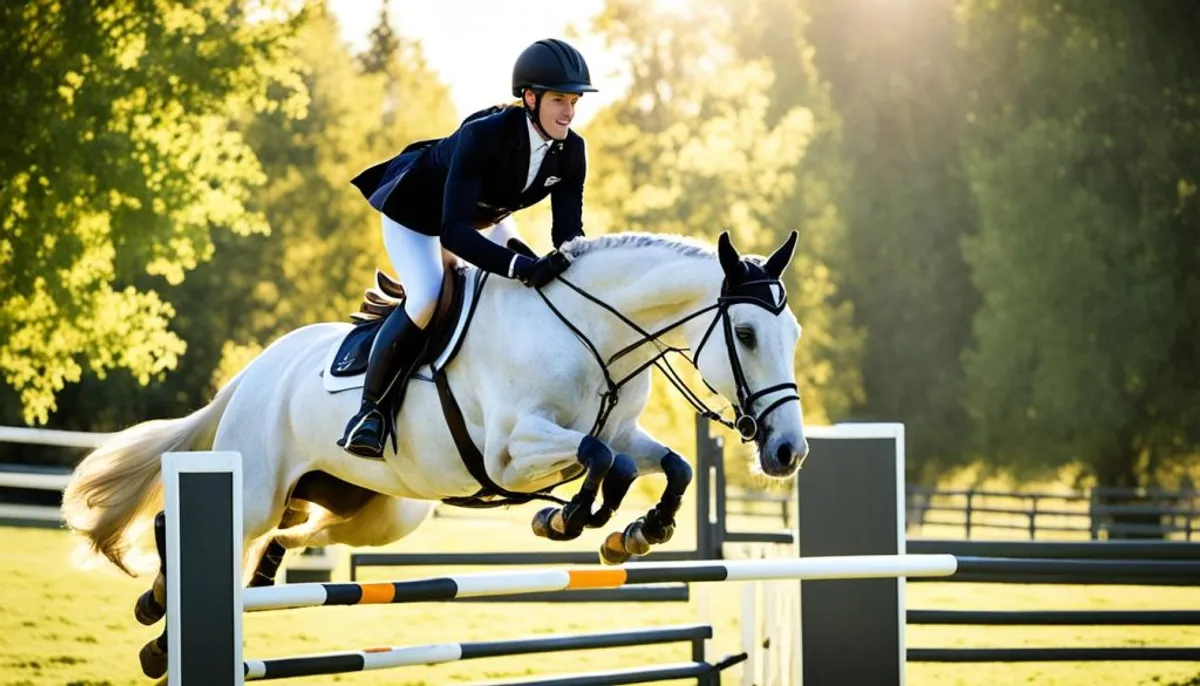
Riding is a sport that connects man and the horse. This union creates an extraordinary experience. It can be seen as an art, practiced for pleasure or in competition. Riding has deep roots in history, having been used in the past for hunting and warfare. Today, it is mainly a sport and a leisure activity. This sport has a large community, welcoming riders of all levels.
Key Points to Remember
- Riding unites man and the horse in a unique experience
- It goes beyond sport, being appreciated as an art or practiced for pleasure
- Originally used for hunting and in wars
- Today, riding is mainly seen as a sport and a leisure activity
- It attracts millions of people around the world
What is Riding?
Riding is a fantastic sport where one rides a horse. Its name comes from the Latin “equitare,” meaning the ability to ride an equine. Initially linked to hunting, warfare, and farming, it is now a leisure activity and a sport.
Definition and Origins of Riding
This discipline involves riding a horse while developing a trusting relationship. Over time, riding has evolved into various activities. Among them, we have show jumping, dressage, and eventing.
- Hunting: Riders used horses to chase game.
- Warfare: Horses were essential for movement and cavalry charges.
- Fieldwork: Equines were used for agricultural tasks.
Today, riding is more popular as a sport and pastime. Yet, it retains its special bond between the rider and the horse.
| Discipline | Description |
|---|---|
| Show Jumping | Involves clearing a series of obstacles with a horse. |
| Dressage | Highlights the harmony between the rider and the horse. |
| Eventing | Combination of several tests: dressage, show jumping, and cross-country. |
Riding Definition
Riding goes far beyond simply riding a horse. It combines art, pleasure, and sporting challenge. There is a communication special between man and animal. The techniques arise from this understanding.
Riding follows well-established rules. It includes activities like show jumping, dressage, and endurance. Men and women compete in these equestrian disciplines.
Riding offers various disciplines. Thus, all riders, regardless of their level, can have fun. It is a unique activity that enriches life, whether for pleasure, competition, or well-being.
| Equestrian Discipline | Description |
|---|---|
| Show Jumping | The rider and their horse clear a series of obstacles of varying height and width. |
| Dressage | The rider and the horse perform a series of codified movements aimed at demonstrating their harmony and flexibility. |
| Endurance | The rider and the horse cover long distances, testing their stamina and endurance. |
Do you want to try riding, whether you are new or experienced? You will discover an exciting world. And you can develop a special relationship with your horse.
Natural Aids in Riding
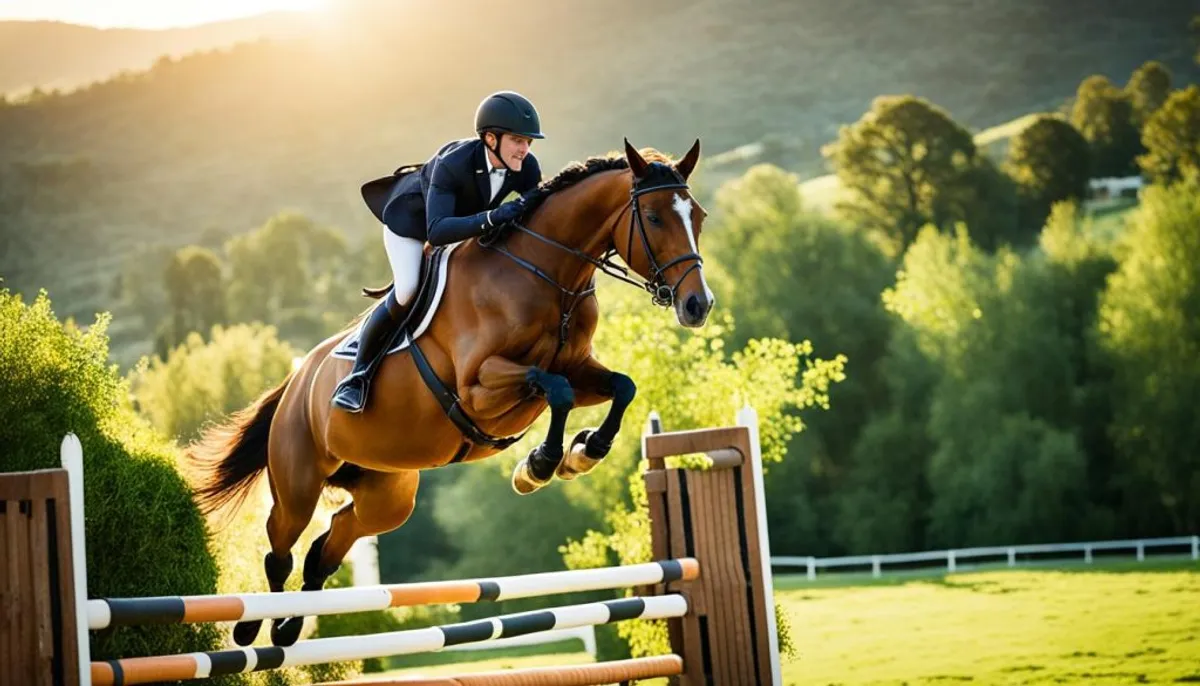
The communication between the rider and the horse is key for good control. These aids are used to request actions from the horse and to sense its reactions. The legs, hands, body weight, and gaze are the main aids.
- The legs: They are used to request and maintain the horse's movement.
- The hands: They allow slowing down or stopping the horse.
- Body weight: It also plays an important role in adjusting these aids.
- The gaze: The rider can use their gaze to communicate with their mount.
This fine communication is critical for good control of the mount. Riders learn to master these natural aids. This helps build a trusting relationship with their horse. Communication is vital in riding.
Skill with the aids allows riders to communicate well with their horse. They can adjust their communication to achieve various goals in riding. Understanding one's horse leads to a rewarding and peaceful experience in this equestrian sport.
Who Practices Riding?
Riding is loved by millions around the world, of all ages and genders. From under 4 years to over 60 years, both sexes enjoy it. This sport allows men and women to compete on equal terms, making it unique.
Diversity of Riders
Many notable figures love riding, such as Queen Elizabeth II. She practiced it her entire life. The sport attracts a wide audience, of all ages and genders. It is practiced by youth, seniors, men, and women, showcasing its great diversity.
| Age Category | Proportion of Practitioners |
|---|---|
| Under 18 years | 45% |
| 18-35 years | 30% |
| 36-60 years | 20% |
| Over 60 years | 5% |
More than half of the practitioners are young people under 18, as shown in this table. This proves that children and teenagers love to practice this sport.
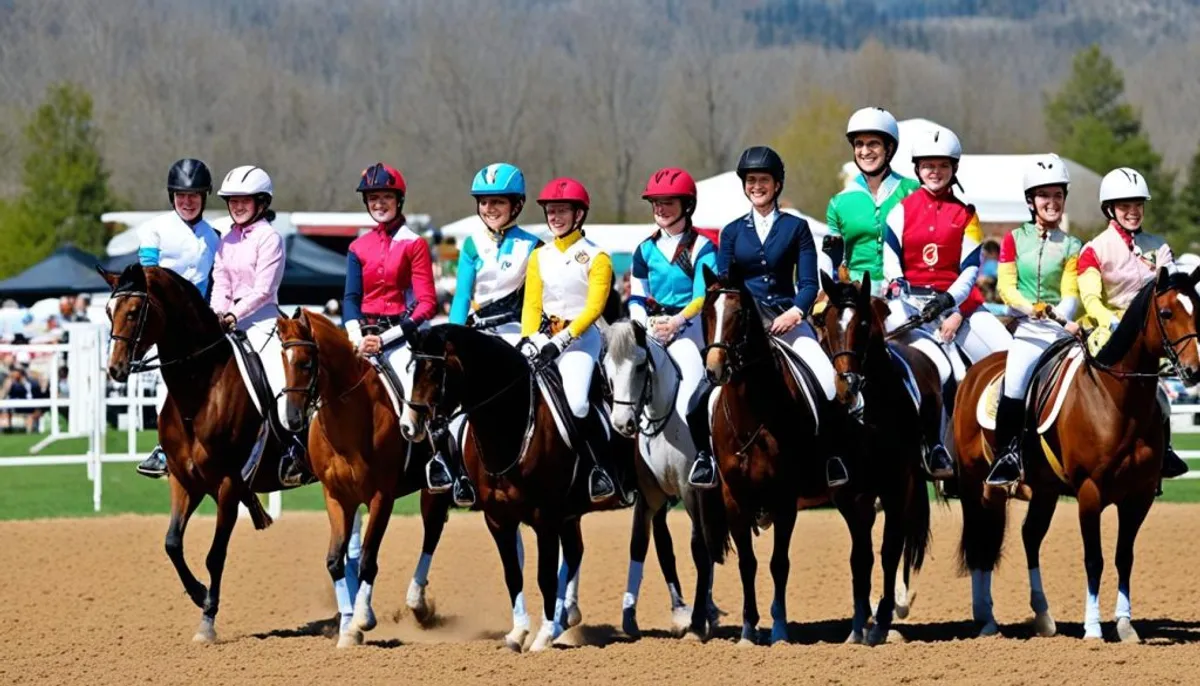
Riding welcomes people of all ages and genders. From young children to the elderly, men and women, all come together around this sport. It creates a passionate and varied community.
Preparation and Training in Riding
Practicing riding requires good physical and mental condition. The rider must ensure good balance and solid muscle strength. This helps them control the mount gently. Training should include exercises to strengthen and stretch.
The horse also needs to learn to be ridden. It must become familiar with the rider's weight and follow their commands. This is done through precise training so that the rider-horse duo gains confidence and rapport.
There are tips to help prepare and train well:
- Working on important muscles, like the core, legs, and arms, is key for being stable in the saddle.
- Improving endurance with exercises that work the heart. This helps to keep up during riding.
- Maintaining flexibility and mobility is important. Stretching and mobility exercises help to communicate better with the horse.
- Body gymnastics exercises are essential. They include movements for the legs, pelvis, and spine.
- Getting to know and communicate with one's horse is vital. This builds a bond based on trust and rapport.
The key to progressing in riding is constant preparation and training. This allows for a good connection with the animal.
| Preparation Element | Objective |
|---|---|
| Muscle Strengthening | Improve balance and stability in the saddle |
| Cardiovascular Endurance | Support the physical efforts of riding |
| Flexibility and Mobility | Facilitate communication with the horse |
| Specific Riding Exercises | Develop technical skills |
| Knowledge and Communication with the Horse | Establish a relationship of trust and rapport |
Conclusion
Riding is not just a sport. It is an adventure that creates a strong bond between humans and horses. It has existed for a long time and uses advanced methods to understand each other.
This sport is suitable for both newcomers and experts. It allows everyone to get closer to their horse. It can be experienced as a hobby, a means of expression, or for competition. It is an activity that brings joy and balance.
There are many ways to enjoy riding. One can do it for fun or to win prizes. With all its variations and a large community, riding is exciting. It is a world where one learns while having fun.
FAQ
What is Riding?
Riding is a sport that connects man and horse. It is a unique experience. It can be practiced as an art, a leisure activity, or a competition. Its origins date back to the use of horses for hunting and warfare.
What is the definition of Riding?
Riding is the art of riding a horse. The word comes from the Latin “equitare,” meaning “to ride.” It includes subtle communication between the rider and their horse.
What are the Equestrian Disciplines?
Riding has several disciplines, such as show jumping and dressage. Men and women can compete in these competitions.
How does the rider communicate with the horse?
The rider communicates with the horse through “aids.” These aids include the legs, hands, body weight, and gaze.
Who practices Riding?
Millions of people, of all ages and genders, practice riding. From young children to people over 60, there is a wide range of participants.
How do the rider and horse prepare?
The rider must be mentally and physically ready. They work on their balance and strength. The horse learns to accept the rider and to obey.