
We often wonder how a horse sleeps, especially in stables. Is there a truth about standing sleep or is it a myth? The horse's sleep is crucial for its well-being.
This article will address the essential questions. Does the horse lie down to sleep? Why does it change position? We will see the importance of these phases for its rest. Understanding equine sleep is vital for horse health, just like in humans.
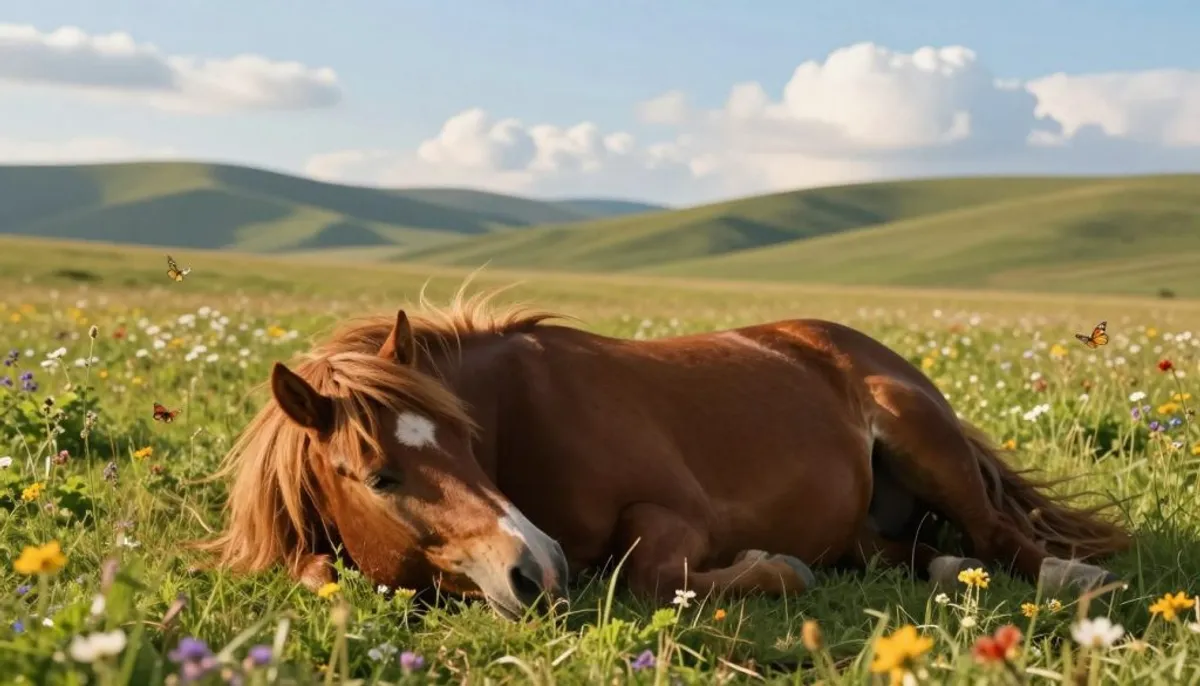
Horses can sleep standing and lying down. The chosen posture affects the quality of their sleep. Their energy at work, concentration, and stability depend on this.
In France, the environment plays an important role. The comfort provided by establishments like La Sellerie Française is essential. They offer quality equipment, made in France, that contributes to equine well-being.
Key points to remember
- Equine sleep is fragmented and occurs in several short sequences.
- How a horse sleeps: it can rest standing and sleep lying down.
- The position influences the depth of sleep and recovery.
- Good equine sleep supports horse health and performance.
- Equine well-being also depends on perceived safety and comfort.
- Bedding and environment can promote more stable and deeper rest.
Understanding equine sleep and its importance for health
Sleep is not just a bonus for horses; it is essential. If a horse does not rest well, it quickly shows. It is crucial to know how many hours a horse needs to sleep. This depends on its age, work, and environment.
In winter, sleep becomes even more important. The body uses more energy to stay warm. Thus, horses tire more quickly. Good recovery shows if a horse is fit each day.
Why quality sleep is essential for well-being and performance
Regular sleep helps tissues heal and reduces tension. This is important for horses to perform well, especially with intensive training. Poor rest can make a horse stiff or less attentive.
Just look at the horse's daily routine. Check if they have quiet time, good bedding, and if they can lie down easily. These elements are as important as nutrition for the quality of their sleep.
Sleep, recovery, and the immune system in horses
Sleep aids the functioning of the immune system. Without enough rest, horses become more vulnerable. During winter, transport, or competitions, sleeping well is essential for staying healthy.
It's not just about sleeping longer. They also need to sleep at the right time and in a safe place to relax.
Characteristics of equine sleep compared to humans
Like us, horses go through different phases of sleep. But they sleep in several short sequences and can rest standing. These abilities allow them to stay alert. A small noise can wake them during slow sleep because they are prey animals.
This way of sleeping explains why a horse may appear asleep but is not completely rested. Observing their behavior and understanding their sleep needs is crucial.
| Observed point | What is common in horses | What it changes daily |
|---|---|---|
| Sleep organization | Fragmented sleep in brief episodes, alternating rest and micro-wakes | A calm environment aids equine recovery and reduces hyper-vigilance |
| Rest posture | Rest possible standing, but needs to lie down for deeper sleep | A clean and stable bedding promotes the quality of equine rest |
| Vigilance | Quickly wakes at the slightest noise, especially in slow sleep | Perceived safety directly influences the horse's sleep hour needs |
| Impact of cold | Higher energy expenditure in winter | A protected rest supports horse performance when the body is stressed |
how a horse sleeps
To grasp a horse's sleep, one must observe its behavior, whether in a stall or in the pasture. Sleep is a mix of moments when it stays alert and others when it relaxes, always seeking to feel safe and comfortable. Horses sleep less than humans, which can be surprising.
The horse's sleep divides into short periods, interspersed with brief awakenings. This allows it to stay alert, ready to react if needed, even if it seems to be sleeping.
Sleeping standing or lying down: what we actually observe
Indeed, horses can sleep standing, especially for short rests. They lower their heads, with half-closed eyes, and alternate the weight from one leg to another. However, they also sleep lying down for deeper rest.
When they are on their side or chest, they sleep deeply. If everything is calm around, they lie down more often, allowing for total relaxation. A tense horse prefers to stay standing.
Why a horse alternates rest and sleep in several short sequences
A horse sleeps in fragments, accumulating 3 to 5 hours of sleep per day in several sessions. Each phase is short, less than 20 minutes, before it wakes up a bit.
In the stall, they are more often awake, about 75% of the time. Their deep sleep is rare, accounting for only 4% of the total. That’s why moments of lying down are important.
When and at what times of day does the horse sleep most often
At night, between 8 PM and 5 AM, horses sleep the most, in about six sessions. Their longest sleep cycle does not exceed fifteen minutes.
There is also a drop in activity around noon, especially from 12 PM to 2 PM, when conditions are calm. To truly understand horse sleep, one must observe them at different times.
| Observed moment | What we see most | Useful markers |
|---|---|---|
| Night (8 PM–5 AM) | Repeated episodes, alternating rest and sleep | About six episodes; longest sequence: a good quarter of an hour |
| Midday (12 PM–2 PM) | Slight drowsiness, calm rest, sometimes lying down if safe | Frequent window when activity decreases and the place is reassuring |
| Over 24 hours | Fragmented sleep, micro-wakes, vigilance | Fragmented horse sleep; total often 3 to 5 hours depending on context |
The horse's resting positions: standing, lying on the chest, lying on the side
Horses choose different positions to rest, depending on their needs and where they are. A dry and clean place encourages rest. Conversely, a damp or dirty location can discourage them from lying down.
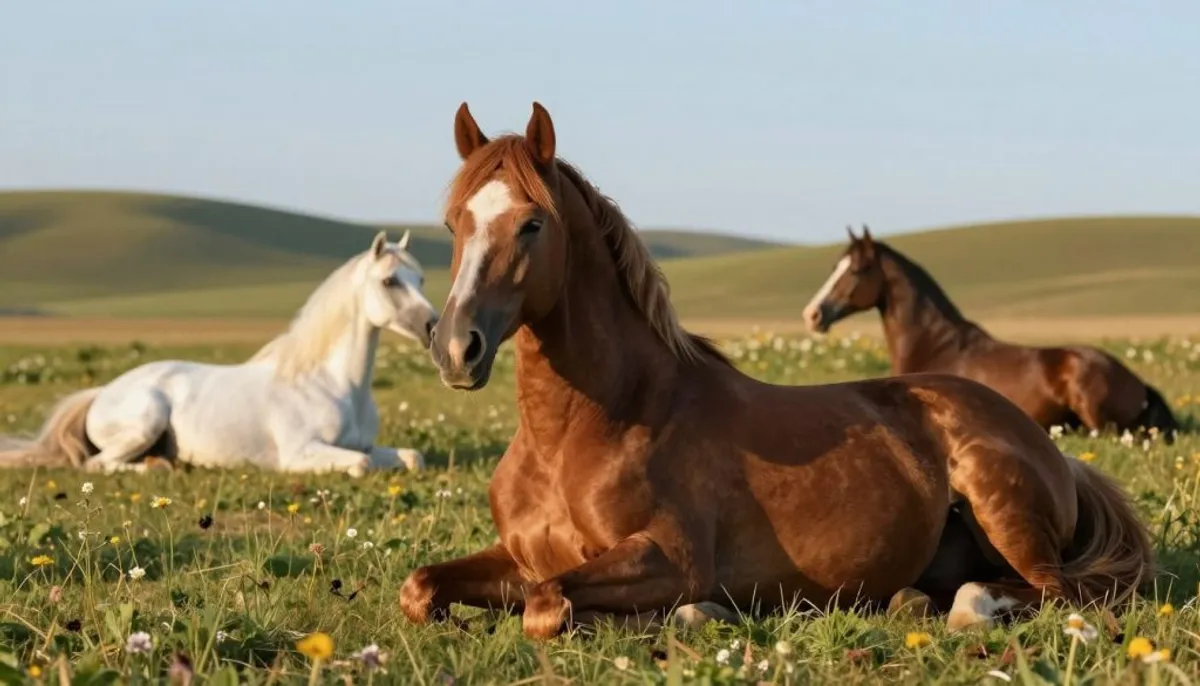
Standing drowsiness: visible signs
Standing drowsiness is easily spotted. A low head, barely open eyes, and a relaxed lip are indicators. The horse may alternate the weight from one leg to the other.
This posture allows resting while staying alert, especially if the environment seems dangerous.
Lying on the chest: the “cow lying” position and slow sleep
The “cow lying” position means the horse rests on its chest. Its front legs are folded under it, and sometimes, its head remains raised. This is associated with light sleep, where the horse stays somewhat vigilant.
Good bedding, thick, prevents scrapes and makes resting more pleasant. This allows the horse to rest longer.
Lying on the side: the key position for paradoxical sleep
When a horse is lying on its side, it is fully extended, legs outstretched. This position requires a safe environment due to the total relaxation it involves. It is essential for deep sleep in the horse.
A wet floor can cause discomfort and increase the risk of health problems. A dry and comfortable area in the stall is crucial to ensure rest.
| Observed posture | What we often see | Most associated phase | Points of vigilance |
|---|---|---|---|
| Standing | Alternating support, low head, half-closed eyes; main signs of drowsiness | Light rest, brief transitions | Stress, noise, frequent passersby: the horse remains on alert |
| On the chest (“cow lying”) | Folded limbs, body gathered, limited movements | slow horse sleep | Bedding too thin: scrapes; cold floor: discomfort |
| On the side | Horse on its side, legs extended, marked relaxation | paradoxical horse sleep | Need for a clean and dry place; humidity: discomfort and rheumatic risk |
Anatomy: why the horse does not fall when it sleeps standing
When looking at a horse that does not move, one might think it stands up by magic. But its sleep has a scientific explanation. Its body uses a well-thought-out system to conserve energy. This allows it to sleep without falling.
This phenomenon is not magic. It relies on special joints, tendons, and ligaments. The latter lock the horse's posture. Thus, it maintains its balance without tiring, even for long periods.
The limb locking mechanism and the role of the patella
The secret lies in a locking system at the knee level. The horse's patella hooks onto a part of the bone. This prevents its legs from bending. Thus, the horse remains standing with little effort.
This device is called the stay apparatus. It functions like a support. Ligaments and tendons help keep the legs straight. This is ideal for standing quietly.
Muscle relaxation and maintaining standing without effort
When a horse rests, it relaxes certain muscles. The stay apparatus helps prevent fatigue and bending of the legs. This allows stability, even when the head lowers.
There is one thing it cannot do standing: deep sleep. For that, it must lie down. Otherwise, it risks falling.
Regular changes of supporting leg and micro-wakes
A horse does not rest always on the same leg. About every ten minutes, it changes legs. It also makes small adjustments. This allows it to stay alert.
Here is a summary of how it works:
| Observed element | What happens | Effect on stability |
|---|---|---|
| locking mechanism | “Locked” joints in line, especially in the hind limb | Less risk of sudden bending |
| horse patella | Hooks onto the femur at the knee | Standing possible with little effort |
| stay apparatus | Tendons and ligaments support the posture like a framework | Less muscle fatigue over time |
| equine sleep anatomy | Alternating support/relaxation + regular micro-adjustments | Balance maintained despite drowsiness |
Equine sleep phases: drowsiness, slow sleep, and paradoxical sleep (REM)
Horses sleep in short stages, often during the day. Some subtle signs are noticeable. For example, they adopt a more relaxed posture and breathe more slowly. They enter deep sleep if they feel safe.
From a distance, it can be hard to distinguish a small pause from real sleep. However, each stage plays a different role and has a distinct impact on their body.
Drowsiness: This is when the horse transitions from wakefulness to sleep. It can remain standing, head lowered, and its attention decreases. Its breathing becomes slower, but it's hard to know without seeing closely.
During drowsiness, a noise can easily wake it. This shows that they remain ready to react, making this phase less noticeable.
Slow sleep (SWS) horse: The horse relaxes, with a calm heart and breathing. Even with slight movements, it remains vigilant. It wakes up quickly if needed.
This sleep can occur standing or lying down. When lying on its side, it is still SWS. It is relaxed but always attentive.
Paradoxical sleep (REM) horse: This is the deepest sleep. The body relaxes completely, breathing and heart rate slow down, but the brain is active. The eyes move rapidly, and the legs may move as if they are running.
For paradoxical sleep (REM), the horse must be lying on its side. This phase is essential for muscle relaxation. It relaxes completely, from the neck to the legs.
Normally, the horse starts with slow sleep, then moves to REM. If the cycle is interrupted, there are more awakenings and less deep sleep.
| Stage | Most frequent posture | Observable signs | Awakening | Benefit for the body |
|---|---|---|---|---|
| Drowsiness | Standing, stable support | Lower neck, slowed breathing, “far away” gaze | Very easy, at the slightest stimulus | Gradual rest, preparation for the next stages of equine sleep phase |
| Slow sleep (SWS) horse | Standing or lying on the chest | Slower breathing and heart rate, possible small twitches | Easy, vigilance maintained | Basic nervous rest, regular recovery without total loss of tone |
| Paradoxical sleep (REM) horse | Lying on the side | Rapid eye movements, marked relaxation, limb twitches | More difficult, the deepest phase | Maximum relaxation and muscle recovery horse, relaxation of neck and postural muscles |
Horse respiratory rhythm and physiological signs during sleep
When a horse begins to fall asleep, its body calms down and its breathing slows. Often, it remains standing, its neck lowers, and it breathes more softly. We notice its sleep by its peaceful stillness, making small adjustments to stay stable.
At the slow sleep stage, the changes are subtle but clear. Its breathing becomes more regular and deep. Its heart beats more slowly. You may even notice twitches on its ears or skin, or its lower lip hanging.
Paradoxical sleep is more distinguished by details than by posture. The horse's eyes are closed with rapid eye movements. There may be small sudden movements. Despite its very active brain, its breathing and circulation slow down. Its breath may even seem irregular, but without being concerning.
Observing horse sleep helps understand their rest. A standing and calm horse may just be drowsy; a lying horse, especially on its side, is sleeping deeply. Observing these signals over several days says a lot about their sleep in their usual environment.
| Observed moment | Horse's respiratory rhythm | Horse's heart rate slowing | Useful visible signs | Advice for observing equine sleep |
|---|---|---|---|---|
| Drowsiness (transition) | Slower, sometimes a bit irregular | Slight, gradual | Low head, half-closed eyes, alternating support | Watch the stability of postures for 2–5 minutes, without disturbing |
| Slow sleep (SWS) | Regular, ample, discreet | Clear, constant | Relaxed mouth, twitching skin, less mobile ears | Note the time, duration, and position (standing or lying on the chest) |
| Paradoxical sleep (REM) | Reduced, sometimes uneven in short phases | Present, with possible variations | Closed eyes, rapid eye movements, small jerks | Observe from a distance, especially if the horse is lying on its side |
Duration of horse sleep and need for sleep hours according to age and activity
People often think that the horse “sleeps a lot.” But in reality, it sleeps little and spends a lot of time resting. To understand its need for sleep, one must know when, how it sleeps, and how this changes with age and exercise.
Medians observed: fragmented sleep over 24 hours and short episodes
Horses generally sleep between 3 and 5 hours per day. They have sleep in pieces during the day, with short naps. These moments are often noticed in the evening and at night, with a peak in the afternoon.
Additionally, the horse rests in a wakeful state for about 3.5 hours a day. This rest time greatly aids its recovery. It is essential to understand how much it needs to sleep each day.
Foals vs adults: why young ones sleep longer and more often
Foals sleep more than adults because they lie down more. They also have deeper sleeps because they lie on their sides. This extra sleep need helps with their growth and learning.
The difference in sleep between young and adults also comes from the safety and calmness of their environment.
Impact of exercise: work, recovery, and increased lying rest
After an active day, horses increase their sleep time. Especially, they seek to rest while lying down. Having a comfortable space allows the horse to lie down easily.
Whether outside or at home, the differences in sleep are not huge. However, group life affects sleep. A dominant or dominated horse sleeps differently due to its position in the group.
| Profile | Duration of sleep (approximate) | Organization throughout the day | Postures and points to monitor |
|---|---|---|---|
| Adult horse at rest | About 3 to 5 h/day, with additional drowsiness | Fragmented sleep over 24h, short episodes, often at night + break around noon | Alternating standing/lying; need for calm to chain several episodes |
| Growing foal | Longer and more frequent than the adult | Fragmented rhythm, repeated dozing after activity and nursing | More lying phases; attention to disturbances in the stall or herd |
| Horse with sustained work | Tendency to increase sleep time and lying rest | More marked episodes after effort; recovery more sought after | Impact of exercise on sleep: more lateral; thick bedding and sufficient space facilitate lying down |
| Very dominant or very dominated horse in a group | Often slightly less, depending on interactions | More micro-wakes, interruptions, and vigilance | Social rank can reduce the duration of horse sleep; spot agitation, frequent movements, rare lying down |
Influence of the environment on horse sleep: safety, stall, bedding, and herd
The horse's sleep is influenced by its daily environment. A simple noise, a light left on, or frequent passersby can wake it. Therefore, it is necessary to promote a calm environment, with consistent routines, especially at night.
Perceived safety: why a stressed horse lies down little (if at all)
The horse is a prey animal. It prefers to sleep standing to flee quickly if necessary. Lying on its side makes it vulnerable. Thus, a stressed horse lies down little, if ever.
Making simple changes can help. Like turning off the lights in the stables and limiting traffic. In the stall, avoiding hostile neighbors is crucial. Getting closer to a friendly companion reduces stress.
Bedding quality: clean, dry, thick to limit discomfort and scrapes
A wet or dirty bedding discourages the horse from lying down. A cold and wet floor is uncomfortable, and a thin layer of bedding can cause injuries. Thick bedding ensures comfort and safety for the horse.
Attention must also be paid to the floor's grip. A slippery or too hard floor can make it hesitant to lie down. The horse's environment must be carefully chosen to promote its well-being.
Size of the stall and risks of a space too narrow to lie down/get up
A stall that is too narrow limits the horse's movements. It risks bumping against the walls when getting up. It is recommended that the space be at least 2.5 times its size to get up easily.
A well-organized space makes the horse calmer. Eating, drinking, and resting without hindrance are essential. At night, a dark environment helps it relax better.
Group life: “contagious effect,” role of sentinels, and social interactions
In a group, resting influences others to rest. Some horses keep watch while others rest. This allows everyone to relax fully.
In the stall, social interactions are important. Seeing, smelling, and hearing others reduces isolation. Activities like walking or grazing also help relieve stress.
A good environment alone is not enough. Nutrition also plays a key role. Proper food, combined with good bedding, ensures quality rest for the horse.
| Point to address | What can hinder sleep | Simple daily adjustment | Sought effect |
|---|---|---|---|
| Perceived safety | Late comings and goings, sudden noises, light at night | Turn off music and lighting, maintain routines, limit disturbances | Decrease in horse security and stress, more relaxed rest |
| Comfort on the ground | Horse bedding wet, thin, or dirty areas | Regular cleaning, thick layer, clean and dry lying area | Fewer scrapes, more desire to lie down |
| Stall space | Horse stall too narrow, obstacles near lying areas | Provide sufficient volume (marker: ~2.5 times the horse's size), clear the areas | Smoother lying down and getting up, less apprehension |
| Social and neighborhood | Aggressive neighbor, isolation, lack of contact | Place near a compatible companion, maintain visual/olfactory/auditory contact | Calmer atmosphere, indirect “sentinel” effect |
| Outings and occupation | Long hours immobile, boredom, tension | Outings, walking, grazing, time in the paddock if possible | Mental release, better relaxation upon return to the stall |
Quality of equine rest: risks, lack of paradoxical sleep, and warning signals
The quality of equine rest depends on simple things: a safe, dry place that is spacious enough to lie down. Without this, the horse remains standing more often. It recovers less well, even with short naps.
The lack of paradoxical sleep is critical. Horses need to lie down for this deep sleep. Without easy access to a place to lie down, they may have less of this sleep. This exposes them to tripping or even collapsing, which can cause injuries.
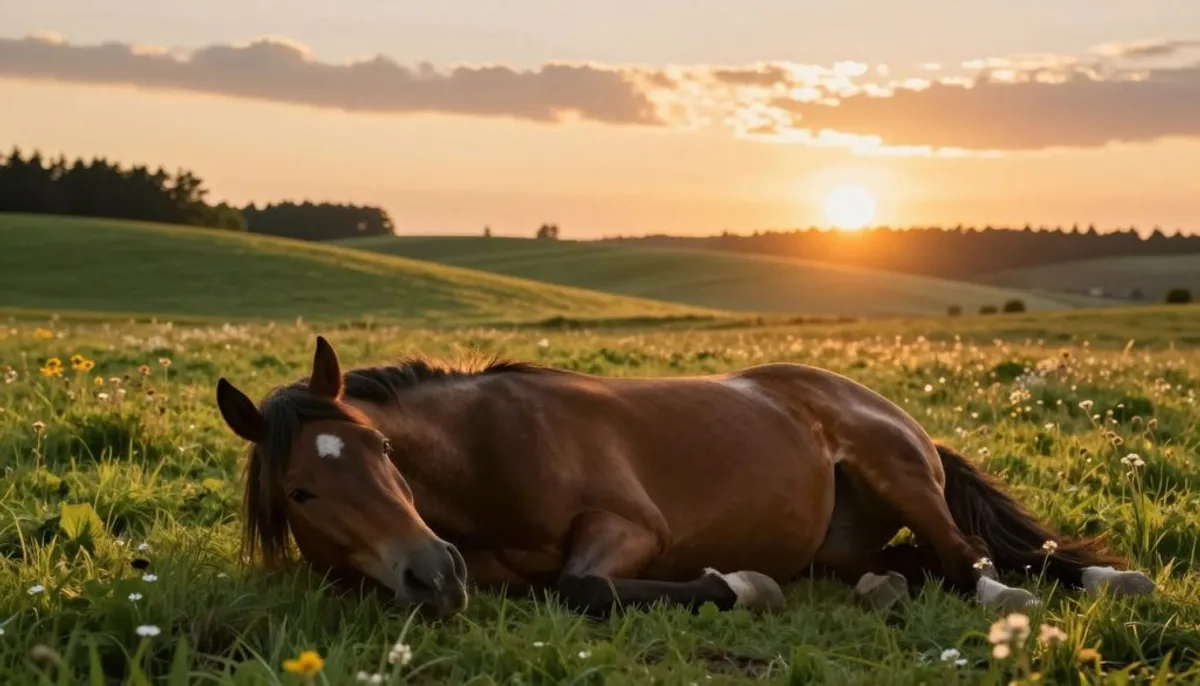
At first, signs of sleep disturbances may be mild. One might notice an irritable horse, sensitive to touch, or fearful. Over time, these signs intensify. They lead to more stress, weakened health, and behavioral issues.
These problems often stem from the environment. A small stall, a wet floor, dirty bedding, or constant noise weigh on rest. For older horses, lying down and getting up is harder. They then opt to stay standing, reinforcing the risk of lacking deep sleep.
| Observed situation | What it may indicate | Check daily |
|---|---|---|
| The horse rarely lies down, even after a calm day | REM deficit in horses related to an environment perceived as unsafe | Presence of a visible companion, stable routine, quiet resting area |
| Signs of falls, marks on the knees or injuries to the fetlocks | Episodes of unstable dozing, possible consequences of lack of paradoxical sleep in horses | Stall wide enough, non-slippery floor, thick and dry bedding |
| Tense, irritable horse or “on edge” during grooming | sleep alert signals in horses compatible with a rest debt | Reduce stress sources, increase time in the paddock, regular social contacts |
| Frequent standing rest in a senior | Discomfort or difficulty getting up, with risk of REM deficit in horses | Assess pain, stiffness, foot condition; adapt the lying area |
- Comfort: clean, dry bedding, and thick enough to avoid pressure points.
- Hygiene: limit lying on soiled areas to reduce discomfort and avoidance of the ground.
- Serenity: regular outings, stable rhythm, social interactions to decrease constant vigilance.
Monitoring warning signs of sleep disturbances in horses is crucial. Adjusting their environment can prevent sleep problems. Improving comfort and safety enhances equine rest, night after night.
Conclusion
How does a horse sleep? It changes its way of resting throughout the day and night. It can sleep standing or lying down. Its sleep is fragmented but remains very restful with a good environment.
The sleep phases in a horse are different. It can fall into light sleep standing or lying down. But for deep sleep where it dreams, it must lie on its side. This requires total muscle relaxation.
If the environment is not quiet, the horse feels it. A stressed horse sleeps less and may be tired or irritable. Having a safe place, clean bedding, enough space, calm, and friends makes a big difference.
It is essential to keep things simple for the horse's well-being. Having routines, going out often, feeding well, and providing good bedding is essential. This also includes using quality and durable equipment. La Sellerie Française offers luxury items made from A to Z in France by local artisans, custom-made or in limited editions.
FAQ
Does the horse sleep standing, or is it a myth?
It is not a myth. Horses can both sleep standing and lying down. But the quality of sleep changes with posture. Standing, they rest more lightly. For deep and restorative sleep, they must lie down.
Why is quality sleep linked to health and performance?
Good sleep helps the horse recover. It keeps its health, mental stability, and performance at their best. This is very important if the animal trains a lot or participates in competitions.
Can lack of sleep weaken the horse's immune system?
Yes. Insufficient or disrupted sleep due to stress can weaken immunity. Over time, this can cause health problems and make the horse more vulnerable to diseases.
How is equine sleep different from human sleep?
Horse sleep is more fragmented. They alternate between short moments of rest and active periods. Thanks to special adaptations, they can even rest standing. They go through several sleep phases, including REM.
Why does the horse sleep “in episodes” rather than in one block?
Horses are prey animals. They sleep in several short periods to stay alert. Thus, they can react quickly in case of danger, especially in an uncertain environment.
When during the day does the horse sleep most often?
They mainly sleep at night, from 8 PM to 5 AM. They also rest in the early afternoon. At night, they can have up to six sleep episodes, the longest lasting more than 15 minutes.
What is the duration of horse sleep per day?
Generally, horses sleep 3 to 5 hours per day. Their sleep is scattered in several short episodes. Even in the stable, they remain mostly awake. The deepest sleep represents only a small part of their rest time.
Does the horse often lie down to sleep?
A confident horse lies down quite often, as this allows it to sleep deeply. But if it rarely does, this may indicate a problem.
What signs indicate that my horse is drowsy while standing?
It is often seen that the horse lowers its head, half-closes its eyes, or closes them completely. It also regularly changes legs to rest.
What does the “cow lying” position (on the chest) mean?
This position means the horse sleeps in a lighter way while remaining alert. It shows that it is just resting, without being completely asleep.
Why does paradoxical sleep (REM) require the horse to be lying on its side?
During REM, the horse's muscles relax significantly. It must therefore lie down to avoid falling. It is during this phase that they recover the most and can dream.
Can the horse dream?
Yes. During REM sleep, we sometimes see the horse moving its lips or legs. This shows that it is dreaming.
In what order do the equine sleep phases occur?
First, the horse enters light sleep before moving to REM. If a horse does not lie down, it misses this important phase of rest.
How does the horse's respiratory rhythm vary during sleep?
As it falls asleep, its breathing slows down. Its heart rate and breathing decrease even more during light sleep. Then, during REM, despite intense brain activity, breathing and blood circulation remain low.
Why doesn’t the horse fall when it sleeps standing?
Thanks to a special system that locks its legs, a horse can remain standing without tiring.
Why does it regularly change its supporting leg?
It adjusts its posture to stay comfortable. This allows it to remain alert, even while resting.
Do foals sleep more than adults?
Yes. They need more rest. Young females tend to adopt the lateral position more often, which promotes deeper sleep.
Does a horse that works a lot have an increased need for lying rest?
It depends. Very active horses often seek to sleep deeply. For this, they need a safe and comfortable place to rest.
In winter, does the horse's need for sleep hours change?
Yes. During winter, horses may need more rest. Good sleep helps them maintain good health during this period.
Why does a stressed horse lie down little, if at all?
Lying down makes the horse vulnerable. If it feels threatened, it will avoid this posture to remain alert.
How does the nighttime environment influence horse sleep?
A quiet place helps a lot. Minimizing noise and turning off lights at night can improve their sleep.
What bedding promotes the best rest for the horse?
Clean, dry, and thick bedding is ideal. Straw is often preferred for its softness and comfort.
What happens if the stall is too narrow?
A small space makes lying down difficult. A larger stall is recommended for good rest.
Does group life help sleep?
In a group, sleep often improves. However, not all horses sleep at the same time.
Can a neighboring stall disturb equine rest?
A poorly chosen neighbor can create stress. Placing the horse next to a liked companion can help.
What are the risks of a paradoxical sleep (REM) deficit?
A lack of REM can cause falls, which are dangerous for the horse. Especially if it rarely lies down.
What signs should alert to a lack of sleep in the horse?
Irritability and hypersensitivity can be the first signs. Later, health or behavioral issues may appear.
Why do some older horses sleep more standing?
With age, getting up becomes difficult. Older horses may prefer to stay standing, but their sleep is less restorative.
How to concretely improve the quality of equine rest daily?
Good rest requires a safe and comfortable place. The environment, routine, and healthy diet are key.
Does comfort also come from equipment, and what is the link with La Sellerie Française?
Good equipment contributes to well-being. La Sellerie Française offers high-end products for equine comfort.