
A baby pony brings a beautiful adventure and responsibilities. From the start, trust and safety are key. With simple and regular gestures, you create a solid foundation.
Ponies need to live outside, with space and pony friends. They must follow a regular routine. This helps a lot during activities with children.
Having a pony requires time, organization, and a specific budget. In France, boarding for a pony costs between €150 and €400 per month. It’s important to think carefully before starting this adventure.
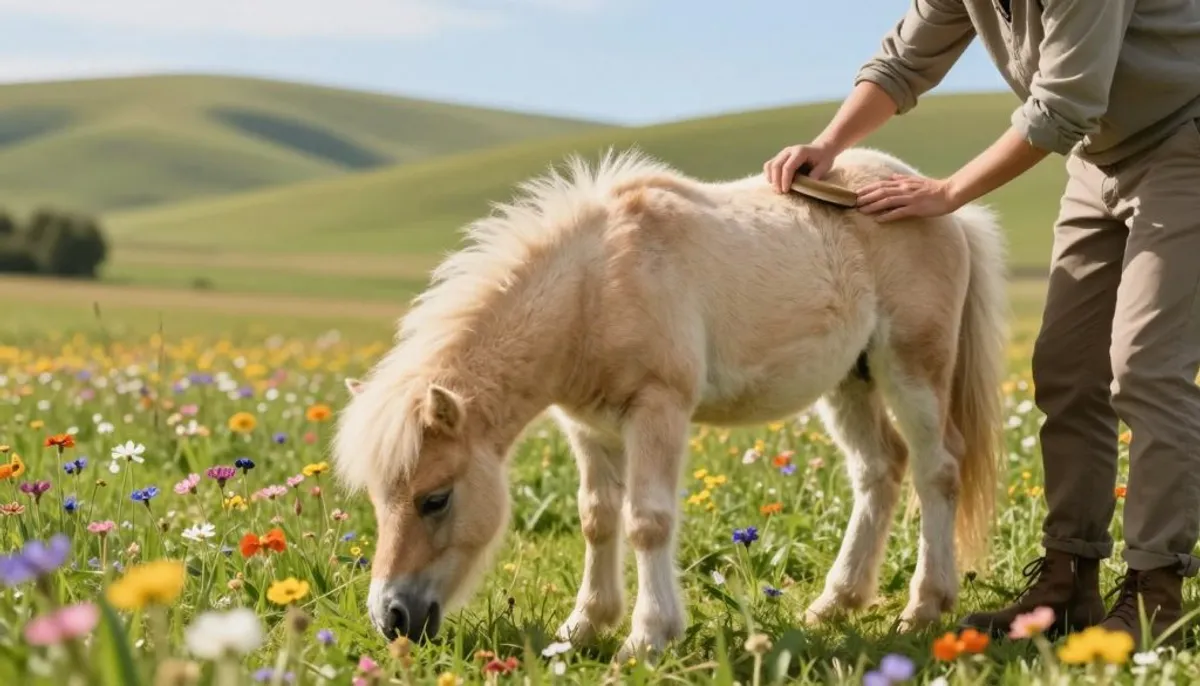
We will discuss important elements: where the pony will live, its diet, and its hygiene. Also, hoof care, exercise, veterinary follow-up, first aid kit, and equipment. The goal is to make lessons safer and always fun.
Key points to remember
- A baby pony needs a simple, repeated, and reassuring routine.
- The pony is not a house pet: its well-being mainly depends on its environment.
- Pasture, stable, or boarding: the choice of living space influences health and behavior.
- Plan for daily time, more than just a "moment" on weekends.
- Expect to pay €150 to €400 per month for boarding, depending on services.
- Successful baby pony lessons involve diet, hygiene, hoof care, and health monitoring.
Understanding the pony and its needs from a young age
First of all, it’s good to know the pony. Equus ferus caballus is the species to which ponies and horses belong. The pony is generally a “small horse,” suited to difficult environments.
In a riding center, this information changes our interaction. Their thick coat easily catches mud. Their denser bone structure requires careful grooming. Care extends to the mane, tail, and sensitive areas.
During the introduction, understanding these differences prevents sudden movements. With a wider body and shorter legs, the equipment must fit well. At the pony club, the importance of gentleness and consistency is quickly learned.
Pony or horse: the size difference according to the FEI
The International Equestrian Federation provides a simple distinction. A pony is defined as measuring less than 148 cm at the withers, or 149 cm with shoes. This criterion helps in selecting the appropriate equipment.
| Criterion | Pony (FEI reference) | Practical consequences for care |
|---|---|---|
| Height at the withers | < 148 cm (149 cm shod) | Shorter equipment, gestures close to the body, awareness of space around the hindquarters |
| Build | Wider body, heavier bone structure | Girth and brushing require attention to folds and friction areas |
| Hair | Coat, mane, and tail often thicker | Frequent detangling, skin checks under the strands, drying after rain |
A robust, social, and enduring mini-equine
Ponies are sturdy and social. They prefer to live in groups. Being isolated can stress them.
Despite their robustness, vigilance is necessary. The condition of their coat, droppings, and gait should be monitored. In a riding center, sharing these observations helps maintain their well-being.
Temperament and “bad habits”: why supervision matters
Ponies are often lively and clever. Without good supervision, they can develop undesirable behaviors. But this does not indicate a bad nature, rather an accidental learning.
Supervision by experienced riders is valuable. It establishes rules and secures interactions, especially for novices. This facilitates learning and builds the confidence of young riders.
Baby pony: daily care basics for a trusting relationship
With a baby pony, building a trusting relationship starts with simple things. Ponies prefer routines, especially with changes in environment. Having routines also helps the child stay focused, which enhances their learning in riding.
Create a simple and reassuring routine for the pony
Follow the same steps, in the same order, at similar times. Arriving, saying hello, checking the halter, then walking a bit is enough. This limits stress and prevents the pony from becoming difficult.
Before and after sessions, take a moment to calm down. A slow walk, a break in the shade, then light grooming marks a clear end. For children, it’s an easy signal to understand.
| Moment | Short gesture | What you are looking for | Why it helps |
|---|---|---|---|
| Arrival at the paddock or stable | Side approach, low voice, halter placed without pulling | Mobile ears, calm breathing, no sudden retreat | The pony understands the intention and remains available |
| Before pony sessions | Quick brushing + hoof check | Abnormal heat, stones, sensitivity | Comfort in movement and better cooperation |
| After the activity | Hand walking for 3 to 5 minutes + water available | Return to normal breathing, relaxation of the back | Smoother recovery, less nervous pony |
| Last contact | Scratch at the withers, parting without rushing | Calm departure, no agitation when leaving | The baby pony associates humans with a safe moment |
Observe the general condition: appetite, posture, mood
Each day, check three things: if it eats well, its posture, and its energy level. If a pony is not eating, stays alone, or seems down, it needs closer examination. Also, check if it drinks and if its droppings are normal.
Watch for signals like staying down for long, having a stiff gait, or an abnormal posture. A pony that moves less well after a session may be in pain. When in doubt, go easy with activities and consult an expert.
Calm handling: approaching, touching, rewarding
Approach the pony without walking directly toward its head and let it smell you. Start by touching the shoulder, then the neck, before the sensitive areas. A light touch, a sure gesture, and a pause are often better than insistence.
Reward the behaviors you want to encourage. Calmness, stillness, giving a hoof without resistance. A soft voice, a gentle stroke, or a small treat are sufficient. With these small victories, sessions become easier for the baby pony and the child.
Comfortable living space in pasture, stable, or boarding at a riding center
A good environment is crucial, just like care. An organized riding center keeps ponies calm. This includes rest and activities with children. In a pony club, this allows for monitoring their habits without stress.

Pasture and group living: the pony hates solitude
Ponies do not like to be alone. They usually live in small groups in nature. In a pasture, they have grass to eat, space to walk, and relax. At home, this often means having at least two ponies or another animal for good company.
Community living requires special attention. Dominance relationships can cause conflicts, such as bites or kicks. In riding centers, staff manage these issues. They carefully adapt groups and organize outings.
Shelter from wind, rain, and cold: options at home
A shelter is essential, even outdoors. The best is a dry and sturdy space made of durable materials. It must protect ponies from wind, rain, and cold. In winter, a blanket is useful for those who are clipped or have short coats, especially during cold nights.
Suitable stable: dimensions, door, and straw bedding
A stable must be large enough for the pony. A space of 3 m x 3 m is a good start, with a double door. This allows them to look outside and keeps them calm and curious.
Straw is the classic choice for flooring. It insulates from the cold and provides warmth. This is especially important in stables where there are children.
| Element | Practical reference | Why it’s useful |
|---|---|---|
| Stable surface | 3 m x 3 m minimum | Allows lying down, getting up, and rolling without stress |
| Door | Double door | The pony observes, stays curious, and is easier to monitor |
| Bedding | Clean and thick straw | Insulation, comfort, warmth in winter |
| Cold management | Special blanket if short-haired and freezing | Helps limit heat loss without unnecessary overheating |
Stable hygiene: daily straw change to limit diseases
The stable must be dry and clean. Removing droppings and renewing the straw daily reduces the risks of diseases and respiratory issues. This quickly becomes a routine, whether in a pony club or boarding at a riding center.
Appropriate diet and routine: hay, pellets, water, and salt block
A regular diet is essential for the well-being of the baby pony. Riding centers easily provide this with fixed schedules. At home, it’s important to follow a similar logic: avoid sudden changes to reassure the animal.
Rations according to breed, age, health status, and exercise
Each pony has different needs that depend on several factors. A growing pony does not have the same needs as a resting pony. Even during moderate lessons, the ration must be adjusted without exaggeration.
| Factor | What it changes | Sign to watch for |
|---|---|---|
| Age | More needs for growth, meals better divided | Weight loss, dull coat |
| Exercise | Energy to adapt according to rides, lunging, arena sessions | Quick fatigue, excessive sweating |
| Health status | Sometimes specific ration (digestive sensitivity, overweight) | Bloating, soft droppings |
Regular hay and quality complete feed
Clean and good quality hay is fundamental. If necessary, pellets are added for energy and nutrient needs. A feeder helps reduce waste and keeps hay clean, especially outdoors.
Meals at fixed times are important for a good routine. In riding centers, automatic feeders help during busy days. The goal is to avoid sudden changes that can cause stress.
Fresh water available: bucket or automatic system
Constant access to fresh water is crucial, with a bucket or an automatic system. Check the water twice a day to ensure its cleanliness and the proper functioning of the troughs. After lessons, give the pony time to drink.
Salt block available: compensating for mineral losses
A salt block should be accessible for the pony. It compensates for minerals lost through sweating. Place it in a dry area to keep it attractive.
Treats: fruits/vegetables yes, bread only very rarely
Treats are good for rewarding, especially for learning the basics. Fruits and vegetables are preferable. Bread should be given sparingly as it can cause colic.
If giving bread, it must be hard and dry, cut into very small pieces. This precaution is easy to follow, whether at home or in a riding center.
Hygiene, grooming, and coat care: essential gestures before and after pony sessions
Grooming is a special moment. It relaxes the pony and shows if it is in good shape. Having daily body care prevents irritations. These cares make riding more enjoyable for children in the pony club.
Brushing every day removes dirt and dead hair. It prevents the formation of scabs, especially where the equipment rubs. Before riding, pay attention to contact areas to avoid friction.
Brushing also allows checking the pony's condition. A simple touch can reveal an injury or irritation. After the activity, check the skin under the saddle pad and look for ticks.
Carefully detangle the mane and tail. Take small sections, starting from the tips. This way, you avoid breaking the hair and keep the pony clean.
A bath should be given occasionally, especially when the weather is nice. Cleaning the pony with special shampoo in summer helps. Make sure to rinse well and dry the pony so it doesn’t get cold.
| Moment | Quick gestures | What to monitor |
|---|---|---|
| Before pony sessions | Rubber curry on fleshy areas, soft brush on the body, hoof pick if needed | Dirt under the coat, beginnings of scabs, sensitive areas at the girth |
| After the session | Soft brush, sponge on sweaty areas, hand inspection | Abnormal heat, swelling, friction, ticks, hair matted under the saddle pad |
| Days without riding | Complete grooming, detangled mane and tail, light cleaning of limbs | General coat condition, hidden small wounds, itching, lasting cleanliness |
Hoof care and farriery: healthy hooves for pony walks
Healthy hooves are essential for pleasant and safe rides. From its first days, it’s good to familiarize the pony with a routine of simple and calm care. In a riding center, this type of check can be integrated before saddling or bringing the pony back to its stable.
Hoof inspection: wear, cracks, sensitivity
Take the time to examine each hoof of the pony carefully. Look for signs of wear, cracks, or warmer areas. Sensitivity can be detected if the pony seems hesitant, places its foot poorly, or pulls it away suddenly.
- Frog: presence of a strong odor, moisture, or darkened areas.
- Wall: appearance of chips, vertical lines, or crumbling edges.
- Sole: embedded stones, accumulation of mud, or abrasive sand.
Shod or not: adapting care and environment
The choice to shoe a pony or not depends on several factors such as terrain, type of work, and the quality of the hoof horn. For rides on hard paths, shod ponies may feel more comfortable. However, on soft ground, a barefoot pony can be perfectly suitable.
When in a riding center, also consider adapting the pony's environment. Provide surfaces where it can walk without slipping, without repeated shocks, and avoid overly wet ground. This helps maintain hoof health.
| Situation | More likely shod | More likely unshod |
|---|---|---|
| Common ground | Stony paths, asphalt, long outings | Meadow, sand, arena, short outings |
| Signs to watch for | Loose nail, twisted shoe, abnormal metallic noise | Flaring, wall chips, breaking horn |
| Daily care | Check fit, clean sole and gaps | Clean, check horn, manage moisture |
Hoof oil if unshod: strengthen and protect
If your pony is not shod, using hoof oil can be beneficial. It strengthens the hoof horn and reduces the risk of drying out. Make sure to apply the oil on a clean hoof, especially on the outer wall, but without overdoing it. After a bath or a rainy day, it’s important to let the hoof dry before applying the oil, to avoid trapping moisture inside.
This practice is especially recommended when the pony spends time both in the pasture and in the arena. It complements regular cleaning and visual inspection but does not replace the need for professional hoof trimming.
Farrier visit: typical frequency and follow-up
Regular visits to the farrier ensure well-maintained hooves. Visits are generally every 4 to 8 weeks. For ponies whose hooves grow quickly or those that work a lot, a monthly visit is ideal. In a riding center, it’s useful to note the dates of these visits for better follow-up. This is particularly important before more demanding rides.
If you notice a shoe moving or a crack appearing between visits, stop the pony's work and consult a professional. These small signs can greatly affect the pony's comfort.
Daily exercise and child riding: move without overworking
A pony is like a battery that never stops. If it doesn’t expend energy, it gets bored and becomes nervous. That’s why frequent outings are essential. They help keep the pony calm and agile, especially for young riders.
Starting riding slowly is key. A simple pony ride can already be very beneficial. It improves concentration and endurance. If the pony is comfortable, you can try a bit of trot.
In the arena, diversify games without overexerting the pony. Exercises like lunging, slalom, or a bit of dressage are perfect. Introduce jumping gradually, starting with low obstacles. A good warm-up is always necessary.
Always protect the pony's legs during exercises. Boots or fetlock guards help prevent injuries. Be attentive to signs of fatigue in the pony. For example, if it is breathing heavily or if its ears are back.
Spending time outdoors is beneficial for the pony. Observing their interactions can be instructive. Good supervision ensures the safety of all. Thus, learning to ride becomes a moment of sharing and trust.
| Activity | Objective | Simple duration | Points of vigilance |
|---|---|---|---|
| pony walk at a walk | Gentle endurance, calmness, outdoor discovery | 20–40 min | Stable paths, distance from others, hydration on return |
| Lunging in a wide circle | Balance, responsiveness to gaits, work without weight on the back | 10–20 min | Non-slippery ground, wide circle, frequent breaks |
| Simple dressage (transitions, bending) | Flexibility, response to aids, posture | 20–30 min | Progressive warm-up, no long repetitions, relaxed back |
| Ground poles then mini-obstacles | Coordination, honesty, propulsion | 10–20 min | Leg protection, moderate height, few jumps |
| Supervised games in the arena (cones, relays) | Motivation, precision, varied children's activities | 15–25 min | Clear rules, sufficient space, controlled speed |
Health professionals: veterinarian, osteopath, and equine dentist
Both at the riding center and at home, regular follow-up prevents several issues. The young pony seems robust, yet its health can deteriorate quickly. In a pony club, daily routines help immensely, and professionals detect problems earlier.
When daily feeding and care remain consistent, many issues like colic and laminitis are already avoided. Certain signs should prompt urgent consultation, even if the pony seems just a bit tired.
When to call the veterinarian: warning signals not to ignore
- It refuses to eat or no longer sorts its hay and pellets like before.
- It seems sad, stays apart, or does not react as usual when approached.
- It lies down longer than usual, has difficulty getting up, or lies down very often.
- It loses weight quickly, its belly is abnormally swollen, it sweats more or breathes strangely.
Parasites and prevention: deworming and tick vigilance
Worms weaken the pony, cause weight loss, and can disrupt its digestive system. Deworming is generally given twice a year, but this can be adjusted with the veterinarian, depending on specific needs.
Ticks are mainly found in spring and autumn. A quick check after being in the grass (look under the jaw, around the girth, between the legs) can protect the pony. This also reassures those who frequent the pony club.
Vaccination: building a schedule with the veterinarian
Vaccines help protect the pony against various diseases sustainably. In a riding center, it is crucial to have a clear and precise vaccination schedule to avoid forgetfulness. The veterinarian adjusts the vaccination schedule based on the pony's age, travels, and interactions with other equines.
Equine osteopathy: comfort and follow-up, especially for older ponies
An osteopathic appointment can improve the pony's flexibility and comfort in daily life. Generally, two visits per year are planned, which can be adjusted based on various factors. For an active pony in a club, this can really enhance its comfort and performance.
Dentistry: annual check-up for effective chewing
It is recommended to check the pony's mouth at least once a year. If the pony has dental problems, it may have difficulty eating properly. Good dental follow-up allows the pony to eat better and stay healthy.
| Professional | Daily role | Frequency often retained | Signs to watch for |
|---|---|---|---|
| Veterinarian | Diagnosis, treatments, general follow-up | As needed + routine visits | Refusal to eat, lethargy, pain, weight loss, colic |
| Equine osteopath | Comfort, mobility, tensions related to work or age | Often 2 times/year, to adjust | Stiffness, resistance at the girth, irregularities, loss of range |
| Equine dentist | Dental balancing, chewing, pain prevention | At least 1 time/year | Hay balls, slow eating, weight loss, bad breath |
First aid kit at the stable: essentials and good reflexes
At a riding center or at home, a well-prepared first aid kit is essential. It allows for quick reactions in case of emergencies, even before needing to contact a veterinarian. This is very important, especially for the well-being of young ponies, where cleanliness and gentleness during care are paramount.
Rectal thermometer and petroleum jelly: taking temperature correctly
Approach the horse's hindquarters without getting too close. Gently lift the tail and apply a bit of petroleum jelly on the thermometer tip. Carefully insert the thermometer about 5 cm, wait for the beep, then check the displayed temperature.
Reference values: normal temperature between 37.5 and 38.5°C
The normal temperature of a horse ranges between 37.5 and 38.5°C. It is advisable to note this measurement as well as the time taken, after activities like pony sessions or transport. This helps in better communication with professionals at the riding center.
Compresses and disposable gloves: for routine care and hygiene
Using disposable gloves reduces the transmission of microbes and protects your hands. Compresses are useful for cleaning small wounds or performing messy care. They are also handy for collecting droppings samples for laboratory analysis.
Disinfect: yellow Betadine (wounds) and red Betadine (antiseptic wash)
Yellow Betadine is perfect for treating small wounds or superficial burns. Use red Betadine as an antiseptic soap to clean the area before disinfecting it. It’s important to use these products only when truly necessary, especially for young ponies.
Tick remover: remove quickly and cleanly to limit risks
A tick remover allows for effective removal of a tick. It is important to remove the tick as soon as you notice it to avoid diseases like Lyme or piroplasmosis. If the tick is well attached, a drop of oil can help facilitate its removal.
Saline solution: clean a watery eye
Use saline solution to rinse an eye irritated by dust or that is watering. Apply a few drops and then gently wipe with a clean compress. This simple gesture can prevent irritation after spending time at the riding center.
Bandages and cohesive bandages: hold a compress or dressing in place
Elastic bandages are used to secure a compress without tightening too much. Cohesive bandages stay in place, even when the pony is moving. Don’t forget to keep clean scissors handy to cut neatly without pulling.
Food-grade clay: support in case of digestive disorders
Food-grade clay is useful for mild digestive problems, such as soft stools or temporary diarrhea. Thanks to its absorbent properties, it helps capture certain gases and toxins present in the intestines. For young ponies, it is also crucial to monitor their hydration and overall health status.
Aloe vera: soothe and support healing of irritations
Aloe vera, applied in a thin layer, relieves irritated areas. It has a calming, hydrating effect and promotes healing. It is very effective against insect bites in summer or friction. This product is therefore very useful, especially after activities at the riding center.
SPF 50 sunscreen: protect pink-skinned areas in summer
In summer, SPF 50 sunscreen is essential for sensitive skin areas. Apply it on the nose and hairless areas, and reapply regularly. This prevents pain and skin problems due to strong sunlight at the riding center.
| Essential | What it’s for | Good reflex at the stable |
|---|---|---|
| Rectal thermometer + petroleum jelly | Measure temperature while limiting discomfort | Note the value and time, especially if the baby pony seems lethargic |
| Compresses + disposable gloves | Clean care, handling of samples | Change gloves between gestures, keep a sealed bag in the kit |
| Yellow Betadine / red Betadine | Local antisepsis / antiseptic wash | Clean first, then disinfect, without multiplying applications |
| Tick remover | Quick removal of a tick | Observe the area in the following days, especially after pony sessions in the pasture |
| Saline solution | Rinse a watery eye | Use a clean compress for each eye, without rubbing hard |
| Bandages + cohesive bandages | Hold a compress or dressing in place | Check that it’s not too tight and that the skin remains warm |
| Food-grade clay | Support in case of digestive disorders | Monitor water intake and frequency of droppings, seek advice from the riding center |
| Aloe vera | Soothe an irritation, support the skin | Apply on clean and dry skin, in a thin layer |
| SPF 50 sunscreen | Prevent sunburn on pink skin | Apply before going out, especially when the sun is high |
Equipment for the young rider and the pony in the pony club: comfort, safety, and quality made in France
In a pony club, having the right equipment is essential. It allows the child to feel safe and the pony to feel comfortable. Before riding, make sure everything is well adjusted. It’s like preparing for a care session. A strap that is too tight or a poorly fitted helmet can ruin the session.
Safety in beginner riding: essential equipment for the child
To start riding, a golden rule: safety first. This matters both on foot and on horseback. Basic equipment includes a suitable helmet and heeled shoes. It’s also important to choose comfortable pants to avoid irritation.
A protective vest can reassure during the first lessons. It helps the child find their balance. Gloves are useful to prevent rope burns. These small details make all the difference during sessions.
Useful accessories for daily use: brushes, protections, storage
Life in the pony club is not just about riding. Having a well-equipped grooming box is crucial. It contains a curry comb, various brushes, a hoof pick, and a comb. This allows for a good cleaning routine before and after lessons.
For the pony, using protections like boots and bell boots can prevent minor injuries. An airy storage bag helps keep equipment dry and odor-free. This facilitates daily life and maintains a clear routine for the child.
Focus on La Sellerie Française: high-end products made from A to Z in France
La Sellerie Française offers high-end equipment, all made in France. French artisans guarantee quality leather, perfect finishes, and durable materials. This excellence is felt, especially for child riding, both in touch and in the daily use of reins and other accessories.
In a pony club, quality equipment allows for precise adjustments and constant comfort. This ensures better consistency between learning and daily practice.
Why choose custom-made or limited series for durability
Choosing custom-made offers a better fit. It improves comfort for the pony and the effectiveness of aids for the rider. This is particularly useful for atypical body shapes or for children who progress quickly. Limited series offer high-quality equipment designed to last without compromise.
With good equipment, pony sessions are more enjoyable: fewer friction issues, better stability, and a simplified routine. All equipment, from grooming to saddles, remains practical and easy to use.
| Element | To check before pony sessions | Impact for the child | Impact for the pony |
|---|---|---|---|
| Helmet | Occipital adjustment, chin strap well secured, current standard | Confidence, protection in case of a fall | Fewer sudden movements, calmer handling |
| Shoes + mini-chaps/boots | Heel, clean sole, closure in good condition | Stable foot, better control of the stirrup | Finer actions, fewer unintentional hits |
| Gloves | Proper size, good grip even when wet | Better grip on the lunge and reins | More regular contact, better tension management |
| Grooming brushes | Clean, no broken edges, sturdy hoof pick | Teaches good gestures in the pony club | Healthier skin, comfort under the saddle |
| Protections (boots/bell boots) | Effective Velcro, no sand inside, correct size | Less worry about impacts | Reduces minor impacts during exercise |
| Girth and saddle pad | No folds, intact seams, clean contact areas | Easier installation in beginner riding | Limits overheating and discomfort |
Conclusion
A baby pony thrives when its fundamental needs are met. It requires an appropriate space, including a shelter and a clean stable. It is also important that it is surrounded by its kind.
Good daily hygiene is crucial. It includes grooming and checking for wounds or ticks.
Regular food is essential. There should always be hay, fresh water, and a salt block available. Some treats, but just the right amount.
Hoof care should not be neglected. A farrier should come every 4 to 8 weeks. This depends on wear and terrain.
It is vital to rely on professionals. Consult a veterinarian if something worries you. Deworm your pony twice a year and follow a vaccination schedule. Also, regularly consult an osteopath and an equine dentist.
Having a complete care kit is a good idea. It should include a thermometer, Betadine, a tick remover, and other essential items.
With this care, baby pony lessons become more peaceful. Pony rides go smoothly, reassuring the child. Ultimately, a well-established care routine allows the baby pony to learn better and share more.
FAQ
Is a baby pony a pet?
No. A pony is not meant to live in the house. It needs a suitable place like a pasture or a stable. It also needs to be well-fed and kept clean.
What is the difference between a pony and a horse?
Ponies and horses belong to the same species, Equus ferus caballus. Ponies are smaller, hardier, and adapted to difficult environments.
What height defines a pony according to the FEI?
If an animal measures less than 148 cm at the withers without shoes, it is a pony, according to the International Equestrian Federation. With shoes, it can measure up to 149 cm.
What morphological differences influence the care of a pony?
Ponies have a thicker mane, tail, and coat. They also have shorter legs and a wider body.
Their bone structure is heavier, with a thicker neck and a smaller head.
Why is the pony considered social and struggles with solitude?
Ponies like to be in small groups. Alone, they can become stressed and exhibit negative behaviors. It is often necessary to have at least two ponies at home.
In a riding center, it is easier to organize group living.
Can a pony be “spirited” and develop bad habits?
Yes, a pony can be lively and try to dominate humans. Without firm training, it may develop annoying behaviors.
Safe learning involves experienced riders and a pony club.
How much time and budget should be planned for caring for a pony?
Caring for a pony requires time each day, good organization, and a steady budget. Housing and feeding costs range from €150 to €400 per month depending on the region.
Why is routine so important with a baby pony?
Ponies love routines. Regular care makes the pony calmer. The routine also helps to better observe and prevent problems before pony sessions or rides.
What simple signals should alert you daily?
Pay attention if the pony eats less, seems sad, stays lying down, or changes posture. These signs should prompt you to be more vigilant and, if necessary, to call a veterinarian.
How to create a trusting relationship with a baby pony?
Approach calmly, touch gently, and be consistent with it. Moments like grooming and putting it in the pasture are educational. This helps to understand the pony before and after lessons or activities at the pony club.
Pasture or stable: which living place is most suitable?
The pasture is better because the pony can graze and move freely. The stable is useful depending on needs and weather. In any case, a clean shelter and frequent outings are necessary.
What risks exist in the pasture when ponies live in groups?
Dominance conflicts can cause fights and injuries. Ponies need to be monitored, especially when there are group changes or limited resources.
What shelter should be provided for a pony in the pasture?
A shelter is essential to protect the pony from wind, rain, and cold. At home, a sturdy shelter, made of solid materials or wood, large enough for it to rest, is preferable.
What are the minimum dimensions for a pony stable?
A size of 3 m x 3 m is recommended for the pony to move. A double door allows it to look around and stay calm.
Why is straw often recommended for bedding?
Straw retains heat, which is good in winter. It should be kept clean to avoid diseases.
How often should the stable be cleaned?
It is important to change the straw daily. A dirty stable increases the risk of diseases and irritations.
Should a pony be covered in winter?
If it is very cold and the pony has a short coat, a blanket may be useful. This depends on its health status and ability to maintain its temperature.
What does a pony's diet depend on?
Food varies based on breed, age, physical condition, activity, and health. Regular follow-up by a veterinarian is advised, especially to prevent laminitis.
What is the basis of the diet: hay, pellets, something else?
Good hay is the foundation. Sometimes, quality pellets are added to supplement. Regular meals are important.
How to ensure good hydration daily?
Fresh water must be available at all times. Check the cleanliness and functioning of the bucket or automatic system every day.
Why leave a salt block available?
Ponies lose minerals through sweating. A salt block compensates for these losses.
What treats are possible, and which should be avoided?
Fruits and vegetables are okay in small quantities. Bread should be hard and given rarely to avoid colic.
Should a pony be groomed even if it is not working?
Yes. Daily grooming keeps the pony clean and allows for early detection of skin problems or injuries.
What do we check during grooming, before and after sessions?
Look for wounds, warm areas, swelling, ticks, and discomfort. This check is useful before and after pony sessions, especially for beginners.
How to maintain the mane and tail of a pony with often abundant hair?
Brush and detangle regularly. This improves comfort and prevents knots. A clean tail also helps against insects in summer.
When should a pony be bathed?
Wash it occasionally with suitable products, especially when it’s warm in spring, summer, and autumn. Bathing keeps the coat clean and refreshes the pony.
How to monitor hoof health daily?
Check for wear, cracks, and sensitivity of the hooves. Note any changes in movement. It’s important to inspect them every day.
Shod or not: how does this change hoof care?
Care varies depending on the ground and activity. Always include checking the shoes in the care routine, as a problem can escalate quickly.
Why use hoof oil if the pony is not shod?
Hoof oil strengthens and protects the horn. It does not replace the professional, but helps maintain the hooves in good condition.
How often should you see the farrier?
It all depends on the condition of the hooves and lifestyle. Generally, a visit every 4 to 8 weeks is recommended.
How much exercise does a pony need?
Ponies need to move regularly. If they are too confined, they do not expend enough energy. Make sure to take them out often and adapt their activity.
What activities are suitable for child riding?
Offer rides, lunging, dressage, and safe games. Riding centers provide secure programs for children.
How to limit injuries during work and games?
Use leg protections and advance gradually. Good equipment and supervision reduce risks in beginner riding.
When should you call the veterinarian?
If the pony changes behavior, stops eating, or seems ill, contact a veterinarian. Even robust, they require regular care.
How to manage parasites: worms and ticks?
Remove ticks during grooming. And, depending on lifestyle, deworm the pony twice a year or as advised by the veterinarian.
Is vaccination useful for a pony?
Yes. Vaccinate against certain diseases. Plan with your veterinarian based on the pony's age and lifestyle.
Why consult an equine osteopath?
A visit can be beneficial for the pony, especially if it is older or works a lot. It can relieve pain and improve mobility.
How often should dental checks be done?
Check at least once a year. Bad teeth can cause chewing problems.
How to take a pony's temperature correctly?
With a rectal thermometer, position yourself near the pony and gently insert the thermometer. Wait for the beep to check.
What is the normal temperature for a pony?
The normal temperature is between 37.5 and 38.5°C. If you are concerned, check and, if necessary, call a veterinarian.
What basics should be included in a first aid kit at the stable?
Include gloves, compresses, saline solution, bandages, tick remover, disinfectant, food-grade clay, aloe vera, and SPF 50 sunscreen.
Which Betadine to use: yellow or red?
Use yellow Betadine for small wounds. Red Betadine is for cleaning with water. Follow instructions without overdoing it.
How to remove a tick and why act quickly?
Remove it quickly with a tick remover to reduce the risk of diseases. Acting quickly is crucial.
What is the purpose of saline solution in routine care?
To clean eyes without irritation. After a dusty walk, it is very useful.
When to use food-grade clay on the pony?
In cases of digestive disorders, clay absorbs gases and toxins. Consult a veterinarian if symptoms persist.
Why is aloe vera useful in a care kit?
Aloe vera soothes, hydrates, and helps heal. It is useful against irritations and friction.
Why apply SPF 50 sunscreen on certain ponies?
Protect sensitive areas from sunburn with SPF 50 sunscreen. This prevents pain and lesions, especially in summer.
What equipment is essential for the child's safety in beginner riding?
Ensure that the equipment is safe: certified helmet, suitable shoes, and comfortable clothing. This helps protect the child during baby pony lessons.
What accessories are useful daily to maintain a regular care routine?
Have brushes for grooming and protections for work. A clean storage space helps maintain a stable routine.
Why choose La Sellerie Française for equipment?
A: La Sellerie Française (https://laselleriefrancaise.com) offers high-end products, made in France, crafted by recognized artisans. They are durable and comfortable.
What is the benefit of custom-made or limited series for a young rider?
Custom or limited series equipment is more comfortable and safer. It is durable and evolves with the child's progress in beginner riding and lessons.