
In English riding, having the right equipment is crucial. It ensures your safety and the comfort of the horse, while helping to communicate clearly with it. If something is wrong, it can cause discomfort or even pain.
When choosing your gear, whether for riding at home or in a club, the important thing is to know what to take. First, determine what is essential. Then, test before making a big purchase. The final decision will depend on what you do (dressage, show jumping, etc.) and your level, from beginner to expert.
The weather in France plays a big role in the equipment to choose. Whether it's raining, cold, or hot, you need to equip yourself properly. Good equipment protects you without hindering you. It allows for a better experience on horseback.
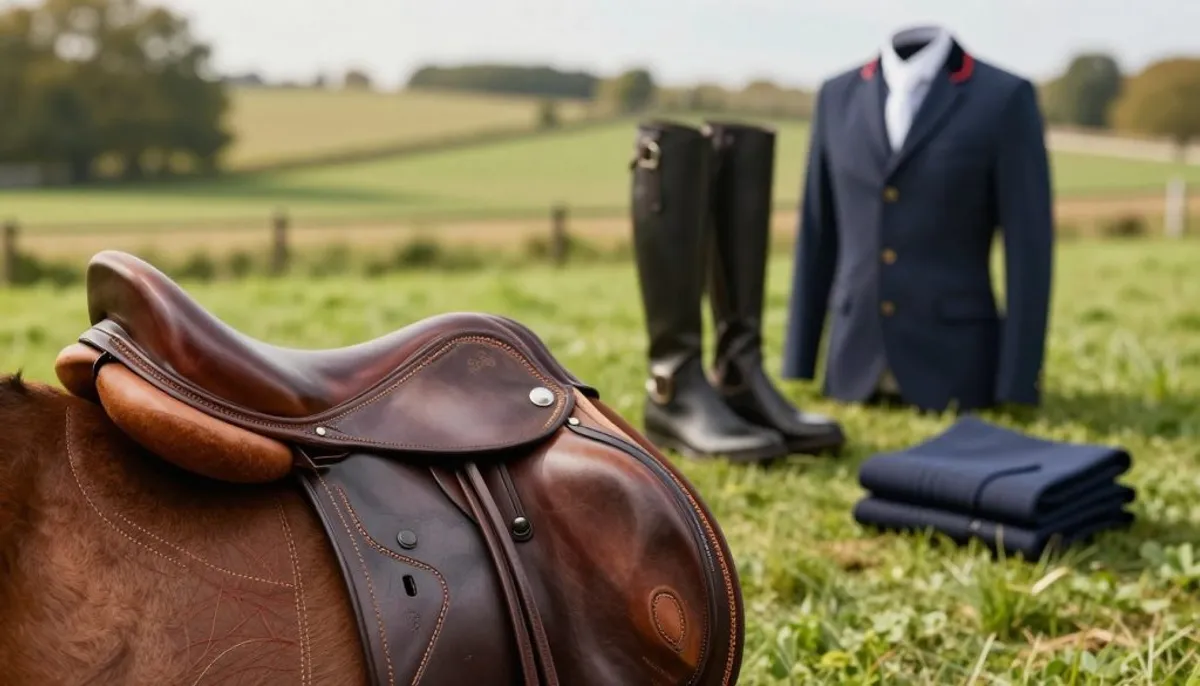
For those who want the best, La Sellerie Française offers luxury products. There are unique pieces, custom-made or in limited editions. They are entirely made in France, a guarantee of their high artisanal quality and the made in France label.
Key Points
- English riding requires reliable equestrian equipment for safety and precision.
- In classical riding, fit is as important as the quality of materials.
- Prioritizing essentials avoids unnecessary purchases, especially at the beginning.
- The choice varies according to dressage, show jumping, and flat work.
- In France, the weather directly influences comfort and grip.
- La Sellerie Française offers an artisanal and made in France approach aimed at high standards.
Why Equip Properly in Classical Riding
In classical riding, equipment is very helpful. It makes riding calmer and aids in progression. The right gear supports movements, prevents accidents, and facilitates learning techniques, especially for beginners.
It's good to call the club in France before buying. Many offer equipment for loan or rent at the beginning. This allows you to test size and comfort before making a choice.
Rider Safety and Fall Prevention
Riding exposes you to the risk of falling, even at low speeds. Wearing a helmet, appropriate shoes, and a torso protector reduces the risk of injury, especially to the head and body.
Loose clothing can easily get caught. Wearing fitted clothes limits this risk and provides reassurance during practice.
Comfort, Freedom of Movement, and Better Position in the Saddle
Being comfortable changes a lot. You are less tense and more stable in the saddle. Long pants help avoid chafing and promote good leg positioning.
With suitable clothing, movements are easier. During training sessions, you quickly realize: you tire less and stay focused longer.
Respect for the Horse: Avoiding Pain and Irritation from Inappropriate Equipment
Poor equipment can injure the horse. For example, a poorly fitted saddle or a bridle that is too tight can cause problems.
Respectful riding seeks to properly adjust the equipment. Regularly checking the gear, especially if the horse has physically changed, is crucial for its well-being.
| Objective | What to Check | Concrete Impact |
|---|---|---|
| Safety | Helmet of the right size, shoes with a heel, straps fastened | Less risk of trauma and foot getting stuck in the stirrup |
| Comfort and Position | Fitted clothing, flat seams, long pants | Less chafing, more stable leg, more precise movements |
| Horse Welfare | Balanced saddle, girth without pinching, bits and bridle well adjusted | Less irritation, better availability, lighter contact |
- Simple Tip: note what is loaned from the club after a riding lesson (size, feel, points of discomfort).
- What to Do Before Investing: test over several sessions, or in riding clinics, to validate comfort over time.
Approved Riding Helmet: Safety Priority
In English riding, the helmet is crucial from the first ride. It reduces risks in case of a fall. It is essential for the safety of riders, at home or in a club.
In France, wearing a helmet is mandatory until the age of 18. Adults are also strongly encouraged to wear one. During competitions, its use is systematically checked, just like the uniform. It is wise to get used to it from the first lessons.
Standards and Certifications to Check: CE VG1 and Recognized Approvals
Always check the label before the style. A helmet marked CE VG1 is often required in clubs and competitions. Acronyms like BSI, ASTM, and SEI are also important, used to compare helmets.
These certifications do not make a helmet indestructible. However, they prove that it has been tested. This is valuable help for choosing among different models. And it's easy to check before purchase.
Selection Criteria: Size, Ventilation, Harness/Chin Strap, and Attachment
A good helmet should not squeeze or slide. It stays in place even if you move your head. Adequate ventilation is crucial, especially in summer or during long sessions.
Also check the harness and chin strap: they should be easy to adjust. A well-designed helmet does not move, even in case of a fall. This can make a big difference.
Helmets Loaned in Riding Lessons: Test Before Investing
Riding centers often lend helmets to beginners. This is an opportunity to find the model that suits you. Pay attention to the feel: warmth, weight, pressure. Note what is uncomfortable.
When you buy your helmet, consider these aspects. A perfect fit is more important than style. If you want to compete, you will already know what suits you.
Reference Brands (High-End and Accessible): GPA, Samshield, Antarès, Egide…
Some brands are recommended for their quality. Egide, GPA, Samshield, and Antarès offer excellent finishing. For tighter budgets, Lamicell and Choplin are good options. Just, always check the certifications.
The most important thing is to stay practical: comfort, fit, certifications, and condition of the helmet. A damaged helmet should be replaced, even if it seems intact. This is an essential rule for safety.
| Point to Check | What You Should Feel | Why It’s Useful | Club Tip |
|---|---|---|---|
| Size and Head Circumference | Firm hold, without pain | Stability at trot and jump | Try for 5 minutes, then retest |
| Harness/Chin Strap | Simple adjustment, no strangling | Avoids helmet tilting | Speak aloud: the strap should not pull |
| Three-Point Attachment | Helmet well “locked” on the head | Better hold in movement | Ask the instructor to check the fit |
| Ventilation | Less heat, less sweating | Comfort during long riding lessons | Compare an indoor session and an outdoor one |
| Certifications | Visible and readable marking | Clear framework for equestrian competition | Check the label before paying, especially for a CE VG1 helmet |
Body Protector and Airbag for Show Jumping and Cross-Country Riding
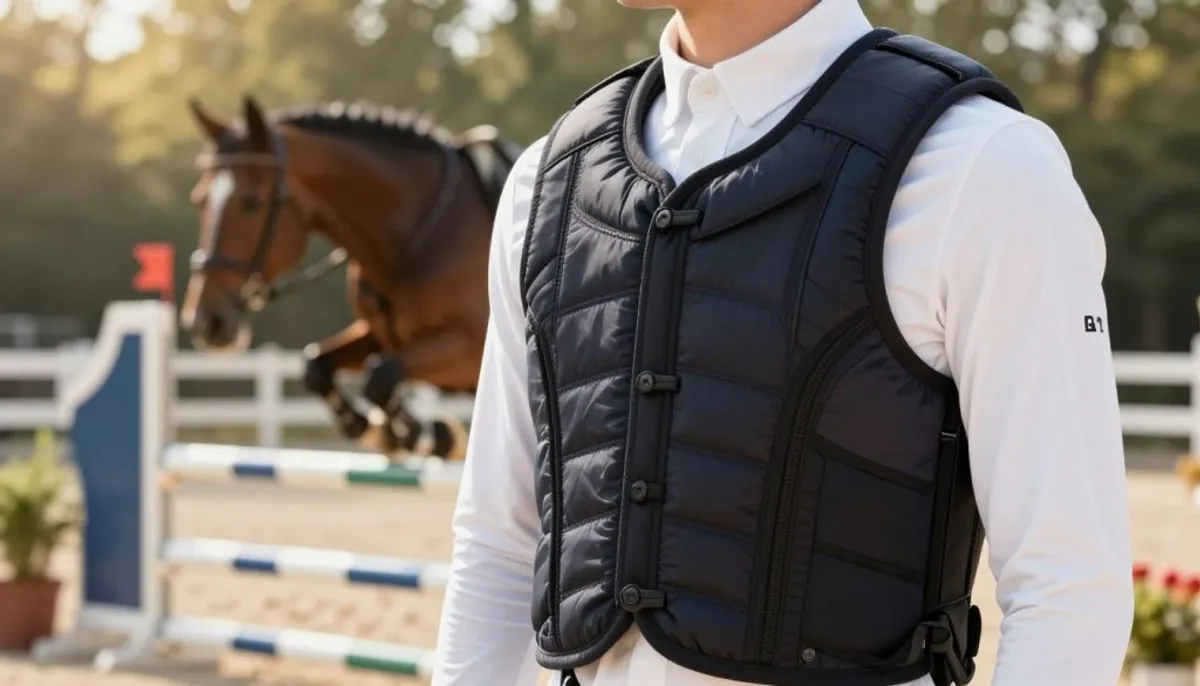
In show jumping, we aim for perfection in trajectory and rhythm. But, a fall can happen quickly, even with a well-trained horse. For all riders, a body protector is essential, especially at high speed in cross-country.
Why Protect the Back, Ribs, and Vital Organs in Case of a Fall
Protecting your back, ribs, and vital organs is crucial. In the heat of action, one can forget the danger. Wearing protection should be automatic, just like wearing a helmet.
A fall can vary: to the side, flat, or after a jump. Cross-country presents more challenges with various obstacles. A good vest allows for shock absorption while breathing properly.
Differences: Classic Vest, Dorsal Protector, Inflatable Airbag
Each protection has its specific utility. The classic vest is padded, protecting the back and ribs. It is easy to put on, even over a jacket.
The dorsal protector mainly protects the back. It is lightweight and unobtrusive, perfect for daily training.
The airbag inflates automatically in case of a fall. It envelops the rider, protecting the chest and neck. Some models can be used with a traditional vest.
| Type | Highlighted Areas | Feelings on Horseback | Frequent Use |
|---|---|---|---|
| Classic Vest | Back, ribs, torso (continuous protection) | Firm support, a bit warmer, very stable | Cross-country, training, equestrian competition |
| Dorsal Protector | Spine, lower back (targeted) | Very lightweight, unobtrusive under a jacket | Show jumping, flat work |
| Inflatable Airbag | Chest, back, neck depending on design | Soft at first, protective volume after activation | Cross-country and fast courses, as a complement or alone depending on regulations |
Choose According to Discipline and Certification (Level 2 or 3)
The choice of protection varies according to the discipline. For cross-country, a wide protection is preferable. For show jumping, freedom of movement is paramount.
The certification of the vest is important. Depending on the competitions, the rules differ. Make sure your equipment is compliant.
Adjustment: Chest Circumference, Shoulder Height, Compatibility with Jacket
A good vest must be well-adjusted. Take your measurements precisely. Try it on while moving to test comfort.
If you choose an airbag, ensure there is enough space for inflation. The right vest should be comfortable and secure, without hindering you.
Boots, Shoes, and Mini-Chaps: Foot Stability and Leg Protection
Footwear in riding is not just for looks. In English riding, they protect your feet and legs. They also prevent chafing and help you stay stable in the stirrup.
A simple tip for beginners: choose closed shoes with a small heel. This helps to block the foot, reduces the risk of slipping, and makes your movements more precise.
Leather boots are highly appreciated as they fit the shape of the leg well. They last over time and allow for good contact with the horse. They are especially favored in dressage and show jumping for better guiding of the lower leg.
Rubber or plastic boots are good when it rains or for stable chores. They protect from water and are easy to clean. However, they can be less comfortable to wear for long periods, especially in summer.
Boots are very practical, tall shoes for everyday use. They are easy to put on, comfortable for walking, and well-suited for moving between the stable and the arena.
With mini-chaps, you get the protection of a full boot. They protect well from the ankle up to the calf. This combo is perfect for progressing in riding without buying tall boots right away.
| Option | Stability Benefits | Protection | When It’s Most Useful | Reference Brands |
|---|---|---|---|---|
| leather riding boots | Shank that supports the lower leg, more consistent grip in the stirrup | Very good barrier against chafing and pinching | Regular lessons, dressage, show jumping, seeking finesse | Parlanti, Tucci, Joël Albert, Soubirac |
| Rubber/plastic boots | Correct support, but sometimes feels stiffer | Very good against water, average comfort over long periods | Rain, paddock, stable chores, tight budget | Ariat, Soubirac |
| boots + mini-chaps | Mobile ankle, leg wrapped, good compromise between precision and comfort | Good protection of the calf and stirrup strap | Beginning, training, riders who walk a lot | Ariat, Freejump |
When choosing, test them in a riding position. The heel should be well placed, the foot flat, and without hard points at the closure. Often, these small details make a big difference from the first times.
Riding Pants and Technical Clothing: Grip and Comfort
When riding a lot, you understand the importance of good equipment. A suitable riding pant allows you to stay in place without discomfort at the knees or waist. This is essential for long days in riding training.
Riding Breeches: Limit Chafing and Irritation, Improve Seat Position
Riding breeches protect against wear caused by friction. They prevent irritation, ideal for staying focused on horseback. This helps maintain a stable and precise position.
Grip and Reinforcements: More Stability for Riding Techniques
The grip helps you stay in the saddle without sticking, especially with the right gear. It is perfect for improving stability and balance on horseback. Reinforcements extend the life of the pants against wear.
- Knee grip: good compromise for moving easily on foot and horseback.
- Full grip: more support, appreciated in technical sessions and deep seats.
- Fabric reinforcement: more classic feel, often very durable.
Adapting Material to Weather: Lightweight, Lined, Breathable
In summer, choose lightweight and breathable textiles to stay cool. In winter, lined pants keep you warm, especially while resting. Stretch fabrics prevent excess fabric accumulation in the boots.
| Conditions | Preferred Material | What It Changes in the Saddle |
|---|---|---|
| Heat, intense sessions | Breathable, quick-drying, micro-perforated | Less overheating, better regulation |
| Mid-season, variable weather | Thin softshell, stretchy, water-repellent | Stable comfort, protects from wind |
| Winter, early morning | Warm lined, brushed interior | Muscles more “flexible,” less stiffness |
Colors and Codes: White in Equestrian Competition, Classic Tones Daily
In competition, white dominates for competition outfits. Black, beige, and navy blue are practical day to day. A suitable shirt or polo under the jacket makes all the difference. Brands like Samshield, Cavalleria Toscana, and Animo offer well-tailored cuts. Horse Pilot is renowned for its well-ventilated technical clothing.
Riding Gloves: Grip on the Reins and Finesse of Aids
In English riding, having a stable hand is crucial. Riding gloves increase grip on the reins and ensure consistent contact. This is true even when the horse leans heavily. You therefore better feel the movements and the aids become clearer.
These gloves also protect your hands. They reduce blisters and friction, especially at the finger bends. This makes riding more enjoyable, even during long sessions. In rainy or cold weather, choosing the right material can keep your hands flexible.
The type of gloves depends on your experience and what you feel. A glove that is too large can slip; too tight, it can hinder blood circulation. You should seek a perfect fit, with a gripping palm and without irritating seams.
| Profile | Recommended Type of Riding Gloves | Benefits for Aids | Rider Comfort and Use |
|---|---|---|---|
| Beginner | Thin knit with anti-slip dots | Simple grip, clear markers, less slipping reins | Very flexible, easy to put on, practical in lessons and on the lunge |
| Intermediate | Reinforced synthetic, textured palm | Consistent contact, better stability at sitting trot and over jumps | Wear-resistant, good compromise for variable weather |
| Expert | Leather + breathable mesh, precise grip | Maximum finesse, easier micro-adjustments in hand | Durable, very pleasant over time, requires light maintenance |
To perfect your routine, use one pair for daily training and another for wet days. In any case, choosing the right riding gloves improves equestrian equipment. They make the aids more precise and the experience more comfortable.
Saddle and Girth: The Heart of Equestrian Equipment
The saddle and girth play an important role in riding equipment. They ensure stability, comfort, and help to transmit commands clearly. A precise adjustment enhances the experience from the very first moments.
The saddle distributes the rider's weight across the horse's back. This allows for direct contact, avoiding painful pressure points. If everything is well adjusted, the horse can move freely, whether at a trot or a gallop.
Role of the Saddle: Weight Distribution and Rider/Horse Contact
A good saddle follows the shape of the horse's back while avoiding pressure on the withers. The seat and knee rolls help position the rider's leg without pinching. This results in better stability and allows for more precise application of the aids.
Risks of an Inappropriate Saddle: Pain, Defensive Reactions, Rider Imbalance
An unsuitable saddle can cause pain and irritation on the horse's skin. The horse may then show signs of discomfort, such as bucking or refusing to move forward. The rider may also lose balance while trying to compensate for these issues.
Choosing According to Discipline: Dressage Horses, Show Jumping, Flat Work
For dressage, a deep seat that allows for close contact with the horse is essential. In show jumping (Concours de Saut d'Obstacles), it is preferable to have a saddle that facilitates forward movement. For flat work exercises, a versatile saddle promotes changes in direction and rounded movements without limiting the animal.
Leather is often chosen for its natural appearance, while synthetic offers easier maintenance. Brands like Wintec, Bates, or Antarès offer various options suited to every budget. The main goal should be the perfect fit between the horse and its saddle, before considering aesthetics.
Types of Girths: Elastic, Dressage (Shorter), Anatomical (Balanced Pressure Distribution)
The girth ensures that the saddle stays in place without overly tightening the horse. An elastic girth offers some flexibility while needing to stay well in place. The dressage girth, which is shorter, often allows for better freedom of movement for the horse.
As for the anatomical girth, it adapts to the horse's structure for even pressure distribution. It is particularly suitable for sensitive horses and ensures comfort even during intense training sessions. It is crucial to always check that everything is properly adjusted and that there is no pinching.
| Equipment | Main Advantage | What to Watch For | Frequent Use |
|---|---|---|---|
| Dressage Saddle | Long leg, close contact | Shoulder freedom, wither clearance | dressage horses, flat work |
| Jumping Saddle | Balance in suspension, more open seat | Stability on landing, suitable flaps | Show jumping |
| Elastic Girth | Feeling of flexibility when girthing | Avoid slipping and excessive tension | Mixed use depending on the horse |
| Dressage Girth | Shorter, often more freedom around the elbow | Exact length and position of buckles | dressage horses |
| Anatomical Girth | Better distributed pressure, targeted comfort | Shape adapted to the breast and girth passage | flat work, show jumping depending on morphology |
Simple Tip: after brushing the horse, run your hand under the girth and along the padding. The skin should remain soft and not overheated, with smooth hair. This simple check ensures that the equipment is comfortable for the horse on a daily basis.
Bridle, Noseband, and Bit: Fine Communication and Respect for the Mouth
In riding, headgear is essential. A good bridle and an appropriate bit clarify communication. This allows for gentle commands without having to pull.
Why the Mouth is a Sensitive Area: Priority on Gentleness and Adjustment
The horse's mouth is very sensitive. A bit that is too large can move and pinch. If it is too small, it can cause injury.
Comfort also depends on the thickness of the bit and its shape. Properly adjusting the tack helps: the headpiece well adjusted and a noseband that does not hinder breathing.
Overview of Options: Simple/Dual Bridles, Combined Nosebands
A simple bridle is often sufficient. It ensures clear instruction, useful for consistency. But a dual bridle offers more options, requiring a steady hand.
Combined nosebands help keep the bit in place for certain horses. They must be gentle. If too tight, they hinder the horse.
Types of Bits Encountered: Simple Joint, Pelham, Pessoa, Needles… and Their Effects
Each type of bit has a different effect. A simple joint bit acts directly. The Pelham, with its leverage effect, requires more precision.
Pessoa bits change the horse's head position. They come in several models. For example, the Waldhausen Pessoa Gag simple joint or at EH Equestrian. Beris offers a straight leather bit, good for sensitive horses.
| Option | What the Horse Might Feel | Points of Caution in Equestrian Equipment |
|---|---|---|
| Simple Bridle + Simple Joint Bit | Direct contact, quick response if the hand is steady | Exact size, rings that slide without pinching, corners protected |
| Dual Bridle | Finer actions, more precise adjustments | Millimeter adjustment, compatible mouthpieces, reins well separated |
| Combined Noseband | Stability, feeling of frame if it is soft | Do not tighten, check jaw freedom and breathing |
| Pessoa Bit (Gag) | Changing action depending on the ring, tendency to lift | Progressive use, calm hand, consistent rein adjustment |
| Beris Straight Leather Bit (HARD/SOFT) | Softer contact, possible acceptance by some horses | Leather maintenance, wear control, choice of rigidity based on sensitivity |
How to Choose: Morphology, Sensitivity, Temperament, Gradual Testing
The choice depends on the shape of the horse's mouth and its sensitivity. The horse's character also influences, especially during rhythm changes.
Testing equipment one at a time is the best way to see what works. With the right bridle and bit, the rider can remain gentle and the horse responsive.
Stirrups, Leathers, and Accessories: Safety and Professional Rider Position
The lower leg controls balance, direction, and impulse. For professional riders, choosing the right equipment is crucial. It greatly enhances the feel on the horse. A good support helps stabilize the leg, especially at high speeds or near obstacles.
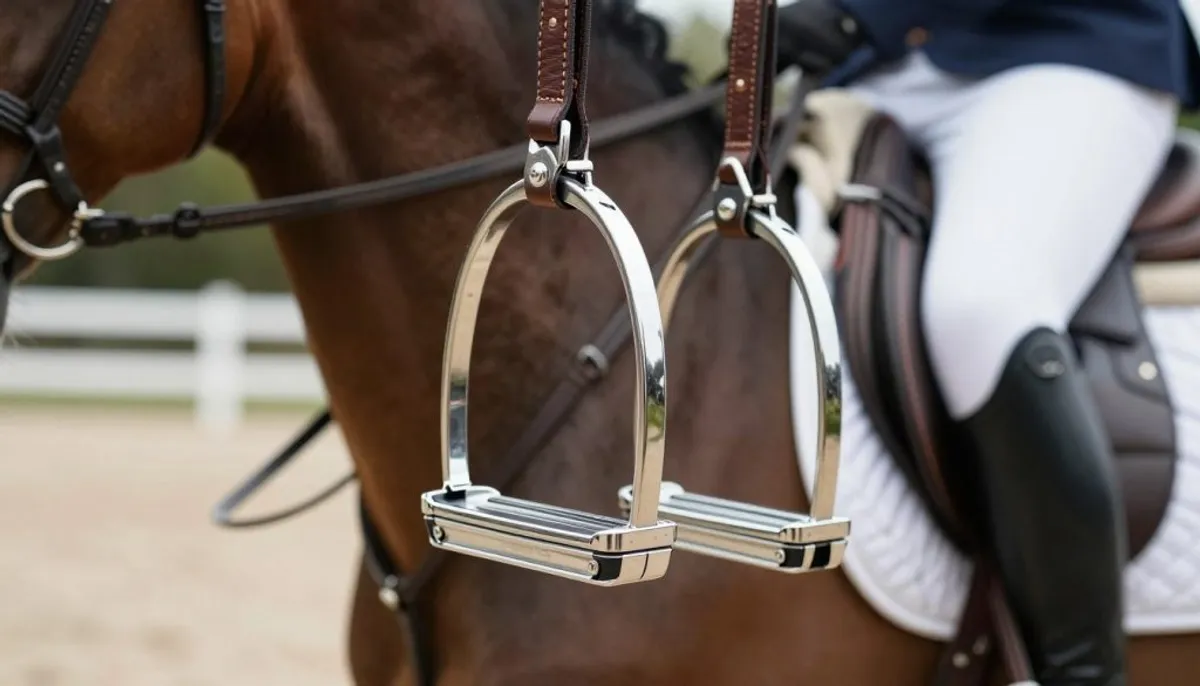
Safety stirrups prevent getting stuck in case of a fall. Flex-On – classic safety stirrups IR-ON S (Chrome) is recognized for its easy opening and comfort. It requires a well-gripping floor that does not hinder the ankle, and the right width for the boot.
Leathers, although discreet, play a big role. Soft and durable materials help maintain a constant position. Ovation – Classic Comfort Leathers and Can-Pro Equestrian – M. Toulouse MTL Double Leather 54" leathers are appreciated for their quality and comfort.
Spur accessories are there to refine the aids, precisely. Sprenger – classic spurs with 30 mm roller and Centaur – classic spurs with 3/4" roller offer a gentle action. Spur straps from Valencia ensure good support without distorting the boot.
A martingale can help guide the hand and reduce sudden movements. BR – German leather martingale with reins is useful if well adjusted. LeMieux, Feeling, and Fleck are valued for their durable and practical finishes.
| Element | What It Brings to Daily Life | Adjustment Points to Check | Cited References |
|---|---|---|---|
| Safety Stirrups | Stable support, foot release in case of incident, confidence over jumps | Width suited to the boot, non-slip floor, comfortable orientation | Flex-On – classic safety stirrups IR-ON S (Chrome) |
| Leathers | Constant length, firmer contact, leg that descends without forcing | Left/right symmetry, regular holes, buckles that do not create thickness | Ovation – Classic Comfort Leathers; Can-Pro Equestrian – M. Toulouse MTL Double Leather 54" |
| Spur Accessories | Finer aids when the leg stays calm, progressive action with roller | Branch length, position on the boot, tightening of straps without hindrance | Sprenger – classic spurs with 30 mm roller; Centaur – classic spurs with 3/4" roller; Valencia – classic leather spur straps |
| Martingale (depending on use) | Clearer frame for the hand, limits attitude deviations on certain horses | Height at the breast, length of reins, neck and mouth freedom | BR – German leather martingale with reins |
Horse Protection and Blankets: Warmth, Rain, Drying, and Insects
Choosing the right protections for your horse brings peace of mind. Against humidity, cold, or insects, an adapted routine avoids problems. With the right equipment, the horse remains comfortable.
Blankets: Waterproofing, Breathability, Weight, and Maintenance
Blankets must be waterproof but breathable. They should not cause overheating, especially if the horse moves a lot. Their weight depends on the perceived cold and the animal's living habits.
Brands like Horseware and Equithème offer varied options. Maintenance is crucial: wash and dry well, and check the straps to avoid irritations.
Choosing According to Season, Shearing, Age, and Health
The weather influences, but the important thing is to feel on-site what your horse needs. Shorn or older horses may need blankets earlier. Fragile horses require special attention.
| Horse Profile | Priority of Choice | Desired Effect | Point of Caution |
|---|---|---|---|
| Shorn (regular work) | Warmer and stable blanket | Horse comfort without shivering | Monitor sweating and irritations |
| Unshorn (living in the field) | Rain protection + covering cut | Dry coat longer | Avoid a blanket that is too heavy that crushes the hair |
| Senior or sensitive horse | Gradual insulation and gentle adjustment | More regular temperature | Daily check of shoulders and withers |
| Horse prone to chafing | Smooth lining and precise size | Protected skin | Check alignment of straps and shoulder freedom |
Drying After Work: Importance of Textiles that Evacuate Moisture
Using a drying blanket after working helps the horse. It removes moisture and maintains temperature. This is especially useful in spring or autumn.
For a very wet horse, first remove the excess water with a heat knife.
Summer Protection: Insects and Sun, Depending on Local Conditions in France
Summer blankets protect from cold, insects, and sun. They are useful against mosquitoes and during high heat. Choose a lightweight and airy model for the horse's comfort.
For daily use, have a complete grooming kit. In competitions or travel, plan for a halter, a lead rope, and a first aid kit.
Conclusion
In the world of English riding, safety comes first. A certified helmet and, for certain activities, body protection are essential. These pieces of equipment can really help if you fall.
Comfort should not be overlooked: stable shoes, suitable pants, and comfortable gloves are important. They help to have a good grip and feel well mounted.
Progressing in riding means gradually buying what you need. Start with the essentials. Then, try to borrow or rent in a club before buying. For those who practice more often or want to compete, adjust your equipment according to your needs and the discipline, from dressage to show jumping, including cross-country.
For the horse, properly adjusting the gear is crucial. A suitable saddle and girth protect its back and improve balance. A good bridle and a carefully chosen bit respect the horse's mouth. Accessories and blankets protect against bad weather, promote recovery, and keep insects away. Choosing the right equipment prevents chafing and tension issues.
For those seeking quality and precision, La Sellerie Française offers high-end equipment. Whether custom-made or in limited series, everything is manufactured in France. This equipment is designed to last. The finishing aims for both comfort and performance.
FAQ
Why is equipment so important in English riding?
In English riding, equipment ensures safety, comfort, and good communication between the rider and the horse. Good equipment also helps improve performance in equestrian competitions.
What should you buy first when starting riding lessons?
First, buy an approved helmet, closed shoes with a small heel, long pants, and gloves. Ask your riding center for advice on the rest; they often offer equipment for loan or rent at the beginning.
How to adapt your riding equipment to the weather and type of activity?
Choose clothing suited to the season, terrain, and intensity of your activity. In summer, wear breathable textiles. In winter, opt for lined layers and a windproof jacket for outdoors. For long outings, prefer technical materials.
Is wearing a helmet mandatory in classical riding?
The helmet is mandatory for those under 18 and highly recommended for adults. It protects the head in case of falls, even at low speeds.
What standards should be checked for an approved riding helmet?
Check that the helmet complies with the CE VG1 standard. You can also look for BSI, ASTM, and SEI approvals. Certification and fit are crucial.
How to properly choose the size and adjustment of a riding helmet?
The helmet should fit well, without pressing or moving. Ensure it offers good ventilation and an adjustable harness. Opt for a model specific to riding.
Can you test a helmet in the club before buying?
Yes. Many clubs lend helmets for lessons. This allows you to test before buying.
What helmet brands are references in English riding?
For high-end, look at Egide, GPA, Samshield, and Antarès. For more economical options, Lamicell and Choplin are good. Certification is more important than style.
Why wear a body protector or airbag in show jumping?
These protections help reduce the risk of injury during falls, especially in show jumping, cross-country, and eventing.
What is the difference between classic vest, dorsal protector, and inflatable airbag?
The classic vest protects the back and ribs. The dorsal protector focuses on the back. The airbag inflates during a fall for instant protection.
How to choose the certification of a vest or airbag (level 2 or 3)?
The choice of certification depends on your activity and the level of protection desired. Ask for advice in the club, considering your experience and goals.
How to properly adjust a body protector?
Measure your chest circumference and shoulder height. The protection should not limit your movements. Ensure it is compatible with your competition jacket.
What shoes to choose: boots, shoes, or mini-chaps?
Start with small-heeled shoes for good support in the stirrup. Boots and mini-chaps are practical for daily use. Boots are ideal for competitions.
Leather or rubber boots: which to prioritize?
Leather is durable and flexible, while rubber is economical and easy to maintain. Your choice will depend on your activity and frequency of practice.
What brands are benchmarks for riding boots and shoes?
Look for Parlanti, Tucci, Joël Albert, Freejump, Soubirac, and Ariat for reliable quality. The important thing is foot stability in the stirrup.
Why wear riding pants instead of regular leggings?
Riding pants reduce chafing and irritation. They improve grip and help achieve a better position in the saddle.
What are the grip and reinforcements on riding breeches for?
They ensure better grip and stability in the saddle. This is useful for technical and precise riding.
What technical clothing to choose according to the season?
In summer, opt for lightweight materials. In winter, prefer lined clothing to stay warm without being bulky.
What colors to wear in equestrian competition?
White is standard for competition pants. Daily, prefer classic colors like black, beige, or navy blue.
What clothing is expected in competitions (shirt, polo, jacket)?
Wear a competition shirt under the jacket. Depending on the regulations and weather, a polo may also be appropriate.
What brands are recognized for competition outfits and technical clothing?
For quality shirts, look at Samshield, Cavalleria Toscana, and Animo. Horse Pilot is top for technical clothing.
Why wear riding gloves?
Gloves improve grip on the reins, protect your hands, and facilitate communication with the horse.
How to choose gloves based on your level?
For beginners, thin knit gloves are sufficient. With more experience, choose synthetic gloves for more durability. Experts will appreciate leather for its grip.
What is the role of the saddle in English riding?
The saddle distributes the rider's weight and influences comfort and stability. It is essential for a good position in the saddle.
What risks come with an ill-fitting saddle?
An unsuitable saddle can cause pain and movement issues for the horse, and affect the rider's balance.
How to choose a saddle according to the discipline: dressage, show jumping, flat?
A dressage saddle allows for stable contact. A show jumping saddle offers more freedom. For training, a versatile saddle may suffice. Adjustment is key.
What is the purpose of the girth and how to choose it?
The girth ensures safety by keeping the saddle in place. You need a suitable girth to avoid pressure. Choose according to your needs: elastic, short for dressage, or anatomical for better comfort.
Why must the bridle, noseband, and bit be well adjusted?
A precise adjustment is essential to avoid discomfort and ensures gentle communication between the rider and the horse.
What options exist for bridles and nosebands?
You will find simple bridles, dual bridles, or those with combined nosebands. Choose according to your horse and discipline. Simplicity is often the best option.
What types of bits are most commonly encountered and what do they serve?
There are many types of bits, such as the simple joint or the pelham. Each type has a different effect. Choose according to your horse and your goals.
Can you give concrete examples of “classic” bits?
For example, Waldhausen offers a Pessoa Gag simple joint. EH Equestrian has models like the Pessoa Gag 3 pieces. Beris offers leather bits, both HARD and SOFT.
How to choose a bit without making a mistake?
Consider the morphology of your horse and its temperament. Progress through testing under the eye of an instructor. Gentleness and patience are fundamental.
Why do stirrups and leathers matter so much for position?
They improve leg stability and precision in the saddle. This is vital for performance, especially in classical riding and show jumping.
What are the advantages of safety stirrups?
Safety stirrups prevent the risk of getting stuck in case of a fall. Flex-On offers models that combine stability and safety.
Do you have examples of useful leathers and accessories?
For leathers, look at Ovation or Can-Pro Equestrian. For accessories, Sprenger spurs or Centaur are good options, with straps like those from Valencia.
What brands are often cited for accessories and equipment durability?
A: LeMieux, Sprenger, Feeling, and Fleck are reference brands for their reliability and comfort.
What are horse blankets for and how to choose them?
Blankets provide protection against cold, humidity, and insects. Check for waterproofing, breathability, and ease of maintenance when making your choice.
What criteria to consider based on the horse (shearing, age, health)?
Consider the season, temperature, age, and health of your horse to choose the appropriate blanket.
How to dry the horse after work, especially in winter?
Use textiles that evacuate moisture to avoid cooling down after exercise. A heat knife can also help in summer.
What summer protection to plan against insects and sun in France?
Protect your horse from insects and sun with specially designed blankets. Adapt according to exposure and local insects.
What blanket brands are reliable?
A: Horseware, Equithème, Greenfield, and HKM are reliable brands. Compare their products according to your needs.
What grooming equipment should you have in your kit?
Have curries, brushes, sponges, and a hoof pick. A first aid kit is also useful. Think about a halter and lead rope for competitions.
What is the best purchasing strategy as you progress (leisure, clinics, competition)?
Buy gradually, starting with safety and then moving to comfort and technicality. Test in the club before investing, especially for competition.
Where to find high-end, unique, and French-made equipment?
A: La Sellerie Française (https://laselleriefrancaise.com) offers high-end and custom-made equipment, manufactured in France. It’s ideal for superior quality equipment.