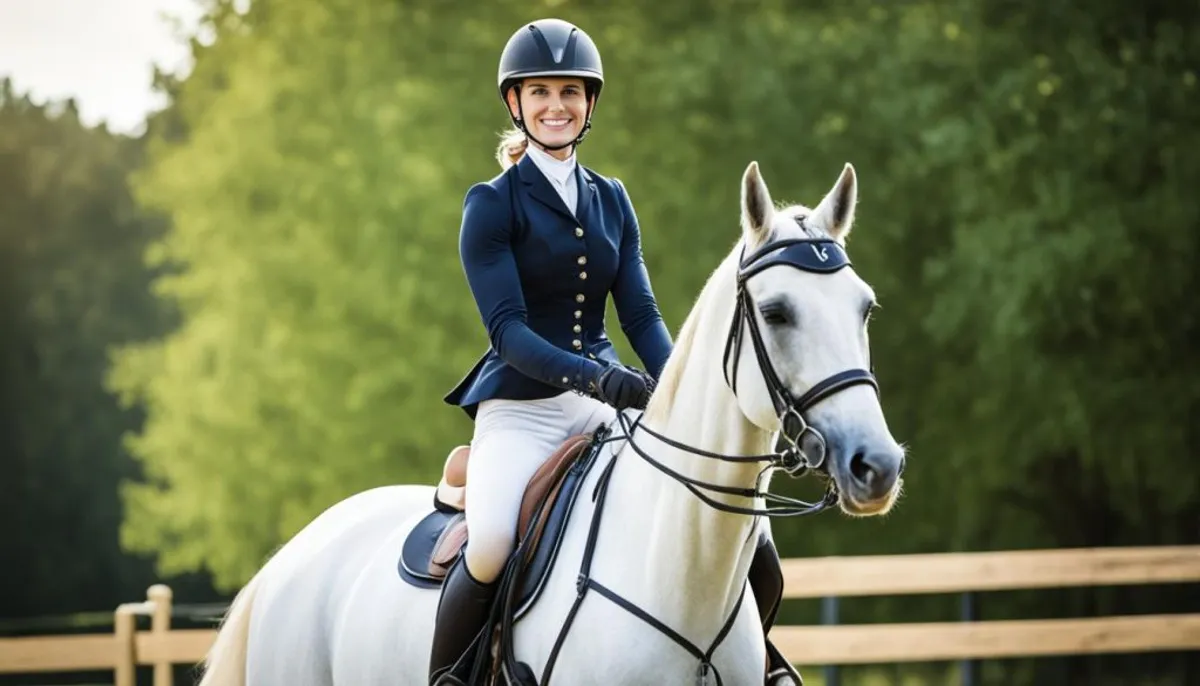
Equestrianism is exciting but requires more than just riding a horse. You need to have physical, mental, and interpersonal skills. This guide shows you the key qualities to be a good rider, whether you are a beginner or already experienced.
Key Points to Remember
- Understand the essential physical skills for equestrianism
- Develop the mental abilities necessary to succeed in equestrianism
- Cultivate the indispensable interpersonal qualities to work with horses
- Discover the recognized training and certifications in the field
- Gain solid practical experience to become a skilled rider
Introduction
Equestrianism is an exciting sport that requires physical, mental, and interpersonal qualities. Understanding the importance of these qualities is essential to becoming a skilled rider. This guide shows you the key skills to succeed in equestrianism. It also provides an overview of the aspects to master.
Importance of Qualities for Equestrianism
The qualities in equestrianism are crucial, whether you are a beginner or experienced. They help create a good relationship with the horse. They also ensure your safety and that of the animal. Riding with mastery requires cultivating specific physical, mental, and relational skills.
Overview of the Guide
This guide shows you the fundamental skills in equestrianism. You will learn about the important areas to work on. This includes:
- The essential physical skills, such as balance, coordination, strength, and endurance
- The key mental abilities, such as concentration, alertness, and stress management
- The indispensable interpersonal qualities, such as patience, pedagogy, and leadership
By mastering these skills, you will become a skilled rider. You will be able to have a harmonious relationship with your mount. You will be ready to face the challenges of equestrianism.
Essential Physical Skills
To ride safely, certain physical skills are required. Balance, coordination, strength, and endurance are crucial. These qualities are indispensable for riders.
Balance and Coordination
Being balanced and well-coordinated is vital for riders. It allows you to stay stable and follow the horse's movements. Good coordination also helps in communicating with the horse.
Muscle strengthening exercises, yoga, and Pilates are useful. It is also important to get familiar with the horse and get used to its movements.
Strength and Endurance
Strength and endurance are crucial for riders. Riding requires strength, especially in the legs, back, and arms. Endurance allows you to practice equestrianism for long periods without getting tired.
Regular training, with muscle strengthening and cardio, is recommended. The goal is to be fit for equestrianism.
Key Mental Abilities
Equestrianism is more than just a physical sport. It requires developed mental abilities. This section emphasizes the importance of concentration, alertness, and stress and risk management to excel.
Concentration and Alertness
Being a high-performing rider requires strong concentration. Riders must focus on their movements and the horse's balance. They must also be ready to react quickly to unforeseen events.
Alertness is essential. It helps riders stay cautious and act quickly in case of danger.
Stress and Risk Management
Equestrianism presents risks. Good stress management is crucial. Riders must remain calm and thoughtful, even under pressure.
This allows them to make the right choices and stay safe, for themselves and their mount.
By working on these mental abilities, riders improve their skills. They also fully enjoy equestrianism.
Indispensable Interpersonal Qualities
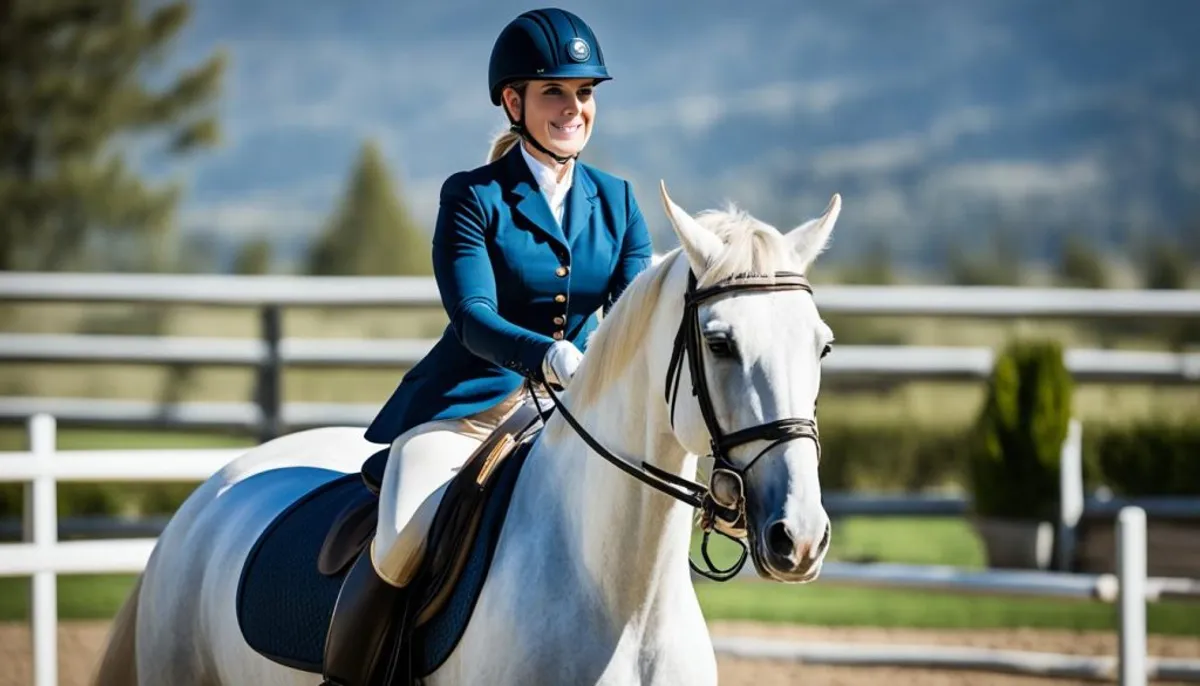
Equestrianism goes beyond technical skills. It requires key interpersonal qualities for a harmonious relationship with horses. Patience, pedagogy, communication, and leadership are essential for equestrian enthusiasts.
Patience and Pedagogy
Working with animals requires patience. Horses have their own personalities and learning paces. A good rider must be patient and use gentle pedagogy to guide the horses. This ability to adapt is key for building trust and progress.
Communication and Leadership
Equestrianism also requires developing communication and leadership. A rider must clearly convey instructions to the horses. They must also establish constructive dialogue with other riders. Knowing how to make decisions and guide their team is crucial for success.
With these interpersonal qualities, the rider creates strong bonds with the horses. They can also unite their team to achieve their goals.
Required Quality for Equestrianism
To have fun and stay safe in equestrianism, many qualities are needed. Whether you are a beginner or experienced, these skills are key to progressing with confidence. It's exciting.
The essential skills for equestrianism include:
- A balance and coordination to easily follow the horse.
- A strength and endurance to control the animal and perform exercises for long periods.
- A constant concentration and alertness to react quickly and effectively.
- An effective stress and risk management to remain calm in case of problems.
- A patience and pedagogy to communicate well with the horse.
- Communication and leadership skills to guide the animal and work together.
By working on these rider skills, you will be able to fully enjoy the required quality of equestrianism. It’s an incredible discipline.
| Required Qualities | Key Elements |
|---|---|
| Physical | Balance, coordination, strength, endurance |
| Mental | Concentration, alertness, stress management |
| Interpersonal | Patience, pedagogy, communication, leadership |
Recognized Training and Certifications
To improve your equestrian skills and obtain recognized qualifications, many equestrian training and federation certifications are available. Among them, the Professional Certificate of Youth, Popular Education, and Sport (BPJEPS) and the State Diploma of Youth, Popular Education, and Sport (DEJEPS) are highly sought after.
Professional Certificate of Youth, Popular Education, and Sport
The BPJEPS is a training program that allows you to become a riding instructor. It is awarded by the French Equestrian Federation (FFE). This certification proves that you have the necessary skills to teach equestrianism at all levels.
State Diploma of Youth, Popular Education, and Sport
The DEJEPS grants the title of instructor or riding coach. This higher-level training allows you to acquire advanced skills. You will learn to design and implement equestrian training programs.
| Diploma | Level | Objective |
|---|---|---|
| BPJEPS | Level 4 | Become a riding instructor |
| DEJEPS | Level 5 | Become an instructor or riding coach |
Essential Practical Experience
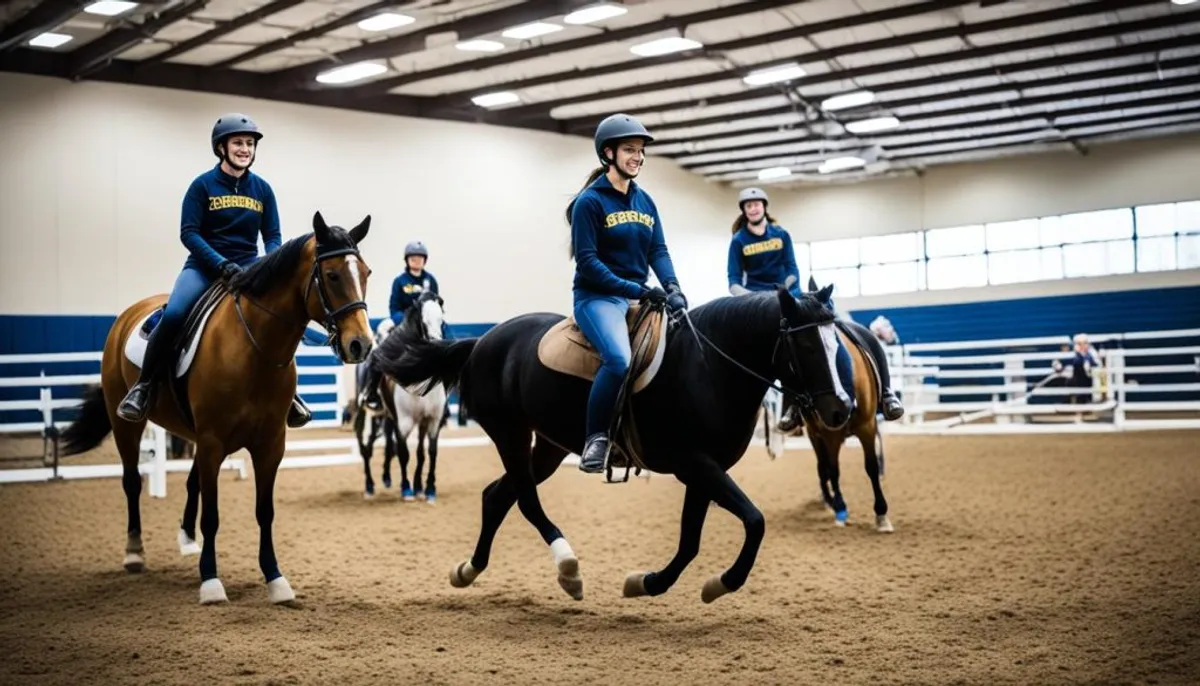
Theoretical training is important to become a good rider. However, practical experience in the field is crucial. Regular equestrian practice helps you become more skilled, whether in training or equestrian competitions.
Riding regularly is essential. It helps develop reflexes and improve technique. Each time is an opportunity to become better.
Regular practice also teaches important qualities. For example, patience, composure, and adaptability. These traits are key to becoming an experienced rider.
Practical experience is essential, whether in a club or at an equestrian center. It complements theoretical courses to become a well-rounded rider.
Career Opportunities and Advancement
The world of equestrianism is full of opportunities for a career in equestrianism and professional equestrian advancement. Positions such as riding instructor, instructor, and coach are in high demand. But there are also other paths like breeding, equestrian tourism, or managing an equestrian center.
Riding Instructor
The riding instructor teaches the basics of equestrianism. They help riders progress safely. Patience and good communication skills are essential for this role.
Instructor and Coach
The instructor riding coach goes beyond the instructor. They create programs to help riders improve. This profession requires expertise and rigor.
Other Professional Perspectives
There are also other paths in equestrianism, such as breeding or equestrian tourism. These fields allow you to showcase your equestrian skills and vary activities.
Conclusion
This guide has shown you the key qualities to excel in equestrianism. You have learned about physical, mental, and interpersonal skills. Now you know how to improve your strengths.
By developing your rider skills, you will achieve your goals and enrich your relationship with your horse. This guide on the required qualities for equestrianism prepares you to face challenges.
Continue to train and practice. The more experiences you have, the better you will be. Become an exceptional rider, capable of overcoming obstacles with elegance. Safe travels!
FAQ
What are the physical qualities required to practice equestrianism safely and effectively?
For equestrianism, you need to be balanced, coordinated, strong, and enduring. These physical qualities are crucial to mastering the horse and performing movements with ease.
Why are mental abilities essential in equestrianism?
Equestrianism requires concentration, alertness, and stress management. These skills help the rider stay attentive and react appropriately in difficult situations.
What are the indispensable interpersonal qualities for riders?
In addition to technical skills, equestrianism requires patience, pedagogy, communication, and leadership. These qualities help create a trusting relationship with the horse and share knowledge.
What training and certifications allow you to become a riding instructor or coach?
The Professional Certificate of Youth, Popular Education, and Sport (BPJEPS) and the State Diploma of Youth, Popular Education, and Sport (DEJEPS) are recognized for becoming a riding instructor or coach.
Why is practical experience in equestrianism so important?
Theoretical training is important, but practical experience is crucial. In training or competitions, it allows you to gain the ease and mastery necessary to become a skilled rider.
What are the career and professional advancement prospects in equestrianism?
Equestrianism offers numerous careers, such as instructor, coach, or trainer. Riders can also explore other fields, such as breeding, equestrian tourism, or managing an equestrian center.