
The corn holds a prominent place in the nutrition of modern equines. This cereal represents a very dense source of energy, perfectly suited to support athletic performance.
Its integration into the daily ration requires great caution. An imbalance can occur quickly if the proportions are not respected.

It is essential to view this grain as a energy supplement. It must not, under any circumstances, form the sole basis of your animal's diet.
Key points to remember
- Corn is a cereal with very concentrated energy.
- Its introduction must always be gradual and measured.
- Managing the starch content is crucial for digestive health.
- The ration must be adapted to the level of activity and individual needs.
- Consult an equine nutritionist for a tailored feeding plan.
- It is an ally for intense work, not for life in the pasture.
- The quality and freshness of the grain are non-negotiable criteria.
Introduction and general context
At the heart of good feeding management is the understanding of the animal's fundamental needs. Equine nutrition is a determining factor for the health and performance of each horse.
It requires a balanced diet, tailored to each individual.
Context of equine feeding
Modern equine nutrition relies on a solid foundation of quality forages. These cereals then complement to meet specific energy demands.
This personalized approach ensures that all horses receive essential nutrients.
The role of cereals in the ration
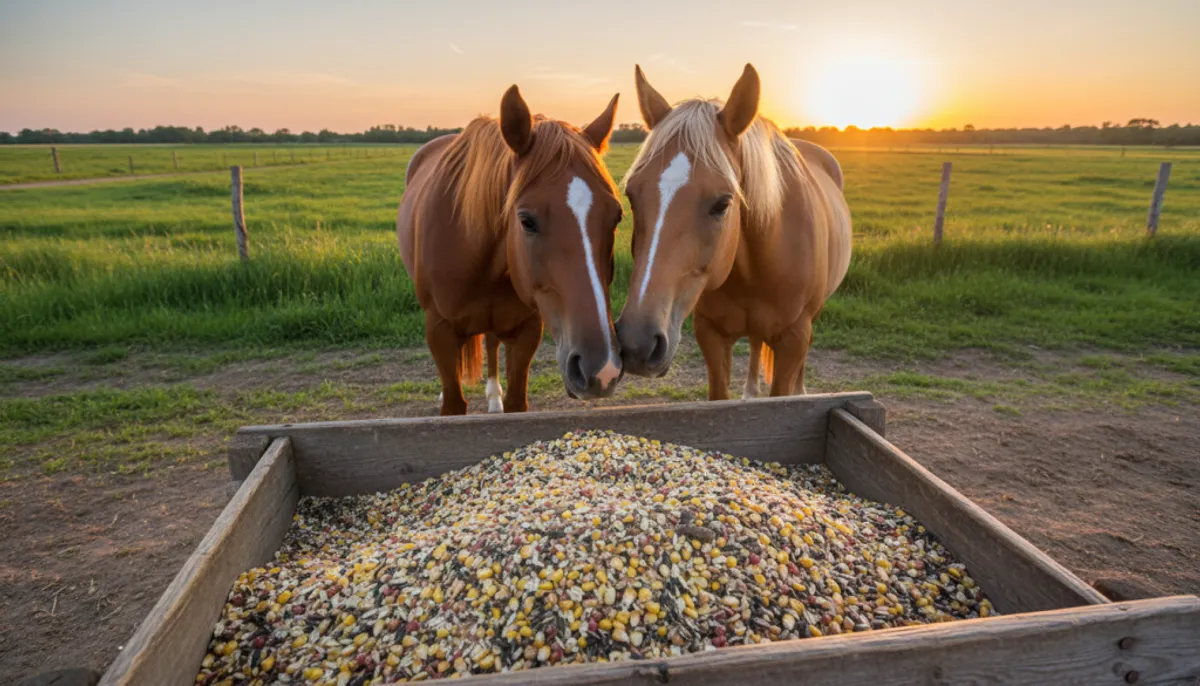
Grains, such as corn, serve as a valuable energy base. Their integration into the ration must be well thought out.
The goal is to maintain an optimal metabolic balance for long-term well-being. Quantities are adjusted according to age and work intensity.
When well managed, these cereals support effort while protecting the digestive system. Thus, corn is a true ally for sustained activities.
Advantages and disadvantages of corn for horses
Flaked corn, in particular, transforms the way equines assimilate starch. This cereal is a powerful supplement, but its use must be weighed carefully.
Nutritional benefits and improved digestibility
This grain is a source of energy that is very dense. It provides about 20% more calories than oats.
This energy density makes it a top choice for periods of intense work. The flaked form significantly improves digestibility.
A university study showed that it better regulates blood sugar levels than whole grain. This helps prevent metabolic disorders.
| Aspect | Whole corn | Flaked corn |
|---|---|---|
| Starch digestibility | Moderate | High |
| Main absorption site | Large intestine (risk of fermentation) | Small intestine (optimal) |
| Impact on blood sugar | More variable | Moderate glycemic index |
| Recommendation | Limit | Prefer for better assimilation |
Risks associated with overfeeding and digestive disorders
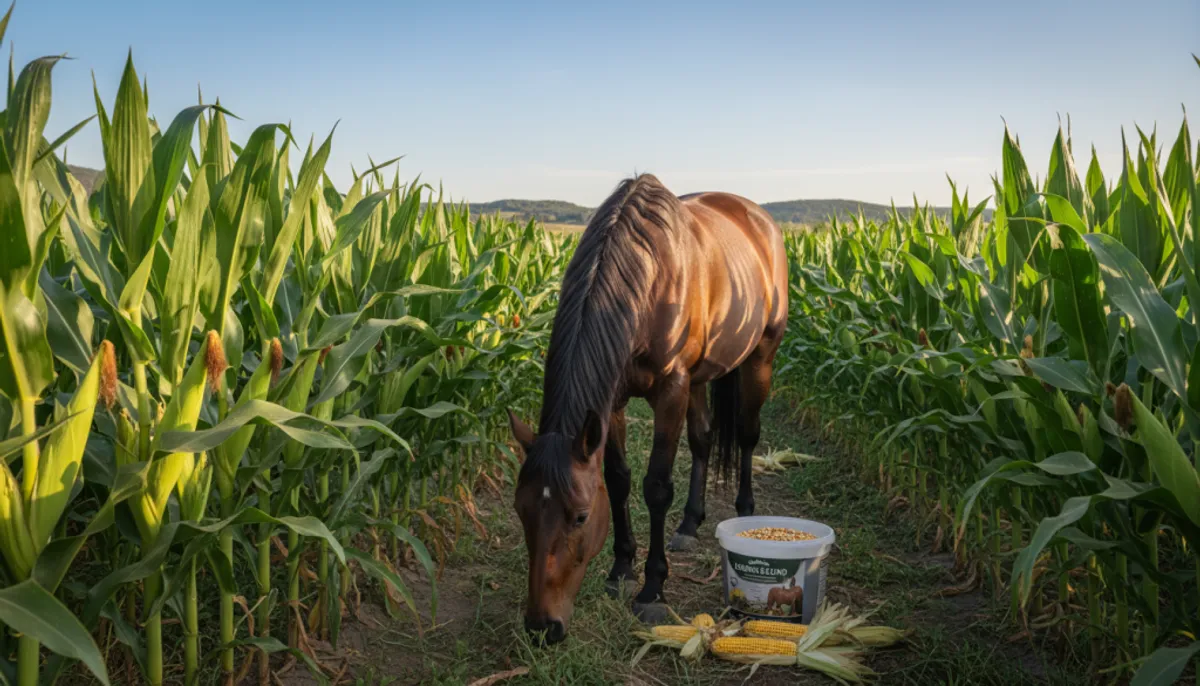
An excess is dangerous. Undigested starch ferments in the large intestine.
This can lead to severe colic. The crude protein content is also lower.
A protein supplement is often necessary. Always introduce these foods gradually, over several weeks.
Hay must remain the basis of the diet for sufficient fiber intake. This ensures sustainable digestive health.
Nutrition and digestibility of flaked corn
The nutritional analysis of flaked corn reveals a remarkably dense energy profile. This specific treatment transforms the cereal into a highly assimilable source of energy.
To use it effectively, one must understand its precise composition and its impact on digestion.
Macro and micronutrient composition
One kilogram of this cereal provides about 3500 kcal. This is much more than oats (3000 kcal/kg) or alfalfa (2000 kcal/kg).
Its composition includes 8% crude protein and 4% fat. Carbohydrates account for about 65% of the weight.
This high carbohydrate content directly influences the glycemic index. A protein supplement is often necessary to balance the ration.
| Feed (per kg) | Energy (kcal) | Crude protein (%) | Carbohydrates (%) | Fat (%) | Starch digestibility |
|---|---|---|---|---|---|
| Flaked corn | 3500 | 8 | 65 | 4 | High (85% gelatinized) |
| Oats | 3000 | 10-12 | ~60 | 5-6 | Moderate |
| Alfalfa | 2000 | 15-18 | ~30 | 2-3 | Not applicable (fiber) |
The flaking process at 95°C, as practiced by Reverdy, gelatinizes up to 85% of the starch. This greatly improves its digestibility in the small intestine.
This better assimilation reduces the risks of digestive disorders related to fermentation. The quality of the flakes is crucial to avoid mycotoxins.
Introduce this new source of cereal gradually. A two-week delay allows the intestinal flora to adapt.
Whole corn is less digestible because it has not undergone this thermal treatment. Nutrients are less accessible to the animal.
Practical advice and precautions to take
Here are the key recommendations for safely introducing and managing this dense energy source. A methodical approach preserves your animal's good health digestive health.
Dosage and gradual integration into the ration
Start with small amounts over a period of two weeks. This time allows the intestinal flora to adapt without digestive disorders.
Maintain a ratio of 1.5 kg of hay for 0.5 kg of cereal. This base is essential for the balance of the large intestine.
A sufficient water supply supports digestion. Provide about 35 liters of water per day.
Monitoring digestive health and veterinary recommendations
Observe each horse closely, especially those prone to sensitivities. Veterinary monitoring is essential.
Prebiotics can reduce blood sugar spikes by 18%. They optimize the assimilation of starch.
Interactions with other feeds and nutritional balance
Combine the flakes with other cereals such as oats or barley. A supplement of fat sometimes meets the needs.
Prefer high quality products, such as those containing 15% flaked corn. They ensure optimal digestibility.
Adjust the quantity according to the weight and intensity of work. Regular monitoring maintains the balance of the ration.
Conclusion
In conclusion, this processed cereal is a powerful nutritional tool when used judiciously. Flaked corn remains an exceptional source of energy, but its distribution requires rigor and professionalism.
A successful transition spans a period of ten to fourteen weeks. This period allows the intestinal flora to adapt. The balance between hay, proteins, and fats is fundamental to maximize benefits.
Consulting an equine nutritionist allows for tailoring the ration to the specific needs of each animal. Constant monitoring of behavior and droppings helps detect any early signs of digestive disorders related to starch.
By choosing high quality flakes and respecting the doses, this cereal becomes a valuable ally. It supports performance and vitality while preserving your horse's digestive health.
FAQ
What is the main advantage of corn in horse feeding?
Its main advantage is its high energy density. Rich in starch, it constitutes a very concentrated energy source, ideal for equines with high needs, such as those in intense work or having difficulty gaining weight.
What are the risks if I give too much corn to my horse?
An excess can disrupt digestion in the large intestine, leading to serious digestive disorders such as colic or laminitis. A ration that is too rich can also promote metabolic disorders. Therefore, the balance of the ration is crucial.
How to safely introduce flaked corn into the ration?
The introduction must be very gradual, over several weeks. Start with small amounts mixed with the usual food, such as hay or barley. This slowness allows the intestinal flora to adapt and preserves your horse's good digestive health.
Is flaked corn better than oats or barley?
It is not "better," but different. Compared to oats, it provides more calories per equal volume and has a higher glycemic index. Barley is in between the two. The choice depends on the specific needs of the animal, its health status, and the rest of its diet. An appropriate supplement makes a difference.