
In riding, achieving a harmonious contact is a major goal. This specific attitude allows your mount to move with ease and balance. The contact with the reins then becomes light and constant.
This skill is part of the official program for Gallops 6 and 7. It marks an important step in the progression of the rider and their partner.
The great horseman François Baucher emphasized a golden rule. One must ask often and reward a lot. This benevolent approach fosters understanding and mutual trust.
Working in this way develops the musculature of the horse. It also protects its back during sessions. A well-managed impulsion leads to a precise response and great lightness.
This learning requires time and patience. It profoundly transforms the relationship between human and animal. It is crucial to approach this exercise calmly, respecting the basic parameters.
Key Points to Remember
- This contact is a fundamental step in Gallops 6 and 7.
- The contact with the rider's hands must remain light and soft.
- It is essential for developing the musculature of the mount and protecting its back.
- Managing the impulsion is crucial for achieving a harmonious attitude.
- This way of working produces an effect of lightness and requires patience.
- One must approach learning calmly, focusing on the basics.
- It is a process that enhances the connection and relationship with the animal.
Understanding the Concept of Horse on the Contact
What does it really mean when we say a horse is on the contact? Expert Pierre Beaupère reminds us that this contact is a consequence, not an ultimate goal. It results from harmonious work.
Definition and Attitude of the Horse
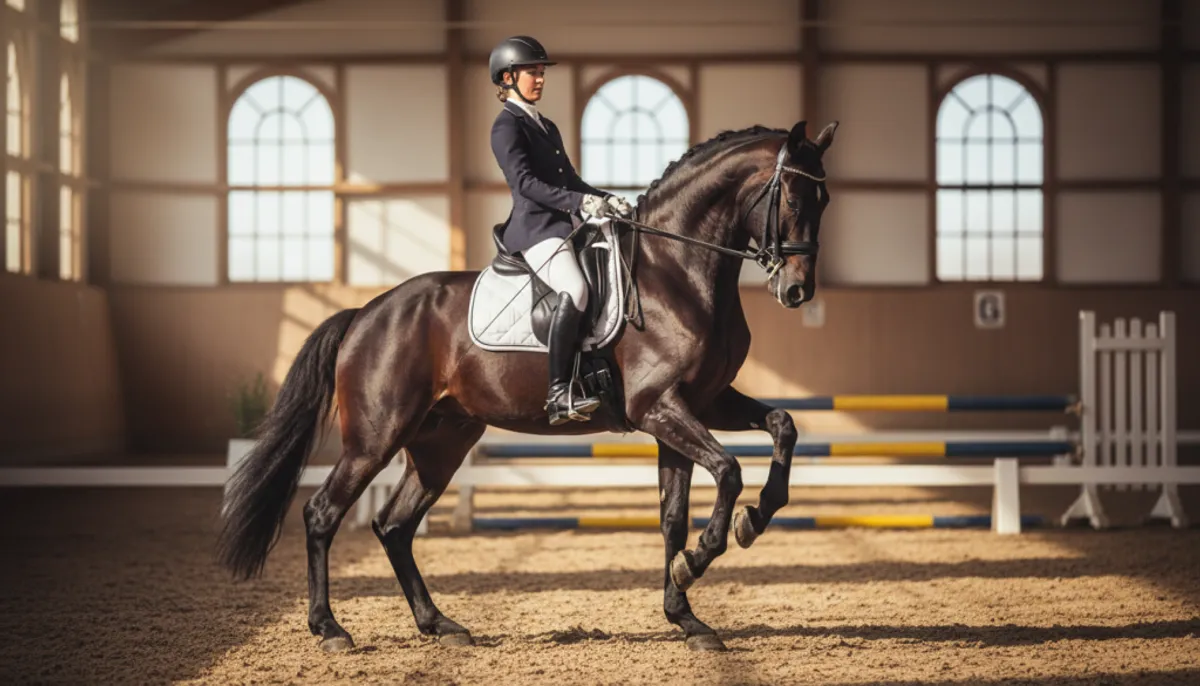
When in this position, your partner actively engages its hindquarters under its body. Its top line then stretches forward. The poll naturally becomes the highest point.
For a correct attitude, the muzzle is placed slightly in front of the vertical. The neck rounds, promoting great relaxation. The contact with the reins remains constant but very light, to preserve the mouth.
The Benefits for the Rider and the Horse
This way of doing things releases the tensions accumulated in the animal's body. It improves its balance by preventing it from overloading its shoulders.
The bit then acts as a tool for subtle communication. The rider uses their legs to create the necessary impulsion, and the horse responds with a willing engagement.
Ultimately, seeking this posture is a quest for lightness. It benefits both the rider and their mount, strengthening their connection.
The Pillars of the Contact: Impulsion, Balance, and Relaxation
For a horse to adopt a correct posture, three pillars must be combined. They form the essential basis for harmonious work.
Each of these elements supports the others. Mastering them transforms your practice.
The Importance of Impulsion and Its Control
The impulsion is the true engine. It arises from the action of the rider's legs.
This energy translates into an active push from the hindquarters. Pierre Beaupère emphasizes that controlling the rhythm is crucial.
Your partner must move forward with a steady tempo. Avoid any excessive speed to maintain the quality of the movement.
Managing Balance and Weight Distribution
A good balance allows for weight distribution over all four limbs. The goal is to prevent the mount from leaning on its shoulders.
Observe your companion at the trot. If it rushes, its forehand is likely overloaded.
Working on a circle helps greatly. It encourages bending and deep engagement.
The Role of Mental and Physical Relaxation
Total relaxation is key. Tensions in the body create resistance against the bit.
Approach each session with calm. A stressed animal cannot settle.
The time invested in seeking this relaxation is precious. It paves the way for authentic lightness and a deep connection.
Techniques and Tips for Success with the Horse on the Contact
Several practical methods can guide your partner toward a balanced and light attitude. Success depends on precise execution and great sensitivity on your part.
Always prioritize gentle progression. Each animal reacts differently to requests.
Practical Exercises and Positions to Adopt
Expert Simon Laforêt advises a stable position of the hands. Place them on either side of the withers, without locking them.
For an effective contact, chain close transitions at the trot. This maintains the attention and engagement of the hindquarters.
Working on a large circle is very beneficial. It encourages your companion to lower its neck and seek a soft contact.
If you feel resistance, avoid tightening your grip. This would create tensions in the mouth and the back.
| Exercise | Main Objective | Recommended Hand Position |
|---|---|---|
| Close Transitions | Maintain attention and engagement | Stable on either side of the withers |
| Large Circle | Encourage lowering of the neck | Low to seek contact |
| Yielding of the Poll at a Standstill | Relax stiffness | Flexible and adaptive |
Tips for Adapting Your Hands According to Your Horse's Character
Adapt your position based on your mount. High hands promote a dressage attitude, while low ones help to seek downward.
For stiff horses, start with a yielding of the poll at a standstill. First, ask for a vertical flexion, then lateral.
In the corners of the arena, use your inside leg. This promotes engagement and facilitates the contact.
Play with your fingers on the reins to maintain a lively contact. Absolutely avoid sawing at the mouth.
This work requires patience and consistency. Reward every effort to build solid trust.
High-End Products and Made in France Equipment
French artisanal know-how stands out for its excellence in saddle making. Choosing quality equipment transforms your daily work.
It becomes a true partner in refining your communication.
The French Saddle: Artisan Excellence
The French Saddle offers unique pieces, custom-made or in limited series. Each product is made from A to Z in France by the best artisans.
This guarantee goes far beyond a simple label. It embodies a total commitment to excellence.
How These Products Optimize Your Equestrian Practice
A perfectly fitted bridle allows for a light and constant contact. The rider then feels every nuance through their hands.
This equipment promotes your partner's relaxation. A low and round attitude of the neck becomes more natural.
Here are the main benefits:
- Better perception of aids for optimal balance.
- Comfort that releases impulsion and engagement of the hindquarters.
- Exceptional durability for long-term progress.
Investing in this quality is a way to respectfully approach your passion. You support valuable craftsmanship while optimizing your training parameters.
Conclusion
Achieving this harmony with your mount is the result of a methodical progression. This rewarding work requires patience, a certain rigor, and constant listening to your sensations.
By mastering impulsion, balance, and relaxation, you fundamentally transform your riding. A real complicity then establishes itself with your partner.
Remember that the contact is a natural consequence. It should never be obtained by force but should result from successful dialogue.
Quality equipment, like that from the French Saddle, effectively supports your progress. It contributes to your horse's comfort and refines your perception.
Practice regularly, prioritizing small steps. This way of proceeding builds a lasting trust relationship between the rider and their companion.
This exciting equestrian adventure will enrich your daily practice. It will lead you toward authentic and shared lightness.
FAQ
What does it really mean to "have your horse on the contact"?
This describes a perfect balance where your mount seeks a light and constant contact with your fingers. Its neck is supple, its back is mobile, and its hindquarters are engaged. It is a fluid dialogue, not a constraint.
What are the main advantages of this attitude for dressage?
The benefits are numerous! Your partner becomes lighter, more maneuverable, and more balanced. Its impulsion is better channeled, improving the quality of all figures. For it, this promotes a supple back and harmonious musculature.
How can I develop good impulsion without forcing the mouth?
The key is to think "push forward" and not "hold back." Use your legs to create energy forward. Your hands should then receive and channel this energy flexibly, maintaining an elastic contact. The quality of the bit is also crucial.
My horse is contracting and hollowing its back. What should I do?
This often indicates an imbalance or tension. Rework the relaxation at all three gaits on large circles. Ensure your aids are independent and that you are not blocking with your seat. Sometimes, checking the fit of your saddle or bridle is necessary.
Are there simple exercises to feel this connection?
Absolutely! Frequent transitions (walk-trot-walk) and serpentines are excellent. They encourage your horse to carry itself and adjust its balance. Working on two tracks, such as shoulder-in, also refines the dialogue with the reins.
How can quality equipment, like that from La Sellerie Française, help?
A perfectly fitted bridle and a well-chosen bit make all the difference. High-level French craftsmanship, like that of this saddle maker, guarantees optimal comfort and precise transmission of aids. This avoids painful pressure points that cause resistance.
Do I need to have still hands to achieve this?
On the contrary! Fixed and hard hands are often counterproductive. You need mobile, soft, and following hands that accompany the movement of the neck. They constantly communicate to maintain a light and constant contact without ever pulling.