
The fjord pony originates from Norway. It is known for its robustness, gentleness, and versatility. With a rare genetic purity, it measures between 1.35 and 1.55 m and weighs between 400 and 500 kg. It often lives up to 30 or 35 years.
It possesses unique characteristics: a coat influenced by the dun gene, a two-colored mane, and distinctive stripes. In Norway, five colors are officially recognized. These traits help in easily identifying it.
It has a fascinating history linked to the Vikings and has been part of a special registry since 1910. The fjord excels in several areas such as harnessing and hiking. In France, the French Fjord Horse Association has been overseeing this breed since the 1970s. Their work contributes to a global population of nearly 40,000 fjords.
Despite its robustness, the fjord can be sensitive to certain diseases. It requires special attention regarding diet and care. But with its calm and willing temperament, it is perfect for families and professionals.
Key Points
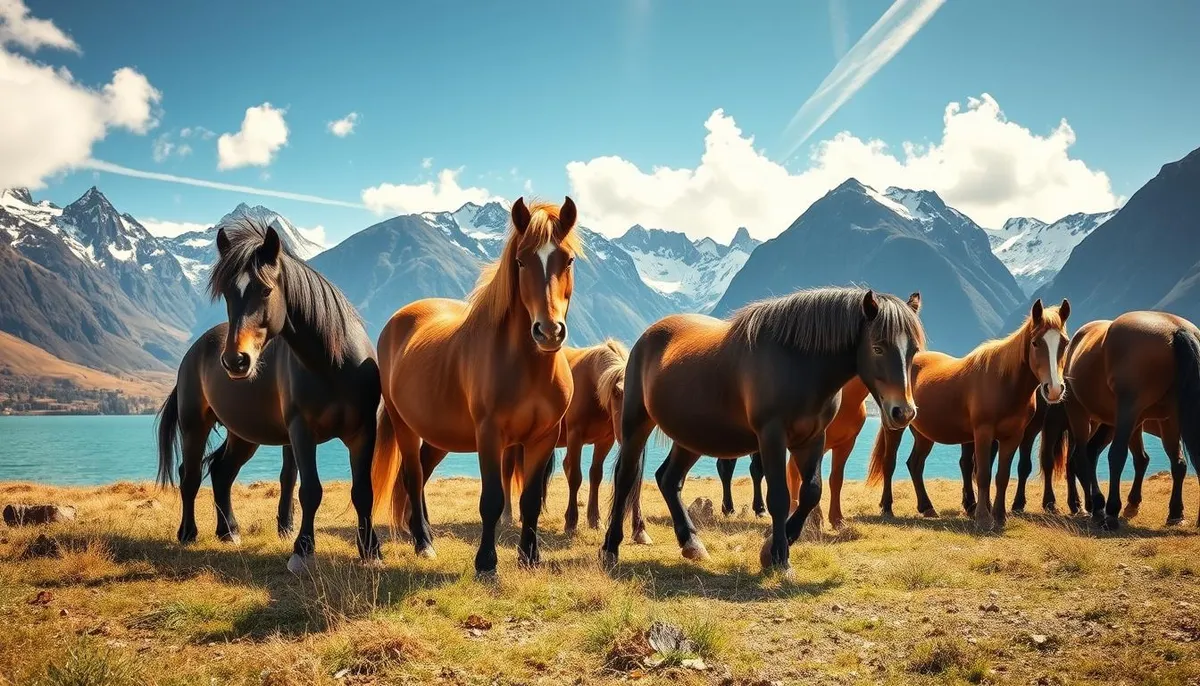
- Fjord pony breed from Norway, robust, docile, and versatile.
- Fjord pony characteristics: dun gene, two-colored mane, dorsal stripe, stripes.
- Height 1.35–1.55 m, 400–500 kg; long life and reasonable maintenance.
- Five official shades: Brunblakk, Gra, Ulsblakk, Rodblakk, Gulblakk.
- Historical selection in Norway; fjord pony France structured by the French Fjord Horse Association.
- Various uses: harnessing, leisure, TREC, equine therapy, traction.
- Health vigilance: weight management and prevention of summer dermatitis.
Nordic Origins and History of the Fjord Pony Breed
This small Nordic horse is marked by fjords, wind, and ice. It has the characteristics of a wild fjord pony from the mountains. Its strong silhouette, two-colored mane, and sobriety showcase its fjord pony origins. In its history, Norway has played a key role. Later, the fjord pony France became important for its promotion.
From Viking Horses to Modern Breeding
Ancient engravings reveal strong horses, similar to the Fjord, chosen by the Vikings. These robust horses adapted to difficult terrains, being reliable and resilient.
In the 18th century, Norwegians attempted to increase their size without sacrificing their hardiness. Originally, they were quite small. They were essential for pulling plows, transporting mail, and other goods, thus becoming a valuable aid in the countryside.
Genetic Purity and Selection in Norway
The breed has undergone very few crossbreeds. Attempts made with the Døle Gudbrandsdal were halted to maintain their pure lineage. In 1910, the first Norwegian breed registry was created, thus consolidating their preservation.
Some stallions like Rosendalborken I 8 and Njål 166 have been pivotal. The selection aimed to preserve strength, docility, and adaptability while remaining true to the fjord pony origins.
Spread in Europe and France
Exports increased from the 1950s to many countries. Each country adapted the model, respecting Norwegian standards.
The first French imports began in 1969. Subsequently, the French Fjord Pony Association organized this breed, officially recognized in 2003. The fjord pony France plays a major role, remaining true to its past while adapting to the present.
| Period | Key Events | Institutions and Milestones | Impact on the Breed |
|---|---|---|---|
| Viking Age – 18th Century | Mountain horse, traction and transport; runic iconography | Local Norwegian traditions | Hardiness, sure-footedness, profile of wild fjord pony |
| 18th – late 19th Century | Gradual increase in size; limited crossbreeding attempts | Døle Gudbrandsdal (crossbreeding halted) | Preservation of fjord pony origins and type |
| 1910 – mid 20th Century | Opening of the stud-book and structured selection | Statens Stambokkontor, Norsk Hestesenter; stallions Rosendalborken I 8, Njål 166 | Genetic purity, fixed lines, versatility |
| 1950s – 1970 | Exports to Europe, North America, Australia | Stud-books: Denmark (1941), Netherlands (1955); national associations | Common standard, regional adaptation |
| 1969 – 2003 | Establishment and structuring of the fjord pony France | French Fjord Pony Association; recognition as a horse (2003) | Development of populations, cultural and sporting anchoring |
fjord pony
The fjord pony is a small horse from Norway, both compact and powerful. The fjord pony breed was considered a pony in France before 2003 due to its size. But its build is that of a horse, with a solid frame, a medium-length back, a strong neck, and an expressive head.
It has large dark eyes and small upright ears. Each fjord pony has a special coat color due to the dun gene. They have a fjord pony coat with a dorsal stripe, stripes on the legs, dark limbs, and a light shade around the nose.
Their two-colored mane is cut short, which highlights a central dark stripe. This cut, besides being aesthetic, is practical for daily care.
The fjord pony breed is recognized for its good nature, calmness, and sociability. They learn easily and are used in various activities. They are often found in families or with professionals.
In Norway, the fjord pony is a national symbol, with a long history of breeding. Norges Fjordhestlag and Fjord Horse International work together. They ensure that the quality and appearance of the ponies remain the same.
Morphological Characteristics and Coats of the Fjord Pony
The fjord pony is easy to recognize with its compact and strong shape. Its personality is visible in its expressive head, robust body, and two-colored mane. Its truly special coat reminds us of the wild ponies of the North.
Height, Weight, and Model: Between Pony and Small Horse
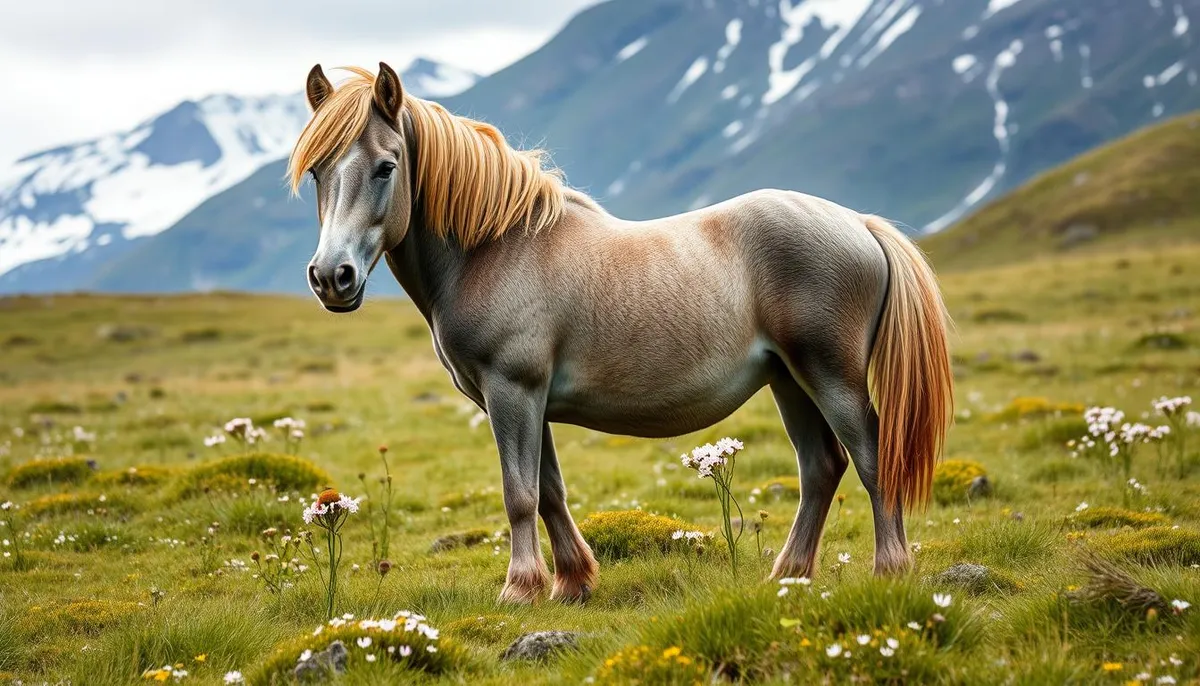
Fjord ponies measure between 1.35 m and 1.50 m, sometimes 1.55 m. They weigh between 400 and 500 kg. They are compact and muscular, like a small draft horse, but very agile.
Their head has a broad forehead, large eyes, and small upright ears. Their neck is short and strong, their body deep, and their croup long. These traits make the fjord pony a reliable companion outdoors, almost wild in its agility.
Dun Coat and Primitive Marks: Dorsal Stripe, Stripes, Two-Colored Mane
The dun color is always present. It gives a light coat with a dark dorsal line, dark extremities, and stripes on the legs. Sometimes, there are marks on the shoulders. The muzzle is often lighter, giving a 'primitive' look.
The mane is two-colored, with the center dark and the edges light, often cut short. It emphasizes the dorsal line and neck. This specific coat, defined by the Norwegian registry, clearly shows the wild origins of the fjord pony while being beautiful in competition.
Recognized Shades: Brunblakk, Gra, Ulsblakk, Rodblakk, Gulblakk
In Norway, five colors are official: Brunblakk (golden brown dun), Gra (gray dun), Ulsblakk (cream dun), Rodblakk (red dun, rare), and Gulblakk (yellow dun, rare). In France, names like isabelle or mouse are found.
The Norwegian system is used in the official registry as it ensures good organization. This helps in choosing ponies well and understanding their coat, reminding of their wild origin.
Character, Abilities, and Uses: From Leisure to Harnessing
The Fjord is simple, honest, and loves humans. It remains calm but is always ready to act. Families, riding centers, and harness drivers love these traits.
It learns quickly and gives its all. This helps novices and improves the experienced. In fjord pony France, its reliability is highly valued.
In hiking, it walks steadily and safely. The fjord equestrian leisure includes several activities where it excels due to its calm temperament. It is also used in light logging and agriculture.
It is strong, can endure for long, and is lively. Perfect for fjord harnessing, it often competes among ponies while being robust. The selection values both its strength and versatility.
Practical Advice: Varying activities keeps the Fjord motivated. Combine outdoor work, maneuverability, and light exercises for its best preservation.
Fjord Pony Breeding in France: Stud-Books, Associations, and Best Practices
In France, the breeding of the fjord pony follows strict rules. These rules include the quality of their movements and a stable mind. They respect the natural characteristics of the fjord pony, according to the stud-book.
French Fjord Horse Association and Selection Framework
The first fjord ponies arrived in France in 1969, coming from the Netherlands. Upon their arrival, France established the foundations for fjord breeding. The French Fjord Horse Association promotes these ponies and organizes competitions.
The selection criteria follow the guidelines of Fjord Horse International and Norges Fjordhestlag. The goal is to keep the breed pure and functional. Attention is paid to the ponies' character and their work capacity over time.
Feeding, Condition, and Prevention of Overweight
The fjord pony, naturally robust, can easily gain weight. To prevent this, its diet must be controlled, especially in spring. Using a paddock or a muzzle can help during periods of abundant grass growth.
A regular exercise program and good mineral nutrition are essential. This helps prevent serious health issues. Thus, the ponies stay fit and happier.
Education, Work Preparation, and Desired Versatility
Good education from a young age makes the fjord pony a docile companion. Varied activities like walking, obstacle courses, and driving build its confidence. This prepares the pony for both family life and competitions.
Breeders follow a program that includes muscle strengthening and hoof care. By collaborating with other European countries, they maintain the quality of the breed. They strictly adhere to the fjord stud-book standards.
| Aspect | Priority Objective | Best Practices | Benefit for Fjord Pony Breeding |
|---|---|---|---|
| Selection | Compliance with the standard | Model/gait evaluations, monitoring of the fjord stud-book | Homogeneity of type and temperament |
| Feeding | Prevent overweight | Rationed forages, managed pastures, regular exercise | Reduced metabolic risks and laminitis |
| Education | Versatility and safety | Socialization, groundwork, harnessing, outdoor work | Reliable horse for leisure and sport |
| Network | European harmonization | Collaboration with the French Fjord Horse Association and FHI | Consistent genetic progress in fjord pony France |
| Monitoring | Sustainable well-being | Body condition scoring, farriery, minerals | Functional longevity and stable performance |
Health and Well-Being: Hardiness, Longevity, and Points of Vigilance
Fjords often live between 30 and 35 years. To keep this pony healthy, it needs quality forage, daily movement, and regular check-ups. This ensures their fjord pony health and enhances their fjord equine well-being.
Equine Metabolic Syndrome and Body Condition Management
The Fjord can quickly become overweight, putting it at risk. Its weight must be monitored, and sugars reduced to maintain a good insulin level. Moving a little each day can also help keep a pony fit longer.
- Choose analyzed hay, low in NSC; soak if necessary.
- Use a grazing basket during grass peaks in spring and fall.
- Weigh the hay, supplement with balanced minerals and vitamins.
Summer Dermatitis and Prevention Strategies
Summer dermatitis is a problem caused by biting insects. To avoid this, a blanket can be put on the pony, repellents used, and outings planned for cooler times. These actions help reduce risks and promote fjord equine well-being.
- Keep stagnant water sources away, maintain hedges and surroundings.
- Shower, dry, then apply soothing skin care.
- Monitor the mane and tail to avoid rubbing.
Veterinary Follow-Up, Farriery, and Pasture Management
Regular visits to the vet, with vaccinations and deworming, are key for their fjord pony health. Their feet, strong but heavy, require regular care. Proper pasture management is also crucial for their well-being.
- Rotate plots, mow, and provide shelter from wind and rain.
- Limit grass richness, especially after dew and in autumn.
- Provide a fibrous ration and a suitable mineral supplement.
Purchase and Budget: Fjord Pony for Sale, Fjord Pony Price, Advice
Before buying a fjord pony, consider its use: leisure, harnessing, or equine therapy. Opt for a calm animal with good movement. The rider's level and the pony's training must be compatible.
The price of a fjord pony depends on its age, lineage, training, and health. A well-trained young pony from a good breeding will cost more. The quality and unique characteristics of the pony also affect the price.
Check the registration in the stud-book and the origin documents. Examine the body, the two-colored mane, and other markings. Assess its character, its reaction outdoors, and its ease of being directed. Require a veterinary examination and, if possible, test it yourself.
| Expense Item | Key Points | Impact on Budget |
|---|---|---|
| Purchase (fjord pony for sale) | Age, lineage, training, coat conformity | Higher range for trained and well-conformed subjects |
| Ongoing Maintenance | Forages, minerals, boarding or pasture management | Recurring monthly cost to anticipate in fjord pony France |
| Preventive Care | Vaccinations, deworming, dentistry, farriery | Stability and longevity of the horse, risk reduction |
| Proper Equipment | Saddle, harnessing gear, protections | Adjustment to the Fjord model for comfort and safety |
| Condition Monitoring | Physical maintenance program, weight management | Prevention of EMS and laminitis, long-term savings |
Choose trusted breeders for a good fjord pony. Strengthen your knowledge about their performance and daily routine. A well-maintained pony brings financial benefits in the long run.
Adopt a progressive training program with regularity. Professional follow-up is crucial. Goal: to obtain a reliable and pleasant partner, without health risks.
High-Quality and Made in France Equipment for Fjord
A well-equipped fjord pony is more comfortable, mobile, and safe. Its compact back and powerful neck require specific equipment. A fjord equipment tailored to its morphology promotes good pressure distribution and stabilizes the saddle.
A quality fjord saddle uses suitable trees, generous padding, and a girth that frees the shoulders. This ensures the durability of the material and the horse's protection.
Saddlery, Harnessing Gear, and Accessories Suitable for the Fjord Model
The Fjord has a wide chest and a compact head. It is necessary to choose a saddle with an open tree and bearing panels. For fjord harnessing gear, it is recommended to use a well-fitted and padded breastplate or collar to ensure smooth traction.
Bridles should have short cheekpieces. Also use strong leads, robust protections, and soft draw reins. These choices improve stability, breathing, and the horse's shoulder freedom.
La Sellerie Française: Custom-Made Products, Limited Series, 100% Made in France
La Sellerie Française offers high-end equipment, made in France, either custom-made or in limited series. Their traceability, quality of finish, selection of leathers, and durable hardware ensure a perfect fit for the Fjord.
Each piece of equipment is designed to support the horse's stability and breathing. This allows for a clear seat, free withers, and well-distributed weight.
Why Prefer Handmade Equipment for Comfort and Durability
Handmade equipment respects the shape of the Fjord. It reduces friction and pressure points. It is also repairable and customizable, making it economical in the long run.
Drivers and hikers will find that this investment offers both safety and enhances the horse's performance. A fjord saddle stays in place on various terrains and supports locomotion without discomfort.
| Item | Essential Criteria for Fjord | Key Benefits | Recommended Options |
|---|---|---|---|
| Saddle | Open tree, bearing panels, anatomical girth | Stability, free back, reduced pressure | Custom La Sellerie Française |
| Bridle | Short cheekpieces, ergonomic headpiece | Neat adjustment, neck comfort | Full-grain leather, stainless steel hardware |
| Fjord harnessing gear | Adjustable breastplate/collar, dense padding | Effective traction, free shoulders | Complete handmade harness |
| Protections | Robust shells, breathable lining | Prevention of shocks and friction | Reinforcements on wear areas |
| Accessories | Strong lead, soft draw reins | Precise control, preserved mouth | Coordinated leather pieces |
| Maintenance | Waxes and fats suitable for leather | Longevity, flexibility, patina | Recommended kits by La Sellerie Française |
Conclusion
The fjord pony has an exciting history linked to the Vikings and a strong presence in Europe. It has a recognizable appearance with its unique mane and various coat colors. It is a robust and reliable animal, living up to 35 years and perfect for multiple activities.
In France, an association ensures that fjord ponies meet the quality standards of Norway. It also helps breeders maintain the well-being and performance of the ponies. This includes disease prevention and regular care.
Before purchasing a fjord pony, it is important to examine its physique, behavior, and movement. It is essential that the pony has clear documents regarding its health and proper hoof care. Also, consider maintenance costs and choose suitable equipment.
When selecting equipment for your pony, opt for high-quality products. La Sellerie Française offers equipment made in France, perfect for comfort and durability. With the right equipment and appropriate care, the fjord pony becomes a valuable companion.
FAQ
What is a Fjord pony and where does it come from?
The Fjord pony comes from Norway. It is an ancient animal known for being sturdy and versatile. It initially helped the Vikings with transport and warfare before working in agriculture. The breed is protected in Norway. It is also recognized worldwide thanks to Fjord Horse International.
What are the morphological characteristics of a Fjord pony?
A Fjord pony measures between 1.35 and 1.50 meters. It weighs between 400 and 500 kilograms. Its body is muscular with a strong neck and an expressive head. It has a gentle and willing character, making it perfect for all riders.
Why is it called a "dun" coat and what are the shades of the Fjord?
The "dun" coat is typical of Fjord ponies. It comes from a special gene that gives this color. There are five official shades and a two-colored mane that is often cut short. This cut highlights the dark line on their back.
Is the Fjord pony a horse or a pony?
Although called a pony due to its size, the Fjord has been considered a horse in France since 2003. But it is still referred to as "fjord pony." It is small but very strong.
What disciplines are suitable for the Fjord pony?
The Fjord pony excels in several sports. It is great in harnessing, TREC, and hiking. Its docility and endurance make it reliable for all these activities.
What is the longevity of the Fjord pony?
The Fjord pony lives long, often up to 30 or 35 years. A good life depends on diet, exercise, and regular care.
What are the main health points to monitor?
Attention should be paid to overweight and summer dermatitis. Proper management of their diet and regular exercise can help prevent these issues.
How to properly feed a Fjord pony?
It is important to choose the right forage and control access to grass. Adjusting the food according to their work and monitoring their weight are essential to avoid health problems.
What are the historical origins of the Fjord and its link to the Vikings?
Archaeological evidence shows that horses similar to the Fjord were used by the Vikings. The breed has been improved over the centuries.
How is the Fjord breed genetically "pure"?
Crossbreeding with other breeds has been limited to keep the Fjord pure. A stud-book was created in 1910 to maintain this purity.
Where to find a Fjord pony breeding in France?
The French Fjord Horse Association has a list of breeders. It organizes competitions and training and follows the Norwegian standard. Information and ponies for sale can be found there.
What is the price of a Fjord pony in France?
The price of a Fjord pony depends on several factors. Well-trained young ponies cost more. It is important to have the pony checked by a veterinarian before purchase.
How to recognize a true Fjord pony in competitions or when buying?
Check the coat color, the two-colored mane, and specific markings. In France, it is necessary to rely on the criteria of the French Fjord Horse Association and the Norwegian standard.
Is the Fjord pony suitable for children and beginners?
Yes, its gentle character makes it perfect for children and beginners. However, professional guidance is still necessary.
What is the global population of the Fjord?
There are about 40,000 Fjord ponies worldwide. The largest populations are found in Norway, Denmark, Germany, and France.
What equipment is recommended for a Fjord pony?
It is important to choose saddles and bridles that fit their morphology. For harnessing, the harnesses must be well-fitted.
Why choose handmade equipment for a Fjord?
Handmade equipment offers better adaptation. They allow for equal pressure distribution and minimize injuries.
Where to find high-quality equipment suitable for the Fjord model?
La Sellerie Française offers custom-made equipment. Everything is made in France, ensuring quality and comfort for the pony.
How to manage the typical two-colored mane of the Fjord?
The mane should be cut in a brush style. This highlights their natural elegance and primitive origin.
Does the wild fjord pony exist?
No, the Fjord is a domesticated pony. There are no wild Fjords. The breed is carefully selected.
Does the Fjord influence other breeds?
Yes, the Fjord has influenced other European and British breeds. Its robust type has been a model.
What good breeding practices should be applied daily for fjord ponies?
Ponies should be well-socialized and trained. Special attention should be given to their diet and environment to maintain their health and versatility.