
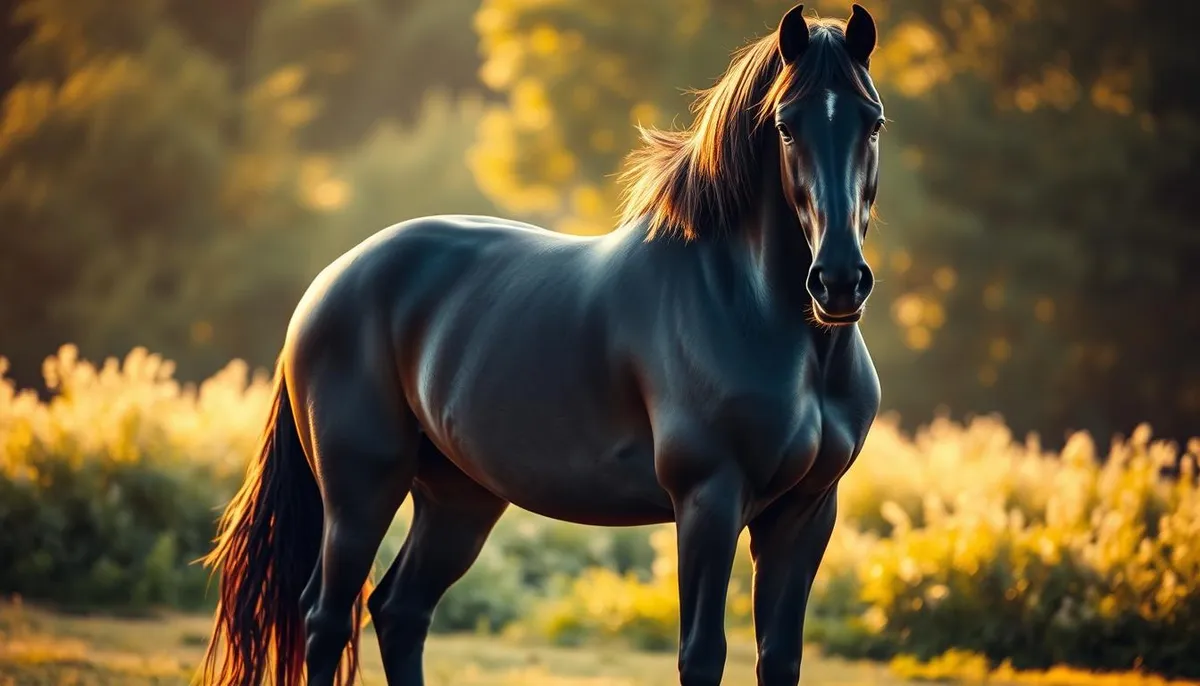
The Friesian horse, nicknamed the black pearl, attracts all eyes. Originating from Friesland in the northern Netherlands, this breed is very ancient. Its entirely black coat, abundant mane, and elegant gait symbolize the strength of the horse.
It combines power and gentleness. During the Middle Ages, it was a valued war horse. Nowadays, it excels in dressage, driving, and even in cinema. In France, it is loved for its calm and willing character.
The Friesian can measure between 1.55 m and 1.75 m and weigh between 500 to 800 kg. The official center for this breed is in the Netherlands, founded in 1879. It is known and appreciated on several continents.
To enhance its value, the French Saddlery offers premium equipment. This equipment highlights its unique beauty, whether in competition or on a ride.
Key Points
- The Friesian horse, black pearl, and ancient breed, originates from Friesland in the Netherlands.
- Uniform black coat, abundant mane and tail, elevated and expressive gaits.
- Calm, docile, and intelligent temperament, suited for dressage, driving, and performance.
- Rich history: from medieval war horse to modern equestrian symbol.
- Recognized selection framework with the KFPS stud-book since 1879.
- Strong presence in equestrianism in France and international reach.
- High-end equipment recommended, notably by the French Saddlery.
Friesian Origin and Dutch Heritage
In the northern Netherlands, the sea has shaped a resilient horse. This animal comes from a Friesian origin and is part of the Dutch heritage. This heritage connects history, culture, and equestrian heritage. From the province of Friesland to today's arenas, this horse has traversed time.
Province of Friesland, Cradle of the Friesian
The province of Friesland is the birthplace of the Friesian. This black horse is robust and reliable. It was already known in the time of Julius Caesar.
The climate and soil of the region have given it its robustness. This strength has benefited other breeds, enriching the equestrian heritage of Europe.
In the 16th and 17th centuries, Andalusian and Castilian horses improved its lineage. These influences have shaped the Dutch heritage.
From Medieval War Horse to Cultural Symbol
Knights chose it for its impressive strength. This horse stood out in battles and tournaments due to its power. It became a symbol of the Netherlands, an icon of equestrian heritage.
It has influenced art and tradition, becoming a major cultural element. Its image continues to keep the Friesian origin alive.
The Role of the KFPS Stud-Book (1879) in Preservation
The KFPS stud-book was founded in 1879 in response to a decline in the breed. The Koninklijk Friesch Paarden-Stamboek established precise standards for selection. These criteria have helped preserve genetic diversity and enhance the Dutch heritage.
Friesian associations like FHANA promote the breed internationally. They unite breeders and enthusiasts, strengthening the role of the KFPS stud-book on a global scale.
| Period | Key Event | Impact on the Breed | Actors and Structures |
|---|---|---|---|
| Antiquity | Robust black horses mentioned in Roman sources | Reputation for endurance and strength in the province of Friesland | Roman armies, Frisian territories |
| Middle Ages | War horse for knights | Power, noble bearing, elevated gaits | European nobility, local traditions |
| 16th–17th Centuries | Andalusian and Castilian influence | Refinement of the model, elevated gaits | Iberian exchanges and Dutch heritage |
| 1879 | Foundation of the KFPS stud-book | Selection standards, genetic preservation | Koninklijk Friesch Paarden-Stamboek |
| 20th–21st Centuries | Network of Friesian associations and expansion | Global diffusion, enhancement of equestrian heritage | KFPS, FHANA, European societies |
Friesian Characteristics and Iconic Morphology
Friesians are powerful, harmonious, and imposing. They have been perfected in the Netherlands. Their silhouette is highly appreciated for dressage and driving, thanks to their spectacular gaits.
Height, Weight, and Baroque/Sport Types
Friesians generally measure from 1.55 to 1.70 m. Some can even reach 1.75 m. Their weight ranges from 500 to 800 kg, depending on the type and sex.
There are two main types: the baroque and the sport. The baroque typically measures between 1.55 and 1.65 m. It is perfect for driving. The sport, on the other hand, measures from 1.60 to 1.75 m. It is ideal for modern dressage.
Friesian Coat: Jet Black, Abundant Mane, Feathers
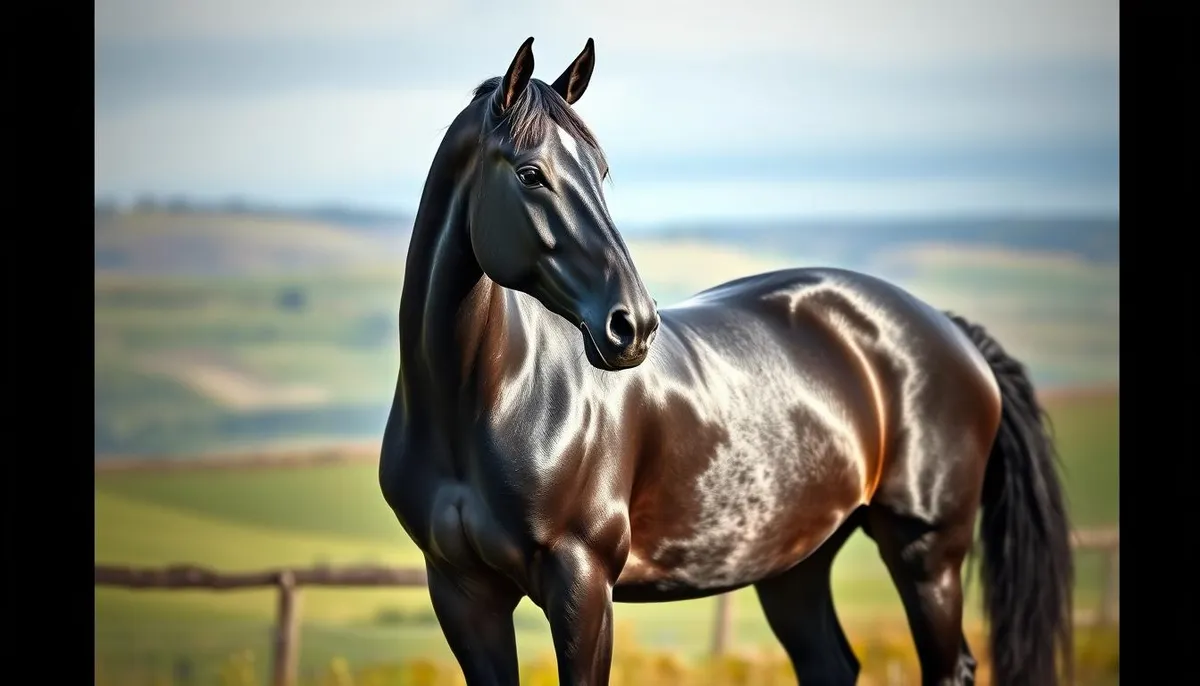
The coat of Friesians is always black, with a dark skin. Sometimes, a small star is accepted in some mares. They have long, wavy manes and tails.
The Friesian has a strong chest, long shoulders, and an arched neck. Its head is expressive. It also has a robust back and well-muscled limbs.
Elevated Gaits: Ample and Cadenced Trot
The trot of Friesians is their hallmark. It is wide, rhythmic, with a marked knee action. This gait makes Friesians particularly elegant in dressage and driving.
At a glance, one can see the unique combination of baroque style and athletic skills. This clearly shows the preservation of their heritage and their modern performance.
Friesian Horse
The Friesian horse amazes with its shape and gentle gaze. This black pearl is highly sought after by lovers of beautiful horses. They adore its wide stride and lively trot. Its gentleness and closeness to people make it an ideal companion for relaxation.
Many choose it for dressage due to its energy and flexibility. In dressage or driving competitions, it always impresses the audience. Its beauty attracts all attention.
In cinema, it impresses with its stature and dense mane. Frederik The Great, born on 01/04/2001, made this breed famous. During rides or in TREC, it is perfect due to its calmness and sure movements.
The Friesian is dynamic yet very attentive. If properly cared for, it is always cooperative. Its long life, often 20 to 30 years, creates a strong bond with its admirers.
Friesian Breeding and International Spread
Friesian breeding combines tradition and modernity in a demanding system. The KFPS stud-book, created in 1879, guides the efforts. Friesian associations facilitate the international spread of the breed. Thanks to them, the breed is spreading well beyond the Netherlands.
At the heart of the system, lineage management ensures diversity and quality. Breeders aim for a perfect balance in breeding. They seek a balance between appearance, performance, and health. They have reliable benchmarks to guide them.
Selection Center in the Netherlands and Lineage Management
In Holland, the KFPS stud-book controls everything before registration. It ensures quality through inspections. The studs present their animals, which undergo various tests, including DNA.
Experts decide on the best pairings. They use precise data to maintain a healthy population. This helps Friesian breeding to progress steadily.
Friesian Associations: KFPS, FHANA, European Networks
The FHANA works with the KFPS in North America. It organizes inspections and training. In Europe, breeders in France, Germany, and elsewhere follow these standards. They conduct regular checks.
These associations allow breeders to share resources and information. They thus have access to important data for each horse.
Global Reach: Europe, North America, Oceania
The Friesian horse became popular worldwide in the 20th century. It can be found in Europe and the USA, with growth in Australia.
Experts organize special events to promote the breed. Friesian breeding always adheres to the standards of the KFPS stud-book. This ensures the quality and value of these horses.
Behavior, Temperament, and Uses
The Friesian is a horse with a Friesian temperament that is gentle. It learns quickly and remains calm even in noisy places. It enjoys being with other horses and easily makes friends.
It is perfect for riders who already have experience. For good understanding, the horse and rider must communicate clearly. This greatly helps during classical dressage and makes daily life easier.
The Friesian stands out for its way of carrying its head and its shoulder movements. Its elegance is highlighted during equestrian shows. In driving events, it shows its strength and determination. It is a good choice for rides and horseback tourism, but it is not the best for long-distance racing.
| Dimension | Strengths | Points of Attention | Recommended Equestrian Uses |
|---|---|---|---|
| Temperament | Calm, docile, intelligent; strong human bond | Can be emotional if mishandled | Flat work, introduction to classical dressage |
| Work Energy | Willing, consistent, enduring for short to medium durations | Less suited for long-distance endurance | Trail riding, leisure TREC, varied sessions |
| Expression and Presence | Expressive gaits, noble bearing, stage charisma | Requires careful preparation | Performance riding, cinema, shows |
| Technique | Natural cadence, shoulder mobility | Requires precise and regular aids | Classical dressage, high school figures |
| Traction and Driving | Power, straightness, elegance at walk and trot | Impulse control needs refinement | Traditional and sport driving |
With patience and a good method, the Friesian can achieve great things. By combining gentleness, precision, and synchronization, it shines in several disciplines. It excels from competition to driving, through performances and classical dressage.
Friesian Performance in Dressage, Driving, and Shows
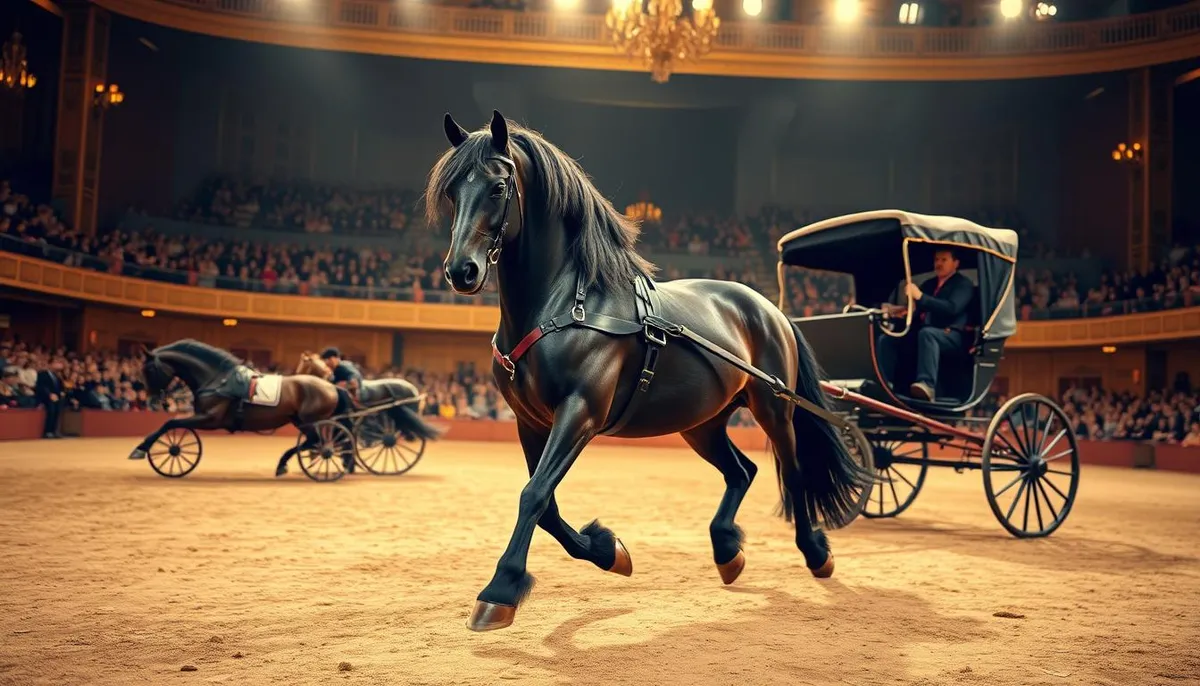
Recognizable at first glance, the Friesian shines on stage and in competition. Its supple and expressive gaits captivate everyone. It is a perfect choice for dressage, driving, and shows due to its presence and ease of learning.
Elevated Trot, Presence, and Expression
Its trot is impressive and very elegant. It demonstrates great strength and beauty, ideal for dressage. These qualities make the Friesian light and expressive, perfect for equestrian sports.
In performance, its clear rhythm and connection with the rider ensure precision. During shows, it draws attention and stands out, even among more technical horses.
Traditional and Sport Driving
In traditional driving, the Friesian is sublime with its noble neck carriage. In competition, its endurance and consistency are assets. These qualities make the Friesian shine in any event, from simple races to more complex ones.
Its responsiveness and mental stability make the courses fluid and precise. These strengths facilitate teamwork and ensure success.
Equestrian Arts, Cinema, and Tourism
A flowing mane, a shiny black coat, and a captivating gaze enchant on stage and screen. In equestrian arts, the Friesian excels in complex and elegant performances. These qualities make it a star of shows.
The Friesian easily adapts to cinema and tourism due to its reliability. Its spectacular gaits and elegant trot attract attention during events and promotions.
Health, Maintenance, and Responsible Selection
Caring for the health of Friesians requires thoughtful choices. Careful selection is essential from foal to adult. It helps avoid genetic problems and improves their performance in sports.
KFPS checks are important to maintain good genetic diversity and performance.
Genetic Vigilance: Inbreeding and KFPS Screenings
Friesians form a small group. The KFPS monitors inbreeding with genetic and veterinary tests. The results of KFPS screenings guide careful selection.
Good reflex: choose different lineages, maintain good genetic levels, and document each pairing well. In France and the Netherlands, breeders use public evaluations to make informed decisions.
Conditions to Monitor: DER, Tendons, Hydrocephalus, Dwarfism
Some diseases are under surveillance, such as summer dermatitis, tendon issues, hydrocephalus, and dwarfism. Attention should also be paid to respiratory and cardiac disorders, infertility in some lineages, and risks after childbirth.
The black color of their coat can cause overheating. A shaded shelter, good ventilation, and careful coat care help prevent irritations and overheating. These are key points for sustainable Friesian maintenance.
Daily Care: Nutrition, Hydration, Thermal Comfort
It is important to provide good quality hay or grass, with appropriate mineral and vitamin supplements. Avoid too much energy when they are not in training. Horses should drink enough, generally 40 liters per day, sometimes more in summer or after exercise.
Care should be taken with their sweating and breathing when it is very hot. Showers and calm walks help after exertion. By spacing intensive training when it is hot, one helps maintain their health.
- Shade and ventilation for thermal comfort.
- Hoof care and tendon maintenance after work.
- Skin hygiene to limit recurring summer dermatitis.
- Scheduled veterinary follow-up and up-to-date KFPS screenings.
Friesian Price, Friesian Sale, and High-End Equipment
To choose a Friesian, consider the Friesian price, Friesian sale, and high-end equipment. An appropriate saddlery and quality harness are essential for comfort and safety. They also ensure good long-term value. Follow these tips for a good purchase and equipping your horse.
Purchase Budget: Indicative Range and Variation Factors
A Friesian generally costs between €4,000 and €20,000, or even more. The price varies according to age, sex, lineage, and other factors. For example, KFPS inspection scores and skills in dressage or driving influence the price.
- Sport horses with good gaits and KFPS papers: high end of the Friesian price.
- Local rarity and additional costs such as import, transport, and tests: increase the budget.
- The certification of the stud-book and a good training history: add value to the Friesian sale.
Tips for a Secure and Ethical Friesian Sale
Opt for transparency to protect the buyer and the horse. Request clear identifications and verified KFPS registration.
- Have a complete veterinary examination done before purchase.
- Check the lineage and level of inbreeding via the stud-book.
- Try the horse and establish guarantees and conditions in writing.
- Ensure the comfort and health of the horse throughout the Friesian sale.
Premium Saddlery and Harness by La Sellerie Française
A Friesian requires a saddlery suited to its strong back and musculature. The equipment must distribute pressure and remain stable. This is crucial for both baroque and sport Friesians.
La Sellerie Française offers high-end equipment, made in France. With limited or custom production, these products combine comfort, durability, and style. They perfectly meet the demands of Friesians.
Conclusion
The Friesian, a horse that blends past and future. Born in Friesland, it has been cherished by the KFPS since 1879. It tells us its story with its unique traits: a black coat, abundant mane, and elegant trot.
This horse excels in various fields such as dressage and driving. It is appreciated for its calm temperament. This makes it popular in Europe, the United States, and Oceania. Breeding must remain responsible. It is important to monitor health, manage lineages, and pay attention to certain diseases.
The price of a Friesian varies based on several criteria. Buying a Friesian requires attention and ethics, including checks by a veterinarian. The French Saddlery offers high-quality equipment. This ensures the comfort of the horse and enhances its natural elegance.
This horse represents a long-term commitment. It combines beauty and strength, touches our hearts, and creates a strong bond with humans. Through its actions and appearance, the Friesian symbolizes tradition, power, and grace.
FAQ
What is the origin of the Friesian horse and why is it called the "black pearl"?
The Friesian comes from Friesland in the northern Netherlands. Known since antiquity, it was a medieval war horse. Its beautiful black coat and thick mane earned it the nickname "black pearl".
What role does the KFPS stud-book (1879) play in Friesian breeding?
The KFPS has guided Friesian breeding since 1879. It monitors lineages, reduces inbreeding, conducts inspections, and confirms the key strengths of the Friesian: form, movements, temperament, and color.
What are the main Friesian characteristics to recognize?
It measures 1.55 to 1.75 m and weighs 500 to 800 kg. It has a curved neck, a strong back, and a muscular hindquarters. Its mane and tail are long and wavy, with thick feathers.
It is distinguished by its noble gaits, particularly a wide and rhythmic trot.
Is the Friesian coat always black?
Yes, they are always black with dark skin. White markings are not accepted, except for a small star in some mares.
What types are recognized: baroque or sport?
The baroque type is broad (1.55–1.65 m) and shines in driving and shows. The sport type is taller and lighter (1.60–1.75 m) and preferred in dressage for its flexibility and elegance.
What is the Friesian primarily used for today?
The Friesian excels in dressage, driving, shows, and cinema. It is also good for leisure. Its gentle and intelligent character makes it a great companion.
Which Friesian associations supervise the breed internationally?
The KFPS oversees selection in the Netherlands. FHANA handles registrations in North America. In Europe, breeder associations coordinate inspections and breeding.
How does Friesian breeding and distribution occur outside the Netherlands?
The Netherlands remains the selection center with inspections and ancestor tracking. The breed is popular in Europe, the United States, Oceania, and elsewhere, respecting the standards of the stud-book.
Is the Friesian suitable for beginner riders?
It is gentle and cooperative but sensitive. An intermediate-level rider, with good guidance, will fully benefit from its generosity.
What Friesian performances are expected in dressage and driving?
In dressage, its presence and style captivate. For driving, it impresses with its elegant trot, consistency, and dignity, both in shows and competitions.
What health conditions should be monitored in Friesians?
Be attentive to inbreeding, summer dermatitis, fragile tendons, hydrocephalus, dwarfism, megaesophagus, and certain muscular diseases. Health checks and careful selection are recommended.
What daily care should be prioritized?
Provide quality forage, supplements if necessary, and plenty of fresh water. Ensure good ventilation and a shaded shelter, and keep its mane and feathers clean to avoid irritations.
What is the Friesian price at purchase?
Prices range from €4,000 to over €20,000. This depends on age, sex, lineage, KFPS evaluations, training, and performance. The best sport types are more expensive.
How to ensure a safe Friesian sale?
Check the registration with KFPS, ancestry, and inbreeding. Request a pre-purchase veterinary examination, test its skills, and clarify the contract and guarantees.
Where to find suitable saddlery for the Friesian?
La Sellerie Française offers luxury equipment, made in France, custom or in limited series. You will find saddles, bridles, harnesses, and protections ideal for the unique shape of the Friesian.
Can the Friesian withstand high heat?
Its black coat attracts heat. Ensure shade, adequate ventilation, and always have fresh water available. Adjust training to temperatures to maintain its performance.
What leisure disciplines suit it?
It is perfect for rides, trail riding, TREC, and free exercises. Its gentleness makes it excellent for all activities, except extreme endurance.
How to recognize an authentic Friesian?
Look for a clean black coat, dense mane, distinctive trot, and pronounced neck. Always request KFPS documents to verify its origin and inspections.
Does the Friesian influence other breeds?
Absolutely. Crossbreeding with Iberian horses has refined its silhouette and inspired other lineages. However, it retains its identity through the stud-book.