
It is called the black pearl. The Friesian horse is known for its beautiful black coat and unique mane. When it arrives, its elegance and strength attract all eyes.
Its steps showcase the art of Friesian dressage. In harness, its power is felt. Its noble appearance comes from fluid movements, a proud carriage, and serenity even in stressful situations.
It is a loyal partner to humans. It learns quickly and gives its best in performance and work. Its noble appearance stems from a long history and rigorous selection.
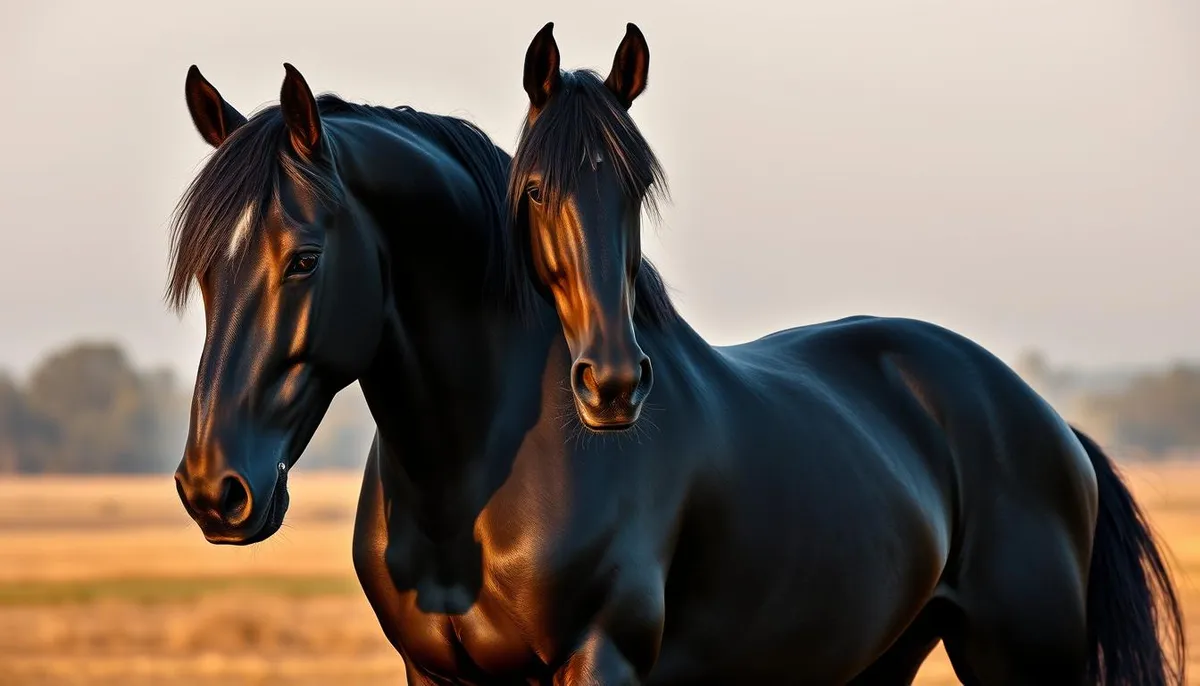
The French Tack Shop creates high-end equipment for the Friesian. These products, made in France, enhance its silhouette and highlight its charisma.
Key Points
- The Friesian horse, nicknamed black pearl, combines elegance and power in the arena and in harness.
- Shiny black coat, abundant mane, and noble neck carriage: a unique visual signature.
- Harmonious movements prized in Friesian dressage and Friesian harness.
- Calm temperament, close to humans, conducive to quick learning.
- The French Tack Shop showcases the majesty of the Friesian with suitable and durable equipment.
- Stage presence and charisma that captivate in competition as well as in performance.
Origins and History of the Friesian, the "black pearl" of the Netherlands
Admired for its beauty and strength, this horse is unique. Its Friesian horse history is an adventure across Europe. Merchants and riders created an exceptional horse. Nicknamed the black pearl of the Netherlands, it has always been a symbol of nobility and utility.
Roots in Friesland and Role in the Middle Ages
Originating from Friesland in the Netherlands, the Friesian has been known for a long time. It was valuable for traveling and working in the fields due to its strength.
In the Middle Ages, it was the choice of warriors for its stability and strength. These qualities laid the foundation for its Friesian origin and history.
Iberian Influence in the 17th Century and Evolution Towards Harnessing
In the 17th century, the Spanish made the Friesian more elegant. The strength remained, but with more delicacy.
This transformation improved Friesian harnesses for cities and aristocrats. Thus, the black pearl of the Netherlands evolved from battlefields to elegant streets.
Modern Recognition in Dressage and Performances
Today, it impresses with its grace in competition. Spanish influences have enriched its dressage.
It is famous for its appearance and magnificent mane. The Friesian horse history continues, still prestigious.
Associations and Preservation of the Breed in France
The French Friesian Horse Association oversees the breed with the Koninklijk Friesch Paarden-Stamboek. They are committed to serious selection and breed preservation.
Breeders and enthusiasts promote Friesian harness and dressage through events. This helps protect their genetic diversity.
| Period | Dominant Use | Key Influences | Impact on the Breed |
|---|---|---|---|
| Middle Ages | Work and war mount | Friesian robustness, Northern trade routes | Endurance and solid conformation embedded in Friesian horse history |
| 17th Century | Transition to Friesian harness | Iberian contributions (lightness, elevated action) | More elegant appearance, ideal for carriages and parades |
| Contemporary Era | Friesian dressage and performances | Selection for grace, power, and coat | International prominence of the black pearl of the Netherlands |
| France Today | Promotion, stud-books, competitions | French Friesian Horse Association, KFPS | Protection of genetic heritage and breed preservation |
Friesian horse characteristics and Friesian horse coats
The Friesian is known in French arenas for its noble appearance. It combines elegance, strength, and remarkable presence. Its unique appearance captivates horse enthusiasts.
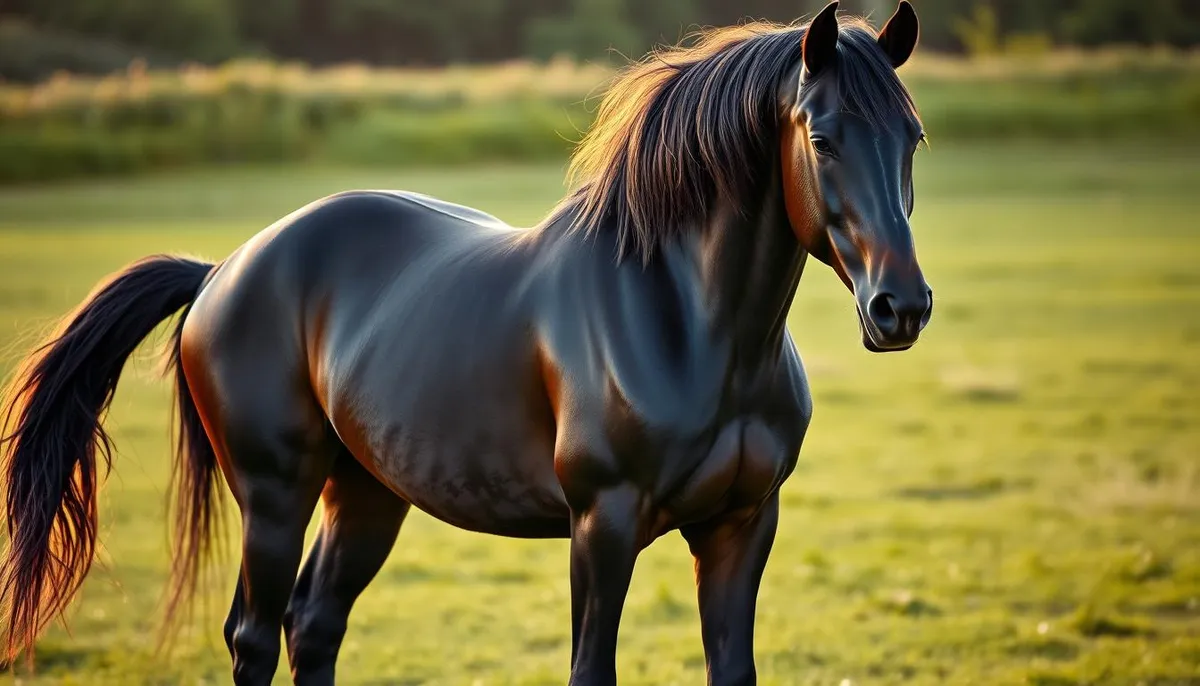
Height, Build, and Appearance: 1.55 to 1.65 m (up to 1.75 m), about 700 kg
Friesians typically measure between 1.55 and 1.65 m, sometimes up to 1.75 m. They weigh around 700 kg. Their robust build and powerful shoulders give them an impressive appearance.
In practice, their size requires careful training to maintain agility. Dressage professionals value their stable back for complex exercises.
Shiny black coat, abundant mane and tail to maintain
The Friesian is famous for its shiny black coat. Its mane and tail, often wavy, require frequent brushing. This maintains their splendor.
Regular care prevents knots and keeps their hair healthy. This characteristic appearance attracts attention in competition.
Morphology: Arched neck, noble head, power and elegance
The proud appearance of a Friesian comes from its arched neck and distinguished head. Its muscular back and hips reflect its strength without appearing massive. The overall impression evokes power with grace.
Their shapes facilitate balanced movement. This allows for smooth transitions in dressage.
Harmonious movements appreciated in dressage and harness
Their gait in dressage is characterized by wide and elegant movements. Their steps express great nobility, thanks to well-raised knees.
In harness, their regularity and energy provide a captivating performance. On stage, these movements attract all eyes.
| Criterion | Key Data | Impact in Practice |
|---|---|---|
| Height and Weight | 1.55–1.65 m (up to 1.75 m), approx. 700 kg | Stability under saddle, gradual effort to preserve amplitude |
| Coat and Hair | Shiny black, abundant mane and tail | Regular maintenance, detangling for shine and comfort |
| Morphology | Arched neck, noble head, powerful musculature | Natural balance, elevated carriage favoring the Friesian appearance |
| Movements | Harmonious cadence in dressage and harness | Readability of figures, expression of Friesian dressage movement |
Friesian horse
The Friesian horse comes from the Netherlands. It is known for its imposing silhouette and beautiful black coat. It is also called the black pearl. It is powerful but has a gentle character. Its movements are smooth and catch the eye, whether in the arena or outdoors. It instills confidence in riders, whether they are beginners or experienced.
The Friesian is gifted for various activities. It excels in dressage and harness, as well as in performance and trail riding. It remains calm, even in noisy places. It listens well, making learning different figures easy. This also ensures safe driving in harness.
To keep it at its best, the right equipment is essential. Well-fitted harnesses and balanced bridles enhance its neck. They also support its back. The French Tack Shop offers handmade equipment. They are tailored to the horse's shape and movement needs.
Proper care is crucial for the Friesian to remain magnificent. Daily brushing and hoof care are necessary. Its bedding must stay clean. This prevents moisture and skin issues. It also needs a special diet rich in fiber and minerals. Additionally, it must always have access to water.
| Key Asset | Impact in Practice | Equipment Advice | Benefit for the Rider |
|---|---|---|---|
| Imposing silhouette and black pearl appearance | Stage presence and clear markers at walk, elevated trot | Anatomical bridle and subtly dyed French leather | Elegant image and smoother connection to aids |
| Friesian versatility in dressage and harness use | Quick transition from arena to carriage | Balanced harness, padded saddle, suitable bit | Increased safety and comfort during long sessions |
| Calm and willing temperament | Stability in noisy or festive environments | Non-slip reins, ergonomic shoulder collar | Calm management of surprises, regular learning |
| Wide and expressive movements | Ideal framework for school figures and presentations | Saddle with appropriate arch and adjusted padding | Balance of the pair and preserved shoulder freedom |
Whether the Friesian is in the city or training, it combines strength and elegance. Its imposing silhouette and versatility make it perfect for dressage and harness. Its charm as a black pearl leaves no one indifferent.
Temperament, Docility, and Bond with Humans
The Friesian has a calming temperament. Its docility makes everything easier, from grooming to saddling. This characteristic strengthens the bond of trust between the rider and the horse.
In dressage and performances, its serenity is evident from the start.
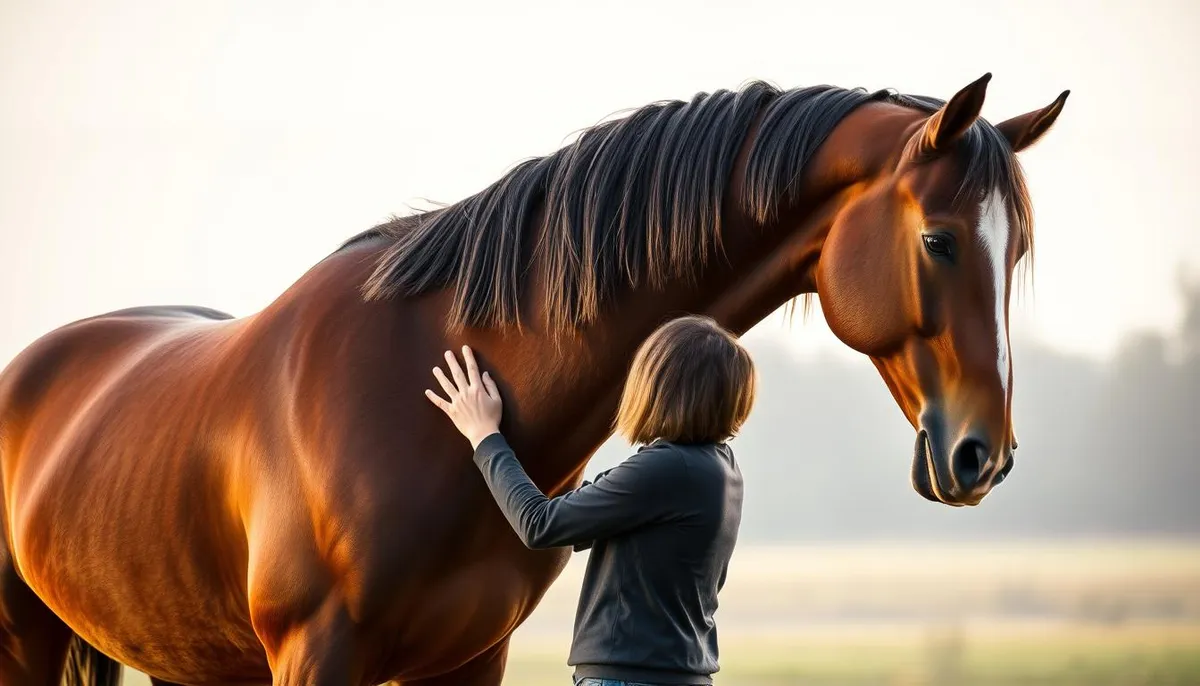
Balance, Generosity, and Calm in Stressful Situations
Even in urban parades or near loudspeakers, the Friesian remains calm. It maintains balance, with energy but without excess.
Its generosity is shown in its calm engagement, even in the face of surprises.
Intelligence and Quick Learning for Various Disciplines
The Friesian learns quickly due to its intelligence. It progresses rapidly in Spanish walk, transitions, and pirouettes.
This responsiveness allows it to excel in various disciplines, from dressage to artistic harness.
Rider-Horse Complicity and Commitment to Work
Using a comfortable saddle, such as those from Hermès Sellier or Forestier, fosters motivation. An established routine improves the precision and fluidity of the duo. Thus, the commitment to work is strengthened, aided by the Friesian's docility and trust.
Tip: Varying between technical sessions and relaxed outings helps reinforce equestrian foundations.
Friesian Horse Care: Maintenance, Health, and Well-being
A Friesian is at its best when its care routine is well established. This includes care for its locomotion and black coat. It also creates a strong bond with its rider. A simple and regular routine is key for its long-term health.
Grooming the Mane and Tail, Detangling, and Shine
Caring for the Friesian's mane means brushing its long hair daily, from the tip to the root. This prevents knots and breakage. Using a quality detangler and a wide-toothed comb keeps the hair soft and shiny.
Before work, a light shine spray protects against dust. Afterward, let the hair breathe and braid it lightly. The French Tack Shop offers perfect care for thick hair.
Hooves and Stable Hygiene: Infection Prevention
It is essential to clean the hooves after each walk. Checking the frog and the nail perimeter prevents problems. Regular trimming by a farrier is important for balance.
A clean stable is equally crucial. Clean bedding, good ventilation, and minimal muddy areas are necessary. These three elements reduce the risk of skin and hoof problems, which are vital for the Friesian's health all year round.
Summer Dermatitis: Prevention, Repellents, and Veterinary Follow-up
Summer dermatitis in the Friesian can come from insect bites. Watch for signs like scratching or thinning mane. Use a breathable neck cover, shelters, and repellents to protect it.
Gentle cleaning followed by a soothing cream reduces inflammation. If needed, a veterinarian can intervene to adjust treatment and prevent complications.
Diet Rich in Fiber, Minerals, and Hydration
A good diet for a Friesian includes plenty of quality hay. This helps maintain good intestinal balance and provides energy without too much starch. Minerals and vitamins should be adjusted according to work and diet.
Fresh water must always be available. Electrolytes are useful after exercise. Outdoor spaces with shelters are also important for the Friesian's mental well-being and health.
Friesian Horse Breeding, Friesian Horse Prices, and Friesian Horse Sales in France
In France, the French Friesian Horse Association oversees the breeding of these horses. They must meet specific criteria such as a black coat, a large mane, and a good temperament. These criteria ensure the quality of horses for dressage and harness.
Friesians are often seen in performances and dressage competitions, which increases their popularity. The Friesian horse price varies depending on age, papers, and the horse's training. The Friesian horse sale is supported by buyers interested in their beauty and skills.
Before purchasing a Friesian, it is essential to check its health, mobility, and behavior. Suitable equipment, like that from The French Tack Shop, enhances the horse's comfort.
- Registered breeder and breeding in France controlled by the French Friesian Horse Association
- Mounted trial and harness test to validate locomotion and temperament
- Complete health record, X-rays if necessary, and clear Friesian horse sale contract
- Work and outing plan adapted to the rider's level and type of Friesian purchase
| Profile | Strengths | Target Use | Value Indicators (impact on Friesian horse price) |
|---|---|---|---|
| Young horse (2–4 years) | Promising genetics, room for improvement | Dressage/harness training | Papers, model scores and gaits, quality of conformation |
| Trained horse (5–9 years) | Confirmed movements, stable temperament | Competition outings, sports leisure | Competition results, consistency of gaits, trainability |
| Breeder/Sow | Friesian selection validated, marked typicity | Friesian horse breeding oriented towards performance and type | Lineages, breeding index, compliance with standards |
| Show horse | Charisma, high school figures | Shows, mediation, branding | Stage presence, responsiveness, tolerance to the public |
A rigorous breeding in France network and serious Friesian selection maintain a transparent market for buyers. By checking standards, health, and skills according to objectives, one can find a horse that fits their budget.
Conclusion
The Friesian horse is a perfect blend of elegance and strength. It has been from Friesland since the Middle Ages. Used for harness and performances, it remains noble and gentle.
Its movements, shiny black coat, and large mane have created its legend. Today, they enrich the dressage of Friesians in France.
Caring for a Friesian horse requires attention: well-maintained hair, healthy hooves, and a clean stable. It is also essential to prevent summer dermatitis and provide a diet rich in fiber, minerals, and fresh water. In good conditions, its intelligence and bond with humans are revealed. This is essential for daily life and performances.
The breeding of Friesian horses follows strict criteria to maintain their black coat, large size, and fluid movements. These criteria help in choosing a horse, seeking reliability, grace, and charisma.
Respecting this heritage requires quality equipment. The French Tack Shop offers high-end items, custom-made or limited edition, all made in France by skilled artisans. This meets the needs of Friesian horses, ensuring to enhance their beauty and strength every day.
FAQ
Why is the Friesian horse nicknamed the "black pearl"?
Its deep and shiny black coat attracts attention. Its abundant mane and elegant movements give it this nickname. It symbolizes elegance and strength.
What are the main characteristics of the Friesian horse?
It measures between 1.55 and 1.65 m at the withers and weighs about 700 kg. Its head is noble, and its body is muscular. This breed is appreciated in dressage and harness for its graceful gaits.
Does the breed accept other coat colors besides black?
The black coat is preferred. White markings may be accepted. The selection aims to maintain uniform black color.
Where does the Friesian horse come from, and what has been its historical role?
It comes from Friesland in the Netherlands. Used by knights for its strength. Later, it was valued for harnessing due to Iberian crossbreeding.
Why does the Friesian shine in dressage and performances?
It excels in dressage thanks to its fluidity and ability to perform complex movements. Its calm demeanor makes it reliable in performances.
What is the daily temperament of the Friesian horse?
It is gentle, friendly, and intelligent. It learns quickly and remains calm, making it ideal for all riders.
What disciplines are best suited for the Friesian?
It shines in dressage, harness, and performance. Its versatility and good temperament make it a popular choice.
What specific care is needed for the Friesian's mane and tail?
Daily brushing with appropriate tools and quality products. Nourishing the hair keeps it soft and shiny.
How to maintain the hooves and stable for a Friesian?
The hooves require frequent cleaning and inspections. The stable must remain clean and dry. This prevents diseases and supports its health.
Does summer dermatitis often affect the Friesian?
Yes, especially if preventive measures are not taken. Use repellents, manage outing times, and consult a veterinarian if symptoms arise.
What diet is recommended for a Friesian horse?
Prioritize quality hay, a diet rich in fiber, minerals, and vitamins. Adjust according to the horse's activity and weight.
What are the keys to harmonious training with a Friesian?
A regular routine, encouragement, and comfortable equipment are essential. Mutual trust facilitates learning.
How to choose the ideal equipment for a Friesian?
Choose ergonomic equipment suited to its unique morphology. The French Tack Shop offers quality products made in France.
What criteria to check when selling a Friesian horse?
Check health, history of dermatitis, gaits, temperament, and appearance. Trying the horse is also recommended.
What is the price of a Friesian horse in France?
The price depends on several factors such as age and skills. Well-trained dressage and harness horses are more valued.
How does Friesian horse breeding work in France?
Breeding in France follows strict selection to maintain the quality of the breed. Adhering to standards is crucial.
Where to find suitable equipment to enhance a Friesian?
The French Tack Shop offers premium equipment for Friesians. Their products combine comfort and aesthetics.
Is the Friesian suitable for beginner riders?
With professional guidance, its calmness and docility can suit beginners. However, careful handling is necessary.