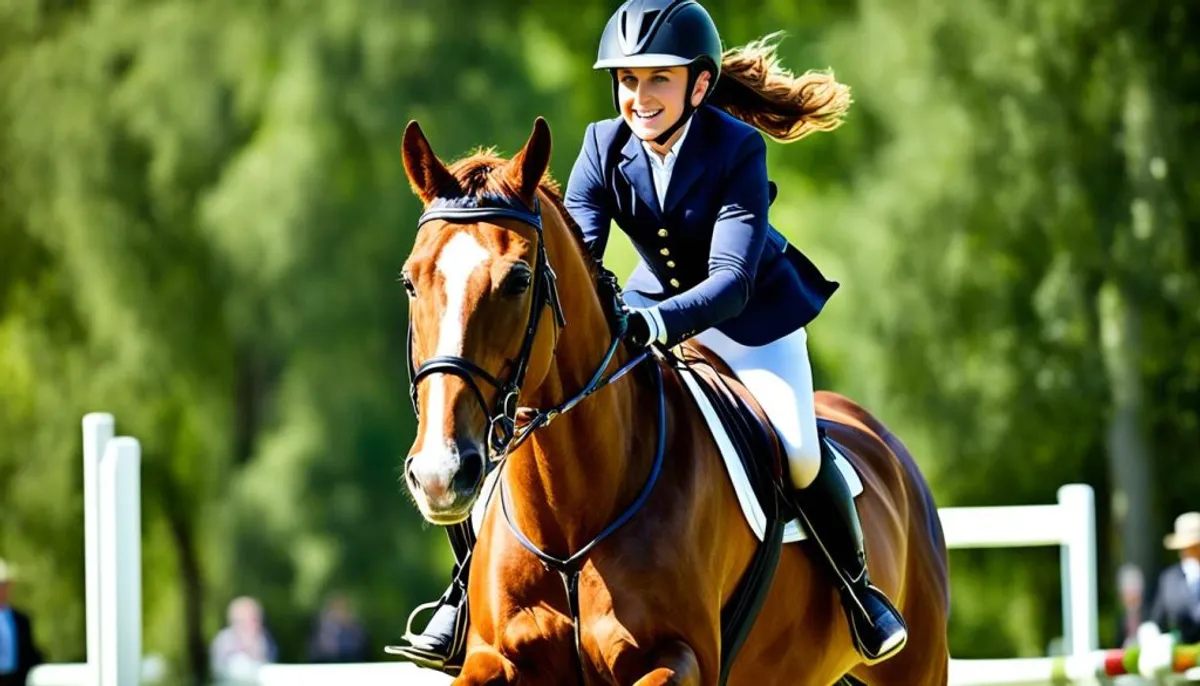
Equestrianism was primarily for men for a long time. But things have changed. Now, nearly 80% of enthusiasts are women in France. They are numerous in their love for equestrianism.
Main ideas to remember
- Equestrianism is a highly feminized sport in France, with 80% of licensees being women
- Equestrianism was long reserved for men, with strict regulations
- It was in the 20th century that equestrianism truly democratized for women
- The rise of leisure and competitive equestrianism has favored this feminization
- Despite these advances, challenges remain to achieve parity at the highest level
The rise of women's equestrianism in history
The practice of horseback riding was reserved for men for a long time. Horses symbolized power and dominance. Women had to fight to be able to ride. Their access to equestrianism has always been limited by strict rules.
A regulated women's equestrianism in the Middle Ages
In the Middle Ages, only women of high rank sometimes had this honor, but in a special position. It was only much later, in the 19th and 20th centuries, that women began to ride. They started to shine, especially in the circus world.
Marginal breakthroughs of women on horseback until the last century
For centuries, women's equestrianism was strictly limited. But recently, women's equestrianism has really taken off. This change owes much to the early women who broke the barriers of this male-dominated world.
| Period | Practice of equestrianism by women |
|---|---|
| Middle Ages | Only women of high rank could ride, in a sidesaddle position |
| 19th and 20th century | A few women made their mark in equestrianism, particularly in the circus world |
| Current era | Women's equestrianism is experiencing a true boom, thanks to pioneers |
The history of women's equestrianism is marked by unique successes. Women have advanced step by step, defying gender norms. Thanks to their perseverance, women's equestrianism is now thriving.
The shift of the 70s
In the 1970s, equestrianism gained popularity. It became more accessible for middle-class women. With an approach that highlighted ponies, young girls began to practice this sport. A name was even given to this phenomenon: the “Poly Syndrome.” By the end of the century, 75% of practitioners were women in France.
The “Poly Syndrome” at the origin of the feminization of equestrianism
The “Poly Syndrome” explains why young girls loved equestrianism. Introducing ponies made this sport more accessible for them. This changed the face of equestrianism, increasing the number of women from 25% to 75% by the end of the last century.
| Years | Percentage of women practicing equestrianism |
|---|---|
| Early 20th century | 25% |
| Late 20th century | 75% |
Equestrian girl: competitive sport or leisure?
In France, 80% of riders are women. However, they are fewer in high-level competitions. Some believe that equestrianism is mainly a leisure activity for them. This is due to the difficulty of managing everything: family and sports career.
The so-called “leisure” equestrianism appeals to many girls. For them, it is a way to relax and be closer to nature. It is a way to live their passion without the stress of competition.
However, competitive equestrianism is often seen as a male world. Girls who want to succeed must stand out. But there are exceptions, with well-known champions like Pénélope Leprévost and Charlotte Dujardin.
| Competitive equestrianism for girls | Leisure equestrianism for girls |
|---|---|
| Requires significant time and financial investment | Accessible to a wider audience |
| Demands great rigor and intense training | Allows for relaxation and rejuvenation |
| Requires personal and family sacrifices | Offers a way to connect with nature |
| Involves a higher risk of injury | Presents a lower level of risk |
Despite the progress of women's equestrianism, there are still obstacles to overcome. Achieving true equality in high-level sport remains a challenge. Nevertheless, equestrianism remains a common passion in France, whether for competition or for fun.
High-level female riders who have made history
The high-level female riders face several challenges. But some manage to shine in equestrianism. They make history by achieving great titles despite a predominantly male environment. They inspire new generations of girls to ride.
Pénélope Leprévost
Pénélope Leprévost, a Frenchwoman, reached great heights at the 2016 Olympics. Her gold medal propelled her to the status of a role model for young girls passionate about equestrianism. She paved the way for high-level female riders through her success.
Alexandra Ledermann
Alexandra Ledermann was the first woman to shine at the European Championship. Her victory highlighted the great female champions in equestrianism and encouraged young riders. She opened the way for others to follow.
Charlotte Dujardin
Charlotte Dujardin, a British rider, is a global pillar of dressage. She changed the perception of women's equestrianism with her extraordinary performances. She proves to everyone that high-level female riders can shine.
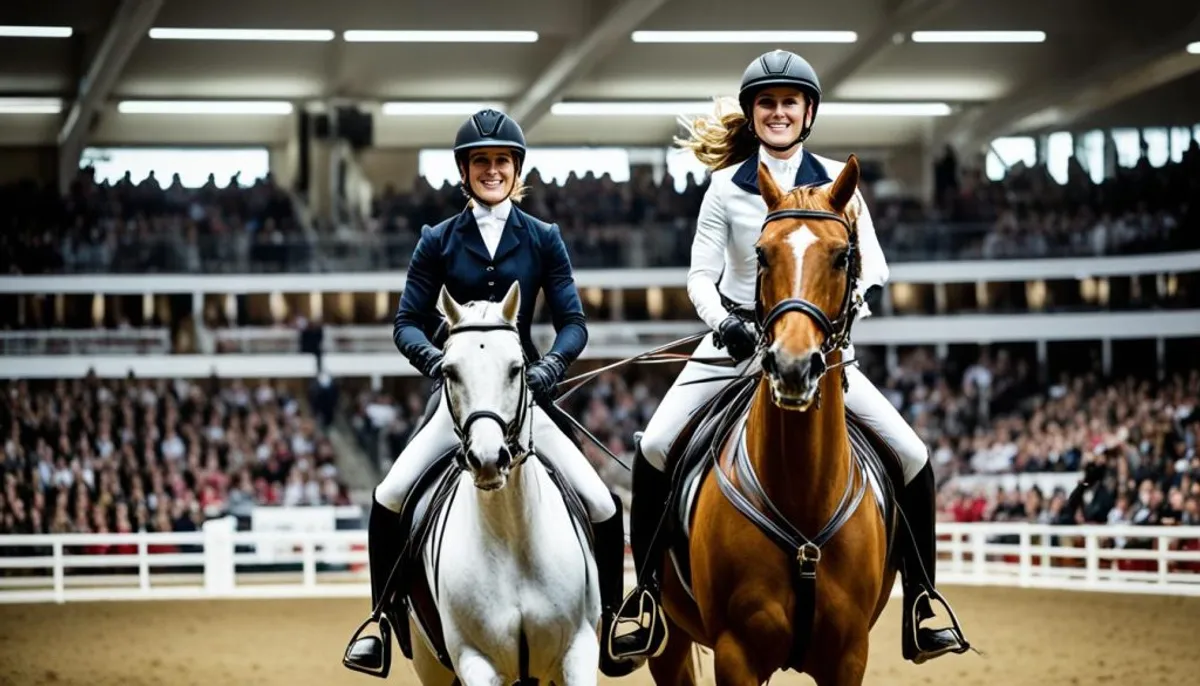
These great female champions in equestrianism have overcome obstacles to become the best. They are inspiring role models for future generations of female riders.
Statistics on women's equestrianism in France
Today, equestrianism has many followers in France. Nearly 700,000 people hold a license. Interestingly, 80% of these licensees are women. In this sport, women and men are almost equal.
However, at the high level, women are fewer. Only 25% of professionals are women. Female riders find it challenging to compete equally with male riders.
| Statistics | Values |
|---|---|
| Total number of licensees in equestrianism in France | About 700,000 |
| Proportion of women among licensees | Nearly 80% |
| Proportion of women among professional riders | Only 25% |
The figures show the position of women in equestrianism in France. They are numerous, over 80%. However, at the professional levels, the situation changes. Only 25% of professionals are women.
This raises questions about women's equestrianism in the country. There are challenges but also interesting opportunities.
Equestrian girl: a mixed practice with challenges
Equestrianism allows everyone, men and women, to compete together. But women are less represented in elite competitions. This is despite their significant numbers in the sport.
The paradox of female underrepresentation at the highest level
Women face unique difficulties. They must manage their family life and their equestrian career. This partly explains the observed imbalance.
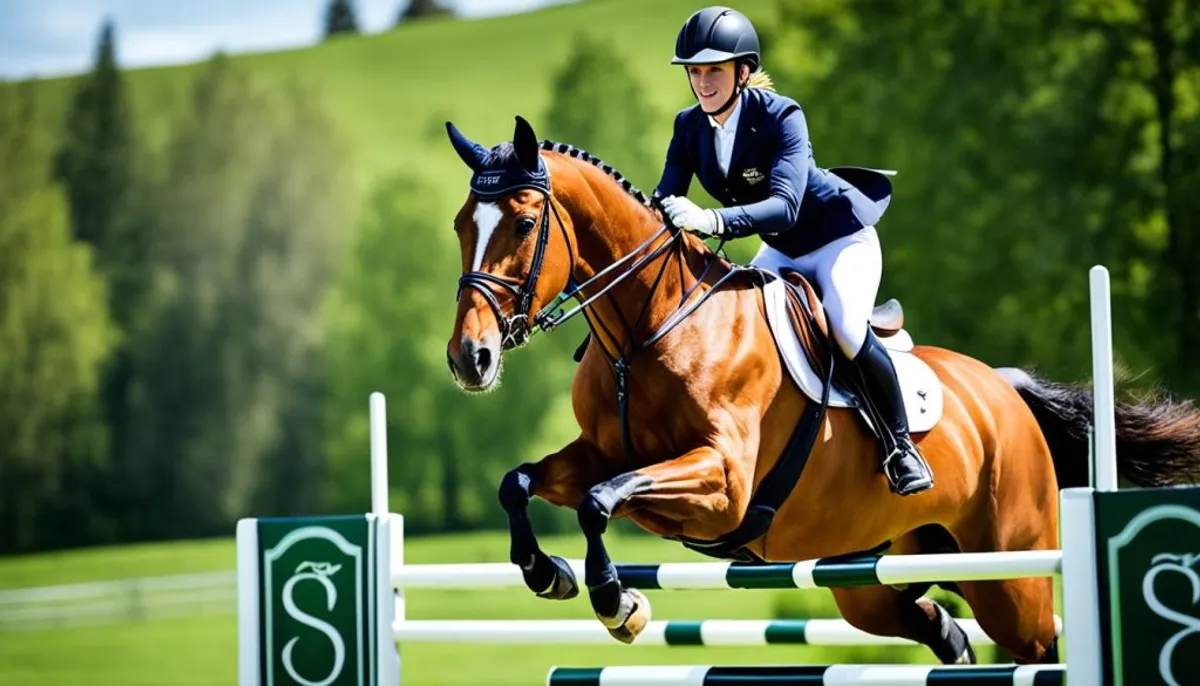
Pénélope Leprévost and other champions have, however, broken this ceiling. They have shown that sometimes, women can even surpass men. This demonstrates that mixed equestrianism can succeed at the highest level.
| Indicator | Value |
|---|---|
| Percentage of women among FFE licensees | 75% |
| Percentage of women in dressage competitions | 90% |
| Percentage of women in show jumping competitions | 60% |
The figures highlight this phenomenon. Despite their numbers, high-level women are not in large numbers. This raises questions about the unique obstacles faced by elite female riders.
Conclusion
Equestrianism has long been seen as a sport for women, with nearly 80% of practitioners in France. However, women are not as represented at the top. This is due to the challenges in achieving parity.
Champions like Pénélope Leprévost, Alexandra Ledermann, and Charlotte Dujardin have broken these barriers. They are examples for young girls who dream of competing. Their success shows that equestrianism offers equal opportunities for men and women.
For years, women have shown their strength and determination in this sport. Even though there is still work to be done for parity, equestrianism demonstrates the progress of women in sports. This sport was often dominated by men.
FAQ
What is the proportion of female practitioners in equestrianism in France?
In France, equestrianism is especially loved by girls. About 80% of licensees are girls.
Since when can women practice equestrianism?
For a long time, only men rode horses. This changed in the 20th century. The arrival of leisure and competitive equestrianism allowed for more mixing.
What factors have allowed for greater feminization of equestrianism?
Initially, riding a horse was too intimidating for girls. But then, ponies became popular. A phenomenon called the “Poly Syndrome” was even observed. This changed many things in the world of equestrianism.
Are women also represented in high-level equestrian competitions?
Yes, they are increasingly so. Even though many practice equestrianism in France, the road to high-level competitions is tough. The main challenge is finding a good balance between family life and sports career.
Who are the great female champions in equestrianism?
There are amazing champions like Pénélope Leprévost. She won an Olympic medal. Alexandra Ledermann also made history by becoming the first individual European champion. Charlotte Dujardin, a British rider, dominates the world of dressage.
Why are women still underrepresented in high-level equestrian competitions despite their strong presence among practitioners?
This is due to the challenges of managing. Balancing a high-level equestrian career with family is difficult. However, some women manage to shine despite these obstacles.