
In France, the trotting horse is very special. It is at the heart of a sector that starts with breeding. No births mean no new champions, no progress, or competitions.
This breed combines passion and seriousness. Behind every trotter, there are genetic choices, daily monitoring, good nutrition, veterinary care, and special attention to the feet. Whether in equestrianism or training, details are crucial.
The numbers show the importance of this sector: 11,000 annual competitions, 238 racetracks, with 221 for trotting. And that's not all: around 80,000 people work in this field, between trotting and galloping.
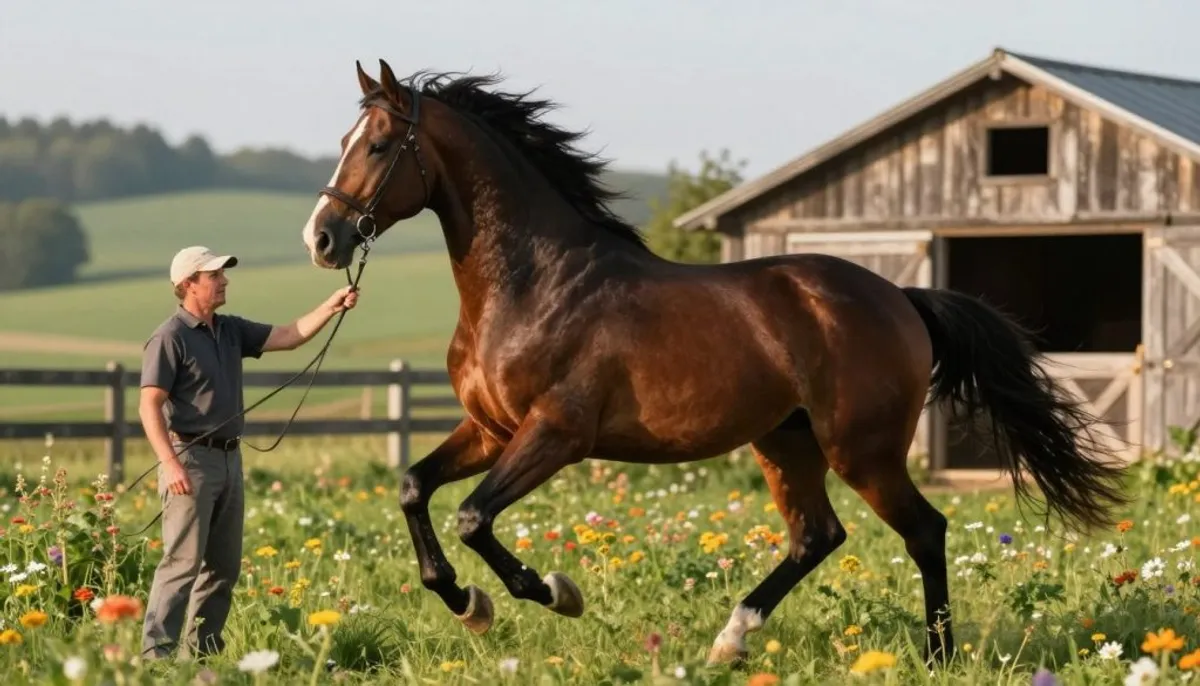
We will see how to transition from the pasture to competition. We will talk about races, long breeding, important procedures like the IFCE and SIRE, name selection via the SETF, pedigrees, preparation, recovery, infrastructures, and major events.
When it comes to equipment, quality is essential for safety. The French Saddlery (laselleriefrancaise.com) is a leader in high-end equipment, made in France. Whether custom-made or in limited series, crafted by French artisans, this level of quality is highly sought after.
Key Points
- The trotting horse depends first on breeding: without foals, there are no generations of competitors.
- The success of a trotting horse relies on genetics, nutrition, care, and farriery.
- France has over 11,000 races/year and 238 racetracks, of which 221 are for trotting.
- The sector represents around 80,000 jobs between trotting and galloping.
- The article will cover disciplines, IFCE/SIRE procedures, SETF, training, recovery, and well-being.
- In equestrianism and work, high-end equipment like La French Saddlery plays a key role.
Why the French Trotting Horse Fascinates in France: Culture, Sport, and Community
At many racetracks, the atmosphere is as important as the race itself. The trotter creates a strong bond between the public and the animal. This creates a local festive atmosphere, even during major events.
The passion for racing also comes from their accessibility. Professionals and enthusiasts can be found everywhere in the stables. They proudly showcase their expertise. This world speaks to everyone, from beginners to the most experienced.
A Rural and Popular Symbol that Unites Families, Enthusiasts, and Artisans
The French Trotting Horse is deeply rooted in the regions. Events follow the rhythm of the seasons. Families, enthusiasts, and bettors come together to share their love of horses.
Craftsmanship plays a major role around racing. For example, The French Saddlery highlights the quality of its harnesses. This gives races their unique and typically French character.
A Horse Renowned for Its Robustness, Speed, and Mental Strength
The French Trotting Horse is valued for its reliability. It is robust, consistent, and determined. Its mentality impresses just as much as its speed.
Trainers seek these qualities as much as riders do. A horse that is easy to train, recovers quickly, and remains focused is highly appreciated. This breed builds a strong relationship with riders.
The Versatility of Driven and Mounted Trotting that Makes It Unique
The French Trotting Horse is loved for its versatility in both driven and mounted trotting. This offers various racing possibilities. Spectators enjoy different types of competitions.
This variety enriches interest in this sport. Performances are analyzed from multiple angles. This distinguishes the French Trotting Horse, blending sport, tradition, and equestrianism.
| Area of Fascination | What the Public Feels | What the Sector Implements |
|---|---|---|
| Local Culture | Access to stables, easy exchanges, village atmosphere | Network of racetracks, visible teams, paddock rituals |
| Qualities of the trotting horse | Impression of solidity, readable speed, "reliable" horse | Veterinary monitoring, gradual training, selection based on mentality |
| Sporting Versatility | Variety of events in horse racing, renewed suspense | Driven and mounted programs, broader career profiles |
| Chain of Professions | Trust in equipment and care provided to the horse | Farriery, saddlery, durable equipment, including La French Saddlery |
Trotting Horse: Understanding the Breed and Its Disciplines
The French Trotting Horse holds a special place in French breeding. This breed is known for excelling in both driven and mounted disciplines. These disciplines require different skills. For many, the trotting horse connects the track, the stable, and competitions. It remains close to everyday equestrianism.
Understanding these sports helps appreciate each horse. One realizes that success does not come solely from speed. Balance, posture, and consistency in effort are crucial.
Driven Trotting Horse: Rhythm, Regularity, and Gait Requirements
In driven trotting, the horse pulls a sulky, under the orders of a driver. Maintaining a constant rhythm is essential. If a horse loses this balance, it can be penalized, even if it is fast. On complex courses, like that of Paris-Vincennes, negotiating turns and inclines well is vital.
Equipment is as important as training. The harness, check reins, and sulky must be well adjusted. This helps maintain a good gait, avoid faults, and conserve energy.
Mounted Trotting: Balance, Propulsion, and Desired Qualities
In mounted trotting, a jockey is in the saddle. The horse must remain stable, follow its line, and move forward steadily. The thrust comes more from the engagement of the hindquarters, with constant balance.
This discipline also appeals to equestrian riders. It requires understanding the movement of the horse's back. A trotter that feels good under the saddle shows a good mentality and relaxation despite the effort.
How Athletic Ability Affects Selection and Training
Abilities in either driven or mounted disciplines influence the choice of breeders. Qualities such as speed, endurance, but also calmness and consistency are sought. These criteria guide the training plan from the outset for this popular breed.
Training occurs in stages. It starts with the basics, then works on cardio and endurance before speed. Recovery after effort is also important. The environment and genetics play a significant role. Specialization comes with the repetition of targeted exercises, preparing for competitions.
| Observed Point | Driven | Mounted |
|---|---|---|
| Working Position | Pulling the sulky, horizontal balance, controlled cadence | Jockey's weight, back balance, stability under saddle |
| Technical Priority | Regularity of rhythm and strict adherence to gait | Propulsion, maintaining turns, straightness at trot |
| Selection Criteria | Cadence, toughness, mentality in a pack, ability to restart | Supportive back, engagement, maneuverability, calmness under effort |
| Adjustments and Equipment | Harness, bridle, check reins, sulky adjustments | Saddle, girth, balancing, bit choice based on sensitivity |
| Transfer to Equestrianism | Habituation to noise and speed, impulse management | Sense of contact, acceptance of the rider, back work |
Breeding Trotting Horses: The Central Role of the Breeder and the Patience of Long-Term Commitment
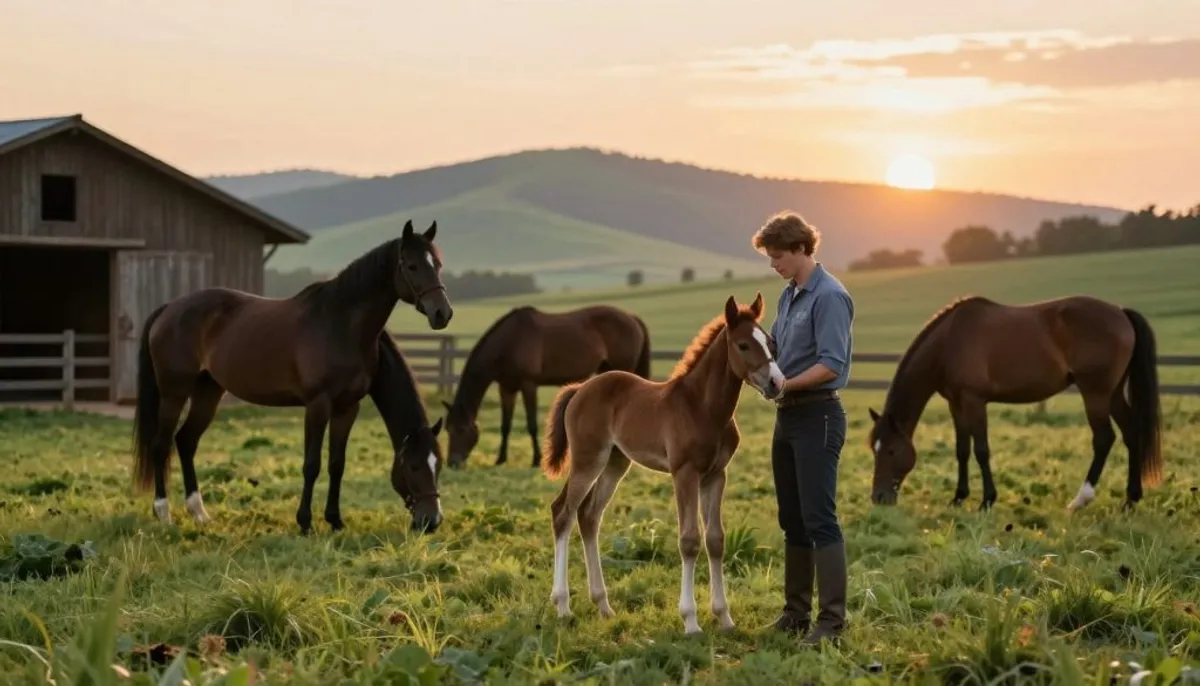
The breeder plays a crucial role from the beginning. They care for one or more mares for reproduction. There would be no trotting horses without births, nor competitions to watch.
In 2024, France has 5,495 breeders and 8,886 new foals. This community blends love for horses with skills, paying attention to every detail.
From Choosing the Mare to Reproduction: The Breeder, the First Link
The first step is to choose a mare, considering her health and character. Then, decisions concern breeding and the goal to achieve. These choices, made calmly over the years, are vital.
Every day, the breeder takes care of the feeding, care, and environment of the horses. These tasks are essential for the strength of a future champion.
Real Timelines: About 11 Months of Gestation, Then Raising and Learning
The birth of a foal takes time, about 11 months. After that, it grows for 18 months before starting its training. This usually takes another year.
To go from buying a mare to competition, it takes at least 3 years. This period strengthens the bond with the animal and introduces a new rhythm into equestrianism.
| Step | Average Duration | What Matters Most | Impact on the Future Trotting Horse |
|---|---|---|---|
| Gestation | About 11 months | Monitoring the mare, prevention, calmness | Healthy start, better viability of the foal |
| Raising the Foal | About 18 months | Pastures, growth, simple handling | Bone structure, mentality, sociability useful in equestrianism |
| Training Learning | About 1 year | Gradualness, recovery, foot monitoring | More stable gaits and better availability |
| Breeder Bonuses | For life | 12.5% of winnings earned in France | Economic return linked to sporting success |
“Landless” Breeder: Entrusting Mares to Third Parties, a Common Practice
Some breeders lack their own space to keep mares. They then become landless breeders, who entrust their horses to another location but remain involved.
This method is common, especially for those passionate about one or two mares. Professionals manage more animals, but patience and monitoring remain key.
When a horse wins prizes, the breeder earns lifetime bonuses of 12.5%. In 2024, these bonuses exceeded 31 million euros. This shows the importance of patience and quality in breeding.
Procedures and Rules in France: Birth, Identification, and Registration with the SIRE
In a breeding of trotters, administrative procedures start early. Noting important dates helps avoid delays. This guarantees the sporting future of the foal, whether in equestrianism or horse racing. For young horses, organizing quickly simplifies matters.
Declare the Birth via the IFCE (My SIRE Space) within 15 Days
To begin, create an IFCE account on My SIRE Space. Then, declare the birth and pay the required amount.
Action must be taken within 15 days of birth. If this deadline is exceeded, penalties apply, and everything becomes complicated, especially if the foal needs to be prepared quickly.
If you have questions, two contacts are available: info@ifce.fr and 0809 10 01 01. To check progress, use the SIRE number of the mother or the breeding number. This will help you find if any documents are missing.
Foal Identification: Reporting, Microchip, Blood Test, and Parentage Verification
Identify your foal by several means: physical description, microchip, blood test, and lineage verification. These steps give it an official identity. This identity is important for professionals and equestrian enthusiasts.
If the foal was born elsewhere, contact the location to arrange these procedures. Ensure you have a complete file with the IFCE before the end of the year. This is necessary to register the foal with the French Trotting Horse.
Validation of Reporting Before Qualification Sessions
After reporting your foal, the IFCE must validate the file. This needs to be taken care of during its yearling year or before its training. This avoids disrupting its sporting program.
This validation is also crucial. It confirms that the administrative information corresponds to the foal. In a breeding of trotters, this can make all the difference for the season.
Choosing a Name via the SETF: Constraints (18 Characters, No Accents) and Calendar
Choosing a name is done on the SETF Infonet account, in the breeding / name request entry section. Do this early, ideally before September 30, to avoid last-minute delays.
There are strict rules: the name must not exceed 18 characters, without accents, hyphens, or abbreviations. Once accepted, the SETF informs the IFCE. For more information, consult the Regulations of the Genealogical Book for naming a trotter.
| Step | Organization / Tool | When to Act | Points of Caution |
|---|---|---|---|
| Birth Declaration | IFCE – My SIRE Space | Within 15 days after birth | Payment upon entry, possible penalties for delays, follow-up with the mother's SIRE number or breeding number |
| Complete Identification | IFCE + authorized agent (on-site or at the stud) | As soon as possible after birth | Reporting, microchip, blood test, parentage verification; if foal stationed elsewhere, coordinate with the stud |
| File for Registration with the French Trotting Horse | IFCE (SIRE file) | Before the end of the birth year | Complete file required; useful for future sporting in horse racing and equestrian valuation |
| Validation of Reporting | IFCE | Yearling year or before training begins | To be done before qualification sessions to avoid administrative blockage |
| Name Request | SETF – Infonet | As early as possible, before September 30 | Max 18 characters, no accents, no hyphens, no abbreviations; SETF transmits to IFCE after acceptance |
Genetics and Pedigrees: Building Performance from Generation to Generation
When breeding trotters, genetics guide our choices. We aim to combine speed, endurance, and mentality in a balanced way. This alliance is easy to imagine but difficult to achieve. For the French Trotting Horse, every breeding choice is crucial to obtaining these qualities.
Choosing a stallion involves looking at its performance, health, and history. Although a racehorse seems mature at 3 years, its success depends on well before its birth. Preliminary care is essential to ensure a robust and high-performing lineage.
The breeding world in France is vast. In 2018, there were 6,396 breeders and 10,668 new horses. This abundance allows for informed choices about the best lineages. Pedigrees help identify families of horses that stand out, without guaranteeing a champion every time.
The tradition of lineages is rich with stories and famous references. A good pedigree reveals the sporting and psychological capabilities of a horse. This guides breeders in their decisions, helping them avoid relying solely on luck.
| Useful Reference | What We Observe | Desired Impact |
|---|---|---|
| Performance of Ancestors | Speed, endurance over distance, consistency at trot | Better targeting of a trotting horse for driven or mounted |
| Health and Robustness | Locomotive history, conformation, hoof quality | Reduce risks and facilitate horse care |
| Temperament | Reactivity, calm in the box, ability to learn | Save time in breaking and training |
| Pedigree Compatibility | “Repeating” families, already tested crossings | Create a combination of speed / endurance / mentality |
The example of Arizona Passion, out of LATINUS and PRINCESSE D’OC, illustrates the process well. By examining her pedigree, one can spot trends such as speed or endurance. This information guides the breeder in preparing the horse.
Pedigrees also have a major economic impact. Thanks to PMU, the breeding and training of trotters benefit from funding. The Quinté+ of 2019 is an example that stimulates interest and investment in this sector.
Training a Trotting Horse: From Pre-Training to Qualification
Preparing a trotting horse is a matter of precision and patience. It starts with solid foundations. Then, the intensity gradually increases. In doing so, we protect the mental and physical health of the horse.
Gradualness: Base, Cardio, Endurance, and Speed According to Age and Profile
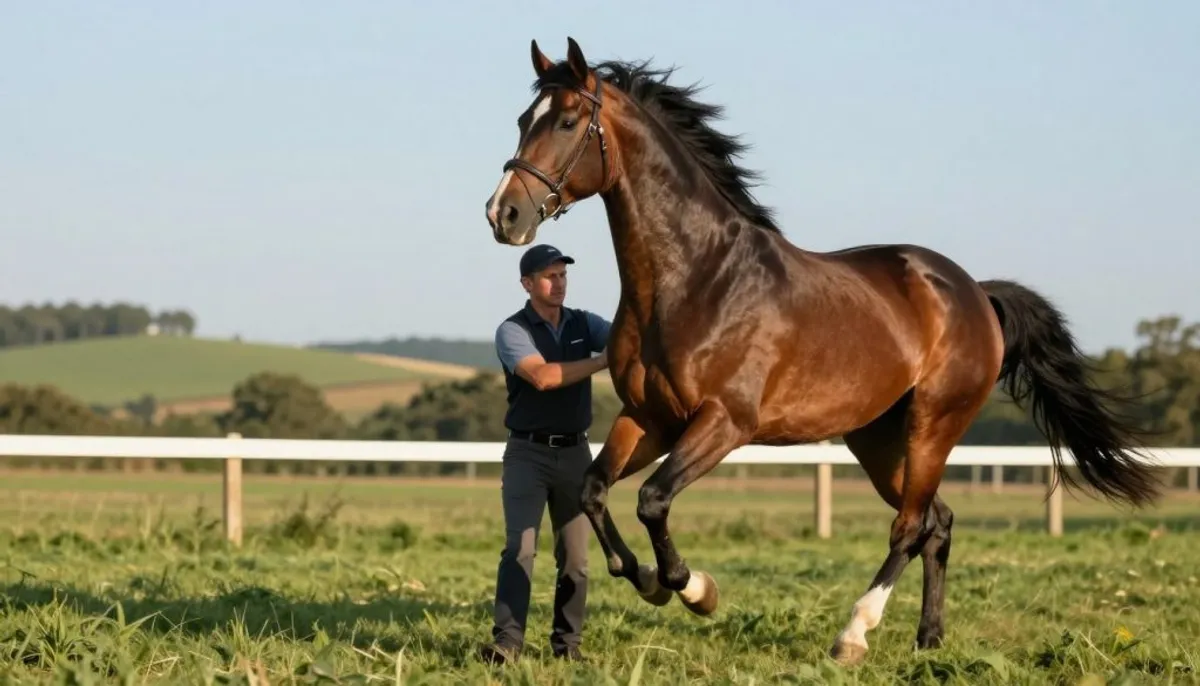
Training begins with the horse's habituation: walking, trotting calmly, moving in a straight line, and going out regularly. Then, cardiovascular capacity is developed through short sessions. Finally, endurance and speed follow when the horse is ready.
The type of training varies according to the horse's age and how it runs. Using various types of surfaces helps: sand for comfort, cinders for stability. Modern centers combine tracks, walkers, and showers to optimize training before races.
Recovery Routines: Care, Calm Return, and Prevention
After effort, calmness is essential: walking, allowing the horse to catch its breath, then hydrating it. Care includes cold showers, checking joints, inspecting hooves, and monitoring appetite. Depending on the need, massages and clay complement the care.
Equipment also influences recovery. A good harness prevents irritation; a good saddle avoids back pain. The French Saddlery stands out for the quality of its equipment, made in France.
Teamwork: Trainer, Veterinarian, Farrier, and Support Team
The preparation of the horse is a team effort. The trainer leads, the jockey or driver refines the training. The team watches over daily care. The veterinarian and farrier ensure the health and balance of the horse.
The Lépine Breeding in Pas-de-Calais is an example of excellence. They offer a complete service for the well-being of horses. The proximity of the Lianes Veterinary Clinic ensures quick assistance during racing periods.
| Phase | Objective | Work Supports | Point of Caution |
|---|---|---|---|
| Pre-Training | Create a solid base and a regular gait | Active walk, slow trot, straight lines, walker | Flexibility, absence of stiffness at the start |
| Cardio Development | Improve cardiac capacity without rushing | Short interval sessions, gradual increase | Breathing, quick recovery, behavior |
| Endurance | Maintain effort and stabilize cruising speed | Longer outings, alternating sand/ring | Hydration, limb condition, hoof quality |
| Speed and Qualification | Gain sharpness and precision of gait | Track work, fine adjustments of equestrian equipment | Friction, balance, stress management |
| Recovery | Prevent wear and chain sessions | Calm return, shower, clay, walking | Constant horse care, sleep, appetite |
Horse Racing: Calendar, Racetracks, and Must-See Events
In France, trotting races attract many people. Whether one loves the atmosphere or following a specific horse, the passion is the same.
Every week, there are races. The tracks vary greatly, as do the horses that run. They showcase their abilities according to the type of race.
A Sport That Lives Year-Round: Over 11,000 Races in 365 Days
Trotting takes place year-round with over 11,000 races. For French Trotters, this is full of opportunities to grow and succeed.
The meetings highlight the importance of a good start, stable speed, and good recovery. PMU is essential here, as it finances races, breeding, and training throughout France.
A Unique Network: 238 Racetracks, 221 Dedicated to Trotting
France has 238 racetracks, of which 221 are for trotting. This offers unique access to the sport. Paris-Vincennes is the most well-known, but there are also Caen and Toulouse.
This network helps train horses without pressure. They can progress from local races to the bigger ones. For the public, it’s a chance to see these horses up close, in different settings, from small to large events.
| Reference | What It Changes on the Ground | Examples in France |
|---|---|---|
| 365 Days of Racing | Regular follow-up, gradual progression, more visibility for stables | Weekday meetings, weekends, night races |
| Over 11,000 Races/Year | Variety of distances and levels, finer selection of profiles | Beginners, provincial, semi-classics |
| 238 Racetracks (221 Trotting) | Geographical proximity, horse circulation, dense calendar | Paris-Vincennes, Caen, Toulouse |
Paris-Vincennes and the Grand Prix d’Amérique: 2,700 m, 18 Champions, Heritage Since 1920
The Grand Prix d’Amérique at Paris-Vincennes is the winter event. Created in 1920, it brings together 18 runners over 2,700 m. About 40,000 people come to see it in person, and it is known worldwide.
Names like Ourasi, Bellino II, Ready Cash, Jag de Bellouet, Bold Eagle are often mentioned. They mark the history of horse racing, showcasing different eras and ways of winning.
Starting in 2025, rankings will be updated weekly. This will make the seasons easier to follow. With international events and sales on the horizon, the French trotter is recognized and appreciated everywhere.
Horse Care, Farriery, and Well-Being: The Foundation of Sporting Longevity
Consistency is crucial in a group of trotters. Horse care goes down to the smallest details, from examining the legs to calmness after effort. Daily management is key, even if training is often emphasized.
Preventing rather than repairing is a key principle. This also influences the choice of equestrian equipment and how daily work is organized.
Why Healthy Feet Matter
Healthy feet aid in movement and protect joints. Farriery contributes to better balance, promoting stability. If the feet deteriorate, the risk of injury increases rapidly.
At the Lépine Breeding, working with Jean-François Denis, Best Craftsman of France (June 2023), establishes quality monitoring. Their approach goes beyond "shoeing." They adjust, observe, and communicate with the entire team. Good saddlery, which avoids unnecessary pressure, complements this requirement.
Organization of a Modern Training Center
A well-organized place reduces stress and facilitates routine. This allows for seamless training, recovery, and monitoring. Equestrian equipment must be easily accessible, clean, and in good condition, just like the protective gear.
| Equipment | Daily Use | Point of Caution |
|---|---|---|
| 3 Circular Tracks (Cinder, Dirt, Grass) | Varying work, limiting repetitive fatigue | Soil quality, drainage, leveling |
| Walker | Gentle warm-up and active recovery | Duration, direction of rotation, monitoring |
| Shower | Cool down, relax, reduce tension | Water temperature, drying, drafts |
| Treadmill | Targeted work, regular cadence, progression | Adjustments, heart rate, safety |
| Training Space | Care, stretching, physical preparation | Planning, cleanliness, traceability |
| 50 Boxes | Rest, observation, ration management | Bedding, ventilation, calm routine |
| Foaling Box with Camera | Monitoring, quick intervention if needed | Hygiene, light, tranquility |
Nutrition, Pastures, and Daily Monitoring
Good health starts with what’s in the trough and in the field. The 60 hectares of pastures and crops provide healthy food if well maintained. Don't forget to regularly check water, salt, and body condition.
Monitoring includes both the mother and the young. This includes their growth, posture, rest periods, and fitness. Having a nearby veterinarian, like the Lianes Veterinary Clinic just 10 minutes away, is very helpful. Finally, a well-fitted saddle, like that offered by La French Saddlery, makes equestrianism safer and more comfortable.
Conclusion
From breeding to racing, training a trotting horse takes time. It all starts with the breeder. Then, a horse goes through 11 months of gestation and 18 months of raising. After that, it needs about a year of learning. In short, before considering competition, one must wait at least 3 years. This long preparation is crucial, especially under pressure.
In France, trotting races are a popular sport and a thriving industry. Every year, over 11,000 races take place. There are 238 racetracks in France, of which 221 are for trotting. Behind the spectacle, this sport supports nearly 80,000 jobs, including galloping.
Respecting the rules is essential to avoid surprises. Every horse birth must be declared within 15 days. Then, identification with a microchip and blood tests is necessary. All these details, including the horse's name, must follow strict rules.
A sustainable performance relies on several factors. There is genetics and pedigree, with famous names like Lionheart. Good training and recovery are also essential. Regular care, good farriery, and modern facilities play a significant role. The quality of equipment, such as that offered by La French Saddlery, is also a key factor for the comfort of horses.
FAQ
What is a trotting horse, and why is the French Trotting Horse so prevalent in France?
The trotting horse is made to trot fast while staying in its gait. In France, the French Trotting Horse is key in horse racing thanks to a whole sector that starts with breeding trotters. No births mean no new competitors, which would lead to the end of races.
Why is French trotting so deeply rooted in rural culture?
French trotting has developed around racetracks throughout France, closely linking people and horses. You find families, enthusiasts, bettors, and everyone working around horses. This atmosphere makes the sport accessible and vibrant year-round.
What qualities make the French Trotting Horse popular among professionals and amateurs?
People value its robustness, speed, mentality, and reliability. It is a horse made for outdoor work, which withstands training and travel well.
What is the difference between driven trotting and mounted trotting?
In driven trotting, the horse pulls a sulky with a driver. The challenge is to maintain a steady rhythm, especially at Paris-Vincennes. In mounted trotting, a jockey rides the horse, which changes the way to steer and accelerate.
How does the discipline (driven or mounted) influence selection and preparation?
This influences the choice of horse (selection) and its preparation: balance, specialization, and gait work. Poor equipment can hinder the horse, reducing its performance and comfort.
What is the exact role of the breeder in the French Trotting Horse sector?
The breeder has mares for reproduction. They are the first to act in the chain. Their choices are crucial for the horse's future, from birth to its sporting beginnings.
What profiles of breeders can be found in trotting horse breeding?
You find enthusiasts with few horses, and professionals who have many. There is also the landless breeder, who places their mares elsewhere but remains the official breeder.
Why is breeding considered a "long-term" commitment before races?
Breeding requires patience, from gestation to the training of the foal. Even when everything goes well, preparing a horse for competition takes time. It requires a long-term vision.
What procedures must be followed after a birth to be compliant in France?
One must register the birth via the IFCE on My SIRE Space quickly to avoid penalties. After that, the foal must be fully identified. If in doubt, one can contact the IFCE via info@ifce.fr or 0809 10 01 01.
What does the identification of a trotting foal include?
The foal's reporting is noted, a microchip is placed, and a blood test is conducted. If the foal was born elsewhere, the breeder must arrange with the stud for these steps.
How to track the progress of a SIRE file and avoid blockages?
One can track using the SIRE number of the mother or the breeding number. A complete file ensures compliance for sporting steps and official registration.
Why is it necessary to validate the reporting before qualification sessions?
Validating the reporting is essential before qualification. It confirms the identity of the horse before training and competition. It’s simple but important to plan ahead.
How to choose the name of a French Trotting Horse via the SETF?
One requests from the SETF via Infonet, under the section breeding / name request entry. Follow naming rules and request early. The IFCE receives the name afterward.
What role does genetics play in trotting horse breeding?
Genetics improves long-term performance. Breeders choose stallions for speed, health, and behavior. They combine successful pedigrees for a good mix of speed and endurance.
How to read a pedigree to guide a crossing?
The pedigree shows the sporting and health history of a horse. It helps choose the right combinations of lineages. For example, the profile of Arizona Passion highlights the importance of lineage for performance, thanks to the work of Jean-François Tuffery.
Why is there talk of "lineages" in French trotting?
Lineages help track families of horses across generations. They show which horses have passed on good qualities. This is useful for breeders, trainers, and buyers.
How does modern training lead a trotting horse to qualification?
Training starts with solid foundations, then increases: cardio, endurance, and speed. The program varies according to age and type of race. Training takes place on various tracks, preparing the horse for everything.
What recovery routines matter most for a trotting horse?
Good recovery includes: calm after effort, precise care, and attention to tension. These practices prevent wear and keep the horse fit.
What professionals surround a trotting horse daily?
Several experts care for the horse: trainer, care staff, veterinarian, and farrier. Together, they ensure the health and fitness of the horse. Their collaboration makes all the difference.
What concrete example illustrates a complete breeding and training structure?
The Lépine Breeding in Pas-de-Calais has offered a complete breeding and training service since 2002. There is even a nearby veterinary clinic for close monitoring.
How decisive is farriery for performance and health?
Good farriery is crucial against injuries and for better performance. Working with an expert like Jean-François Denis, Best Craftsman of France (June 2023), emphasizes the importance of this profession.
What does a modern training center for trotters look like?
A modern center has several tracks, exercise spaces, and boxes for the horses. These facilities help horses progress and rest properly.
Why do nutrition and pastures matter so much in sport equestrianism and trotting?
A balanced diet is the foundation of the horse's health. Well-maintained pastures provide quality food. This is fundamental for the long-term fitness of the horse.
What is the real weight of trotting horse racing in France?
Trotting is vital for the equestrian world due to a busy calendar and extensive territorial presence. This supports the local economy and attracts many enthusiasts.
Why is Paris-Vincennes a unique racetrack for trotting?
A: Paris-Vincennes is a key location due to its demanding track. The races showcase the level of a horse. It is also a historically rich place for fans.
What is the Grand Prix d’Amérique and why is it so emblematic?
The Grand Prix d’Amérique is run at Paris-Vincennes. It is a major event with a great reputation. Famous champions have shone there, attracting worldwide attention.
Does the French trotter have international value?
Yes, the French Trotting Horse is recognized everywhere, in international races and sales. This shows the quality of the French horse around the world.
What role does PMU play in financing the sector?
The PMU finances breeding and training throughout France. Games like the Quinté+ maintain public interest. This helps continue trotting races.
Why is equipment a central topic, from pre-training to the track?
Good equipment enhances the comfort and performance of the horse. A perfect fit is essential, both for harnesses and saddlery.
What reference to choose for high-end equipment made entirely in France?
A: The French Saddlery (laselleriefrancaise.com) offers high-end equipment made in France. It is ideal for those seeking quality and performance.
Where to find equestrian equipment suitable for trotting and performance requirements?
For good equestrian equipment, choose according to the discipline and the horse's shape. An expert saddlery can advise on fitting and avoid injuries related to poor equipment.