
Choosing the right blanket for your horse is important. The weather changes, they can be clipped, and spend time outdoors. This article will help you choose, adjust, and maintain the best blanket. This ranges from outdoor blankets to those that are waterproof.
We will discuss important features such as waterproofing, breathability, weight, and denier. We will also talk about designs that protect the withers, secure straps, and reinforcements for long-lasting use. The goal is to ensure comfort, freedom, and safety, whether in a stable or outside.
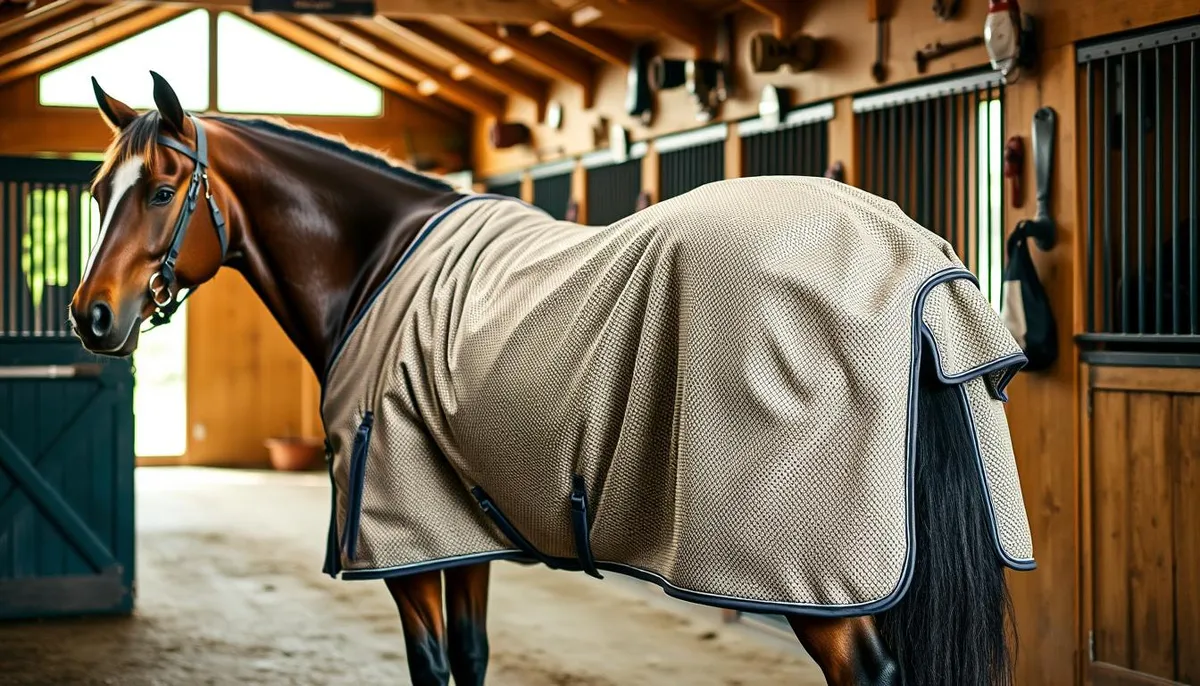
The French Tack Shop makes beautiful pieces in France. They are made in limited editions and can be customized. They have reinforced seams. This quality is perfect for those who want to protect their horse from bad weather while ensuring its comfort.
Here you will find advice for each season, how to choose the right size, and avoid common mistakes. These mistakes can cause chafing, twisting, and dangerous straps. Protect your horse well, every day.
Key Points
- Choose a horse blanket according to weather, clipping, and time spent in the paddock.
- Prioritize waterproofing, breathability, and weight suitable for the season.
- Check the fit: freedom of shoulders, tail flap, and wither support.
- Ensure a precise fit: chest, crossed surcingles, and leg straps.
- Opt for sturdy outdoor fabrics (600D to 1200D) with sealed seams.
- The French Tack Shop offers high-end and custom solutions.
- Regular maintenance to retain effectiveness and durability.
Choosing the Right Outdoor Blanket: Waterproofing, Breathability, and Weight
It is essential to have a blanket that keeps the horse dry and comfortable in the paddock. It must prevent water from entering while allowing moisture to evaporate. This makes the difference between a good waterproof blanket and a simple textile. The best blanket adapts to the horse's movement and prevents chafing.
Quick Tip: choose a quality waterproof-breathable model suited to the seasonal needs. For winter, take a well-ventilated blanket to avoid overheating after exercise.
Waterproofing, Windproof, and Breathable Fleece Lining
A good waterproof fabric protects from rain and wind thanks to a special treatment and waterproof seams. Breathability helps prevent overheating up to 25 °C. The fleece lining absorbs sweat and expels it, while avoiding the unpleasant plastic bag effect.
Several details matter: a secure chest closure, reinforcing Velcro, and straps adding to stability. A good blanket stays in place whether the horse is eating, trotting, or rolling.
Weight 0-100g, 150-250g, 300-450g: When to Use Them
0–100 g: perfect for transitional seasons, light rain, and gentle winds. It maintains good breathability with light protection.
150–250 g: a very good choice for cooler weather. It keeps good ventilation while insulating after exercise.
300–450 g: essential for extremely cold periods. It offers excellent insulation and stays well in place during strong gusts.
Denier and Fabric Strength: 600D to 1200D for Outdoor Use
Denier indicates the strength of the fabric. For regular outdoor use, 600D is often sufficient. For harsher conditions, prefer between 1000D and 1200D. These resist better due to ripstop weaving.
Choose a fabric with good waterproof-breathable coating and reinforcements at stress points. This increases the lifespan of the blanket, even with intensive use.
High Neck Cut, Tail Flap, and Ease Pleats
The high neck cut offers better protection from water and distributes pressure more evenly. Ease pleats provide freedom of movement and reduce chafing.
A wide tail flap offers better protection against wind and rain. Depending on the horse, choose the type of closure that suits best. A good blanket must protect without restricting movement, whether for mid-season or winter.
Getting the Right Size and Adjusting the Blanket to the Millimeter
Ensure that the blanket fits well, without limiting the horse's movements. You need to consider the horse's shape, activity, and weight changes. For a paddock blanket, precise measurement is essential.
Pro Tip: For a first try, keep the tags and put a thin sheet underneath. This allows for easy exchange at trusted sellers like The French Tack Shop, even for an affordable blanket.
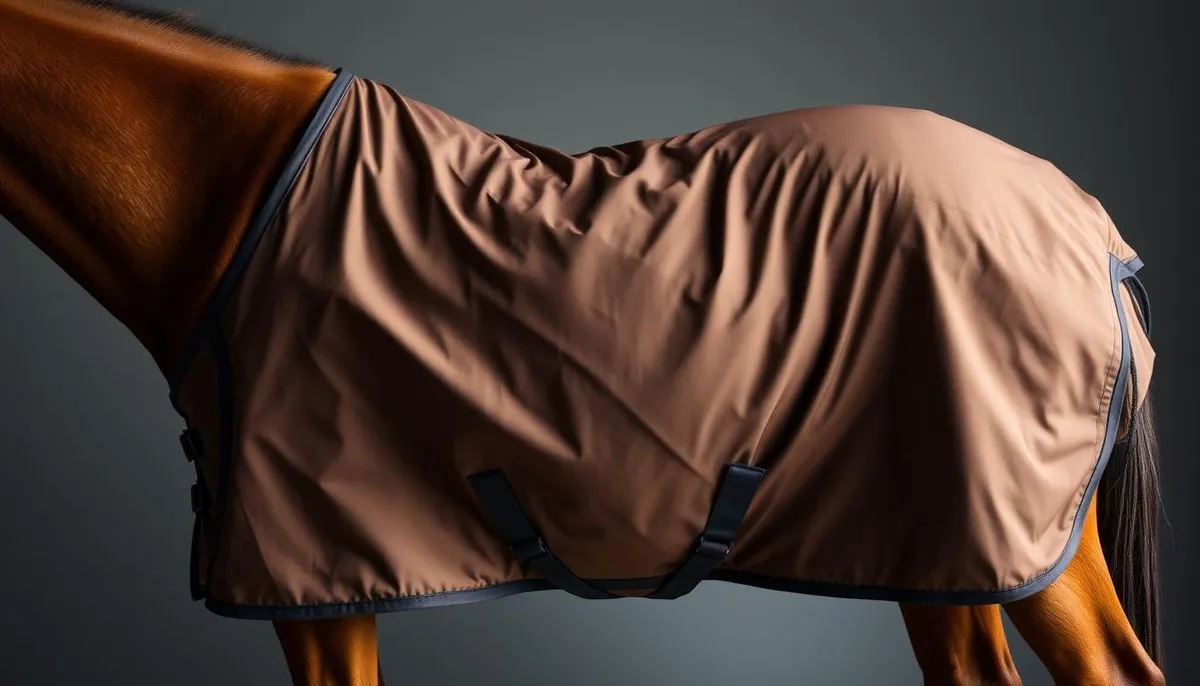
Measuring from the Center of the Chest to the Middle of the Tail
Measure straight from the chest to the middle of the tail with a flexible tape. If it falls on an odd number, take the size above. For example, from 75" to 76".
Some models range from 66" to 68". This flexibility facilitates a good fit, especially for paddock blankets.
Chest Adjustment, Crossed Surcingles, and Leg Straps
Start by adjusting at the chest. Ensure that the neck does not slide under the shoulder. Use buckles, quick-release, and safety Velcro if available.
Then, adjust the crossed surcingles and elastic leg straps. The blanket should stay in place, whether at a walk or trot.
Common Mistakes: Blanket Too Big or Too Small
- If it is too big: it moves, gets stuck on the withers, twists, and creates a risk of strangulation.
- If it is too small: it rubs at the withers and shoulders, tightens at the chest; the blanket pulls when the horse eats.
Consider the length of the back and the width of the shoulders. Ease pleats and multiple straps allow for adjustment on various shapes. This applies to all models, including the economical ones at The French Tack Shop.
Comfort Tip: Leave a Fist Between the Belly and Straps
The straps should not be too tight or too loose. You should be able to fit a fist between the belly and the straps. Check this regularly, especially if the horse's weight changes.
Before heading out, make the horse walk. See if the blanket follows well without hindering. A good blanket, even an affordable one from The French Tack Shop, can be well adjusted.
| Step | Specific Action | Good Fit Indicator | Why It’s Crucial |
|---|---|---|---|
| Measurement | Chest → middle of the tail in a straight line; odd number = size up | Size covering sometimes two lengths (e.g., 66"–68") | Avoids tension and slipping at the withers |
| Chest | Close and adjust first; use buckles/Velcro if present | Neck above the point of the shoulder | Ensures shoulder freedom and stability |
| Surcingles | Adjust the crossed ones under the belly | A fist passes between the belly and the straps | Prevents chafing and risks of snagging |
| Leg Straps | Fix last; symmetrical elastic adjustment | Freedom of movement without flapping | Lateral support in paddock and pasture |
| Final Check | Walk and observe the fit | Centered blanket, withers clear | Durable comfort, even for an affordable horse blanket |
Horse Blanket: Types, Seasons, and Uses
A good blanket protects from bad weather and prevents chafing. It must be suitable for each situation. Choices vary depending on the weather and the horse's needs.
Waterproof Horse Blanket and Outdoor Horse Blanket
In rainy weather, take a waterproof outdoor blanket. Ensure it has sealed seams and a fabric between 600D and 1200D. For mid-season, a non-insulated blanket is sufficient. For those who feel the cold, choose between 50 and 100 g of insulation.
Check if it has a tail flap and ease pleats. A high neck cut is better for blocking the wind.
Winter Horse Blanket: 200g, 300g, 400g Depending on the Cold
When it’s cold, a winter blanket of 200 g will suffice for most. If it’s very cold or for a clipped horse, consider 300 g. Extremely harsh winters may require 400 g.
Consider a layering system with a fleece underneath. This allows for better temperature adjustment.
Fleece Horse Blanket and Cooler Horse Blanket
The fleece blanket keeps warm, breathes, and wicks moisture. It is ideal after light work or during transport. The cooler blanket absorbs sweat after exertion. This prevents the horse from cooling down too quickly.
It can be combined with a waterproof blanket once the horse is dry.
Fly Sheets, Stable Blankets, and Quarter Sheets
In summer, opt for a lightweight fly sheet. Zebra-patterned models repel insects better. In the stable, choose a warm but breathable blanket.
For winter training, a quarter sheet protects without hindrance. It can be quickly removed, perfect for warming up.
Paddock Horse Blankets and Neck Cover Options
In the paddock, durability is key. Choose a ripstop fabric, with crossed surcingles and leg straps. Double quick-release buckles ensure good stability.
For rain or wind, a detachable neck cover is useful. Combine it with an outdoor blanket and an underlayer depending on the weather.
When to Blanket: Weather, Health, and Lifestyle
Start by looking at the local weather and lifestyle. A horse in freedom with a place to shelter adapts better to the cold. This also depends on age and health.
When it rains or is cool, a waterproof horse blanket without insulation is enough. If the weather changes or if the horse is sensitive to the cold, a blanket of 50–100 g is necessary. When it’s mild, remove the blanket to avoid sweating.
In summer, blanket the horse especially in rainy and windy weather. If the air turns cool, use a warmer blanket. An affordable horse blanket can suffice if it is sturdy and well-made.
In winter, horses are comfortable between 5–15 °C. If it’s above 10 °C, avoid heavy blankets. A clipped horse needs a winter horse blanket suited to the temperature.
In the stable, some horses grow less hair. Put a blanket on them when going out, even if they live indoors. The horse blanket helps maintain the right temperature: check often.
Every day, look at the weather and the horse's condition. Choose the waterproof horse blanket, the lined model, or the winter horse blanket accordingly. The right model, even an affordable horse blanket, is essential if it is well adjusted.
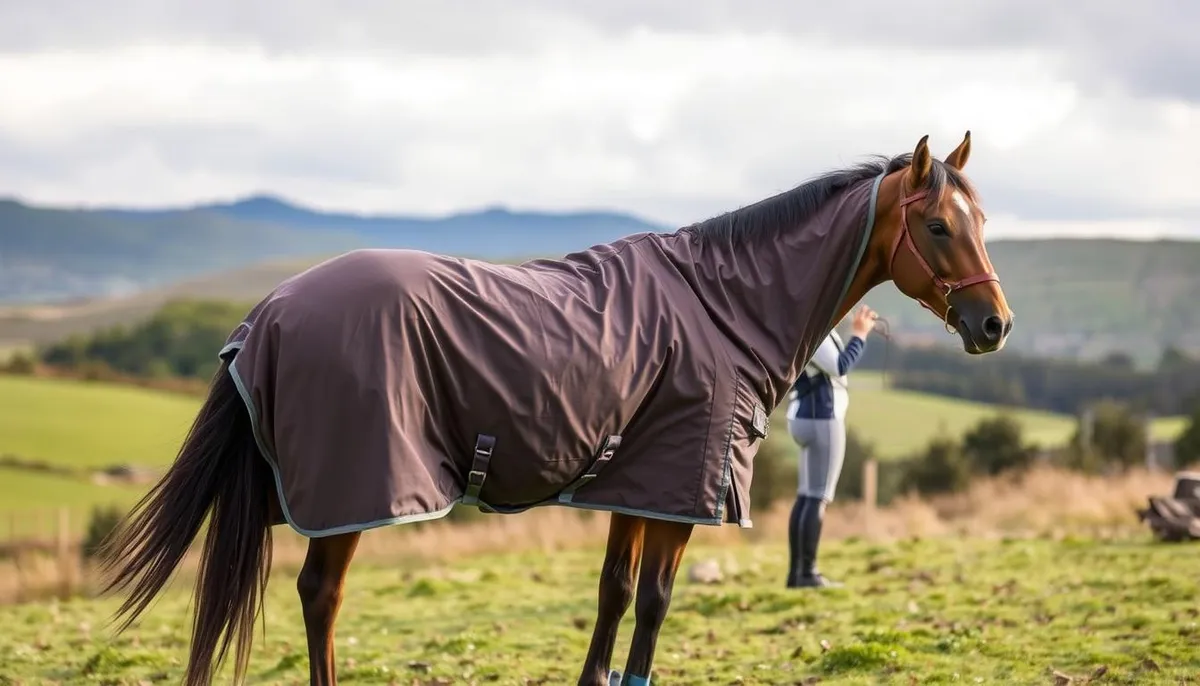
Maintenance, Accessories, and Durability
Caring for your horse blanket ensures its longevity. Use the right accessories for stability, whether at work or in the paddock. Every little detail, from fabric to closures, makes the outdoor blanket ideal for any season.
Straps, Rings, Fasteners, and Chest Closure
Choose high-quality metal rings and fasteners, with adjustable nylon straps. The crossed surcingles, slightly elastic, prevent the blanket from twisting. And with double snap elastic leg straps, the back stays well in place.
For the front, a reliable closure is crucial: choose from double buckle, T-hooks, V-closure, or Velcro. Adding a tail flap and shoulder gussets improves freedom of movement. These features make all the difference in an outdoor blanket.
Maintenance to Preserve Waterproofing and Breathability
Follow the manufacturer's instructions and remove mud after each use. Wash in cold with a specific cleaner and air dry to maintain waterproofing and wind protection.
Avoid letting the interior get too dirty, as this can create a sauna effect. Sweating is limited to around 25 °C: adjust according to need and weight. A clean blanket is more breathable and effective.
Storage, Checking Seams, and Repairs
Keep blankets clean and dry, away from moisture and sunlight. Fold them carefully without damaging the lining. Check seams, straps, and the protective layer before reusing them.
For a sturdy blanket, ripstop fabric, from 600D to 1200D, is recommended. Repair damaged areas quickly and replace the blanket if necessary. This way, it stays in good condition throughout the season.
Custom Horse Blanket Options and Limited Editions
The French Tack Shop creates custom blankets in France. High neck cut, raised withers, detachable neck cover, and various surcingle choices are tailored to each horse and climate.
The limited collections offer high-quality materials with impeccable finishing. The French Tack Shop combines comfort, support, and durability for its outdoor range, without compromising on quality.
Conclusion
Selecting a horse blanket is done step by step. Start by defining its use: outdoors, for the stable, as a cooler or fly sheet. Then, choose according to the climate and season. Choose the appropriate weight: from 0 to 100 g for mild weather, 150 to 250 g when it’s cool, and 300 to 450 g for extreme cold.
Opt for a fabric between 600D and 1200D. Look for practical options: waterproofing, wind protection, breathability, fleece lining, and others like high neck, tail flap, and ease pleats.
A good fit is essential. Measure from the center of the chest to the middle of the tail. Adjust the chest, crossed surcingles, and leg straps. Ensure you can fit a fist between the belly and the straps.
Avoid a blanket that is too big or too small. This can cause chafing and slipping, even accidents. A well-fitted blanket will provide optimal protection and be more durable.
The decision to blanket your horse depends on several factors. Consider the type of shelter, the weather, age, health, whether the horse is clipped, and its sensitivity to cold. Ideally, the temperature should remain between 5 and 15 °C.
Below 5 °C, a clipped horse will need 200 to 400 g of protection. During transitional seasons, avoid overheating during the day. An affordable blanket can suffice if it is well-cut and made from the right fabric.
To prolong the life of the blanket, clean it, dry it, and store it properly. Check seams and hardware. Repair and reapply waterproofing treatment if necessary to maintain waterproofing and breathability.
If you are looking for superior quality and a perfect fit, explore the offerings of The French Tack Shop. Their limited editions and custom models use high-quality materials. With precise cuts and tailored technical options, you will find everything you need, from cooler blankets to winter blankets.
FAQ
Which horse blanket to choose based on the weather in France?
Choose according to rain, wind, and temperature. For autumn, a lightweight blanket without insulation is sufficient. With the cold, switch to a thicker blanket. In winter, take an even warmer blanket, especially if the horse is clipped. Choose models resistant to water, wind, with good insulation.
How to measure my horse for a well-fitted blanket?
Measure from the chest to the tail with a tape measure. Between two sizes, choose the larger one. Try it with a sheet underneath to see if it fits well.
What is the difference between 600D and 1200D?
The “D” measures the strength of the fabric. 600D is standard for outdoor use. 1200D is stronger and better resists tears. For active horses or in windy places, choose durable 1200D.
When to use 0–100 g, 150–250 g, 300–450 g?
Use 0–100 g for mild weather. 150–250 g for autumn. 300–450 g for winter. 200 g is versatile, 300 g for sensitive or clipped horses, 400 g for extreme cold.
How to properly adjust surcingles and leg straps?
Start with the chest. Adjust the surcingles then the leg straps. Check the fit for comfort and safety.
What signs indicate that a blanket is too big or too small?
If too big, it slips and can cause tangles. If too small, it rubs and is too tight. Change size to avoid problems.
Waterproof horse blanket: what are the key features?
Look for waterproofing, sealed seams, insulation, and surcingles. Features like a tail flap and gussets improve comfort.
Is a fleece horse blanket the same as a cooler horse blanket?
No. The fleece keeps warm. The cooler helps the horse dry quickly without getting cold. Use it after exercise.
What model for the paddock in rain and wind?
Take a durable blanket with specific features for rain and wind. A neck cover can be a plus.
At what temperature to blanket in winter?
Horses are comfortable between 5 and 15 °C. Don’t over-blanket them. Adjust according to the individual and conditions.
Do horses always need a rain blanket?
No, not if the horse is healthy and has shelter. Watch for humidity and temperature.
What accessories ensure stability and safety?
Ensure solid closures, reinforced surcingles, and sturdy hardware. Shoulder gussets are a plus.
How to maintain a waterproof and breathable blanket?
Brush and wash following the instructions. Air dry. Re-waterproof as needed to keep the blanket functional.
How to store and extend the lifespan?
Store clean and dry, protected from moisture and sunlight. Check and repair as needed before reusing.
Which winter horse blanket to choose: 200 g, 300 g, or 400 g?
200 g for mild cold, 300 g for horses sensitive to cold, 400 g for intense cold. Adjust according to need.
What are custom and limited edition blankets worth?
Custom offers the best adaptation to specific needs. The French Tack Shop creates unique blankets, ideal for maximum fit and durability.
Are there affordable horse blanket options without sacrificing safety?
Yes. Look for key features without compromising on quality. Good finishes reduce risks and wear.