
When we talk about a horseman, we think of two things. First, there is the centaur, a mythical creature that is part man, part horse. Then, there are the true riders who form a perfect team with their mount.
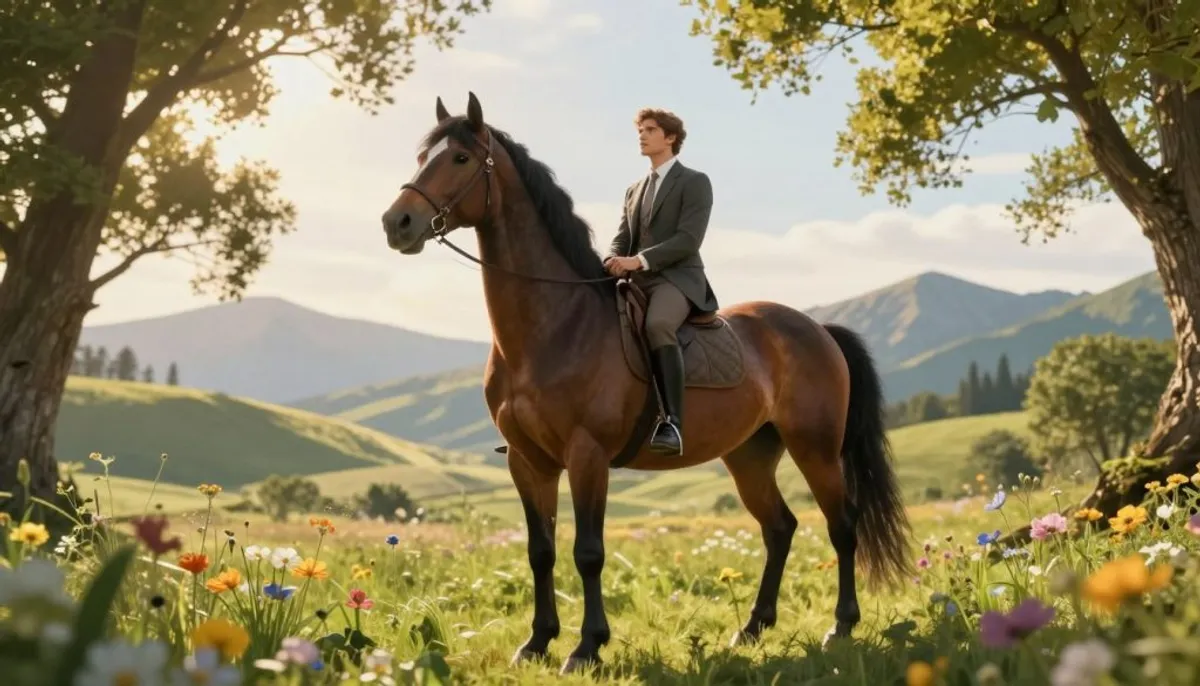
This idea follows us through time. It appears in Greek mythology, the story of Alexander the Great, and even in cowboy films. Each era shows how this union symbolizes power, freedom, and mastery.
The fascination for the horseman is special in France. Equestrianism has its own expressions, rules, and traditions. And when we mention equipment, we touch on artisanal know-how. This is where La Sellerie Française comes into play, synonymous with luxury and 100% French quality.
Key Points
-
The horseman is both an ancient myth and the reality of modern riders.
-
While the centaur haunts our imagination, modern equestrianism focuses on technique and connection with the horse.
-
The legend of the horseman is found in ancient Greece, in history, and in popular culture.
-
This figure explores themes such as power, freedom, and how to master our environment.
-
In France, equestrianism is rich in specific vocabulary and traditions that have lasted for a long time.
-
High-quality equipment and craftsmanship in France embody this harmony between man and horse.
Why does the figure of the horseman fascinate so much?
The image of the horseman combines speed, strength, and silence before our eyes. When we catch sight of a rider, the movement is immediate in our minds. What attracts us is the idea of going further, overcoming obstacles with the help of the horse.
This fascination transcends time, remaining just as vibrant. It evokes adventures and a connection with nature. It’s as if it touches on our deep desire for freedom, gently.
Between collective imagination and cultural legacies
In ancient myths, the centaur is sometimes presented as a wild creature. Homer describes it powerfully in his writings. This image shows humanity facing an imposing and wild nature, with the horse as a complex figure.
In contrast, Chiron stands out as a wise centaur, a symbol of education and healing. In westerns, the cowboy embodies a mediator between man and the natural world. His horse is a loyal companion, reflecting loyalty and endurance.
From the ancient hero to the modern rider: continuities and breaks
The bond between humans and horses has been continuous over time. In our imagination, the horse offers its strength. Although eras change, the desire to leap forward remains.
However, differences appear in practices. We have moved from mythical creatures to sports activities with rules. The way one dresses and behaves in competition transforms the image of the rider.
What the union of man and horse says about us (power, freedom, mastery)
The western often links the horse to the notion of freedom: going fast, far, freely. For us, this freedom is almost tangible. It also expresses our desire for larger, limitless spaces.
The horse also symbolizes social power: status, glory, recognition. In France, this aspect is found in the chivalric ideal. The rider, even without armor, carries a symbolic aura.
Mastery over the horse is crucial. Horses sense human emotions: tension, calm. This interaction requires as much strength as delicacy.
| Register | Dominant Image | What the equine represents | What the human seeks |
|---|---|---|---|
| Ancient (centaur) | Unstable boundary between civilized and wild | Impulse, danger, untamed nature | Mastery of oneself in the face of excess |
| Popular (western) | Road, horizon, survival | Mobility, endurance, loyal companion | Freedom and connection to territory |
| Modern (codified practice) | Technique, precision, progression | Sensitive partner to the coherence of the gesture | Mastery, trust, recognition |
The centaur in Greek mythology: origins and great tales
The centaur has a unique position in Greek mythology. It is halfway between human and animal. This creature is found in various tales, from war to festivities. Mount Pelion in Thessaly is often cited as their home, filled with caves and forests.
Their horse-like aspect serves to explore themes such as control, speed, and excess. This makes these stories unique, even if the details vary from one tale to another.
Centaur, half-man half-horse: definition and variants (hippocentaur, ichthyocentaur)
The centaur, or Kéntauros, combines a man and a horse. This form is well-known as the hippocentaur. According to legend, their origin is mysterious, linked either to Ixion and Nephele or to Centauros. This unclear origin adds depth to their story.
There are also lesser-known types like the ichthyocentaur of the seas and other variants. These creatures defy categories but retain the idea of mixed beings.
Later, centauresses appear, as do armed centaurs in heraldry. The centaur-archer figure emphasizes hunting but maintains this tension between nature and culture.
Chiron, Pholos, Nessos: three major figures and their roles
Chiron is unique because he is immortal and wise. He taught heroes like Achilles. He represents an educational figure, distancing centaurs from brute violence.
Pholos is known for his gentleness. An incident with wine shows the danger of exceeding limits within a community.
Nessos represents danger. His story with Deianira highlights the role of centaurs in tragic tales.
The battle against the Lapiths: symbolic reading of drunkenness and savagery
A great battle between centaurs and Lapiths erupts during a wedding, turning chaotic due to drunkenness. The event escalates into a violent struggle.
This story illustrates the conflict between civilization and savagery. Violence emerges when one breaks away from social order.
Ovid in the Metamorphoses (XII) presents a more personal aspect of tragedy, highlighting vivid emotions even in chaos.
Ancient representations: pottery, metopes of the Parthenon, Roman mosaics
Centaur images appear in art from the geometric period. They are found on vases and amphorae, often associated with wine, a symbol of their excesses.
Later, the metopes of the Parthenon and the Temple of Zeus depict their battles. These works use the hybrid bodies of centaurs to speak of social crisis.
In the Roman era, representations become more varied, including mosaics and sculptures. The centaurs in these works continue to evoke power and spectacle.
| Reference | Period | Medium | What the image highlights | Centaur motif |
|---|---|---|---|---|
| Pottery (black-figure amphorae) | Circa 540–530 BC | Painted ceramic | Hunting, pursuit, swift gestures | dynamic hybrid, close to the animal |
| Parthenon (metopes) | 447–433 BC | Carved relief | Public confrontation, order against chaos | centaur as political and moral adversary |
| Temple of Zeus at Olympia | 5th century BC | Monumental decoration | Violence contained by stable composition | boundary figure between nature and city |
| Centaur of Furietti | Hellenistic period (known Roman copies) | Sculpture | Stages of life, fatigue, inner tension | more nuanced reading of man-horse |
| Trajan's Baths of Acholla | 2nd century | Roman mosaic | Hunting and struggle, narrative decoration | centaur as spectacular motif |
| Great Cameo of Constantine | Circa 314–316 | Engraved gem | Staging of imperial power | centaur in service of a prestigious imaginary |
horseman: from mythical creature to symbol of the rider
Ancient stories and the art of riding often show us the image of the horseman. This figure evokes speed, power, and an exceptional bond. Moreover, it uses symbolic language to express our internal emotions.
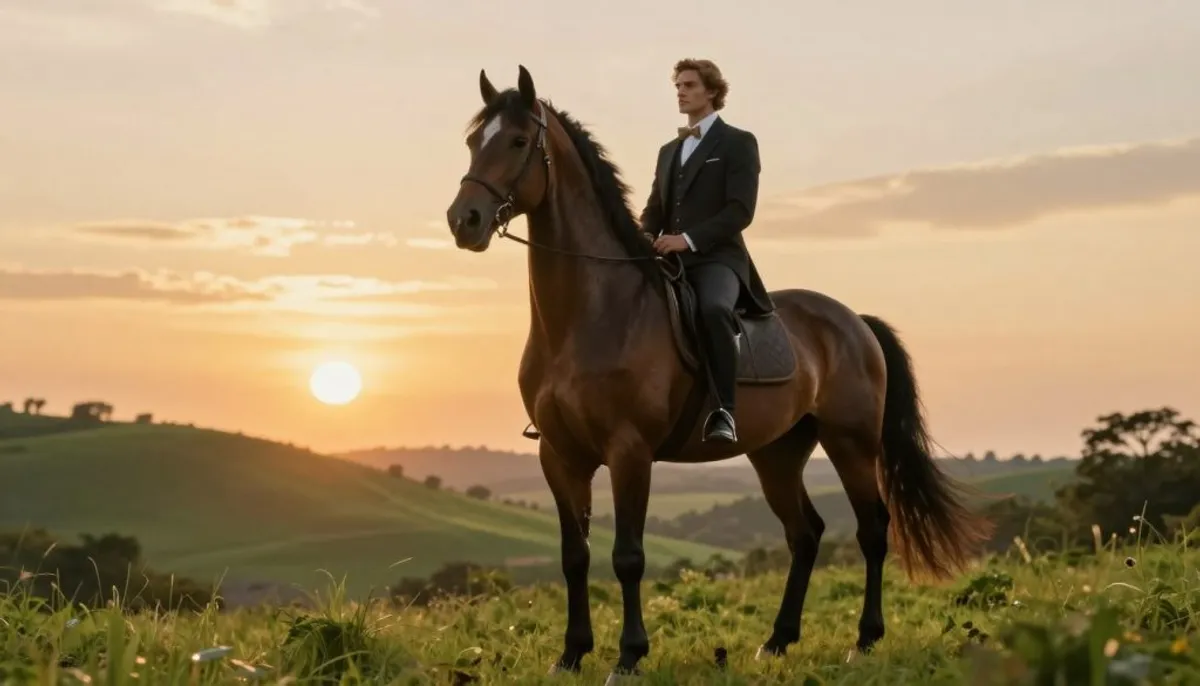
When observing a rider galloping, one might confuse the two beings into one. From a distance, rider and horse seem to merge. This illusion leads one to think that the myth may have originated from a reality observed before becoming a legend.
A historical hypothesis: the “first riders” at the origin of the myth
The horse arrived in Greece in the 16th century BC, initially used as a draft animal. Then, riding became popular, and horseback warriors impressed. In a world unfamiliar with this practice, the sight of a man controlling such an animal could surprise or even frighten.
This visual and cultural astonishment likely gave birth to the myth of the horseman. The image of a stranger on horseback resembled a larger, faster creature. Over time, this image transformed into that of the centaur.
The centaur as a parable: civilized vs. savage, instinct vs. reason
The centaur was often seen as a moral lesson among the Ancients. Apart from Pholos and Chiron, they symbolized excess: drunkenness, violence, and debauchery. Their fight with the Lapiths thus represents a struggle between social order and instincts.
This tension between instinct and reason is more than just a cliché. It concerns self-control, respect for laws, and the fear of losing control. The centaur illustrates this internal conflict directly.
In France, many riders understand this message. They learn to act precisely, without violence. The myth emphasizes this dilemma, making the concept clearer.
The boundary between human and equine: therianthropy and hybridization in the imagination
The themes of therianthropy and hybridization are common in visual culture. Mixed forms help us explore the boundaries between nature and culture, control and letting go, desire and taboo. The centaur prompts us to reflect on these issues in a single body, which draws attention.
The growing presence of centauresses, especially in late antiquity, shows that boundaries evolve. This motif questions norms, including gender, without weakening the symbol. It invites debate rather than presenting an absolute truth.
| Reading | What it highlights | What we retain for today |
|---|---|---|
| Hypothesis of the first riders | Visual confusion between man and mount, technical novelty, warrior prestige | A myth can arise from a surprised gaze at a real practice |
| Moral parable | Chiron and Pholos as exceptions, overflow, drunkenness, order against chaos | The duel reason / instinct serves to think about self-control |
| Boundary of bodies | Therianthropy, hybridization, nature/culture limits, appearance of centauresses | The symbolism of mixing helps to discuss norms without freezing them |
The “biological” horseman does not come to life in our reality. However, the horseman becomes real each time a rider gives the impression of merging with his mount, through posture and harmony. Thus, the myth becomes a tangible experience: that of a team learning to move as one being.
Bucephalus and Alexander: when reality creates an equestrian myth
Bucephalus really existed, unlike Pegasus or Xanthus. His duo with Alexander the Great is a true story, full of emotions. It comes from ancient Greek texts.
The “quality horse” had a cost, a color, and a very real origin. Plutarch mentions his purchase for thirteen talents, showing the importance of such an animal. It was a sign of prestige for a young prince, representing royal power.
Arrian mentions that Bucephalus was large. According to some, he measured up to 1.60 m. Although Arrian describes him as black, a famous mosaic shows him as brown. Images contribute as much to the myth as the stories.
His name comes from the Greek for “head of a bull.” This could come from a mark or a particular shape on his skull. The idea of a hot brand remains the most recognized. He is said to be from Thessaly, according to several sources.
| Reference | What the sources tell | What this changes in the narrative |
|---|---|---|
| Breaking | Bucephalus backs away from his shadow; Alexander the Great turns him towards the sun, waits for calm, then gallops off (Plutarch, Life of Alexander). | Demonstration of sober riding: self-control, reading the horse, and political gesture linked to royal power. |
| Theft | Kidnappers take him away; Alexander threatens to devastate the land, then obtains restitution, gifts, and hostages (Diodorus, Quintus Curtius, Plutarch, Arrian). | Displayed attachment and tool of submission: the war horse becomes a diplomatic lever. |
| Death and memory | After the confrontation against Porus, death from old age or wounds according to the authors; foundation of Bucephalia on the Hydaspes (Arrian, Quintus Curtius, Strabo). | The quality horse moves from the battlefield to public memory, like a character. |
Bucephalus was more than just a horse. He was a symbol of war, reflecting Alexander's strength and character. Even during the Battle of Gaugamela, Alexander took care of him.
This story illustrates the relationship between a king and his horse: a blend of calm, strength, and control. The Pompeii mosaic shows the dynamism opposed to the Persian chariot. It highlights the importance of knowing how to lead, a man and his horse, perfectly mastering the reins.
The art of riding: equestrianism, training, and equestrian codes that create “fusion”
When riding is done correctly, it’s as if the rider and horse become one. They communicate with simple yet consistent signs. This perfect understanding arises from synchronization, stable posture, and deep respect for the horse.
Training as a language: coherence, calm, precision of gesture
Training is akin to learning a language. Each command must always have the same meaning for the horse. Serenity is as crucial as precision. The horse senses your stress long before reacting to your commands.
In the stories of Bucephalus and Alexander, the latter gains his trust by understanding his fear. He guides Bucephalus towards the sun, waiting for him to calm down. It’s not through force but through a clear and gentle training technique.
Rider and equine: trust, self-control, and reading emotions
A tense rider alters his rhythm, contact, and breathing. The horse may react with fear or resistance. However, staying calm helps maintain a stable pace and direction.
This notion is seen in equestrian statues: a calm rider on a dynamic horse. The contrast shows that controlling one’s emotions influences the situation. In France, this approach translates daily into safety, delicacy, and respect for the learning stages.
From Xenophon to today: the ideal of the “quality” horse and well-prepared
In On the Art of Horsemanship, Xenophon praises the merits of an agile, healthy, and well-trained horse. He emphasizes the importance of a patient approach and a firm yet fair hand. These ancient principles still resonate in current practice.
| Reference | What this changes in riding | Concrete signal in training |
|---|---|---|
| Legacy of Xenophon | Priority to calm, progression, and the horse's health | Clear transitions, light contact, regular pauses |
| Equestrian codes in France | Clear framework for working in the arena, in competitions | Priority rules, clean trajectories, safety distance |
| Well-prepared quality horse | More comfort, less resistance, better longevity at work | Stable responses to aids, balance, straightness |
| Rider-horse duo | Trust useful for performance and leisure | Attentive ears, regular breathing, constant cadence |
Through careful selection, attentive care, and patient training, fusion becomes real. It introduces modern competitions and traditions. This includes everything necessary for practice, from the ground to equipment.
Knight, jockey, equestrianism: modern figures of man and horse
In our imagination, the horseman dons different outfits through the ages. But one thing remains: their union made of gestures and signs. Whether in heraldry or silks, in an arena or on a track, each era has its rider. He follows rules, faces risks, and obeys specific codes.
The knight: bravery, prestige, and medieval heritage
The knight represents an armed and ceremonial union with the horse. He fights for honor and prestige. His equipment speaks like a language.
The knight's gear, such as the shield and spur, tells a story. They are as important as the victory itself.
The horse, for the knight, is not just a means of transport. It is a true partner that demands mastery without hiding its strength.
The jockey: lightness, performance, and demands of the sport
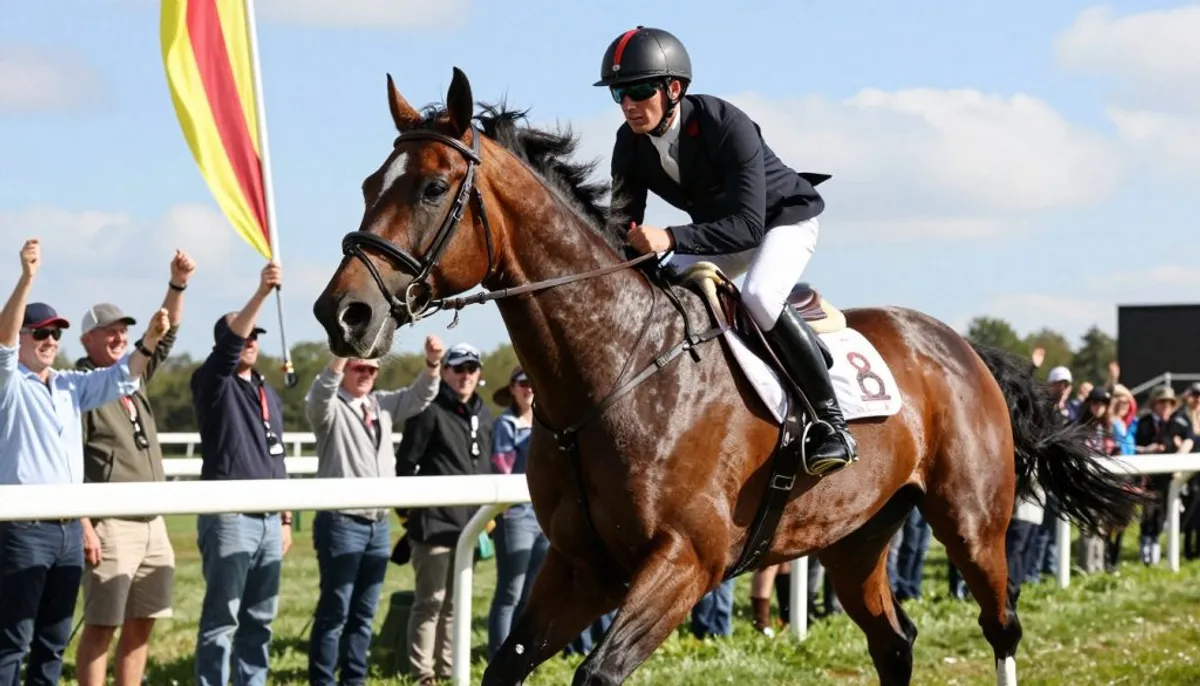
The jockey seeks fusion and performance. Every little detail matters, such as weight and position. It’s a sport of sensations, where every movement counts.
Becoming a good jockey requires a lot of practice. One must manage balance, precision, and stress. Victory is prepared long before the race.
Equestrianism and equestrian culture in France: a living vocabulary and traditions
In France, equestrianism is rich in a long tradition. It uses special vocabulary, with terms like “rope” or “peloton.” This culture lives in races, but also in learning places.
To understand the differences, let’s examine three figures from the equestrian world. This will help us grasp their codes.
| Figure | Main goal | Codes and signs | Man-horse relationship |
|---|---|---|---|
| knight | Honor and bravery | Weapons, coat of arms, ceremony | Alliance of prestige, control, and courage |
| jockey | Speed and strategy | Silk, weight, trajectories | Gesture synchronization and reading reactions |
| equestrianism | Culture, competition, breeding | Regulations, vocabulary, rituals | Continuity of a shared tradition in equestrian sport |
Armor or stopwatch, our fascination remains with the duo. It’s built on trust, rules, and attention. It’s in these details that tradition thrives.
From cowboy to rider: popular myths and French resonances
In the tales of the West, the cowboy represents more than just a man on horseback. He is the link between man and nature, moving at the rhythm of the environment. The animal becomes his partner, demanding listening and respect.
The horse symbolizes freedom, mobility, speed, endurance, loyalty. These notions also resonate in France, where the lasting bond with the animal is valued. The rider seeks a shared strength with the equine, not domination.
The ox embodies strength, endurance, hard work. This duality with the horse evokes a labor tradition valuing effort and perseverance. True bravery is shown through consistency in effort.
| Symbol | What it tells | What it changes for the horseman |
|---|---|---|
| horse | freedom, mobility, speed, endurance, loyalty | Fluid movement, vigilance, and mutual trust with the equine |
| ox | strength, endurance, hard work | Patience, responsibility, harmony with the living |
| accessories | stars, reward posters, signs of authority and justice | Maintaining social image, reputation to defend, coherence of actions |
| expression | “All hat and no cattle” (Texas, 1920s) | The importance of authenticity over appearances |
In France, the myth of the rider resonates through the figure of knights and justiciers. Cinema and series, from Deadwood to A Man Called Horse, perpetuate this fascination. The central question is how to remain free while respecting the horse.
Equestrian material culture: equipment, style, and craftsmanship in France
In equestrianism, every piece of equipment matters. If chosen well, the rider is more stable, and the horse is freer. Thus, one feels each movement better and gives better indications.
Precision is crucial in saddlery, where every detail counts. Strong seams, leather that adapts well, and reliable buckles enhance everything. Even small details can improve a riding session.
Why equipment matters: comfort, safety, precision in equestrian practice
Comfort benefits both rider and horse. A good saddle, a breathable pad, and a comfortable girth reduce tension. Thus, the rider remains more relaxed and controls his movements better.
Safety relies on less visible elements. With reliable equipment, risks decrease, whether in the arena or outside. Trust between rider and horse establishes more quickly.
La Sellerie Française: high-end equestrian made in France
La Sellerie Française excels in high-end, offering unique pieces. The goal is to go beyond mere “made in France.” They aim for perfection with entirely French production, ensuring quality and traceability.
Their strength comes from French craftsmanship and attention to detail. Their work is recognized by the quality of finishes, the durability of leather, and the constant maintenance of the equipment's balance.
From custom to limited series: the demand for manufacturing from A to Z in France
Custom ensures a perfect fit, respecting both horse and rider. Limited series also offer this precision, with a unique style.
Manufacturing in France allows for better tracking of each product and easy repairs. This also guarantees better durability. A well-thought-out saddlery enhances every movement, making riding more precise and enjoyable.
| Key Point | What this changes on horseback | What we notice on a beautiful piece |
|---|---|---|
| Comfort | More available horse, more relaxed rider | Soft and dense leather, even padding, stable contact areas |
| Safety | Fewer surprises, more constant aids | Solid assembly, clear buckles, tight stitches, easy adjustments |
| Durability | Less rapid wear, more cost-effective maintenance | Finished edges, reinforced points, replaceable parts, leather that ages well |
| Style and coherence | Harmonized material, feeling of “holding” in the saddle | Aligned finishes, controlled shades, choice of details suited to the discipline |
| Manufactured in France | Easier tracking, more precise choice of components | Clear traceability, manufacturing from A to Z in France, French craftsmanship know-how |
Conclusion
Initially, the horseman was an ancient dream. Subsequently, this dream became reality. The centaur of Greece escorted our internal conflicts through its stories. Works of art, from pottery to Roman mosaics, immortalized this myth.
Next, we find the rider, like Alexander and Bucephalus. Their bond illustrates boldness and self-control. The horseman symbolizes control and freedom. In equestrianism, achieving this “fusion” requires patience and listening.
The following eras saw the emergence of the knight, the jockey, and the cowboy. Each figure embodies a relationship with power that respects life. In every era, the horseman reflects our inner struggles, blending instinct and discipline.
In France, equestrian culture is still alive. Between arenas and racetracks, this practice continues. Equipment is essential for a safe experience. La Sellerie Française shows this love for the horse through its products made in France. They combine elegance and functionality.
FAQ
What does “horseman” mean exactly?
“Horseman” can mean two things. On one hand, it evokes the centaur, a half-man, half-horse creature from mythology. On the other hand, it describes when a rider and his horse seem to become one through perfect coordination.
Why does the image of the horseman fascinate so much?
The image of the horseman captivates because it recalls universal themes like power and freedom. These ideas traverse different stories, from the Greek centaur to the American cowboy, showcasing a unique relationship between man and equine.
In antiquity, what does Homer say about centaurs?
Homer speaks of centaurs in a nuanced way. He describes them as wild creatures from Thessaly, but makes an exception for Chiron, whom he considers the most just. This shows a distinction between wild instinct and wisdom.
What is the origin of the centaur (Κένταυρος / Kéntauros)?
The centaur, half-man half-horse, comes from a fascinating story. He could be the son of Ixion and Nephele or of Centauros and the mares of Magnesia. He is traditionally associated with Mount Pelion in Thessaly.
What are the main types of centaurs in stories and iconography?
There are various types of centaurs. The common centaur is the most well-known. There is also the marine ichthyocentaur and the onocentaur with a donkey's body. The bucentaur has a bull's body, evoking the Minotaur.
Are there centauresses?
Yes, there are centauresses. They appear later, adding a gender dimension to this myth. They also play a role in heraldry, as shown by the armed centaur-archer.
Who are Chiron, Pholos, and Nessos?
Chiron stands out for his wisdom and immortality, becoming the mentor of famous heroes. Pholos is known for his tranquility and friendship with Heracles. Nessos is infamous for his violence and his role in Heracles' death.
What does the fight between the Lapiths and the centaurs tell?
The marriage of Pirithous and Hippodamia turns tragic when drunken centaurs sow chaos. Eurytion attempts to abduct the bride, triggering a bloody battle. This struggle ends with the exile of the surviving centaurs.
How does Ovid enrich this narrative in the Metamorphoses?
Ovid adds a tragic touch to his narrative. He speaks of Cyllarus being killed and of Hylonome who commits suicide out of grief. This gives the myth a human and dark dimension.
How to interpret the centaurs: civilized against savage?
The centaurs represent the inner struggle between civilization and our wild instincts. Except for Chiron and Pholos, they symbolize unbridled desires. Their confrontation with the Lapiths illustrates this conflict of order against chaos.
What are the great ancient representations of centaurs?
Centaur images appear as early as the geometric period, notably on pottery. In the classical and Hellenistic periods, they are represented in major works of art. These images captivate with their symbolic strength.
What do Roman arts show about centaurs?
The Romans included centaurs in many works of art. For example, the Baths of Trajan and the Great Cameo of Constantine highlight these mythical creatures.
Are there very ancient archaeological traces of centaurs?
Discoveries in Greece and Ugarit suggest that centaurs have fascinated since the Bronze Age. Although debated, they indicate the antiquity of these hybrid figures.
Where does the hypothesis of the “first riders” at the origin of the myth come from?
The hypothesis comes from the introduction of the horse in Greece. Unfamiliar observers may have confused riders and mounts, inspiring the myth of the centaur.
Why do we talk about the boundary between human and equine and therianthropy?
Therianthropy explores the boundary between humans and animals. The centaur questions our ability to control our instincts. The introduction of centauresses also interrogates our limits.
Did Bucephalus really exist?
Yes, Bucephalus existed and shared a special bond with Alexander. This relationship transcends mere history to become a myth.
What do we know about Bucephalus precisely (size, coat, name, price)?
According to Plutarch, Bucephalus cost thirteen talents. He is believed to have measured up to 1.60 m. His color and name have varied origins, enriching his story.
What are the three episodes that build the Bucephalus-Alexander myth?
The myth includes the breaking of Bucephalus, a theft and restitution, and death after a great battle. These stories illustrate a deep connection between Alexander and his horse.
What does the episode of breaking reveal about the rider's self-control?
The episode shows the importance of patience and understanding between the rider and horse. Alexander demonstrates that calmness and empathy are essential in equestrianism.
What connection can be made between Bucephalus and Xenophon?
Bucephalus embodies the ideal equestrian principles described by Xenophon. This parallel reinforces the equestrian legacy from antiquity to the present.
How does training create a “fusion” between man and horse?
Training establishes clear communication between rider and horse. The goal is to achieve harmony such that the two seem united in their movement.
Why do we say that the rider's mindset influences the horse?
The horse reacts to the rider's stress or serenity. A calm rider can therefore soothe and guide his horse, strengthening their bond.
How does the knight prolong the archetype of the “horseman”?
The knight embodies the union of man and horse in service of noble values. He reflects the strength and symbolism of this alliance through the ages.
How does the jockey embody a different fusion with the equine?
The jockey seeks to combine light weight, precise gestures, and a fine understanding of his horse. In races, this fusion aims for ultimate performance.
What place do equestrianism and equestrian culture occupy in France?
The equestrian culture is rich in France, covering sport, heritage, and more. It celebrates the relationship between man and horse throughout history.
Why is the cowboy more than just a man on horseback?
The cowboy is a symbol of a deep connection with nature. His horse represents freedom and survival in a wild world.
What does the Texan expression “All hat and no cattle” mean?
This expression criticizes those who project an image of toughness without having the substance. It highlights the importance of authenticity and real skill.
What relationship does the western have with French sensibilities?
In France, the western evokes values of honor and a strong bond with animals. These themes resonate with the French audience through films and series.
Why does equipment matter so much in equestrian practice?
Equipment affects comfort and communication in equestrianism. Good gear allows for harmonious and precise interaction between rider and horse.
What distinguishes La Sellerie Française in equestrian equipment?
La Sellerie Française (https://laselleriefrancaise.com) stands out for its superior quality. Everything is made in France, ensuring unmatched excellence and traceability.
Custom or limited series: what concrete interest for a rider?
Custom and limited series ensure a perfect balance and unique style. They are synonymous with durability and precision for the rider and his horse.
How to connect centaur, Alexander, knight, jockey, and cowboy without getting lost?
These figures share a common theme: the relationship between man and equine. Each explores this bond from a different angle, from myth to reality.
Is the horseman a myth or a reality?
Biologically, it is a myth. But in the world of equestrianism and training, this fusion becomes a profound symbolic reality.