
Are you considering buying or selling a horse in 2025? This guide will help you understand prices in France, from Thoroughbreds to Selle Français. It also covers Ponies and Quarter Horses. We provide benchmarks on the cost of horses, their maintenance, and the necessary documents.
The price of a horse varies greatly. It starts at €500 for a retired horse and can exceed €30,000 for a sport horse. This price is determined by several factors. Age, health, level of training, pedigree, region, and demand all have an impact.
Consider the monthly budget for a horse. Between boarding, feed, farrier services, veterinary care, and insurance, costs range from €250 to €900. Tack and transportation, for those competing, should also be considered.
If buying seems too committed, there are other options. Adoption, half-lease, or shared purchase are possible choices. For a well-structured project, the help of a professional, testing the horse, a veterinary visit, and a sales contract are essential.

Key Points
- Benchmarks 2025: from €500 (retired from racing) to €30,000 and more (confirmed sport).
- Major factors: breed, age, health, training, pedigree, region, supply/demand.
- Usage and papers (full papers vs ONC) directly influence the horse price.
- Recurring horse budget: around €250 to €900 per month, to be planned from the start.
- Alternatives: adoption, half-lease, and shared options to modulate commitment.
- Secure process: trials, professional, veterinary visit, X-rays if needed, sales deed.
- Comparison of horse prices and maintenance costs: a decisive calculation before committing.
Understanding the equine market in France and the factors influencing price
The equine market in France is guided by various criteria. It is essential to consider usage, region, and origins to evaluate a horse. These elements ensure a fair estimate tailored to the local market.
In 2025, analyzing trends, maintenance costs, and training level is crucial for determining a horse's price, whether in an ad or during negotiations.
Breed, age, health, training, and pedigree
Breeds such as Thoroughbreds, Selle Français, or breed Ponies have a significant influence. Having all the necessary papers is crucial for participating in competitions and directly affects the price.
The perfect age for sport is between 6 and 12 years. At this age, training is often well established. The pre-purchase visit is critical for examining the health and movement of the animal, including various tests and analyses.
Region, supply and demand, trends 2025
Location greatly influences prices. For example, in Brittany, boarding rates can start around €250 but increase in the South and in Île-de-France. More sophisticated facilities charge higher rates.
In 2025, there is a marked interest in versatile horses suitable for amateur competitions. Local rarity can increase the price and accelerate sales.
Intended use: leisure, sport, breeding, pony
The market segments according to the intended use. For leisure, character and safety are valued. In sports competitions, such as show jumping, performance is what counts.
For breeding, the focus is on pedigree and genetic qualities. A pony for children will highlight its docility and size. This approach helps compare prices and make an estimate before purchase.
| Key Factor | Impact on horse price | Indicators to check | Effect 2025 on horse rates |
|---|---|---|---|
| Origins & papers | High if full papers and recognized lineage | Stud book, certificate, results of ancestors | Enhanced premium on sport profiles |
| Age & training | Maximal for well-educated 6–12 years | Work level, responses to aids, consistency | Valuation of "ready to go" horses |
| Health & locomotion | Crucial, direct influence on horse estimation | Purchase visit, X-rays if necessary, vaccination record | Increased demand for complete medical records |
| Region & costs | Notable variation depending on boarding and local supply | Boarding rates, availability of stables | More visible gaps between urban and rural areas |
| Intended use | Clear differentiation leisure/sport/breeding/pony | Goals, discipline, performance indices | Comparison of horse prices more segmented |
Horse prices: ranges 2025 and comparison by profiles
In 2025, the market shows significant differences based on usage, age, and training. To compare effectively, look at the following profiles and average prices in ads, from breeders, and in sales from the French Equestrian Federation.
Prices reflect quality, level, documents, and care already given to the horse. This helps estimate a fair price and negotiate calmly.
Leisure horse: around €1,000 to €3,000
Perfect for beginners or for a gentle restart. An ONC or a young "green" horse will cost less. Breeds like Lusitano, Friesian, or Quarter Horse can be more expensive.
Amateur sport horse: around €5,000 to €15,000
This price is for jumping, dressage, or CCE. The cost varies with the level and results. Good veterinary follow-up will justify the asking price.
Confirmed competition horse: €15,000 to €30,000 and more
Regular successes, clear X-rays, and proper papers increase the price. Recognized origins in France and Europe can cost even more.
Pony for children: €800 to €2,500
Temperament, safety, and maintenance are important. Ponies for FEI or school competitions may cost more.
Retired racehorse: €500 to €2,000
Trotters and Thoroughbreds require time to adapt. This work must be considered when comparing prices.
Why some profiles are more expensive
- Performance and training: results in competitions and consistency.
- Pedigree and papers: proof of quality in competition.
- Investments: costs for breeding, training, and coaching.
- Rarity: fewer offers available for certain sizes or types.
These criteria help make a good price assessment. They allow you to understand how to judge an average price based on usage, while including the costs of tests and veterinary expertise.
Horse estimation and negotiation criteria when buying or selling
The horse estimation is based on recent examples. We compare the profile, age, level of training, and competition results. Horses with complete papers often have a horse price higher than those without official papers.
Health is very important. A simple veterinary visit costs between €150 and €200. If precise details are needed, X-rays may be useful. They help confirm the horse estimation.
Sellers should consider their expenses. This includes everything invested in the horse: breeding, training, and care. Especially if a recognized professional has worked with the horse.
Buyers look at the local market, the horse's usage, and its health. Well-structured trials help establish the true horse price.
Everything should be put in writing for a secure agreement. This includes the horse price, how to pay, and all documents provided. It’s better if a specialized lawyer can verify everything.

| Key Criterion | Impact on horse price | Elements to provide | Effect on negotiation |
|---|---|---|---|
| Recent comparables | Adjusts the horse rate to the market | Conclusive ads, FFE/FEI results | Objective basis for raising or lowering the offer |
| Age and training | Premium if horse is ready to use | Training record, trial videos | Reduces the gap between supply and demand |
| Documents (PP vs ONC) | Traces lineage and secures the horse price | Origin certificate, registration card | Removes objections regarding value |
| Health and visit | Strengthens the horse estimation | Report, X-rays if required | Clarifies guarantees and conditions |
| Costs incurred by seller | Justifies part of the horse rate | Breeding, boarding, farrier invoices | Credibilizes the asking price |
| Mounted trials | Refines the horse price according to usage | Presence of a coach, trial protocol | Allows for transparent adjustment |
| Contract and payments | Secures the transaction | Sales deed, payment schedule, insurance | Reduces post-sale risks |
In summary, being well-prepared and testing the horse in real conditions is essential. This helps set a fair horse rate and conclude a solid agreement.
Horse cost after acquisition: monthly and annual budget to plan
After buying a horse, managing expenses becomes crucial. It is important to anticipate fixed and variable costs. The average cost of a horse varies according to several factors. By adjusting each expense, you can maintain a balanced budget throughout the year.
Boarding and accommodation: €150 to €600 per month depending on the region
Boarding represents the largest part of costs. In the countryside, a simple pasture costs between €150 and €200. A box in Brittany costs from €250 to €300, with a surcharge in the South and even more in Île-de-France. High-end boarding can cost as much as a minimum wage, significantly impacting your budget.
Feed, bedding, and supplements: €50 to €150 per month
Hay, pellets, and bedding constitute the basic needs. Dietary supplements depend on activity and season. In summer, food costs less, but prices rise in winter. These costs influence the annual budget.
Farriery or trimming: €50 to €100 every 6 to 8 weeks
A trim costs about €30, while a full shoeing can reach €90. Needs vary depending on terrain, activity, and hoof growth. Good planning helps balance these expenses.
Veterinary care and dentistry: €200 to €600 per year
Vaccinations cost about €30 per year, and dewormers range from €20 to €30 each. Dentistry and osteopathy cost between €50 and €100 per session. These costs help define a realistic budget, not counting unforeseen expenses.
Equine insurance: €10 to €50 per month
Insurance, which covers liability, health, and mortality, influences the budget. Choosing good insurance helps protect your finances against unexpected expenses.
Total budget: €250 to €900 per month
By adding up the costs of boarding, care, and farriery, you arrive at a reasonable monthly budget. It is wise to save for veterinary emergencies, as accidents can be costly.
Horse rates and alternative options: adoption, half-lease, or shared purchase
Before buying a horse, it’s good to compare your budget with the average price. This helps find cheaper ways to practice riding. These alternatives lighten the total cost.
Adoption: a solidarity commitment and maintenance costs
Adoption is an option. Adopting a horse can cost very little, sometimes nothing. But monthly fees still exist.
You need to think about boarding, food, farrier services, and veterinary care. It's important to consider these costs in the long term.
Half-lease: flexibility, sharing costs and time
A half-lease allows for regular riding at a shared cost. This reduces expenses and makes organization easier.
Costs such as usage days and insurance are shared. It’s convenient for those who ride often.
Useful platforms: discover half-lease with Cavalons
Cavalons is useful for finding a half-lease arrangement. You can filter by level and location to find a suitable rate.
Ads help anticipate your budget and compare prices. This transparency is very helpful for finding a good offer near you.
Shared purchase among individuals
Buying a horse together shares the costs. Boarding, farrier care, veterinary services, and insurance are divided.
A written contract defines the rules and how to manage unforeseen events. This makes the purchase more affordable and balances the budget after a good price comparison.
Average horse price and secure purchase: veterinary visit, trials, and documents
Before discussing the price, consider the horse's usage and a realistic horse estimation. Have it tried in the arena and outdoors, with a coach. Observe its behavior during grooming, saddling, and riding. This will help you evaluate the horse's price and compare it to the market.
A veterinary visit is essential before purchase. It includes a general examination, checking teeth, eyes, hooves, flexion tests, and blood analyses. The basic visit costs between €150 and €200. For more security, consider X-rays of the legs and feet.
Check the necessary documents before paying. You need the sales deed, the horse's identity, its registration, vaccination record, care history, and insurance. Write down the agreed price, payment terms, and, if applicable, a trial period. A good written record makes the horse estimation more reliable.
Consider ongoing costs after purchase. Boarding fees, veterinary care, farriery, and insurance are basic. By anticipating them, you can adjust your budget for the purchase according to your means while staying within the average market price.
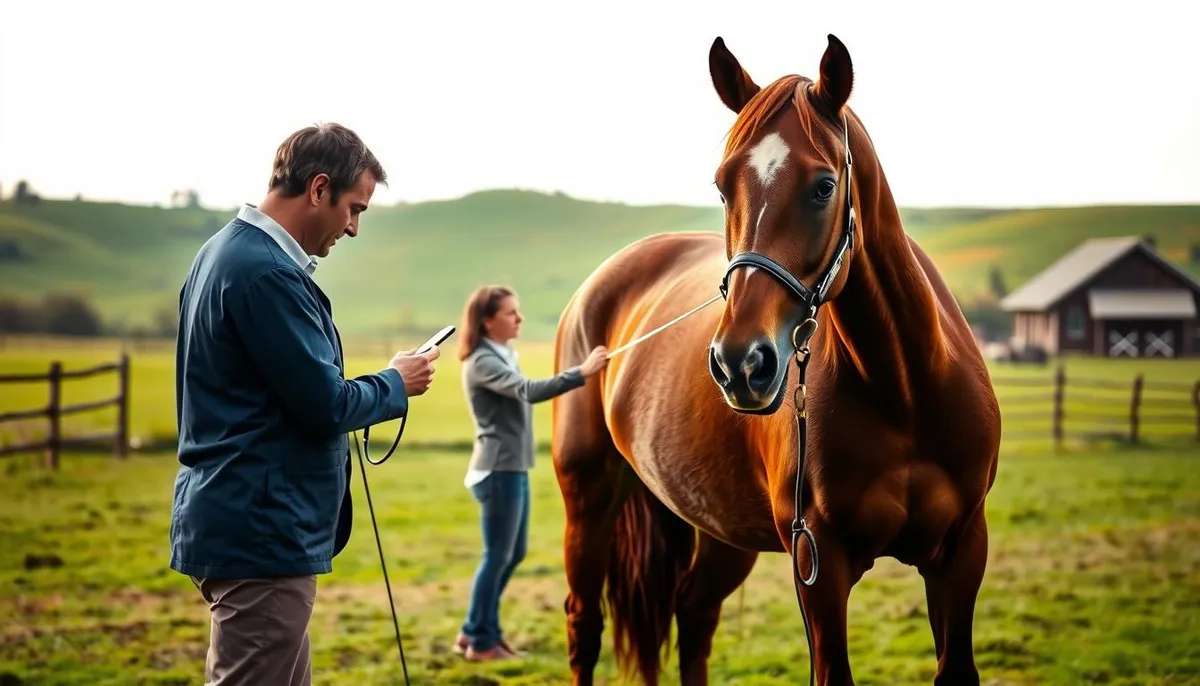
Equipment and materials: comparing horse price vs. tack budget
Before buying, be sure to compare costs. This helps you avoid unexpected expenses. Buying a horse includes more than just the price of the animal. If you use it for sport, costs can rise quickly.
Essentials: saddle, bridle, pad, boots, blankets
You will need a saddle, a pad, a bridle or halter, and other essential items. Don’t forget boots, blankets, a halter with a lead rope, and a grooming kit.
For safety, a certified helmet is crucial. Depending on your discipline, consider a vest as well. Add these items to your budget from the beginning.
New vs. used: balancing quality, safety, and cost
Buying new ensures safety, especially for certain equipment. But used can be a good idea if everything is well checked. This helps you adjust your budget.
Start with a budget of €500 to €1,000. For those who often compete, consider the cost of a trailer or truck.
La Sellerie Française: high-end made in France, custom and limited editions
La Sellerie Française offers high-quality equipment, custom-made or in limited editions. They are made to last, fit perfectly, and retain their value.
Making this choice positively impacts your long-term budget. Choosing wisely helps avoid extra costs and facilitates resale.
Investing sustainably: maintenance, adjustments, resale
Regularly maintain your equipment. Check it and replace worn parts. Have the saddle adjusted to fit your horse's morphology.
Reselling recognized brands is easier. This helps keep the budget under control in the long run.
| Item | New (range) | Used (range) | Points of caution | Impact on horse budget |
|---|---|---|---|---|
| Saddle + fitting | €800–2,500 | €300–1,200 | Adjustment, tree, padding | High initially, savings if well adjusted |
| Bridle + bit | €120–400 | €60–200 | Leather, seams, bit oxidation | Moderate, essential for comfort |
| Pad and shock absorber | €40–180 | €20–90 | Thickness, moisture wicking | Low, but recurring |
| Boots (tendons, bells) | €60–200 | €30–120 | Foams, Velcro, shell | Low to medium depending on use |
| Blankets (season + weights) | €80–250 | €40–150 | Water resistance, durability, size | Variable depending on climate |
| Halter, lead rope, grooming | €40–120 | €20–70 | Durability, snap hooks | Low, quick purchases |
| Certified helmet | €60–300 | — | Standards, replace after a fall | Safety priority |
| Protection vest | €120–350 | — | Certification, adjustment | Useful in cross-country and for young riders |
| Transport (trailer/truck) | €3,000–60,000 | €1,500–40,000 | Technical checks, insurance | Very high if competing regularly |
Buying/selling strategies: horse estimation, testing in situation, and securing the contract
The goal is clear: find the balance between the project, budget, and chosen horse. A precise horse estimation is needed to understand the requested horse rate. The final horse price depends on several factors: usage, trials, and evidence. It is also important to know the horse price in the local market.
Defining usage and avoiding impulsive buying
Determine the horse's usage: leisure, competition, or breeding. Consider the total budget, which includes the horse price, but also boarding fees, veterinary care, and equipment. This helps you avoid impulse purchases.
Establish your selection criteria: temperament, abilities, movement, response to care. This approach makes the horse estimation more accurate and assists in negotiation.
Mounted trials and support from a professional
Plan at least two trials: in the arena and outdoors. Check the horse's behavior on foot to assess its mentality.
An independent trainer or equine veterinarian can accompany you. Their expertise combines the requested horse price and the horse's actual condition. This reduces the risk of costly mistakes.
Purchase visit, X-rays if necessary, and sales deed
Organize a complete purchase visit, including clinical examination and various tests. X-rays should be considered depending on the horse's condition and usage; they help justify the horse estimation.
Preparing the seller's file is crucial: official papers, medical history, vaccinations. These documents justify the horse price and strengthen trust.
Conclude with a sales contract specifying important details: identities, horse price, payment. Have it checked by an expert and keep all documents for future reference.
Conclusion
In France, buying a horse can cost from €500 to over €30,000. For leisure, expect between €1,000 and €3,000. Amateur sports enthusiasts will spend from €5,000 to €15,000. Ponies cost between €800 and €2,500. The price depends on several factors such as breed, age, and health.
The cost of maintaining a horse is significant. For boarding, plan between €150 and €600 per month. Feeding costs between €50 and €150. Farriery amounts to €50 to €100 every 6 to 8 weeks. Annual care costs range from €200 to €600, and insurance from €10 to €50 per month. In total, this amounts to €250 to €900 per month.
When looking to buy or sell, it’s essential to clearly define your needs. Compare offers and test the horse in real conditions. Conducting a purchase visit with X-rays is a good idea. Then, sign a sales deed and keep all documents. If you have a tight budget, consider adoption or half-lease. For equipment, choosing between new or used and reliable brands is crucial.
You should always compare prices and closely monitor maintenance costs. Your expectations should align with the local market. By doing so, your horse budget remains under control. Thus, your project is sustainable and free from unpleasant surprises.
FAQ
What is the price of a horse in France in 2025?
Horse prices range from €500 to over €30,000. For a leisure horse, expect between €1,000 and €3,000. Amateur sports horses cost between €5,000 and €15,000, and ponies between €800 and €2,500. Breed, age, health, and training level greatly influence the price.
What factors influence horse rates (breed, age, health, training, pedigree)?
Several important factors include breed, such as Selle Français or Quarter Horse, age, health status, education level, and origins. Having all the papers and a good pedigree adds value, especially in competition.
Does the region change the average horse price?
Yes, the region greatly influences the price. For example, boarding costs less in Brittany than in Île-de-France. This difference in costs affects the purchase price in each region.
How does the price vary according to usage (leisure, sport, breeding, pony)?
The price depends on usage. For leisure, plan between €1,000 and €3,000. Amateur sport requires a budget of €5,000 to €15,000. Competition and breeding horses have a higher cost.
ONC horse vs full papers: what impact on price?
Having complete papers increases the horse's value for competitions. ONC horses, without full papers, cost less but are limited in competition. This directly influences their price.
What are the 2025 ranges for a leisure horse?
For a leisure horse, expect between €1,000 and €3,000 in 2025. If you are looking for a specific breed like the Lusitano, the price may be higher.
What price for an amateur sport horse (show jumping, dressage, CCE)?
For an amateur sport horse, the price ranges between €5,000 and €15,000. This cost can increase depending on the horse's training and documents.
How much does a confirmed competition horse cost?
Expect to pay between €15,000 and €30,000 for a confirmed competitor. Their results and rigorous veterinary follow-up justify this high price.
What is the price of a pony for children?
Ponies for children cost between €800 and €2,500. The better educated, beginner-friendly ponies with all papers tend to be more expensive.
How much is a retired racehorse worth?
Retired racehorses range from €500 to €2,000. This lower initial investment requires subsequent retraining and specific follow-up.
Why are some profiles more expensive?
Success in competitions, advanced training, a good pedigree, and significant investments by the seller increase the price. Demand also supports these high rates.
How to estimate a horse and prepare for negotiation?
Study similar recent sales and check all documents. Insist on a veterinary visit before buying. These steps help establish a fair price.
What monthly budget to plan after purchase?
Calculate between €250 and €900 per month. This budget covers boarding, feed, farriery, insurance, and regular care. Also, keep a reserve for medical emergencies.
How much does boarding cost depending on the region?
Boarding costs between €150 and €600 per month, varying by region. In Île-de-France, prices are generally higher than elsewhere.
What are the farriery and care costs?
Expect about €90 for shoeing and €30 for trimming, every 6 to 8 weeks. Annual care varies between €200 to €600, excluding unforeseen expenses.
Is equine insurance essential and at what price?
Yes, it is highly recommended. Prices range from €10 to €50 per month. Compare carefully before choosing an insurance policy.
What alternatives to buying to reduce horse budget?
Adopting through an association or choosing a half-lease helps reduce costs. Shared purchase is another option, with a clear agreement.
How does half-lease work and where to look?
Half-lease allows you to ride several times a week for a shared cost. Use platforms like Cavalons to find offers near you.
How does the purchase veterinary visit secure the average horse price?
It ensures the horse is healthy. This visit includes various tests and examinations. Without X-rays, it typically costs between €150 and €200.
What documents to gather for a secure purchase?
Gather the sales deed, horse papers, medical records, and insurance. Clarify the price and payment terms. Legal advice can help.
What basic equipment and tack budget to plan?
Plan €500 to €1,000 for basic equipment including saddle, bridle, and boots. Choose new or used based on your budget.
New or used: how to decide?
Safety is paramount. Have equipment checked by a professional. Used can save money, while new offers additional guarantees.
What does La Sellerie Française offer?
It offers high-end equipment, made in France. These products are durable, well-fitted, and have good resale value.
How to invest sustainably in tack?
To keep your equipment in good condition, clean and oil it regularly. Choose quality brands to ensure your horse's comfort.
What best practices for buying or selling at the right price?
Determine your needs and budget, try the horse with a pro, have a veterinary visit, compare offers, and write a clear contract. Keep a record of all documents.
How to make an effective horse price comparison?
Base your comparison on similar ads and consider the region and fees. Adjust your estimate after visiting and examining the horse.