
Imagine a stable for horses. It’s a place where detail makes all the difference. From the tranquility of the paddocks to the daily training. In France, these places often have two missions: to breed horses and to progress without haste.
The most important thing here is the happiness and advancement of the horse. Breeders, riders, grooms, and caretakers work hand in hand. They follow precise routines and observe the needs of the horses. Their training relies on consistency, injury prevention, and mutual trust.
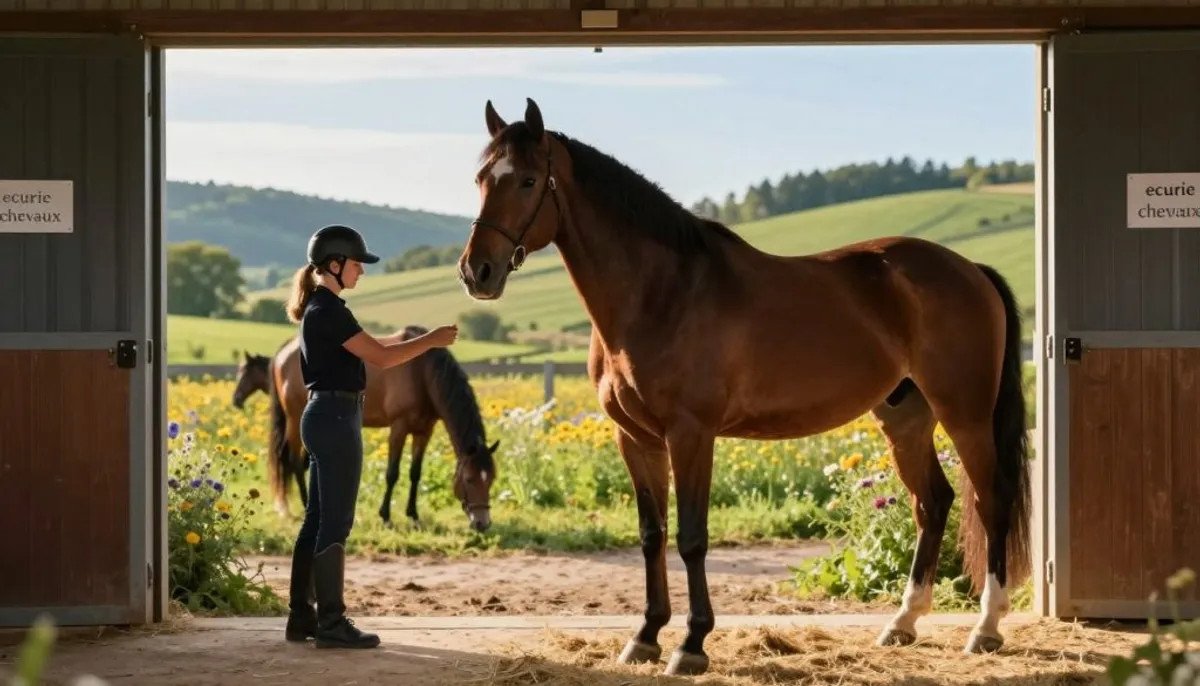
Further on, we will explore how to choose the best breeders, manage pregnancy, and the birth of foals. We will also discuss how to raise young horses, care for them, feed them, and prepare them for sport.
The idea remains the same: to create a comprehensive program that serves both leisure and competition, sales, or exhibitions. In horse breeding, quality takes time to build, and equestrian education in France succeeds when it respects this rhythm.
Key Takeaways
- A horse stable combines equine breeding, mounted work, and daily management.
- Well-being guides decisions: routine, observation, and stable environment.
- Equestrian training relies on regular and measured progression.
- Key stages range from selection to birth, then to the education of the young horse.
- Care, nutrition, and prevention support long-term performance.
- In France, the “high-level” approach also relies on organization and teamwork.
Presentation of a High-Level Breeding and Training Stable
A horse stable dedicated to breeding and development focuses on sustainable quality. The passion here rests on a precise approach: observe, adjust, and respect each horse. The goal is to offer a progressive equestrian training, without haste.
Between Passion, Equine Well-Being, and Sustainable Performance
Achieving performance goes beyond intensive work. It starts with ensuring the well-being of the horses: monitoring their physical condition, foot care, good recovery, and appropriate feeding. Thus, a comfortable horse learns better and stays motivated.
Technique also occupies a central place, promoting progressive training, clear routines, and achievable goals. In doing so, the team ensures the mental and physical well-being of the horses, creating a solid foundation for the future.
For Leisure Horses, Equestrian Sports, and Competition Goals
From leisure horses to competitors in equestrian sports, all are here to improve. The common goal is to enhance balance, responsiveness to cues, and confidence in new situations. For those aiming for competition, consistency is prioritized over spectacle.
| Horse Profile | Work Priorities | Points of Vigilance |
|---|---|---|
| Leisure | Calm, safety, basic outdoor codes | Back, feet, weight management, and regular outings |
| Equestrian Sport | Gymnastics, balance, precision of transitions | Recovery, variety of sessions, prevention of stiffness |
| Competition Goals | Progression plan, conditioning, stress management | Workload, transport, veterinary follow-up, and farriery |
The Central Role of the Team in Daily Operations
A dedicated team is essential: daily care, grooming, maintenance of the premises, and attention to subtle signs (appetite, movement, mood). Collaborating closely with the veterinarian and the farrier allows for quick intervention.
During sessions, the environment is just as important. In France, an equestrian instructor must be certified by a level 4 professional or higher. This structure makes learning safer and more uniform for everyone.
Horse Stable: Key Missions of a Modern Equine Breeding
In a horse stable focused on breeding, every choice is crucial. This ranges from selecting parents to managing young horses. The goal is to produce healthy and happy horses, ready for leisure or competition. To achieve this, careful observation, note-taking, and a dedicated team are required.
To ensure reliability, the structure must stay updated on equine health and follow existing regulations. Care is meticulously recorded, and a precise agenda is maintained. This system ensures good breeding and the development of foals.
Selection of Breeders and Breeding Goals
Choosing breeders starts with setting clear goals. We look for beauty, movement, character, and ability for a sport. We examine the ancestors and what the horse can transmit. In breeding, logic must prevail over impulse.
Breeding is planned like preparing for a sporting competition. Health checks are conducted, their condition is verified, and stress is managed. A good program avoids overly frequent matings and reduces surprises. Thus, we obtain more consistent and easier-to-train foals.
Management of Breeding and Monitoring of Pregnancies
The management of breeding depends on timing and meticulous monitoring. Ultrasounds and cycle tracking help intervene quickly if necessary. This reduces unnecessary travel and improves life for the mares.
Monitoring pregnancy is daily: we watch the appetite, posture, coat, and behavior. We adjust feeding and deworming as needed. These regular cares support breeding and protect the mare.
Birth of Foals and Support in the First Days
The birth of foals requires constant vigilance, especially towards the end. A clean space is prepared, along with the necessary equipment. The goal is to intervene discreetly but effectively if needed.
The first moments are decisive: we check breathing, nursing, temperature, and transit. A colostrum test and veterinary advice in case of doubt are essential. This early attention prevents many problems.
Early Education and Socialization of Young Horses
Education begins early, with simple actions: putting on a halter, walking alongside, being groomed, and lifting feet. Young horses learn to trust gradually. This makes future work, transport, and care easier.
Socialization involves group living and familiar landmarks. We change settings, acclimate to the sounds of the stable, and encourage good reactions. If done well, this routine benefits future breeding and a long sporting career.
| Mission | Key Actions | Expected Benefits |
|---|---|---|
| Selection of Breeders | Analysis of conformation, temperament, performance, tracking of offspring | Coherent breeding goals, consistency in equine breeding |
| Breeding | Cycle management, ultrasounds, planning, traceability | Better-controlled breeding, reduced stress in horse stables |
| Pregnancies | Daily monitoring, nutritional adjustments, health follow-up | Stable mares, limited risks until term |
| Birth of Foals | Preparation of the box, vigilance, first aid, nursing control | Stronger foals, secure start |
| Education and Socialization | Short handling sessions, group living, acclimatization to the environment | Calm young horses, easier care and work |
Essential Facilities: Horse Boxes, Pastures, and Safety
In a breeding operation, organizing equestrian facilities well is crucial. This affects the well-being of the horses and the efficiency of work, from feeding to care. Having a solid plan reduces surprises and facilitates daily tasks.
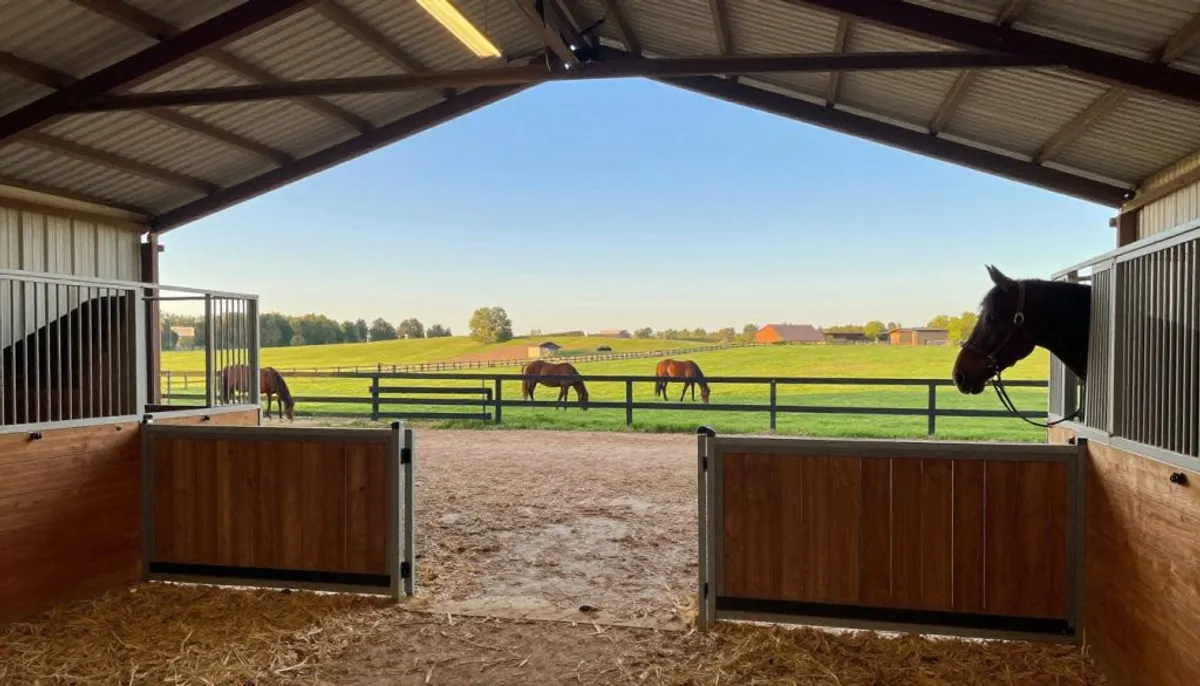
Designing Horse Boxes for Comfort and Monitoring
A box must be comfortable for the horse and practical for the team. It should be well-lit, ventilated, and easy to clean. Having well-maintained bedding, reliable waterers, and properly placed hay racks is essential.
Monitoring is as important as comfort. It is crucial to have secure doors, good visibility, and uncluttered aisles. This allows for quick detection of issues like colic or lameness. For safety, we must also consider storage, non-slip floors, and good organization of spaces.
Organization of Pastures and Management of Movements
Pastures are vital for the health of horses. They must be well managed with rotation, grass maintenance, and good access to water. Having strong and visible fences is important, especially with young horses.
It is crucial to maintain calm movements. Having well-made paths, accessible gates, and sufficiently wide passages helps. It is also important to adapt the space according to the needs of the horses, whether for breeding, foals, or working horses.
Work Infrastructures: Arena, Indoor School, and Preparation Areas
Quality facilities are essential for training and progressing horses. A good arena protects tendons thanks to well-maintained ground. An indoor school allows for continued training, even in bad weather, without overloading the horses.
Preparation areas save time and add quality to daily routines. Having a place to groom, wash, care for feet, and store equipment is essential. It is important to keep a clear path: from the box to work, then from rest before going out to the pastures.
| Area | Main Objective | Point of Vigilance | Impact on Daily Life |
|---|---|---|---|
| Horse Box | Rest, care, observation | Hygiene, ventilation, circulation | Faster care, easier monitoring |
| Pastures | Movement, relaxation, mental balance | Rotation, fences, access to water | Calmer horses, better recovery |
| Arena | Technical and regular work | Ground quality, watering, leveling | More consistent sessions, less fatigue |
| Indoor School | Continuity in all seasons | Lighting, dust, management of crossings | Stable planning, better progress tracking |
| Preparation Areas | Prepare, wash, handle in safety | Non-slip floors, storage, calm | Fluid organization, enhanced stable safety |
Equine Boarding: Services, Packages, and Selection Criteria
A good equine boarding is like a perfectly planned day. Everything is organized: meals, outings, cleaning the premises, checking water, and closely observing the horses. Every little detail matters. Thus, if the horses behave differently, the team quickly notices thanks to their well-established routine.
If you are an owner, here’s how to assess a horse boarding facility. Look at the condition of the boxes, whether the fences are strong, if the horses have access to fields, and if everything is secure. An efficient organization helps reduce stress for the horses. They benefit from fixed schedules, gentle changes, and attentive monitoring, even on the busiest days.
The services offered should go beyond simply providing shelter and food. It is crucial that the food is suited to the horse's exercise: a good amount of feed, hay, well-managed pastures, and access to salt and water. The best scenario is to have concise and frequent updates on the horse's health, such as appetite, droppings, physical condition, and the state of their feet.
| Point to Check | What You Observe On Site | What It Changes for the Horse |
|---|---|---|
| Outing Rhythm | Displayed schedule, paddock rotation, real time outside | Better recovery, less tension, more stable morale |
| Feeding | Dry hay storage, weighed rations, adjustments according to work | Better energy management, more consistent body condition, calmer digestion |
| Monitoring | Frequent passages, note-taking, ability to isolate if needed | Faster detection of colic, lameness, loss of appetite |
| Facilities | Non-slip ground, clean fences, shelters, clean areas | Fewer injuries, calmer movements, daily comfort |
| Supervision and Work | Access to an arena, time slots, follow-up, consistent instructions | Clearer progression, more available horse, clearer routine |
A boarding facility can also help to enhance a horse, according to its needs. Some owners seek structured activities, regular training, or fitness programs. There are versatile stables that offer these services with clear objectives and without haste.
These horse boarding options are available throughout France. Whether in stud farms, equestrian centers, competition stables, or agricultural farms. The important thing is to find a place offering clear services, an accessible team, and consistent rules. This ensures the safety and well-being of the horses and their owners.
Horse Care: Health, Prevention, and Veterinary Follow-Up
In a stable, taking care of horses is essential, not just a plus. It maintains their well-being and ensures a good routine of work, relaxation, or competition. The goal? To quickly detect problems, act without delay, and have benchmarks for everyone.
Vaccination, Disease Prevention, and Daily Vigilance
Vaccination, planned with the veterinarian, follows a precise schedule. It is crucial to reduce the risk of diseases, especially during competitions or changes in environment. This includes parasite control, maintenance of waterers, and monitoring new horses.
Checking the behavior of the horses daily is vital. If a horse drinks less, lies down longer, or refuses to eat, it may signal a problem. Noting these changes allows for quick action by adjusting care or consulting an expert.
Routine Care, Observation, and Management of Warning Signals
Daily small gestures are fundamental for the well-being of horses. It is necessary to clean their feet, monitor their skin and limbs after work. Observing breathing, sweating, and appetite is essential to avoid ignoring problems.
It is important that everyone in the stable has the same reflexes. A tracking sheet helps share essential information. This also assists professionals, like the veterinarian, in having all the data during their visits.
| Checked Point | What We Look At | Signal to Monitor | Recommended Reaction |
|---|---|---|---|
| Temperature | Stable value at rest, taken calmly | Persistent rise | Isolate if needed, call the veterinarian, note the evolution |
| Feet and Locomotion | Heat, digital pulse, irregularity | Lameness or hesitant support | Stop work, soft ground, contact farrier/veterinarian |
| Digestive | Appetite, droppings, abdominal noise | Decreased appetite, agitation, rare droppings | Close monitoring, walking, veterinary advice |
| Skin and General Condition | Coat, rubbed areas, hydration | Loss of condition, itching, wounds | Adjust grooming and equipment, disinfect, follow-up if recurrence |
Balanced Nutrition According to Age, Activity, and Horse Profile
Good nutrition for horses starts with good hay, plenty of fresh water, and well-measured nutritional supplements. Needs vary depending on whether the horse is young, old, or an athlete. An inadequate ration can cause agitation or a loss of condition.
It is crucial to adjust feeding with the seasons, the work done, and the state of the teeth. By regularly observing weight, recovery, and morale, we adjust the diet as necessary. Adequate nutrition is also a pillar of disease prevention, helping the horse stay fit.
Equine Training: Progression, Respect for the Horse, and Sporting Goals
Training horses is more than just exercise. It requires a precise routine, where we respect their mind and body before thinking about time. In a stable, the goal is to train a performing, consistent, and calm horse.
Learning happens gradually. We conduct short and clear sessions. We vary the exercises: moving forward, changing pace, placing poles on the ground, and going out for walks. This also depends on the weather, the state of the ground, and how the horse feels after the last training.
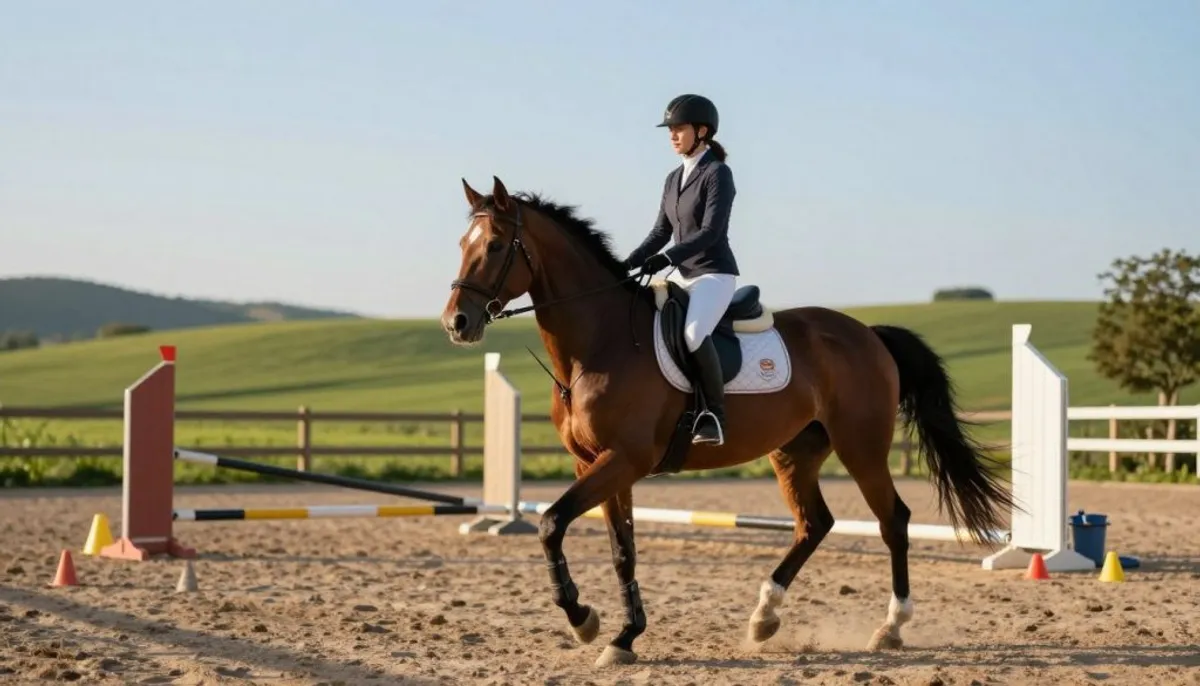
Sometimes, the breeder helps prepare for competitions, to show the horse, or before selling it. This requires finesse. A horse ready for competition must be strong but also intelligent, able to handle pressure and remain confident. We plan progressive training, outdoor outings, and rest times.
Being versatile is crucial on the ground. A groom rider does more than train. They also take care of the horse daily. This proximity helps quickly note any signs of fatigue or problems.
To excel in equestrian sports, we must consider nutrition, care, and equipment. Good infrastructure reduces the risk of injury and helps maintain a good level of performance. With a good balance, progression is more stable and preparation is safer.
| Work Element | Objective | Signs to Monitor | Simple Adjustment |
|---|---|---|---|
| Warm-up at the walk (10–15 min) | Mobilize the back, loosen joints, establish attention | Stiffness, irregularity, absent chewing | Lengthen the warm-up and add wide curves |
| Gymnastics (poles on the ground, cavaletti) | Improve balance, coordination, and engagement | Haste, repeated faults, tension in the neck | Lower the difficulty, space out the poles, pauses at the walk |
| Flat Work (transitions, bending) | Stabilize connection and response to aids | Horse “in hand”, hard mouth, loss of impulsion | Return to simple transitions and reward quickly |
| Recovery (walk, shower, light massage) | Promote recovery and limit soreness | Warm limbs, marked fatigue, sensitive back | Lighter day, walk out, hydration control |
Equestrian Center: Supervision, Pedagogy, and Safety
A equestrian center is the ideal place to learn to ride, have fun, and take care of horses. It brings together enthusiasts of all levels and sometimes even competitions. The goal is clear: to offer understandable lessons, tailored learning, and absolute safety.
Welcoming Riders and Organizing Activities
The team at the center explains the rules from the start: how to dress, the necessary equipment, and how to behave with the horses. A supervisor divides riders into groups according to their level and goals. This facilitates teaching and makes everything simpler.
Activities are well organized. There are lessons, internships, and even outings. Managing the horses and space is crucial to avoid surprises and ensure safety.
Supervision of Sessions Within the Regulatory Framework
In France, equestrian education follows strict rules. An Equestrian Instructor, guided by a certified professional, ensures safety while teaching. This allows everyone to know what they need to do and guarantees safety during lessons.
The instructor ensures that exercises are well organized, maintains distance between horses, and reminds of basic rules. Clear and brief instructions, but often repeated, are essential for safety. With these good practices, the equestrian center remains a safe place, even for beginners.
Well-Being of School Horses and Maintenance of the Structure
The well-being of the horses is as important as that of the riders. Well-maintained horses are synonymous with a good balance between work and rest, and daily attention. We pay attention to their health, morale, and education.
Maintenance plays a crucial role. We must take care of fences, ground, lighting, and equipment. A well-managed center ensures the safety of all. Good organization transforms safety into an established routine.
| Control Point | Expected Practice in Equestrian Center | Effect on Equestrian Supervision | Impact on Safety |
|---|---|---|---|
| Group Formation | Homogeneous levels, announced objectives, common instructions | Clearer progression, fewer rhythm discrepancies | Fewer risky situations related to speed or stress |
| Supervision Framework | Equestrian Instructor under the authority of a level 4 or higher | Better-validated pedagogical decisions, clear roles | Faster responses in case of incidents |
| Monitoring of School Horses | Care, adapted work, rotation, observation of discomfort signs | More available horses, more regular sessions | Reduction of unexpected reactions and defenses |
| Facility Maintenance | Maintained grounds, checked fences, verified equipment | Fewer interruptions and improvised changes | Decrease in falls and material incidents |
| Session Rituals | Briefing, arena rules, equipment check | Equestrian Instructor more available to correct and guide | Better prevention of simple and repeated mistakes |
Equestrian Instructor and Equestrian Animator: Roles and Training
In a stable, everything must be well organized. The equestrian instructor creates clear rules, calms the riders, and ensures the well-being of the horses. With them, the equestrian animator AE mainly takes care of beginners and life at the club.
The FFE has created a certification to guide the path. The AE is a level 3, registered under RNCP 37414 on March 27, 2023. This is a good reference for those hiring and for families.
Equestrian Animator (AE): FFE Qualification, Level 3 (RNCP 37414)
The AE animator is key in a pony club or equestrian center. They organize, prepare lessons, ensure safety, and explain the basic rules. They often work with an equestrian instructor.
The training is practical, with real exercises. It also teaches what needs to be done daily, such as caring for the horses.
Common Prerequisites: FFE License, PSC1, Gallop 5 or Gallop 6 Depending on the Path
This depends on the chosen training. From age 16, one can start with Gallop 5, an FFE license, and PSC1. If one is not doing an apprenticeship, it is often necessary to be 18 years old and have Gallop 6.
A medical certificate is also required. There are usually tests to pass and a file to present. Finding an FFE center is very important.
Job Objectives: Supervision in Safety, Care, Maintenance, and Participation in Stable Life
The essence of the job is to keep everyone safe and help them progress. The AE animator leads sessions, manages a group, and remains vigilant. They must also care for the horses, observe them, and follow a routine.
Much time is spent outside the arena, such as in the tack room or preparing the horses. These tasks help the instructor and ensure the well-being of the horses.
Indicative Duration and Rhythm: 10 Months, 490 Hours in Person (Depending on the Organization)
The training often lasts 10 months for 490 hours of classes, depending on the organization. The evaluation combines theory and practice, with an exam for Gallop 6, an internship, a report, and a presentation. There are also tests for safe management of lessons and demonstration.
Those interested in breeding can learn with the Groom Rider program. This covers stable management, breeding, and more.
Job Opportunities: Equestrian Center, Horse Stables, Breeding, Competition Stables
One can work in an equestrian center, pony club, stable, with a breeder, or in competition. Most of the time, it is a salaried job within a team. The AE can also be a stepping stone to other training.
If you prefer breeding, places like the Maison Familiale Rurale (MFR) in Villers-Bocage (rue de la Sablière, 80260 Villers-Bocage, 03 22 93 70 04, mfr.villers-bocage@mfr.asso.fr) offer a tailored program with internships with professionals.
| Key Point | What the Equestrian Animator AE Practices | What the Equestrian Instructor Most Often Oversees | Official Reference |
|---|---|---|---|
| Supervised Public | Beginners, discovery, pony club activities, leisure groups | Technical progression, preparation of sporting goals, improvement | FFE federal references |
| Safety | Instructions, simple checks, group management, conducting sessions safely | Choice of exercises, risk management, fine adaptation according to levels | RNCP 37414: expected situational applications |
| Stable Life | Routine care, observation, maintenance, organization, assistance with transport | Work organization, team coordination, monitoring of the horses | Professional practices supervised by the FFE |
| Access and Prerequisites | Learning from age 16: Gallop 5, FFE license, PSC1, tests, medical certificate | Path often after club experience, with higher technical requirements | Entry framework linked to certification |
| Training Rhythm | About 10 months, 490 hours in person, internship + report + presentation | Distinct training paths depending on targeted diplomas | RNCP 37414 registered on March 27, 2023 |
Competition Stable: Preparation, Organization, and Performance Monitoring
In a competition stable, everyone knows their role. Everything is organized and recorded. Performance is built step by step without haste. Breeders enhance their horses before selling or presenting them in competition.
Work Planning, Recovery Management, and Injury Prevention
Every week, we organize short training sessions and rest days. The goal is to keep the horse fit, flexible, and calm. A good routine is more beneficial than an intense training session.
To prevent injuries, special attention is given to nutrition, monitoring the horse, vaccinations, and regular follow-ups. Subtle signs, such as changes in behavior or movement, are scrupulously observed.
| Monitored Point | Frequency | What We Check | Impact on Performance |
|---|---|---|---|
| Body Condition and Ration | Every week | Energy, hydration, hay quality, adjustment of concentrates | More stable endurance and better recovery |
| Limbs and Feet | Before/after session | Heat, swelling, sensitivity, shoeing adapted to terrain | Fewer stops, more regular locomotion |
| Breathing and General Condition | At every work | Breath, sweating, coughing, fatigue state | Effort better managed, reduced stress in competition |
| Rest Planning | Every week | Paddock outings, walking, stretching sessions | More relaxed back, clearer movement |
Collaboration Rider–Trainer–Care Team
The rider shares their feelings, the trainer adjusts plans, and the care team looks after daily needs. This collaboration eliminates hasty decisions and smooths the preparation for competitions. It saves time and reduces stress.
Whether in the box or in the arena, everyone has a precise role: caring for the horse, maintaining equipment, recovering after effort. In the world of equestrian sports, a well-oiled routine can make the difference on competition day.
Preparation for Competitions, Transport, and Logistics
Preparing for a competition is not just about training hard. It includes planning the warm-up, course reconnaissance, and time management. Not to mention organizing documents for a hassle-free trip.
- The day before: checking documents, equipment, protections, and maintaining the usual ration.
- Transport: making stops, providing water, ensuring good ventilation, and driving gently to protect the horse's back.
- On the ground: exploring the venues, finding a calm space, and returning to a clean box for optimal recovery.
Tack: Choosing Reliable Equipment and Valuing French Craftsmanship
In a stable aiming for performance, the choice of tack is crucial. Quality equipment helps avoid discomfort and supports the performance of both rider and horse. With good gear, comfort and precision improve over time.
The Importance of Tack Suitable for the Horse and Rider
A well-fitted saddle frees the horse's back and evenly distributes weight. With the pad, girth, and bridle, every detail matters. If something moves poorly or is too tight, the horse reacts negatively, and the quality of work decreases.
The rider's safety also depends on reliable equipment like stirrup leathers and stirrups. Sturdy equipment reduces the risk of accidents. And equipment suited to the horse's morphology avoids unnecessary friction.
Partner Focus: La Sellerie Française and High-End Made from A to Z in France
La Sellerie Française prioritizes manufacturing entirely in France. This high-end approach focuses on artisanal craftsmanship. The products are designed to be durable, flexible, and finely finished, specifically for riding.
Their daily use is facilitated: maintenance is simple, and the pieces retain their shape. This helps keep regular track of a horse's performance. For a stable, the quality of the equipment offers true stability in horse care.
Unique Products, Custom or Limited Series: An Artisan Approach for Equestrian Sports
Choosing custom equipment improves balance, especially with the horse's physical changes. Limited series bring a unique touch with special attention to details. For the horse-rider duo, this means better harmony and precision.
| Point to Check | What It Changes in Work | Simple Reference at the Stable |
|---|---|---|
| Saddle Adjustment | Freer back, more regular strides | No isolated dry areas after the session |
| Stability of the Girth and Pad | Less friction, calmer horse | No slipping at the mounting block |
| Condition of Seams and Hardware | Increased safety, constant contact | Quick check before saddling |
| Choice of Leather and Maintenance | Durable flexibility, better longevity | Light cleaning after each session |
To simplify, it is good to have a checking routine. In terms of tack, it is better to prioritize quality pieces that you know well.
- A complete and stable set, checked often
- Attention to pressure points and friction
- A riding material suited to the sporting purpose and the horse's level
Conclusion
A solid horse stable rests on three clear pillars: breeding, care, and then training. The equine breeding process starts with choosing the best breeders until the birth of foals. It also includes the education of young horses from an early age.
Breeding requires time, consistency, and a gentle approach. These elements are essential for a good start.
Daily care is our second important pillar. In an equestrian center, preventing diseases, following veterinary advice, and balanced nutrition are key. It is crucial to observe the horses, adjust their feeding, and manage their recovery to avoid problems and keep them fit.
The third pillar concerns progression and the results obtained. Regardless of the goal, leisure or competition, good supervision, precise work planning, and unwavering safety are required. Opportunities are varied, including the farm, the equestrian center, and competition, leading to diverse careers.
A horse stable is also recognized by its facilities: suitable boxes, secure pastures, a well-maintained arena, a competent team, and followed rules. The equipment, including quality tack, is equally important. Choosing a French artisanal house like La Sellerie Française is opting for the comfort of the horse, the precision of the rider, and sustainable performance.
FAQ
What distinguishes a horse stable focused on breeding and training?
A horse stable combines breeding, training, and daily management. Its goal is the well-being of the horses, their development, and their progression from small to large. It prepares horses for pleasure, sport, competitions, exhibitions, or sale.
What are the main pillars of a stable aiming for long-term quality?
Three key points are followed: choosing the best breeders, taking care of the horses (health, prevention, nutrition), and providing them with appropriate training. Additionally, the organization of facilities and quality tack for horses and riders are necessary.
What horse profiles are concerned by this type of structure?
Well-organized stables welcome leisure, sport, and competition horses. They seek to manage the activity, feeding, care, and progression of each horse while valuing its talents and personality.
Why is teamwork central in a stable?
Teamwork ensures good coordination of care, maintenance, and monitoring of the horses. For a competition stable or boarding facility, this organization ensures the regularity of work and prevents health problems.
What are the key missions of a modern equine breeder?
The breeder focuses on selecting breeders, managing breedings, monitoring pregnancies, and the birth of foals. They set realistic breeding goals while keeping an eye on equine health and regulations.
How is a pregnancy prepared and monitored in equine breeding?
The mare is closely monitored, with appropriate feeding and veterinary follow-up. The goal is to protect the mare, prevent risks, and prepare for foaling under good conditions.
What support is needed at the time of foaling?
Foaling requires close attention and monitoring. A stable prepares a clean and calm space for this, knowing when to call the veterinarian if necessary.
What does early education of young horses involve?
Early education is based on socialization and learning simple routines. This includes handling, accepting the halter, and discovering care. It facilitates mounted work later, reduces stress, and improves safety.
What should a good horse box offer in a quality-oriented structure?
A good box should be comfortable, hygienic, and allow for easy monitoring. It should facilitate the care of horses, such as feeding, access to water, and allow for safe circulation.
How to organize pastures in a horse stable?
Pastures should be divided into groups of similar horses, with rotation of plots and secure fences. Movements must be secured and designed to reduce stress for the horses while respecting their needs.
What work infrastructures are useful for training and enhancing horses?
An arena, an indoor school, and preparation areas support the progression of horses. They allow for training year-round, organizing supervised sessions, and ensuring regular follow-up.
What does equine boarding cover concretely?
Boarding includes the daily care of horses: feeding, outings, maintenance, and routine care. A good boarding facility also ensures monitoring and feeding consistent with the lifestyle and activity of the horses.
What criteria to consider when choosing an equine boarding facility?
It is important to check the quality of facilities, organization, safety, and regularity of care. Also check access to supervision and regular training if necessary.
Can equine boarding and horse enhancement be combined?
Yes, some boarding facilities offer a “boarding + enhancement” program. This can include leisure, training, or competition preparation. This requires precise planning and careful monitoring for the well-being of the horses.
What are the essentials in horse care regarding health and prevention?
The basics include vaccination, disease prevention, and daily attention to signs of discomfort. A good stable adjusts its care and involves professionals quickly if needed.
Why is nutrition a pillar in a performance-oriented stable?
A balanced diet, adapted to each horse, is crucial. It directly influences health, recovery after effort, and work capacity, whether for leisure or competition.
How does high-level equine training differ from classic work?
It focuses on sustainable progression, balancing prevention, recovery, and adaptation to each horse. The key is stable organization, teamwork, and a program respectful of the horse.
What is the role of an equestrian center in this sector?
An equestrian center combines learning, management, and maintenance in addition to breeding and enhancing horses. It can be involved in various activities, adapted to its profile.
What regulatory framework applies to the supervision of equestrian activities?
An Equestrian Animator supervises under the authority of a certified professional to ensure safety and quality of teaching.
What is the Equestrian Animator (AE) diploma?
It is a professional qualification registered under RNCP 37414 on March 27, 2023. It allows for safe supervision and participation in the functioning of an equestrian structure.
What are the access conditions and prerequisites for entering AE training?
From age 16 with Gallop 5 and PSC1 for apprenticeships; 18 years and Gallop 6 for others. A medical certificate, a current license, and passing tests are required.
What is the duration of AE training and how is evaluation conducted?
The training lasts 10 months with 490 hours in person. The exams include validation of Gallop 6, a module A, and situational applications.
What job opportunities are available after AE, and which structures hire?
Graduates can work in equestrian centers, pony clubs, stables, or breeding facilities. Most are salaried in varied teams.
Is a certified equestrian center required to enter AE training?
Yes, it is recommended to choose a certified FFE center to ensure quality training.
What is the link between AE and BPJEPS with the reform?
The AE can serve as a pre-training for BPJEPS with exemptions depending on the path. This helps build a solid foundation before advancing.
What is the daily life of a groom rider like?
The groom rider takes care of the well-being and training of the horses. They ensure the link between the health and work of the horses.
Where can an equine breeder or a versatile professional in the sector work?
Possibilities include stud farms, equestrian centers, competition stables, and agricultural operations. These roles require versatility and good observation.
Are there equine breeding training programs to recommend?
The Groom Rider training is recommended. It covers various topics including breeding and equine regulations. The MFR of Villers-Bocage offers a comprehensive program with practical internships.
How does a competition stable operate daily?
It organizes the work and recovery of the horses, focusing on health and disease prevention. Performance relies on good preparation and injury prevention.
What is the role of the rider-trainer-care team collaboration?
This collaboration ensures that objectives are aligned and coherent, to avoid overloads and support performance. Every observation on the horse's condition is crucial.
How does preparation for competitions, transport, and logistics work?
Preparation includes training, stress management, and logistical organization. It is also necessary to check equipment and follow stable routines.
Why is tack so important for comfort and performance?
Good tack ensures the comfort of the horse and the safety of the rider. Poor equipment can cause problems and hinder progression.
What does La Sellerie Française offer and how is it useful in equestrian sports?
La Sellerie Française (https://laselleriefrancaise.com) offers high-end products, custom or limited series, made by the best artisans. This provides durability and precision for training and competition.
What equipment should be prioritized in a tack room to avoid discomfort?
Attention should be paid to contact points such as the saddle and bridle. Proper adjustment and maintenance prevent irritations and support training.
What services does an equestrian center offer that also cover maintenance?
A center takes care of welcoming, caring for, using the horses, and maintaining the facilities. Maintenance is essential for smooth operation.
How to recognize a structure that truly places well-being at the center?
Well-being is evident in the quality of care, health monitoring, and good organization. A true stable prioritizes prevention and comfort for the horses above all.