
The Iberian equestrian art is unique for its elegance and precision. It has its roots in the dressage heritage of Spain and Portugal. Since ancient times with the Greeks and Romans, this discipline has evolved into a true art form.
Today, it attracts enthusiasts from around the world. They are fascinated by its beauty and technical execution. Iberian equestrian art stands out for its unique techniques, methods, and grand figures.
Main keys to remember
- Iberian equestrian art is a unique equestrian tradition, characterized by its elegance and precision.
- Its origins date back to the equestrian practices of the Greeks and Romans.
- It developed in Spain and Portugal, becoming a true art form.
- Iberian equestrian art fascinates enthusiasts worldwide with its beauty and virtuosity.
- The techniques, methods, and grand figures of Iberian equestrian art are recognized internationally.
The origins of Iberian equestrian art
The Greek equestrian art begins in antiquity. Xenophon writes an important book “The Equestrian Treatise.” He explains how to teach horses by understanding their emotions.
This approach is gentle towards animals, using external and soft techniques to guide them. It emphasizes respect for the animal.
Equestrian art among the Greeks
Xenophon was a general and writer of the 5th century BC. He is important for the history of academic equestrian art. In his book, he discusses a method that respects horses and encourages understanding between horses and riders.
Equestrian art among the Romans
The Romans would soon follow this approach. But they would add their personal touch with harsher methods and bits that could harm the horses.
Despite this, they contributed to the world of equestrian art with special movements, such as the piaffer. They managed to create a strong bond between the rider and the horse.
The birth of academic art
Between the 9th and 15th centuries, chivalry spread across Europe. This involved learning combat and caring for horses. The armor and heavy horses or destriers changed equestrian art. It became more focused on strength than elegance, limiting the talents of ancient riders. There are few writings describing the equestrian technique of this period, as little was written.
At the same time, the first combat airs emerged. This was thanks to the court riders. They presented complex movements, a kind of performance equestrian art. These movements marked the beginning of what would later be called the “academic equestrian art.”
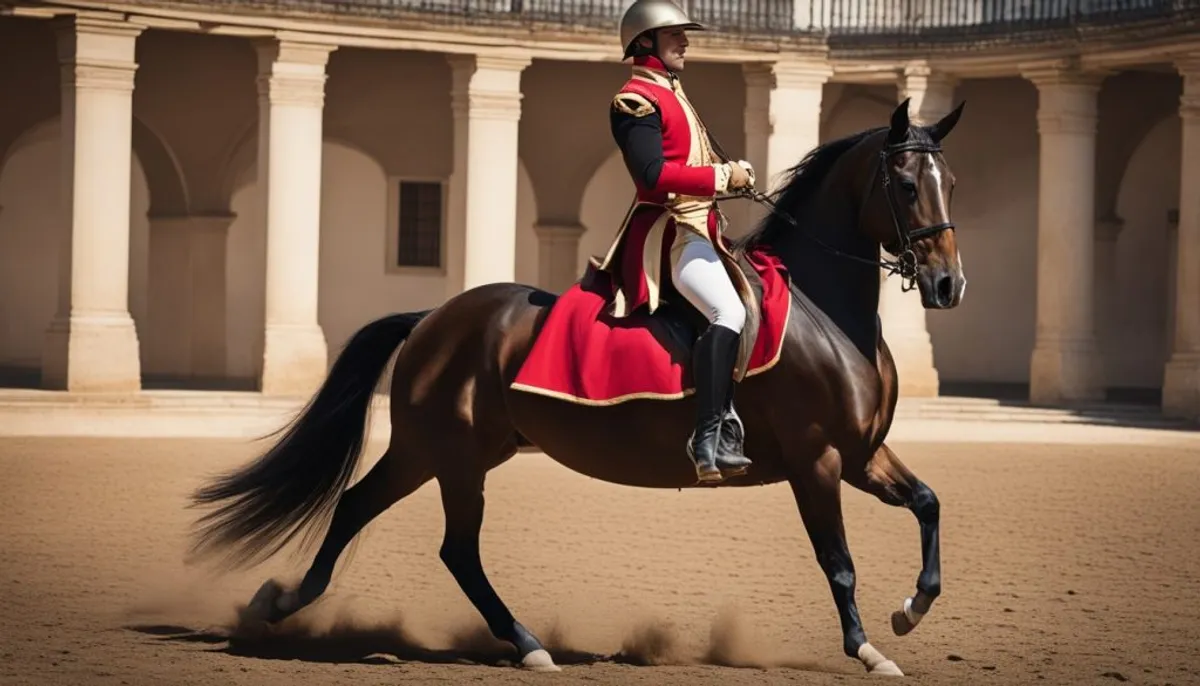
Over time, knights and their armor evolved equestrian art. They emphasized strength and bravery. Yet, destriers and combat airs also became symbols of prestige and talent. This heralded the creation of a new, more academic equestrian tradition.
| Period | Development of equestrian art | Main elements |
|---|---|---|
| 9th-15th century | Emergence of combat and performance equestrian art | Chivalry, armor, destriers, combat airs |
| Subsequent centuries | Codification of the “academic art” | Sophisticated equestrian tradition |
Portuguese and Spanish equestrian art
The first serious studies on equestrian art come from the Iberian Peninsula. People like Mestre Giraldo from Portugal and King Don Duarte established a teaching method. This was long before the invention of the printing press.
Great names in Iberian equestrian art
After them, many Portuguese rider-authors contributed. They enriched the teaching of Portuguese and Spanish equestrian art. These two styles are unique in the equestrian world.
- Portugal has produced many masters in equestrian art. They improved both practice and theory.
- Spain was not left behind, with experts like Rafael Soto.
Their influence has been crucial for the advancement of equestrian art. They established rigorous teaching methods. Thus, they shaped a true equestrian art.
Iberian equestrian art: a unique tradition
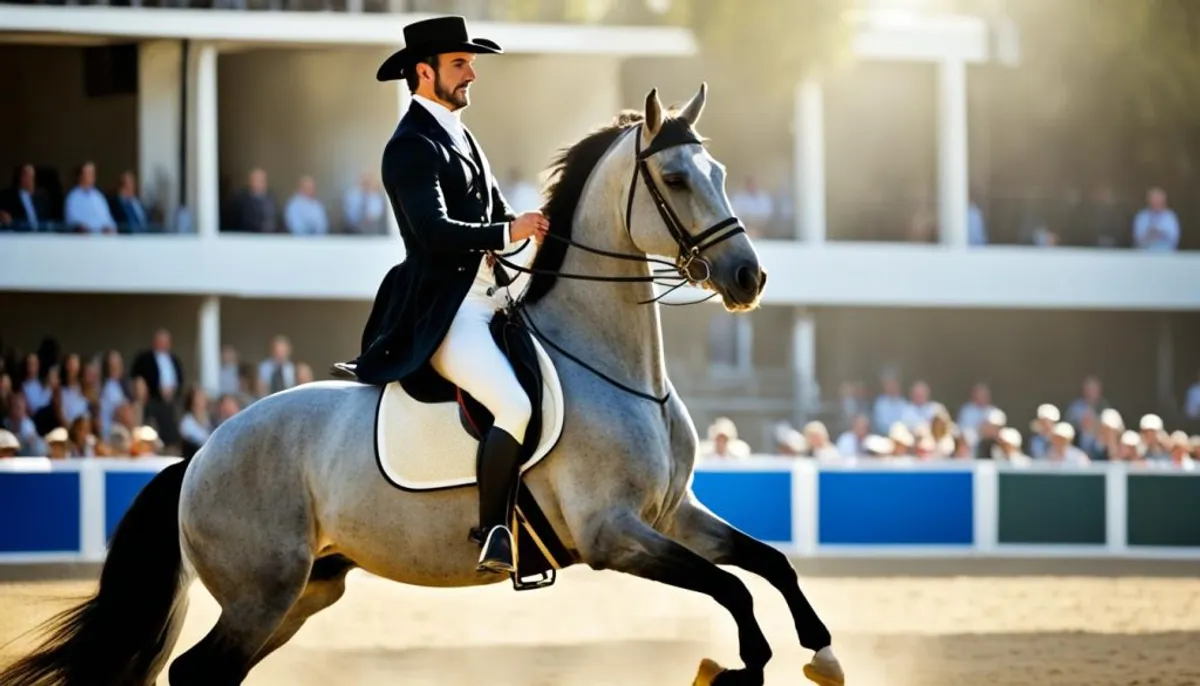
Iberian equestrian art is unique for its elegance and precision. It descends from classical dressage and High School. These techniques enhance the Iberian horse. Enthusiasts worldwide find it fascinating for its elaborate movements and perfect execution.
This tradition has ancient roots, influenced by the Greeks and Romans. Recent centuries have seen Iberian equestrian art become a true art form. It celebrates the harmony between the rider and their horse.
The classical dressage is vital in this discipline. Iberian riders master very elaborate movements. Their grace and ease come from years of training and a strong bond with their mounts.
The High School marks the pinnacle of Iberian equestrian art. Riders showcase performances of great sophistication. These demonstrations, such as the elevated airs and pirouettes, express the essence of the Iberian tradition.
This art represents more than just technical performances. Iberian equestrian art is a philosophy, based on a deep respect for the animal. It emphasizes patience, gentleness, and humility. This has contributed to its reputation as an exceptional equestrian tradition.
Rafael Soto: ambassador of Iberian equestrian art
Rafael Soto is a world-renowned dressage champion. He has participated in the Olympics three times. Based in Jerez de la Frontera, he is the heart of Spanish equestrian traditions.
Rafael Soto's career
At just 15 years old, Rafael entered the Royal Andalusian School of Equestrian Art in Jerez. This school, established in 1973, revitalized the dressage methods of Andalusia. Today, Rafael is the Chief Rider there, inspiring a new resurgence of High School dressage.
Royal Andalusian School of Equestrian Art in Jerez
The Royal Andalusian School of Equestrian Art in Jerez is known for its crucial role in preserving dressage techniques. Rafael Soto teaches there, ensuring that the craftsmanship of Iberian equestrian art endures.
Through his dedication, Rafael Soto has been recognized as a pillar of Iberian equestrian art. He symbolizes an exceptional equestrian heritage.
The Portuguese School of Equestrian Art
The Portuguese School of Equestrian Art is linked to the prestigious Picaria Real. It was the school of the former royal court of Portugal. Located at the beautiful Stud Farm of Alter do Chão, this school opened its doors in 1748. It offers shows and training sessions that everyone can come to see.
The school showcases classical equestrian art from Portugal, with its majestic movements and famous Court Games. The Portuguese riders and horses, known as Lusitanians, are dressed in ancient fashion. This immerses spectators in a bath of equestrian history.
Equestrian Art Presentations
In the shows of the Portuguese School of Equestrian Art, riders display their great skill. The Lusitanian horses, known for their elegance, play an important role. Here are some spectacular moments from the shows:
- The elaborate movements of high school, executed gracefully by the horses.
- The Court Games, reminiscent of the equestrian parades of nobility in the Baroque era.
- The Carousels featuring equestrian acrobatics that impress the audience.
These shows allow visitors to appreciate a rich and unique equestrian art. It is a cultural treasure of Spain that fascinates everyone.
Conclusion
Iberian equestrian art represents a rich heritage of equestrian art. It comes from several centuries of tradition. It combines elegance with great precision, from ancient times to today.
This art has been passed down from antiquity to the present day. It is appreciated worldwide thanks to icons like Rafael Soto. The Iberian equestrian art is a world equestrian heritage thanks to these guardians of tradition.
It is not just a relic of the past. Today, Iberian equestrian art is alive and renewing itself. It combines tradition and modernity, inspiring all those who love horses and equestrianism.
FAQ
What is Iberian equestrian art?
Iberian equestrian art comes from Spain and Portugal. It is a very beautiful and precise form of equestrianism. Ancient techniques are used to showcase the nobility of the horses from this region.
What are the origins of Iberian equestrian art?
Iberian equestrian art has very ancient roots, dating back to ancient Greece and Rome. It was developed by writers like Xenophon. The Romans also added techniques, such as the piaffer.
How did academic equestrian art develop?
In Spain and Portugal, writers like Mestre Giraldo began studying equestrian art. They laid the foundations for how people should teach equestrianism. This is how academic equestrian art began.
What are the main characteristics of Iberian equestrian art?
This equestrian art is unique in its approach to elegance and technicality. It highlights the beauty of Iberian horses. This is why so many people from around the world are fascinated by how it combines subtle movements and perfection.
Who are the iconic figures of Iberian equestrian art?
Rafael Soto is very important in the world of Iberian equestrian art. He has won medals at the Olympics. Now, he is a highly respected equestrian chief in Spain.
What does the Portuguese School of Equestrian Art do?
The school showcases performances with high-quality Lusitanian horses. It offers the public a glimpse into the classical equestrianism of the Baroque era. One can see Court Games there, all in ancient attire.