
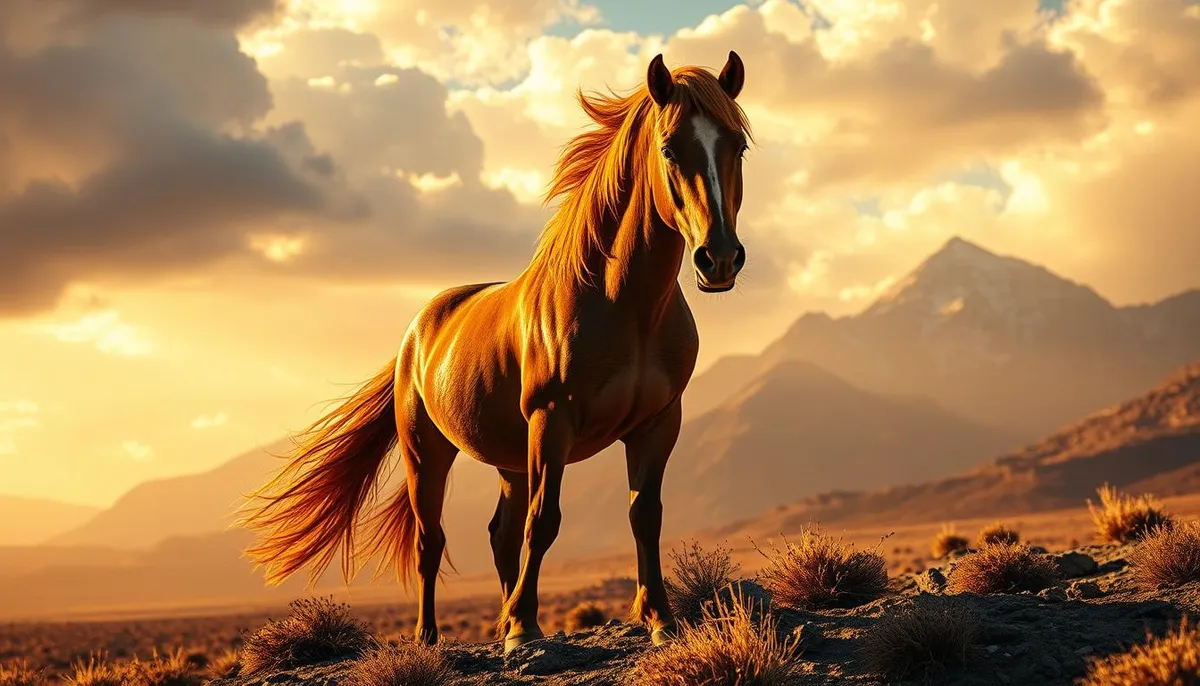
The mustang horse has a wild beauty that captivates everyone. It lives in the vast expanses of the United States, symbolizing freedom. It is known for its unique history, great endurance, and natural elegance.
These horses come from a breed shaped by wind and dust. They have a robust structure and hard hooves. They are generally found in Nevada, Wyoming, and Montana. They form groups and maintain the balance of nature. The mustang is a symbol of independence, intelligent and full of energy.
Since the time of the Spanish conquest, the mustang has nearly disappeared. Fortunately, it has received support and protection by law. This has made it unique in American culture and in the world of horseback riding.
If you love horseback riding, La Sellerie Française offers quality products made in France. They celebrate the free spirit of the mustang and the magnificence of nature.
Key Points
- The mustang horse is an icon of freedom of the United States, emblem of independence.
- Horse breed robust, adapted to arid and rocky terrains.
- Major presence in the American West: Nevada, Wyoming, Montana.
- Lives in herds, high endurance and marked intelligence.
- Drama-filled history, followed by decisive legal protection in the 20th century.
- La Sellerie Française embodies a way of life inspired by this wild beauty.
Origins and History of the Wild Mustang
The mustang has an origin that shows its importance in the West. Its history intertwines conquest and marooning, making it fascinating.
From Spanish Horses of the 16th Century to the Herds of the West
In the 16th century, Spanish horses arrived with the conquistadors. Some escape or are abandoned. They become wild in the plains and form free groups.
New horses join them from ranches, creating the mustang. This history explains why the mustang horse is so special.
Marooning and Adaptation: From Domestication to Return to the Wild
Domesticated horses become wild again. Only the strongest survive due to their sturdiness. They adapt to the harsh climate and predators.
In 2018, a study showed that even so-called “wild” horses come from former domesticated ones. The mustang illustrates this phenomenon of adaptation well.
The Cultural and Symbolic Role in U.S. History
In the United States, the mustang symbolizes freedom. It appears in westerns, paintings, and books. Indigenous peoples, like the Lakota, share a deep connection with it.
The mustang represents endless space and mobility. Its history is linked to westward expansion, trade, and nomadic life.
Legal Protection: Wild Free-Roaming Horses and Burros Act of 1971
Excessive hunting threatened mustangs in the early 20th century. Citizens acted to change this. The Wild Free-Roaming Horses and Burros Act of 1971 protects these animals and assigns their guardianship to government agencies.
This law protects mustangs in the wild on public lands. It emphasizes the importance of wildlife and ecology in the United States.
Characteristics of the Mustang Horse and Morphology
The mustang is unique and represents the wild horse of the vast plains. Its mustang morphology shows a compact and sporty shape. It owes its form to nature, which has shaped it well. Thus, the mustang is a solid, agile, and fast horse. It is known for its long-lasting endurance and quick thinking.
Size, Solid Build, and Hard Hooves Adapted to Arid Terrains
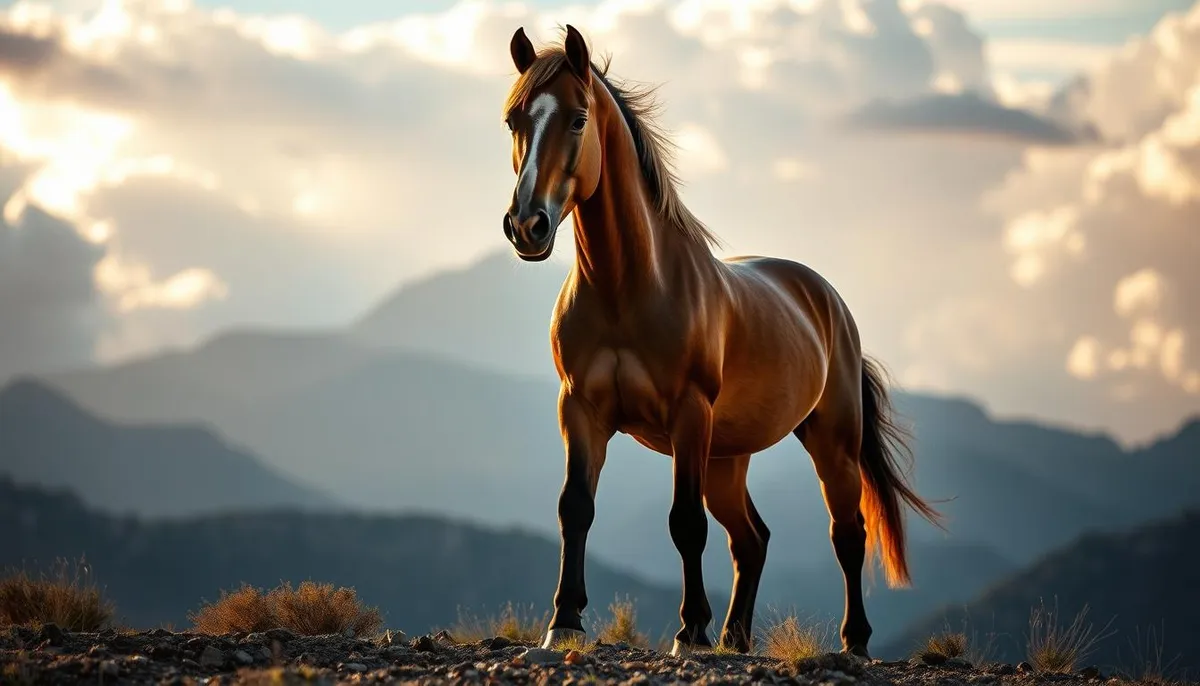
A mustang often measures between 1.40 m and 1.50 m. It has a wide chest, a muscular but short neck, and solid but not heavy bones. Its hooves are so hard that it almost never needs shoes. This is useful in the rocky deserts where it travels a lot.
This configuration, with a short back and strong loins, ensures a safe gait. It shows how the mustang has adapted to the harsh environment of the American West, where it has lived for centuries.
Diversity of Coats: From Black to Bay, Gray, and Isabel
Mustangs come in colors ranging from black to light brown. Golden colors with black mane hairs are special. They show great genetic diversity due to many crossbreeds. This diversity is also visible in the textures of their coats and markings that change with the seasons.
For mustangs, color is not just for visual pleasure. It also indicates their adaptation to different climatic conditions. This helps the mustang to camouflage well in its environment.
Endurance, Intelligence, and Herd Behavior
The mustang is especially known for its endurance and ability to learn quickly. It is cautious and has a highly developed survival instinct. In the wild, they live in structured groups that protect them from predators.
Initiatives like the Mustang Makeover prove that these wild horses can become good companions. They retain their endurance while becoming reliable. This combination of qualities shows the true nature of mustangs.
| Criterion | Main Asset | Impact on Terrain | Numeric Reference |
|---|---|---|---|
| Height at Withers | Compactness and Agility | Balance on Slopes and Ravines | 1.40–1.50 m |
| Build and Musculature | Sturdiness without Heaviness | Load Bearing and Stability | High Bone Density |
| Hooves | Natural Hardness | Less Shoeing, Better Grip | Slow Wear on Rock |
| Coats | Diversity, including isabel coats | Thermal Adaptation and Camouflage | Black, Bay, Gray, Isabel |
| Temperament | Intelligence and Caution | Quick Learning and Safety | High Reactivity |
| Endurance | Prolonged Effort | Long-Distance Travel | Economical Stride |
Natural Habitat of the Mustang Horse in the Western United States
The natural habitat of the mustang horse covers large areas in the United States. Mustang groups move between prairies, plateaus, and deserts. This wild horse lives freely, following water and grass seasons. It adapts its route according to the terrain. Living in a wild state, the mustang has been in harmony with arid lands forever.
Plains and Mountains of Nevada, Wyoming, Montana
In Nevada, Wyoming, and Montana, the most mustangs can be found. They also extend into Idaho and Utah, and even reach Canada. Mustangs live in salt flats, steppe valleys, and near mountains. They adjust their living area based on altitude.
Adaptation Capabilities to Prairies, Deserts, and Rocky Terrain
The mustang finds its food in prairies, deserts, and rocky terrains. It knows the water points, rests and eats, and travels long distances. This versatility helps it survive the hot summers and cold winters in the United States.
Ecological Impact: Grazing, Vegetation Balance, and Carrying Capacity
Grazing by herds helps aerate the soil and maintain the ecological balance of the prairies. If the number of mustangs is too high, plants and soils suffer, creating problems for local wildlife. Monitoring the number of mustangs is crucial to keeping the ecosystem healthy.
- Moderate Grazing: Renewal of Grass and Seed Dispersion.
- Excessive Grazing: Decrease in Cover and Erosion Risk.
- Adjustment of Numbers: Alignment with Local Carrying Capacity.
Variations in rainfall in Nevada, Wyoming, Montana require regular adjustments. Management ensures that the ecological balance remains intact without disrupting the freedom of herds.
Controversies, Management, and Protection of Mustangs
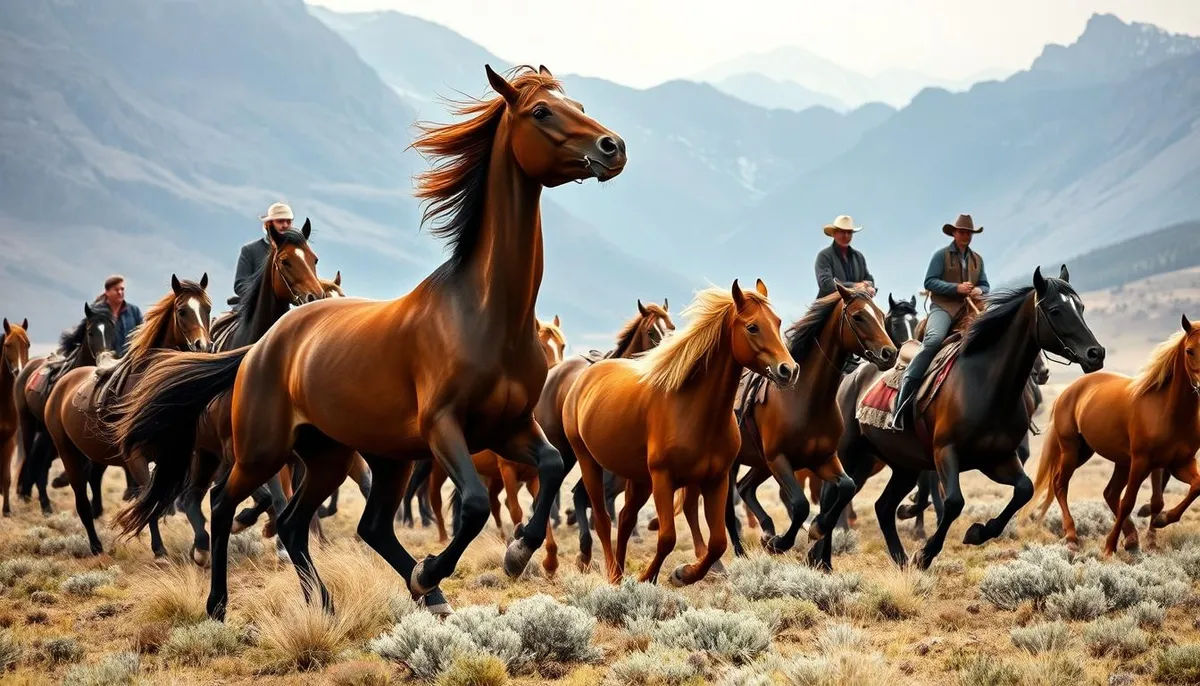
In the West, the wild horse coexists with cattle on the same lands. This often creates debates about the best way to protect these animals and use the land. Between environmental concerns, economic needs, and respect for animals, opinions diverge.
Usage Conflicts: Wild Horses and Pastures for Cattle
The plains see a conflict for forage between cattle and mustangs. Ranchers worry about the impact of horses on sensitive areas. Debates about solutions, including drastic measures like sterilization or culling, are intensifying.
Mustang management seeks a balance. It must allow nature to regenerate without harming wild horses.
Sustainable Management: Adoptions, Relocations, Contraception
The BLM monitors mustangs and organizes selective captures through the Wild Horse and Burro Program. Adoption, encouraged by campaigns like “Adopt a Mustang,” gives horses a new home. Relocation moves them to more suitable lands.
Contraception helps control births on the ground. These methods help preserve mustangs while protecting their habitats.
Symbolism and Awareness: Preserving an Icon of Freedom
The 1971 law establishes the protection of mustangs on public lands. Many groups, including associations and museums, work to raise awareness for this cause. They are supported by brands and institutions valuing this icon of freedom.
This cultural role strengthens public support for mustang preservation. It benefits from the actions of the BLM and the Wild Horse and Burro Program, ranging from adoption to relocation, not to mention contraception.
| Issue | Main Action | Key Players | Expected Benefits | Points of Caution |
|---|---|---|---|---|
| Cattle–Wild Horse Conflicts | Pasture Planning and Population Monitoring | BLM, ranchers, biologists | Reduction of Forage Pressure | Carrying Capacity varies by season |
| Local Overpopulation | Adoption and Relocation | Wild Horse and Burro Program, sanctuaries | Stabilization of Herds | Post-adoption monitoring and well-being in transit |
| Birth Growth | Targeted Immunological Contraception | Veterinarians, field teams | Fewer Captures Needed | Regular Reminders and Coverage of Mares |
| Social Acceptability | Information and Mediation | Associations, cultural institutions | Support for mustang protection | Perception of Local Controversies |
Mustang Horse: Symbolism, Culture, and Inspiration
The mustang symbolizes freedom, adventure, and limitless horizons in the United States. It appears in films and poetry. Its image evokes strength, autonomy, and a deep connection with the lands of the West.
Indigenous peoples, like the Lakota, enrich this story. Their traditions and knowledge highlight equestrian culture. Research by Yvette Running Horse Collin and Ludovic Orlando has renewed the understanding of horses, blending science and tradition.
In art, the mustang inspires creativity and power. Artists and designers capture its essence through dynamic works. The horse becomes a language of forms, playing with shadow and light, leather and metal.
In France, this passion is palpable. La Sellerie Française offers high-quality items that combine functionality and elegance. Their work reflects the authenticity and spirit of the mustang.
Whether in America or France, the spirit of the mustang remains the same. It inspires respect for nature and a sustainable approach to life. Creators and riders follow this philosophy, seeking harmony and responsibility.
Conclusion
The mustang comes from Spanish horses of the 16th century. It is now a symbol of freedom in the United States. With its compact body and robust hooves, it stands out. Mustangs live in varied environments, from the plains of Nevada to the mountains of Wyoming and Montana.
Their life in these places showcases their remarkable endurance and intelligence. These qualities help them survive. The ecological role of the mustang is also important. They contribute to shaping landscapes. But their numbers must be controlled to protect the environment.
The Wild Free-Roaming Horses and Burros Act of 1971 protects these horses. Thanks to the Bureau of Land Management, their population is managed responsibly. The Wild Horse and Burro program helps through adoption and contraception methods to avoid conflicts and preserve nature.
Mustangs have inspired art and cinema. They are also part of the history of indigenous peoples. They bridge the past and present, honoring our heritage while being contemporary. La Sellerie Française creates high-quality items inspired by these horses.
To keep this icon alive, we combine science, culture, and commitment. This helps maintain the balance of the lands of the West. Thus, the beauty of mustangs continues to shine, from the United States to riders around the world.
FAQ
What is a mustang horse and why is it considered wild in the United States?
The mustang horse comes from Iberian animals brought by conquistadors. They became wild and live freely in the West of the United States. They represent freedom.
What are the characteristics of the mustang horse in terms of morphology and behavior?
Mustangs are medium-sized. They have strong bones and hard hooves. They are intelligent and live in groups.
What coats does the mustang have?
There are many colors in mustangs. Black, bay, gray, and isabel are some examples. This variety shows their genetic richness.
What is the natural habitat of the mustang horse and how does it adapt?
Mustangs live in prairies, deserts, and mountains. They find their food and water over long distances. They cope well with weather changes.
What ecological role does the mustang play in the ecosystems of the West?
By eating grass, they help keep plants balanced. But too many mustangs can cause problems for nature and other animals.
How is the mustang legally protected in the United States?
A law from 1971 protects these animals on federal lands. The BLM manages their numbers through various means to protect them.
What are the main controversies surrounding mustang management?
There are debates on how to protect mustangs without harming the environment or farmers. Some management methods are highly discussed.
Can you adopt a mustang and what does its training involve?
Yes, through a special program and adoption initiatives. Training a mustang requires patience. They can become good companions.
Is the mustang really a “wild” horse in the biological sense?
Yes, it has become wild again after being domesticated. Their history shows that they have adapted to wild life.
Where are the most mustangs observed today?
They are mainly found in Nevada, Wyoming, and Montana. There are also herds in other states and Canada.
Why is the mustang a cultural and symbolic icon?
They symbolize freedom and are present in westerns and art. Indigenous peoples also have a special bond with them.
How to reconcile mustang protection and habitat preservation?
Management includes monitoring populations and measures like adoptions. This helps protect mustangs without harming the environment.
Do mustang hooves require specific shoeing?
Their hooves adapt well on their own. But if they live with humans, they may need special care.
Is the mustang suitable for leisure riders?
Yes, with proper training. They are perfect for trail riding. Experts can help train them.
What equipment embodies the spirit of the mustang in everyday life?
Choosing quality and simple equipment shows respect for these horses. In France, La Sellerie Française offers durable gear.
Is the mustang a recognized horse breed?
“Mustang” describes horses of various origins. There is no precise registry, but their tracking is done by certain organizations.
How do mustangs interact socially in herds?
They form tight groups for protection. They communicate well with each other, which helps them survive.
What is the impact of climate change on mustangs?
Drought makes their lives harder. It is important to wisely manage their numbers to protect their environment.
How to support mustang protection from Europe?
You can help through donations to associations. Promoting responsible riding and choosing eco-friendly equipment are also good actions.