
Horses captivate everyone with their strength and elegance. In France and elsewhere, they are admired. But when standing in front of a very tall horse, one notices that there are exceptional sizes.
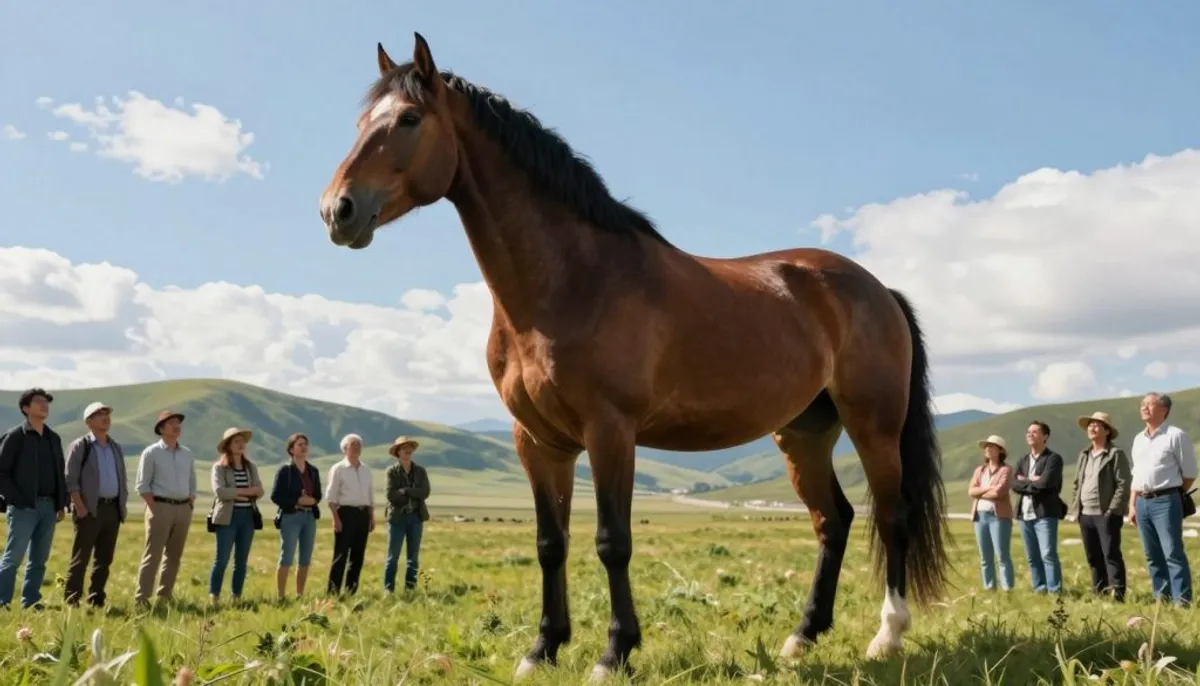
We are talking here about the largest horse in the world, recognized by Guinness World Records. This title is not only based on the impression it gives. It is based on precise measurements and serious checks.
Guinness World Records videos showcase this giant horse and amaze millions of viewers. On screens, it seems almost fantastical. But in front of it, everything appears more real, every movement is impressive.
Later, we will see how to measure a horse accurately. We will discuss the conversion of “hands” into centimeters. And the difference between a “living” record and a “historical” record. How to care for such a giant on a daily basis will also be addressed: its habitat, movements, care, and necessary equipment.
Key points
- The largest horse in the world is an official title from Guinness World Records.
- An incredible giant horse is validated by precise measurements.
- The height of a horse is officially measured at the withers.
- There is a difference between a “living” record and a “historical” record.
- Seeing a large horse in reality truly shows its scale.
- To keep such a large horse, its logistics and care are very important.
Why giant horses fascinate us so much
When we see a large horse in the paddock, our gaze changes. They are so big that they are not just numbers on a sheet. They become a real, imposing, and calm presence. Approaching them is discovering their amazing patience.
Between quiet strength and gentleness: the aura of an impressive equine
Large horses attract with their perfect mix of opposing traits. They have power in their shoulders and gait. But also slow movements, a head gently seeking our hand, and a peaceful breath.
Their gentleness does not diminish the respect they inspire. This gentleness makes the respect more evident. It allows us to understand what it is like to guide a large horse, whether leading it with a halter, in a stable, or during grooming.
Viral records and public curiosity: the effect of Guinness World Records
Records fascinate because they offer a simple measure. When Guinness World Records presents a giant horse, its image goes viral. People share, comment, and compare. The horse's large size becomes a direct and visible fact.
This phenomenon also attracts due to the striking contrast. A large horse next to a person instantly shows what numbers cannot always explain.
Seeing the scale in real life: when impressive horse size becomes concrete
Photos and videos have a big impact, but seeing in real life is different. Elements like a stable door or a too-short blanket remind us of their great size. Even moving involves more planning.
To truly understand these differences, here are some simple examples drawn from experience, without complicated language.
| What we observe | “Standard” horse | Giant horse | What it changes daily |
|---|---|---|---|
| Passing through a stable door | Comfortable height, margin at the withers | Reduced margin, caution on the lintel | We open wide and move more slowly |
| Putting on the halter | Gesture at chest height | Gesture higher, arms extended | We take more time to avoid jolts |
| Blanket and gear | Common sizes in saddlery | Rare sizes, often custom-made | We anticipate suitable equipment from the purchase |
| Visual impression next to a human | Notable but familiar difference | Unusual silhouette, impressive equine | The impressive horse size becomes obvious at a glance |
Understanding measurements: how to validate a record horse height
To start, it is important to know how we measure. A record horse height is not simply assessed by looking. We must follow a precise and strict method to ensure that the measurements are fair.
Measuring at the withers: the international standard used by stud-books and Guinness
The height of a horse is measured at the withers, where the neck meets the back. This allows for a reliable measurement, even if the horse moves. With this fixed point, we obtain an accurate data.
Stud-books, national stud farms, and Guinness World Records use this international method. Without it, it would be very difficult to validate a world record, as the measurements would vary too much.
From “hands” to centimeters: 1 hand = 10.16 cm (often rounded to 10 cm)
In Anglo-Saxon countries, height is often measured in “hands.” One hand equals 10.16 cm, but it is often rounded to 10 cm. These details are crucial when comparing records.
For example, 20 hands correspond to about 203.2 cm. If we add 2.5 inches, we reach nearly 210.2 cm. It is in these ranges that records are determined by very small differences.
| Measurement in hands | Equivalent in cm | What it changes for validation |
|---|---|---|
| 20 hands | ≈ 203.2 cm | At this size, every small deviation counts for ranking. |
| 20 hands + 2.5 inches | ≈ 210.2 cm | At this level, a flat surface and a precise tool are necessary. |
| 21 hands | ≈ 213.36 cm | Even a small deviation must be carefully checked at the withers. |
Why precision changes everything for a world record horse
In cases of great size, a few millimeters can change the results. A record can depend on details like a thick shoe or an uneven surface. That is why every millimeter counts.
We therefore seek to maintain stable conditions: a flat surface, a calm horse, and precise measurements. This guarantees the authenticity of a record, beyond the excitement it may generate.
the largest horse in the world: current records and historical record
To understand who is the largest horse in the world, we must know how records are classified. We distinguish between current records and those of the past. This helps us better appreciate the significance of such a record.
Photos and videos clearly show why these horses are exceptional. They are not defined solely by their size. Their daily life, from the stable to transport, is also affected.
“Living” record: what it means in modern rankings
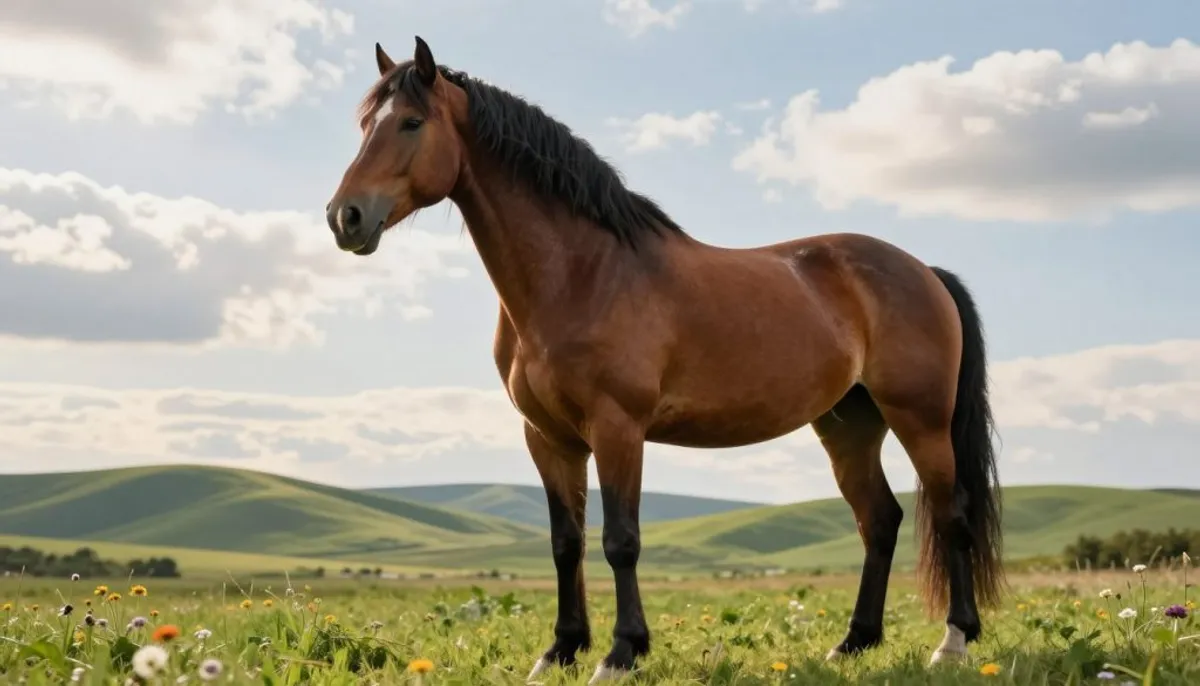
A “living record” refers to a horse still alive, officially measured according to a strict method. Big Jake has held this title since January 19, 2010. He has been recognized by Guinness as the largest.
This record is based on height at the withers and follows precise rules. This ensures its reliability, far from mere rumors.
“Historical” record: why some sizes remain unmatched
A “historical record” refers to a past record, like that of Sampson, born in 1846, also known as Mammoth. He is often mentioned for his exceptional size. Even though the measuring methods of the past are debated, his record still fascinates.
These records are important because they establish a reference. They help us understand what a truly colossal horse is, beyond trends.
Puts numbers into perspective: what we call a colossal horse
Saddle horses usually measure between 1.40 m and 1.80 m at the withers. But starting from 2.10 m, we enter a whole different universe. This is where the concept of colossal horse takes on its full meaning, especially next to a human.
A larger horse requires different care. It needs a bigger stall, taller doors, and a special trailer. The images are striking, but the numbers clarify the point.
| Simple reference | Saddle horse (often observed) | “Giant” size (order of magnitude) | What it changes daily |
|---|---|---|---|
| Height at the withers | 1.40 m to 1.80 m | 2.10 m and above | Higher handling, grooming and care require different organization |
| Reading a record | Little concern for rankings | Official measurement, checks, protocol | A world record horse depends on a method, not just an estimate |
| Scale effect | Familiar proportions | Unusual silhouette | Photos and videos make the size of the largest horse in the world easier to understand |
| Infrastructures | Standard stalls and transport | Specific arrangements | A colossal horse often requires more space, height, and sturdiness |
Big Jake, the incredible giant horse recognized by Guinness
Big Jake is famous as the largest horse of our time. His impressive size is confirmed by official measurements. He lived on a farm, where his grandeur was part of daily life.
ID card
Big Jake was a Belgian draft gelding born in 2000. Guinness World Records recognized him on January 19, 2010. Shortly after his birth, he was already about 75 cm tall, foreshadowing his exceptional growth.
Verified measurements
Big Jake measured 210.2 cm at the withers. His weight was around 1,180 kg. These measurements make him a true giant among horses.
| Reference | Data | Why it’s significant |
|---|---|---|
| Breed | Belgian draft | A lineage known for strength and build |
| Recognition | Guinness World Records, January 19, 2010 | An official framework that stabilizes the title of largest horse in the world (living) |
| Height at the withers | 210.2 cm | A record horse height that far exceeds usual large sizes |
| Reported weight | Approximately 1,180 kg | A concrete indicator of mass, useful for understanding the actual build |
A farm legend
Big Jake lived at Smokey Hollow Farm in Wisconsin, with Jerry and Dawn Gilbert. His photos and videos made his legendary size evident. Despite his size, he was very sociable and loved being around people, which often surprised visitors.
Sampson, also known as Mammoth: the majestic specimen with a historical record
In the world of horses, Sampson holds a special place. Renamed Mammoth, this horse holds a world record. The numbers vary, but his story still fascinates.
Imagine the life of a huge horse. He pulled carts, helped with fieldwork, and moved with strength. His imposing size was not just impressive; it influenced his daily life.
Origins: Shire born in 1846 and measured at 219 cm
Sampson, born in 1846 in England, was a Shire. These are very large draft horses. He measured 219 cm at the withers, according to the most widespread accounts, marking history.
Other accounts from the time say he was a bit smaller, at 218.4 cm. This shows that measuring such a horse was not easy with the tools of the past.
Estimated weight: around 1,520 kg and unmatched reference status
It is believed that Sampson weighed around 1,520 kg. This extraordinary weight contributed to his majestic appearance. He became a legend among horses.
On the farm, Sampson was valuable for pulling heavy loads. He was admired for his strength and endurance, not just his size.
| Reference | Often cited value | What it implies daily |
|---|---|---|
| Year of birth | 1846 | Agricultural context: pulling and working at a walk |
| Height at the withers | 219 cm (or 21 hands 2.5 inches ≈ 218.4 cm) | More demanding equipment, doors, and passages |
| Estimated weight | ≈ 1,520 kg (often rounded) | Strong demands on feet, tendons, and joints |
| Main use | Draft horse | Pulling carts and heavy equipment |
| Reported longevity | ≈ 15 years | Physiological constraints mentioned in very large builds |
The limits of gigantism: joint, respiratory, and cardiac challenges mentioned in giants
A horse like Sampson raises health questions. Large horses can have foot and joint problems. Their weight accelerates wear.
Respiratory and cardiac issues are common among these giants. This reminds us that these fantastic animals need constant care. Their story is marked as much by their greatness as by their challenges.
The breeds that most often produce an exceptional horse
“Giant breeds” like the Shire, Clydesdale, Belgian draft, and Percheron are well known. These breeds have been chosen for their ability to pull, carry, and their endurance. They are often larger and impress with their size.
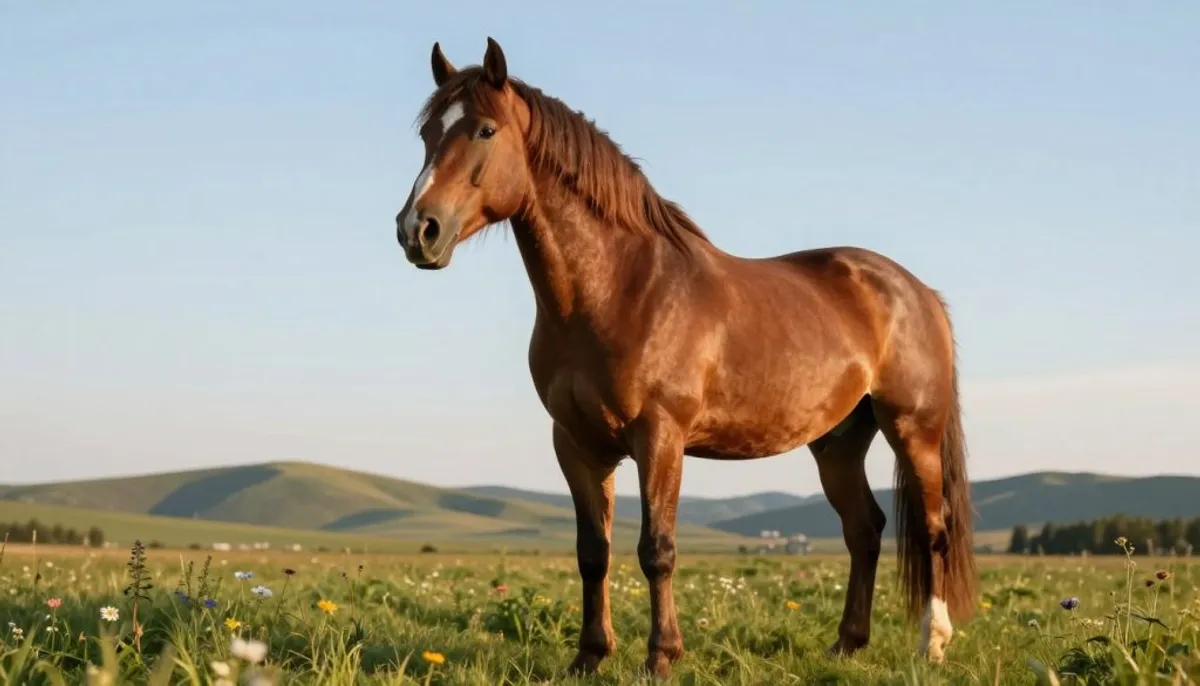
The Shire is very large and well-known for it. The Clydesdale is easily recognizable with its markings and feathers, loved in harness competitions. The Belgian draft is famous for its quiet strength, and the French Percheron is appreciated for its versatility.
| Breed | Height at the withers (references) | Weight (references) | Often noted traits |
|---|---|---|---|
| Shire | Often over 1.73 m; average around 1.80 m; some > 1.98 m | Around 1,000 kg, sometimes 1,200+ kg | Heavy feathers, massive build, impressive horse size in hand |
| Clydesdale | Generally 1.63 to 1.83 m | Often 900+ kg | Frequent markings, ample gaits, very “showy” presence |
| Belgian draft | Often 1.63 to 1.73 m; some individuals far exceed these references | Heavyweight, often close to 1,000 kg depending on lineage | Pulling strength, docile temperament, compact model |
| Percheron | About 1.60 to 1.85 m (often 18–19 hands in large subjects) | Can exceed 1,000 kg depending on sources and selection | French origin, powerful back, used for harness and work |
Several elements explain the differences among horses. Genetics is important, but breeding, nutrition, development, and even the soil matter a lot. It is the combination of these factors that can create an exceptional horse, although not all become large.
Before the advent of engines, these characteristics were essential for agricultural work and transport. Nowadays, these horses participate in competitions, harnessing, and demonstrations. Their large size is still an advantage, provided the necessary care is given.
Shire: the icon of draft horses and large animals
The Shire comes from England and is well known for its large size. It is mainly associated with Lincolnshire and Derbyshire, with Flemish and Friesian origins. In the 18th century, specific methods were implemented to obtain a robust horse.
The Shire Horse Society, established in 1884, plays a significant role in protecting this breed. This organization has helped preserve its unique identity, even over time. Today, Shires are easily recognizable due to their imposing appearance.
Morphological markers: typical feathers, power, silhouette, and profile
The Shire is an enormous horse, very muscular, with a thick neck and a large back. It has a gentle face, thanks to its large eyes. Its feathers, which are the hairs around its legs, must be well maintained.
Its main colors are black and bay, sometimes gray. It is fascinating to see how its large size comes from the harmony of its body. Despite its size, it is often described as a “gentle giant.”
Orders of magnitude: males often over 1.73 m, average around 1.80 m cited
Male Shires often exceed 1.73 m at the withers and weigh around 1,000 to 1,220 kg. These figures show how large and heavy they are, which influences their daily care.
Aside from size, balance and foot health are essential. A Shire is also distinguished by its gait, majestic rather than fast. This creates the “wow” effect among spectators.
Modern uses: harnessing, logging, demonstrations… and need for suitable equipment
Today, Shires are used for pulling carts, logging, and in shows, especially in Great Britain and Australia. They are perfect for these roles due to their steady gait and calmness. They then become ambassadors for their breed.
However, their large size requires special equipment: sturdy harnesses, durable metal parts, and precise adjustments. It is crucial that the equipment fits well for their safety and comfort.
| Concrete reference | Common orders of magnitude in Shires | Practical impact daily |
|---|---|---|
| Height at the withers (male) | Often > 1.73 m; average cited around 1.80 m | Need for tall doors, spacious grooming area, higher handling |
| Weight | About 1,000 kg; some subjects close to 1,220 kg | Stable ground, ramps and adapted floors, caution on load during transport |
| Visual markers | Abundant feathers, massive neck, wide back, convex profile | Regular maintenance of feathers, monitoring of mud and moisture, suitable brushes |
| Frequent coats | Black, bay; sometimes gray | Visible protection choices in events, tracking friction marks on harnessing |
| Current uses | Harnessing, logging, demonstrations (UK, Australia) | Reinforced harness, precise adjustments, safety routine before each outing |
Comparing an impressive equine to a saddle horse
When comparing a huge equine to a saddle horse, the difference is clear. Just by looking, one notices the large size of these animals. Especially when they pass near a stable entrance or a tie point.
Common heights: saddle horses often between 1.40 m and 1.80 m
In France, saddle horses often measure between 1.40 m and 1.80 m. But Big Jake, who holds a Guinness record, measured 2.10 m.
In front of such a giant, everything seems clearer, even for someone who knows nothing about horses. His legs are longer and his back much higher. Thus, the usual equipment seems “small.”
| Concrete reference | Saddle horse (order of magnitude) | Big Jake (giant reference) |
|---|---|---|
| Height at the withers | 1.40 m to 1.80 m | 2.10 m |
| Head level when standing | Often at the torso level of an adult | Often above the head of an adult |
| Access to grooming | Brush possible without a stool in most cases | Stool often useful for the back and withers |
| Common equipment | Standard sizes easy to find | More frequent specific sizes |
What size changes: center of gravity, handling, and calmer maneuvers
A large horse gives the impression of having a higher center of gravity. More attention must be paid to movements, especially in tight spaces or when exiting a stall.
With a large horse, it is better to act slowly and steadily. One must leave enough space to turn and hold the lead rope properly.
In a stable, some details are essential. For example, the height of tie points and devices for eating and drinking. When considering all this, managing space becomes easier.
“Wow” effect: understanding scale through photos and videos of giant horses
Photos and videos clearly show the size of these animals. Especially next to a person, a standard stall, or a trailer. This creates an incredible “wow” effect, even without needing to measure.
In these situations, it is easy to see the difference between a normal horse and a very large equine. We understand why these images so strongly impact the mind and why we remember this grandeur.
Living with a colossal horse: logistics, stalls, and transport
Welcoming a large horse requires a lot of space, safety, and routine. Details like the width of passages and the quality of the ground are crucial. A large horse can be gentle, but its size demands special precautions.
XXL housing
Big Jake, who lived at Smokey Hollow Farm in Wisconsin, had an enormous stall. Measuring 6.10 m x 6.10 m, it was almost twice the size of a standard stall. This allowed Big Jake to move freely without bumping into things.
It is important to have a wide door, a high ceiling, and a well-drained floor. A non-slip floor is essential for the horse's safety. A large horse also needs a high-flow water trough to avoid discomfort.
Transport
Transporting a colossal horse requires a suitable vehicle, with enough height and a reinforced floor. For Big Jake, a semi-trailer was necessary because a standard trailer was too small. The cabin must be perfect to ensure the animal's safety.
Trips must be well-planned, with a wide ramp and regular breaks. This reduces stress and protects the horse's health. Good ventilation is also crucial for its well-being during transport.
Infrastructures
The stable corridors must be wide enough for easy passage. Tight corners are problematic for large horses. The grooming area must be spacious and safe, with a non-slip floor.
Tie points must be adjusted for large horses. Sometimes, it is necessary to reinforce the structure around the doors. For a large horse, simple and practical infrastructures are preferable.
| Element | “Standard” reference | Recommended format for a colossal horse | Practical detail |
|---|---|---|---|
| Stall / box | ≈ 3.60 m x 3.60 m | ≈ 6.10 m x 6.10 m (example Big Jake) | Facilitates turning around, limits shocks, improves rest |
| Box door | Correct width for a saddle horse | Wider and taller, with sturdy closure | Reduces friction on the shoulders of a large animal |
| Floor and bedding | Stable floor, “classic” bedding | Draining floor + non-slip surface + thicker bedding | Absorbs impacts, protects feet and hocks |
| Watering | Current flow | High-flow trough | Meets the needs of an exceptional horse without waiting |
| Transport | Standard trailer, limited height | Reinforced trailer or semi-trailer depending on size | Useful height, sturdy floor, adjusted protections |
| Indoor circulation | Corridors suited for average sizes | Wider corridors, softened turns | Less stress, safer maneuvers on foot |
Care, nutrition, and harnessing for impressive horse size
Caring for a large horse requires attention and precision. One must carefully choose what to feed it. It is also important to monitor its condition daily and select the right equipment. Even for a very large horse, small mistakes can have big consequences, especially if it approaches a size record.
Nutrition
It is essential to provide high-quality hay, clean and regularly. Rations of grains, fibers, and supplements are adjusted according to each horse's needs. This depends on its work, health condition, and veterinary advice.
A good guideline is to aim for more than 2% of body weight in food each day. This amount can then be adjusted. To prevent colic, it is useful to divide meals into small portions. Always provide plenty of water to drink.
Health prevention
Large horses need special care for their feet. It is important to monitor hoof width and horn quality. A good farrier, experienced with large breeds, is essential.
For certain breeds like Shires, it is important to keep the feathers clean and dry. This helps avoid irritations. One must also monitor the horse's weight, joints, breathing, and heart. Large horses can have specific health issues.
Examples like the horse Sampson (Mammoth) show that taking care of a very large horse is a real challenge. It is necessary to manage their activity and rest well.
Custom equipment
A very large horse does not fit into standard-sized harnesses. Often, one must look for X-full sizes or have custom-made ones. This includes halters, bridles, harnesses, girths, and blankets. All of this must be sturdy and well-fitted.
In France, one can find very good equipment at Forestier Sellier and Antarès Sellier. For blankets and accessories, there are Horseware, Horse Pilot, Kramer, Ravene, and Decathlon. Cheval Liberté offers solutions for transport. When the right size cannot be found, La Sellerie Française can make equipment from A to Z in France. This is perfect for horses that are out of the ordinary, close to a size record.
| Need | Point to check | Simple reference | Useful brands in France |
|---|---|---|---|
| Daily ration | Quality of hay, body condition, energy at work | Divide + water ad libitum; often > 2% of body weight according to veterinary advice | Ravene, Kramer, Decathlon |
| Feet and feathers | Hoof width, moisture, irritations under feathers | Cleaning, drying, regular monitoring and trimming | Ravene, Kramer |
| Joints and weight | Stiffness, fatigue, recovery, overload | Progressive work, suitable grounds, veterinary follow-up | Ravene, Horse Pilot |
| Harnessing | Adjustment, pressure points, sturdiness of buckles | X-full often too short; prefer custom and reinforced buckles | Forestier Sellier, Antarès Sellier, La Sellerie Française |
| Blankets and protections | Back length, shoulder range, friction | Measure before purchase; test in movement | Horseware, Horse Pilot, Decathlon |
| Daily logistics | Handling, ties, safety, trips | Sturdy accessories; equipment designed for large sizes | Cheval Liberté, Decathlon |
Conclusion
When talking about the largest horse in the world, Big Jake and Sampson stand out. Big Jake is a Belgian draft horse who was recognized by Guinness World Records on January 19, 2010. He measured 210.2 cm at the withers and weighed around 1,180 kg. Sampson, also known as Mammoth, was a Shire born in 1846. He measured 219 cm and weighed nearly 1,520 kg, a world record often mentioned.
For a fair comparison, measuring at the withers is essential as it is where the height is most accurate. The conversion of Anglo-Saxon measurements is crucial: one hand equals 10.16 cm. This conversion helps understand the gap between saddle horses and imposing draft equines.
The enormous size of horses also fascinates due to their visual impact. Guinness rankings and famous videos allow us to better appreciate their grandeur. A photo next to a human makes the horse's size even more impressive.
The daily life of these giants includes XXL stalls, special transport, and meticulous care for their feet, joints, and weight. Suitable equipment is necessary for their well-being. La Sellerie Française, with its French manufacturing and luxury custom equipment, can make a big difference. This shows respect for the spirit of a world record horse.
FAQ
What is the largest horse in the world according to Guinness World Records?
A: Big Jake, a Belgian draft gelding, holds the title of largest horse in the world. Guinness World Records officially recognized him on January 19, 2010. He measures 210.2 cm at the withers.
What is the difference between a “living” record and a historical record?
A “living” record refers to a horse still alive, officially measured. It can be beaten. A historical record concerns a horse from the past. Its size remains a reference despite differences in old measurements.
What is the historical record for the largest horse ever measured?
A: Sampson, renamed Mammoth, a Shire born in 1846 in England, holds the record. He was 219 cm at the withers. He is often seen as an unmatched colossal horse.
How is the height of a horse officially measured for a record?
The height of a horse is measured at the withers, where the neck meets the back. This method is safe and used by experts to certify a record.
What is a “hand” for measuring a horse, and how much is it in cm?
One hand equals 4 inches, or 10.16 cm. This measurement helps understand a horse's size in terms of world record.
Can you provide useful conversions to understand records?
For example, 20 hands is about 203.2 cm. This shows how a few centimeters influence records. Big Jake measures about 210.2 cm.
Why is measurement precision so important in a world record horse?
Small differences can change a ranking. Measuring at the withers helps compare horses fairly.
What size do “classic” horses measure compared to an incredible giant horse?
Most horses measure between 1.40 m and 1.80 m. Next to a giant of 2.10 m, their size difference is striking.
What are the measurements of Big Jake, the current modern champion?
Big Jake measures 210.2 cm at the withers and weighs about 1,180 kg. His immense size makes him very special.
Where did Big Jake live and who took care of him?
Big Jake lived at Smokey Hollow Farm, Wisconsin. Jerry and Dawn Gilbert took care of him. He was known to be sociable.
What are the key data on Sampson/Mammoth (Shire)?
Born in 1846, Sampson, known as Mammoth, measured 219 cm at the withers. Weighing about 1,520 kg, he was a true giant.
Do very large horses have more health risks?
Yes, their size can cause health problems. They may have issues with their feet, joints, as well as respiratory and cardiac problems.
Which breeds most often produce horses close to a record?
Shire, Clydesdale, Belgian draft, and Percheron are often close to records. They are large and strong.
What sizes and weights are often observed in these “giant” breeds?
Male Shires often exceed 1.73 m, some go beyond 1.98 m. Clydesdales range between 1.63 m and 1.83 m. Belgian drafts and Percherons are also large and heavy.
Why do Guinness World Records videos of giant horses go viral?
The videos clearly show the size difference. They capture attention and are easy to share. Millions watch them.
What fascinates when seeing an impressive equine “up close”?
Up close, their size and power impress. But they also show great gentleness, making them even more special.
What does size change concretely in a stable?
Large sizes require specific facilities. Everything must be adapted for their comfort and safety.
What size stall should be planned for a very large horse?
A large horse needs a large stall. Big Jake, for example, had a stall of 6.10 m x 6.10 m.
How do you transport a giant horse?
They require special transport with enough height and reinforcements. A semi-trailer was used for Big Jake.
How do you feed a large animal like a record horse?
They eat quality hay and adjusted rations. Meals are often divided for their health.
What care is prioritized for a very heavy exceptional horse?
It is crucial to monitor their feet and joints. Tracking their weight and overall health is also essential.
What equipment is needed for a horse of unusual size?
Special equipment, often custom-made, is necessary. Everything must be sturdy enough to support their weight.
Which brands are often cited for equipment, and what to do if standard sizes do not fit?
Brands such as Forestier Sellier and Antarès Sellier are recommended. For custom-made, La Sellerie Française in France offers personalized options.
How do you know if a horse can claim a record horse height title?
It must be measured officially at the withers according to a strict protocol. This ensures a fair comparison between horses.