
Originating from the high valley of Ariège, near Andorra, the Mérens horse is robust and loyal. For centuries, this mountain breed has been distinguished by its sure-footedness and endurance. Nowadays, it is appreciated for driving, hiking, TREC, and vaulting.
The Mérens stud book was created in 1947, supervised by the SHERPA and the National Studs. With the arrival of machines in agriculture, the breed nearly disappeared. But it was saved by passionate breeders, the community of the 70s, and the national events in Bouan. Breeding in France is based on strict standards and a dedicated network.
The Mérens is rustic and attentive, perfect for the ecological maintenance of pastures. La Sellerie Française offers custom-made, limited edition equipment for this compact breed. All these products are made in France.
Key Points
- The merens horse is a mountain horse from Ariège, always black, rustic, and sure-footed.
- Stud book opened in 1947, managed by the SHERPA with demanding selection criteria.
- The breed was revived by breeders, the Bouan competitions, and the rise of leisure riding.
- Key uses: driving, hiking, TREC, circle vaulting, and eco-grazing.
- Breeding in France focuses on rusticity, reliable temperament, and adaptability to terrain.
- La Sellerie Française equips the Mérens with handcrafted, 100% French-made materials.
Ariège Origins and Living History of the Breed
The mountain horse from Ariège comes from the high valleys of the Pyrenees. Its name recalls its Ariège origins. The name Mérens-les-Vals began to be used in 1998, although mentions existed since 1866. These horses, accustomed to living in semi-freedom and transhumance, hold a special place in the merens horse history.
From the Pyrenees to National Fame
The Mérens, from Foix to the passes near Andorra, has long worked hard. Motorization caused its decline. In 1964, there were barely twenty births.
Lucien Lafont de Sentenac created the stud book in 1947. The national fame of the Mérens then developed, reaching the Reunion in 1977 and Europe in 1983.
From Work Animal to Leisure Riding
In the 70s, the Mérens horse changed direction. Michel Vidal and the SHERPA directed it towards leisure riding. Enthusiasts in Ariège revived the breeding, supported by local icons.
The number of Mérens doubled between 1975 and 1985. They transitioned from work horses to reliable leisure partners.
Role of Communities and Key Players in Conservation
The conservation of the Mérens is a collective effort. The SHERPA plays a significant role, as does Pierre Planteau in Castelmir in the 70s and 80s.
Collective efforts enrich the merens horse history. The SHERPA bulletins are immensely helpful.
Two Breeding Directions: Rustic Type vs. Sport Type
Since the 80s, two types of Mérens coexist. The rustic type, small and robust, lives in semi-freedom. The sport type is modern, light, and versatile.
| Criteria | Rustic Type | Sport Type |
|---|---|---|
| Origin and Environment | High valley, semi-freedom, poor pastures of the Pyrenees | Selected breeding, performance-oriented in flatlands |
| Model | Compact, bony, short neck, deep chest | More elongated, fluid gaits, more open shoulder |
| Abilities | Mountain carrying, utility driving, slow endurance | Basic dressage, TREC, sport driving, sustained hiking |
| Management | Herd life, rusticity, marked frugality | Regular work, monitored feeding, technical follow-up |
| Uses | Mountain horse from Ariège for difficult terrain | Versatility focused on leisure riding and exhibitions |
| Impact on the Breed | Preservation of Ariège origins and historical abilities | Increased visibility and national fame |
This duality gives the Mérens a rich history while making it ideal for current needs.
Characteristics of the Mérens Horse and Coat
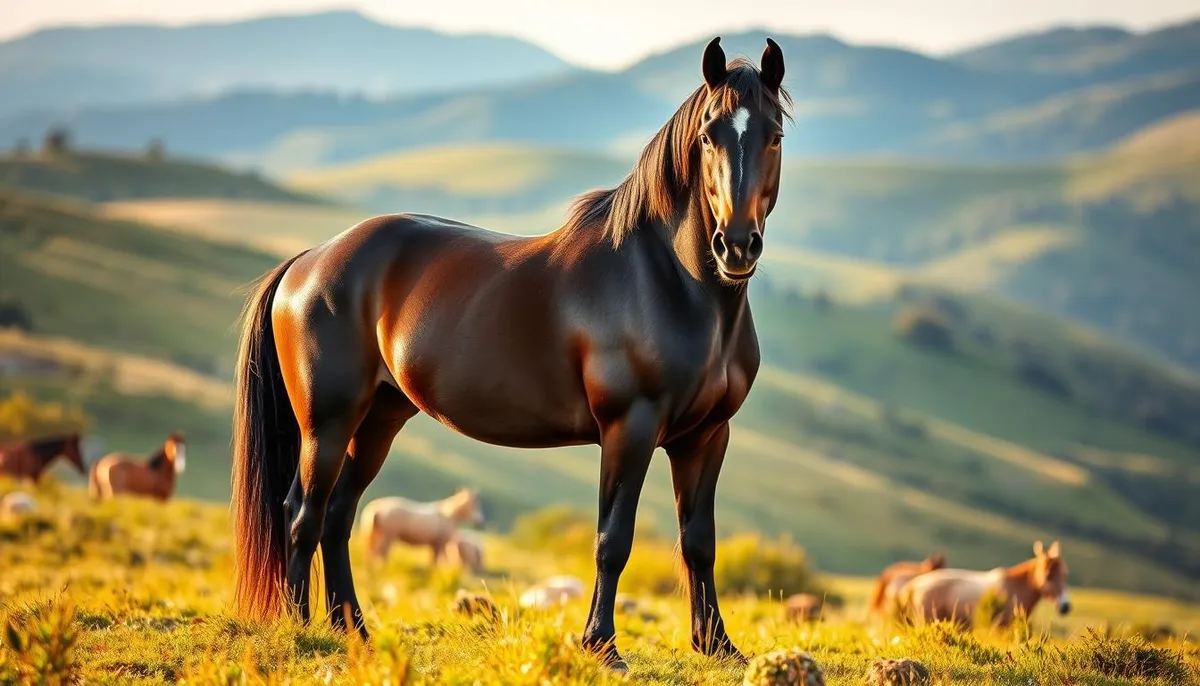
The coat of the Mérens horse is always black. It shines in summer and becomes darker in winter. This color is an important criterion for this breed.
The Mérens horses have an elegant appearance and a well-formed head. These horses are robust, well-suited to the mountains. They are carefully bred in Ariège.
The Mérens measures between 1.45 m and 1.55 m. They weigh from 400 to 650 kg. Their body is well-built, with feet adapted to mountainous terrain.
The Mérens is known for its calm temperament. It is easy to train for various activities. These horses are also useful for maintaining high-altitude land.
Despite crossbreeding with other breeds, the Mérens has retained its black color. It shares common traits with other European breeds. However, it remains unique in its kind.

| Criteria | Description | Practical Interest |
|---|---|---|
| Coat | Uniform black, thick mane | Immediate recognition, easy maintenance |
| Size of the Mérens horse | 1.45 m to 1.55 m at the withers | Adult/child versatility, good bearing |
| Gaits | Supple, elevated, regular | Comfort in hiking and driving |
| Mountain Feet | Hard black horn, tight hooves | Grip on rugged terrain, regular wear |
| Mérens Temperament | Calm, honest, enduring | Ease of learning and management outdoors |
| Weight | 400 to 650 kg depending on the type | Pulling power without excess mass |
| Morphological Origin | Pyrenean adaptation, straight profile | Cold resistance, efficiency in elevation |
| Status | FAO: not threatened | Population rebuilding, solid genetic base |
| Uses | Driving, TREC, vaulting, leisure, eco-grazing | Sporting and utility versatility |
Mérens Horse Breeding in France: Practices, Selection, and Stud Book
The breeding of the Mérens horse combines mountain traditions and modern tools. With the help of the Mérens stud book, the sector ensures the identity and progress of these horses.
The national coordination guides breeders, from rustic horses to the more sporty, while preserving their uniqueness.
SHERPA: Missions, Breeder Selection, and Genealogical Record Keeping
SHERPA leads the breeder selection and manages the Mérens stud book. In collaboration with the National Studs, it ensures genetic quality and informs through technical bulletins.
This organization facilitates good breeding practices. It helps choose the best breeders and guarantees traceability for buyers.
National Days of Bouan and Promotion of the Breed
The National Days in Bouan foster meetings between breeders, riders, and enthusiasts. They discover the best bloodlines through various competitions and presentations.
These events help promote the Mérens in France and around the world. The rigorous selection of breeders is highlighted there.
Breed Standard, Size, Temperament, and Abilities
The Mérens must have a black coat and measure between 1.45 and 1.55 m. This horse is distinguished by its calmness, gentleness, and excellent stability.
They are perfect for driving and many outdoor activities. Their standard also specifies the choice of breeders and the breed's orientation.
Transhumance, Herd Life, and Mountain Rusticness
Transhumance and semi-freedom enhance their endurance. On the high plateaus, natural breeding improves their health and climate resistance.
This breeding tradition, combined with sport selection, has developed their robustness since the 1980s. SHERPA ensures a balance between tradition and modernity.
Equestrian Farm and Reference Breeding: The Example of Essoulieux
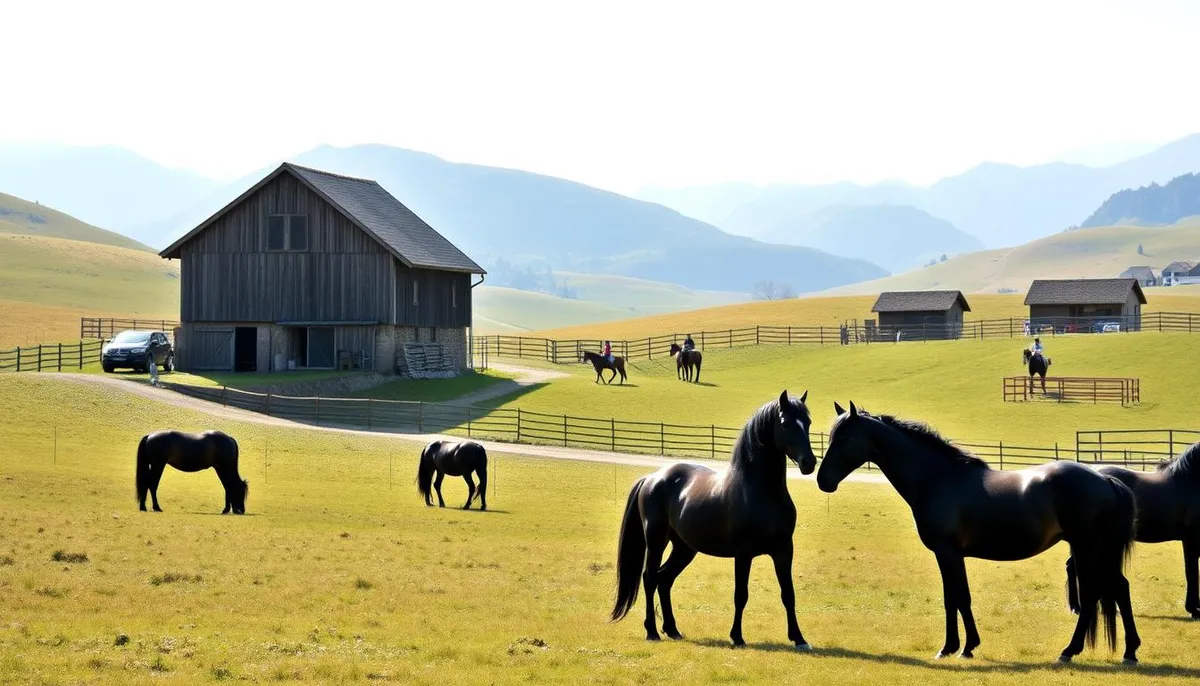
The Equestrian Farm of Essoulieux, located in Bourg d’Oisans, specializes in breeding Mérens horses, adapted to the mountains. These horses live outdoors and work throughout the year. This makes it a privileged place for riders looking for a specialized equestrian center in Mérens that is well integrated into the environment.
The landscapes of Oisans shape the spirit and resilience of the Mérens. They grow between the plains and high paths, gaining balance and robustness.
Laurent Hustache: Breeder, President of SHERPA Rhône-Alpes, Guide
Laurent Hustache has passionately led the breeding of Mérens horses since 2009. As a breeder and equestrian tourism guide, one of his goals is to promote this breed through competitions and presentations.
With 25 years of experience, he oversees a herd of 60 horses, 10 of which are broodmares. His work focuses on careful selection and patient commitment to training young horses.
A Herd Used to Mountain Pastures: Learning in the Mountains
From May to autumn, the horses go up to Besse in Oisans, at about 1,500 m altitude. There, the young learn by following their mothers. They get accustomed to group life and moving over different terrains.
In winter, they come down to Bourg d’Oisans for training. This routine allows them to become reliable companions for hiking and driving.
Services: Sale of Mérens Foals, Approved Stallions, Hiking and Driving
- Sale from weaned to trained horse: personalized follow-up for each merens foal.
- Stallion service: three approved Mérens stallions, supervised matings, and genetic advice.
- Carriage rides and merens driving for events and local discovery.
- Hiking at all levels from the plains to the alpine balcony, with management and accommodation in lodges, refuges, or bivouacs.
The site offers a complete experience in Mérens riding, ideal for those looking to progress with their horse.
Indicative Prices for Rides and Seasonal Openings
Visitors are welcomed by appointment, from 01/05 to 30/11, in Bourg d’Oisans. Activities are adapted for everyone: families, beginners, and experienced hikers.
| Service | Duration / Period | Content | Indicative Price |
|---|---|---|---|
| Horse Ride | 1 h | Discovery in the plains, saddling | 20 € |
| 1/2 Day Morning | 2 h 30 | Paths of Oisans, gentle pace | 40 € |
| 1/2 Day Afternoon | 2 h 30 | Edges of Romanche or Vénéon | 45 € |
| Full Day | 5–6 h | Alpine loop, without meal | 80 € |
| 2-Day Hike | May–October | 1,500–2,400 m, lodge/refuge, management | 255 € all inclusive |
| 3-Day Hike | May–October | High-altitude routes, 5–6 h/day | 375 € |
| 4-Day Hike and More | May–October | Program on request, advanced levels | On request |
| Merens Driving | 1 h | Carriage, max 6 people | 70 € |
| Foal Sales | Depending on age | From weaned to trained, breeding follow-up | Contact us |
In addition to horses, the farm raises Limousin cattle and manages the slopes in Deux Alpes during winter. This shows the commitment of Essoulieux to quality and the seriousness of their work.
Mérens Horse in Equestrian Centers and Hiking
In a merens horse equestrian center, the Mérens is perfect for beginners or progression. It is calm, docile, and robust, making it safe. Its black horn is dense and withstands wear well. This makes it ideal even for difficult grounds. Additionally, caring for it is easy, even outdoors.
In hiking, the Mérens is exceptional. It is safe on difficult terrains like stones and slopes. It can undertake hikes of 2 to 4 days up to 2,400 meters. These qualities benefit both novices and experienced hikers.
The Mérens also excels in TREC. Orientation, regularity, and dexterity are essential. Its ability to jump and its concentration help greatly. In vaulting, its calmness and stable movements are an asset. This helps maintain balance and precision.
In merens driving, its strength and stability make rides enjoyable. These skills are valued during events like the National Days of Bouan. There, the riding and driving qualities of the Mérens are celebrated.
| Use | Advantages of the Mérens | Terrain / Context | Key Skills |
|---|---|---|---|
| Merens Horse Equestrian Center | Calm, docile, versatile format | Riding arena, outdoor, beginner to advanced sessions | Progressive learning, safety, regularity of gaits |
| Mérens Equestrian Hiking | Sure-footed, endurance, comfort | Mountain, scree, elevation, 1,500–2,400 m | Effort management, stability, autonomy |
| TREC | Franchise, precision, cool-headedness | PTV, POR, pace control | Orientation, jumps, regularity |
| Circle Vaulting | Regular gaits, cool temperament | Riding arena, technical and educational sessions | Balance, cadence, trust of the vaulter |
| Merens Driving | Pulling, stability, reliability | Carriage rides, demonstrations, competitions | Impulse, straightness, obedience in hand |
Practical Tip: Varying between the arena and trails is good for muscle development and motivation. Proper hoof care and frequent outings keep the horse fit without compromising its comfort.
Buying a Mérens Horse: Advice, Budgets, and Association Networks
Buying a Mérens horse requires good preparation. They are known for their black coat, small size, and strong character. It is advisable to rely on a trusted Mérens breeding and a dynamic Mérens association. This ensures a good experience, from selection to the arrival of the horse.
Identifying a Serious Breeder and Reading a Pedigree
A good breeder offers tested and approved horses. They often participate in events, such as the Bouan Days. Ensure that the horses meet expectations: black coat, height between 1.45 and 1.55 m, and a balanced character.
It is important to ask to see the pedigree. This document shows the horse's lineage, evaluations, and successes. A good pedigree also indicates how the horse was raised and trained, proving its solidity and endurance.
Mérens Association and Regional Networks
The SHERPA works with the SFET to manage all important information. In regions like Rhône-Alpes, local groups help connect buyers and sellers. They also offer resources such as bulletins, tests, and plan breeding visits.
These networks also assist in testing horses under real conditions. Whether for driving, hiking, or TREC, they offer reliable listings and valuable advice for a safe purchase.
Choosing Between Foal, Trained Horse, and Intended Use
The choice between a young foal or an adult horse depends on your knowledge and availability. A young horse requires attention, ongoing learning, and time. A trained horse is ideal for starting activities like hiking or sports directly.
Some farms offer the opportunity to test different horses, from young to adult. This allows finding the horse that best matches your expectations.
Transport, Acclimatization, and Suitable Equipment
Careful transport and gentle acclimatization are crucial: a secure space and a gradual introduction to grazing. It is important to monitor the horse's health in the first weeks.
Choose quality equipment suitable for the Mérens. La Sellerie Française offers special items made in France. Perfect for hiking and light work.
- Key checks at purchase: stud book, merens pedigree, veterinary visits.
- Field tests: outdoor, elevation, active pace, sure-footedness.
- Overall budget: purchase, transport, farriery, saddlery, follow-up.
Conclusion
The Mérens horse comes from Ariège and represents a mountain breed. It is always black and has a long history, transitioning from agricultural work to leisure without losing its tranquility. Its survival is due to the efforts of breeders and enthusiasts.
The SHERPA, the SFET, and the National Studs guarantee the quality of the Mérens. They take care of selection and promotion. Their efforts include a stud book and events like the National Days of Bouan.
These horses become strong thanks to transhumance and herd life. They excel in driving, hiking, TREC, and vaulting. This versatility comes from their mountain lifestyle.
The Equestrian Farm of Essoulieux is a model to follow. It teaches how to manage a herd well at high altitude. The Mérens is a popular choice for both equestrian centers and families.
The tradition of the Mérens blends with modernity at the national level. Careful selection, suitable equipment, and French know-how are key. The equipment from La Sellerie Française aligns with these efforts, highlighting the potential of the Mérens as a mountain horse.
FAQ
Where does the Mérens horse come from and why is it called a mountain horse from Ariège?
The Mérens horse comes from Ariège, near Andorra. It has grown up in semi-freedom, which has given it strength and endurance. That’s why it is called a mountain horse from Ariège.
Is the Mérens horse's coat always black?
Yes, its coat is always black. This is a rule for these horses. It gives them a unique identity.
What are the main characteristics of the Mérens horse?
The Mérens weighs between 400 and 650 kg. It measures from 1.45 to 1.55 m. It is known for being calm and easy to educate.
How was the breed saved in the 20th century?
In the 1970s, passionate people revived the breeding. Competitions and events helped greatly to increase their numbers.
What does the opening of the stud book in 1947 mean?
In 1947, an official register for the Mérens was created. This helped manage and improve the breed.
Are there several types of Mérens in breeding?
Yes, there is the rustic type and the modern type. The former is bred in the mountains, and the latter is lighter and more agile.
Why is the Mérens appreciated by equestrian centers?
This horse is easy to manage for beginners and versatile for outdoor activities. Its calm nature makes it ideal for learning.
What are the National Days of Bouan?
It is the main event for the breed in Ariège. It brings together breeders, buyers, and enthusiasts to exchange and admire the horses.
How to recognize a serious Mérens horse breeder?
A good breeder is officially registered and respects the breed standards. They also participate in important events for the community.
Buying a Mérens horse: is it better to choose a foal or a trained horse?
It all depends on your experience and needs. A foal requires time to educate, while a trained horse is ready for use.
Where to find information through a Mérens horse association?
The SHERPA is your best ally for finding information. It offers bulletins and facilitates contact with breeders.
What is the importance of transhumance and herd life for the Mérens?
Living in a herd and moving in the mountains makes these horses very resilient. This life also strengthens their social character and adaptability.
Example of a reference breeding: what does the Equestrian Farm of Essoulieux offer?
This farm breeds Mérens and offers activities like carriage rides. It also sells foals and trained horses.
Which disciplines are best suited for the Mérens?
The Mérens excels in driving, hiking, and TREC due to its strength and serenity. It is also good for work in the mountains.
What points to check in a Mérens pedigree?
Ensure that the horse is well registered and has good ancestors. Competition scores and breeder approvals are important.
How to transport and acclimatize a Mérens after purchase?
Transport it gently and let it get used to the outdoors and group life. Monitor its health and adjust its diet.
What equipment is recommended for a mountain horse like the Mérens?
Choose sturdy and comfortable equipment for the outdoors. La Sellerie Française offers quality products made in France.
Does the Mérens have links with other breeds?
There are similarities with other breeds like the Fell. But the Mérens has retained its uniqueness thanks to careful selection.
What is the ideal size for a Mérens according to the standard?
A Mérens should measure between 1.45 m and 1.55 m. This size allows them to be versatile under saddle or in harness.
Is the Mérens a threatened breed?
No, their situation has improved thanks to preservation efforts. Their popularity in leisure and promotion have helped.