
The miniature horse is increasingly appreciated by French families. Officially recognized in July 2014, it has its own registry since August 17, 2014. These mini horses, perfect for both sport and show, are highly sought after.
Imported and raised locally, they come from Argentina, the United States, England, and the Netherlands. Their height does not exceed 89.5 cm. They are agile, symmetrical, and have a beautiful appearance.
They excel in many areas such as animation, driving, and jumping. The French Association of Miniature Horses, since 1995, supports this passion. With a growing market, they provide great companionship everywhere, from the United States to the United Kingdom.
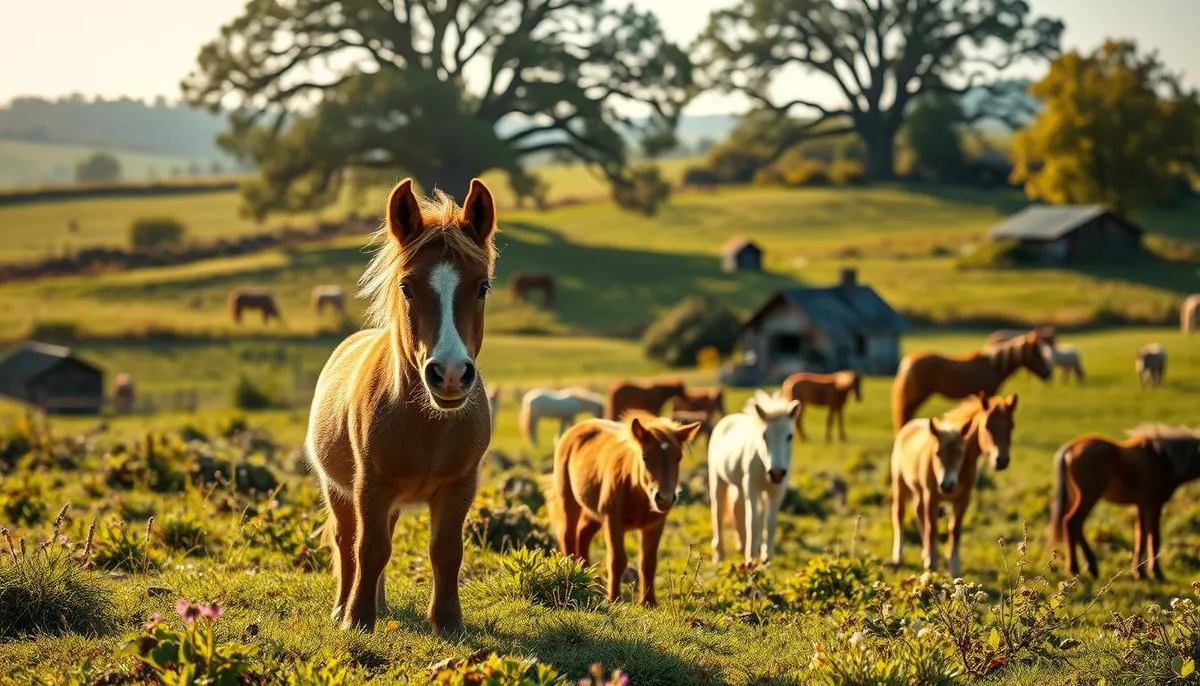
Key Points
- Breed officially recognized in 2014 with a French stud-book and traceability.
- Maximum height: 89.5 cm at the withers; all colors are accepted.
- Sport-oriented selection: balanced, agile, and harmonious model.
- True miniaturized horse, distinct from the miniature pony for leisure.
- Varied uses: animal mediation, light driving, ground work.
- AFCM: promotion, training, championships, and structuring of breeding.
- International enthusiasm for well-bred miniature horse breeds.
Origins, History, and Miniature Horse Breeds in France
Passionate breeders have created miniature horse breeds in France. They relied on reliable information. The miniature horse origins start globally before focusing in France, where breeding has gradually evolved.
From Falabellas to American Miniatures: the Genealogy of Mini Horses
The modern lineage of mini horses begins with the falabella in Argentina, officially recognized in 1980. This breed is the result of crossings between criollo and shetland, producing small but proportionate equines like horses.
In the USA, from the late 19th century to the 1950s, small English and Dutch horses worked in the mines. From 1950 to 1971, crossings between falabella and American shetlands created the American miniature horse. Its genealogical book was established in 1978, influencing miniature horse breeds in Europe.
Between 1995 and 2015, France imported these horses from America, England, and the Netherlands. This mix of bloodlines, with precise standards, allowed for the development of the French miniature horse and improved national breeding.
Recognition of the French Miniature Horse and Creation of the Stud-Book (2014)
In 2011, the American miniature horse was officially recognized. Then, in July 2014, France also gained recognition for the French miniature horse. This was achieved after discussions between the IFCE and the Ministry of Agriculture. The first horses were registered on August 17, 2014.
The goal was to provide reliable information to buyers, reduce the number of horses without papers, and highlight French births. DAD-IS classified the French miniature horse as a French variant of the falabella, clarifying the miniature horse origins and their role in France.
Role of the AFCM and Structuring of Miniature Horse Breeding
Since 1995, the French Association of Miniature Horses (AFCM) has played a crucial role, becoming a selection body in 2014. It manages the breed, organizes the French championship, registers horses in the stud-book, and offers training to breeders.
During the health crisis, the AFCM innovated with online competitions, thus stimulating miniature horse breeding. In 2018, DAD-IS reported 102 horses registered in France. There are more than a thousand of these animals in the country, while in the United States, there are over 180,000.
| Origin / Country | Key Period | Major Event | Impact on France |
|---|---|---|---|
| Argentina | 1980 | Recognition of the falabella | Genetic base of miniature horse origins and miniature horse breeds |
| United States | 1950–1978 | Creation of the American miniature horse and stud-book | Selection model and influx of imports to France |
| France | 1995–2015 | Imports, crossings, and structuring of breeding | Emergence of the French miniature horse and structured miniature horse breeding |
| France | 2014 | Official recognition and stud-book | Traceability, benchmarks for buyers, common standard |
| France (AFCM) | Since 2014 | Selection body, training, championship | Professionalization and visibility of miniature horse breeds |
Characteristics of the Miniature Horse: Morphology, Size, and Temperament
Compact and expressive, the French miniature horse has a well-proportioned silhouette. Its characteristics are easily recognized: harmonious lines and great responsiveness. It is made to be agile and efficient.
To remember: the size of miniature horses is regulated. Their care is similar to that of a large horse. Great attention is paid to their feet, teeth, and weight.
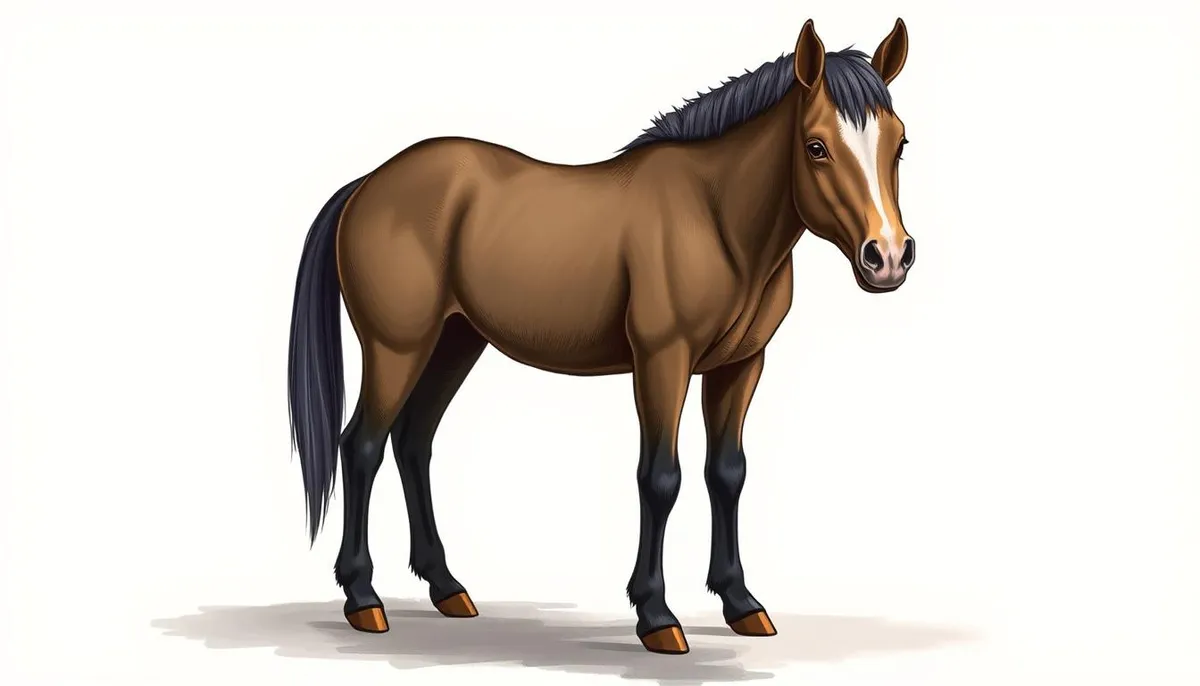
Maximum height 89.5 cm at the withers, accepted colors and sought standard
In France, a miniature horse does not exceed 89.5 cm at the withers. A foal is born measuring between 40 to 50 cm and weighs about 10 kg. In the United States, the maximum height is 86 cm.
The French stud-book accepts all coat colors. While bright colors are popular, well-constructed horses are preferred.
A true “horse” and not a pony: sporty model, symmetry, and agility
The shape of the miniature horse is well-defined: slender legs and a proportionate body. Its head is small but expressive, with large eyes and fine ears.
It represents strength and liveliness. It is closer to a horse than a pony, ideal for training.
Human-friendly character: family companion and animal mediation
These horses easily form bonds with humans. They are perfect as companion animals or for assisting in therapy.
Caring for them strengthens this bond. With attention and regular care, they remain balanced and confident.
| Criterion | Sought Standard | Numerical Benchmarks | Practical Interest |
|---|---|---|---|
| Height | Withers under 89.5 cm | Birth: 40–50 cm; US: 34 inches ≈ 86 cm (last mane) | Homogeneity of type and ease of handling |
| Silhouette | Inscribed in a square, short back, sloping croup | Height from foot to elbow > elbow to withers | Balanced gaits, stability in ground work |
| Head | Small, expressive, prominent eyes, fine ears | Clear profile, well-defined jaws | Clear communication, sought expressiveness |
| Limbs | Slender, dry, clear joints | “A little more bone” than some show models | Resistance, precision of movements |
| Coat | All accepted in the stud-book | Market preference for marked colors | Visual diversity, no morphological compromise |
| Temperament | Close to humans, receptive, sociable | Easy to train, calm but lively | Family companion, animal mediation |
| Care | Regular hoof trimming, monitored teeth, controlled weight | Monthly to quarterly routines | Sustainable well-being, prevention of disorders |
Sporting and Leisure Uses: Versatile Miniature Pony
The miniature pony is truly versatile and calm. In a family setting, it is excellent for mediation and miniature equestrian leisure. It learns quickly during short sessions. During outdoor activities, active walking and educational games help build a strong relationship without overloading it.
In sports, it excels in in-hand disciplines such as long lines, ethological dressage, shows, and in-hand jumping. In 2020, a pony measuring 84 cm jumped 1.17 m and was recognized by the Guinness World Records. This showcases their great athletic ability.
Light driving is highly appreciated: a light vehicle of 30 kg, including the driver, is used to avoid tiring them. The French model is preferred for sport, while the American model is more for show. The AFCM organizes competitions that help improve techniques and prepare the ponies well.
The topic of carrying children is delicate. Some ponies can carry a small rider under 30 kg. However, most activities with these ponies are done on the ground, focusing on precision and gentleness.
| Practice | Objective | Technical Benchmarks | Advantage for the Miniature Pony |
|---|---|---|---|
| In-hand disciplines | Control, calm, connection | Between 10 and 20 min, precise exercises, transitions | Ideal for gradual learning and safety |
| In-hand jumping | Clearance, trajectory, impulsion | Low to medium bars, line work, recovery | Enhances expressiveness without weight on the back |
| Light driving | Gentle endurance, maneuverability | Vehicle ≈ 30 kg max with driver, adjusted harness | Effort distributed, respect for biomechanics |
| Long lines | Straightness, bending, transitions | Flat surface, simple training, frequent pauses | Fine dialogue and visible progression |
| Miniature equestrian leisure | Outings, games, well-being | Active walk, natural obstacles, short duration | Versatility and shared enjoyment with family |
Care for Miniature Horses and Daily Maintenance
A mini-horse is still a real horse. Regular care for a miniature horse helps maintain its health and prolong its life. The important thing is to prevent problems, monitor its health, and make necessary adjustments.
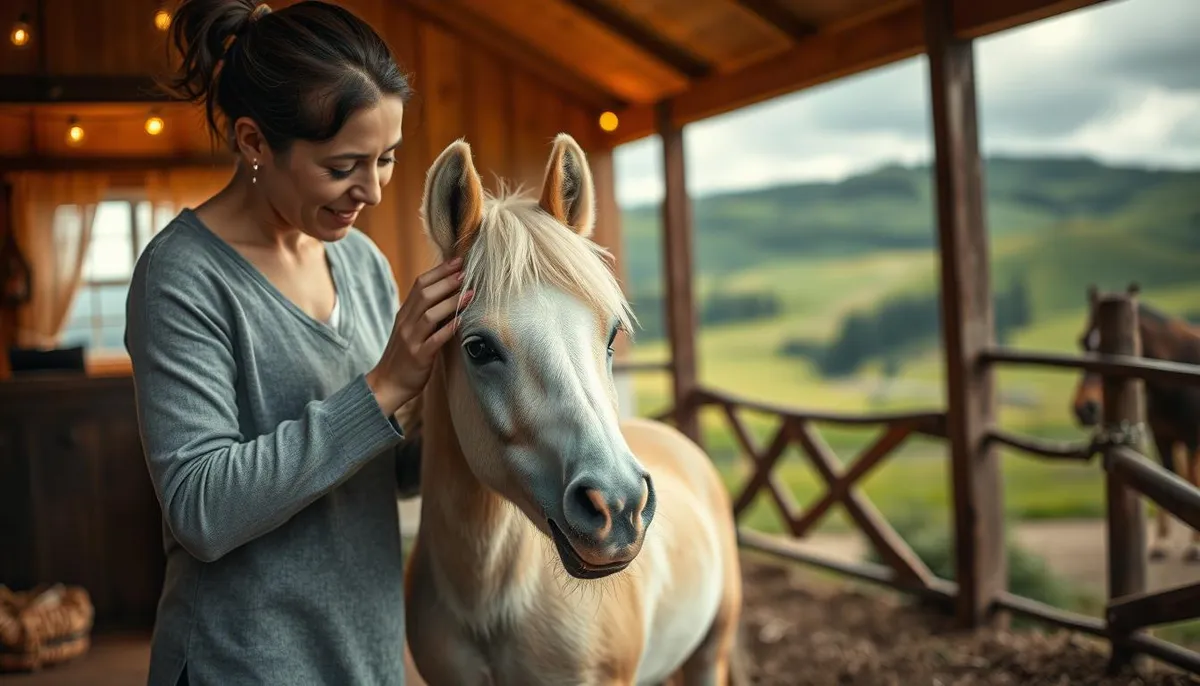
Maintenance of Miniature Horses: Hoof Care, Teeth, Vaccinations, and Osteopathy Follow-up
Have their hooves trimmed every 6 to 12 weeks, depending on hoof growth. This maintenance helps avoid posture problems and reduces tension. Have their teeth checked by an equine dentist every 2 to 3 years to prevent dental issues.
Your veterinarian may recommend annual vaccinations, depending on local risks. Also, budget for emergencies like colic, dermatitis, and injuries. Regular osteopathic visits help maintain good posture, which is important.
Breeding in miniatures requires special attention. During foaling, it is crucial to monitor and intervene if necessary. This helps protect the mare and the foal, ensuring their health.
Feeding Miniature Horses: Grass, Quality Hay, and Suitable Supplements
Base the feeding on good quality grass or hay. Ensure it is clean and available in controlled quantities. Adjust the amount given according to the age, exercise, and specific needs of the horse. Foals and pregnant mares, for example, may need specific nutritional supplements.
Avoid limiting fiber to refine the silhouette for competitions. This can harm digestion and health. Prefer a divided diet with continuous access to clean water. This is essential for the well-being of the miniature horse.
Space, Shelter, and Social Life: 1500 m² and an Indispensable Companion
A space of about 1,500 m² per animal is recommended, with a shelter for protection. Having a companion is vital for their social well-being. Another mini, or even a donkey or goat, can be a good friend. Moving every day is important for their health.
Vary exercises daily, such as walks or games. These activities strengthen the bond with humans and keep them healthy. A good routine, from hoof care to balanced feeding, is crucial for their well-being.
Buying a Miniature Horse in France: Tips, Breeding, and Pitfalls to Avoid
Before diving in, clearly define your project with a miniature horse. Whether for companionship, ground work, or driving, each goal requires a specific type. Choose an appearance that suits you: finer and more expressive or sturdier and sportier. Opt for a breeding operation that offers transparency and follow-up, and that meets your expectations.
Choosing a Miniature Horse Breeder According to Your Goals (Companionship, Work)
If you are looking for a companion, prioritize temperament. Look for a horse that is gentle, curious, and easy to handle. It is important to see how they live daily and to test their reaction to your gestures.
For work use, pay attention to their movement and physical form. Ensure that the back is strong and avoid issues like locked patellas. Visit different breeding operations, meet the parents if possible, and check the horse's education.
Documents and Traceability: SIRE Book, Stud-Book, Certificates (AMHA if applicable)
In France, each horse must be identified by a microchip and registered in a SIRE book. If it is an American miniature, also request an AMHA certificate, in addition to registration in the appropriate stud-book.
If it comes from abroad, you will have a passport, but ensure its registration in the French stud-book or AMHA. Also, make sure that information such as dates and parentage are correct.
Beware of Dubious Imports, “Show” Conditioning, and Misleading Effects
Be cautious of too-good-to-be-true offers at fairs. Horses that are often young, poorly nourished, and without papers can be sold at low prices. Always ask for official documents and ask pointed questions to assess the reliability of the seller.
Exaggerated presentations may hide defects. Some American breeders use tricks to enhance their horses. Look for a breeding operation that values health and a natural, athletic physique. Prefer those who avoid excesses in horse preparation.
Equipment and Craftsmanship: La Sellerie Française for High-End Customization
Equipment must be adapted to ensure safety. Choose harnesses, reins, and other accessories specifically for small horses. La Sellerie Française offers custom-made equipment, designed by qualified artisans.
This ensures a good fit, long durability, and great comfort. To properly equip your miniature horse, seek advice. Ensure that everything is well-suited to its size and activities, in accordance with the standards of the stud-book and AMHA if applicable.
Conclusion
In France, the miniature horse is seen as a modern breed since 2014. Its stud-book and the AFCM provide clear rules. Descended from Falabellas and American miniatures, it symbolizes the sporting spirit in a small body: 89.5 cm at the withers, accepts all coat colors, and is symmetrical, agile, and strong.
It excels in ground work, long lines, light driving, and jumping. Its performances demonstrate its great potential. It is also an excellent companion for sport, mediation, and leisure due to its good relationship with humans.
To keep it healthy, careful maintenance is essential. This includes regular hoof trimming, dental follow-up, osteopathic checks, quality hay, and nutritional supplements. It should also have a space of about 1,500 m² with shelter and the opportunity to socialize.
When breeding miniature horses, it is important to be transparent and cautious, especially regarding reproduction. Make sure to clearly understand your goals before purchasing a miniature horse. Always check its SIRE book, stud-book, and verify AMHA certificates for horses of American origin. Beware of dubious imports and misleading representations.
The market for miniature horses in France is rapidly growing. These compact, versatile, and affectionate horses meet a growing demand. They represent a wonderful opportunity for those seeking a close relationship with these animals. By using suitable equipment like that from La Sellerie Française and providing attentive care, every owner can successfully pursue their project with their miniature horse.
FAQ
What is the difference between a miniature horse, a miniature pony, and the French miniature horse?
Often, “miniature horse” is confused with miniatures. The French miniature horse has been recognized since July 2014. It has its own registry and specific criteria. It is like a horse, but smaller. It should not be mixed with the miniature pony, which resembles more the shetland. The French miniature horse can measure up to 89.5 cm at the withers. All coat colors are accepted.
What are the origins of the miniature horse in France?
They first come from the Falabellas of Argentina, then from American miniatures. The latter are born from crossings between Falabellas and shetlands. From 1995 to 2015, the importation of English and Dutch bloodlines helped create the French miniature horse. The Ministry of Agriculture officially recognized it in 2014.
What size and morphological characteristics are sought?
We seek a maximum height of 89.5 cm at the withers. The body shape is compact, with a small head full of expression, a short back, and slender legs. The horse should have an athletic, symmetrical, flexible, and strong appearance. It should resemble more a horse than a pony.
What is the temperament of the French miniature horse?
It enjoys being close to humans, is sociable and open. It is perfect as a companion animal, for zootherapy, and educational activities. Its ease of being guided makes it perfect for those who can no longer ride.
What disciplines can a versatile miniature pony practice?
There are many things to do: ground work, long lines driving, light driving, shows, and even ski-joering. In 2020, a miniature pony jumped 1.17 m, showcasing their capabilities.
Is driving possible and with what limits?
Yes, but only with light driving. A vehicle of 30 kg maximum, for the horse's safety. The important thing is to ensure its well-being while having fun.
Can children ride a miniature horse?
It depends. Some say yes for children under 30 kg, but briefly. However, many recommend ground activities instead. This better respects the animal's constitution.
What care should be provided for a miniature horse daily?
Hoof care should be done every 6 to 12 weeks. Check their teeth every 2 to 3 years, and vaccinate according to regional risks. Budget for emergencies like colic or injuries. Sometimes, an osteopath can help, especially if they work.
How to feed a miniature horse safely?
Quality grass and hay are essential. Adjust feeding for young, pregnant females, or active horses. Avoid show methods that eliminate fiber. This can harm their health.
What space and environment does it need?
Provide 1,500 m² per horse, with a shelter. Horses need companionship, so consider another mini or even a donkey. They should move and be mentally stimulated every day.
Is breeding miniature horses delicate?
Yes, sometimes foaling requires assistance, especially if the placenta comes out first. Close monitoring and quick intervention are crucial to protect the mother and her baby.
How to buy a miniature horse in France safely?
Decide what you want (companionship, ground work, driving), and visit several breeding places. Observe how they live and, if possible, meet the parents. Ensure their character, movement, and back are good. Avoid offers that seem too good to be true.
What documents to check before purchase?
Request the SIRE document (it must be registered with the IFCE). For a French miniature horse, check its registration in the stud-book. For an American miniature born in France, an AMHA certificate is also required in addition to the SIRE. Import papers alone are not sufficient.
How to avoid scams and misleading “show” effects?
Be cautious of miniatures sold at fairs, weaned too early or without papers. Be wary of extreme methods used for competitions. Choose a reputable breeding operation where health and functionality are prioritized.
Where to find suitable equipment for miniature horse breeds?
La Sellerie Française offers high-quality equipment for miniatures. You will find light harnesses, long lines, and bridles. Everything is custom-made or in limited edition in France.
What is the role of the AFCM in miniature horse breeding?
Since 2014, the French Association of Miniature Horses manages the breed. It oversees the registry, organizes the French championship, and offers training. This includes online competitions.
Is the French miniature horse different from the American miniature?
Yes. The French horse is bred for sport and balance. The American miniature is more for shows. They share some ancestors, but their breeding goals are different.
What are the recognized miniature horse breeds and their populations?
The Falabella has been recognized since 1980. The American miniature horse since 1978, with recognition in France in 2011. The French miniature horse has been recognized since 2014. The USA has over 180,000 miniatures, the Netherlands 3,000, and the United Kingdom 1,000.
What are the expected maintenance costs for a miniature horse?
Prepare for regular care, feeding, and potential emergency costs. There is also the cost of suitable equipment. This represents an investment, but it is crucial for their well-being.
Where to get official information about the breed and the stud-book?
For the French stud-book, contact the AFCM. For traceability and SIRE, visit the IFCE website. For information on American miniatures, the AMHA is the source for lineage certificates.