
The miniature horse is small but very intelligent and versatile. In France, the breeding of these horses follows precise rules. The French Association of Miniature Horses (AFCM) has been assisting in this area since 2017. It works with the IFCE to properly manage the breed of the French Miniature Horse.
Beautiful locations contribute to this activity. For example, Puy-de-Dôme offers a perfect environment for these horses. In Var, Rhéa Horses presents American miniature horses and offers tours. These places promote excellence and a modern approach to breeding.
The qualities of miniature horses are carefully evaluated. This includes their way of moving, their temperament, their shape, and their health. Genetic tests help avoid dwarfism issues. The different colors of these horses are also important. The entire sector is organizing to welcome new enthusiasts.
Miniature horses can engage in various activities. They can pull carriages, jump obstacles, or even participate in ski-joering. Training centers help utilize these horses for therapeutic purposes. Thus, breeding miniature horses creates connections between people and offers sporting and social benefits.
Key Points
- The AFCM and IFCE oversee the breed of the French Miniature Horse with official references.
- Key territories: Puy-de-Dôme between the chain of Puys and Sancy, and Rhéa Horses in Var.
- Genetic selection: ACAN D1-D4 tests and Skeletal Atavism to ensure the absence of dwarfism.
- Varied disciplines: driving, long reins, in-hand obstacles, free work, and TREC.
- Miniature horse characteristics: conformation, temperament, health monitoring, and miniature horse coat.
- National structuring network with the Haras du Pin, headquarters of the AFCM.
- Support for future owners: visits, boarding, and unique accommodation experiences.
Overview of Breeding in France and Official References
In France, the breeding of miniature horses is developing thanks to a well-established framework. Official organizations support breeders and help register the horses. They also facilitate communication within the national network of miniature horse clubs.
Role of the AFCM and Breed Recognition
The French Association of Miniature Horses (AFCM) has been working since 1995. Its mission is to promote and protect miniature breeds. Recognized by the Ministry of Agriculture, it manages the breed of the French Miniature Horse.
With nearly 100 members and 1,500 horses under its wing, the AFCM is committed. It selects the best breeders and organizes events to energize breeding.
IFCE and Registrations: AMHA, AMHR, ASPC, and French Miniature Horse
The IFCE takes care of the breed of the French Miniature Horse for the AFCM. At the same time, there are miniature horses registered in American registries.
- AMHA: measures up to 86.5 cm, elegant and harmonious.
- AMHR: can measure up to 96.5 cm, offering great genetic diversity.
- ASPC: modern American Shetland, perfect for sport and driving.
Recognition by the IFCE facilitates the work of breeders and buyers. It ensures the quality and origin of miniature horses.
National Network: Haras du Pin and Revitalizing the Sector
The headquarters of the AFCM is located at the Haras du Pin. This place is a central point for organizing events and training.
This organization helps the public find reliable information about breeding. It also simplifies access to the equine community, thanks to contacts like the email afcm.infos@gmail.com and the phone number 07 60 27 14 84.
Exceptional Territories and Breeding
From Auvergne to Provence, France is home to unique places for breeding miniature horses. These horses stand out for their precise movements and good temperament, thanks to the climate and local expertise. Each location has its own identity, highlighting the differences between horses and miniature ponies.
In the Heart of Puy-de-Dôme: Natural Conditions Between the Chain of Puys and Sancy
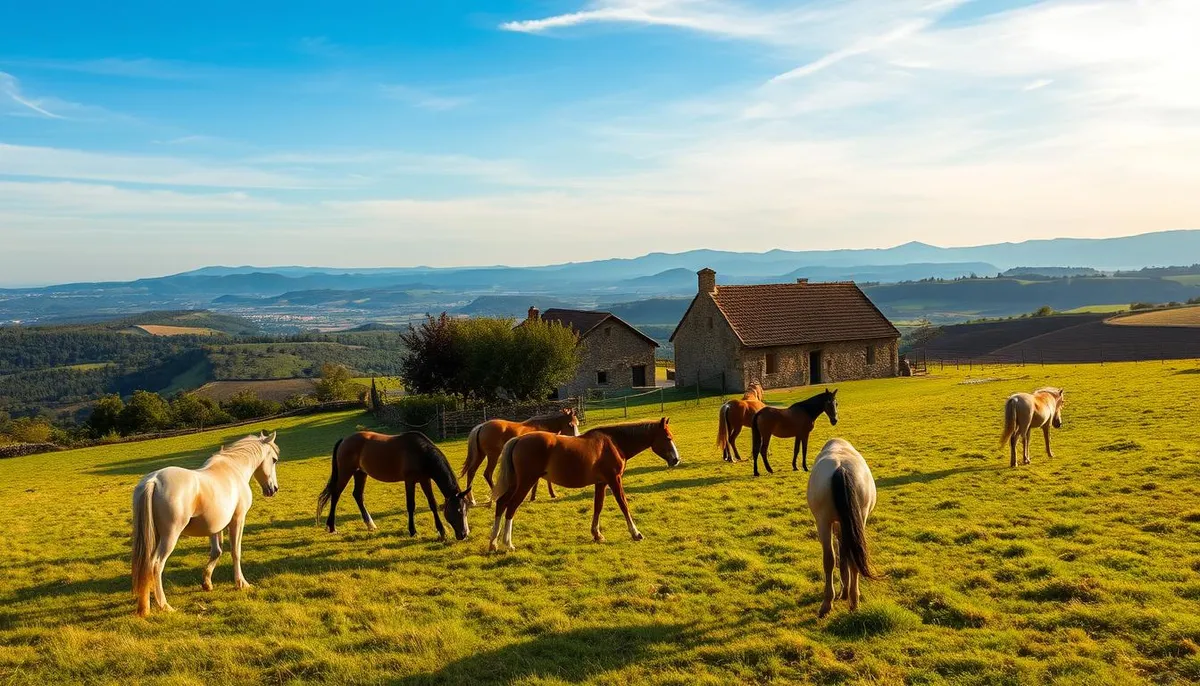
Between the chain of Puys and Sancy, the environment is ideal for horses. They live outside most of the time, which promotes their balanced development. This also contributes to their calm temperament.
The goal is to produce quality American miniature horses with good gaits. Breeding animals are carefully selected to avoid certain diseases. This ensures the birth of healthy foals.
The site offers various services, such as the sale of foals and consignment sales. Visits are by appointment only. Close monitoring ensures the horses' good health and preparation for various activities.
Rhéa Horses in Var: Vision, Disciplines, and Support
In Brignoles, Rhéa Horses specializes in breeding high-quality miniature horses. They aim to maintain the appearance of large horses, in miniature. This avoids confusion with ponies or dwarfism.
The horses are trained for several disciplines such as dressage and show jumping. The breeding also offers advice and preparation for competitions. This allows for a combination of performance and animal well-being.
Miniature horses benefit from a specific program tailored to their sporting potential and daily well-being. This makes them versatile, capable of participating in competitions as well as going on trail rides.
Visits, Boarding, and Unique Accommodations Around Miniatures
Discovery visits are an opportunity to learn about the specifics of miniature horses. They allow for a close look at their conformation and behavior. The boarding facilities offer tailored supervision for all types of horses.
An original accommodation is also offered, with a view of the miniature horse stalls. This unique experience is aimed at families and horse enthusiasts. It immerses visitors in the fascinating world of mini-horses.
Miniature Horse
The miniature horse is considered a real horse, but smaller. It is as elegant as a large horse, with a delicate head, a compact body, and fine legs. They are bred specifically to clearly distinguish mini horses from mini ponies, which are rounder and have a different appearance.
Breeders carefully eliminate signs of dwarfism. They use genetic tests ACAN D1-D4 and Skeletal Atavism to ensure that the animals are healthy and well-proportioned. This rigor reassures families, equestrian centers, and other users.
There are clear standard sizes: for AMHA, up to 86.5 cm, and for AMHR, up to 96.5 cm. Some breeds derive from the American Shetland. The AFCM, with the help of the IFCE, manages the French Miniature Horse, ensuring serious monitoring and uniform standards in France.
Mini horses have varied coats: solid, bicolored, appaloosa, and others. Good grooming, taking care of their skin, and appropriate clipping make them even more beautiful. Choosing the right equipment enhances their comfort and showcases their physique.
Their gentle and curious nature makes learning easier. They are excellent for being led by the halter, driving, and in-hand obstacle courses. Versatile, they are perfect for free training, TREC in hand, and mediation activities. They offer much more than mini ponies, blending elegance, practicality, and finesse in education.
| Criteria | Key Indicators | Concrete Benefits |
|---|---|---|
| Model | Saddle horse profile, harmonious proportions | Elegant gait, proper balances, better miniature horse characteristics |
| Height | AMHA ≤ 86.5 cm; AMHR ≤ 96.5 cm | Clear orientation towards in-hand sport and light driving |
| Genetics | ACAN D1-D4 tests, Skeletal Atavism | Prevention of dwarfism, functional and sustainable subjects |
| Coat | Solid, pinto, appaloosa, dilutions | Highlighting the miniature horse coat with appropriate grooming |
| Temperament | Calm, affectionate, curious | Quick learning, mediation, family activities |
| Difference from Pony | Do not confuse with miniature pony type pony | Standard of compact horse, fine and athletic silhouette |
Selection, Genetics, and Compliance of Breeders
In France, the breeding of miniature horses is taken seriously. Precise methods are used to ensure safe reproduction and improve the traits of miniature horses. This also includes caring for them appropriately.
Genetic Tests: ACAN D1-D4 and Skeletal Atavism, Ensuring the Absence of Dwarfism
Breeders test their breeders for the ACAN D1-D4 and Skeletal Atavism genes. They ensure through certified labs that the horses are at no risk of dwarfism.
In Puy-de-Dôme, centers certify healthy parents. This guarantees descendants without health issues. This approach improves the quality of breeding and buyer confidence.
Gaits, Conformation, Temperament: Selection Criteria in Breeding
The selection aims for good physical structure and natural, harmonious movements. The horse must be well-proportioned and move easily.
The horse's character is also important. A calm, curious, and kind horse makes training and care easier. These points are crucial for good performance and safety.
Lines and Goals: Show, Sport, Leisure, and Mediation
Some breeding operations have horses from recognized American lines. They aim to develop versatile horses for shows and sports.
The goals include various activities such as driving and obstacles. They also aim for uses such as animal-assisted therapy. This approach requires emotionally stable and reliable horses, which greatly influences breeding.
Care, Nutrition, and Daily Well-Being
Miniature horses need a regular routine. In France, they are offered natural space, group movement. Daily observation is also essential. This values their unique characteristics while being practical for breeders.
Care for Miniature Horses: Osteopathy, Dentistry, Trimming, and Monitoring
It is crucial to have regular follow-ups with specialists. This includes an animal osteopath, an equine dentist, and a farrier. These experts are trained to care for miniature horses.
Biannual visits are important. They prevent pain and improve posture and breathing. These practices respect the physical specificities of the miniature horse.
Nutrition for Miniature Horses: Ration, Grass Management, and Obesity Prevention
The diet of miniature horses is based on quality hay. Hay is distributed in small mesh nets so they eat slowly. Grazing is controlled to limit the amount of sugar they consume.
Their diet is supplemented with minerals and vitamins. Weighing hay, monitoring weight, and doing some exercise helps avoid obesity. All this protects the health of the miniature horse without depriving it.
Enrichment and Ground Work: Long Reins, Driving, In-Hand Obstacles
Ground work is good for the mental and physical health of the horse. Using long reins, progressive education in driving, and obstacle courses improve their connection and coordination.
Allowing them to live in groups in pastures stimulates their social life and physical activity. Activities such as discovery visits and equimotricity are calming and beneficial. They provide an important complement to daily care and nutrition.
- Goals: well-being, emotional balance, light endurance.
- Tools: ethological halter, suitable harness, poles, ground bars.
- Benchmarks: short sessions, gradual progression, frequent breaks.
Purchases, Prices, and Support for Future Owners
Before making a purchase, closely observe the horses. Check how they behave and work. A good miniature horse breeding will show you everything. They explain their methods, introduce you to the horse's parents, and provide all official documents. If you want to drive a carriage, ask to try it out.
Price of Miniature Horse: Factors Influencing the Budget
The price of a miniature horse varies according to registration. The AMHA, AMHR, and ASPC sizes differ. Genetics also influences the price. This includes health tests and the quality of the horse's ancestors.
Age, character, and physical condition of the horse count. Good preparation can increase the cost. Professional follow-up by a quality miniature horse breeding can make a horse more expensive.
| Registration | Key Indicators | Typical Preparation | Impact on Budget |
|---|---|---|---|
| AMHA (≤ 86.5 cm) | ACAN/SA tests, fine models, typified heads | Show in-hand, regular ground work | High if championships and traced genetics |
| AMHR (≤ 96.5 cm) | Sport/leisure versatility, expressive gaits | Light driving, in-hand obstacles | Medium to high depending on training and results |
| ASPC | Performing origins, athletic frame | Sport driving, endurance work | Variable, linked to lines and performances |
Breeding, Sales, and Consignment: How to Choose Your Foal Wisely
Choose well-documented and early-handled foals. Their IFCE booklet must be up to date. Demand health tests and videos of the foals in motion. Some miniature horse breeders offer consignment sales for better comparison.
Clearly define your project and needs. A clear sales contract is essential. It should include all guarantees, as well as post-purchase support.
Long-Term Commitment: Hosting Conditions and Realistic Expectations
A miniature horse has specific needs. Ensure you have enough space and suitable equipment. Consider regular care and the monthly budget for its maintenance.
Think carefully about the time you can devote to it. Participate in activities with other owners to better understand what it entails.
Clubs and Community: Joining a Miniature Horse Club and Events
The AFCM plays an important role in the world of miniature horses. Being a member of a miniature horse club offers several advantages. It facilitates learning and sharing among owners.
The varied activities help in progressing. The miniature horse club is also a good source of information on prices and quality of horses.
High-End Equipment and French Craftsmanship
Appropriate gear can make a big difference for a miniature pony at work. Whether for driving, long reins, or leading, a good fit helps the pony breathe better, move freely, and stay safe. In show grounds, harmony between the equipment and the pony's coat enhances its appearance without hindering its movements.
Saddlery, Driving Harness, and Custom Equipment for Miniature Ponies
A well-fitted harness reduces the risk of friction and pressure for the minis. Bridles, protections, lunge lines, and training aids are designed for better contact and control. Thus, while respecting the specific needs of the pony, comfort and safety are increased.
La Sellerie Française: Made in France Products, Custom-Made, Limited Editions
La Sellerie Française offers custom-made equipment for miniature ponies: harnesses, bridles, pads, and accessories. Their personalized approach and limited editions ensure a perfect fit for various uses, enhancing the experience on foot, in driving, or during presentations.
Quality and Traceability: Made from A to Z in France by the Best Artisans
The manufacturing of products is done entirely in France, ensuring superior quality. From the choice of leather to the hardware, every detail is carefully controlled. These durable materials remain supple while being robust, perfectly suited for the efforts in driving and for miniature ponies.
Adapting Equipment to the Characteristics and Coat of the Miniature Horse
The perfect match between leather, thread, and hardware highlights the beauty of the pony. A meticulous adjustment supports the natural movement of the pony, combining aesthetics and functionality. This contributes to an elegant performance of the miniature pony in complete comfort.
Conclusion
The breeding of miniature horses in France is based on solid foundations. The AFCM leads the sector, the IFCE manages registrations, and the Haras du Pin animates a vibrant network. These official structures promote high standards, with a focus on genetics and behavior.
Breeders adopt genetic tests to ensure the quality of their breeding. They operate throughout France, offering various services such as sales and boarding. They specialize in several equestrian disciplines, thus enriching the experience.
The well-being of the horses is paramount, with particular attention to their nutrition and daily care. New owners receive advice to engage responsibly. This ensures the well-being and health of the horses.
Craftsmanship also plays a key role, with La Sellerie Française producing quality equipment. All these components contribute to the excellence of miniature horse breeding in France. They create a dynamic and passionate sector, where quality is always at the forefront.
FAQ
What is the difference between a miniature horse and a miniature pony?
A miniature horse resembles a classic horse but smaller. A miniature pony has the traits of a pony. Good breeders select well-proportioned animals that are tested for their health. They distinguish between small size and dwarfism.
What is the role of the AFCM in miniature horse breeding in France?
Since 2017, the AFCM has been recognized by the Ministry of Agriculture. It manages the breed of the French Miniature Horse with the IFCE. It organizes competitions, training, and the national network of miniature horse lovers.
AMHA, AMHR, ASPC… what do these registrations mean?
AMHA refers to miniature horses under 86.5 cm. AMHR up to 96.5 cm. ASPC corresponds to the modern American Shetland. In France, the French Miniature Horse is managed by the AFCM with the support of the IFCE.
Where is the AFCM headquarters located and why is the Haras du Pin important?
The AFCM headquarters is located at the Haras du Pin. This historic place helps promote the breed, organize events, and connect breeders and enthusiasts.
What conditions does Puy-de-Dôme offer for breeding?
In Puy-de-Dôme, horses grow well thanks to good pastures and a mild climate. They benefit from living in herds, exercise, and socialization, essential for their physical and mental well-being.
What does the Rhéa Horses breeding in Var offer?
Rhéa Horses breeds purebred and champion miniature horses. They offer various services: sales, boarding, and even riding workshops. You can even sleep with a view of these little horses.
Are the breeders tested against dwarfism?
Yes. Quality breeding operations conduct genetic tests to avoid dwarfism. Thus, they ensure the birth of healthy foals. This complements their attention to the silhouette, movement, and character of the horses.
What disciplines are suitable for miniature horses?
Miniature horses are skilled in several activities such as driving and show jumping. They are also good in precision sports and can even participate in ski-roller races. Their gentle nature makes them excellent companions.
What does animal mediation and equimotricity with minis involve?
These activities are conducted by trained professionals. They help improve mobility, coordination, and manage emotions. They particularly benefit certain institutions, providing significant benefits to their users.
What daily care do miniature horses require?
They require regular care such as osteopathy, dentistry, and trimming. A good environment with space and friends is vital. This greatly contributes to their well-being and longevity.
How to manage the nutrition of miniature horses to avoid obesity?
Give them mainly hay and limit grass. Use small mesh nets for this. Dietary supplements should be given according to the exercise. Regular follow-up and adaptation to each horse is crucial.
What is the price of a miniature horse and what factors influence it?
The price depends on several criteria such as type, genetics, gait, and education of the horse. Official papers and health tracking also affect the cost.
How to choose your foal wisely in resale or consignment?
Check the genetics, size, and character of the animal. Look at how it moves alone and with equipment. Ensure that its skills match your expectations. A real trial can help you decide.
What hosting conditions for a miniature horse at home?
They need to live with others, have shelter, and reliable fencing. Access to a paddock and good nutrition are essential. Like all horses, they require time, care, and a regular budget.
How to join a miniature horse club and the community?
To participate in activities, contact the AFCM by email at afcm.infos@gmail.com or by phone at 07 60 27 14 84. Breeders also organize visits and workshops for the public.
What equipment to choose for driving and long reins for a pony or miniature horse?
You need a well-fitted harness and a suitable bridle. Protect your animal well with special equipment for its size. The materials should be supple yet strong for its comfort and safety, especially in driving.
Where to find high-end saddlery suitable for minis?
La Sellerie Française offers harnesses and accessories made to measure in France. You will find quality, traceability, and high-end finishes there. Visit laselleriefrancaise.com for more information.
Should the equipment be adapted to the coat of the miniature horse?
Yes. It is important to choose colors and materials that enhance its size and color. A good fit ensures comfort, safety, and a beautiful presentation, whether in a show or daily.
Can you visit breeding farms and try activities before buying?
Some breeders in Puy-de-Dôme and Var offer visits and initiations. You can discover driving or show jumping. This helps you get to know these horses better before committing.