
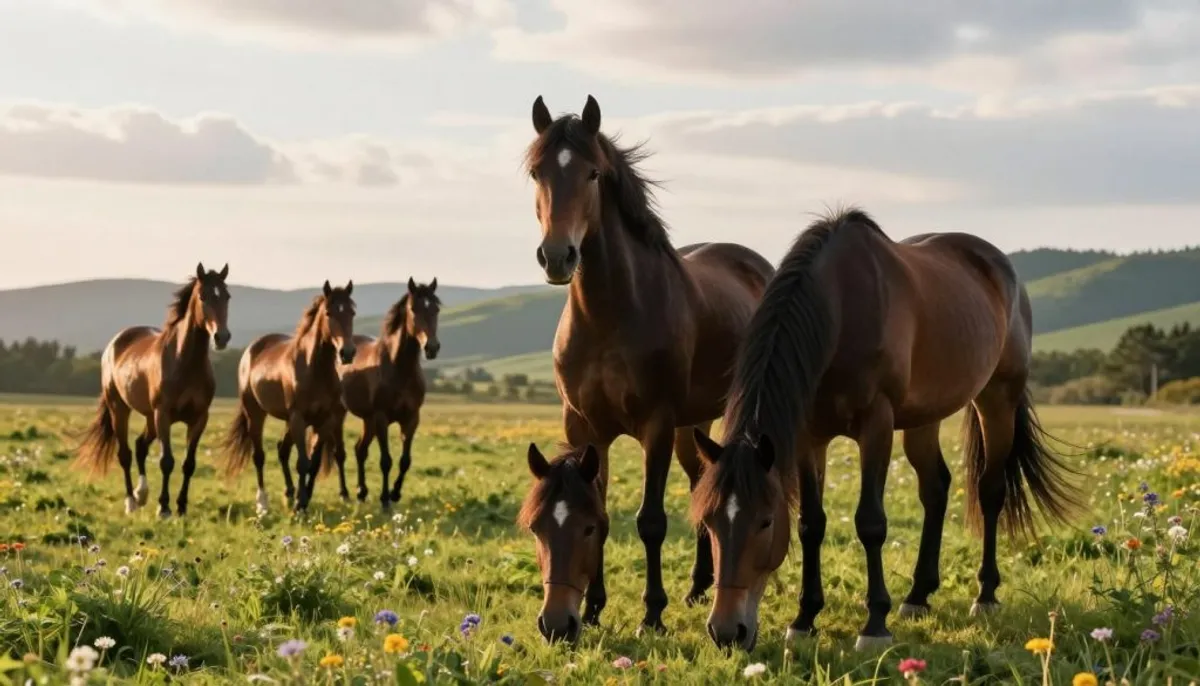
In France, Henson horses capture attention right from the start. Their natural grace is evident, walking between dunes, pines, and vast spaces. This breed of horse is relatively new but has quickly made a place in the hearts of riders.
The Henson horse is appreciated for its versatility, calmness, and beautiful appearance. It inspires confidence during rides. In the arena, it shows seriousness, remaining easy to understand. This explains why their popularity increases every year.
To meet them in person, the experience in the field is unparalleled. Outings with Henson-Chantilly-Apremont offer a chance to discover these horses in their natural state. One can appreciate their perfect balance and effortless elegance.
This article first explores their origins in Baie de Somme. Then, it describes their physical appearance and personality. It also addresses the different disciplines, health, breeding in France, and how to choose a horse according to one's project.
For equipment, local expertise is essential. La Sellerie Française (https://laselleriefrancaise.com) offers luxury items made in France. All created by excellent French artisans, this equipment is advertised as superior to the Made in France label.
Key Points
- The Henson horses form a recent French breed, already highly sought after.
- The Henson horse breed stands out for its versatility and easy-going nature.
- Their natural elegance is noticeable both outdoors and at work.
- Field experiences exist, including Henson-Chantilly-Apremont.
- The article covers origins, physical traits, temperament, disciplines, health, breeding, purchasing, and pricing.
- La Sellerie Française values high-end equipment made from A to Z in France.
Introducing the Henson breed, a recent and already essential French horse
The Henson horses are among the most recent breeds in France. They are often seen on paths, in clubs, or with breeders. They are known for their natural gait and stable spirit. They were created for easy riding, offering confidence from the start.
NAME: Henson
Family: Equidae
Order: Perissodactyla
Class: Mammals
A popularity built on versatility, docility, and elegance
Their balance between energy and serenity is appealing. Hensons have a calm nature, are sociable, and cooperative. These qualities make the daily life of riders more enjoyable in France.
Their beautiful appearance, without being excessive, is appreciated. They are beautiful but especially easy to ride. They are well-suited for families as they remain calm with everyone, adults and children alike.
A horse suited for leisure riding as well as more athletic practices
For outings and hikes, Hensons are perfect due to their comfort and stability. One benefits from an active yet attentive horse, adaptable to any environmental changes. This allows for a peaceful progression.
They can also meet more advanced sporting goals. Whether for endurance, jumping obstacles, or dressage, their versatility is a plus. Hensons are ideal for combining pleasure and ambition.
| Key Point | What is often observed | Interest for the rider |
|---|---|---|
| Temperament | Calm, close to humans, easy to channel | Ideal for learning, reassuring, and riding in groups |
| Versatility | Comfortable outdoors, in the arena, and on varied exercises | Allows changing programs without changing horses |
| Functional elegance | Pleasant gaits, harmonious silhouette, neat presentation | Comfort in the saddle and good image in clubs or outings |
Origins and history in Baie de Somme: the cradle of the Henson in Marquenterre
In the north of the Somme, the Baie de Somme is known for its dunes and salt meadows. This region is the birthplace of Henson horses, in harmony with nature. In Marquenterre, the vast space established the need for a reliable, resilient, and pleasant horse to ride.
A breed developed in the 1970s in the Marquenterre Nature Reserve
In the 1970s, the selection of Henson horses began in Marquenterre. Breeders sought horses adapted to wind and uneven ground. This shows why locals in the Baie de Somme cherish these horses for their outdoor activities.
Henson horses became more visible, especially thanks to dedicated places for their discovery. The Henson Equestrian Spaces, launched in 2004, have particularly helped. Thanks to the Henson-Chantilly Equestrian Space, the breed is now recognized well beyond the coasts.
Initial goal: to create a versatile horse from suitable crossbreeds
The aim was to create a horse capable of adapting to different types of activities. The selection emphasized mental stability and durability. They wanted a horse easy to manage daily in the Marquenterre, suited for outdoor life.
| Observed Criterion | What the Baie de Somme demands | What the Henson horse breed selection aims for |
|---|---|---|
| Ground and supports | Sandy, moist grasses, uneven passages | Strong limbs, balance, durable feet |
| Climate | Wind, rapid rains, temperature variations | Hardiness, recovery, outdoor resilience |
| Use | Long outings, groups, equestrian tourism | Versatility, comfort, regularity of gaits |
| Behavior | Encounters with wildlife, bicycles, walkers | Calm, curiosity, willingness |
The main lines of crossbreeding: draft horses and ponies of varied origins
Crossbreeding between draft horses and ponies of varied origins created the Henson horses. The goal was not only aesthetic but to produce a useful and reliable horse. This method led to a strong and balanced horse.
The link between Henson horses and their origin, Marquenterre, remains very strong. In the Baie de Somme, this breeding history continues to shape the breed, created specifically for these landscapes.
Physical characteristics of Hensons: silhouette, size, and coat
Henson horses are easy to recognize with their elegant appearance. They have a harmonious silhouette. Their short coat highlights their musculature, especially after grooming.
They are perfect for adults due to their ideal size. They are well-balanced, neither too small nor too large.
Size and build: about 1.50 to 1.60 m at the withers for 450 to 500 kg
The size of Hensons ranges between 1.50 and 1.60 m at the withers. They weigh about 450 to 500 kg, making them strong but not too heavy.
| Reference | Common Values | What is observed daily |
|---|---|---|
| Height at the withers | 1.50 to 1.60 m | A practical height for mounting and dismounting, with good presence under the saddle |
| Weight | 450 to 500 kg | A stable carrier, suitable for long outings and varied terrain |
| Type of silhouette | Balanced and athletic | A well-supported back, a rounded croup, regular locomotion |
Model: fine and expressive head, proportionate neck, strong limbs
They have a fine and expressive head, with soft eyes. Their neck is proportionate, ensuring good posture.
Their limbs are strong, with clear joints. Henson horses have a solid back line and good posture.
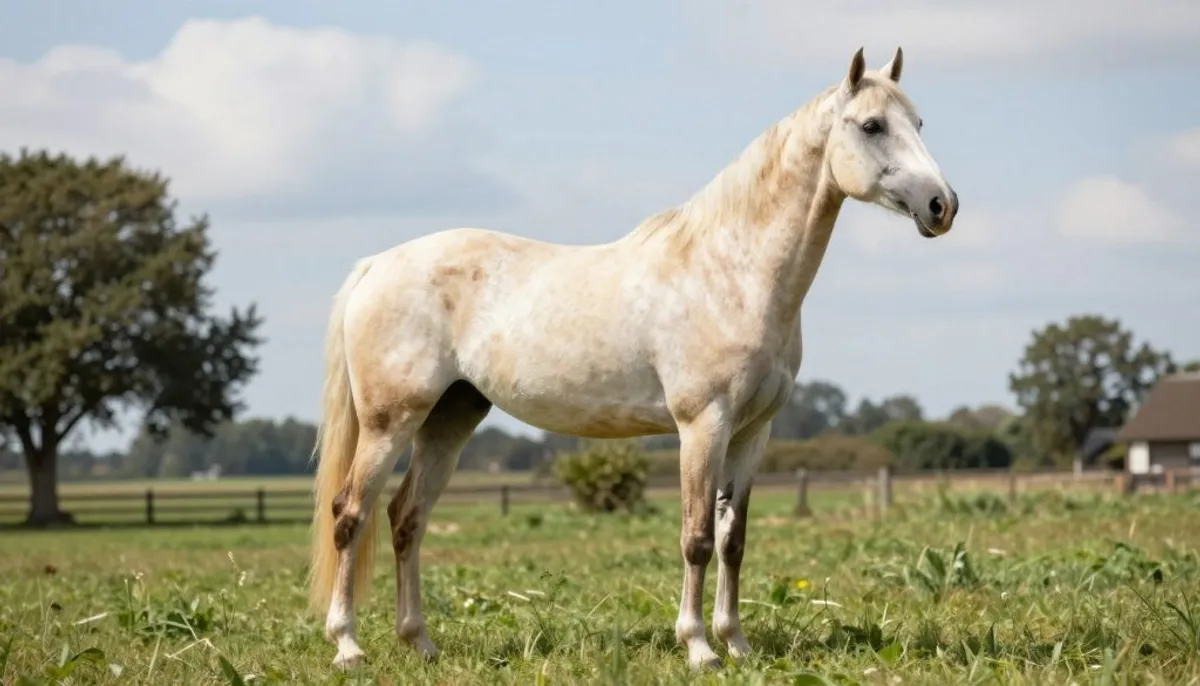
Common coats: isabelle and bay (often encountered)
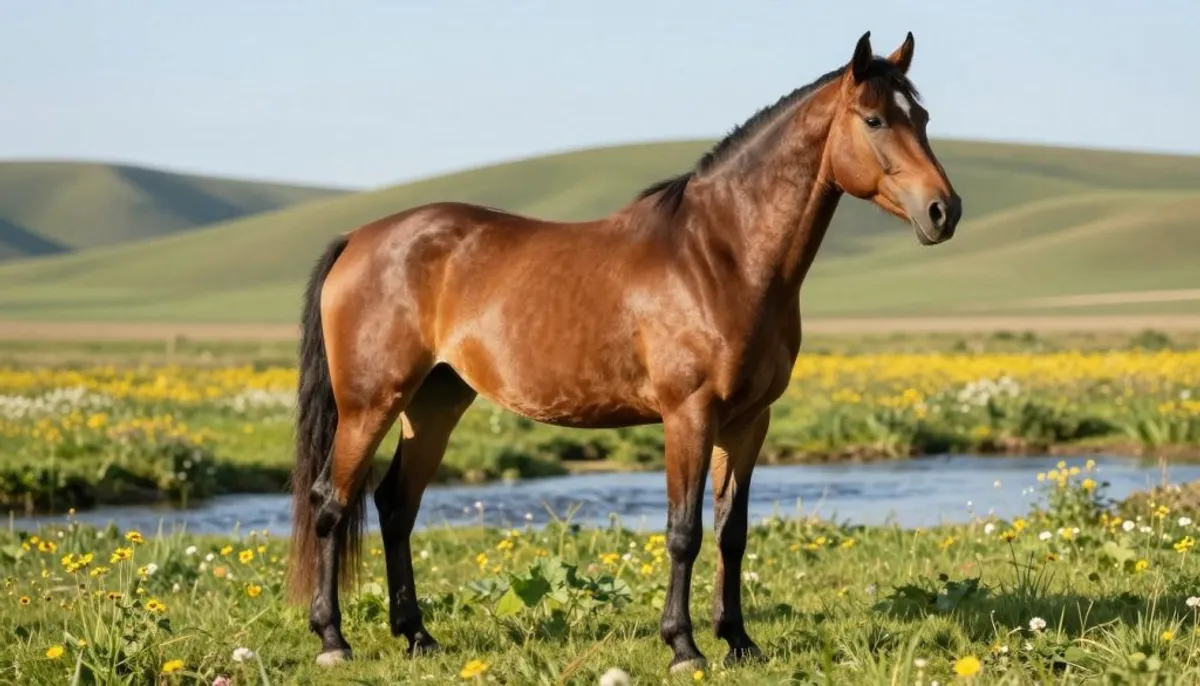
The isabelle coat, golden with dark manes, is highly appreciated. The bay coat, from light to dark, is classic and often seen.
There are chestnuts or greys sometimes. But the isabelle and bay coats are the most common.
Rusticity advantages: hard hooves and robust constitution
The Henson is renowned for its robustness. Its hard hooves are perfect for various types of ground. Its size and solid constitution make it durable and resilient.
Temperament and behavior: a gentle, sociable, and easy-going horse
Henson horses are known for being easy to approach. Their calmness creates a simple routine. This is reassuring, especially with changes in environment.
A calm, manageable, and docile character, appreciated by riders of all levels
The Henson horse is gentle and tolerates mistakes well. It is docile, enjoys contact, and follows instructions well. Its manageability allows for smooth movements.
It can be reactive, but this becomes positive with regular training. Under good guidance, it remains balanced. This is perfect for training or outings.
Intelligence and willingness to please: a partner for smooth learning
Hensons learn quickly, especially with clear instructions. They enjoy short sessions with breaks. This makes learning easy and engaging.
- Measured repetition: it is better to practice little but often.
- Positive reinforcement: a soft voice, petting, relaxation at the right moment.
- Stable framework: consistent gestures at mounting, during grooming, and in hand.
A profile suited for families and both beginner and advanced riders
For a family, one seeks a reliable and easy horse for daily life. The Henson is predictable, patient, sociable, and dynamic. It is ideal for reassurance.
| Situation | What helps daily | Point to watch |
|---|---|---|
| Supervised children | Docile horse, gentle approach, stillness during grooming | Stay attentive to size and well-fitted equipment |
| Adult beginners | Readable responses, regular pace, tolerance for imprecise aids | Work on consistency to avoid rushing |
| Advanced riders | Available energy, good cooperation, possible technical progression | Vary the work to maintain desire and availability |
Henson horses: disciplines, abilities, and daily uses
Henson horses are easily distinguished by their balance and consistency. Their reassuring gait suits everyone without appearing weak. They are appreciated for their sense of rhythm and honesty, especially when changing environments.
Leisure riding and hiking: comfort, balance, and adaptability
For leisure riding, one wants a simple, reliable, and enjoyable companion. The Henson often meets these criteria thanks to its lively step and collaborative spirit. Its robustness is a plus, even when the weather is capricious.
During hikes, its comfort and stability are essential on trails. It moves well while remaining attentive in tight spaces. This flexibility is valuable on various terrains: sand, grass, or forest.
Endurance and jumping: a horse capable of meeting varied challenges
In endurance, one seeks endurance, appropriate breathing, and efficient movement. The Henson excels due to its constant rhythm and good recovery after gradual training. A well-planned training and special care for the feet are crucial.
For jumping, it offers a safe and thoughtful attitude, ideal for beginners. Its balance allows for maintaining a clean course, even with changes in stride. With the right training, it can evolve at its own pace.
Driving and light work: robustness and good traction
Its origin and constitution make it perfect for driving, especially for walks and learning the basics. It offers good traction for light tasks, often showing enthusiasm. The important thing is to emphasize vocal training and physical preparation.
In France, guided experiences with Henson-Chantilly-Apremont reveal its versatility. Between parks, cities, and vast spaces near polo fields, one discovers its incredible adaptability. These adventures inform us well about its character in daily life.
| Use | Useful advantage | What is sought in the field |
|---|---|---|
| leisure riding | cooperative mentality | simple responses, clear transitions, regular rhythm |
| horseback hiking | sure-footedness | stability on varied terrain, comfortable step, calm in the unexpected |
| endurance | cadence and management | proper recovery, economical pace, well-monitored hydration |
| jumping | balance | calm approaches, clean trajectories, respect for bars |
| driving | regular traction | forwardness, listening to the voice, clean starts and stops |
Health, longevity, and care: preserving the robustness of the Henson
Henson horses are known to be strong, with good hooves. But this does not mean that their maintenance can be neglected. Daily attention is crucial, especially when there are changes in their routine.
Indicative life expectancy: 20 to 25 years
On average, a Henson horse lives between 20 and 25 years in France. This duration depends on its lifestyle and the care received. An active and well-cared-for Henson remains healthy longer.
Common health concerns for equines: colics, skin issues, respiratory conditions
The Henson can suffer from colics. Sudden changes in food, lack of water or exercise are common causes. Unusual behavior, such as frequently lying down, can be a warning signal.
The skin and respiratory tracts also need monitoring. Humidity, insects, and dust can cause irritations or respiratory problems, even in rustic horses.
The basics of well-being: veterinary follow-up, balanced diet, regular exercise
Prevention is essential to keep a Henson healthy. This includes vaccination, deworming, dental and hoof care. A good diet and regular exercise are also imperative.
The diet should always be balanced, and exercise frequent. This helps prevent colics. Regular veterinary follow-up, appropriate feeding, and exercise form an indispensable trio for the longevity of the horse.
| Habit | Goal | What helps daily | Point of vigilance |
|---|---|---|---|
| Forage + water at will | Regular digestion | Low-dust hay, warm water in winter | Sudden changes that promote horse colics |
| Outings and movement | Tone and transit | Walking, paddock, gentle and frequent work | Long immobility after transport or weather |
| Veterinary follow-up | Targeted prevention | Vaccines, teeth, respiratory check | Persistent cough or decline in condition |
| Hoof care | Preserve rusticity | Regular trimming, varied ground, checking balance | Cracks, sensitivity on hard ground |
| Monitoring skin and environment | Comfort and recovery | Insect management, grooming, ventilated shelter | Itching, scabs, hot spots |
Breeding Henson horses in France: benchmarks for understanding selection
In France, breeding Henson horses means aiming for three qualities: reliability, pleasantness, and versatility. These horses are the result of a mix between draft horses and varied ponies. They are designed to adapt easily to different terrains.
Marquenterre, in Baie de Somme, is where it all began in the 1970s. This place, combining wetlands and vast lands, inspired breeders to choose a model of horse that is both rustic and elegant.
To grasp the criteria for selection, one only needs to look at the horse. We seek a harmonious horse: a fine, expressive head and a well-proportioned neck.
Robustness is essential. Strong limbs, clear joints, and hard hooves are preferred. Breeders also value a calm, docile, and friendly temperament. These qualities make the Henson ideal for hiking and driving.
- Gaits: balance, regularity, good impulse without rushing
- Behavior: manageability, attention to the rider, ease of work
- Use: leisure, sport, light driving, long outings
| Selection Axis | What we look for in the Henson | Why it is useful daily |
|---|---|---|
| Model | Fine head, proportionate neck, homogeneous silhouette | Comfort under the saddle, horse easier to balance |
| Sturdiness | Strong limbs, hard hooves, good rusticity | Less fragility on paths, better performance in regular work |
| Temperament | Calm, docile, sociable, straightforward | Safety for families, smooth progression for all levels |
| Versatility | Leisure, sport, driving, outdoor abilities | One horse for multiple projects, without changing mounts |
The Henson breed has become more visible well beyond the Baie de Somme. Places like Henson-Chantilly-Apremont have contributed to its popularity in France. This expansion facilitates comparisons between bloodlines. It allows for choosing the best horse for each project.
Buying Henson horses: how to choose the right horse according to your level and project
Buying a Henson horse should be well-prepared. This breed is known for its consistency, but each horse has its own story. It is important to take the time to observe and try the horse before making a choice.
Defining your goal: leisure, hiking, sport, driving
First, think about what you want to do with your horse. For hiking, an ideal horse is one that enjoys walking, manages climbs well, and remains calm outdoors. For leisure, look for a horse that is easy to live with every day.
If you want to engage in sports, choose an energetic and willing Henson horse. And for driving, you need a horse that listens, pulls well, and remains stable.
| Project | What to check | What you test in trial |
|---|---|---|
| Leisure | Easy handling, respect on foot, calm during grooming | Simple starts/stops, light direction, reaction to the unexpected |
| Horse for hiking | Sure-footedness, endurance, stress management outdoors | Outing on varied terrain, crossing water/roads, regular rhythm |
| Endurance / jumping | Recovery, breath, balance, honesty | Active gaits, curves, small bar, concentration |
| Driving horse | Free shoulders, solid back, attention to voice | Long reins, straight stop, half-turns, starting at a walk without rushing |
Assessing the mentality and locomotion: calmness, balance, availability
Temperament is crucial in Henson horses. A horse needs to be calm and attentive, sociable, and easy to manage in new places.
Regarding locomotion, look for a well-balanced horse. The movement should be regular at both the walk and trot.
Questions to ask before buying: work history, health, living conditions
Inquire about the horse's past before buying. Knowing whether it is used to going out or working in an arena can help you avoid surprises.
For health, ask clear questions: medical history, deworming, dental care, and hoof condition. Feeding and exercise habits are also important to know.
Try the horse in conditions similar to what you plan for it. This is essential to see if you get along well and to test its responsiveness.
Pricing Henson horses: factors that influence budget and value
The price of a Henson horse is not just a number. It reflects many things, such as daily work and visible criteria. To buy a Henson horse without stress, it is important to understand what determines its value. It is not just the price that matters.
Elements such as age and experience have a significant impact. A Henson that is already accustomed to the outdoors and masters the basics will require more training. This process increases the cost as it involves more hours of work and ensures greater safety.
The temperament of the horse is also crucial. Being easy to manage and adaptable makes the horse more enjoyable to ride, especially for leisure. These qualities can really increase the value of a Henson, even if two horses look alike.
Some characteristics are specifically sought after: size between 1.50–1.60 m, good build, and solid hooves. These details affect the horse's comfort and resilience. They can also influence its price, depending on what buyers are looking for.
It is essential that the health and history of the horse are clear. Having regular follow-up and knowing its background helps forecast the necessary long-term budget. Common issues need to be monitored as they can affect the horse's value.
The origin of the horse provides a lot of information. A reputable breeding and stable living conditions are reassuring. These elements can also influence the horse's price by reducing uncertainties.
Do not forget the "overall cost." This includes equipment such as saddle, bridle, and general maintenance. La Sellerie Française offers high-quality equipment. Good equipment improves the horse's comfort and supports its value.
| Observed Factor | What to check | Impact on horse value | Effect on horse budget |
|---|---|---|---|
| Age and experience | Leisure horse, sport level, driving basics, outdoor outings | The more reliable the experience, the simpler and safer the use | Less training costs if the horse is already trained |
| Temperament | Docility, reactivity, stress management, behavior during grooming and loading | A stable mentality makes the horse more accessible to different profiles | Reduces expenses related to "catch-up" lessons and rehabilitation sessions |
| Model and abilities | Size 1.50–1.60 m, balance, back, limbs, hard hooves, isabelle/bay coat | A functional model increases versatility (hiking, arena, driving) | Can limit farriery and equipment adaptation costs |
| Health and history | Veterinary follow-up, feeding, colic history, skin, respiratory | A transparent history reassures and stabilizes estimation | Anticipates maintenance costs and necessary checks |
| Provenance and breeding | Reputation, consistency of selection, living conditions, gradual work | A monitored origin makes the profile clearer for the buyer | Limits surprises after purchasing Henson horses |
| Equipment and comfort | Suitable saddle, bridle, protections, adjustments; premium reference: La Sellerie Française | Regular comfort supports availability and longevity at work | More significant initial investment, but better managed over time |
Conclusion
Henson horses are a perfect example of creating a modern French horse breed. They were born in the 1970s, in the heart of the Baie de Somme. They are the result of crossing draft horses and ponies. This combination aims to produce horses capable of moving well across different terrains while being pleasant to ride.
They are recognized for their height ranging between 1.50 and 1.60 m at the withers, and their weight oscillating between 450 and 500 kg. They often have an isabelle or bay coat. Additionally, they possess hard hooves, which is an asset in daily life. They stand out for their calm temperament, docility, and sociability. They are also intelligent, making their training easier.
These horses are perfect for various activities: from leisure to hiking, including endurance and even jumping. To preserve their robustness, it is crucial to maintain good veterinary monitoring, appropriate feeding, and regular physical activity. They can live between 20 and 25 years. Initiatives around Henson horses also exist in Chantilly – Apremont. There, one can find walks and a connection to the world of polo at La Ferme d’Apremont.
Whether for breeding or buying Henson horses, it is important to choose a horse that meets your needs. It is also essential to equip oneself properly. The cost of a Henson horse varies based on several factors. Nevertheless, the investment does not stop at the purchase. La Sellerie Française offers high-quality equipment made in France. This can enhance comfort and precision during rides.
FAQ
What is the Henson horse breed, and why is it so appealing in France?
Henson horses are a new French breed. They are appreciated for their versatility and gentleness. Their elegance and easy-going nature make them ideal partners, from leisure to sport.
Where was the Henson breed born?
The Henson comes from the Baie de Somme, in France. This breed was developed in the 1970s. It is designed to adapt to different terrains and uses.
How was the Henson created?
The Henson was created by crossing draft horses and ponies. The goal? To have a robust and versatile horse. It is perfect for daily riding, whether for leisure or more.
What are the most easily recognizable characteristics of Henson horses?
The Henson is elegant with a beautiful silhouette. Its head is fine, and it has large ears. It is well-proportioned, with strong limbs and a short coat.
What size and weight for an adult Henson?
An adult Henson measures between 1.50 and 1.60 m. It weighs about 450 to 500 kg. This size is ideal for various equestrian activities.
What coats are most common in Henson horses?
Henson horses are often found in isabelle and bay. There are also chestnuts and greys. Choosing a coat is important when buying Henson horses.
Is the Henson really a rustic horse?
Absolutely, the Henson is robust. It has hard hooves and a strong constitution. To maintain this rusticity, good management is essential.
What is the temperament of Henson horses?
Hensons are known to be gentle and friendly. They are docile and sociable. They are calm and balanced horses, but reactive at work and easy to manage.
Is the Henson suitable for children and beginner riders?
The Henson is perfect for everyone, thanks to its calm nature. It is ideal for children and novices with the right guidance. Choosing a well-educated horse is crucial for families.
In which disciplines are Henson horses comfortable?
Hensons are loved for leisure, riding, and hiking. They perform well in endurance and jumping depending on the work. They also excel in driving and for some agricultural tasks.
Where can one experience "field" activities with Henson horses in France?
Experience Henson with Henson-Chantilly-Apremont. Enjoy walks and nature. Discover the equestrian world near the Château de Chantilly and La Ferme d’Apremont.
What is the life expectancy of a Henson horse?
A Henson lives about 20 to 25 years. Its longevity depends on its lifestyle and appropriate care.
What are the health vigilance points for Henson horses?
Hensons are robust. Watch for colics, skin issues, and respiratory conditions. Good health monitoring is essential.
What essential care is needed to preserve the robustness of a Henson?
Take care of your Henson with veterinary visits, a balanced diet, and exercise. Do not neglect hoof maintenance and adapt work to the animal.
What should one know about breeding Henson horses and selection in France?
Breeding Henson horses aims for a strong and calm model. It started in Marquenterre and Baie de Somme. Since 2004, initiatives have promoted the breed, such as the Henson-Chantilly Equestrian Space.
How to successfully purchase Henson horses according to your level and project?
Think about your goal: leisure, hiking, sport, or driving. Check the horse's temperament and its ability to adapt. A test outdoors is useful to assess its versatility.
What questions to ask before buying a Henson?
Inquire about its past, level, and health. Ask about veterinary visits, feeding, and usual exercise. This helps understand the horse's living conditions.
What factors influence the price of Henson horses, beyond just numbers?
The price of Henson horses is influenced by age, training, and experience. Personality, health, and breeding origin also play a role. The desired coat can affect the budget.
What budget to plan beyond the purchase price of a Henson horse?
Consider the overall budget: care, feeding, and equipment. For quality materials, La Sellerie Française (https://laselleriefrancaise.com) offers made in France products. They provide unique items, handmade by artisans.
What simple identity markers to locate the Henson in the animal world?
A: NAME: Henson. Family: Equidae. Order: Perissodactyla. Class: Mammals. These elements highlight that it is an athlete sensitive to its environment.