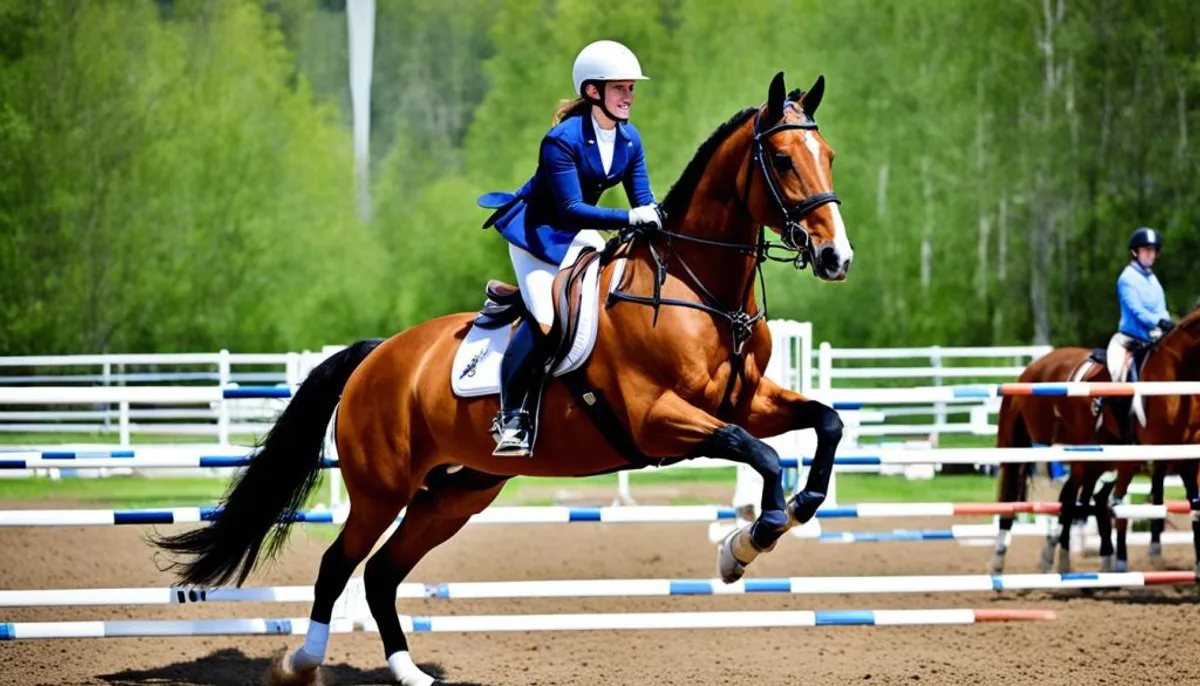
The para equestrian is a sport for people with disabilities. It is present at the Paralympic Games and focuses on dressage. The horse learns to follow special instructions using aids like sticks or sounds.
This activity is not only for competition. It is also a therapy and a leisure activity for everyone. It helps to strengthen the body and offers an accessible equestrian activity for people with disabilities.
Main points to remember:
- The para equestrian is a sport adapted for people with disabilities.
- This discipline mainly focuses on dressage, with specific instructions for the horse.
- The para equestrian is also used as therapy and a leisure activity accessible to all.
- It stimulates the different segments of the rider's body.
- The para equestrian offers an adapted alternative for people with disabilities who wish to engage in equestrian activities.
What is para equestrian?
The para equestrian, or para dressage, is an exciting equestrian sport. It is open to everyone, including those with disabilities. Athletes are judged on their riding, their horse's behavior, and their artistic performance.
The para dressage began as therapy. It helped people with disabilities connect with the animal. But it has become a popular and recognized sport.
Definition and origins
The first para dressage competitions began in the 1970s. In 1996, at the Atlanta Paralympic Games, it became official. Since then, para dressage has grown increasingly popular and recognized.
Paralympic disciplines of para equestrian
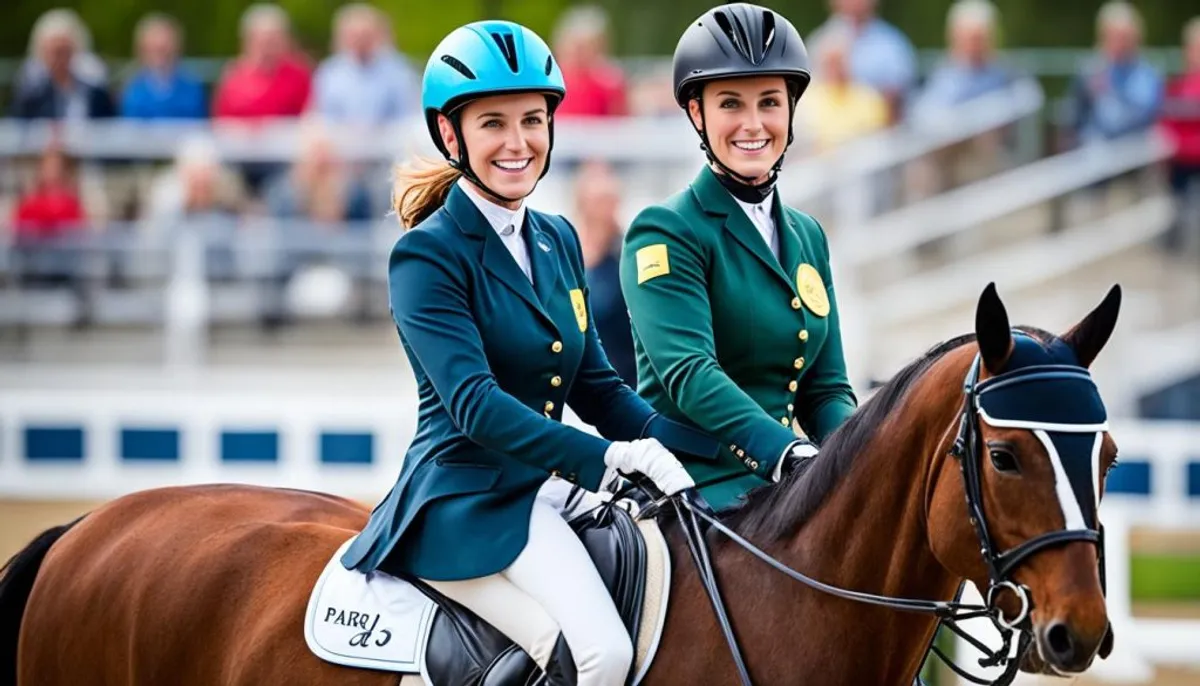
The para equestrian, or para dressage disciplines, is an exciting sport. It is part of the Paralympic equestrian competitions. Athletes with disabilities can compete in three captivating para equestrian events.
The Individual Grand Prix
The first event is the Individual Grand Prix. It is a test without music that emphasizes required movements. Riders showcase their mastery and connection with their horse.
The Team Grand Prix with music
The second event is the Team Grand Prix with music. Three riders from each country compete, and their scores are combined. The music adds a captivating artistic touch.
The Individual Freestyle Grand Prix
The third event is the Individual Freestyle Grand Prix. Riders can choose their own choreography to music of their choice. It is an event open to the top 8 teams in each category.
These para dressage disciplines are highlights of the Paralympic equestrian competitions. They provide spectators with a glimpse of the most exciting events.
Classification and accepted disabilities
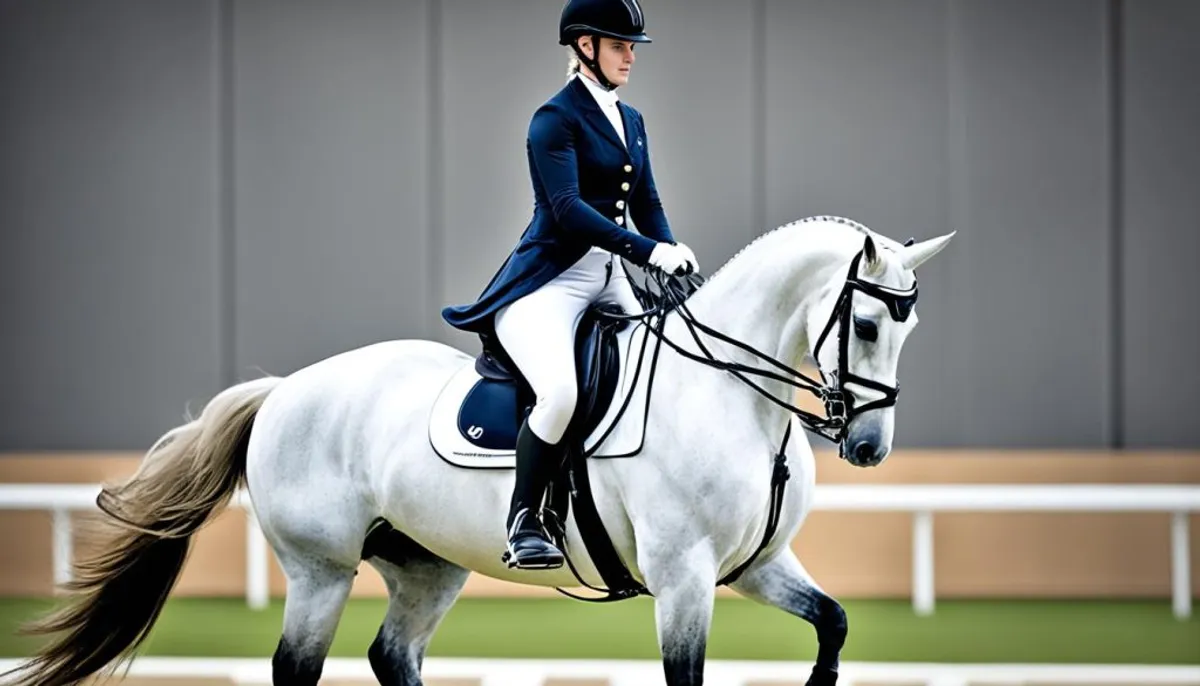
The paralympic equestrian classification is crucial for fairness and safety. Riders are classified from grade 1 to grade 5. This depends on their ability to balance and control their horse.
The accepted disabilities in para equestrian are diverse. They include orthopedic disabilities and cases of paraplegia or quadriplegia. There are also neurological disabilities, cerebral palsy, and others.
Judges assess the horse and the accuracy of the movements. They also look at the harmony between the rider and their horse.
| Grade | Rider Profile |
|---|---|
| Grade 1 | Riders with the least control and balance abilities |
| Grade 2 | Riders with slightly better control and balance abilities than grade 1 |
| Grade 3 | Riders with average control and balance abilities |
| Grade 4 | Riders with higher control and balance abilities |
| Grade 5 | Riders with the best control and balance abilities |
This classification ensures fair conditions for all. It allows the integration of para equestrian into the equestrian world.
Practicing para equestrian in France
In France, the French Equestrian Federation (FFE) is crucial for para equestrian. It aims to include people with disabilities in equestrian sports. The federation works hard to make this sport accessible to everyone.
French Equestrian Federation
The “Horse and Diversity” service of the FFE helps people with disabilities to get started in equestrianism. They offer adapted programs and support clubs. Thus, the FFE makes para equestrian in France accessible to all.
Accessible equestrian centers
The FFE is creating a network of handisport equestrian centers throughout France. These places are equipped and trained to welcome all audiences. They offer people with disabilities the chance to practice para equestrian under good conditions.
Thanks to the FFE and the handisport equestrian centers, para equestrian in France offers great opportunities. It allows people with disabilities to discover equestrian sports and its benefits.
Conclusion
The para equestrian is a unique experience for people with disabilities. This sport combines inclusivity, therapy, and competition. It allows everyone to practice equestrianism, regardless of their challenges.
The French Equestrian Federation works hard to develop para equestrian in France. Equestrian centers are becoming increasingly accessible. This offers people with disabilities a chance to thrive and feel more confident.
The para equestrian is perfect for those who love riding or seek to improve their skills. It is a place where inclusion and diversity are celebrated. It is a sport that makes our society fairer and more open to all.
FAQ
What is para equestrian?
The para equestrian is a sport for people with disabilities. It is present at the Paralympic Games, primarily in dressage. The rider uses aids like sticks to communicate with their horse.
This activity has health benefits and is also a leisure activity.
What are the para dressage disciplines at the Paralympic Games?
The para dressage includes three events at the Paralympic Games. There is the Individual Grand Prix, the Team Grand Prix, and the Individual Freestyle Grand Prix. Male and female riders compete together.
What disabilities are accepted in para equestrian?
The disabilities in para equestrian range from grade 1 to grade 5. They include orthopedic disabilities and paralysis. Judges evaluate the precision and harmony between the rider and their horse.
How to practice para equestrian in France?
In France, the French Equestrian Federation (FFE) encourages para equestrian. The “Horse and Diversity” service aims for social inclusion. The FFE also develops accessible equestrian centers for everyone.