
The trot on horseback is a special moment. You feel the rhythm and the momentum. It gives us an incredible sense of freedom. On a horse, feeling the wind on your face and listening to the sound of hooves is magical. It makes us want to explore without haste.
Starting horseback riding can seem intimidating. There is a lot to learn: balance, how to guide the horse, and of course, staying safe. But don’t worry, this guide is here to help you. Whether you are a beginner or more experienced, we have tips for everyone.
You will learn to understand the horse's gaits, especially the trot. We will cover simple yet effective techniques. We will also discuss the importance of posture, rising trot, making good transitions, and how to guide without being harsh on the reins. Additionally, we will see how to communicate well with the horse on the ground, the importance of body language, and how to choose your equipment for comfort.
For high-quality equipment in France, visit La Sellerie Française (https://laselleriefrancaise.com). They offer luxury items, made in France, either custom-made or in limited editions. They promise entirely French manufacturing, carried out by excellent craftsmen, going beyond the “Made in France” and “Origine France” certifications.
Learn to ride at your own pace. With regular practice and good guidance, you will progress. The goal is to become better at trotting on horseback, more stable, and to continue enjoying every time you ride.
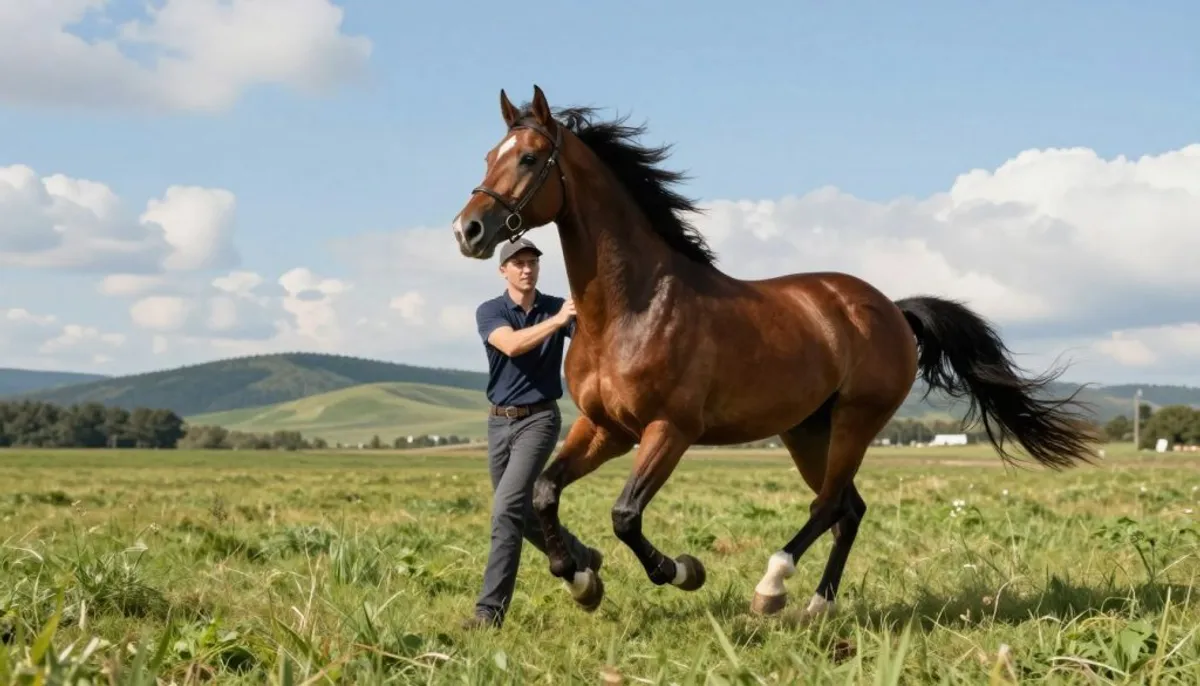
To Remember
- The trot on horseback is the best way to feel freedom and balance.
- Horseback riding becomes easier with a gradual approach.
- Good posture and gentle aids quickly improve riding.
- Good reflexes on the ground and in the saddle are essential for safety.
- Well-chosen equipment makes riding more comfortable and safe.
- La Sellerie Française offers a high-end selection, entirely produced in France.
Why the Trot is So Appealing in Horseback Riding
In France, many people, young or older, are interested in horseback riding. This sport is a mix of leisure, light physical exercise, and moments outdoors. The trot quickly becomes crucial for learning and progressing.
What also attracts is the community around horseback riding. Between lessons, friendly competitions, and outings, we advise each other and share our goals. This friendly atmosphere encourages us to continue, even in bad weather.
The trot is a balanced rhythm, neither too slow nor too fast. It teaches us to follow the movement and position ourselves correctly. It is an essential element for progressing in many equestrian disciplines.
An Accessible Gait to Start and Progress at Your Own Pace
Start with ease at the walk, then discover the trot and finally the gallop, all well supervised. ease at the walk → discovery of the trot → then gallop. The trot helps master the fundamentals: balance, direction, and rhythm. With each session, our stability gradually improves.
Each rider progresses at their own speed. Some quickly master the rising trot, while others take their time to relax. This flexibility makes horseback riding accessible, even after a break.
| Step | What the Rider Learns | What the Horse Develops | Sign that it’s Acquired |
|---|---|---|---|
| Walk | Posture, trajectory, calm hands | Confidence, consistency, attention to aids | Stable contact and smooth direction |
| horse trot | Rhythm, coordination, breathing, balance | Impulse, flexibility of the back, engagement | Constant cadence without rushing |
| Gallop | Energy management, control, precision | Power, balance, response to transitions | Clear departures and quick return to calm |
A Unique Rider-Horse Connection Between Energy and Balance
When trotting, you feel every aspect: the bounce, the push, the rhythm. By aligning with these movements, the energies harmonize. Thus, the trot embodies a perfect union of strength and control.
Horses captivate us with their beauty and intelligence. In horseback riding, the bond with the horse is as important as technique. A smooth and relaxed trot often symbolizes a harmonious partnership.
The Trot in the History of the Human-Horse Relationship
Horses have played many important roles long before modern competitions. Since prehistoric times, they have assisted in hunting, transport, and war. Antiquity saw their use in agriculture, the military, and competition.
In the Middle Ages, they were present in war, travel, and leisure. In modern times, horses have been associated with leisure and sports, evolving towards professionalization. Throughout this history, the trot has always held a special place, valuable in everyday life and in competition.
Understanding the Gaits: From Walk to Gallop, and the Role of the Trot
In horseback riding, mastering walk, trot, gallop is essential. The walk is the slowest gait and allows you to relax and adapt to the horse. You feel the movement and each change of rhythm better at this gait.
The trot is an important step. It requires more coordination while being very instructive before reaching the gallop. With the rising trot, you learn to rise and sit in rhythm while remaining relaxed. From this stage, riding works the muscles and posture.
To advance, frequently changing gaits: walk↔trot↔gallop helps a lot. It teaches you to announce your intentions without startling the horse. You refine your use of legs, posture, and rein handling. Thus, horseback riding becomes more harmonious, whether in the arena or outdoors.
| Gait | What the Rider Learns | Typical Sensation | Interest in Horseback Riding |
|---|---|---|---|
| Walk | Relaxation, finding balance, following the horse's back | Regular rhythm, easy to control | Base of communication and initial corrections |
| Trot | Coordination, stability of the torso, rising trot and regularity | More pronounced impulses, cadence to accompany | Bridge between comfort at the walk and demands of the gallop |
| Gallop | Anticipation, impulse management, balance in motion | Wide swinging, faster rhythm | Prepares for sports work as well as outdoor rides |
No matter our goal, leisure or competition, knowing these gaits is crucial. They provide control, confidence, and precision. With each session, horseback riding engages the body and mind, from walk to gallop.
horse trot: Essential Techniques for a Stable and Harmonious Ride
To improve comfort at the trot, you must first find balance. Having good equestrian technique ensures a stable ride without excessive effort. Learning to follow the horse's movement is better than trying to control it at all costs.
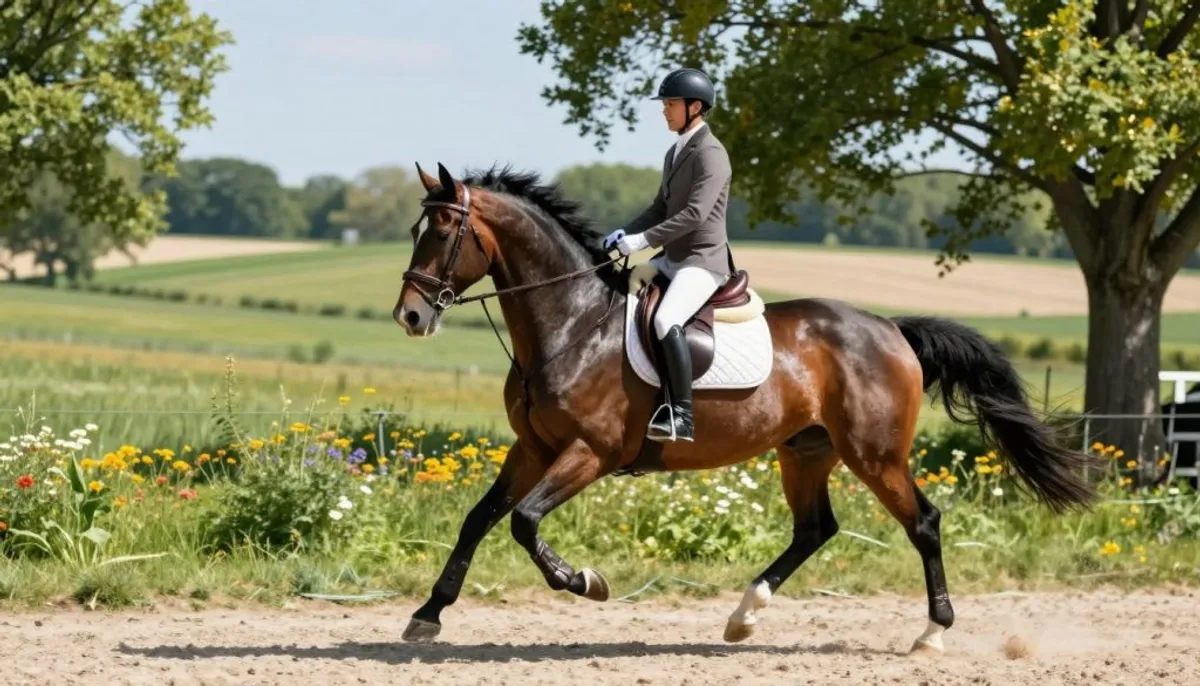
Basic Rider Posture: Straight Back, Open Shoulders, Heels Down
Keep a straight line from your ears to your heels to stay well-centered. You should keep your back straight, open your shoulders, and look ahead. Your heels should drop slightly, without pressing too hard on the stirrups.
Position your hands at waist height, firm but not tense. Thus, on a regular trot, you will avoid sudden movements. A good equestrian technique is often discreet.
Rising Trot: Timing, Relaxation, and Regularity
The rising trot consists of rising and sitting in rhythm with the horse. Good timing creates a sensation of fluidity without jolts. If you are tense, slow down to regain a calm breath.
Think of being “soft” in the knees and “heavy” in the heels. Being relaxed helps stabilize the upper body, making the aids clearer. In this technique, regularity is more important than the height of the movement.
Managing Walk-Trot-Gallop Transitions to Improve Control
Regularly changing gaits improves listening and control, especially at the trot. Start by sitting tall in the saddle, then set a tempo. Next, use your legs briefly and clearly.
To transition to the walk, stay upright and think of slowing down before using the reins. Look for a soft response from the horse, avoiding a sudden stop. This method also facilitates a clear departure to the gallop.
| Objective | What the Rider Does | What You Should Feel |
|---|---|---|
| Transition Walk → Trot | Engaged seat, legs in contact, stable hands at the waist | A precise departure, a regular rhythm, the movement of the horse's back |
| Return Trot → Walk | Sit tall, exhale, gently close fingers without pulling | A slowdown without haste, the horse's neck relaxed, a regular walk |
| Departure Trot → Gallop | Look far ahead, inner leg at the girth, outer leg slightly back | A clear gallop, constant balance, precise trajectory |
Using Legs, Hands, Voice, and Seat Without Pulling on the Reins
The aids are more effective when they complement each other. The legs provide the momentum, the seat controls the rhythm, the hands guide, and the voice motivates. On a fast trot, calm the horse with your posture before touching the reins.
Do not pull on the reins; this can make the horse's mouth insensitive. If you use a whip, it is to reinforce an aid, never to punish. Strong reins help the rider remain consistent, especially in long sessions.
Safety and Horse Behavior: The Reflexes That Change Everything
In equestrian sport, one rule is clear: safety first. Wearing a well-fitted helmet is essential, even for a short session. These good practices help the horse stay calm, as it senses our emotions.
Approaching a Horse Calmly from the Front and Avoiding Sudden Movements
It is always better to approach the horse from the front, where it can see you. Speak to it softly and keep one hand visible. Never pass behind without caution. For a peaceful experience, take a deep breath before touching its neck.
A horse can shift suddenly out of surprise. In the arena, maintain a distance from other horses to avoid accidents.
Reading Body Language: Ears, Posture, Stress, and Discomfort
Ears pinned back are a sign of discomfort. Also note a tight jaw or a horse that frequently looks at its girth. Signs such as pawing, showing teeth, or freezing indicate stress.
Recognizing these signs helps prevent conflicts. Check the girth, the bit, and look for pain. If in doubt, talk to the instructor.
Instructions in the Arena and Outdoors: Listening to the Instructor, Anticipating
The instructor knows how to manage horses and dangerous situations. Following their advice promptly can avoid many problems. Always look far ahead and communicate your intentions clearly.
Outdoors, adjust your speed and maintain a safe distance, especially on narrow paths. This makes the ride more enjoyable for everyone.
Mounting and Dismounting Safely: Left Side, Reins in Hand, Control
Always mount from the left side, reins in hand, to control the horse well. Before mounting, check that the horse is not moving. Safety stirrups are a good aid, as they easily release in case of a fall.
To dismount, take your feet out of the stirrups, hold the reins, and dismount gently. Be careful where you place your feet. This detail can prevent a fall.
| Frequent Situation | Signal to Spot | Useful Reflex | Why It Helps |
|---|---|---|---|
| Arriving at the stall or grooming area | Horse shifting, fixed gaze, tail swishing | Approach from the front, hand visible, calm voice | Reduces surprise and limits sudden reactions |
| Before girthing | Ears back, belly contracting, head turning | Girth in stages, check saddle pad and girth | Reduces discomfort and risk of a fit |
| In the arena, crossing and overtaking | Horse speeding up, leaning on the shoulder, crowding another horse | Maintain distances, announce, follow the track | Avoids kicks and loss of balance |
| Preparing for mounting | Horse moving at the mounting block, regular steps, tense neck | Reins in hand, ask for a stop, move on if necessary | Stabilizes the departure and secures the rider |
| Dismounting after the session | Horse wanting to leave, turning, pawing the ground | Feet out of stirrups, slide to the ground, maintain control | Limits falls and unexpected departures |
Rider Equipment for Practicing Equestrian Sport Comfortably
To enjoy equestrian sport, you need to be well-equipped. The equipment should help keep the body stable and comfortable. It reduces friction and improves balance.
Feeling safe allows you to focus on technique. This improves the quality of your posture while riding.
Helmet meeting standards and well-fitted: top priority
The helmet is the most important purchase. It must meet standards and fit well without hurting the forehead.
A model that is too big moves too much, and a model that is too small hinders breathing. Brands like GPA or Fouganza offer good options for beginners.
Riding attire: flexible pants, heeled boots/shoes, gloves
Wear flexible pants so your legs are comfortable. Also wear a breathable top and, depending on the weather, a light jacket.
Heeled boots or shoes help keep the foot secure. Gloves protect against blisters and improve grip on the reins.
Protective vest and useful accessories depending on the level
The protective vest is reassuring, especially for beginners or when riding outside. It is a good investment for those who ride regularly.
Having a whip to assist, not to punish, is important. A small bag for water and snacks is also handy.
If you are looking for high-end gear, La Sellerie Française offers equipment made in France. They are durable and perfect for passionate riders.
Choosing and adjusting stirrups for a stable position
Well-adjusted stirrups help maintain good posture. If they are too short or too long, it poses a problem.
The correct adjustment is checked while standing next to the horse. The stirrup should reach the level of the wrist.
| Equipment | What You Should Check | Direct Benefit for the Rider | Simple Reference |
|---|---|---|---|
| Helmet | Standards, head circumference, stability, absence of hard spots | Protection and confidence in equestrian sport | Does not move when you shake your head |
| Jodhpurs | Flexibility, flat seams, appropriate grip | Less friction, more stable leg | You bend your knee without pulling |
| Heeled boots/shoes | Presence of heel, ankle support, firm sole | Secure foot, more stable support | Heel does not slip through the stirrup |
| Gloves | Fitted size, grippy palm, breathability | More constant contact, better grip on reins | You close your fingers without thick folds |
| Stirrups (adjustment) | Identical length, stirrup leathers not twisted, symmetry | More accurate position, better equestrian technique | Base of the stirrup at wrist level |
Dressage and Equestrian Technique: Exercises to Improve the Trot
Dressage is the art of precision. It aims to achieve a smooth and harmonious trot. The key is to maintain regularity without pushing the horse too hard.
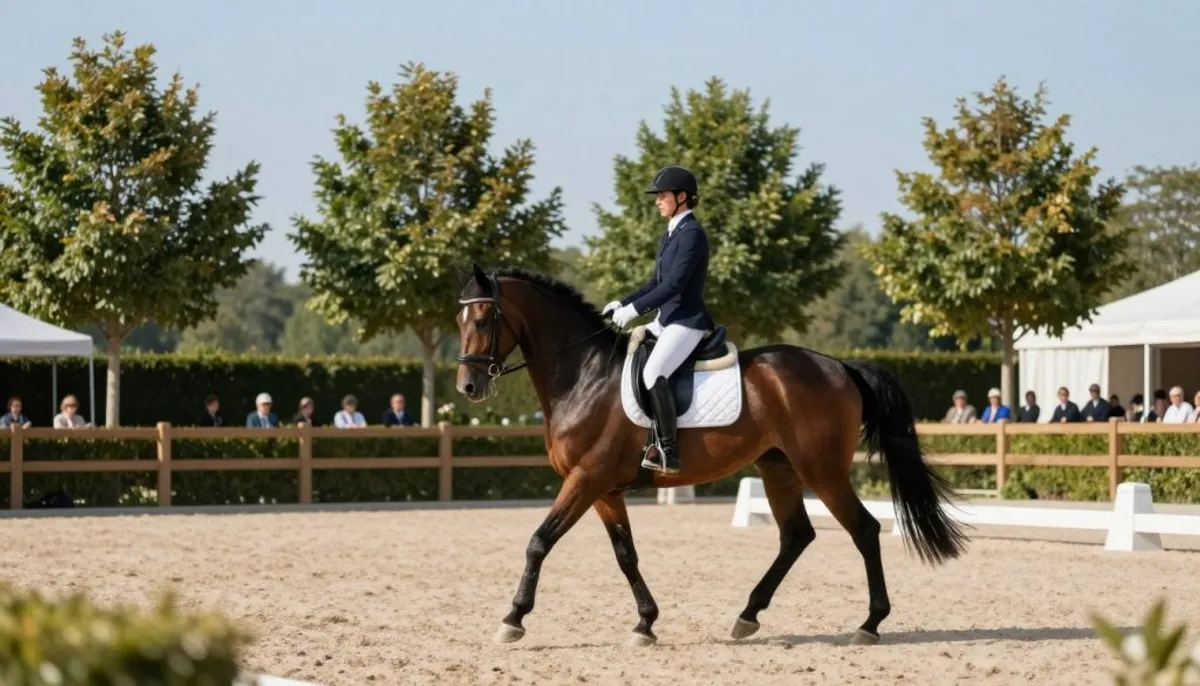
Start with simple transitions. Alternate between walk and trot, then trot and gallop, briefly. This makes the horse more attentive and helps maintain a constant rhythm.
Posture is crucial from the start. A straight back, wide shoulders, and lowered heels stabilize the rider. A balanced and light trot results from this.
For light hands, use “whispering aids.” The use of legs, posture, voice, and hands creates a clear dialogue. This works even in circles or straight lines.
Here is a simple routine for the arena. It perfects the trot without overloading the horse or rider.
| Exercise | Objective | Simple References | Common Mistake |
|---|---|---|---|
| Walk-Trot-Walk Transitions | Response to aids and balance | Clear departure, return to walk without pulling | Leaning forward at the start |
| 20m Circle at Trot | Cadence and bending | Horse's shoulders on the circle track | Looking at the ground and losing trajectory |
| Variations of Amplitude at Trot | Control of rhythm and engagement | Lengthen 6 strides, regain 6 strides | Accelerating instead of lengthening |
| Ground Poles at Trot | Coordination and tone | Stable reins, legs in contact, regular breath | Changing position at each pole |
Consistent practice strengthens the body and improves posture. Perseverance is key in dressage, and improvements are quickly visible. This discipline also helps to concentrate better and relieve stress, whether outdoors or in the arena.
Camps, Courses, and Progression: Building Real Regularity
In horseback riding, being regular is more important than being intense. This helps the rider to be stable and the horse to be relaxed. Riding once a week already improves the trot, especially with a good foundation.
Choosing a Supervised Equestrian Center Suitable for Beginners
A good equestrian center is easily recognizable. It has a clean arena, well-maintained facilities, and calm horses. Instructors use simple words and correct calmly. Reviews and local reputation are also good indicators.
The Écuries Saint Victor near Nogent-le-Rotrou offer a good environment for beginners. They emphasize safety, comfort, and step-by-step progression. This reassures and guides new riders well.
What to Expect During the First Sessions: Grooming, Tack, Basics
The first riding lessons are not on horseback. You learn the basic rules on the ground, the position to maintain, and to keep a safe distance. This avoids simple mistakes and creates a climate of trust.
Learning to groom and tack up is essential. Everything is checked before mounting the horse. The first exercises at the walk help you feel comfortable.
Recommended Progression: Ease at Walk, Discovery of Trot, Then Gallop
Starting with the walk, then exploring the trot, and finally the gallop is a good method. It allows you to learn to stay relaxed and attentive. Thus, the trot becomes more regular and easier.
It is good to aim for one lesson per week to progress well. Even though a camp can help, nothing replaces regularity. Warming up and stretching also helps.
Common Mistakes: Leaning Forward, Hard Hands, Lack of Regularity
Leaning forward disrupts balance. Too hard hands can stress the horse. And lack of regularity prevents acquiring good reflexes.
To improve, you need to adopt good posture and use light aids. Setting small goals and keeping a journal helps. Getting involved in the care of the horse and talking with other riders is beneficial.
| Point to Check | What You Observe On Site | Why It’s Useful in Horseback Riding |
|---|---|---|
| Supervision | Clear instructions, individualized corrections, group management | The rider progresses without rushing, with a more composed trot |
| Infrastructure | Usable arena, drained outdoor arena, maintained equipment | Less stress, more safety, regular sessions even in bad weather |
| Horses | Horses suitable for beginners, well-cared-for general condition, stable behavior | A gentler learning experience and reliable sensations in equestrian sport |
| Course Organization | Time allocated for grooming, tacking up, cooling down | You learn on foot too, and the rider-horse relationship builds |
Equestrian Competition and Goals: When the Trot Becomes Performance
When moving from the arena to competitions, you see each training session differently. The trot helps set the rhythm, direction, and bond with the horse. It is also key to staying calm before accelerating to the gallop, especially when nervous.
The goal goes beyond simply going fast. It requires a responsive horse, a precise rider, and quality, sustainable work.
From Leisure to Competition: Defining Your Discipline and Project
Having a clear plan helps you progress without rushing. You can aim for a simple exercise in dressage, a first jumping course, or discovering a competition. The trot, regular and well-controlled, is central in each case.
You should set specific goals: finish without faults, maintain a constant rhythm, or successfully make trot-gallop transitions without stress. This allows you to see progress week by week.
Overview of Major Families: Dressage, Show Jumping, Endurance, Eventing
Each discipline values the trot differently, focusing on precision and energy management. Major competitions like the Olympic Games, the World Cup, or the Rolex Grand Slam illustrate the excellence that can be achieved.
| Discipline | What the Trot Brings | Point of Attention |
|---|---|---|
| Dressage | Cadence, balance, straightness, and finesse of aids | Quality of contact and clean transitions to gallop |
| Show Jumping | Regular approaches, adjusting strides, control before jumps | Stay flexible without rushing, maintain impulse |
| Endurance | Effort management, energy economy, comfort over distance | Monitor recovery and mental freshness |
| Eventing | Common technical foundation for combining dressage, cross-country, and jumping | Maintain stability despite stress and fatigue |
Choosing a Suitable Horse: Morphology, Temperament, Rider Level
Choosing the right horse is essential for safe progression. Age, size, and back are important, as is character. A mare can be calm but unpredictable; a strong stallion can be too agitated at times.
Try different horses and seek advice from a professional. A horse that suits you will help you master the trot and then the gallop more easily.
Preparation Routine: Warm-Up, Stretching, and Caring for the Mount
Details matter for achieving performance. Start with a gradual warm-up: active walk, light trot, then simple transitions. The goal is a stable cadence without excessive effort.
After training, take the time to stretch and care for your horse: calmly remove the saddle, check its legs, and brush sensitive areas. This ritual builds trust and prepares for competition, whether in dressage or for a gallop departure.
Conclusion
The trot on horseback is a real challenge in horseback riding. It is easy at first. But it quickly demands rhythm, balance, and precision. This training also helps with the gallop, dressage, and even competition for some.
The basics are important for progression. You need a helmet that fits well, listen to your instructor, and approach the horse from the front. Knowing how to interpret signs like pinned ears or a swishing tail can really help.
The essential thing in horseback riding is posture and how we communicate with the horse. You need to be gentle with your legs, hands, voice, and not pull on the reins. Making transitions between walk, trot, and gallop regularly helps to become more stable. One lesson per week is sufficient to improve your skills.
Over time, the horse trot improves leg strength and posture. It also teaches you to breathe correctly, concentrate, and manage stress. Whether outdoors or in the arena, there is the pleasure of belonging to a community. To take this activity seriously, choosing quality equipment is essential. La Sellerie Française offers high-end, durable equipment, custom-made or in limited editions, all made in France by talented artisans. They are designed for comfort, durability, and competition.
FAQ
Why is the horse trot an ideal entry point into horseback riding?
Riding a horse and feeling the wind is liberating, especially outdoors. The trot is lively but simpler than the gallop. It helps you move at your own pace and creates a strong bond between the rider and the horse.
Is it normal to find the beginnings of trotting intimidating?
Yes, it’s common. At first, there is a lot to learn and understand. But with help, clear goals, and time, confidence grows quickly.
Which gaits should be mastered first: walk, trot, or gallop?
Start with the walk, then discover the trot, and finally the gallop. The walk is slower and easier. It prepares well for the coordination needed for the trot and gallop.
What is the purpose of the trot in the rider's learning?
The trot helps with balancing well, staying stable, and using aids precisely. It is essential for learning to maintain a rhythm, which is crucial in all equestrian disciplines.
How to achieve the basic posture at the trot?
Keep your back straight, open your shoulders, and lower your heels slightly. Imagine a straight line from your ears to your heels. This allows you to better manage movements while staying relaxed.
What is the rising trot, and why is it so commonly used?
The rising trot consists of rising and sitting in rhythm with the horse. It protects the horse's back while helping the rider find their rhythm. The goal is regularity, not the height of the rise.
Why practice walk-trot-gallop transitions so often?
Frequently changing gaits strengthens communication with the horse. It improves listening, response to aids, and anticipation. Using transitions helps to control better, whether in the arena or outdoors.
How to use aids (legs, hands, voice, seat) without pulling on the reins?
The legs provide the impulse, the seat stabilizes, the hands manage contact, and the voice supports. Keep your hands firm without pulling. Pulling hard can hurt the horse and harm trust.
Is a whip “mandatory” for learning?
No. The whip is used to clarify a request, never violently. The instructor will teach you how to use it correctly.
How to approach a horse safely, especially when starting out?
Approach from the front, without sudden movements. Avoid surprising the horse from behind. Speak to it softly and stay calm. Safety always starts on the ground.
What body language signs indicate stress or discomfort?
A stressed horse may pin its ears back. If it turns its head, paws, or shows teeth, it may be stressed. Recognizing these signals helps avoid problems.
What instructions to follow in the arena and outdoors?
Follow the instructor's instructions, who knows how to manage horses and risks. In a group, keep your distances and pay attention. Outdoors, watch the terrain and stay with the group.
How to mount and dismount correctly from your mount?
Mount from the left side, controlling the reins. To dismount, remove your feet from the stirrups, hold the reins, and slide to the ground while watching where you place your feet. This avoids many risks.
What is the essential equipment to start horseback riding?
Start with a certified and fitted helmet. Wear comfortable clothing and shoes with heels. This protects and stabilizes.
Is a protective vest useful in learning?
Yes, especially outdoors and for starting alone. It protects against shocks. It is a good investment for more peace of mind.
Which brands to choose when starting out?
GPA, Fouganza, and Decathlon offer a good balance between safety, comfort, and price. The important thing is that the equipment fits well and stays in place.
How to adjust the stirrups for a stable position?
Next to the horse, the stirrup at wrist level gives the right length. Safety stirrups are also useful.
Is there a premium alternative, made in France, for sustainable equipment?
Yes. La Sellerie Française (https://laselleriefrancaise.com) offers high-quality equipment made in France. Everything is locally crafted by qualified artisans.
How does dressage help improve the trot?
Dressage, through its pursuit of elegance and precision, refines the trot. It teaches the correct posture, a soft contact, and the proper use of energy. This makes riding more enjoyable.
What simple exercises quickly improve the quality of the trot?
Transitions between gaits refine listening. Working on stability and good coordination also helps. This makes the trot more enjoyable and effective.
What to expect during the first sessions at an equestrian center?
You first learn safety and how to check the equipment. Grooming and tacking help create a bond. Then, you address the basics like holding the reins and mounting/dismounting.
How to choose an equestrian center suitable for beginners?
Look for a place with good instructors, equipment, and safety. The Écuries Saint Victor offer a gentle learning experience focused on comfort and safety. Reviews and the quality of the horses also matter a lot.
How often should you ride to progress in the trot?
Riding once a week is good. It helps to better understand, improve technique, and feel more comfortable. With a good rhythm, you progress faster.
What mistakes most hinder progress in the trot?
Leaning forward disrupts balance. Pulling on the reins is uncomfortable for the horse and harms communication. Lack of regularity slows learning.
What “practice hygiene” gestures help avoid pain and tension?
Warming up before and stretching after avoids pain. Participating in the horse's care strengthens the bond. Talking with other riders helps integrate.
How to transition from leisure to equestrian competition?
Define a discipline and follow a progression. Equestrian sport requires discipline, perseverance, and good supervision. The trot plays a role of precision in this.
What disciplines can be chosen after consolidating the trot?
Dressage improves elegance and precision. Show jumping requires agility and technique. Eventing combines several disciplines, and endurance works on stamina.
What major competitions provide benchmarks when dreaming bigger?
The Olympic Games, the World Cup, and the Rolex Grand Slam are models. They showcase excellence in equestrian competitions. Even just for inspiration, these events provide motivating goals.
How to choose a horse suitable for your level and morphology?
Safety and comfort depend on making the right choice. Consider the horse's age, sex, size, and character. Test several horses and seek advice from a professional.
What preparation routine helps better manage energy at the trot?
Start by warming up, then stretching. Take care of the horse before and after to strengthen your bond. Look for regularity and good contact for a balanced trot.
Does the trot have physical and mental benefits, even in leisure horseback riding?
Yes. Riding a horse strengthens the body and improves attention. It can also reduce stress. When mastered well, the trot offers a privileged moment of harmony.
What is the place of the trot in the history of the human-horse relationship?
The horse has always helped humans: for moving, hunting, or warring. Since antiquity, it has contributed to agriculture and leisure. Over the centuries, the relationship between humans and horses has evolved, enriching riding techniques and equestrian pleasures.