
Buying a pony is fulfilling a childhood dream. The initial cost is just the beginning of a larger adventure. It is crucial to set a precise budget, allowing for extras for unforeseen expenses.
The pony market is dynamic in France. In 2022, horseback riding was the third most popular sport. With 692,400 participants, it ranks just after tennis and football. This strong demand influences prices, especially in equestrian regions.
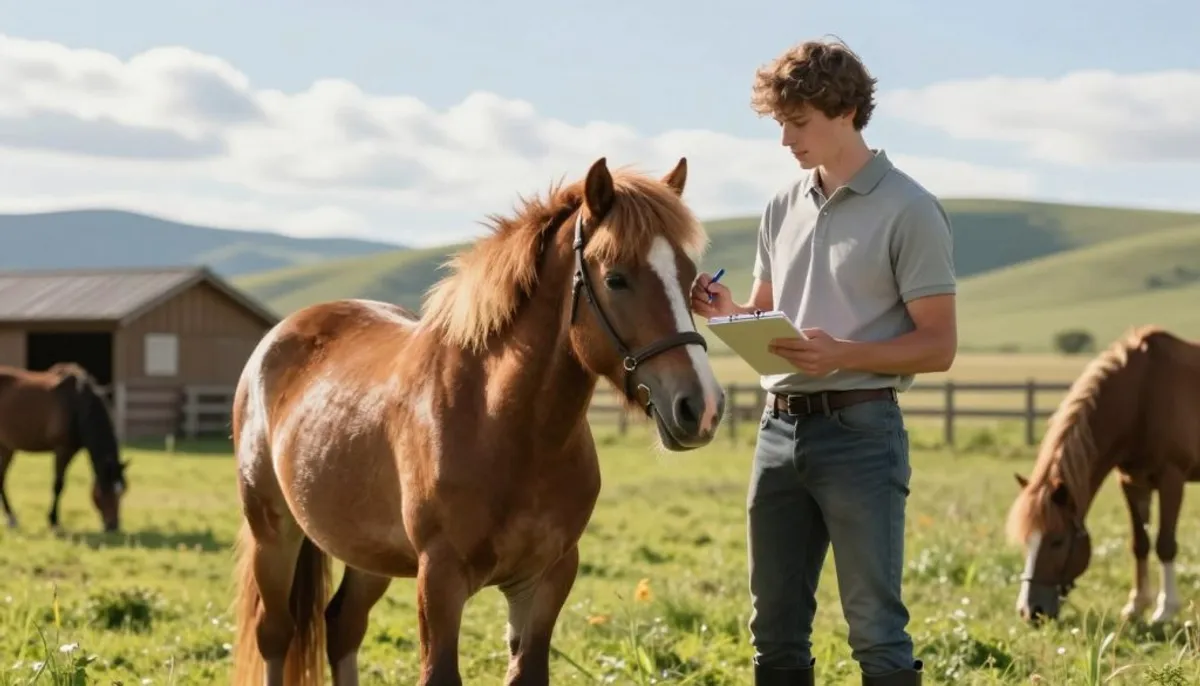
Several criteria define the price of a pony. These include breed, size, age, health, and talents. A pony intended for leisure, family, or competition will have a different price. Background and pedigree also play a significant role.
A pony lives a long time, up to 30 or 35 years. Therefore, it is not an investment to take lightly. A true budget encompasses accommodation, food, health care, and much more, in addition to the purchase.
Key points to remember
- The price of a pony is based on many criteria.
- Define an overall budget, including a fund for surprises.
- Breed, pedigree, age, and health are key factors in pricing.
- In France, demand affects prices by region, with 692,400 licensed riders.
- Costs go beyond the purchase: consider boarding, care, equipment, and more.
- Committing to a pony means taking responsibility for 30 to 35 years.
Understanding the pony market in France
The pony market is changing rapidly. It is not enough to have just an attractive ad. Considering usage, age, training, and origin, the price of a pony can vary significantly.
It is essential to think in terms of the pony's profile. Then, check carefully what is included in the price: education, paperwork, follow-up, and sales conditions.
Why the “right” price depends on the pony's profile (leisure, sport, family)
A leisure pony is calm and reliable. In France, its price often ranges between €1,000 and €2,500. This depends on its temperament and level of training.
A competition pony costs more. They have experience, skills, and sometimes awards. For these ponies, the price can reach up to €7,000. This depends on their skills and potential.
The “family” pony is a mix of both. It should be easy to handle and suitable for everyone. Its price depends more on its reliability than on its breed.
The role of breeders and stud-books in tracing lineages (pedigree)
Pony breeders select and breed ponies, often with an expert. There are about 400 breeds of equines in the world. Each breed has its own characteristics.
A stud-book records the details and pedigree of ponies. This information helps to understand their origins. It also explains why some ponies cost more than others.
Buying a pony can be done in various ways. You can buy from a professional, a private individual, or online. Price differences often come from the services offered and the pony's history.
Supply, demand, and areas with high equestrian concentration: impact on prices
Geographical location greatly influences prices. In areas with many clubs, pony prices are higher. But in rural areas, there is more choice and more opportunities to negotiate.
To make a good comparison, look closely at criteria like level and paperwork. A breeder close to a major equestrian center may ask for a higher price, even for a similar pony.
| Desired profile | Common price range in France | Factors affecting pricing | Frequent purchase channel |
|---|---|---|---|
| Leisure pony | €1,000 to €2,500 (IFCE benchmark) | Calmness, handling, outdoor outings, basic level | Private individual or pony breeder with simple follow-up |
| “Family” pony | Often between €2,000 and €4,500 | Versatility, safety, tolerance, ease of grooming and transport | Local ads, equestrian facilities, direct sales |
| Sport-oriented breed pony | Up to €7,000 (IFCE benchmark) | Advanced backing, results, model, competition mindset, pedigree | Pony breeder, sports sector, specialized networks |
| “Zone” effect on the pony market | Difference of several hundred to thousands of euros | Equestrian concentration, seasonal demand, transport, availability | Multi-region comparison before decision |
Pony price: purchase ranges by breed, age, and level
The price of a pony varies greatly depending on listings. In France, criteria such as size, appearance, and personality are very important. A well-proportioned pony with good posture is often worth more. It shows that it is reliable for work and daily life.
To assess a pony's price, one must consider its breed, age, and level of training. Prices vary, but a general idea can be given. This can still change depending on location, the pony's health, and its documents.
Price ranges by popular breeds
| Breed | Common purchase range | Factors affecting pricing | Frequent profile |
|---|---|---|---|
| Shetland pony price | €600 to €2,500 | Size (mini vs large Shetland), ground training, docility, hoof condition | Family, leisure, light driving |
| Welsh pony price | €1,500 to €6,000 | Gaits, balance, jumping ability, versatility, conformation quality | Club, sport, children progressing |
| Connemara pony price | €2,000 to €8,000 (and more) | Sporty model, bloodlines, jumping ability, consistency, successful competition lines | Sport, outdoor, “Swiss army knife” pony |
Sometimes, two similar ponies can have different prices. If one has a better physique and moves better, it will be more expensive. These small details play a significant role, especially if you want to progress.
Foal, young pony, adult: cost variations by age
Age directly affects the price of a pony. A young foal is cheaper but requires more patience and attention.
- Foal (< 1 year): €400 to €1,500
- Young pony (2–4 years): €800 to €3,500
- Adult (≥ 5 years): €1,200 to €6,000 or more depending on training
A pony aged 5 to 6 years, already well-trained, often costs more than an older pony. On the other hand, a reliable and experienced adult pony remains in high demand. It makes things easier.
Backing/training level and performance: when the price rises
The level of training increases the price of the pony. A pony that is ready for anything and easy to manage is more valued.
Backing, training, and competition experience affect the price. The cost reflects the time invested and daily reliability, beyond breed.
Origins, paperwork, and traceability: what influences pony pricing
The price gap between two similar ponies can come from their paperwork. Having clear origins helps set a fairer price. It allows for a more secure purchase and assists with health tracking and resale.

It is important to check the identification and information on the official document. Verifying the origin is crucial before making a decision. These details may seem administrative, but they greatly influence the cost.
— Purebred pony vs ONC: a value that tells a different story
A purebred pony follows specific criteria and has a pedigree. This instills confidence in its type and abilities, which is useful for sports or breeding.
On the other hand, an ONC pony has a less clear origin. Its evaluation is more challenging, which can deter buyers even if it is well-trained.
— Identification, passport, and registration: costs and checks
In France, every pony must have identification and a passport. Fees range from €50 to €150 depending on the case. These costs vary depending on the organization and the file.
Before paying, check several details such as the identification number and the microchip. A complete file avoids delays and surprises during the sale.
— Breed associations and lineage tracking: a purchasing guide
The stud-book records origins and tracks pony families. For the buyer, it is a simple way to understand a pony's price.
Breed associations in France organize events and share important information. They help to understand listings and make informed comparisons.
In Quebec, the Cheval Origine Québec label promotes local horses without fees and for life. A clear origin facilitates a smooth sale.
| Criterion | What to look for | Common impact on price |
|---|---|---|
| Declared origin | Registered pedigree vs unverified origin | A purebred pony is often valued more than an ONC pony, as the history is documented |
| Traceability | Registration in the stud-book, consistency of lineage, verifiable elements | Provides a solid reference for negotiating and comparing listings at the same level |
| Documents | Equine passport, identification, updated ownership | Fewer procedures to redo, simpler sale, more reassuring file |
| Administrative fees | Creation/updates/duplicates, registration, changes | Budget for €50 to €150 depending on the case, to be included in the purchase budget |
Health status and veterinary visit: securing your purchase
First, look at the pony's health before the price. A healthy, calm, and well-cared-for pony avoids surprises. This allows for better price evaluation based on its future use.
Pre-purchase veterinary visit: average budget and what it should cover
The veterinary visit checks the pony's health and movement. The vet examines the eyes, mouth, skin, and more. They may suggest additional tests if necessary.
The cost ranges from €100 to €250. This expense is more advantageous than costly care later. It also helps negotiate the pony's price without conflict.
The check generally includes:
| Checked point | What the vet looks for | Why it’s useful for purchase |
|---|---|---|
| General examination | Body condition, skin, mucous membranes, temperature, signs of pain | Confirms if the pony is suitable for the intended use |
| Locomotion | Lameness, stiffness, irregularity on hard ground and in a circle | Reduces the risk of movement problems after purchase |
| Respiratory and cardiac system | Breath, cough, abnormal noise, recovery | Crucial for a sport pony and its daily well-being |
| Mouth and teeth | Overgrowth, chewing problems, pain when opening | Anticipates dental care needs, preserves health |
| Feet and conformation | Quality of hoof, sensitivity, asymmetries | Information for farriery and prevention of lameness |
Vaccinations and deworming: initial costs to anticipate
Always check the health record for vaccines and dewormers. Initial fees range from €75 to €150, depending on necessary updates. An up-to-date record also shows good health tracking.
Before signing, ask for a simple summary of care:
- Dates of the last vaccinations and boosters
- Deworming schedule (product, frequency)
- Recent visits from the farrier and dentist
Hidden defects and care history: reducing the risk of unexpected expenses
Hidden defects are not always immediately visible. Problems may arise in daily life or with work. An incomplete care history may hide recurring issues.
To avoid unexpected costs, ask for proof: invoices, care reports. A good veterinary visit and clear documents protect your budget. This justifies the price to pay for the pony.
Immediate additional costs after purchase: the “real” pony cost
The cost of a pony is not limited to its initial price. You also need to think about transport, necessary equipment, and administrative procedures. These additional expenses can appear in the first week.
Transport: how much to budget based on distance
The price of transport can vary from €150 to €600 for a trip. This cost changes depending on distance, waiting time, and the type of transport required. If you need special transport or if the pony must travel far, it will cost more.
Consider purchasing a trailer if you plan to travel often with your pony. The cost will be higher but necessary for your activities.
Essential equipment: saddlery, protection, maintenance, rider safety
Choosing the right equipment is crucial. An ill-fitting saddle can cause problems and lead to additional costs. It is important to select each piece carefully.
La Sellerie Française is renowned for its premium quality. They offer high-end equipment, made to measure or in limited edition from A to Z in France by qualified artisans.
Administrative formalities: a fee envelope not to forget
Administrative formalities must be settled quickly and can impact your budget. Between identification, passport, and registration, budget between €50 and €150. The cost may vary depending on the documents to obtain or renew.
| Item to budget for | Budget range | Factors affecting price | Tip to stay on track |
|---|---|---|---|
| Transport | €150 to €600 (or more) | Distance, tolls, timing, specialized transport | Combine trips and book outside weekends when possible |
| Complete pony saddlery | €300 to €1,200 | Fitting saddle, bridle, halter, leather quality, adjustment | Prioritize fitting and aim for durable pieces rather than “quick buys” |
| Maintenance equipment | €80 to €200 | Number of brushes, quality, accessories (hoof pick, comb, bucket) | Choose a simple kit at first, then complete as needed |
| Protection and blankets | €100 to €400 | Number of blankets, weight, work protection, sturdiness | Adapt to lifestyle (pasture/stable) to avoid unnecessary purchases |
| Rider safety | €100 to €250 | Helmet, gloves, range level, periodic replacement | Try in-store and keep a margin for renewal |
| Pony formalities | €50 to €150 | Passport, identification, registration, updates | Check papers before departure to avoid returns and delays |
Accommodation and pony boarding prices: pasture, stable, paddock
The accommodation costs for ponies can be higher than expected. This varies greatly depending on the location, quality of the grounds, and daily attention given.
It is important to know what is included in the price. This includes hay, access to water, supervision, management of blankets, and use of facilities. A low initial cost could mean additional fees later.
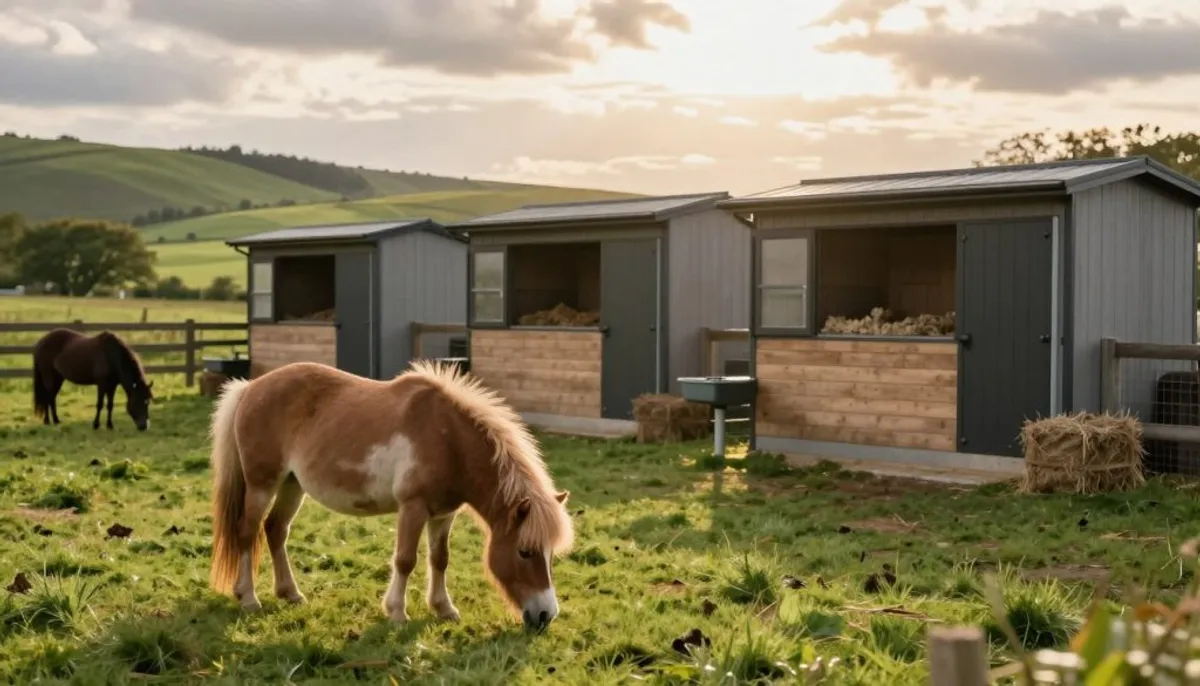
Pasture boarding: monthly ranges and for which type of pony
Choosing pasture boarding is often the simplest solution. Costs generally range between €180 and €400 per month. For shared pasture, it would be between €150 and €300.
This option is perfect for a sturdy pony that enjoys being outdoors. Management is crucial, including clean water, hay in winter, and adequate shelter, with regular checks.
Stable (with or without outings): rates and services that affect the bill
The price for stable boarding ranges from €300 to €600 per month. It can reach €700 for additional services. Even though the stable offers security, the pony needs to go out regularly.
Prices increase when services such as access to a paddock, specific feeding, and personal care are offered. The available facilities also play a significant role in cost.
At home: recommended space, shelter, fencing, water, and companionship
Keeping your pony at home may seem cheaper, but it requires a lot of commitment. Generally, 1 hectare per pony is recommended for proper space management.
A good shelter, sturdy fencing, and constant access to water are essential. You should also think about straw for the shelter and where to store hay.
A pony is happy with companions. They can be other horses, donkeys, or even sheep. The diet will depend on their activity and physical condition.
Commodat / loan: an option to lighten some costs
The commodat, or loan, allows a club to use the pony in exchange for covering expenses. This should be discussed calmly to establish clear rules.
Agreements can cover farrier fees, veterinary care, and use of facilities. It is important to specify the pony's use, rest times, and protocols in case of injury.
| Accommodation option | Common monthly range (France) | What is often included | Points to check | For which profile |
|---|---|---|---|---|
| Collective pasture | €150 to €300 | Parcel, water, basic supervision, sometimes hay | Quality of forage, access to shelter, parasite management, soil condition in winter | Rustic pony, outdoor life, tight budget |
| Pasture with enhanced services | €180 to €400 | More regular hay, rotations, more present supervision, sometimes supplement distribution | Frequency of checks, protocol in case of injury, blanket management | Pony in light to moderate work, needing a stable environment |
| Stable without outings | €300 to €500 | Bedding, meals, cleaning according to formula, access to facilities | Actual time outside, ventilation, quality of bedding, cleaning rhythm | Pony that needs to be monitored but requires an outing plan |
| Stable with paddock or daily pasture | €350 to €700 | Outings, ration management, sometimes simple care, infrastructure | Duration of outings, weather management, care supplements, organization on weekends | Sport or family pony, looking for comfort and regularity |
| Loan | Variable depending on agreement | Shared expenses, structured use, access to arena/riding school depending on facility | Written contract, workload, health tracking, responsibility in case of accident | Owner wanting to lighten the budget while maintaining a structured framework |
Regular care: farriery, dentist, osteopath, and veterinarian
Regular care plays a significant role in the pony's well-being. This includes regular maintenance to keep the animal fit for work. The costs of these services can quickly add up each year.
Trimming or shoeing every 6 to 8 weeks: indicative budgets
Hoof care is done approximately every 6 to 8 weeks. Depending on the condition of the hooves, the type of ground, and the activities performed, one can choose between trimming and shoeing. The goal is to maintain good hoof structure and even wear.
| Service | Recommended frequency | Indicative budget | Useful reference |
|---|---|---|---|
| Pony trimming | Every 6 to 8 weeks | €40 to €50 | Often sufficient for a pony in pasture with moderate work |
| Pony shoeing (4 hooves) | Every 6 to 8 weeks | €80 to €90 | Interesting if the pony wears down quickly or works on hard ground |
| Intervention (overall range) | As needed | €60 to €120 | Varies with region, complexity, and type of shoeing |
| Annual estimate | 6 to 9 visits/year | €360 to €720 | To be budgeted from the purchase to smooth out expenses |
Annual veterinary follow-up (vaccines + dewormers): order of magnitude
The veterinarian is important for the pony's regular health. An annual visit for vaccines and dewormers costs about €150 to €200/year. These visits prevent infections that could become more costly.
The care protocol varies according to the pony's life. Keeping an up-to-date care record, with dates and types of vaccines, is useful for organizing care.
Dentist and osteopath: recommended items to include in the budget
A visit to the equine dentist is recommended at least once a year, for about €80. Dental problems can affect the pony's nutrition and behavior.
The osteopath, while not mandatory, is often consulted at least once a year. This costs between €70 to €100. A session can help after a change in activity or an intense period, to prevent imbalances.
Feeding and maintenance: monthly and annual budget to plan
The cost of a pony depends greatly on factors such as grass, forage, and equipment. To keep your expenses regular, consider organizing your costs into fixed categories. Then, adjust them according to the season and the pony's activities.
The amount you spend each month on your pony can change. This varies especially if your pony works more, is still growing, or spends the winter without access to grass. What you spend also depends on factors like the pony's breed, size, age, and lifestyle.
Hay, grains, supplements
An average-sized adult pony generally costs between €60 and €200 per month. This is for hay, grains, and supplements. Over a year, this amounts to approximately €720 to €2,400.
The reason for this wide price range is simple. A pony that rests a lot and has enough grass to eat spends less. But a pony that works more or is not in good shape may need more food. It may require additional fibers, special feeding, and a CMV.
| Pony profile | Forage and concentrates | Budget reference | What varies |
|---|---|---|---|
| In pasture, light activity | Supplemental hay, little grain | €60 to €110 / month | Quality of hay, access to grass, weather |
| Regular leisure | Hay + feed as needed | €100 to €160 / month | Work frequency, body condition, season |
| Intensive work or senior pony | Unlimited hay + more technical ration | €150 to €200 / month | Dental wear, digestion, energy needs |
Straw, water, shelter management
Some costs may seem small but recur frequently. For example, if you keep the pony at home, you need straw for its shelter. You also need to consider continuous access to water and maintenance of fences. These costs remain even if the amount of food given does not change.
A shelter requires regular maintenance. For example, it is important to reduce humidity and block the wind. It is essential to keep a dry area and check for any dangers. In boarding, these costs may be included in the price or charged separately.
- Straw for bedding and dry comfort
- Water available continuously, even during freezing periods
- Shelter: repairs, drainage, ground maintenance
- Fences: insulators, tape, posts, safety checks
Maintenance and renewal of equipment
It is also important to consider the maintenance of riding equipment. Even when you already have everything you need. Each year, budget between €100 and €250. This budget is for repairs, replacement of protective gear, and wear of certain equipment.
Choosing durable equipment can help reduce costs in the long run. For example, a well-maintained saddle and good-quality gear last longer. This avoids frequent replacements, which is especially important if your pony works a lot.
Alternatives to purchase: pony rental prices and pony ride prices
A pony is more than just an animal; it is a true friend for life. But owning a pony involves costs such as accommodation and care. It also requires time commitment. Fortunately, there are alternative solutions to enjoy a pony without all these responsibilities.
Rental is a very practical option. It can be done as a half-lease or full lease. The cost depends on several factors such as the region, the pony's skills, and the chosen days. In equestrian centers in France, everything is well organized. There are schedules, safety rules, and sometimes even equipment loans.
Trying rental is testing the reality of owning a pony. This allows you to evaluate your budget. You take into account the necessary equipment, the frequency of lessons, and regular expenses. This helps anticipate fixed costs that you may not have considered.
| Option | What you pay | What you avoid | Who it’s ideal for |
|---|---|---|---|
| Half-lease / structured rental | Pony rental price + share of equipment as per agreement | Full accommodation, owner insurance, management 7 days a week | Families wanting a regular rhythm without committing for 30 years |
| Guided ride | Pony ride price per session (often by duration) | Annual fees (farriery, vaccines, dentist), equipment storage | Beginners, children, resuming after a break |
| Loan / commodat | Contribution to costs, sometimes boarding and regular care | Purchase price, some heavy charges depending on contract | Independent riders wanting a close connection to “ownership” |
If you are looking for something less committing, consider rides and lessons. With these options, you can better control expenses. You only pay when you use the service. This is ideal to avoid ongoing costs in case of a break. And in an equestrian center, there is always someone to supervise, which is very reassuring, especially if you go with a child.
The loan and commodat are between rental and ownership. It means sharing maintenance costs and gaining time on the pony’s back. It also allows you to learn how to take care of a pony without buying immediately. As an alternative solution, it is an excellent way to get accustomed before making a purchase decision.
Conclusion
The price of a pony varies according to several factors. These factors include the intended use (leisure, sport, family), the breed, and the age of the pony. The level of training and the pony's health are also important.
Location and availability also influence the price. This is because the supply and demand for ponies change significantly in France.
Making a decision requires considering all associated costs. After the purchase, there are additional expenses to anticipate. These include transport, administrative procedures, and equipment purchases.
Costs continue with boarding, feeding, and regular pony care. Boarding often ranges from €150 to €700 per month. Feeding and care also add to the monthly bill.
It is essential not to neglect safety measures. A veterinary visit before purchase and regular follow-ups are crucial. Also, ensure you have adequate insurance to avoid unpleasant surprises.
Choosing the right pony means finding one that best suits your level and lifestyle. It is important to compare options and ask clear questions. Keep a realistic budget, including equipment costs to avoid surprises.
For quality equipment, La Sellerie Française offers high-end products. Everything is made in France, custom-made or in limited series by local artisans.
FAQ
Why is the pony price never a “standard” figure?
The pony's price varies because several factors determine it. These include breed, pedigree, and age of the pony. Size, health status, and level of training also count. The pony's intended use is important: leisure, family, or competition, it changes everything. Finally, geographical area influences prices, with supply and demand varying.
What type of commitment does owning a pony entail?
Having a pony is a dream, but it requires a real long-term budget. A pony can live up to 30 to 35 years. This involves regular expenses such as housing, food, and medical care. Consider the total cost, not just the purchase price.
Does the French market influence pony prices?
Yes, because horseback riding is very popular in France. In 2022, it was the 3rd most practiced sport. With 692,400 licensed riders, the demand is strong. This demand can drive prices up, especially in equestrian-enthusiastic areas.
What are the main factors that affect pony pricing?
Breed, lineage, age, condition, health, and abilities (leisure or sport) matter. A trained pony that is safe outdoors or good in competitions costs more. Location also impacts: where demand is high, prices rise.
What price benchmarks are there for a leisure pony and a competition pony?
For a leisure pony, we talk about €1,000 to €2,500. A competition pony can reach €7,000, sometimes more for exceptional subjects.
What price ranges are there by breed (Shetland, Welsh, Connemara)?
Shetlands cost between €600 to €2,500, perfect for families. Welsh ponies are valued between €1,500 to €6,000, often for sport. Connemara ponies can range from €2,000 to €8,000, or even more for the best.
How does age influence the pony's cost?
Age has a significant effect on the cost. A foal costs between €400 and €1,500. They require time and education. A young pony is priced between €800 and €3,500. An adult ranges from €1,200 to €6,000 or more, depending on training.
Why does a 5–6 year old pony often cost more than a 15–20 year old pony?
A 5–6 year old pony is often at an ideal age, already trained and full of potential. A 15–20 year old pony has fewer years ahead. Buyers consider future expenses. This can reduce the price if health and level are the same.
How do backing, training, and performance increase the price?
A ready pony costs more because it saves time and training risks. Good backing, outdoor safety, good behavior at work, and competition successes add value. Conversely, a green pony or one needing retraining has a lower price. It will require a larger training budget.
Do morphology and size count in the estimate?
Absolutely. The shape impacts comfort, longevity in the sport, and sometimes suitability for a specific sport. A well-proportioned pony is often worth more. Physical defects can reduce the price, as they limit work potential.
Purebred pony or ONC: what are the consequences for value?
Purebred ponies are generally more expensive than ONC ponies. The explanation? Traceability, access to certain events, and resale value are better with papers. An ONC can be an excellent leisure pony, but its unknown origin affects the price.
What role do stud-books and pedigree play in estimating a price?
A stud-book records pedigree to trace lineages and breed. For a buyer, it is a useful guide. Genealogy and sometimes the successes of parents help verify if the price is fair.
What role do breeders and stallion owners play in pricing?
A: Breeders and stallion owners select and breed to ensure quality. With nearly 400 breeds of equines, this selection often influences price.
Why does geography affect pony rental price and purchase price?
In densely equestrian areas, demand and prices rise, for both purchase and rental. In the countryside, with more supply, prices may be lower. Supply and demand always determine prices.
Where to buy a pony: breeder, private individual, or online ads?
From a breeder, the pony's history is clear. A private individual offers a lower price but requires caution. Online ads offer a lot of choices but require checking many details.
What fees for identification, passport, and registration?
Costs range from €50 to €150 for identification, passport, and registration. This is crucial: a clear file secures the purchase and aids resale.
Are breed associations useful for a buyer?
Yes, they help promote and enhance the breed. For a buyer, this is reassuring. It provides access to valuable information about the breed, which helps understand the pony price.
Can you give a concrete example of value enhancement through traceability?
The “Cheval Origine Québec” system is an example. It concerns horses registered in Quebec. Registration is free for life. This increases value through good traceability. In France, systems vary, but the idea is the same.
Is the pre-purchase veterinary visit essential, and how much does it cost?
Yes, it is crucial for assessing health and avoiding surprises. It costs between €100 and €250. It also reduces the risk of disagreement after purchase.
What budget to plan for vaccines and dewormers at the start?
Plan for €75 to €150 for vaccines and dewormers initially. A pony with up-to-date vaccines is worth more, as this shows good medical tracking.
How to limit the risk of hidden defects and unexpected expenses?
Ask for a clear history. The pre-purchase veterinary visit is essential. An incomplete file can lead to unexpected costs later.
What immediate costs are added to the purchase price?
The total includes transport costs, formalities, and initial equipment. Then, consider boarding, feeding, and ongoing care to estimate the total budget.
How much to budget for transporting a pony?
Transport ranges from €150 to €600, more for long distances. If you travel often, consider the costs of a trailer and hitch.
What budget for essential equipment (saddlery, protection, safety)?
To start well, budget €300 to €1,200 for saddlery. Add €80 to €200 for maintenance equipment, €100 to €400 for protection, and €100 to €250 for rider safety.
Where to find durable and high-end saddlery made in France?
For premium equipment, La Sellerie Française (https://laselleriefrancaise.com) offers high-end products, made in France. They provide unique items, custom-made or in limited series. Everything is made in France by French artisans.
Is boarding the largest recurring expense in pony boarding price?
Yes, accommodation is the main expense. The pony's boarding price varies by region, type of boarding, and services. Calculate this item before buying, as it impacts your monthly budget.
What is the price for pasture boarding?
Pasture boarding ranges from €180 to €400/month. In collective settings, it’s more like €150 to €300/month. It’s often cheaper if well managed.
What budget for stable boarding (with or without outings)?
Prices range from €300 to €600/month, sometimes €300 to €700/month depending on services. This includes outings, care, and access to facilities.
Is keeping your pony at home really cheaper?
Yes, but it comes with requirements. Ideally, budget for 1 hectare per pony with safe shelter and fencing. Ponies need companionship.
What is commodat (loan) and how does it reduce costs?
Commodat means lending the pony to a club in exchange for covered expenses. This includes farriery, veterinary care, and use of facilities.
What farriery budget to plan for the year?
Farriery is done every 6 to 8 weeks. Costs range from €60 to €120 per intervention. Annually, this can represent €360 to €720.
What is the order of magnitude for annual veterinary follow-up?
Budget €150 to €200/year for visits, vaccinations, and dewormers. This avoids higher costs by detecting problems early.
Equine dentist and osteopath: what costs to include?
The dentist costs about €80 per year. The osteopath, recommended annually, costs between €70 to €100. They support well-being and pain prevention.
What feeding budget for a pony, monthly and annually?
An adult pony costs between €60 to €200 per month for food. This varies based on several factors and ranges from €720 to €2,400 per year.
What are the “invisible costs” to anticipate, especially at home?
Even without boarding, don’t forget straw, water, and shelter maintenance. These regular costs are important.
What annual budget to plan for maintenance and renewal of equipment?
Plan for €100 to €250 per year for maintenance and renewal. Choosing durable equipment helps save money.
What alternatives to purchase to reduce fixed costs?
Rental, such as half-lease, allows testing without the costs of ownership. Rides offer occasional practice without charges. Commodat is another option.
What is the most common pony rental price, and what does it cover?
The pony's rental price depends on the formula and the region. It can partially or fully cover boarding and care. This allows managing major expenses without paying for full accommodation.
How much does a pony ride cost, and for what use?
The pony ride price changes according to duration and location. It’s good for testing riding or for occasional activity. This avoids the fixed costs of ownership.
What items to add to estimate the total cost from the start?
Add the purchase price, transport, formalities, and initial equipment. Then, consider boarding, feeding, and ongoing care to estimate the total budget.
What minimum securities to check before signing?
Conduct a pre-purchase veterinary visit and check vaccines, dewormers, and medical follow-up. Insurance and regular follow-up protect your investment and the pony.