
For many female riders, discovering a pregnancy raises a passionate question: can one continue to ride horses? With over 550,000 licensed women in the French Equestrian Federation, this question is at the heart of many enthusiasts' concerns.
Dr. Priscille Le Grelle, a specialist, indicates that this activity is not contraindicated for a healthy expectant mother. However, this unique period requires adaptations and a personalized medical opinion is essential to assess the risks specific to each case.
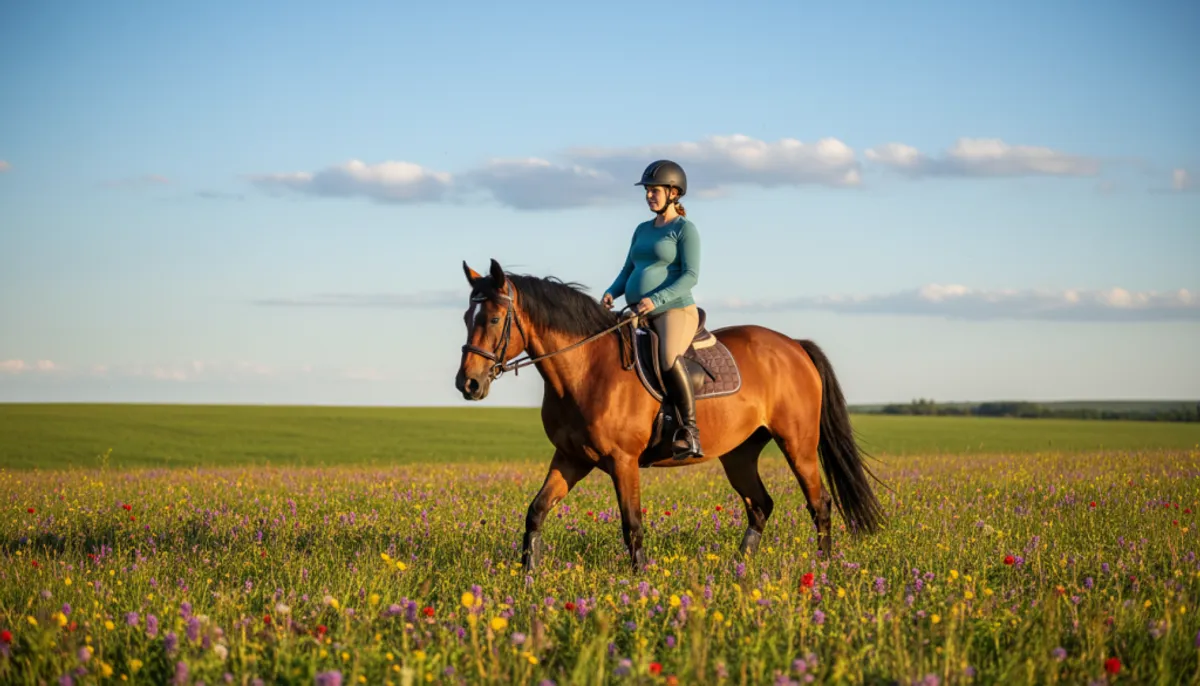
Your body is changing, your belly is rounding, and your center of gravity is shifting. Therefore, your practice must evolve over the months to ensure your safety and well-being. This article guides you through official recommendations and expert advice to enjoy your passion with peace of mind.
Key Points to Remember
- Riding is not automatically prohibited during pregnancy.
- Consulting your doctor for a personalized opinion is a crucial step.
- The practice must be adapted to the physical changes of each trimester.
- Listening attentively to your body allows you to know when to slow down or stop.
- Specific precautions apply for resuming after childbirth.
Introduction to Riding While Pregnant
With over 550,000 licensed riders, horseback riding is the number one women's sport in France. For the majority of these experienced riders, the bond with the horse is profound. The question of maintaining this practice during a pregnancy is therefore natural and deserves special attention.
Why Ride Horses During Pregnancy?
Staying active is beneficial for the body and mind of the expectant mother. For an enthusiast, riding helps maintain a precious mental balance. This activity promotes well-being while maintaining a unique connection with the animal.
The gentle movements of walking can be soothing. It is crucial, however, to avoid any sudden movements or jumps.
Overview of Benefits and Potential Risks
This practice offers obvious psychological benefits. It helps manage stress and maintain a positive routine. Nevertheless, the risks must be fully understood.
The main danger identified by experts is falling. An accident can have serious consequences for the baby. That is why safety should guide every decision.
- Assess your own level and the docility of your mount.
- Consulting your doctor for a personalized opinion is an essential step.
- Adapt the activity from the very first months and listen to your body.
Each case is unique. Making an informed decision allows you to pursue your passion with peace of mind.
Consult Your Doctor and Listen to Your Body
Before any decision, an open dialogue with your doctor is key to a serene practice. Your health condition and the progression of your pregnancy are unique.
The Importance of a Personalized Medical Assessment
Only a healthcare professional can assess whether your condition allows you to ride in complete safety. Dr. Priscille Le Grelle recommends a personalized assessment for each expectant mother.
This consultation analyzes your medical history and the specific risks related to your case. It either validates or not the continuation of your equestrian passion.

Warning Signs and Symptoms to Monitor
Your body sends signals that you need to know how to interpret. Intense fatigue or pelvic pain requires reducing activity.
Midwife Anh-Chi Ton reminds us that any jolt can weaken the perineum. This increases the risk of urinary leaks during exertion.
| Symptom / Signal | Cause / Risk | Immediate Action |
|---|---|---|
| Bleeding | Potential complication | Complete stop and urgent medical call |
| Pelvic pain | Pressure on the perineum | Cease practice and consult |
| Contractions | Early warning sign | Immediate stop, strict rest |
| Extreme fatigue | Need for recovery | Reduce intensity, prioritize rest |
In case of doubt, prioritize groundwork with your horse. The health of the mother and the baby comes first.
Practical Tips for Riding While Pregnant
To enjoy your equestrian passion serenely during this period, some practical adjustments are essential. They aim for your comfort and safety at every moment.
Choosing Appropriate Equipment and Saddle Adjustments
The right equipment makes all the difference. Dr. Priscille Le Grelle recommends wearing a sports bra for optimal support.
Also check the adjustment of your saddle. A stable position limits the risks of imbalance.
- Opt for flexible clothing that does not constrict the belly.
- Ensure that the stirrups are the right length for a relaxed posture.
Tips to Limit Impacts and Prevent Falls
Adapt the pace and duration of your sessions. The specialist suggests limiting rides to one hour, 1 to 3 times a week.
Favor walking or a very gentle trot. Absolutely avoid jumping obstacles and fast paces.
Safety comes from being attentive to your body. If you feel discomfort, stop.
Groundwork is an excellent alternative to maintain the bond with your horse without risks. These tips help you preserve a beneficial activity for your health.
Adapting Your Practice According to Trimesters of Pregnancy
Each trimester of pregnancy brings changes that directly influence your way of riding. Your practice must therefore evolve to ensure optimal safety each month.

First and Second Trimesters: Essential Recommendations
During the first three months, caution is advised. Gynecologists often discourage sports due to the risk of miscarriage.
It may be wise to pause riding. In the second trimester, your body changes.
The center of gravity shifts. This can increase the risk of falling. Adapt your pace and choose a very calm horse.
Third Trimester: Adjustments and Increased Precautions
From the sixth month, stopping riding is generally recommended. This stage aims to prevent any risk of premature birth.
The large belly affects balance. The safety of the mother and the baby becomes the absolute priority.
Favor gentle activities like swimming. Walking is also an excellent alternative.
| Trimester | Main Recommendations | Recommended Alternative Activities |
|---|---|---|
| First (1-3 months) | Maximum caution, possible pause in riding. | Groundwork with the horse, resting. |
| Second (4-6 months) | Riding adapted to a slow pace, on a very reliable mount. | Walking, gentle gymnastics, stretching. |
| Third (from the 6th month) | Stop riding to prevent any risk. | Swimming, walking, prenatal yoga. |
In case of doubt about your ability to ride, consult your doctor. Their personal opinion is essential for your health.
The Benefits of Sport and Safety in Riding While Pregnant
Staying active during pregnancy offers undeniable physical and mental benefits. Moderate physical activity, as emphasized by Dr. Priscille Le Grelle, provides relaxation and enjoyment without exhausting the expectant mother.
Positive Impact of Physical Activity on the Expectant Mother's Body
Unlike running, this practice does not involve a high energy expenditure. It allows for gentle mobilization of the body while discovering the natural environment.
This gentle mobilization helps maintain good physical condition. It thus facilitates recovery after childbirth.
Tips to Preserve the Perineum and Avoid Injuries
Safety in the saddle depends on your ability to remain relaxed. It is important to avoid sudden movements that could harm the baby.
It is crucial to preserve the perineum. Midwife Anh-Chi Ton reminds us that abdominal pressure can cause urinary leaks.
Perineal rehabilitation after birth is therefore essential. Listening to your body remains the golden rule to avoid risks.
| Benefits of Activity | Essential Safety Measures |
|---|---|
| Relaxation and enjoyment without exhaustion | Avoid sudden movements and jumps |
| Gentle mobilization of muscles | Preserve the perineum by limiting abdominal pressure |
| Maintaining good physical condition | Adapt intensity to each trimester |
| Facilitates post-childbirth recovery | Consult a doctor for a personalized opinion |
Preventing risks involves a thorough understanding of your body's limits. These tips aim to ensure your health and well-being throughout this period.
Expert Opinions and Testimonials
After childbirth, the question of resuming riding arises with as much importance as during pregnancy. Testimonials from specialists and feedback from riders provide valuable guidance for this delicate moment.
Testimonials from Dr. Priscille Le Grelle and Anh-Chi Ton
Dr. Priscille Le Grelle, federal doctor, emphasizes the gradualness of resuming sports. She advises waiting at least three months after a cesarean before getting back on a horse.
Midwife Anh-Chi Ton recommends a five-month wait for a complete resumption including abdominal rehabilitation. She specifies that perineal rehabilitation only begins six weeks after childbirth.
Recommendations from the French Equestrian Federation
The Federation encourages a return through short sessions of 30 minutes at a walk. This allows for gentle testing of your body.
Feedback emphasizes that patience is essential. It allows for a harmonious relationship with your horse to be regained.
Following these opinions and recommendations ensures a safe return. You can thus enjoy your passion again with complete peace of mind.
Conclusion
Balancing your passion for horses with a pregnancy requires a thoughtful and personalized approach. As experts confirm, this practice is possible as long as the safety of the mother and baby is at the heart of every decision.
Attentively listening to your body and regular follow-ups with your doctor are your best allies. Each case being unique, adapt the recommendations to your own feelings to avoid any unnecessary risks.
After childbirth, a gradual return, respecting rehabilitation timelines, is essential for your health. By following these tips, you can continue to enjoy special moments with your mount, with complete peace of mind.
FAQ
Is it safe to ride horses when expecting a baby?
This activity can be continued with caution, provided there is medical approval. It is crucial to adapt your practice, avoid any risk of falling, and listen to your body. A personalized opinion from your gynecologist or midwife is essential.
What are the main benefits of this physical activity during pregnancy?
Sporting activities, like horseback riding, help maintain good physical shape, reduce stress, and improve mood. They strengthen the back and perineum, which can be beneficial for the overall health of the expectant mother.
How to adapt your practice over the months of pregnancy?
In the first and second trimesters, moderate practice is often possible. From the third trimester, as the belly rounds and the center of gravity shifts, it is recommended to reduce intensity or take a break, favoring animal care or walking.
What equipment or adjustments are recommended for increased safety?
Choosing a suitable and well-adjusted saddle is essential to limit impacts. Wearing an appropriate protective vest and opting for a calm and reliable horse are crucial safety measures to prevent accidents.
What do experts like Dr. Priscille Le Grelle recommend?
Experts, including Dr. Le Grelle, emphasize the importance of a medical assessment before starting or continuing. They advise listening attentively to your body and stopping immediately in case of pain, bleeding, or contractions.
Can one quickly resume riding after childbirth?
The return must be gradual and subject to your doctor's approval, usually after the post-natal visit. It is important to give the body, especially the perineum, time to recover before getting back in the saddle.