
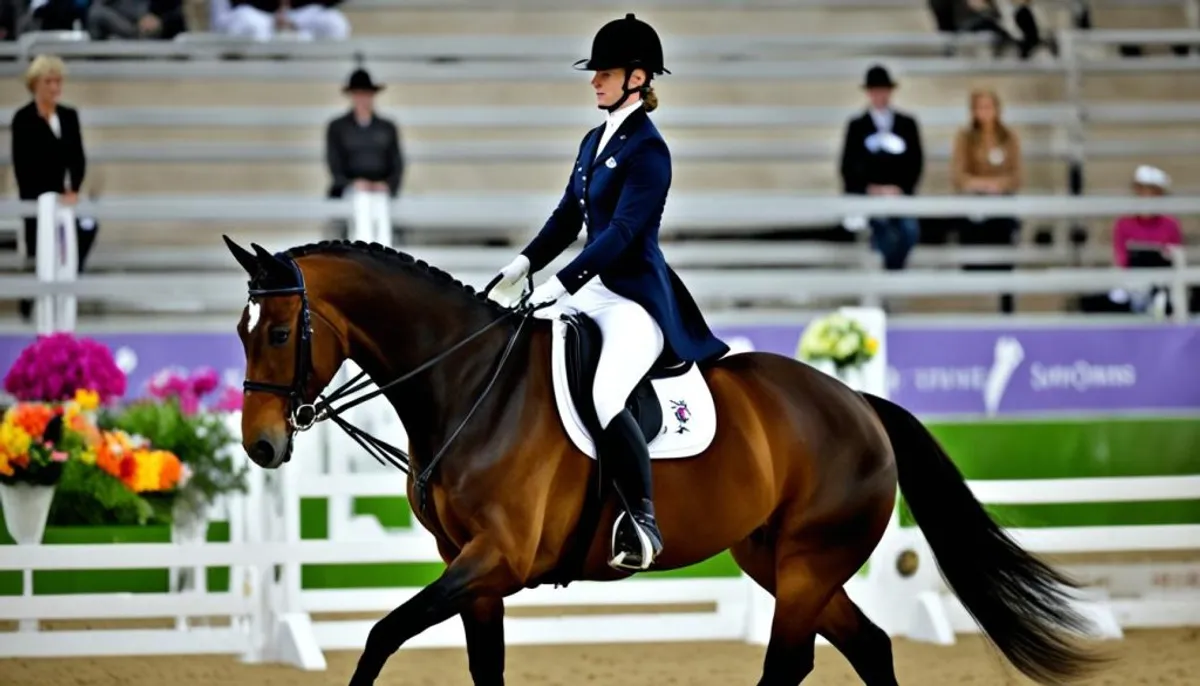
The ring figures are precise patterns marked on letters in a riding arena or a training ground. They help make the horse more flexible and manageable. These techniques are key in classical riding. They are useful in all branches, such as show jumping.
Mastering these figures is vital to being a good rider. They help move safely in the arena during group lessons.
Main points to remember
- The ring figures are precise patterns made in a riding arena or a training ground
- They develop the horse's flexibility and maneuverability, essential for classical riding
- They are important in all equestrian disciplines, not just dressage
- Mastering the figures allows for autonomous and elegant riding
- They also ensure safety during group riding lessons
Fundamentals of ring figures in riding
In the world of riding, the ring figures are crucial. They help train and improve horses. The straight and curved lines drawn on the ground provide key information. This data shows where the rider and their horse can improve.
Definition and importance of the figures
The ring figures help horses become more flexible. Being flexible means responding easily to the rider's commands. For example, during transitions, you can see how flexible the horse is.
Developing flexibility and control
When a horse is strong and balanced, it must learn to gather its energy. Collection is an important step for good training. The different shapes of figures help the rider work on the horse's flexibility and control.
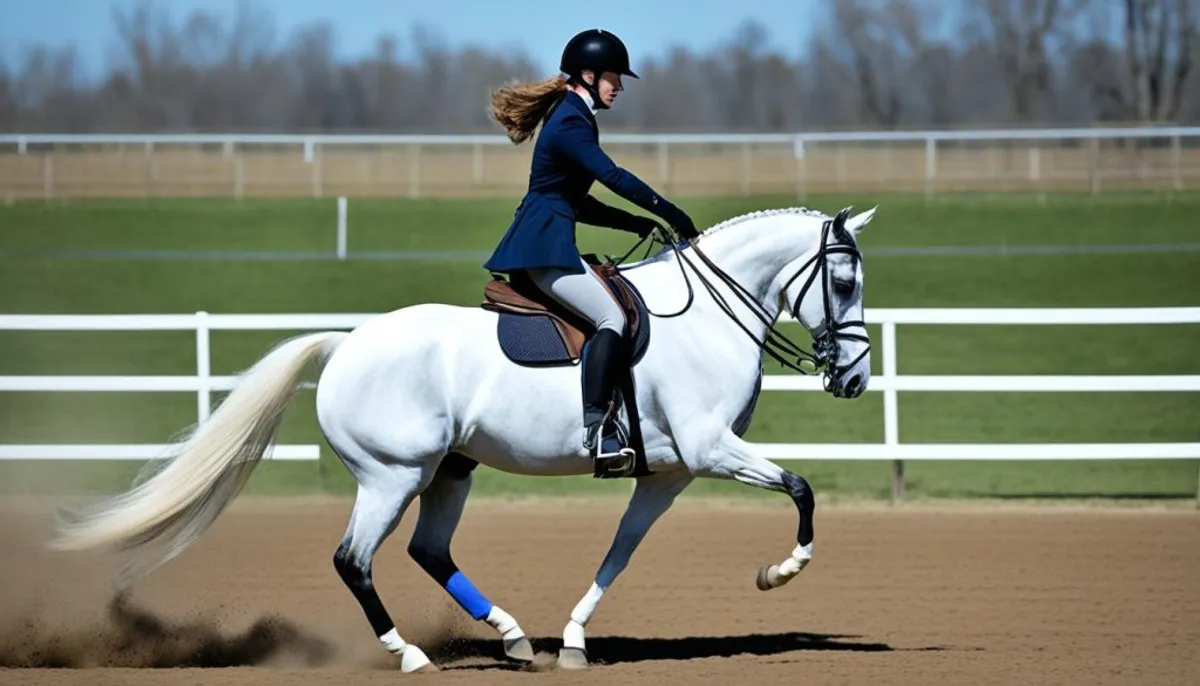
Mastering the ring figures helps the rider better understand their horse. This deep knowledge is essential for improving in riding.
Ten ring figures to master
In equestrian dressage, knowing ring figures is crucial. They help make the horse more balanced, flexible, and well-controlled. Here are five important figures to learn and perfect.
The circle
The circle is very important. The horse and rider move in a circular formation. It must be round and regular. Performing this figure helps the horse become more balanced and follow curves well. The 20-meter circle is essential in dressage. It is found from the beginner levels to the most advanced.
The volte
The volte is a small circle, 10 meters in diameter or less. It shows how flexible the horse is and how precise the rider is. Making such a small circle requires balance. Voltes are useful for the horse's impulsion. They help with its flexibility. Often, they are the starting point for learning more complex movements with three tracks.
The diagonal
The diagonal is a straight path from one corner to the opposite corner. It is useful for changing hands. It is often used to show the length of the stride. There are long diagonals and short diagonals, depending on the paths.
The double
The double is a straight path from one side to the other. It is used to change sides, but it is not always necessary. The double is distinguished in width and length. Performing a double tests the horse's straightness. It also shows the rider's ability to guide without the help of a wall.
The serpentine
The serpentine is a figure that resembles an "S". It consists of connected curves, usually with three or four loops. It is a good exercise for learning to change bending. It is used to improve direction when an even number of loops is made.
Knowing these five figures is essential for advancing in dressage. They help the horse develop. They improve its balance, flexibility, and obedience.
Ring figures in riding: figures serving all disciplines
In the world of riding, ring figures are crucial. They are useful, regardless of your level or discipline. If you are starting, they help you learn. If you are experienced, they help you improve.
Basic figures for beginners
At first, you will learn simple movements. For example, the circle, the diagonal, and the straight line (double) are important. They help the horse balance and become flexible. They also teach how to send precise signals.
- The circle helps maintain a steady rhythm.
- The diagonal teaches the horse to move straight.
- The straight line (double) improves response to commands.
These simple movements are the essential foundation. They help every beginner rider to progress.
More advanced patterns for experienced riders
But over time, more challenging movements await you. Experienced riders can try things like the piaffe, the passage, or the pirouette. These challenges always bring new lessons and successes. They truly test the limits of the horse's coordination and precision.
Mastering them means performing equestrian shows worthy of awards. This is what is seen in major competitions.
| Ring figure | Difficulty level | Benefits |
|---|---|---|
| Circle | Beginner | Helps regulate the horse's steps. |
| Diagonal | Beginner | Helps the horse move straight. |
| Straight line (double) | Beginner | Improves communication with the horse. |
| Piaffe | Advanced | Works on impulsion and presence. |
| Passage | Advanced | Increases elegance in movement. |
| Pirouette | Advanced | Enhances maneuverability and speed. |
No matter your level, these ring figures enrich your equestrian experience. They help you improve, regardless of your preferred area.
Perfecting the execution of ring figures
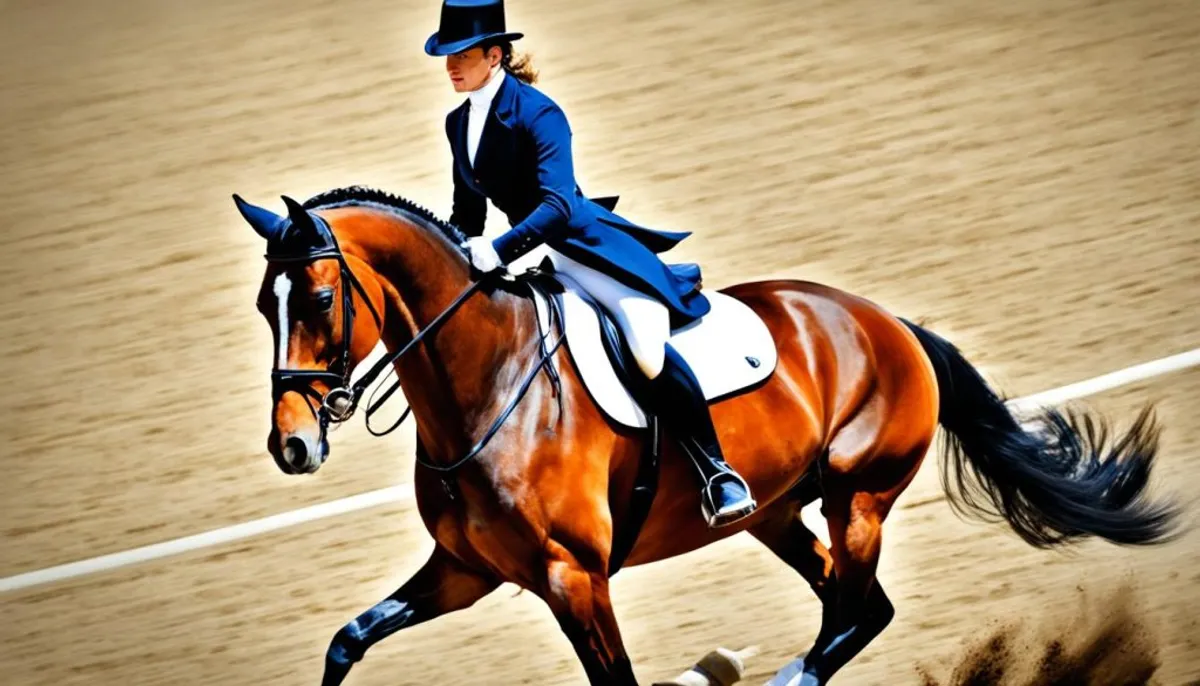
Learning the basic figures in riding improves fundamental skills. But, to really excel, you need to keep practicing. Three main things help become excellent:
Follow appropriate instruction
Taking courses with a specific instructor can also help. It makes practice more regular and serious.
Work on the horse's physical condition
It is important to build your horse's muscles well. This improves its endurance and flexibility. Regular training strengthens the muscles. Afterward, you can engage in varied activities, such as trail rides or cross-country courses.
Leverage resources from the FFE
The FFE provides online rules, ratings, and guides. These resources tell you what you need to know, depending on your level. The guide for the gallop explains the first figures well.
By effectively utilizing these three aspects, riders can become very strong in the figures. Combining good instruction, good physical condition of the horse, and the resources from the FFE ensures progress. And all of this while taking care of your horse.
Conclusion
Performing the basic figures helps a beginner rider become more independent in their lessons. For those who know more, complex figures enrich learning and personal satisfaction. In major competitions, mastering these figures ensures remarkable performances.
Whether you are starting or already have experience in riding, learning the figures will lead you to a higher level. Enjoy the pace and elegance they bring to your riding. Continue to improve to achieve higher goals.
Riding is a blend of skill, discipline, and love for horses. Learning and mastering the figures creates a special harmony between you and your mount. Enter the world of elite riders by committing seriously!
FAQ
What are ring figures in riding?
In riding, ring figures are precise paths made in a dedicated space. They are followed using letters as reference points. These exercises help the horse become more flexible and manageable.
Why are they important in riding?
Ring figures are not just about dressage. They are key in many equestrian sports, such as show jumping. Knowing them well is vital for being autonomous and graceful while riding. Additionally, they ensure safety in enclosed spaces during group lessons.
What are the main types of ring figures?
Several types of figures exist, including the circle, the volte, and the serpentine. Each improves specific aspects of the horse's performance. They help work on flexibility, balance, and maneuverability.
How to perfect the execution of ring figures?
To improve, you should take lessons with a good teacher. It is also important to keep the horse in good shape. Finally, you can rely on the French Equestrian Federation for advice.