
Equestrianism has been an Olympic sport since 1896. The first games focused on show jumping. However, over the years, other disciplines have been added, such as dressage and eventing.
These disciplines offer an incredible spectacle at the Olympic Games. They showcase the harmony between riders and their horses.
Main points to remember
- Equestrianism has been present at the Olympic Games since 1900
- The 3 main disciplines are show jumping, dressage, and eventing
- These equestrian events provide a fascinating spectacle during the Olympics
- Olympic riders and their competition horses form exceptional pairs
- The history and stakes of these equestrian sports are rich and exciting
Introduction
Equestrianism is the only Olympic sport where animals, horses, participate. It has been present since the ancient Games, in the form of chariot races. It returned to the modern Olympic Games in 1900 with 3 jumping events.
In 1912, equestrianism added dressage and eventing. Today, the 3 Olympic disciplines – show jumping, dressage, and eventing – allow men and women to compete together. This event is mixed.
This history highlights the importance of Olympic equestrian sports. It shows how the Olympic equestrian disciplines have evolved over the centuries.
| Discipline | Year of introduction to the Olympics | Description |
|---|---|---|
| Show jumping | 1900 | Riders navigate a course of obstacles with their horse within a set time. |
| Dressage | 1912 | Riders perform a series of required figures with their horse, judged on precision and harmony of the pair. |
| Eventing | 1912 | Riders compete in 3 events: dressage, cross-country (natural obstacles), and show jumping. |
Origins and history of Olympic equestrian sports
Equestrianism has deep roots in the ancient Olympic Games. From the very first Greek editions, there were chariot races. This discipline was absent for a long time but returned to the Games in 1900 in Paris.
The 1912 Games in Stockholm saw the introduction of three show jumping events. Since then, the disciplines of dressage, show jumping, and eventing have been essential to the Games. These Olympic equestrian events captivate spectators from around the world.
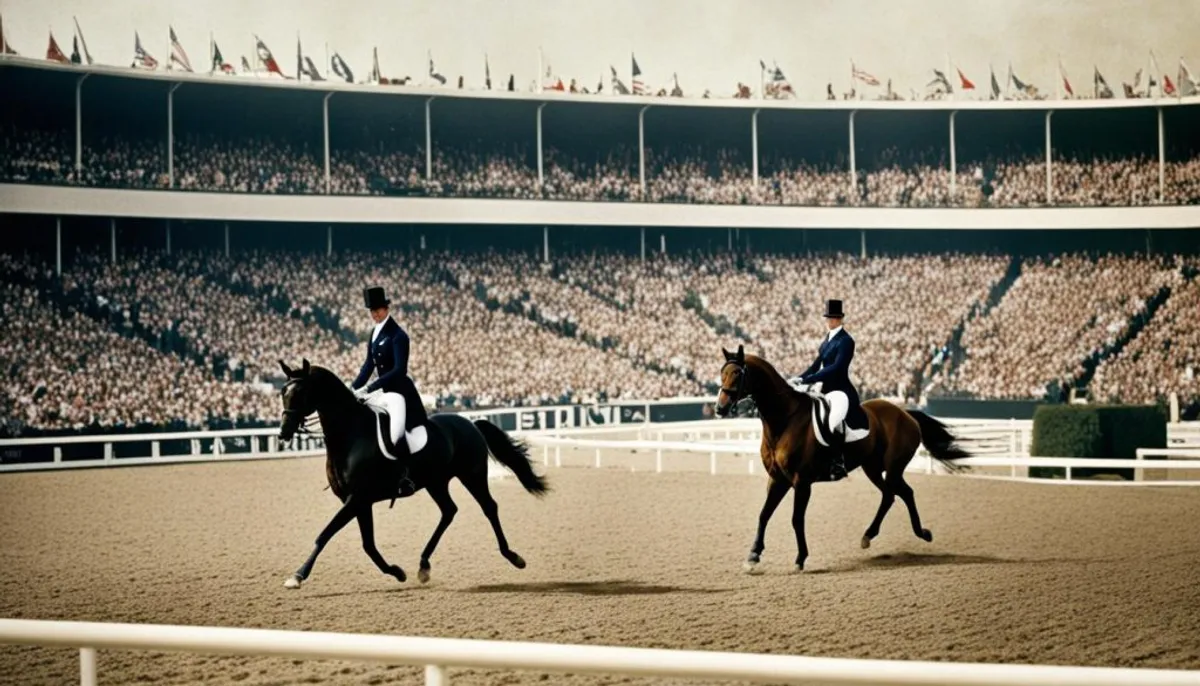
Olympic equestrian sports have evolved over the years. They have professionalized and attract more and more enthusiasts. Equestrianism remains a pillar of the Olympics, from the ancient Games to the 1900 Olympic Games and 1912.
3 equestrian disciplines at the Olympic Games
The equestrian disciplines have been crucial in the Olympic Games for a long time. They include Olympic show jumping, Olympic dressage, and Olympic eventing. Each discipline offers a unique experience for athletes and spectators.
Show jumping
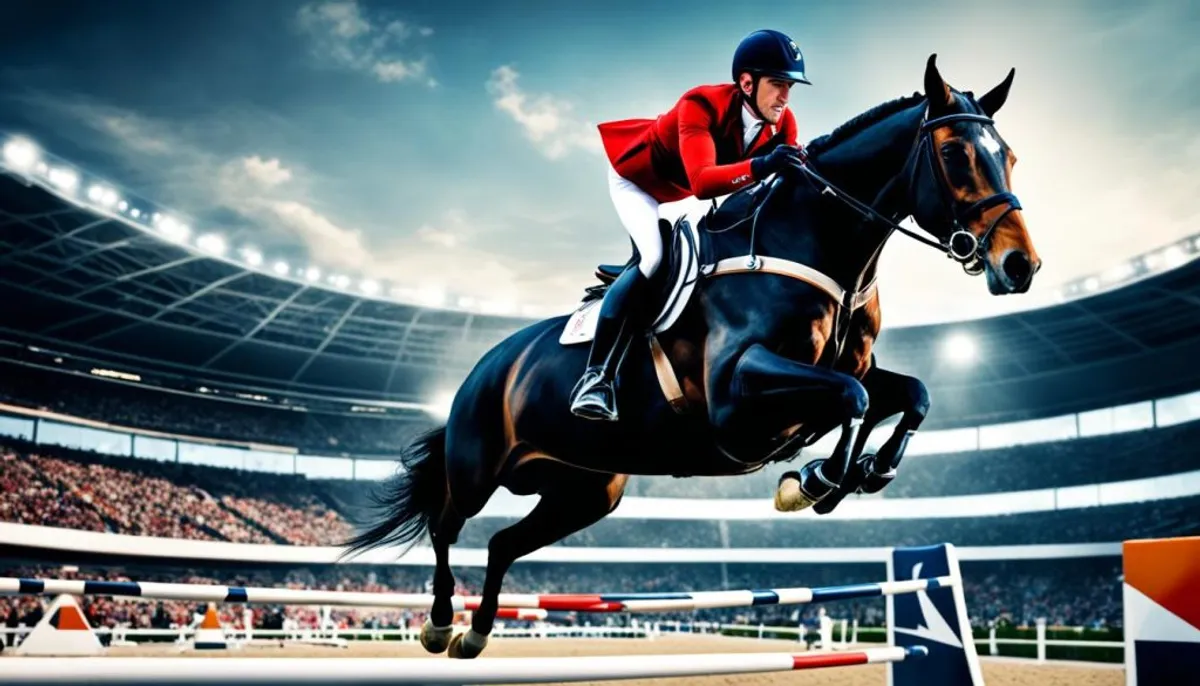
The Olympic show jumping is a discipline where horses and their riders jump over obstacles. Speed, precision, and agility are key. This event tests the bond between the rider and their horse.
Dressage
The Olympic dressage is an elegant and artistic discipline. Riders and their horses perform a rigorous choreography. The jury evaluates their flexibility, responsiveness, and grace.
Eventing
The Olympic eventing combines show jumping, dressage, and cross-country. It is an “equestrian triathlon” that tests the versatility and endurance of the pairs.
| Discipline | Description | Required skills |
|---|---|---|
| Olympic show jumping | Timed course with obstacles | Speed, precision, rider-horse bond |
| Olympic dressage | Choreography judged by a jury | Flexibility, responsiveness, horse's grace |
| Olympic eventing | Equestrian triathlon (jumping, dressage, cross-country) | Versatility, endurance of the pair |
Rules and regulations of Olympic equestrian events
The rules and regulations of Olympic equestrian events are created and monitored by the International Equestrian Federation (FEI). This organization is the most important for equestrian sports. The rules are very strict for the welfare of the horses and to combat doping.
The FEI is essential for organizing and overseeing equestrian events at the Olympic Games. It collaborates with the International Olympic Committee (IOC) to adhere to Olympic rules.
Here are the main rules for Olympic equestrian events:
- Respect for the welfare and health of the horses
- Prohibition of any doping or illegal treatment
- Eligibility criteria for athletes and horses
- Technical and safety rules for each discipline
- Arbitration process and management of claims
These rules of equestrian sports at the Olympics ensure fairness, safety, and integrity. They promote excellence and respect between athletes and horses.
| Discipline | Key regulation | Role of the FEI |
|---|---|---|
| Show jumping | Technical standards for courses, penalties for faults | Course design, judge designation |
| Dressage | Evaluation criteria for movements, scoring codes | Training and accreditation of judges |
| Eventing | Safety rules on cross-country, time limits | Approval of competition venues |
In conclusion, the regulation of Olympic equestrianism protects the integrity of equestrian sports at the Olympic Games. It prioritizes the welfare of the horses.
Notable countries and athletes in the history of Olympic equestrian sports
Several nations have made a name for themselves in the history of Olympic equestrian sports. Germany leads with the highest number of Olympic equestrian medals. Names like Anky van Grunsven from The Netherlands have won 9 Olympic medals, becoming among the top Olympic riders.
Despite Germany's dominance, other countries have begun to shine in Olympic equestrian events. This diversity has enriched the competition and highlighted new top Olympic riders.
| Country | Number of medals | Top riders |
|---|---|---|
| Germany | 635 | Isabell Werth, Ludger Beerbaum |
| United States | 298 | McLain Ward, Beezie Madden |
| United Kingdom | 184 | Nick Skelton, Charlotte Dujardin |
| The Netherlands | 160 | Anky van Grunsven, Jeroen Dubbeldam |
Challenges and perspectives for the upcoming Olympic Games
Olympic equestrian sports face significant challenges for the upcoming editions of the Olympic Games. The future of Olympic equestrianism is marked by important changes. Among them, the establishment of mixed events since the 1960s and the opening up to new countries.
The constant adaptation of regulations is essential for fairness and safety. Innovations in Olympic equestrian sports are eagerly anticipated. Enthusiasts want to discover the next developments in equestrian disciplines.
The globalization of equestrian sport is an exciting challenge. It allows new talents to emerge worldwide. The upcoming Olympic Games in Paris 2024 at Versailles will be a celebration of these innovations and the evolution of equestrian disciplines on the international stage.
| Challenges | Perspectives |
|---|---|
| Adaptation of regulations | Innovations in disciplines |
| Maintaining fairness and safety | Opening up to new countries |
| Mixed events established since the 1960s | Celebration of performances at the 2024 Olympics |
Equestrian enthusiasts eagerly await the performances of the best riders and horses. The upcoming Olympic Games promise to be rich in innovations and evolutions of equestrian disciplines.
Conclusion
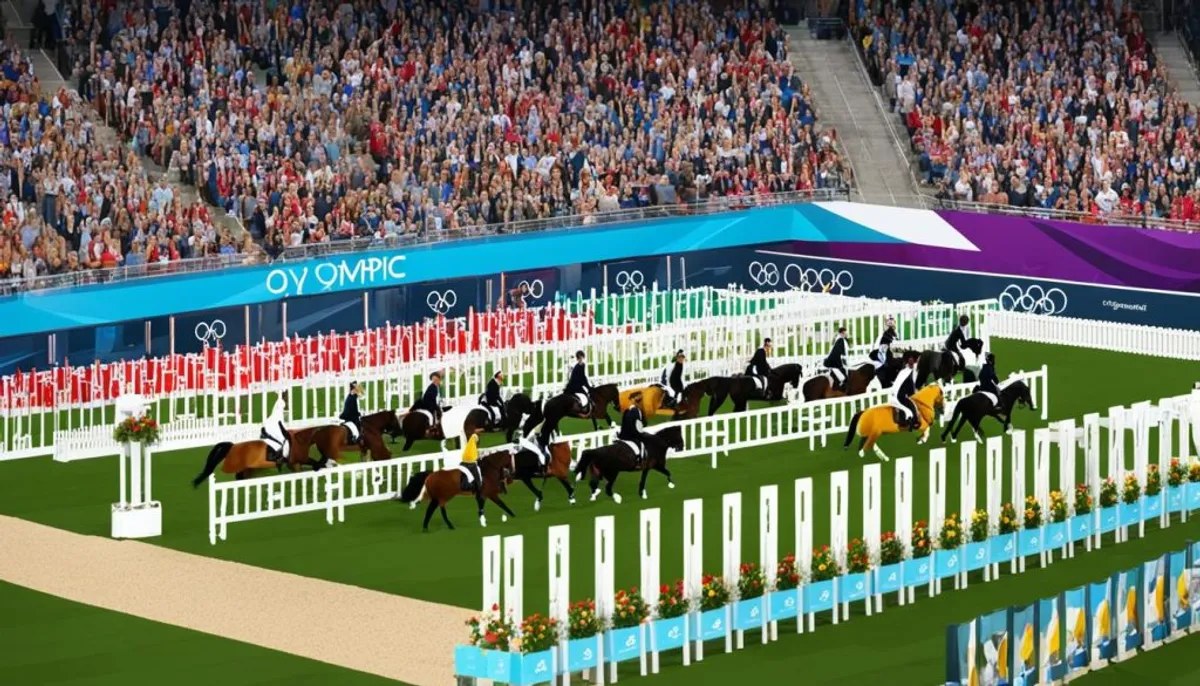
Equestrianism has been an iconic Olympic sport for a long time. It has evolved to become a unique spectacle. The major disciplines are show jumping, dressage, and eventing.
These disciplines offer a blend of prowess, elegance, and the bond between human and animal. Equestrian enthusiasts eagerly await the 2024 Olympic Games in Versailles.
The best riders and horses will showcase their talents. This event will highlight the importance of equestrianism in the Olympic Games.
In 2024, be ready to experience the excitement of the performances. Olympic equestrianism will once again capture the hearts of the public. It will showcase the unique sporting heritage of equestrianism.
FAQ
Since when has equestrianism been present at the Olympic Games?
Equestrianism appeared at the Olympic Games in 1900, in Paris. Originally, there were 3 jumping events. However, the disciplines have diversified to become today 3 main ones: show jumping, dressage, and eventing.
What are the 3 Olympic equestrian disciplines?
The Olympic disciplines are show jumping, dressage, and eventing. Show jumping involves clearing obstacles without knocking them down. Dressage showcases the art of training the horse. Eventing combines show jumping, dressage, and cross-country.
What role does the International Equestrian Federation (FEI) play in Olympic equestrian events?
The FEI is essential for the organization of equestrian events at the Olympic Games. It creates the rules and regulations. These rules are approved by the International Olympic Committee. The FEI also takes care of the welfare of the horses and combats doping.
Which countries have particularly excelled in the history of Olympic equestrian sports?
Germany has won the most medals in equestrianism. Anky van Grunsven from The Netherlands has won 9 medals. Other countries are also increasingly participating in equestrian events.
What are the challenges and perspectives for the upcoming Olympic Games?
Olympic equestrian sports are changing with the introduction of mixed events and the opening up to new countries. They must adapt, innovate, and globalize for the upcoming Olympic Games.