Equestrianism combines passion and know-how. For a long time, humans and horses have had a unique relationship. This is seen in ancient paintings, such as those in the Lascaux Cave. Today, many discover equestrianism through idealized representations of this relationship, such as in films or toys.
The learning of equestrianism can be quite different from these images. But art and craftsmanship are there for riders. They offer the opportunity to express their passion in a creative way. 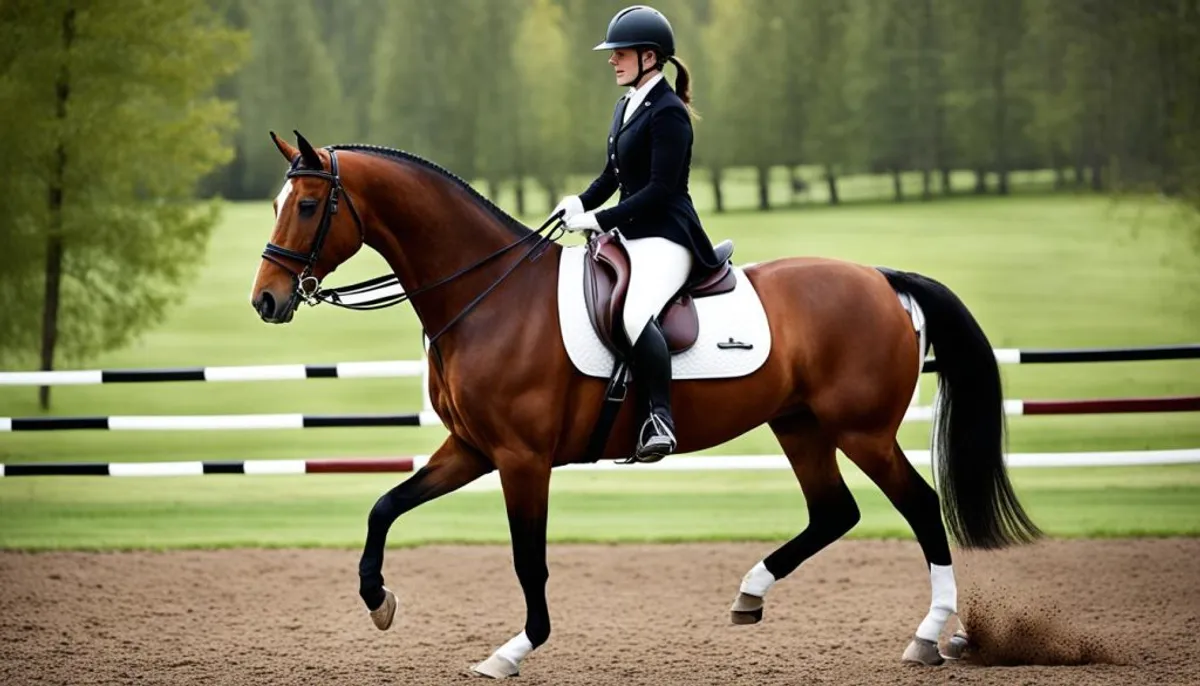 Riding becomes more than just a simple activity. It is a special moment where one connects deeply with the animal, almost like a form of meditation.
Main points to remember
- Equestrianism is an art that combines passion and technique
- Humans have an ancestral relationship with horses
- Popular culture conveys a romantic image of equestrianism
- Art and craftsmanship allow riders to express their passion
- Riding becomes a moment of intimate connection with the animal
Equestrianism, an ancestral passion
Origins and historical representations
More than 18,000 years ago, people painted horses on the walls in the Lascaux Cave. Since then, the horse has been seen as a symbol of nobility, strength, and freedom. Even though it is no longer essential for living, it can still be seen everywhere. It is found in books, toys, films, and it continues to inspire lovers of equestrianism.
Since antiquity, equestrianism has been loved by many. People drew horses to show how important they were. Whether for going into battle, moving around, or having fun, the horse was essential. Now, equestrianism is a true passion passed down from generation to generation.
The beginnings of equestrianism are very ancient. It is a sport that dates back to when humans began using horses, thousands of years ago. The horse has always influenced our lives, our art, and our traditions. Thus, loving equestrianism is not just a pastime; it is a true passion that has lasted for a long time.
Despite the passage of time, the horse remains important in our hearts. From ancient paintings, legends, to stables today, the horse continues to touch us. It awakens in us an ancient passion for equestrianism.
Being in equestrianism: the harmony between rider and horse
Equestrianism is much more than an activity. It is an art where a deep connection between the rider and their horse is essential. It goes beyond technique; it is also about feeling and harmony. Riding becomes a form of calm and meditation. In this journey, the bond between man and animal is key.
Being in equestrianism means being an artist. It requires a deep connection and perfect harmony between the rider and their mount. One must learn how each horse operates. Creating a trusting relationship and working in symbiosis with it offers a unique experience.
Equestrianism as an art is more than just technique. It relies on subtle, intuitive, and sensitive communication. The rider must read the signals of their horse, anticipate its reaction, and align with its movements. Thus, a harmonious unity is formed.
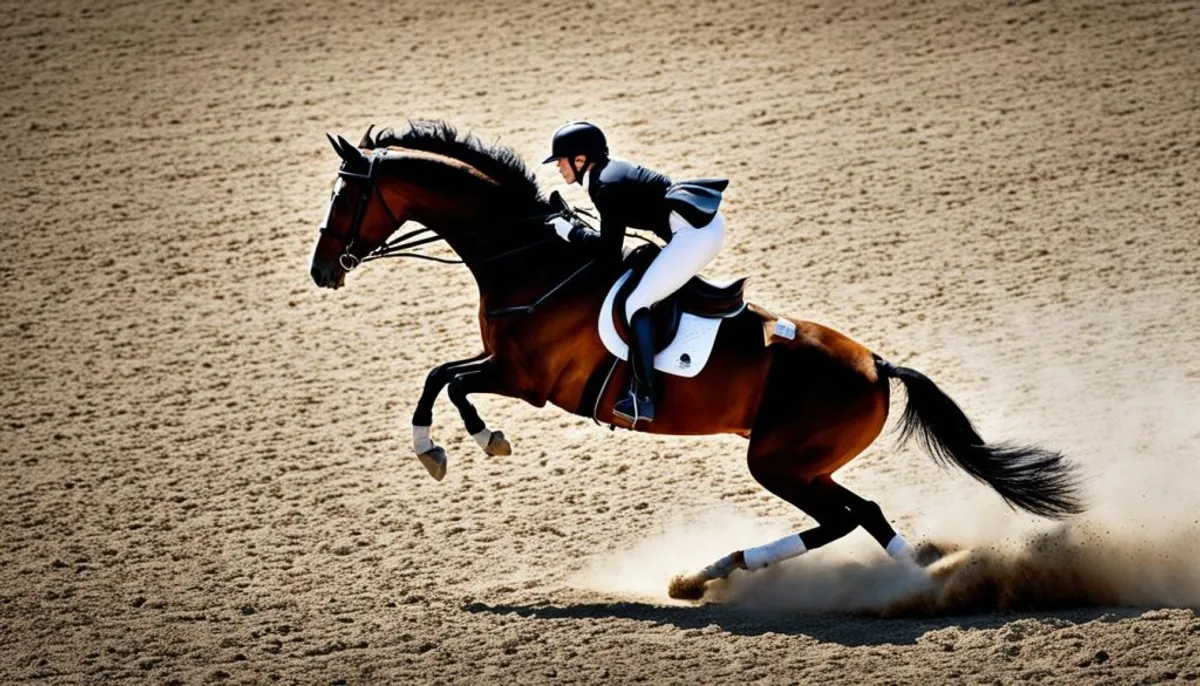
Equestrianism becomes a communion, a dance between the rider and the horse. In this dance, they respond to and understand each other. It is this perfect balance that makes this art so beautiful and noble.
| Key elements of equestrianism as art | Descriptions |
|---|---|
| Deep connection | Emotional and trusting bond between rider and horse |
| Harmony | Coordination, synchronization, and fluidity of movements |
| Sensitivity and Intuition | Ability to read and understand the horse's signals |
| Creativity | Personalized approach to teaching and guiding the horse |
| Bond | Working relationship and mutual trust |
Equestrianism is a true art. It requires patience, sensitivity, and creativity. The unique connection between the rider and the horse reveals all the beauty of this equestrian art.
The classic disciplines of equestrianism
Classical equestrianism encompasses several disciplines. They emphasize precision, technique, and elegance. Among them are dressage, show jumping, and eventing.
Dressage, the "dance" of the rider and horse
Dressage evokes a true "dance" between the rider and the horse. It requires fine communication and great technical skill. It showcases the rider's ability to guide their horse gently. They must perform precise and beautiful movements.
Show jumping, agility and speed
Show jumping highlights the speed, agility, and ability of the horse to jump. The rider and their horse must be coordinated. They must react quickly with strength to achieve a perfect course.
Eventing, a test of versatility
Eventing tests dressage, cross-country endurance, and show jumping. It shows how versatile and resilient the rider-horse pair is. This event requires great adaptability and serious physical and mental preparation.
| Discipline | Description | Main requirements |
|---|---|---|
| Dressage | Execution of precise and harmonious movements | Subtle communication, technical mastery |
| Show jumping | Overcoming various obstacles | Coordination, responsiveness, power |
| Eventing | Sequence of dressage, cross-country, and show jumping | Versatility, robustness, adaptability |
Western equestrianism and its traditions
Western equestrianism, or cowboy equestrianism, began with the cowboys of the American West. They use it to manage cattle effectively. Key activities include reining, barrel racing, and roping.
Reining incorporates complex movements at high speed. It showcases the finesse and skill of the rider. In barrel racing, one must turn around three barrels as quickly as possible. This tests the speed and agility of both the horse and the rider. Finally, roping simulates the capture of cattle. It is a vital skill for cowboys.
These activities showcase the traditional skills of cowboys. They display a unique style and a strong bond with their horses. This connection is very important for success in working with cattle.
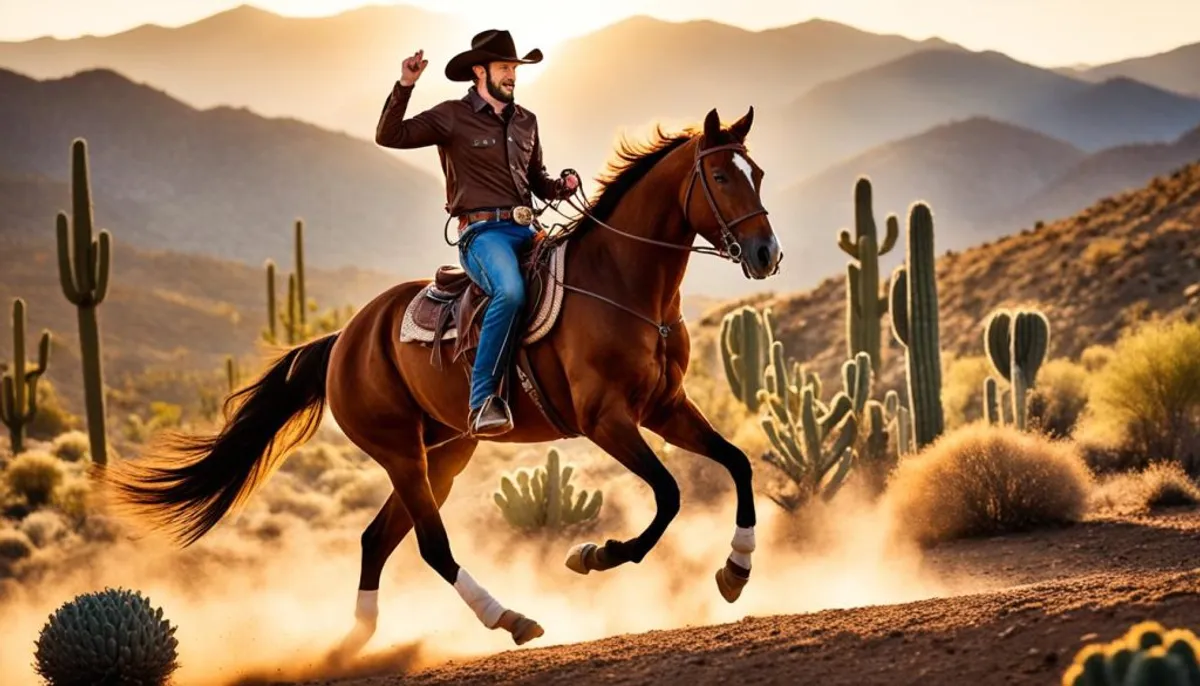
But they are not just sports. These activities breathe new life into cowboy traditions. They maintain a connection with rural life and cattle raising. Thus, they add a special and captivating dimension to equestrianism.
Working equestrianism and cattle management
Working equestrianism goes beyond simple dressage. It finds its origins in ancient techniques of working with animals. This includes specific activities such as cattle herding and liberty training. These methods highlight the importance of harmony between the rider, the horse, and the animals.
Cattle herding: a subtle interaction
Cattle herding requires a deep understanding of animal behavior. It involves a fine interaction between the rider, their mount, and the animals. Horses must be quick and attentive to follow the movements of the cattle. Riders, on the other hand, must be precise in their movements to guide the animals smoothly.
Liberty training: trust at the heart of the relationship
Liberty training relies on pure communication between the rider and the horse, without the aid of reins. It is based on a deep trust between the two. This approach demonstrates the rider's ability to communicate subtle commands to the horse. It proves their expertise in working equestrianism.
| Discipline | Description | Required skills |
|---|---|---|
| Cattle herding | Guiding a herd of cattle with precision | Horse agility, understanding of cattle behavior, coordination of movements |
| Liberty training | Communication without the use of reins or bridle | Trust and bond between rider and horse, mastery of subtle signals |
Working equestrianism and cattle management showcase a key aspect of equestrianism. They demonstrate the diversity and depth of this ancient discipline.
The dynamic equestrian sports
Equestrianism is not limited to classical disciplines. There are also dynamic equestrian sports. They mix competition, athleticism, and various practices. This combination makes the experience unique for riders.
Polo, horseball, and endurance are examples. Polo pits two teams against each other, trying to score by getting a ball into the goals. Horseball combines polo and rugby, requiring teams to score in the opposing goals.
Endurance highlights the stamina of both horses and riders. Marathon events test their endurance and mental strength. It is a great challenge for equestrian sports enthusiasts.
| Equestrian sport | Description | Key characteristics |
|---|---|---|
| Polo | Two teams of riders compete to score by getting a ball into the opposing goals. | Speed, spectacle, skill |
| Horseball | It is like polo and rugby, but teams must score in goals. | Teamwork, agility, strategy |
| Endurance | Events test the stamina of horses and riders. | Endurance, perseverance, effort management |
Dynamic equestrian sports are unique. They consist of skill, speed, and teamwork. These sports help riders push their limits in a competitive atmosphere.
Conclusion
Equestrianism is not just a sport; it is an art filled with passion and technique. For a long time, it has been a source of inspiration and creativity to unite man and horse.
Equestrianism offers different practices, such as classical and western. Each style teaches special skills and strengthens the bond between rider and horse. It is an art synonymous with harmony and gentle communication, merging technique and love for the horse.
This activity encompasses a deep passion, transforming the lives of those who practice it. The art of equestrianism is seen in the mastery of gestures, the understanding with the horse, and the personal development of the rider.
FAQ
What makes equestrianism an art?
Equestrianism is much more than just a sport. It is an art that marries passion with technique. It creates a deep bond between the horse and the rider. This world goes beyond technique to touch the heart.
When riding a horse, one feels a sense of peace. It is a moment where one is united with another living being. It becomes a pause, a moment of calm and reflection.
What are the historical origins of equestrianism?
The earliest creations related to the horse date back 18,000 years. They are visible in the paintings of the Lascaux Cave. The horse has always been a symbol of power and freedom.
What are the flagship disciplines of classical equestrianism?
Dressage, show jumping, and eventing are at the heart of classical equestrianism. Dressage is a true harmony between the rider and the horse. It is almost like a dance.
The show jumping tests the horse's ability to overcome obstacles. The eventing combines all three, showcasing the versatility of the pair.
What are the flagship disciplines of western equestrianism?
The western includes reining, barrel racing, and roping. Reining is a competition of complex figures executed at high speed. Barrel racing is a race around three barrels, completed as quickly as possible.
Roping involves throwing a lasso to catch a calf. These events remind us of the skills of cowboys.
What are the flagship disciplines of working equestrianism?
Cattle herding and liberty training are essential in working equestrianism. Herding requires coordination and agility from both riders and horses. It is a dance between humans and animals to manage cattle.
Liberty training emphasizes communication without reins or bridle. It relies entirely on trust between the rider and the horse.
What are the main dynamic equestrian sports?
Polo, horseball, and endurance are very active equestrian sports. Polo features two teams competing to score goals. It is an excellent mix of speed and skill.
Horseball combines polo and rugby. Endurance is a long-distance event that highlights the stamina and endurance of both horses and riders.