
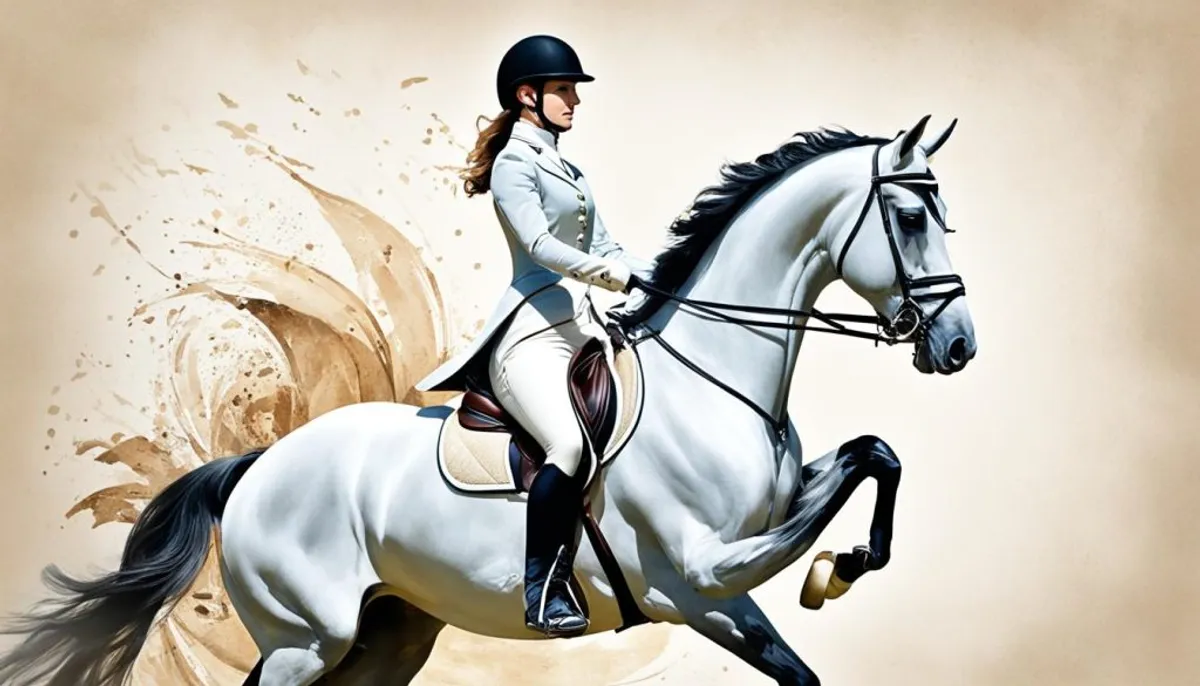
Classical riding, also known as high riding, is an art as old as time. It originates from the customs of ancient Greece and the Renaissance. It is a style where the rider and the horse seek a perfect balance. In this style, the aim is to achieve ideal harmony between the two, respecting reason and nature.
This discipline is very difficult. It requires the rider to be gentle, to learn a lot, and to use signals effectively. All of this keeps the horse's natural courage and joy intact.
Main ideas to remember
- Classical riding is an ancestral equestrian art
- It aims for perfect harmony between the rider and the horse
- It requires the rider to have gentleness, learning, and mastery of aids
- It preserves the courage, naturalness, and joy of the horse
- It is inspired by the traditions of ancient Greece and the Renaissance
- It is referred to as "classical" in reference to the French movement
- It is distinguished by equestrian elegance
Introduction to classical riding
Origins and definition
Classical riding has its origins in ancient Greece and the Renaissance. Its rules were established in the 17th century. They define this activity as an "art." This art consists of training horses for various uses, always with delicacy and in the pursuit of a balance based on natural and harmony.
As a noble discipline, classical riding demands a lot of gentleness from the rider. It aims to be a long education and a perfect mastery of the aids. Thus, it preserves the courage, naturalness, and joy of the horse. It differs from competitive dressage by its search for lightness and fluidity in the interaction between rider and horse.
Classical riding is recognized for its elegant and graceful style. This stems from a long history that has built a true equestrian culture. Based on a deep understanding of the horse, it aims for a harmonious relationship. This discipline has passed through the ages, transmitting its essence and knowledge from generation to generation.
Foundational principles of Xenophon
Xenophon wrote the most famous book on ancient riding in the 5th century BC. He is seen as the spiritual father of classical riding. The principles he provided are still essential today.
Xenophon highlighted several principles. Notably:
- Gentleness in the use of aids: He believed that the horse should be educated with gentleness. This allows it to show beautiful and proud gaits.
- The method and principle of imitating nature: According to him, it is essential to imitate nature. Training should be gradual, following the horse's character.
- Lowering the hand: Xenophon emphasized this greatly. Lowering the hand means that one must gradually release the aids. Thus, the horse can express itself freely and harmoniously.
These ideas, based on respect for the horse and its nature, are what still make classical riding so special.
| Principle | Description |
|---|---|
| Gentleness in the use of aids | The horse must be trained with gentleness and respect for its nature, in order to develop magnificent and proud gaits. |
| Method and imitation of nature | The training of the horse must be done progressively and in accordance with its temperament, imitating nature. |
| Lowering the hand | It is important to gradually release the aids to allow the horse to express itself freely and with harmony. |
The rise during the Renaissance
The Renaissance was a key period for classical riding. It saw this practice expand across Europe. The advent of gunpowder changed military tactics. This diminished the importance of heavy cavalry. It paved the way for a more agile and precise riding style.
The printing press also changed the game in the horse world. It allowed for the dissemination and organization of knowledge about riding. Thanks to theorization, equestrian academies began to open, especially in Italy, in Naples and Ferrara.
Emergence of equestrian academies
These academies were vital for classical riding. They emphasized the importance of lightness and precision of the rider. They helped propagate the high movements and the school jump throughout Europe. They became the pillars of academic riding.
| City | Equestrian Academy | Contribution |
|---|---|---|
| Naples | Royal Academy of Naples | Development of high movements and school jump |
| Ferrara | Academy of Ferrara | Spreading classical riding in Italy |
The academies allowed classical riding to develop and spread across Europe. They transformed this practice into an art of living. It was a way to express elegance and subtlety on horseback.
Classical riding and dressage
Classical riding is an equestrian art. Dressage is like a "dance" between the rider and the horse. It is based on fine communication and precise movements.
The show jumping requires speed and agility. It also tests the horse's ability to overcome obstacles. For eventing, one must master dressage, cross-country, and show jumping.
This event showcases the versatility of the horse and the skills of the rider.
Disciplines of classical riding
Classical riding showcases the beauty of the human-animal relationship. It highlights the execution of precise and fluid movements. Each discipline demands precision and harmony, essential to classical riding.
| Discipline | Description | Requirements |
|---|---|---|
| Dressage | Subtle communication and precision of movements between the rider and the horse | Finesse, elegance, harmony |
| Show jumping | Speed, agility, and ability to overcome various obstacles | Precision, responsiveness, power |
| Eventing | Combination of dressage, cross-country, and show jumping | Versatility, robustness, rider skills |
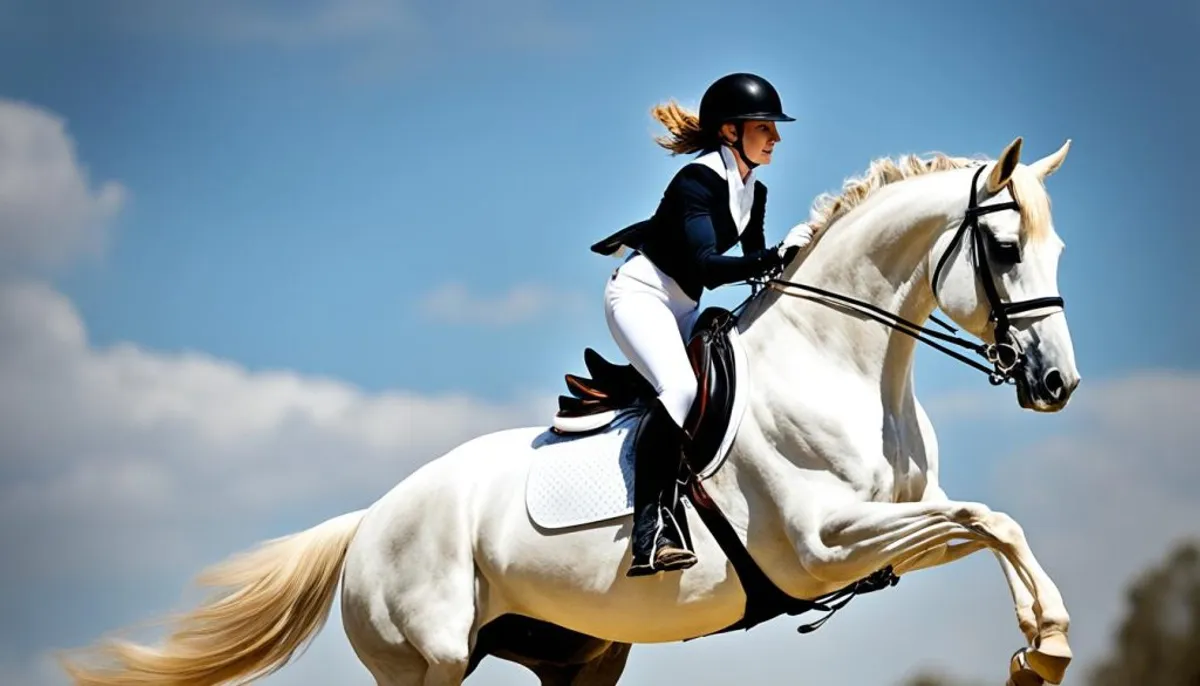
Each classical discipline of riding highlights the beautiful relationship between man and animal. They showcase the graceful execution of precise movements. These events define classical riding by its precision and harmony.
Equestrian elegance in French style
France is a leader in classical riding. Since the 17th century, French horsemen have pioneered the high school. This includes elaborate and aesthetic movements. Their goal was to seek harmony between the rider and the horse.
Today, France still shines in classical riding. Its craftsmanship highlights a French equestrian elegance. This style is the result of an ancient tradition. It emphasizes beauty and the deep relationship between man and animal.
| Discipline | Characteristics |
|---|---|
| Dressage | Execution of precise and harmonious figures |
| Show jumping | Lightness and grace of the rider |
| Vaulting | Elegant acrobatics on the moving horse |
The French classical riding aims for elegance and perfect technique. It is a true art recognized and respected worldwide.
Conclusion
Classical riding is an art that has existed for centuries. It seeks harmony between the rider and the horse. Its history comes from ancient Greece and the Renaissance.
France has brought it to an international level with its elegance. From Xenophon, through dressage and show jumping, the basic principles remain. This showcases the beauty of the relationship between human and animal.
This equestrian art continues to captivate the world with its tradition and craftsmanship. Enthusiasts remain numerous, demonstrating the value of this practice through the ages.
Today, classical riding remains significant in the horse world. It showcases grace and harmony between the rider and the horse. It is a precious legacy to keep alive for future generations.
FAQ
What is classical riding?
Classical riding, also called high riding, is an ancient equestrian art. It comes from the traditions of ancient Greece and the Renaissance. It is the art of equestrian elegance, seeking a perfect balance between the rider and the horse. It is done by respecting reason and nature.
What are the foundational principles of classical riding?
The principles come from Xenophon, an ancient author. He is considered the spiritual father of classical riding. He taught gentleness in the use of aids, the method and principle of imitating nature, and lowering the hand.
How did classical riding develop during the Renaissance?
The Renaissance greatly helped classical riding to evolve. Equestrian academies appeared in Italy, in Naples and Ferrara. They brought a new practice characterized by lightness, precision, and elegance.
What are the main disciplines of classical riding?
Classical riding includes several disciplines. There is dressage, show jumping, and eventing. These practices highlight the beautiful relationship between the rider and their horse. They must perform precise movements gracefully and smoothly.
What is the reputation of French classical riding?
France excels in classical riding. Since the 17th century, French horsemen have advanced in the high school. This discipline is known for its highly aesthetic movements. Today, France is still highly respected for its expertise in these disciplines.