
The dressage, a key part of horseback riding, requires a good understanding of the rider's position. This guide is perfect for you, whether you are just starting or already an expert. It explains how to adopt an ideal position for dressage.
Having a good position helps tremendously. It makes communication with the horse clearer and improves results. Additionally, your horse will feel more comfortable. Thus, the rider's position is essential for success and making the exercise enjoyable for the horse.
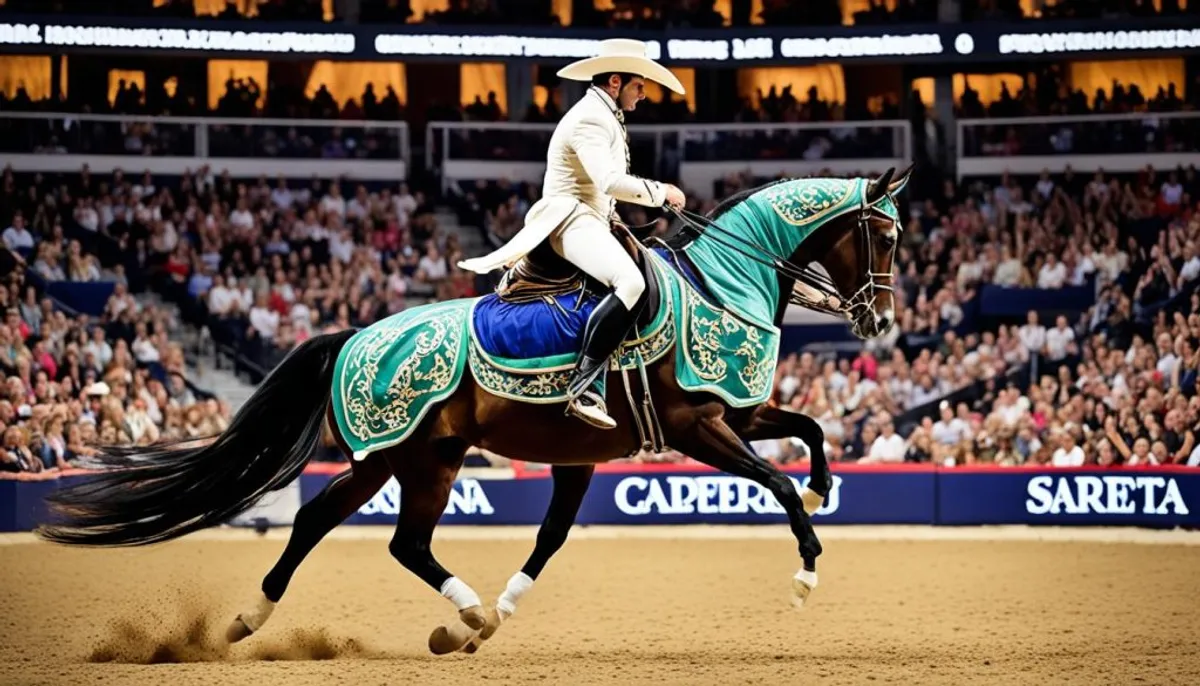
Main lessons to remember
- The rider's position is the key to success in dressage riding.
- A good position allows for better communication with the horse and improved performance.
- Understanding and mastering the key elements of the rider's position in dressage is essential.
- Specific exercises can help perfect the rider's position.
- Training the horse is a complete art that requires techniques and tips.
The importance of the rider's position in dressage riding
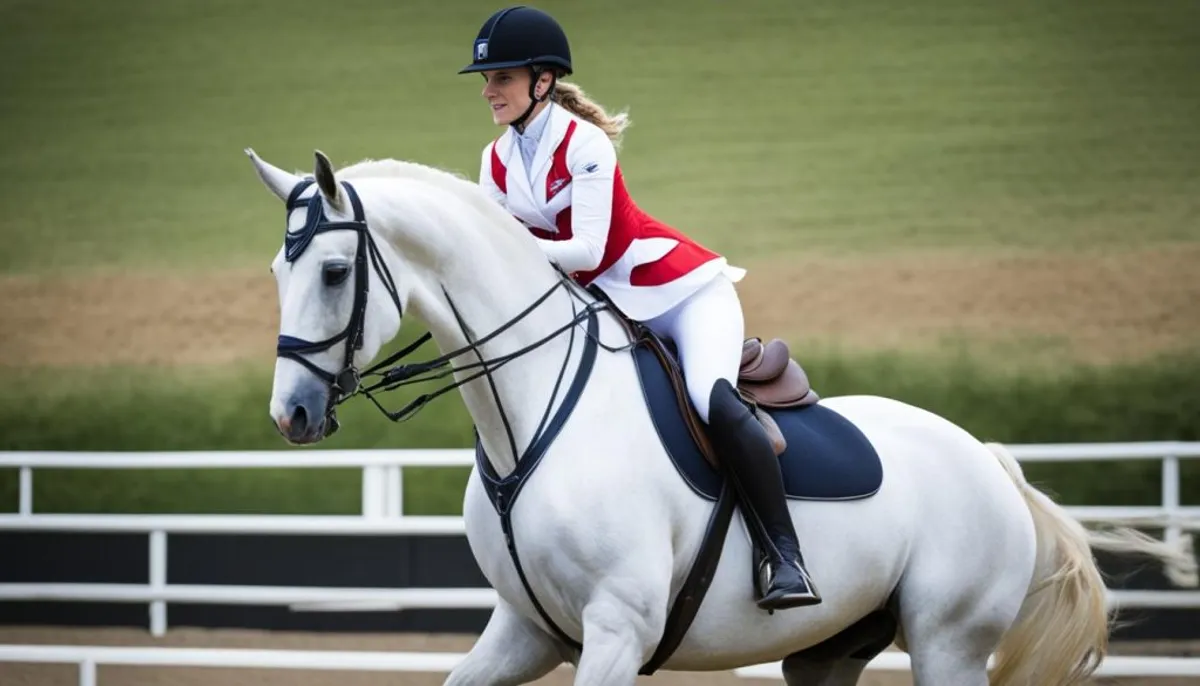
The rider's position is crucial in dressage. It helps to communicate well with the horse. A good position ensures clear instructions. This makes dressage performances better, as one can control speed and direction effectively. A balanced position is also good for the horse's comfort.
Understanding the importance of the rider's position in dressage
The rider's position is very important in dressage. It allows for fine communication between the rider and the horse. This improves dressage performances. The horse understands better what is being asked of it.
Key elements of the rider's position in dressage
What are the keys to a good rider's position in dressage?
- The torso, upright and aligned
- The legs, firm in contact with the horse
- The hands, slightly advanced and forming a straight line to the horse's mouth
- The gaze, directed forward
Each element is crucial for a rider's position in dressage. They ensure good communication with the horse. And they guarantee the horse's comfort.
Exercises to improve your position
Improving your position as a dressage rider requires practice. There are many exercises to help you. Working on your balance and stability in the saddle is crucial for progressing in this sport.
Flat work
Start with flat work for a stable position at all speeds. Focus on your rider's position. Don't worry yet about the horse's direction or speed.
It is helpful to have yourself filmed or observed by a friend. This way, you can receive feedback to improve.
Work without stirrups
Working without stirrups is great for your balance and position. It improves your independence of the legs and torso. Begin at a collected walk, then add the trot and canter.
Lunge work
The lunge work is also very beneficial. This technique allows you to focus solely on your position. It improves your balance and refines your rider's position.
By alternating all these exercises, you build a strong rider's position. This is essential for successfully practicing dressage.
Dressage riding: The piaffer, a key movement
The piaffer is a sublime step in dressage riding. It captivates enthusiasts around the world. This movement is complex and dynamic, posing an exciting challenge for expert riders.
Breaking down the piaffer
The piaffer consists of diagonal steps. They are performed with flexibility and elasticity. The horse must be balanced. It implements a dynamically driven impulse from the back.
The action of the hocks, lightness at the front, and rhythmic precision are essential. This allows for a high-quality piaffer.
Integrating the piaffer into training
- Start with the collected walk and transitions trot/walk. This prepares the horse step by step.
- The lunge work helps the horse explore the movement freely.
- Positive reinforcement and rewards facilitate the learning of the piaffer.
- Patience and perseverance are key in training the horse.
Learning the piaffer requires time and repetition. But success brings great satisfaction, especially for dressage fans.
The basics of horse training
The breaking-in is a very important step in the education of the horse. It begins when the foal arrives in a new place, around three years old. This is when the horse learns to stop acting defensively and to truly communicate with the rider. There are several ways to break in a horse, and today we prefer gentle methods, such as “natural horsemanship.”
The contribution of ethology
Ethology has allowed us to better understand horses. We have learned how they function physically and mentally. Thanks to this, we have found more natural ways to train them. Now, we focus on communication and understanding with the horse, without using force.
The qualities of a trainer
To train a horse well, one must have certain qualities. It is important to be experienced and knowledgeable about horses. A good trainer remains calm and patient. They must be inventive and know how to maintain respect without excessive force. They act as a strong friend who knows how to speak clearly to the horses.
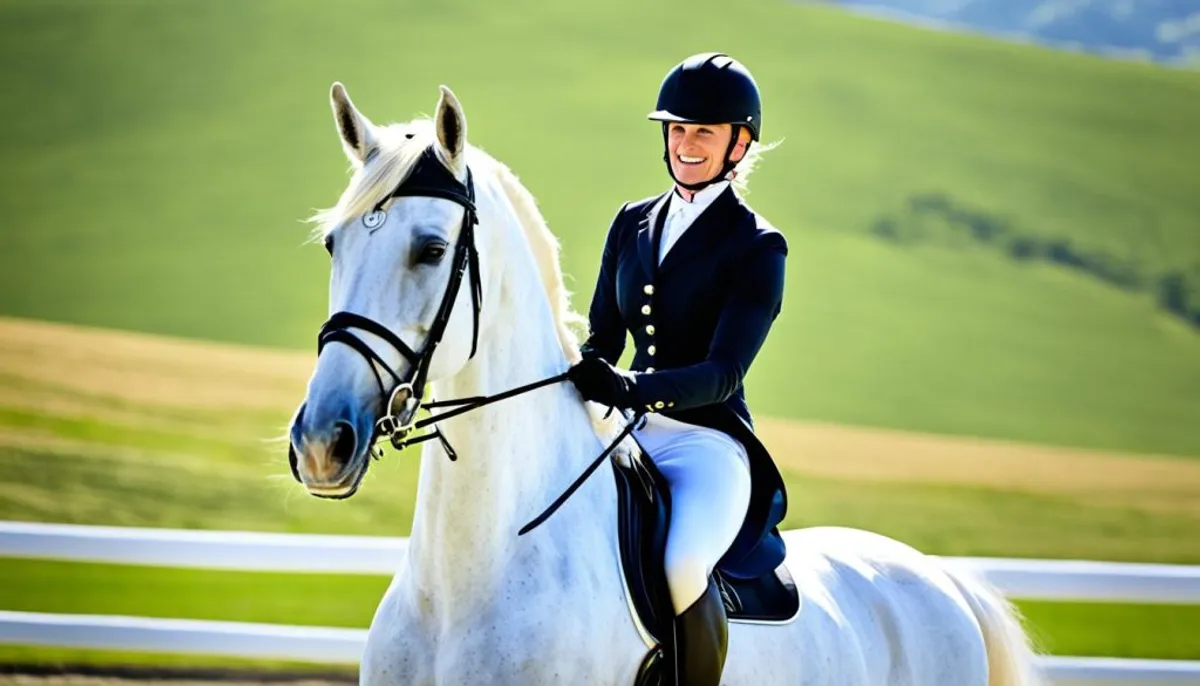
In summary, breaking-in, the importance of ethology, and the virtues of the trainer are the pillars of horse training. This method, centered on mutual respect and communication, creates a deep bond of trust. It allows the rider and the horse to live in perfect harmony, fostering the emergence of a true team.
Techniques and aids for training your horse
Riders use various techniques and aids to train a horse. These tools, known as aids, help communicate clearly. They build a trusting relationship between the horse and its rider. This includes both natural and artificial aids.
Natural aids
Among the natural methods, we find the voice, legs, hands, the seat, and the rider's weight. These means allow for subtle guidance of the horse. Thus, the horse learns in a gentle and progressive manner.
Artificial aids
Alongside, artificial aids include spurs, the whip, the cavesson, or the lunge line. They serve to enhance communication. They reinforce aspects such as the horse's impulsion or the flexibility of the neck.
Lunge work
The lunge work is vital for training. It puts the horse in impulse and prepares for upcoming sessions. By observing their horse, the rider can adjust their methods. This ensures they are training their horse in the best way.
| Natural aids | Artificial aids |
|---|---|
|
|
In summary, dressage requires the use of various aids. The lunge work is crucial. These practices help establish good communication. They guide the horse in its education, respecting its well-being.
Conclusion
The art of dressage in horseback riding emphasizes the rider's position. A position that is firm, balanced, and speaks to the horse is essential. Through precise exercises, regular training, and mastery of dressage techniques, any rider can improve their interaction with the animal.
Dressage is exciting but requires patience and perseverance. However, when the bond with the horse is established, the rewards are immense. It is a subtle process where communication, finesse, and precision play a key role in the unity between the rider and their horse.
No matter your level, understanding the basics of the rider's position and the secrets of dressage will take you far. With effort and willingness, anyone can progress in this beautiful discipline. This will translate into real trust and shared respect with your horse.
FAQ
What is the importance of the rider's position in dressage riding?
The rider's position is key for performing well and staying safe. It enhances communication and the horse's comfort. This is crucial for success and caring for your horse.
What are the key elements of the dressage rider's position?
You need to have an upright torso, legs close to the horse, and hands forward. Looking ahead is also important. All these elements help achieve a good position and communicate perfectly with the horse.
What exercises can help improve the rider's position in dressage?
You can improve by doing flat work with a stable position. Try riding without stirrups to enhance your balance.
Lunge work is beneficial too; it helps focus on your position.
What is the piaffer in dressage riding?
The piaffer is one of the most difficult movements in dressage. The horse moves step by step, remaining almost in place. Flexibility of the back and legs, and lightness of the shoulders are essential. Balance and impulse are key.
How is a horse broken in?
The breaking-in starts when the foal is three years old and arrives in a new place. It is to learn to communicate with the rider. Methods have changed to gentler approaches, such as ethology.
What qualities are needed to train a horse?
To train a horse, one must be calm, patient, and imaginative. Knowing horses and communicating clearly is essential. One must be a caring yet firm partner when necessary.
What are the different aids used to train a horse?
The aids used to train a horse include the voice, legs, and hands. The seat and body weight also play a role. Artificial aids like spurs help. Lunge work is also vital; it aids in impulse and prepares for other exercises.