
Sometimes, a simple silhouette in the distance captures our attention. The brown horse, with its brown coat and dark mane, embodies natural and effortless beauty. It symbolizes freedom, the energy of nature, and a "wild" aesthetic that attracts riders in France.
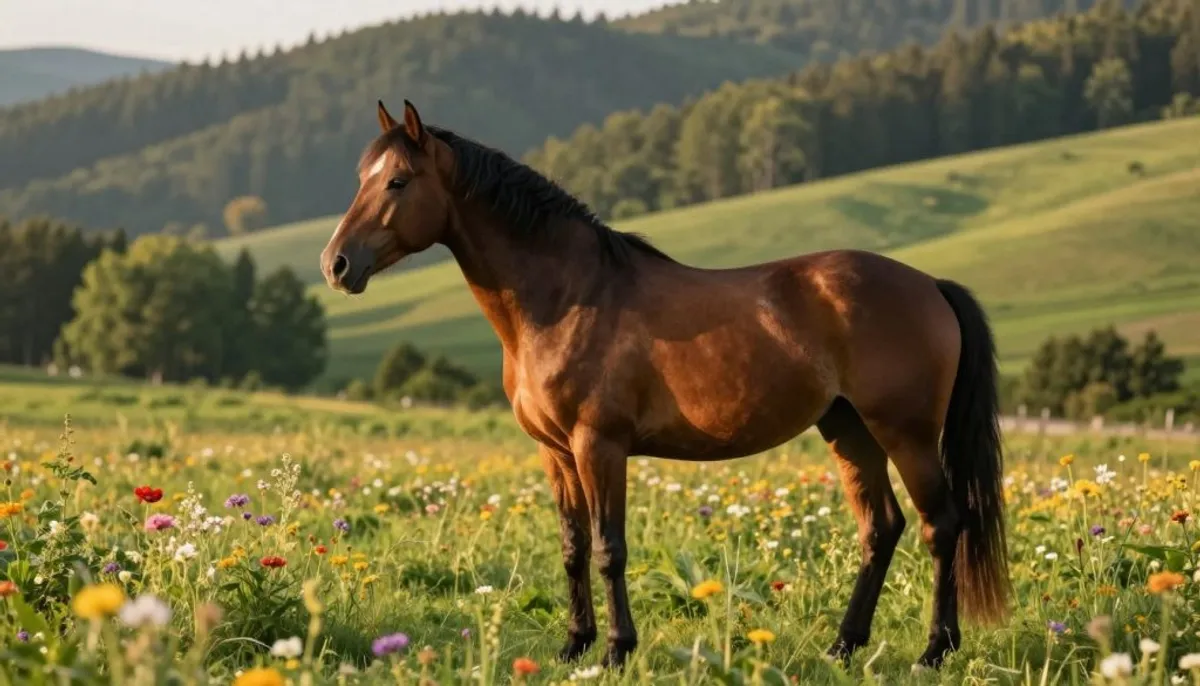
We will explore in detail what makes a brown horse so special: its shades, the way light plays on its coat, and the little details that make all the difference. Then, we will talk about daily life with these horses: riding, the club, care, equipment, saddlery, and breeding choices. Our goal is simple: to better understand and appreciate these magnificent animals.
Discussions around these themes often include photos and illustrations. One wonders if certain images can be used and how to credit them correctly. We will also address how to respect licenses, in a simple way, to share our experiences with the brown horse fairly and peacefully.
Key Points
- Why the brown horse is associated with elegance and freedom.
- What we really observe in a brown-coated horse: tones, reflections, hair.
- The article's journey: riding, club, care, equipment, breeding, decor.
- How to maintain a "natural" approach without idealizing the color.
- The importance of images: rights, licenses, and online attribution.
- A guiding thread designed for the French context and practical applications.
The brown horse, a symbol of elegance and freedom
In France, the brown horse is truly captivating. Its brown color symbolizes quiet strength and evokes nature. It is often seen during rides, in paddocks, or in spontaneous photos.
This shade is also synonymous with elegance. It pairs perfectly with simple leathers and fabrics. For riders, it expresses an elegant simplicity.
Why this coat fascinates riders and enthusiasts
Brown horses exude an aura of warmth and solidity. From a distance, their color is easy to distinguish, even with changes in light. This shade remains beautiful outdoors, under trees or in soft sunlight.
In stables, this coat is also very practical. Dust is less visible, especially on dark shades. Moreover, during competitions, this color contrasts well with light accessories, which is very aesthetic.
Between wild nature, grace, and presence
The brown horse evokes wide open spaces, wind, and various terrains. It gives the impression of being calm but always ready to go. This feeling is important for those who enjoy riding outdoors.
In the arena, its brown coat captures light well. This highlights its movements and helps the rider observe better. It quickly encourages the choice of matching equipment for visual harmony.
Brown-coated horse, brown equine, brown-colored horse: speaking well about the shades
Talking about a "brown horse" is a good start, but details matter. Shades can vary from light to chocolate to deep brown. Whether for a purchase, a competition, or an advertisement, these specifics are crucial to avoid confusion.
| Observed Shade | What we see daily | Usefulness for description (photo, competition, sale) |
|---|---|---|
| Light brown | Golden reflections in the sun, brighter areas on the flanks | Looks good in outdoor photos; useful precision if the coat appears "lighter" in images |
| Medium brown | Stable color, warm appearance, clear contrast with a stripe or markings | Simple and reliable description; facilitates matching rugs, bonnets, and boots |
| Deep brown | Dense coat, discreet reflections, very marked silhouette against the light | Appreciated in competitions for its understated look; allows announcing a brown-coated horse very dark without confusion |
To accurately describe a brown horse, we can rely on three elements: its color, its reflections, and the harmony with its mane. With simple terms, we clearly describe without overdoing it.
Understanding the brown coat in horses
To truly grasp the color of a brown horse, one must observe three points: the hair, the light, and the mane. A single small detail can completely change what we think we see, especially in photos. The important thing is to observe carefully and describe what we notice.
Coat, pigmentation, mane: what we really observe
The coat refers to the color of the horse's hair. The pigmentation, on the other hand, is visible on the skin, especially around the eyes and under the fine hairs. Depending on the light, a brown horse can appear brighter or different.
The mane should also be considered. Dark manes add contrast, giving a richer appearance. If they are light, they make the horse appear softer, even with brown hair.
Animal with a brown coat: variations from light to deep brown
The brown color of a horse ranges from light brown to deep brown, almost chocolate. The same horse can look different depending on the daylight, due to reflections and the angle of the sun.
To describe accurately, note the lighter areas, reflections, and the color of the limbs. These elements help to track an animal or compare photos in different seasons.
| Observation Indicator | What it reveals | Observation Tip |
|---|---|---|
| Reflections on the neck and shoulder | Shade of brown (warm, cool, coppery) | Look in the shade and then in the sun to compare |
| Shade of the mane (mane, tail) | Overall contrast of the brown-colored horse | Observe dry mane, without detangler that darkens |
| Skin around the eyes and nostrils | Impression of pigmentation and "cleanliness" of the shade | Gently part the fine hair, without rubbing |
| Limbs and lower body | Natural gradients or darker areas | Compare after grooming, dust often misleads |
Common differences with other coats often confused
Confusions with the brown coat can occur depending on the hair. In winter, thicker hair makes the horse appear duller. In summer, the sun can lighten the coat, especially for horses outdoors.
Dust, mud, and sweat can mislead about the color. Often, a good brushing reveals the true shade of brown. That's why caring for your horse greatly changes its appearance.
Portraits and temperament: beyond color
A brown horse can captivate our gaze, but its color does not tell everything. To really understand a horse, we must observe its body, breathing, and attitude. What matters is its energy, signs of pain or fatigue, not just the color of its coat.
By watching how it moves, the condition of its feet and back, we learn a lot. A brown horse can be calm when held but stressed when ridden if something bothers it. Conversely, an energetic horse can become calm with a good routine and appropriate exercises.
In riding, what is crucial is the horse's health, its education, and regular practice. Progress comes from small daily actions like careful transitions, knowing when to take a break, and making simple requests. The horse's color is just a plus for the eyes, nothing more.
The horse's lifestyle habits also influence its behavior. Outdoors, they move, eat, and manage themselves, which relaxes some horses. In stalls, they can get bored if outings are too rare or unpredictable.
Variety in work reduces the horse's mental stress. A horse that understands what is asked of it will seek contact and show a stable response.
| Daily Factor | Frequent Effect on Behavior | Signals to Spot | Simple Action to Test |
|---|---|---|---|
| Paddock life (with peers) | Better recovery, more calm during grooming | Yawning, chewing, stretching | Maintain a regular daily outing, even if short |
| Individual paddock | Higher energy, fluctuating attention | Quick steps, gaze "jumping" from point to point | Start the session with 10 minutes of long walking on a lead |
| Box with little movement | Tensions, sharp reactions to leg or girth | Ears pinned back, tight tail, scratching | Add fragmented hay and increase walking outings |
| Stable routine (schedules, care, work) | More predictable horse, faster learning | Regular breathing, more supple neck | Repeat the same warm-up steps, in the same order |
| Respectful and frequent handling | Increased trust, less defensiveness | Sharp stops, shoulders staying at a distance | Work on light backing and immobility for 30 seconds |
The key to a good relationship with a horse is consistency. It's better to be clear about what is asked, then give freedom. This way, the horse understands how to feel good, without having to guess.
One must progress gradually to maintain its trust. Only one new thing at a time, whether it's duration, speed, or environment. This creates a safe space for the horse and allows it to remain calm.
- Keep exercises short if the horse loses attention, and finish with something easy.
- Observe how it reacts to the saddle, when mounting, and during changes of pace to measure its progress.
- Alternating between work and walking breaks with long reins helps to calm it down.
Riding a brown horse: disciplines, goals, and pleasure
Riding with a brown horse is similar to others, with key points like balance. A brown horse captures light in a unique way outdoors. This can inspire riders, despite the importance of basic training.
To stay motivated, one must set specific goals and progress step by step. A brown horse can change its mood. It is essential not to judge too quickly and to follow a solid routine.
Trail riding and outdoors: rediscovering wild nature safely
Going out with a brown horse requires preparation. One must check its feet and equipment before leaving. A good warm-up helps the horse manage its energy better.
Safe and well-known paths should be chosen. In a group, it is important to maintain distances. If the horse becomes nervous, it is better to slow down and relax by practicing simple figures.
Dressage, jumping, flat work: building a steady progression
Flat work quickly makes sessions productive. Focus on clear transitions, smooth curves, and straight lines. This discipline shows the true pleasure of riding a brown horse.
In jumping, the goal is to maintain a good rhythm before and after the obstacle. Few jumps, well executed, can suffice. The important thing is to practice regularly, especially if the horse needs reinforcement.
Equipment and adjustment tips for the horse's comfort
Comfort depends on the fitting of the equipment. A good saddle and a properly adjusted bridle are essential. A well-breathing pad helps too. With a brown horse, it is easy to see if we are doing things right.
Here is a simple checklist for equipment.
- Saddle: stability, clear gullet, no discomfort at the shoulder.
- Girth: correct position, useful elasticity, no pinching.
- Pad: reasonable thickness, flat seams, quick drying.
- Bridle: headpiece positioned without crushing, noseband not tight.
| Discipline | Main Goal | Point of Vigilance | Equipment Adjustment to Check |
|---|---|---|---|
| Trail riding / outdoors | Calm and control of pace | Management of energy and terrain | Stable girth, pad that does not slide back |
| Flat work | Straightness, transitions, suppleness | Regular rhythm, back tension | Saddle clear at the withers, clean gullet |
| Dressage | Precision of aids and balance | Quality of contact, fixed hands | Adjusted bridle, suitable and stable bit |
| Show jumping | Constant cadence and trajectory | Balanced landing, recovery | Stirrups at the right length, secure girth |
When the equipment is well adjusted, the brown horse feels free. This makes training more enjoyable. Additionally, riders who appreciate aesthetics are also interested in the materials and durability of the equipment.
Equestrian club for brown horses: choosing the right structure in France
When looking for an equestrian club for brown horses, it is about finding a safe and pleasant place. It is important to progress joyfully and without pressure. The quality of supervision and safety are essential.
Start by examining the qualifications of the instructors and their teaching methods. A good instructor knows how to explain clearly and correct effectively. They adjust their lessons to the level of everyone.
In a good club, the organization must be clear with precise instructions, a well-defined warm-up, and breaks. The rules to follow on the ground are also important.
Visit the stables first before focusing on the practice area. A horse should appear lively, have a healthy back, and a calm gaze. What matters for optimal comfort is the state of the feet, the fitting of the saddle, and the management of exercise rather than the color.
Also observe how the horses are turned out. A club that regularly takes them to the paddock or pasture prevents stress and improves their well-being. The cleanliness of the boxes, access to water and hay, and good ventilation are clear indicators. A well-managed club offers simple but well-maintained equipment.
Finally, pay attention to the facilities and the overall atmosphere. Drained areas, an arena usable in winter, and accessible outdoor spaces are major assets. Details reveal attention to well-being: relaxed horses, friendly riders, and welcoming staff.
- Supervision: clear instructions, well-assembled groups, attentive follow-up.
- Safety: strict application of riding rules, maintaining distances, good management of passages.
- Horses: diversity of horses, well-thought-out work rhythm, frequent outings.
- Facilities: shock-absorbing ground, well-maintained obstacles, passable paths.
| Point to Check | What Reassures On Site | Useful Question to Ask |
|---|---|---|
| Supervision | Simple and calm instructions, observable progress | "How do you organize groups and track progress?" |
| Safety | Worn helmets, respect for ground rules, safe movements on the track | "What are your measures in case of a fall or horse agitation?" |
| Horses | Well-treated horses, well-fitted saddles, calm animals during grooming | "How many hours of lessons per horse each week?" |
| Outings and well-being | Use of paddock/pasture, stable schedules, availability of water and hay | "How often are the horses turned out, even during winter?" |
| Facilities | Safe ground, adequate lighting, functional grooming areas | "Do you water the arena and is the ground maintained often?" |
| Suitable Mount | Choice according to level, supervised trials, horses suited to each discipline | "How do you select a horse for activities like trail riding, dressage, or jumping?" |
If your wish is to ride a brown horse, simply mention it. Do not make this color an absolute requirement. A serious club will find the mount that suits your level, goals, and style. The color may attract, but the comfort and mindset of the horse are crucial.
Care and maintenance of a brown-coated horse
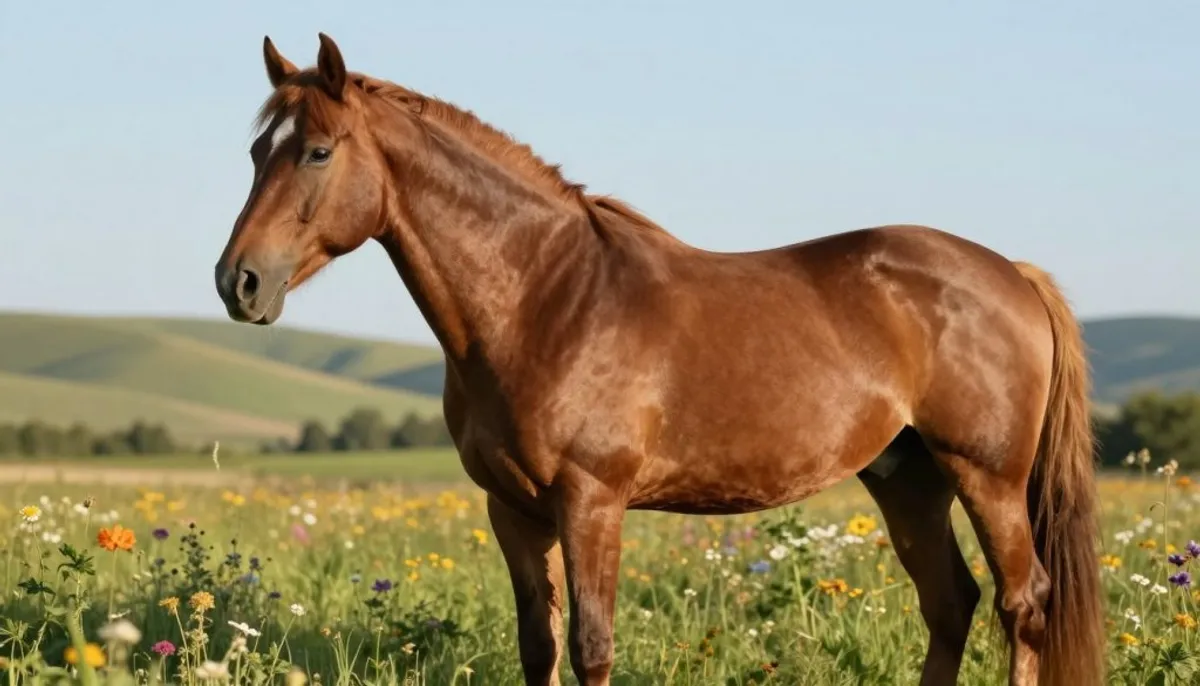
A brown horse can be very beautiful if its coat is well cared for. The important thing is to have shiny reflections and healthy skin. One must adopt a few simple routines to achieve this.
Brushing, bathing, and shine: enhancing the coat without aggression
When caring for a brown horse, start gently with the curry comb. Especially on the neck and shoulders. Then, use a stiff brush to remove dust, followed by a soft brush to smooth. Finally, a clean cloth will add beautiful reflections.
Baths should not be too frequent. Choose a mild shampoo and rinse well to avoid itching and flakes. On a brown horse, it is better to rinse well rather than use "shine" products.
Managing stains and dust in the paddock and pasture
Stains are more visible on brown horses. They often appear on the sides, on the knees, and at the bottom of the legs. After the paddock, a damp sponge can remove mud without scrubbing hard. If the skin is sensitive, dab then brush after drying.
Dust can dull the coat, even if it is healthy. A short but regular brushing is effective. Don't forget to clean the girths and contact areas to avoid irritations.
Photos and competitions: tips to enhance a brown equine
Before taking photos, groom 30 to 60 minutes in advance. This allows time for the coat to settle. For a brown equine, detangling the mane and unifying the coat with a cloth highlights it. Avoid putting oil on the saddle, as it attracts dust.
In competitions, having clean and well-maintained equipment is crucial. For a brown horse, shiny leather and lint-free fabrics make it look better in photos. Considering image rights when sharing these photos online is also important.
| Moment | Key Gesture | Area to Watch | Desired Effect |
|---|---|---|---|
| Before saddling | Stiff brush then soft brush | Girth area, withers | Avoid friction, keep a clean coat |
| After work | Damp sponge + dry cloth | Sweat on the neck, behind the elbows | Limit salt, maintain the reflections of the brown horse |
| Return from paddock/pasture | Damp sponge, then dry brushing | Flanks, lower limbs | Reduce stains and dust on a brown-coated horse |
| Day before photo/presentation | Detangling mane + polishing with cloth | Mane, tail, shoulder | Enhance the brown equine without greasing the coat |
Saddlery for brown horses: style, comfort, and consistency
An elegant saddlery highlights the beauty of a brown horse without exaggeration. Keeping a clean and comfortable style is essential, whether in competition or during a ride. It is important to maintain consistency in the colors of the saddlery.
Harmonizing colors (leathers, textiles, pads) with a brown coat
Leathers in shades of Havana, hazelnut, or chocolate go well with a brown horse. A navy blue, fir green, or burgundy pad remains discreet and enhances the horse's coat. For leisure activities, a light border can be added without exaggerating contrasts.
If the horse has warm reflections, opt for cream or camel tones. If the coat is a deep brown, slate gray and black are more suitable. Safety is paramount: equipment must be visible and well-adjusted.
Choosing durable finishes for regular use
Durable saddleries feature strong stitching and resilient buckles. On frequently used saddleries, wear shows quickly in certain areas.
The horse's comfort also depends on proper fitting. A stable saddle and a breathable pad reduce pressure points and help control temperature. Gently cleaning the equipment and using suitable nourishing products keeps the leather in good condition.
Focus France: La Sellerie Française and high-end craftsmanship
La Sellerie Française advocates for high-end, durable quality. Their products combine craftsmanship and rigorous selection of materials. Choosing from them ensures your horse a well-designed saddlery that will age well.
Their philosophy is clear: prioritize entirely French manufacturing. This choice guarantees quality and attention to detail appreciated by riders.
Products made from A to Z in France: custom, unique, or limited series
Opting for equipment entirely made in France ensures better tracking and great consistency. It allows for choosing custom pieces, unique items, or limited editions, respecting budget and needs. For a brown horse, this means selecting perfect shades and finishes.
French artisans carefully select their leathers and make precise fittings. This results in better-defined adjustments, quality finishes, and a style that enhances the daily life of the brown horse.
| Choice | Effect on a brown horse | Comfort Benefit | Durability Point to Check | Recommended Use in France |
|---|---|---|---|---|
| Havana leather + navy blue pad | Elegant contrast, competition look | Good visibility of aids, visually stable ensemble | Stitching of the girth straps, quality of the buckles | Dressage, show jumping, neat presentation |
| Chocolate leather + fir green pad | Natural match, coat enhanced without shining | Softer ambiance, easy to match | Resistance of the flaps to friction, edge of the leather | Outdoors, daily work at the club |
| Black leather + slate gray pad | Clean style, marked graphics on brown coat | Clear visual markers for adjustment | Dye that does not bleed, secure stirrup attachments | Regular training, versatile equipment |
| Custom-made from A to Z in France | Fine harmony on a brown-colored horse, chosen finishes | Precise fitting, better distribution of pressures | Padding, symmetry, replaceable wear parts | Long-term goal, demanding rider |
| Unique piece or limited series (high-end craftsmanship) | Subtle visual signature, coherent style | Choice of materials designed for use | Quality of assembly, sturdiness of loops and attachments | Equipment pleasure, gift, reasoned collection |
Breeding brown horses: foundations, ethics, and goals
Starting a breeding project for brown horses means wanting a strong and balanced animal. Color is secondary to the health and well-being of the animal. It is important for horses intended for sport or leisure to have a good breeding program.
Why breeding is not just about producing a color
Brown horses can be very beautiful, especially in photos. But choosing a horse just for its color can be risky. What we want above all is a healthy horse that can live and work without suffering.
The principles of good breeding include good living conditions, appropriate pastures, and serious medical follow-up. In a serious breeding program, the horse's well-being is prioritized before its color.
Selection: health, conformation, temperament, athletic abilities, and leisure
Selection is based on what can be observed, not on promises. We examine the body, feet, and how the horse moves. A beautiful brown horse that is not robust can make life difficult.
| Key Criterion | What We Observe | What It Changes for the Future Brown Horse |
|---|---|---|
| Health and follow-up | Veterinary history, body condition, recovery | Fewer interruptions, better longevity at work |
| Conformation and soundness | Alignment of limbs, balance, back, feet | Mounted comfort, reduced risk of lameness |
| Locomotion | Amplitude, regularity, engagement, flexibility | Easier progression in dressage, jumping, outdoors |
| Temperament | Reactivity, curiosity, pressure management | More reliable horse, more pleasant to train |
| Color | Coat, mane, stability of tone | Aesthetic asset, secondary in brown horse breeding |
The character of the horse is very important. A calm and friendly brown horse adapts better to life in a club or on a trail. Color is a bonus, not a primary goal.
Follow-up, handling of the foal, and socialization
Consistency is key in the education of the foal. They are taught to give their feet, accept the halter, and walk on a lead. Brown horses learn with patience, just like all others.
Socialization is crucial. They need to live with others, meet adults, and explore new places. These steps help reduce stress and facilitate care. They prepare a brown horse to be calmer and more confident, ready for all riders.
Brown horse and decoration: realistic nature and rustic ambiance
The image of a brown horse in an interior gives a sense of nature. Simple elements like wood and earth tones are used. This creates a peaceful atmosphere, perfect for a living room, bedroom, or office.
Playing with colors allows for adjusting the ambiance. A brown horse against a light background makes a room softer. A brown horse against a dark background adds a rustic touch. The balance between decoration and light is essential.
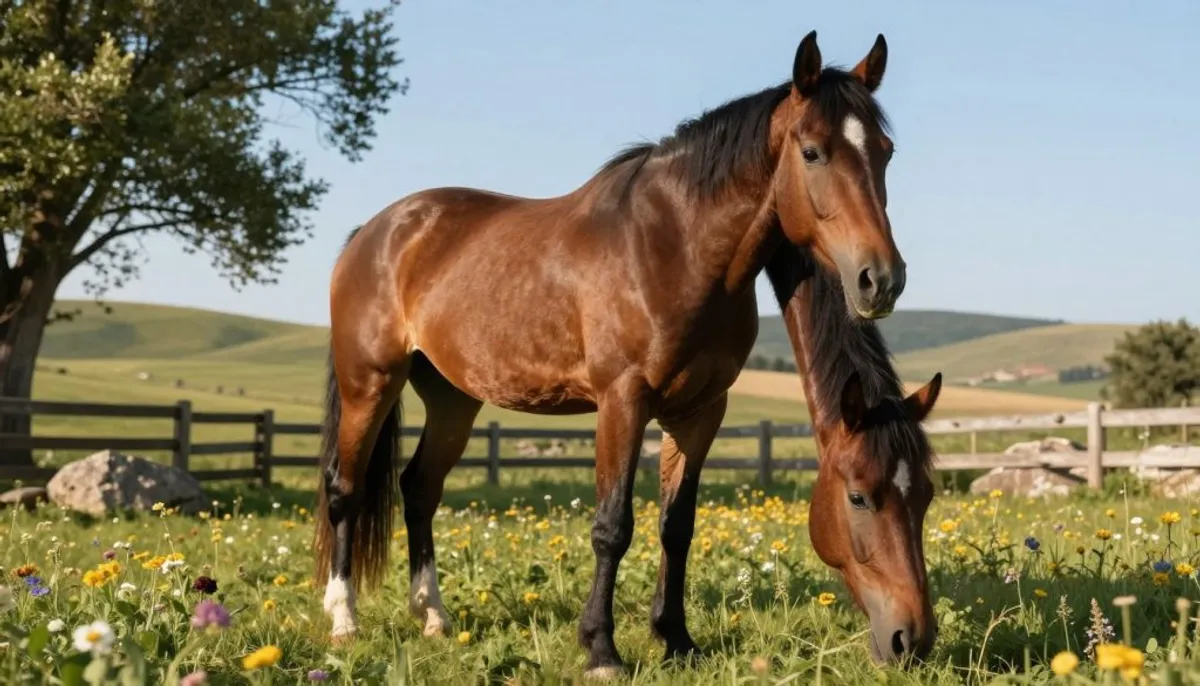
Canvas prints: example of a "brown horse stallion in the desert" scene
A canvas depicting a brown stallion in the desert captures attention. The natural colors of sand, sky, and dust blend well with raw materials. Perfect for a reading corner, it creates a calm atmosphere.
This image is ideal for those who love strong contrasts. It features a sharp silhouette, a wide horizon, and an impression of space. The brown horse adds a warm touch.
Formats and useful details (canvas 30.5 x 45.7 cm, landscape orientation, nature theme)
The landscape format opens up space on the wall. The canvas, 45.7 cm by 30.5 cm, provides a natural perspective. It is a canvas framed as Wrapped Canvas, considered wall art.
Product details include: 1 item, weight of 2 pounds, made by NWT, available since April 10, 2022, under ASIN code B09XHWV862. Reviews give it 5 stars out of 5. Easy to install, it beautifies any room with a nature theme.
Wallpaper "brown horse in the mountains": creating a rustic and soothing atmosphere
The wallpaper "brown horse in the mountains" from LePapierPeint offers a sublime view. It features a majestic horse among green fields, mountains, and valleys. It is sold at €29.90 per square meter under reference PP202400112.
Ideal as a headboard or to decorate an office. It creates a soothing background, perfect for taking a break from screens. Even in a full room, the horse remains the focal point.
Material choices: vinyl on premium non-woven (matte, opaque, moisture-resistant) vs. sticker (quick installation)
The choice depends on the state of the wall and available time. Premium vinyl on non-woven is perfect for smooth walls. It offers easy installation, a premium matte appearance, and is moisture-resistant.
The sticker option is ideal for quick application. It is easy to apply, even on imperfect walls, and washable. Both options are sturdy and easily adjust for a flawless result. Samples and home delivery are available.
| Option | Visual Rendering & Comfort | Installation & Adjustments | Resistance & Maintenance | When to Choose It |
|---|---|---|---|---|
| Wall Canvas (Wrapped Canvas) | Realistic nature photo, landscape format that enhances a brown horse and the horizon | Simple installation, flexible placement above furniture | Light maintenance, not sensitive to small daily marks | For a targeted decorative touch, without changing an entire wall |
| Premium Wallpaper (vinyl on non-woven) | Premium matte finish, completely opaque, clear reading of a brown-colored horse in a landscape | Edge-to-edge matching, easily adjustable, easy to apply on smooth and clean walls | Moisture-resistant, tear-resistant, good longevity | For a durable accent wall in a living room, bedroom, or office |
| Sticker Wallpaper (vinyl sticker) | Clean and direct look, ideal for a large format scene of a brown-coated horse | Quick application without glue, adjustable, suitable for slightly irregular walls | Washable, advertised as tear-resistant, practical in high-traffic areas | For a quick project, a rented room, or frequent decor changes |
Images, rights, and attribution: using visuals legally
When you want to put an image of a brown horse on a blog or Instagram, it is important to follow rules. The rules for using an image vary if you use it online, in print, or to create a product. So, before sharing a photo of a horse, check what type of license it has and what it allows.
If you use Vecteezy, you will see that some images require mentioning the source. This means you must indicate the name of Vecteezy in the project credits. To do it correctly, simply use the attribution code provided by them.
| Key Point | License with required attribution | License without attribution (depending on tier) | Higher License |
|---|---|---|---|
| Digital | Up to 10,000 views | Up to 100,000 views | Unlimited |
| Up to 50 copies | Up to 100,000 copies | Unlimited | |
| Production (budgets) | Up to $1,000 | Up to $10,000 | Unlimited |
| Legal Guarantee | Up to $500 | Up to $10,000 | Up to $100,000 |
| Commercial Products | Non-commercial products | Up to 100,000 items | Unlimited |
| Logos | No logos | Non-exclusive logos | Non-exclusive logos |
| NFT | No NFT | No NFT | No NFT |
To avoid problems, keep proofs like an invoice or a screenshot. Also, check if the image is marked as "Pro" or if it is free. Having a Pro subscription grants access to more images.
This habit helps you protect your images of brown horses. It also clarifies the rights associated with equestrian images.
Conclusion
The brown horse is more than just a color. It shows how nature plays with shades. For enthusiasts, understanding these nuances also means exploring more than just color.
The beauty of a horse is not the only thing that matters. What also matters is its spirit, education, and how it is trained. Choosing the right club in France, which respects the horse, can make a big difference.
Caring for a brown horse means keeping it clean while protecting its skin. One must choose durable equipment for the long term. La Sellerie Française offers quality equipment, custom-made, that is made from A to Z in France.
Whether for breeding, sport, or decoration, the image of the brown horse must be treated with respect. Using photos correctly and respecting copyright is essential. This shows a commitment to quality in all aspects.
FAQ
Why is the brown horse often associated with elegance and freedom?
The brown color evokes nature, suggesting warmth, sobriety, and power. A brown horse evokes open spaces, embodying tranquility and confidence.
What is the difference between a brown-coated horse, a brown equine, and a brown-colored horse?
These terms refer to a horse with a brown coat. It is useful to mention the exact shade of brown for more precision, as well as the color of the mane.
What do we really look at to describe a brown coat?
We observe the color of the hair, how light impacts its pigmentation, and the appearance of the mane. Conditions such as sunlight, dust, and season affect these shades.
What variations can be observed in an animal with a brown coat?
Brown varies from light to very dark. The same horse can appear different depending on the light or season. Observing these details improves descriptions and photos.
What confusions are common with the brown coat?
Confusions arise from similar colors and seasonal effects. Winter hair or dust can change appearance, leading to confusion about the true shade.
Does the brown color say anything about a horse's character?
No. The color of the coat does not reflect temperament. What matters is health, education, and the relationship with the rider, regardless of color.
What influences daily behavior, beyond the coat?
The environment, daily routine, and care provided play a significant role. A good framework and clear progression make a horse calmer.
How to create a trusting relationship with a brown-colored horse?
By being consistent and reassuring. Observing the horse's reactions helps to progress. It is the partnership that creates trust, not the color of the coat.
Is riding a brown horse technically different?
No, the techniques remain the same. The brown color may add an emotional dimension, but the work focuses on health and performance.
Trail riding and outdoors: what caution rules should be applied?
Ensuring good supervision, checking equipment, and choosing safe routes are essential. Caution allows for enjoying freedom safely.
Dressage, jumping, flat work: how to progress without rushing?
One must set clear goals, practice regularly, and respect the horse's recovery pace. Balanced progression is the key to success.
What are the key points for proper fitting of equipment?
A well-fitted saddle and harness are essential. Good equipment ensures the comfort and performance of the horse in all disciplines.
How to choose an equestrian club for brown horses in France without focusing on color?
Supervision, safety, and the state of the facilities matter more than the color of the horses. One should look for a club that meets their needs.
What should be observed when visiting a club?
Checking the condition of the horses and places, the management of outings, and the quality of the equipment are important. A good atmosphere is also crucial.
What grooming routine best highlights a brown-coated horse?
A regular and gentle brushing. Using suitable products during bathing. The goal is to keep the coat clean without irritating the skin.
Why are stains and dust so visible on a brown-coated horse?
The contrast stands out more on a brown coat. Daily dirt reduces shine. A simple but regular routine is effective.
How to prepare a brown equine for photos or a competition?
Prepare in advance. Clean sensitive areas and choose matching equipment. The right light will highlight the shades of brown.
What color palettes work well with brown coats in brown horse saddleries?
Havana, chocolate, or black for leathers. Beige, cream, navy blue, fir green, or burgundy go well with brown. Clarity and safety above all.
What matters most for durability in saddlery?
Strong stitching, durable leather, and regular maintenance ensure durability. A good fit protects the horse and prolongs the life of the equipment.
What does La Sellerie Française offer for high-end equipment?
A: La Sellerie Française (https://laselleriefrancaise.com) offers high-end products, made in France by excellent artisans. They offer unique pieces or limited editions, with a total commitment to French quality.
Should breeding brown horses aim for a shade above all?
No. Breeding values health and abilities before color. The coat is secondary to character traits and sturdiness.
What criteria prevail in selecting a horse, beyond the coat?
Consider structure, movement, robustness, and temperament. It is important to examine health history and compatibility with the rider.
How to properly follow a foal, regardless of its coat?
Start with gentle handling, teach the basics, and ensure good socialization. These steps prepare a reliable horse, before any consideration of color.
How to integrate the imagery of the brown horse into interior decoration?
A brown horse fits with a natural style. It can bring a soothing touch to an interior with its image evoking freedom.
What are the details of the canvas print example "brown horse stallion in the desert"?
It is a nature photography-style canvas. Dimensions of 45.7 cm (W) x 30.5 cm (H), landscape orientation. Nature theme, with a Wrapped Canvas frame. Available since April 10, 2022, with excellent ratings.
What does the wallpaper "brown horse in the mountains" from LePapierPeint promise?
It promises to bring a rustic ambiance with a view of mountains and a brown horse. Offered at €29.90 / m², reference PP202400112.
Which option to choose between Premium and Sticker for this wallpaper?
A: Premium is recommended for its quality and resistance. Sticker, being more flexible, is easier to adjust on imperfect walls.
What logistical recommendations facilitate the installation of wallpaper?
Add 10 cm extra for installation. A4 samples help in choosing. Delivery via Colissimo, Fedex, among others.
Why should attention be paid to image rights when publishing a horse visual?
Publishing requires respecting image licenses. This avoids rights issues and supports creators.
What do the license limits often encountered on Vecteezy mean?
The limits vary: some allow up to 10,000 online views and 50 prints. Others, more permissive, allow almost unlimited use. It is crucial to understand your license.
How to make a correct attribution when required on Vecteezy?
Include Vecteezy.com in the credits. Vecteezy provides a code to facilitate attribution.
What good practices to adopt before using a downloaded image?
Keep proof of the license and ensure the status of the image. Vecteezy offers extensive "Pro" resources via subscription.
Can an image of a brown horse be used for a logo or commercial product?
This depends on the license. Some prohibit commercial use, while others allow it under conditions. Always check before use.