
“What is the color of the white horse of Henry IV?” This question seems like a classic joke. It is simple, but often it traps people. One answers quickly, and that’s where the mistake happens.
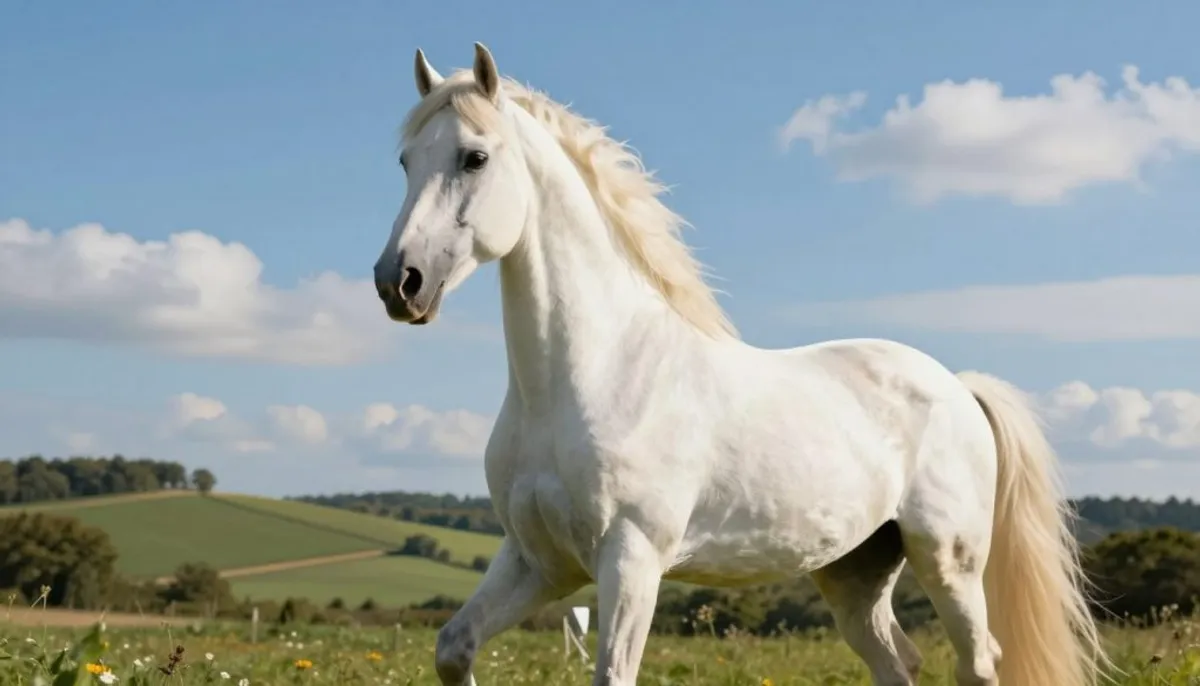
Henry IV and his white horse resonate with us. We think we know the answer. But we will explore two aspects: what the riddle suggests and what history says about this “white”.
The white horse, more than just a joke, symbolizes a lot. Power, purity, and greatness are linked to this color. The study of real horses shows the confusion between “white” and “gray”, especially as they age.
This mystery of the white horse will captivate our attention. We will see its impact through the ages. From antiquity to the present day, its color fascinates and inspires people.
Key Takeaways
- The riddle “what is the color of the white horse of henry iv” prompts a hasty response.
- Henry IV makes the question more intriguing, highlighting the trap.
- The white horse is a strong political and cultural symbol.
- In the study of horses, “white” can actually be close to gray.
- The article combines humor, cultural history, and representations.
- Over time, the white horse remains a powerful visual symbol.
Why the riddle of Henry IV's white horse still fascinates
This question seems simple at first glance. It often resurfaces, awakening our curiosity. It cleverly mixes history and wordplay.
A popular trick riddle that plays on the obvious
The riddle is constructed so that one responds hastily. We hear “What is the color of the white horse…”, and we think we know the answer. But that’s where the trap closes in on us.
Henry IV questions Sully, who replies “white.” Then, Henry IV retorts that the horse is “gray.” This punchline creates a comedic effect.
Between humor, attention, and the reflex to respond too quickly
We find this mystery funny because it tests our attention. After laughing, we reflect on our mistake. The trap plays more on our reactivity than on our knowledge.
| What we think we are testing | What is really being tested | What it provokes |
|---|---|---|
| A historical fact about Henry IV | The exact reading of the question | A surprise, then a quick laugh |
| The knowledge of colors | The automatic response reflex | A moment of slight embarrassment, harmless |
| A “true” knowledge | Attention to words and context | A desire to ask someone else |
From Henry IV's court to the playground: a lasting transmission
No matter its truth, this story is easily passed down. It travels from generation to generation. The riddle becomes a social game.
It endures because it evokes strong and ancient images. We can easily imagine the grandeur and the scene. Thus, the riddle perpetuates, blending history and mystery.
what is the color of the white horse of henry iv
The color of Henry IV's white horse is often asked. It’s a fun way to test our attention. It’s not a question of culture.
The expected answer: “white”
The answer to this riddle is white. The name “white horse” already reveals the color. If we think too much, we get lost in the details.
We often want to prove that we know the answer. But it’s enough to take the question literally and respond simply.
The nuanced answer: often “gray” in equine studies
Outside of the riddle, the world of horses offers a different answer. In equine studies, horses described as white are actually gray. Their coats lighten over time.
Truly white horses are rare. That’s why the question can lead to a debate about what we think we see and the reality.
Why “white” remains the solution to the riddle
Both perspectives can coexist. “White” is the correct answer for the riddle. But we can also discuss gray and perception in reality.
The image of the white horse is powerful and symbolic. It marks us and simplifies the riddle. It creates an instant impact.
| Reading | Answer | What matters | Why we get it wrong |
|---|---|---|---|
| Wordplay (riddle) | White | The words of the question | We look for a complicated explanation |
| Equine reading (coat) | Often gray | The evolution of the coat with age | Very light gray is mistaken for white |
| Symbolic reading (image of the king) | White (in the mind) | The visual impact and collective memory | Representations idealize the color |
White horse or gray horse: what equine studies say about the coat
We often think of a white horse as being a simple and pure color. But in equine studies, a horse's coat color tells a story. It can change with age, season, and light. What our eyes see as “white” may not correspond to the reality of the hair.
Why most “white horses” are actually gray
The “white” we usually see is often a gray coat. Gray horses are born dark and then their color lightens over time. From a distance, this shade appears uniform, especially if the horse is well-groomed.
This transformation can go unnoticed. We remember the final result, not the process. Thus, we speak of a white horse even if in truth, it is gray.
The perceived nuances: matte, shiny, porcelain, yellowish, pinkish
On the ground, we distinguish different shades of white. There is matte white, without shine, and shiny white, gleaming in the light. Sometimes, we see yellowish tones, due to dust or sunlight.
Some whites appear gray due to darker hairs. Others have a porcelain look, slightly bluish, considered rare. There is even a pinkish white, due to very low skin pigmentation, offering a unique appearance.
| Perceived aspect | Clues about the horse's coat | What changes the color to the eye |
|---|---|---|
| Matte white | Light hair, low reflections, “powdery” appearance | Diffuse light, overcast sky, winter hair |
| Shiny white | Polished hair, marked reflections on the shoulder and croup | Grooming, low sun, clean and dry skin |
| Yellowish white | Warm tint on the body, extremities sometimes lighter | Dust, sand, sweat, UV |
| White tending towards gray | Darker streaks in the hair, subtle contrasts | Molt, humidity, shadow areas on the coat |
| Porcelain white | Bluish impression, cold and fairly uniform tone | Cold light, dark background, very light hair |
| Pinkish white | Very light skin, mucous membranes and finer areas more visible | Absence of pigments, heat, direct light |
Rarity of the “true white” and its effect on the collective imagination
Encountering a horse with “true white” is very rare. This rarity creates a sense of mystery. If we see a completely white animal, we perceive it as exceptional. This color then becomes an important element in our imagination.
When a horse seems to escape known categories, our imagination takes flight. The gap between the legendary white horse and the real gray one inspires stories and evokes wonder.
Henry IV and the white horse in history and iconography
In history, images often speak louder than written words. With Henry IV, his white horse becomes an easy-to-remember symbol. Its color catches the eye and leaves a mark, even if we forget the precise details.
The Equestrian Portrait of Henry IV by Jean-Baptiste Mauzaisse is a telling example. The brilliant mount highlights the king. This contrast emphasizes his proud posture and importance.
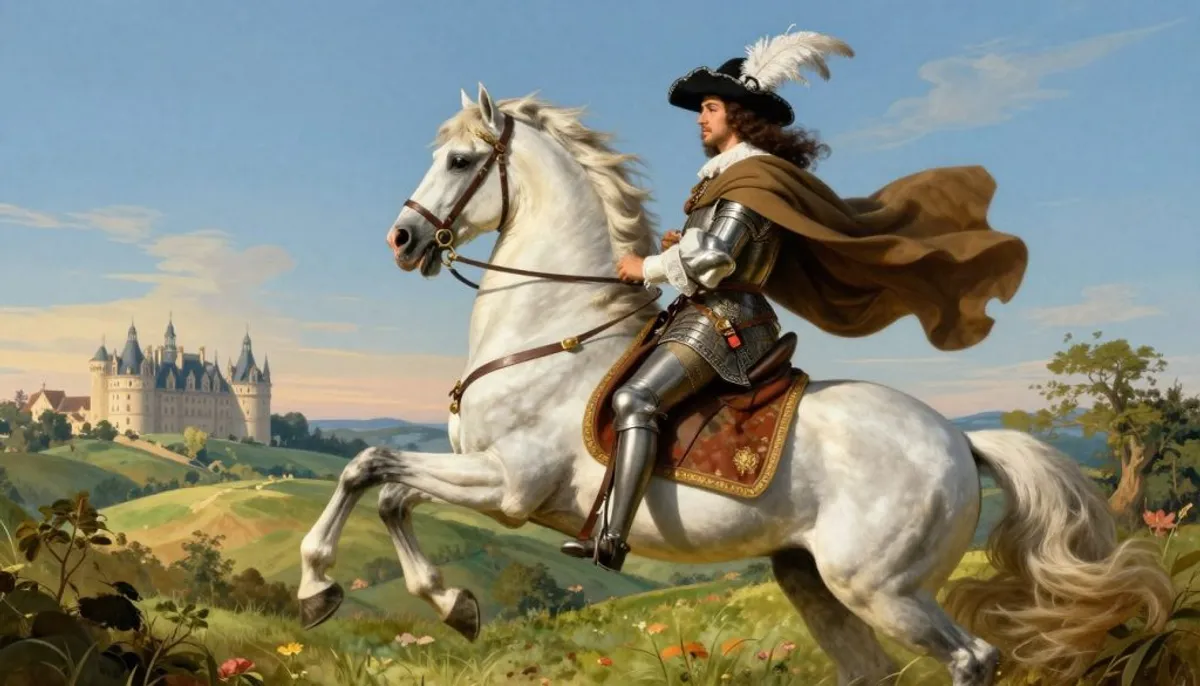
So, why this focus on the white horse? Indeed, its bright color easily distinguishes it at the head of the group. The white color serves as a symbol of greatness. It attracts attention just as a coat of arms would.
Chroniclers do not often mention the exact color of royal horses. However, artists seek to make these scenes readable. Thus, iconography does not just show a color. It also illustrates the authority and prestige of the king.
| Medium | What it shows about Henry IV | Role of the white horse | Effect on the reading of history |
|---|---|---|---|
| Display painting | A central, stable, and visible figure | Sharp contrast, easily recognizable silhouette, color as a rank mark | Reinforces collective memory and simplifies the scene for the public |
| Engraving and print | A king disseminated in series, recognized at first glance | Graphic clarity, white horse that “carries” the figure | Establishes lasting visual codes, even without equine detail |
| Popular narrative | A relatable character, almost familiar | White horse as a short image, easy to repeat | Transforms data into a narrative marker and riddle |
| Cultural memory | A presence in places, museums, textbooks | Light color associated with the idea of order and mastery | Facilitates dialogue between iconography and history, without requiring technical proof |
White as a symbolic color: from antiquity to the royal era
Talking about color often means thinking of a specific hue. But in history, white had a special role. Since antiquity, white fascinated as much by what it shows as by its hidden meanings.
Aristotle saw things simply. He believed everything revolved around white, black, and red. He said that other shades come from mixtures of light and dark. And that black is just a lack of white.
This idea helps us understand works of art. With a light background or a shiny material, everything is clearer. It is the contrast that creates meaning, not just the color.
In Latin, two words explain the nuances of white. Albus is a matte white, like chalk. Candidus is more radiant, seeming alive due to its brightness. This shows us two different ways of using white.
| Term | Rendering of white | Visual effect | Common usage in imagination |
|---|---|---|---|
| Albus | Matte, soft, low-reflective | Soothing, stable, discreet | Simple purity, sobriety, everyday |
| Candidus | Shiny, luminous, reflective | Catches the eye, seems prestigious | Brilliance, distinction, enhancement |
Liz James, a historian, highlights an interesting fact. For the Ancients, what mattered was not the color itself. They paid attention to how objects shone or reflected light. The effects of light were essential in their visual culture.
For example, a white horse catches the eye. It reflects the sun, highlights shapes, and gives a special presence to the rider. The symbolism comes from there: being easily and immediately seen.
White horse: power, purity, and staging of the sovereign
In the history of kings, colors always have special significance. The white horse first attracts attention, then helps to quickly recognize the king, even from afar. Henry IV particularly played on these symbols to show his power almost immediately.
White also symbolizes purity, both morally and visually. And in front of the crowd, it becomes a powerful symbol, conveying a strong message without words.
Standing out in the crowd: white as a visual emblem
Being quickly identifiable is crucial, whether on a battlefield or at a public event. A white horse allows for immediate recognition of the leader. This simplifies following the chief and reinforces his omnipresence.
White, in the case of Henry IV, is a sign of excellence. It emphasizes control, poise, and serenity. Thus, power is presented simply yet effectively.
White versus red: stability, cost, and symbols of power
Red is often associated with war and strength in Roman tradition. It captures attention but can age poorly. White, on the other hand, remains always elegant and easy to understand.
| Aspect | White | Red |
|---|---|---|
| Visual effect | Sharp contrast, quick identification of the rider and the white horse | Aggressive signal, attracts attention through the mass of color |
| Cultural imagery | Purity, sobriety, almost religious or magical aura | War, energy, triumph, demonstrative power |
| Political reading | Established, legitimate power that seeks to be evident | Militaristic power, more spectacular and conquering |
| Material reality | Constant visual rendering, even from afar, on action scenes | More delicate and often more expensive dye, variable holding |
Both colors represent power differently. White signifies just authority, while red represents a more brute force. This gap enriches the history of power symbols.
The rider and order: the white coat as controlled power
In art, a white horse is often a symbol of order. It evokes directed strength, under control, thanks to its rider. Purity here shows a mastered power.
In contrast, the black horse often symbolizes a wilder energy. This contrast highlights the story of Henry IV: a leader who knows how to control himself and make history.
The white horse in myths: gods, heroes, saints, and kings
In myths, the white horse is a strong and visible symbol. It appears in various stories, changing roles but always surrounded by mystery. It is thought to be able to see the future or guide people to their destiny.
This horse is often linked to the sun. It figures in tales of solar races and luminous chariots. Its light is seen as purifying and protective, warding off evil.
It plays a role in power rites. For example, the Ashvamedha in Vedic India shows the sovereignty of a king. This indicates that this rite had great importance in history.
Similar traditions exist in Ireland, Germania, or Mongolia. In Mongolia, white mares are honored. They symbolize social order.
In antiquity, the white horse stood beside heroes. Among the Greeks, Achilles' horses are almost white. The Dioscuri are known as “possessors of white horses.”
The motif also symbolizes triumph. Camillus and Caesar used white horse-drawn chariots. This shows their superior status.
In Christianity, saints and even Jesus Christ are associated with white horses. A rider of the Apocalypse is also described on a white horse. This creates a mystery that persists.
The theme is present beyond Europe. In Buddhism, Kanthaka helps Prince Siddhartha. In Zoroastrianism, Tishtrya fights to bring rain.
In Wales, Rhiannon, and in Vietnam, the Bach Ma temple share this image. The white horse is a guide, showing the way to follow.
| Cultural area | Figure or story | Role of the white horse | Desired effect in myths and legends |
|---|---|---|---|
| Vedic India | Ashvamedha; title of Chakravartin; Pushyamitra Shunga | Horse left free then public ritual | Assertion of sovereignty, mystery of royal destiny, purification |
| Ancient Greece | Xanthos and Balios (Achilles); Dioscuri Castor and Pollux (Leukopoloi) | Heroic companion, sometimes prophetic | Protection at sea and in battle, prestige, sign of intervention |
| Rome | Camillus; Julius Caesar | Triumphal chariot | Political superiority, staging, public memory in history |
| Christianity | Rider of the Apocalypse; iconography of saints and Christ | Sacred or announcing mount | Narrative tension between salvation and threat, intensity of mystery |
| Asia (Buddhism and Zoroastrianism) | Kanthaka (Siddhartha); Tishtrya linked to Sirius | Companion of rupture, divine form | Passage of life, rain and order of the world, legends with moral reach |
| Mongolia | White mares revered around Kublai Khan | Herd honored during a seasonal festival | Protection of the group, ritual purity, continuity of history |
| Wales and Vietnam | Rhiannon (Mabinogion); Bach Ma temple and Lý Thái Tổ | Guide and revealer of a place | Orientation, warning, visible proof in local legends |
White horse and black horse: a moral and narrative opposition
The colors of horses in stories symbolize strong ideas. A white horse symbolizes order, and a black horse evokes disorder. This difference helps to quickly understand the stories, without lengthy explanations.
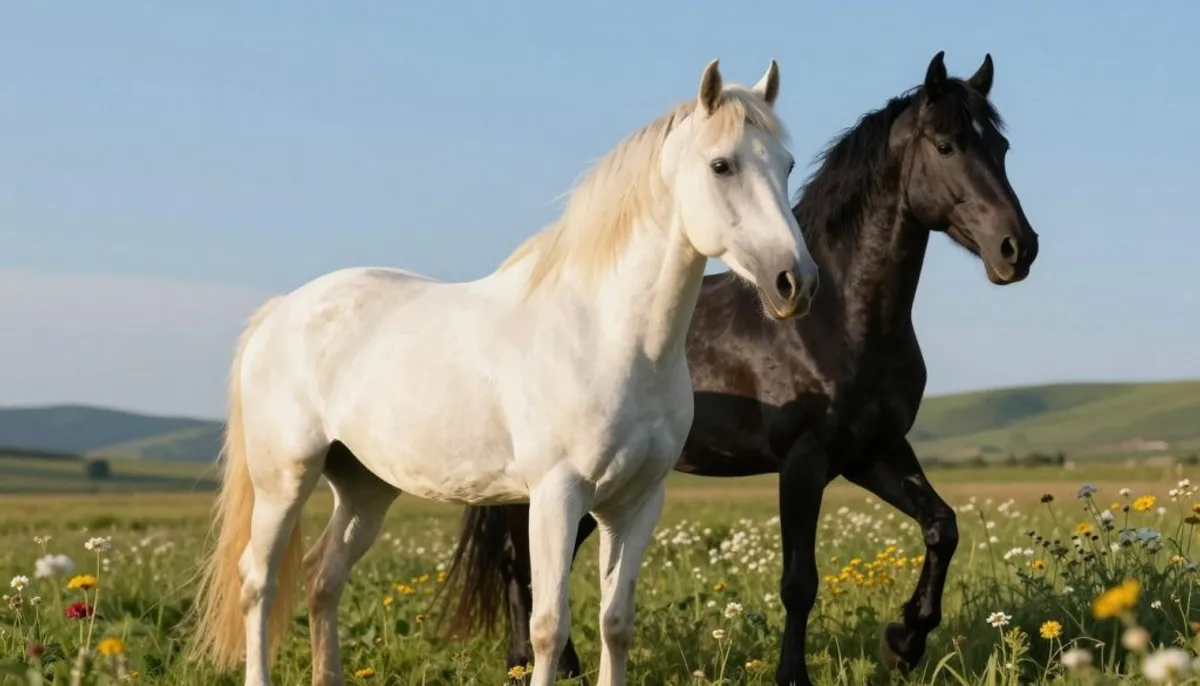
Plato and the chariot of the soul: white horse and black horse
In the Phaedrus, Plato uses a metaphor to speak of the soul. He compares it to a chariot pulled by two horses, one obedient, the other rebellious. The white horse embodies the impulse towards good and order.
The black horse, on the other hand, represents temptations and excess. This image shows our inner struggle between the will to do good and obstacles. This idea from Plato is often used in stories to illustrate this inner struggle.
Obedience and mastery: white versus the “unruly” black
In tales, the white horse often demonstrates self-control. It shows reliability and clarity of action. The black, on the other hand, embodies unpredictability and crossing boundaries, illustrating the refusal of submission.
| Described trait | White horse | Black horse |
|---|---|---|
| Immediate effect on the reader | Clarity, marker, readable direction | Tension, doubt, imminent danger |
| Relationship to the rider | Agreement, listening, quick response | Conflict, struggle, unpredictability |
| Role in the scene | Stabilize action and order | Accelerate drama and disorder |
| Frequent use in narrated history | Solemn entry, victory, oath | Trial, temptation, rupture |
From Bucephalus to medieval tales: how the coat serves character
Bucephalus, horse of Alexander the Great, is often described as dark. His “unruly” side highlights the power of his master. The color of the horse thus reinforces the identity of the one who rides it.
In Irish mythology, Cúchulainn leads two horses with symbolic colors. The Black Hoof represents the wild side. The light-colored horses symbolize obedience. This opposition reinforces the theme of control versus freedom in stories.
The myth of the white rider: intercessions, legends, and “fake news”
History often shows us the white rider. We see him in stories of battle, faith, and even fear. He appears as a clear sign of help amidst chaos. This mystery has created many legends, especially when people need hope.
In Rome, a famous story speaks of Castor and Pollux. It was in the early 5th century BC, near Lake Regillus. They are said to have appeared on white horses. Then, they proclaimed a victory. This story symbolizes divine help during war. It shows how a bright sign can guide through chaos.
During the Crusades, the story takes a different turn but the theme remains the same. In Antioch in 1098, people saw Saint George and Saint Mercurios as protectors. They were seen as saintly riders coming to aid. This vision changed the morale of the soldiers, giving them courage.
More recently, in 1914 at Mons, a rumor began to spread. Soldiers claimed to have seen a knight in the sky. Depending on who you listen to, it was either Wotan or Saint George. This story illustrates how a vision can inspire soldiers.
This story was first written by Arthur Machen, a writer. He later admitted it was fiction, inspired by another historical event. But the story had already begun to spread as “fake news.”
This kind of story often resurfaces in similar contexts. The same type of narrative appears, responding to similar needs in people.
| Episode | Evoked figure | Context | Role of the narrative | Dominant reading |
|---|---|---|---|---|
| Lake Regillus (early 5th century BC) | Castor and Pollux on white horses | Foundational battle, Roman civic memory | Provide symbolic proof of divine support | Legends integrated into public narrative |
| Antioch (1098) | Saint George and Saint Mercurios | Siege, religious and military tension | Boost morale and the idea of mission | Mystery carried by faith and transmission |
| Mons (August 23, 1914) | Celestial knight, sometimes Saint George | Shock of modern warfare, trench narratives | Transform fear into an image of protection | Enigma amplified, later labeled as “fake news” |
The white horse brings order to stories. It helps distinguish good from evil. This simplicity makes legends easy to remember and tell. When times are tough, a mysterious sign can offer a moment of respite.
The color of horses in medieval texts: codes and variations
In medieval texts, color plays a more significant role than just decoration. It is part of the history of perception, with its own rules and exceptions. And this makes the story of the white horse particularly intriguing. What seems obvious is not necessarily so in ancient texts.
Evaluation criteria: form, beauty, merit, color
Isidore of Seville established four criteria for evaluating a horse. He ordered them as follows: forma, pulchritudo, meritum atque color. This means that color is considered after form, appearance, and utility of the horse.
Brunetto Latini, in The Book of Treasure, has a similar approach. He begins by praising the intelligence and loyalty of the horse. Then, he describes its physique: strong muscles, small dry head, short ears, large eyes, thick mane and tail, and solid hooves. The merit of the horse is seen in its performance: courageous, good-looking, fast, and docile. The color is mentioned at the end, as the last criterion, the “most suitable” choice.
Cited colors and specialized lexicon: bay, sorrel, iron-gray, variegated, piebald
The vocabulary of horse colors is rich but not always used consistently. Often, the horse's color is overlooked because the animal is seen as an auxiliary of the fighter, almost like a weapon. This is evident in the Song of Roland. Roland has his horse Veillantif, Charlemagne has Tencendur. Comparing them to Durandal shows their importance as noble tools.
When the color is specified, the vocabulary becomes richer: bay, sorrel, iron-gray, variegated, piebald. In Roland, some horse names reflect a moral dimension. They valorize Christians or mock opponents. Tachebrun for Ganelon and Sorel for Count Guérin are examples. Sorel designates a blond ranging from golden to brown, often used for horses.
| Coat term | Meaning and nuance | Typical usage in medieval texts | Effect on the narrative |
|---|---|---|---|
| bay | Warm brown, often with black mane | Describes a sturdy, “serviceable” horse, reliable mount | Realism, concrete anchoring in equestrian history |
| sorrel | From golden blond to brownish blond | Can appear as a proper name or coat indication (e.g., Sorel) | Familiar hue, closeness, sometimes marked identity |
| iron-gray | Iron color, dark and cold | Often associated with endurance and toughness | Suggestion of strength, harsher tone |
| variegated | Spotted, varied, changing nuance | Coat noted for its visual uniqueness | Strangeness, singularization of the horse in the scene |
| piebald | Mixed coat, often black and white in large areas | Marks a horse recognizable from afar | Contrast, emblematic effect, visibility |
White in literature: prestige, adornment, but also omen and ambivalence
The white horse symbolizes high ideals but also presents contradictions. In literature, it can symbolize prestige. An example: “Sor un blanc palefrei siet le rois coronez.” Here, white complements gold and precious stones, magnifying power.
In Lanval, it is on a white horse that the fairy takes the hero to Avalon. The color marks a passage to another world. In The Death of King Arthur, a Lady on a white horse announces a dire omen. The same color, but with a very different message. The color creates not only beauty but also tension.
Decorations add to this effect. In Guillaume de Dole, a red saddle and blanket enhance the white of the horse. The gaze is captured. Elsewhere, a color can completely transform a horse. In Renaud de Montauban, Maugis turns Baiart white, and “Then the horse was as white as a flower in summer.” Thus, in these medieval tales, color is not just a detail. It plays a key role in weaving symbols.
The French Saddle: equestrian excellence made in France serving style
The stories of kings and their horses continue to inspire us. In equestrianism, style highlights quality. The French Saddle combines these two: style and requirement, making the equipment a thoughtful choice.
The French Saddle offers elegant, sturdy, and functional equipment. Each item is designed to be durable. They provide comfort to the rider and are made to accompany every outing.
The manufacturing details showcase the art of French craftsmanship. Each stitch and choice of leather reflects quality. The production, entirely carried out in France, ensures traceability and rigorous control.
This know-how goes beyond the simple mention of “Made in France.” It guarantees harmony from design to finishing. This ensures reliable and comfortable equipment for every rider.
You can discover The French Saddle on their website: https://laselleriefrancaise.com
| What we seek | What a high-end saddle offers | What The French Saddle highlights |
|---|---|---|
| Comfort in the saddle and regular contact | Thoughtful cuts, selected materials | Precise finishes and usage designed for everyday riding |
| Durable pieces that age well | Robust leathers, easy maintenance | Manufacturing from A to Z in France, coherent and sustainable follow-up |
| Sober style, without fashion effects | Timeless design, clean lines | Custom-made or limited series for a just output, without overload |
| Trust in origin | Variable made in France mention depending on brands | Promise announced as stricter than “Made in France” and “Origin France” |
Conclusion
Have you ever wondered what color is the white horse of Henry IV? The answer seems obvious: white. It makes us smile because the question already contains its answer. The real challenge is not the color, but our eagerness to respond.
However, by exploring the history and study of horses, the narrative evolves. Many horses considered white are actually gray, becoming lighter over time. Truly white horses are exceptional. This distinction enriches the riddle, making it more complex.
The riddle persists also due to its symbolic richness. Since Aristotle, concepts like matter, light, and reflection have been discussed. Myths see in the white horse a sign of aid and power. Ancient texts describe its coat in detail, highlighting its ambiguity.
The combination of simplicity, imagination, and tangible details gives weight to the mystery. In France, this tradition still affects equestrianism. The attention paid to equipment, illustrated by The French Saddle, reminds us that the white horse surpasses the simple image. It represents a rich and vibrant culture.
FAQ
What is the color of Henry IV's white horse?
White. The answer seems obvious because the question already mentions “white horse.” This riddle traps those who think too quickly.
Why is this riddle a trick question?
It plays on a formulation trap. We think to answer it like a history question. However, it tests our attention. If we listen carefully, we already have the answer.
Where does the legend around the question come from?
A popular story recounts that Henry IV asked the question to Sully. Sully replied “white,” while the horse was described as “gray.” This is the comic origin of the anecdote.
So, was Henry IV's horse really white or rather gray?
For the wordplay, it is “white.” But reality may be different. In fact, many horses we think are white are technically gray. Their coat lightens with age.
Why do we often confuse “white” and “gray” in horses?
The gray coat can appear very light from a distance, especially in sunlight. Thus, a gray horse may look white, especially if its skin is dark.
Does a “true white horse” exist in equine studies?
Yes, but they are very rare. Some even say that “pure white” is almost a legend. This creates fascinating stories.
What shades of “white” can we encounter in coat descriptions?
There are several types like matte white, shiny white, or slightly yellowish. There is even porcelain white, which is rare. Each has its particularity that makes it special.
Why does “white” prevail in the collective imagination, even if reality is more nuanced?
White is a strong signal. It symbolizes purity and greatness. That’s why it is often associated with a king.
Which painting illustrates Henry IV on a light mount well?
The painting by Jean-Baptiste Mauzaisse shows Henry IV on a light horse. A white horse reinforces royal status in art.
What is the purpose of a light mount in royal staging?
A light horse helps to distinguish the king at first glance. Whether in a parade or in battle, it stands out, almost like a symbol.
Did chroniclers technically describe the coats of royal horses?
Not often. Although the coat is not always precisely described, art favors the symbolic impact. This reinforces the message of power.
What does Aristotle say about colors in antiquity?
Aristotle classified white among the three primary colors. According to him, many colors are mixtures of white and black. Even black would be an absence of white.
What is the difference between “albus” and “candidus” in Latin?
The Romans distinguished matte white (albus) from shiny white (candidus). This distinction shows that appearance is as important as color.
Why does brightness matter so much in the perception of color?
Brightness greatly influences our perception. The ancients valued the play between matte and shiny. A light horse reflects light well, highlighting its rider.
Why do we often oppose white and red in the symbolism of power?
Red, linked to war, is striking but costly. White, in contrast, symbolizes stability and spirituality, enhancing its impact in power.
What does the white horse symbolize against the black horse in narratives?
White symbolizes order and mastery. Black represents wild force. Each color offers a different message about power.
What does Plato say about the white horse and the black horse?
Plato imagined the soul as a chariot drawn by two horses, one white and one black. The white symbolizes guided strength on the right path.
What famous examples associate the white horse with gods, heroes, or kings?
Mythological stories show white horses with legendary figures. For example, Achilles' horses and the Dioscuri. Caesar also had white horses.
What historical rituals link the white horse to sovereignty?
Ancient rites use the white horse as a symbol of power. This includes sacrifices during important ceremonies to show a sovereign's strength.
What religious examples associate a white mount with sacred figures?
Sacred texts and legends often present saints on white horses. This reinforces their spiritual aura.
What famous multicultural examples of white horses can we cite?
Across the world, the white horse appears in various cultures. For example, in Buddhism, Zoroastrianism, and even among Mongols. Each narrative underscores its symbolic importance.
Mons 1914: why do we talk about a knight and a white horse in the sky?
Some accounts from the First World War speak of a mysterious apparition. The most well-known story comes from Arthur Machen, who admitted to inventing the tale.
Why does the motif of the “white rider” spread so well in times of crisis?
This symbol brings hope. It helps tell stories that comfort and support, especially during difficult times.
How does the Middle Ages judge a good horse?
The criteria include form, beauty, and merit before color. This hierarchy shows what the era valued in a horse.
What does Brunetto Latini say about the color of horses?
In his work, Latini explores the ideal qualities of a horse, including its color. He advises choosing the most suitable one.
What medieval terms designate horse coats?
The Middle Ages had a wealth of terms for coat colors. Precise words designated each nuance.
Why is white ambivalent in medieval literature?
White can signify prestige or announce an omen. It has a complex role in medieval narratives.
What example shows that coat color can transform the meaning of a horse in a narrative?
The story of Baiart dyed white shows how color influences our perception of a character.
What connection to today's equestrianism: what does The French Saddle offer?
The French Saddle combines luxury and personalization. It offers high-end equipment, custom-made in France.
Where can we find The French Saddle?
A: The useful link is: https://laselleriefrancaise.com
In one sentence, how to summarize the answer to the riddle?
The answer “white” is simple, but reality shows that “white” horses are often gray. True whites are unique.