
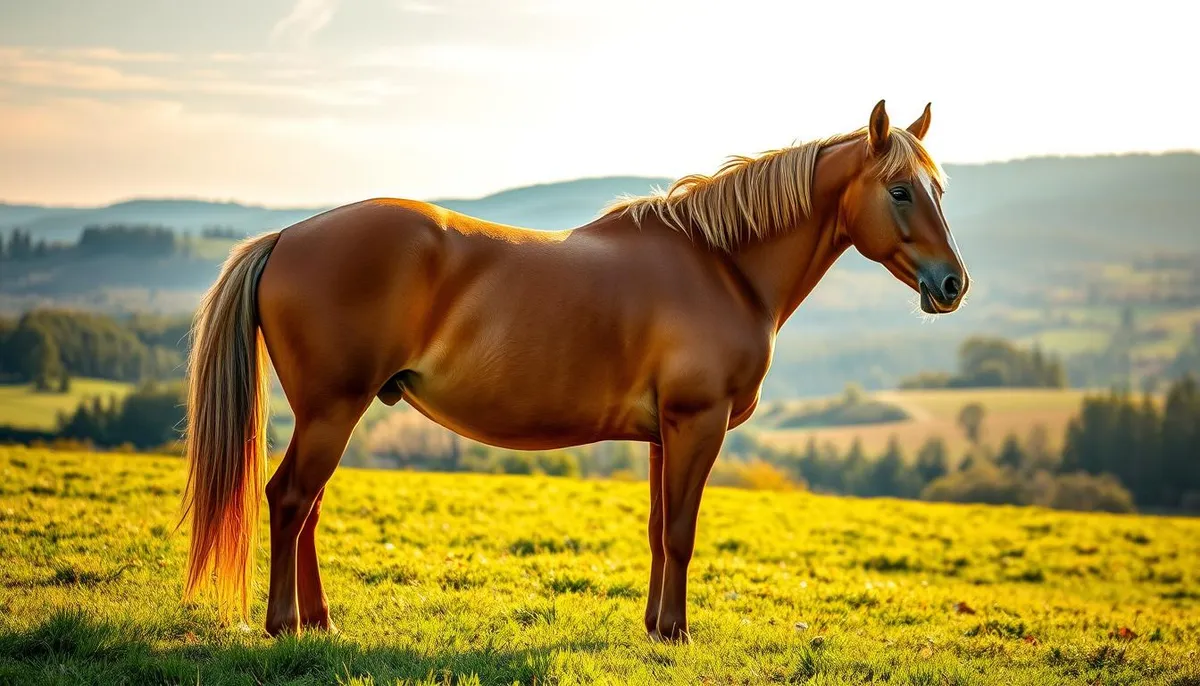
The Comtois horse is solid, short-legged, and very noble. It represents the elegance and strength of the French equestrian heritage. Recognizable in photos taken in the Jura, like those from Getty Images in January 2024, it showcases its power.
Its height ranges from 1.50 to 1.65 m, and it weighs between 650 and 800 kg. Thanks to its compact body, it offers a light traction that is very effective. It is valued for its gentleness and ease of handling, especially for recreational driving.
In 2012, it was the number one draft horse breed in France. More than a third of draft horses belonged to this breed. This clearly demonstrates its popularity and vitality.
The Comtois is a horse that has retained its roots while adapting. Its coat varies from bay to copper, often with blonde mane. These horses combine strength and calmness, which is perfect for working in vineyards or forests.
La Sellerie Française offers quality equipment for the Comtois horse. You will find pieces made in France, in limited series or custom-made. This is ideal for ensuring comfort, reliability, and durability in driving.

Key Points
- Iconic breed of Burgundy-Franche-Comté, often highlighted in the Jura.
- Robust morphology: 1.50 to 1.65 m for 650 to 800 kg.
- Gentle and docile temperament, ideal for driving and light traction.
- Regular gaits and recognized pulling power on varied terrain.
- First draft breed in France in 2012, reflecting a living French equestrian heritage.
- Copper-colored coat with light mane, a visual signature of the current type.
- High-end equipment available at La Sellerie Française for sustainable use.
Origins and History of the Comtois Breed
The Comtois breed has its origins in the Franche-Comté region. Over the centuries, it has been influenced by Germanic and Eastern cultures. Thus, it became a strong and maneuverable draft horse, essential in both rural and urban areas.
From the Burgundians to Franche-Comté: Historical Roots
In the 5th century, the Burgundians introduced horses into the Germanic tradition in Franche-Comté. These animals adapted to the local terrain and developed their endurance.
Later, Spanish influence brought in Eastern stallions, which improved the breed. These crossbreeds created a reliable and sought-after Comtois breed.
From Draft Horse to Modern Uses
Previously, the draft horse was crucial for agriculture, transport, and other tasks. During the Belle Époque, France had three million draft horses. Even Paris used 80,000 horses for transport in 1892.
The Comtois breed stands out for its quiet strength and excellent driving ability. Its history illustrates why it remains important both in the city and in the countryside.
The Turning Point of Mechanization and Conversion
After 1945, tractors began to replace horses, especially in the 1950s. This evolution affected all draft horses, but the Comtois found new roles.
It returned to driving for leisure or prestige reasons. It is also used by public services for various tasks. Today, it is the most widespread draft horse breed in France, a true sign of success.
| Period | Key Milestones | Territories | Dominant Functions | Impact on the Comtois Breed |
|---|---|---|---|---|
| 5th–16th centuries | Burgundian Origins, Germanic roots | Franche-Comté | Local agricultural traction | Consolidated endurance and hardiness |
| 16th–17th centuries | Introduction of Eastern stallions | East of France | Driving and hauling | More harmonious and maneuverable model |
| 19th–early 20th centuries | Golden age of the draft horse | France, Paris | Agriculture, urban transport | Notoriety and spread of the Comtois breed |
| 1950s | Rapid mechanization | All of France | Replacement by tractors | Decline in numbers, beginning of conversion |
| Late 20th–21st centuries | Return of ecological uses | Communities and forests | Driving, logging, urban services | First draft breed in numbers, strong heritage image |
Characteristics of the Comtois Horse and Physical Traits
The Comtois, a famous breed from Franche-Comté, is appreciated for its compact size and proud appearance. It is the product of a rustic heritage, with physical characteristics suited for work without sacrificing comfort and agility. It excels in various tasks, from plowing to driving.

Height, Weight, and Morphology: 1.50 to 1.65 m for 650 to 800 kg
The Comtois measures between 1.50 and 1.65 m at the withers and weighs between 650 and 800 kg. This breed is characterized by a short back, a wide chest, and strong thighs. With a robust bone structure, a muscular neck, and an expressive head, it often has a beautiful copper bay coat and blonde mane.
Temperament: Gentleness, Docility, and Pulling Power
The Comtois is known for its kindness and docility. It is calm and determined, capable of working in the city or on hilly terrain. Its ability to pull 1.5 times its weight makes it a safe choice for both novices and professionals.
Gaits and Driving Ability
At a walk, it moves at a speed of 3 to 6 km/h, with a smooth motion. Its trot is steady and well-balanced, perfect for demonstrations and light tasks. The unique combination of its structure and endurance provides it with excellent maneuverability and consistent strength when driven.
Coat of the Comtois Horse: Evolution and Particularities
The color of the Comtois breed tells fascinating stories. The evolution of the Comtois coat has changed according to public preferences while maintaining its functionality. Its unique aesthetic particularities are immediately noticeable, blending tradition and precise selection.
From Dark Bay Coat and Black Mane to Blonde Mane
Initially, the Comtois horse coat resembled that of the Ardennais with a dark coat and black mane. The hooves, often a deep black, were valued for their strength. This characteristic has remained a symbol of the Comtois breed.
Today, the color of the Comtois blonde mane is more common. The color of their coat highlights their thick neck and tail, emphasizing important aesthetic particularities for enthusiasts and judges.
Post-War Crossbreeding for an Aesthetic Signature
After World War II, selection favored driving as a leisure activity and a sign of prestige. The introduction of chestnut stallions lightened the mane and created a brand image. This marked a key stage in the evolution of the Comtois coat, with Comtois blonde manes becoming iconic.
The blend of copper-colored coat and often wavy blonde mane enhances their shape. In competitions, this contrast improves the spectacle and the image of the Comtois breed.
Observed Variations: Blonde and Sometimes Black Manes
There are variations, such as blonde or black manes, with different shades of coat. These differences still align with the breed standard and reinforce its identity.
In competitions and presentations, these color variations offer beautiful harmonies with the equipment. They add to the aesthetic appeal while respecting the historical heritage of the Comtois breed.
Comtois Horse in Its Current Uses
The Comtois horse is versatile and reliable. It is perfect for tasks requiring precision and calmness. With its steady gait and strength, it is widely used both in the city and in the countryside, reducing noise and pollution.
Use of the Comtois Horse in Leisure and Prestige Driving
In France, the Comtois horse is famous for its beauty and gaits. It is ideal for leisure driving, competitions, and parades. Thanks to its calmness, it is easy to handle even in crowded places.
Its appearance is not the only important factor; the equipment is also crucial. Well-fitted harnesses and quality gear ensure safety. For this, La Sellerie Française offers harnesses and bridles made for the powerful Comtois.
Light Traction, Vineyard Work, Market Gardening, and Logging in Forests
The Comtois is perfect on delicate terrains. In vineyards, it does not compact the soil while being efficient. Its work is precise and consistent, ideal for market gardening.
For logging in forests, it is exceptional. It can pull much more than its weight, avoiding excessive damage to the soil.
Ecological Role and Return to the City: Maintenance and Collection
The Comtois helps reduce pollution in cities. It is used to maintain parks, water plants, and collect waste. Its almost unnoticed presence and gentleness improve community life.
In addition to protecting the environment, it creates jobs. With proper training and suitable equipment, it offers a regular and appreciated service.
| Use | Advantages of the Comtois | Key Equipment | Performance Indicators |
|---|---|---|---|
| Leisure Driving and Prestige | Stable gaits, docility, heritage image | Complete harnesses from La Sellerie Française, adjustable shafts | Smooth driving in urban environments, public safety |
| Utility Traction in Vineyards and Market Gardening | Manoeuvrability between rows, low soil compaction | Draft collars, short traces, inter-row tools | 3–6 km/h at a walk, precision over repeated lengths |
| Forest Logging | Power, access on sensitive terrains | Logging chains, carts, sliding pads | Pulling ≈ 1.5× weight dynamically, reduced impact on undergrowth |
| Ecological Urban Services | Low noise, reduced carbon footprint, social connection | Horse-drawn vehicles, light bins, watering systems | Regularity of rounds, user satisfaction |
Breeding Horses and Market: From Breeding to Comtois Horse Listings
The Comtois represents 37% of draft horses in France in 2012. It is at the top of breeding. Breeders work on lots ready for driving and farming. They aim to create rustic and easy-to-manage horses for a diverse market.
The Comtois selection highlights docility and a beautiful copper coat. These qualities make the foals attractive. Buyers want well-bred horses with a soft mouth. They also seek good gaits, whether in the city or countryside.
Comtois horse listings are booming thanks to urban and eco-traction. Demand comes from all over the world. Buyers want a reliable and elegant horse. They look at its history and behavior in the city.
Good harnessing is key. Durable and custom equipment adds to safety in driving. La Sellerie Française offers perfect harnesses for Comtois horses. They are designed to fit the horse well.
Ecological practices boost the use of horses in cities and countryside. This helps breeding and local craftsmanship. The draft horse market becomes more visible, with horses ready for work.
| Key Criteria | Market Expectations | Value Indicator | Impact on Comtois Horse Listings |
|---|---|---|---|
| Model & Morphology | Open shoulder, strong back, healthy conformation | Consistency of gaits at walk and trot | Highlighting measurements and regularity |
| Temperament | Docility, measured responsiveness, calm in the city | Driving tests on varied courses | Accurate description of observed behaviors |
| Finish & Training | Educated horse, responsive to commands, ready to work | Number of outings, type of work performed | Video evidence and service history |
| Aesthetic of the Breed | Copper/chestnut coat, typical light mane | Compliance with the Comtois selection standard | Photos in natural light, details of the mane |
| Equipment | Robust harnesses and collars, precise adjustments | Made in France equipment, ongoing maintenance | Safety and durability arguments |
| Versatility | Driving, vineyards, market gardening, light logging | Tests in real conditions | Clear positioning in the draft horse market |
Key Takeaway for Buyers: choose a Comtois that suits your needs. Carefully check the driving and made in France equipment. A good listing with precise information helps make a quick decision and adds value to the horse.
Conclusion
The Comtois horse has a rich history and a specific purpose. Originating from Franche-Comté and influenced by the Burgundians, it has stood the test of time. Even though its appearance has evolved, transitioning from dark to blonde after the war, it has maintained its elegance.
Now the leading draft breed in France, it demonstrates incredible strength. It can pull 1.5 times its weight. It is also used in agriculture, viticulture, and for maintaining forests. In cities, it helps with waste collection and maintenance.
The future of the draft horse blends tradition and innovation. The Comtois is becoming an eco-responsible choice for driving. Companies like La Sellerie Française are creating modern equipment. These tools provide comfort and safety.
In conclusion, the Comtois plays a key role in creating eco-responsible communities. It combines beauty and strength for sustainable applications. With the right equipment and training, this heritage promises a bright future for draft horses.
FAQ
What is the Comtois horse and where does it come from?
The Comtois horse comes from Franche-Comté, since the 5th century. The Burgundians introduced it there. It is a regional emblem, often photographed in the Jura. Its history is rich, blending Germanic influences and Eastern contributions.
What are the characteristics of the Comtois horse?
This horse measures between 1.50 and 1.65 m for 650 to 800 kg. It is compact, muscular, and very strong in traction. People appreciate it for its kindness, docility, and courage.
What is the typical coat of the Comtois today?
Today, the Comtois has a bay or copper chestnut coat, often with light mane. This appearance became typical after 1945. Some have dark manes.
How has the Comtois breed evolved over time?
Once similar to the Ardennais type, with a dark coat, the Comtois has changed. Post-war selection favored blonde manes. The breed remains strong while being more elegant.
What is the Comtois horse used for today?
It excels in leisure driving and ceremonies. It is also used in vineyards, for market gardening, and for logging. Cities employ it for maintaining green spaces and for ecological missions.
What is its place among draft horses in France?
In France, the Comtois is number one among draft horses. In 2012, it represented 37% of this population. It is the preferred choice for driving and traction.
What is its pulling capacity and work speed?
A Comtois horse can pull up to 1.5 times its weight. It moves at 3 to 6 km/h at a walk. It combines strength and agility, which is perfect for precise work.
Is the temperament of the Comtois suitable for beginners?
Absolutely. Its gentle and docile character helps novices, especially in driving. Well-trained, it is safe and reliable, even in busy urban environments.
Why has the blonde mane become the breed's signature?
With the arrival of agricultural machines, the breed shifted towards leisure driving. Breeders selected stallions to obtain light manes. This reinforced its elegant image and popularity worldwide.
What coat variations are observed today?
Most Comtois have a copper, chestnut, or bay coat, often with blonde manes. There are still individuals with black manes. These variations fit within the breed standard.
Where can I find a reputable Comtois horse breeder?
Look for recognized breeders and breed associations. Ensure the documents are compliant and the horses are well-selected. Visiting the breeding facility will allow you to assess the health and training of the animals.
What should I look for in a Comtois horse listing?
Check the age, height, weight, color, training, and previous use of the horse. Demonstration videos and trials are a plus.
What equipment is recommended for a Comtois in driving?
Opt for a sturdy and well-fitted harness. La Sellerie Française offers quality equipment, handcrafted in France. They are perfect for Comtois horses.
Is the Comtois suitable for ecological missions in the city?
Yes. It is ideal for maintaining green spaces and collecting waste due to its gentleness and agility. It contributes to preserving the natural heritage.
How to care for a Comtois horse at work?
Provide a balanced diet and regular care. Monitor its health closely with a veterinarian. A good harness and appropriate breaks will ensure a long and effective career.
Is the Comtois suitable for logging in forests?
Absolutely. It is valued for its strength and ability to move on difficult terrains. Guided by a driver, it maneuvers loads with precision without damaging the soil.
Does the Comtois have good endurance in driving?
It has excellent endurance at a walk and trot. Stable and self-assured, it ensures quality performances safely.
Does the weather influence its performance?
As it is very resilient, it adapts well to changing weather conditions. With the right equipment, it remains comfortable and safe, regardless of the weather.
Why choose a Comtois for a leisure driving project?
For its easy-going character, neat appearance, and impressive strength. It guarantees a pleasant experience and makes a statement during competitions and events.
What advantages does it have for viticulture and market gardening?
It works with precision and reduces soil compaction. Its controlled strength is perfect for agroecology.
How has mechanization changed the Comtois breed?
With tractors, the breed has turned to other uses without losing power. It remains renowned for its gentleness and work aptitude.
Is the Comtois valued internationally?
Certainly. Its appearance, reliability, and elegance have charmed beyond borders. It is now present in various projects and shows internationally.
What impact does the choice of harnessing have on the value of a Comtois?
A good harness increases safety, comfort, and the working duration of the horse. It also adds value during resale. La Sellerie Française offers custom equipment, ideal for them.
What qualities should I look for in a young Comtois when buying?
Look for a horse that is calm, obedient, and well-proportioned. Good training and sociability are crucial.
Is the Comtois suitable for waste collection in the city?
Absolutely. Its use by cities for garbage collection is gaining popularity. It is appreciated for its regularity and low environmental impact.
What are the Comtois's strengths in driving competitions?
It stands out for its noble gaits, regularity, and unique appearance. Its ease of handling is a major asset for both judges and the public.
How is the market for Comtois horse listings doing?
There is a strong demand for well-trained horses suitable for driving. The market is vibrant, attracting enthusiasts for various uses.