
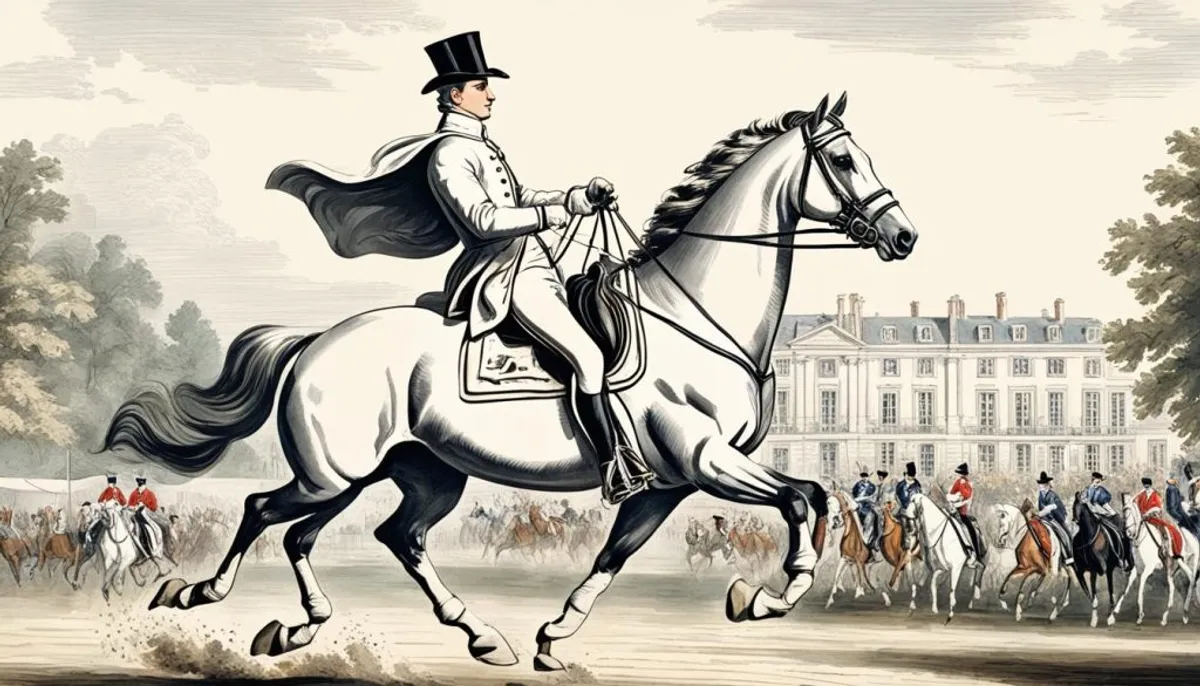
French horseback riding is not just a sport. It is an art with centuries of history. Since the time when horses were tamed by ancient humans, horseback riding has changed significantly. It has responded to the needs of armies, new technologies, and lifestyle trends. The history of horseback riding in France begins long before the Middle Ages.
In the Middle Ages, riding schools appeared in Paris and changed the training of horses. The Cadre Noir de Saumur, known worldwide, symbolizes this tradition. Today, French horseback riding is appreciated everywhere for its elegance and technique.
Main points to remember
- The fascinating history of French horseback riding, an equestrian art rich in centuries-old traditions
- The evolution of French horseback riding from antiquity to the present day
- The influence of French horseback riding on cavalry, equestrian sports, and culture in France
- The international prominence of French horseback riding, particularly with the Cadre Noir de Saumur
- The preservation of the French equestrian heritage through the centuries
The origins of horseback riding in France
Horseback riding in France has a long history that begins several millennia ago. It started with the domestication of horses in the steppes of Central Asia. At that time, in France, riders used simple equipment. They had basic bridles, leather saddles, and ropes to guide the horses.
The domestication of horses in France
The beginnings of horse domestication in France date back to the Bronze Age, around 2000 BC. Archaeological evidence shows that horses were used for transportation and pulling loads. Over time, breeding and training of horses improved in France. This contributed to creating a captivating and rewarding history of the horse.
The importance of horseback riding in ancient France
Since ancient France, horseback riding has played a major role, especially in the military. With more advanced saddles and the introduction of stirrups, soldiers could better wield their weapons. The horse in ancient France became an important element for winning battles and showcasing the strength of the army.
| Era | Use of the horse | Role of the horse in ancient French society |
|---|---|---|
| Bronze Age | Transport, pulling | Domestication, early breeding |
| Antiquity | Military activities | Key element of military strategy and power |
Horseback riding has, therefore, had a major impact on the history of the horse in France. It has left a strong legacy that has shaped French society since ancient times.
Horseback riding in the Middle Ages
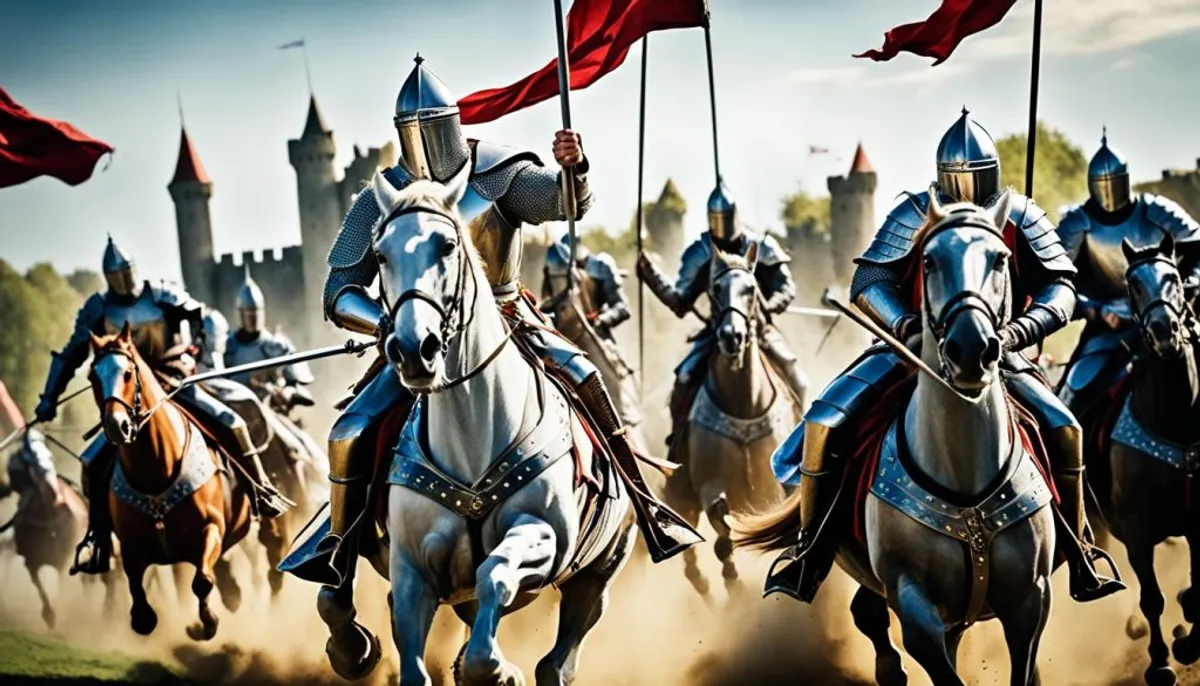
Horseback riding was vital in the medieval French heavy cavalry. War saddles supported the riders, allowing them to wield weapons and lances easily.
The equestrian equipment improved, leading to armor for horses and riders. This armor protected them from enemy attacks during battles.
Military horseback riding and knight armor
Riders mastered advanced military horseback riding. Special saddles provided them with balance and comfort for combat. Armor, for both horses and riders, was designed for maximum protection.
It was vital for the French heavy cavalry to be well-equipped, ensuring its success on the battlefield.
The role of horses in medieval battles
Horses were essential in medieval battles. They transported knights into combat. The strength of the horses was decisive, making the French heavy cavalry a major asset.
The tactics of medieval horseback riding in France greatly influenced the outcome of wars.
| Medieval equestrian equipment | Use |
|---|---|
| War saddle | Stabilize the rider for weapon handling |
| Horse armor | Protect mounts against enemy weapons |
| Rider armor | Protect riders against enemy weapons |
The Renaissance and traditional French horseback riding
The Renaissance was a time of great cultural wealth and evolution for French horseback riding. Saddles became more comfortable thanks to leather padding. Saddle covers were decorated with elaborate embroidery.
During this period, French horseback riding reached a level of excellence. It developed an approach based on harmony between man and horse. This method excluded the use of force and coercion. The refinement of horseback riding at the time gained it a certain renown, influencing all of Europe.
| Characteristics of French horseback riding during the Renaissance | Influence on European horseback riding |
|---|---|
|
|
The influence of the Renaissance on horseback riding played a major role. It propelled French horseback riding to the top of global traditions. It established it as one of the most sophisticated and influential in the world.
The history of French horseback riding
Ancient and exciting, French horseback riding finds its origins in antiquity. At the beginning of the 20th century, Paris was a major center of French horseback riding. This was due to famous horsemen who opened many riding schools.
Challenges like war and urbanization threatened the presence of horses in Paris. But places like l'Étrier de Paris held strong despite everything.
The emergence of riding schools and equestrian schools
French riding schools greatly contributed to the equestrian art in France. They trained generations of remarkable horsemen. These experts increased the influence of French horseback riding in Europe.
The Cadre Noir de Saumur particularly shone internationally. It was crucial in training equestrian leaders from around the world.
| Riding schools in Paris | French riding schools |
|---|---|
| L'Étrier de Paris | Cadre Noir de Saumur |
| École Militaire | Écurie Nationale d'Équitation |
| Manège des Tuileries | École Nationale d'Équitation |
Throughout the 20th century, horseback riding in France maintained its global prestige. This was possible thanks to riding schools in Paris and French riding schools.
Horseback riding in modern times
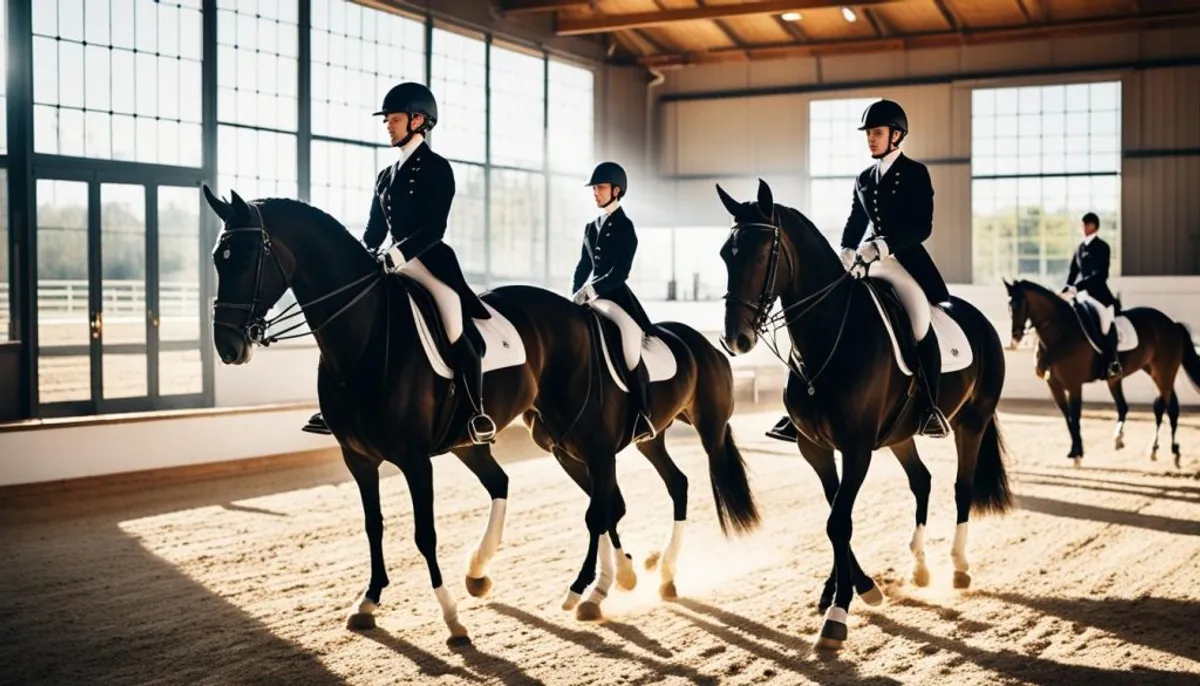
In the 20th century, horseback riding in France changed thanks to technology. Saddles and equipment evolved significantly. This increased comfort, safety, and performance for riders.
The evolution of saddles and equipment
Saddles are now made with materials like synthetic leather. They are lighter and last longer. Stirrups have also been improved to prevent falls.
Today, high-tech equipment is used. There are sensors to measure performance and the health of horses. This helps riders train better.
| Element | Evolution | Advantages |
|---|---|---|
| Saddles | Use of modern materials (synthetic leather, high-density foams) | Lightweight, durability |
| Stirrups | Integrated safety designs | Fall prevention |
| Cutting-edge equipment | Performance sensors, health monitors for horses | Tracking the physical condition of horses, optimizing training |
Technological changes have greatly aided horseback riding in France. Now, riders enjoy more comfort, safety, and performance.
The international prominence of French horseback riding
French horseback riding has made a name for itself worldwide. Its excellence and long history attract all eyes. The Cadre Noir de Saumur symbolizes this heritage and the perfect relationship between man and horse. This is evident in their elegance and the subtlety of their movements.
Horsemen trained at the École Nationale d'Équitation are key to this reputation. During performances, they showcase their talent, captivating audiences from around the world. This highlights the beauty of the French equestrian heritage.
The competitive success of the riders from the Cadre Noir confirms their expertise. Their victories in major equestrian competitions bolster the reputation of the Cadre Noir de Saumur. This also emphasizes the quality of training at the École Nationale d'Équitation.
Thanks to its representatives, French horseback riding dazzles on the world stage. It keeps alive a centuries-old tradition and celebrates French equestrian traditions everywhere.
Contemporary French horseback riding
Today, French horseback riding evolves through various equestrian disciplines. In France, show jumping, dressage, and endurance attract riders. They combine athletic performance with respect for horses, a legacy of France's equestrian history.
French riders shine in major events and competitions. The Cossé-Brissac competition is a must-attend event, organized by l'Étrier de Paris. It hosts the best riders, showcasing contemporary French horseback riding.
Popular equestrian disciplines in France
- Show jumping
- Dressage
- Endurance
Major events and competitions
- Cossé-Brissac competition (Étrier de Paris)
- French Championship in show jumping
- Dressage World Cup
| Competition | Location | Discipline |
|---|---|---|
| Cossé-Brissac competition | Paris | Show jumping |
| French Championship in show jumping | Lamotte-Beuvron | Show jumping |
| Dressage World Cup | Omaha, United States | Dressage |
This diversity of disciplines and competitions contributes to the renown of contemporary French horseback riding. It continues to shine, blending tradition with innovations in the equestrian world.
Conclusion
The history of French horseback riding is incredible. It has very ancient roots and a great reputation worldwide. From the domestication of horses by our ancestors to the success of the Cadre Noir de Saumur, this art has progressed through the ages. It has followed changes in military needs, lifestyles, and technological advancements.
Today, French horseback riding proudly maintains its past. It skillfully marries tradition with innovation. It offers riders of all levels a unique adventure. It is a harmonious, elegant experience that deeply respects the horse. France's rich equestrian heritage inspires the entire world today. It demonstrates the beauty and durability of this unique equestrian culture.
From ancient times to today, horseback riding in France has continuously changed to adapt. It has followed military needs, social evolutions, and technological advancements. Now, it combines tradition with new ideas. This creates a special experience filled with harmony, elegance, and respect for the horse. Its global reputation shows how rich and enduring this equestrian culture is.
FAQ
What is the history of French horseback riding?
A long time ago, in Central Asia, humans began to tame horses. Upon arriving in France, horseback riding became very important, especially in the armies.
In the Middle Ages, horses were essential for battles. Special saddles and armor were invented. During the Renaissance, French horseback riding became a true work of art.
What is the importance of horseback riding in French history?
It played a key role in history by assisting knights in battles. Horses were vital for striking power.
Today, the art of French horseback riding is recognized everywhere. The Cadre Noir in Saumur is particularly famous for its excellence.
What are the main evolutions of French horseback riding over the centuries?
Over the centuries, horseback riding has changed significantly to adapt. In the Middle Ages, saddles were improved to make them more practical.
The Renaissance period saw the birth of more comfortable and beautiful saddles. Then, innovations in the 20th century revolutionized horseback riding.
What is the influence of the Cadre Noir de Saumur on French horseback riding?
The Cadre Noir de Saumur is very important for French horseback riding. It embodies excellence and transmits knowledge.
They highlight the harmony between human and horse. Through their demonstrations and successes, they promote this art worldwide.
What are the popular equestrian disciplines in France today?
Today, in France, show jumping, dressage, and endurance are widely practiced. Riders participate in prestigious competitions.
Like the Cossé-Brissac, which is a major event every year in Paris. French horseback riding follows its traditions while integrating new technologies.