
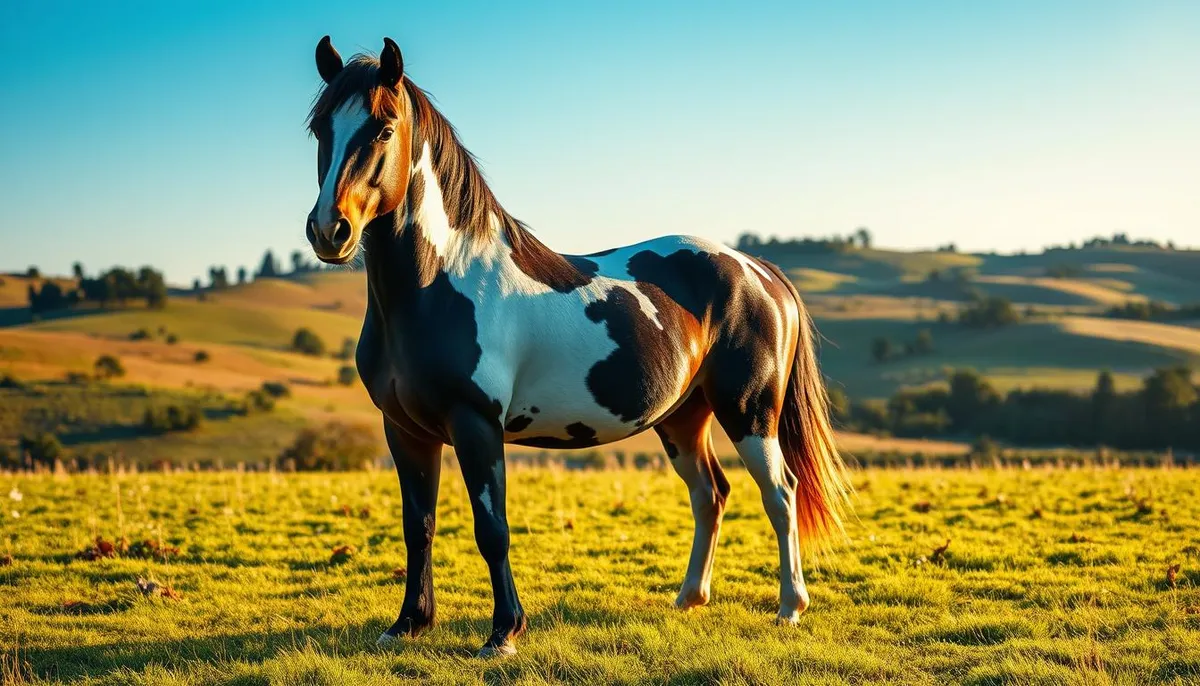
The pinto horse first attracts attention with its unique coat. With its large white and colored patches, it resembles a work of art. No matter the color – black, bay, chestnut, or café au lait, it is the patterns that captivate.
The skin of the pinto horse shows a peculiarity: it is pink under the white parts and dark elsewhere. Its eyes can be blue or dark. Its mane also mixes light and dark shades.
The origins of the pinto horse date back far, from cave paintings to current parades. In Europe and America, it has left its mark in history. The Paint Horse is known for its beautiful appearance and agility. The term “Pinto” applies to various horses with this coat, regardless of breed. This knowledge of patterns – tobiano, overo, or tovero – is crucial.
Proper equipment is essential for the horse's well-being. Quality saddlery, like those made in France, ensures a good fit and more comfort. French Saddlery, with its custom and limited edition creations, prioritizes a perfect fit for each horse. This quality equipment strengthens the bond between the rider and their pinto horse, regardless of the terrain.
Key Points
- The pinto coat is a pattern (tobiano, overo, tovero), not a color.
- Pink skin under the white, dark skin under the colored areas, blue eyes possible.
- Origin of the pinto horse rooted in equestrian culture in Europe and America.
- Paint Horse = recognized breed; Pinto = type of coat, across all breeds.
- High-end saddlery made in France for comfort, safety, and durability.
- French Saddlery offers tailored and elegant handcrafted equipment.
- The characteristics of the pinto horse reveal themselves both at work and in parades.
Origin of the Pinto Horse and Cultural Heritage
The equestrian culture has always loved pinto horses. Their origin goes back to cave paintings and continues in riding schools. The patches of their coat symbolize a rich cultural heritage, from Europe and America to the steppes.
From Cave Paintings to Modern Breeding
Spotted horses are an ancient theme in art, present at Lascaux and Pech Merle. Their popularity has been reinforced by selective breeding for parades and war.
The Cadre Noir of Saumur and the Spanish Riding School have established standards. They have integrated equestrian culture into traditional arts.
Europe, America, and the Rise of Spotted Coats
The Camargue festivals in Europe celebrate the pinto horse, as does the Feria del Caballo in Jerez. These horses attract attention with their colors.
In the United States, the legends of the Sioux and Comanche also celebrate pinto horses. Ranches and rodeos testify to this passion, enriching our cultural heritage.
Paint Horse vs Pinto: Coat, Breed, and Type
The Paint Horse is recognized for its lineage and sporting talents. The Pinto, on the other hand, is defined by its varied coat, with no reference to a specific breed.
A horse can be a Paint Horse if it meets certain standards. Or Pinto, if its coat follows a set of rules. These distinctions clarify the categories.
| Criteria | Paint Horse | Pinto | Concerns for the Buyer |
|---|---|---|---|
| Status | Official breed with pedigree | Category based on coat | Check papers and stud-book |
| Focus | Conformation and performance | Spotted pattern (tobiano, overo, tovero) | Align use with goals |
| Geographic Origin | United States, spread in Europe | International, multi-breed | Compare standards Europe and America |
| Typical Use | Western, ranch, show, performance | Show, leisure, varied parades | Weigh image, budget, and maintenance |
| Cultural Link | American icon and cultural heritage | Striking visual in equestrian culture | Choose based on identity and narrative |
Pinto Horse
The pinto horse fascinates with its pinto coat, featuring vast white and colored areas. These contrasts reveal genetic secrets and a special place in equestrian culture. The characteristics of the pinto horse provide clues about training, health, and recognition.
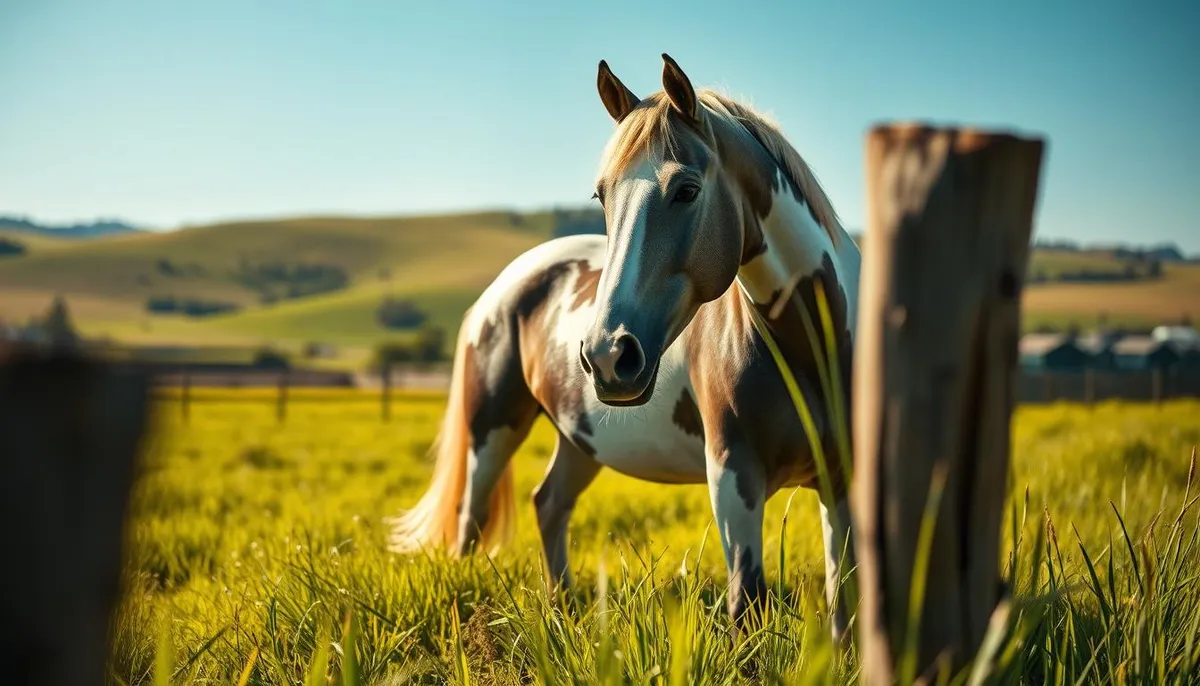
There are mainly three types: tobiano, overo, and tovero. Tobianos have white legs and patches that cross the back. Overos have a colored back and distinct markings on the face. Toveros mix characteristics of both. The color of the pinto coat varies between black, bay, chestnut, and café au lait. This makes each horse visually unique.
Horses with pink skin under the white require more care in the sun. Those with dark areas under the color are better protected. Their eyes can be blue or black. The two-colored traits of their manes affect their look in competition and daily life.
When looking for a pinto horse for sale, it is crucial to distinguish between breed and coat type. An American Paint Horse from the APHA is not just a Pinto. This distinction is important for registries, value, and the horse's use, whether for sport, shows, or trail riding.
| Pattern | Visual Marker | Base Colors | Points of Caution | Common Use |
|---|---|---|---|---|
| Tobiano | White patches crossing the back, often white legs | Black, bay, chestnut, café au lait | Pink skin to protect, two-colored mane | Show, trail riding, western disciplines |
| Overo | Generally colored back, pronounced facial markings | Black, bay, chestnut, café au lait | Photosensitivity of white areas, dermatological follow-up | Presentation, reining, pleasure |
| Tovero | Mix of tobiano/overo traits, frequent light eyes | Black, bay, chestnut, café au lait | Sun management, identification through lists and markings | Model and gait competitions, leisure |
Characteristics of the Pinto Horse and Pinto Coat
Observing a pinto horse is like reading a living map. Its pinto coat shows contrasts and white markings. The colors and distribution of patches tell stories of tobiano, overo, and tovero patterns.
Tobiano, Overo, and Tovero: Patterns and Visual Markers
The tobiano has large white patches that cross the back. Its legs are often white, and its head is colored, sometimes with a thin stripe.
The overo features patches that do not cross its back. Its head may be marked with white, with irregular markings and stockings.
The tovero mixes these characteristics. It has a very marked head, white areas touching the back, and clear transitions, ideal for recognizing the coat during purchase or competition.
Possible Colors: Black, Bay, Chestnut, Café au Lait
The base colors of the pinto horse are black, bay, chestnut, and café au lait. These bases accentuate the contrast of the white markings and highlight the contours of the body.
The bay brings out the light patches. On a chestnut, the white is striking. The black offers a strong contrast, and the café au lait makes the overall appearance softer.
Pink Skin Under White Areas, Dark Skin Under Colored Areas
Under the white markings, the skin is pink, indicating depigmentation. The colored areas have dark skin, marking a clear separation.
This difference highlights the pattern of the horse, whether it is tobiano, overo, or tovero. It helps to precisely identify the pinto coat.
Mane and Distinctive Markings: Stripes, Stockings, Blue Eyes
The manes vary from black to white, adding texture. Stripes on the forehead, stockings on the legs, and other white markings make each horse unique.
Blue eyes are common, especially if the horse has large markings on the head. This detail, visible in overo and tovero, enriches the identification of pinto horses in breeding and competition.
Breeding Pinto Horses, Well-Being, and Uses
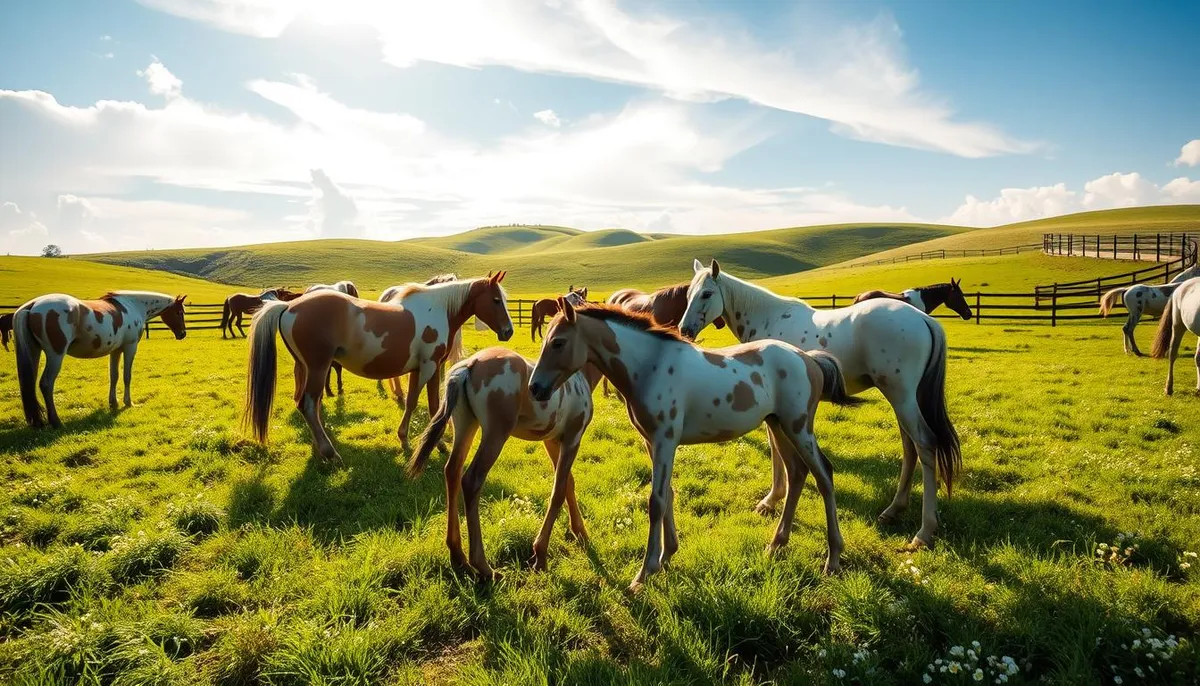
People seek pinto horses that are both reliable, resilient, and beautiful. In their breeding, they strive to find the perfect balance. They focus on their shape, spirit, and distribution of patches. This improves their well-being, performance, and appearance.
Accurate tracking of genealogy and DNA testing ensures their health and the beauty of their coat. Appropriate horse equipment aids in better mobility and prevents daily irritations.
Select Breeding and Goals (Sport, Show, Trail Riding)
Breeding programs aim for specific goals like dressage, barrel racing, show halter, or trail rides. The Paint Horse is particularly valued for its versatility. It is selected for its fluid movements and stable character.
High-quality saddles and equipment offer precise adjustments for training and competitions. French manufacturers, such as French Saddlery, create custom equipment. They are designed to last long and to assist precisely.
Sun Sensitivity of Depigmented Areas and Appropriate Care
The light skin areas of pinto horses require special care. Their sun exposure should be limited, sunscreen applied, and protective gear used. For example, UV masks, light blankets, and fly sheets, depending on the weather.
Regular grooming of their two-colored coat keeps their skin healthy and their coat beautiful. This type of grooming encourages their well-being. It also reduces irritations caused by sweating or contact with sand.
History of Uses: War, Agriculture, Parades, and Shows
Historically, these horses have been used in many ways: as war mounts in Europe, ranch horses in America, and as stars of parades. Their unique coat has always been highlighted in equestrian art, from Andalusia to the Camargue.
Today, this heritage is showcased with appropriate gear and quality saddlery. This approach helps preserve their utility while caring for their aesthetics, whether in competition, on trails, or in shows.
Choosing a Pinto Breed Horse or a Pinto Horse for Sale
Before making your choice, consider the use you plan: sport, trail riding, show, or simply for pleasure. Pinto breed horses offer advantages such as traceability and specific selection. A pinto horse without papers may be more suitable if you have a small budget. It is important to spend time with the horse before deciding. See it, touch it, and try it out to ensure your choice.
Buying Criteria: Conformation, Temperament, Pattern, and Health
- Conformation: the back should be balanced, the shoulder free, the neck well set, and the limbs well aligned to avoid wear.
- Temperament: the horse should be easy to lead on the ground and calmly responsive under saddle. The energy should match your activity.
- Pattern: choose between tobiano, overo, or tovero. But remember, suitability takes precedence over color, especially in jumping or endurance.
- Health: have the horse examined by a veterinarian, check its teeth and hooves. Also, test its way of moving on different terrains.
Differentiating Breed, Coat Type, and Papers
The Paint Horse is recognized as a breed with specific standards and a registry. The term Pinto refers more to the coat type, found in several breeds.
It is crucial to check the horse's documents. Look for information on its origins, identification, lineage, and performance history. This ensures you are buying a true pinto breed horse and secures your purchase.
Maintenance Costs, Saddlery, and Appropriate Equipment
Consider maintenance costs: farrier, feed, vaccines, dental care, and unexpected expenses. The white areas of the coat can be sensitive to the sun. Think about using sunscreen, masks, and nose protections.
Opt for a well-fitted French saddlery. Whether for trail riding, shows, or sport, French Saddlery offers high-quality saddles and equipment. They are custom-designed to fit pinto horses perfectly and ensure rider comfort.
Where to See/Try: Stud Farms, Specialized Breeders, Events
Visit stud farms and specialized breeders to assess the horse's movement, pattern, and conformation. Also, attend equestrian competitions in Europe. This allows you to compare different horses, see how they are groomed and handled.
Arrange trials in various situations, planning your route using specialized apps. This helps better define your buying criteria. You can also test if you and the horse make a good team.
| Decision Point | Why It’s Key | To Check On-Site |
|---|---|---|
| Conformation and Legs | Durability and comfort in the saddle | Shoulder, back, hocks, trajectory of the hind legs |
| Temperament | Safety and progression | Response to aids, management of the environment |
| Papers and Studbooks | Traceability, resale value | Lineage, numbers, Paint registry vs Pinto type |
| Maintenance Costs | Realistic long-term budget | Farrier, sensitive skin, mane care |
| Saddlery and Equipment | Morphological adaptation | Saddle fit, bridle, protections |
Conclusion
The pinto horse is beautiful and useful. Its colors include tobiano, overo, and tovero. They rest on a base of black, bay, chestnut, or café au lait.
Pinto horses have pink skin under the white and black elsewhere. They can have blue eyes and two-colored manes. They are part of equestrian culture, combining art, work, and sport.
Since prehistory, these horses have played a role in wars, agriculture, parades, and shows. It is important to know that the Paint Horse is a breed, while the Pinto refers to a coat. This distinction helps in making a good choice when selecting a pinto horse.
Their well-being is essential. Areas without pigment must be protected from the sun. Good grooming is also necessary.
Well-fitted equipment is important to avoid injuries, especially on sensitive skin. In France, French Saddlery offers quality equipment that respects the pinto horse.
By adopting good practices, one can easily evaluate a pinto horse. One can plan breeding and highlight a horse for sale. These choices promote a lasting and harmonious relationship between the horse and rider.
FAQ
What is a pinto horse and how does the pinto coat differ from a color?
A pinto horse has large white and colored patches. It is not a color but a pattern. Patterns such as tobiano, overo, and tovero are on a base color like black or bay.
What are the differences between tobiano, overo, and tovero?
Tobiano has large white patches that cross the back. They often have white legs and a colored head. Overo has white patches without crossing the back, and markings on the face. Tovero mixes these two types.
What is the origin of the pinto horse and its cultural heritage?
Pinto horses have been known for a long time, even in ancient art. In Europe and America, they were used for various reasons. They can be seen in Saumur, Vienna, the Camargue, and Jerez.
Paint Horse and Pinto, what’s the difference?
The Paint Horse is an American breed with sporting skills. Pinto only refers to the coat, across several breeds. A horse is Paint if it is registered; otherwise, it is Pinto.
What base colors can a pinto horse present?
Common colors are black, bay, chestnut, and café au lait. The pinto pattern varies these base colors.
Is the skin of pinto horses more sensitive to the sun?
Yes. The skin under the white patches is pink and sensitive to UV. The colored areas are better protected. Use sunscreen, masks, and light blankets.
Can pinto horses have blue eyes and two-colored manes?
Yes. They can have dark or blue eyes. Their mane can be of several colors. Stripes and stockings help in their recognition.
What are the historical and current uses of pinto horses?
Once used for war and agriculture, today they are in shows and sports. Their appearance and versatility are appreciated.
How to evaluate a pinto horse for sale?
Check its conformation, temperament, health, and coat pattern. Quality is more important than the pattern.
How to differentiate "pinto breed horse" and "pinto horse"?
“Pinto breed horse” is a registered breed like the Paint Horse. “Pinto horse” describes the pattern, regardless of breed. Check the documents to be sure.
What are the specific maintenance costs of a pinto horse?
In addition to regular expenses, protect them from the sun and regularly groom their mane. Use appropriate saddlery for their back.
What saddlery should be preferred for a pinto horse?
Choose quality saddlery that enhances their comfort and athletic longevity. French Saddlery offers custom or limited equipment, made in France.
Where to see and try pinto horses?
Visit stud farms and breeders, participate in equestrian events. Observe and test the horses to find the right one.
What objectives does pinto horse breeding aim for?
The goal is to obtain visually harmonious, high-performing, and healthy horses. They should be good for sport, shows, and trail riding.
What well-being precautions for the pink skin of pinto horses?
Protect them from the sun, use UV protections, and monitor their skin. Good hygiene prevents skin issues.
What distinctive markings facilitate the identification of a pinto horse?
The patches on the head, the color of the eyes, and the stockings help to identify them. This is useful for breeding and competitions.
Is the pinto horse suitable for trail riding?
Yes. They are often calm and well-built for that. Ensure they are well-equipped and gradually trained for trail riding.
What regions and traditions value pinto coats in Europe?
They are famous in Europe, especially in Saumur, Vienna, the Camargue, and Jerez. Their appearances are highlighted in many celebrations.
Why is the pinto horse so appealing in the market?
Their unique beauty, versatility, and clear stud-books, like that of the Paint Horse, make them popular. They are sought after for their looks, temperament, and abilities.