
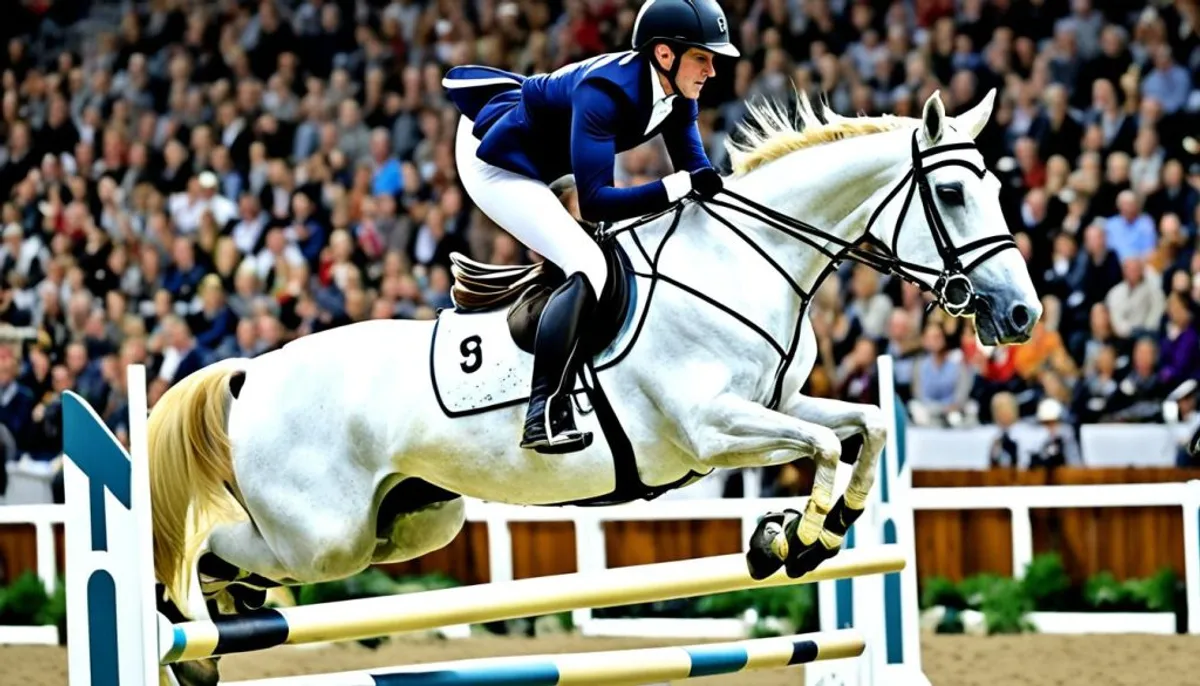
The show jumping is an exciting equestrian sport. Riders and their horses must overcome obstacles by jumping. The height of these obstacles varies depending on the competitions and levels. To succeed, riders must be comfortable, balanced, and confident on their mounts.
Main ideas to remember
- The show jumping is an equestrian discipline where the height of the obstacles is a key element.
- The categories and competition levels define the maximum heights to be cleared.
- Riders must develop specific technical skills to allow their horses to clear the obstacles safely.
- Mastering the height of the obstacles is essential for the performance of both horses and riders in competition.
- Regulations and safety are important aspects to consider in the practice of show jumping.
Introduction to the height of show jumping
The show jumping is a very captivating equestrian sport. It takes place on a course with obstacles. Riders must clear these obstacles without knocking them down.
What is show jumping?
Show jumping is an event that tests technique. And the balance, of the rider and their horse. The goal is to pass the obstacles together, in harmony.
Importance of height for horses and riders
The height of the obstacles is crucial. It requires specific technique from both the horse and the rider. The latter must control speed and direction for perfect performances.
For horses and riders, the height of the obstacles represents a constant challenge. They must always improve their technique to succeed.
Categories of heights for competitions
Show jumping competitions are divided into several categories. Each has a specific maximum obstacle height. The age and experience of the riders and horses influence these heights. Obstacles can range from less than 65 cm for amateurs to 150 cm for professionals.
Maximum heights by age category and level
The heights of the obstacles change according to the participants' category. Young riders and beginners jump lower obstacles. More experienced riders face higher heights.
| Category | Maximum obstacle height |
|---|---|
| Pony | 65 cm |
| Junior | 110 cm |
| Amateur | 105 cm |
| Pro Elite | 150 cm |
Differences between amateur and professional events
Amateur and professional competitions differ in the difficulty of the courses and the height of the obstacles. Amateurs face simpler courses, with heights between 65 cm and 105 cm. Professionals have tougher challenges, reaching heights up to 150 cm.
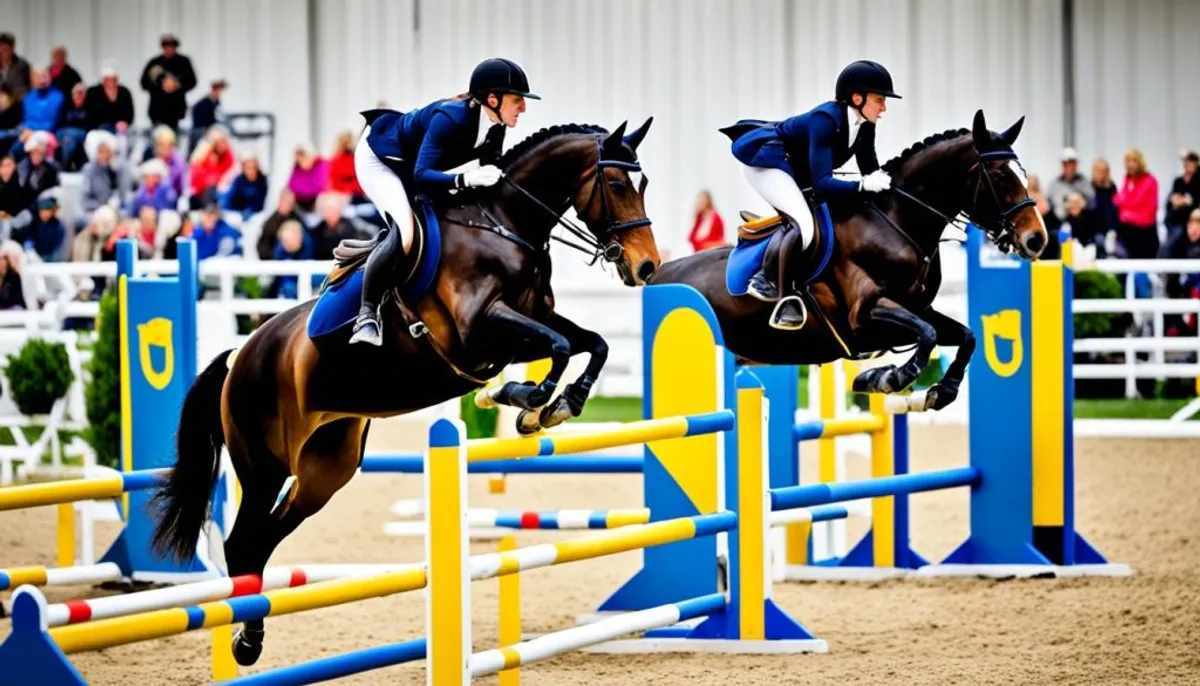
These levels of difficulty show who can participate. Amateur competitions help novices learn. Professionals compete with their trained horses.
Heights of obstacles by level
In the discipline of show jumping, the heights of the obstacles change according to the level of competition. Understanding these differences is crucial for proper preparation, whether you are competing at Club, Pony, or International level.
At the Club level, the obstacles measure between 65 and 105 cm. These challenges help amateur riders improve gradually, with technical levels appropriate to their experience.
The Pony events range from 40 to 130 cm. They offer young riders the chance to gain confidence safely and prepare for larger challenges.
The international levels see obstacles rise up to 150 cm. Here, the best in the world, both horses and riders, showcase their mastery and physical condition.
| Level | Obstacle heights |
|---|---|
| Club Events | From 65 cm to 105 cm |
| Pony Events | From 40 cm to 130 cm |
| International Events | Up to 150 cm |
For all riders, amateur or professional, knowing the obstacle heights by level is vital. It helps in better preparation and facing these challenges with confidence.
show jumping height
Clearing high obstacles on horseback requires coordination between the rider and the mount. They must work together in perfect harmony to control their impulse and balance. Both must prepare physically and mentally for this challenge.
Rider techniques
The rider must be agile and stable to successfully jump high obstacles. They learn to move with their mount, change posture, and use the correct jumping methods. These techniques include how to regain momentum, how to jump, and where to land.
Physical and mental preparation
Improving strength and agility is vital for the rider. This is done through strength training and stretching exercises. They must also work on their self-confidence in themselves and their horse. This will make them calmer in the face of obstacles.
The horses, on the other hand, undergo special training focused on strength, dressage, and agility. All these aspects help them develop the power and technique necessary to jump safely and maintain their balance.
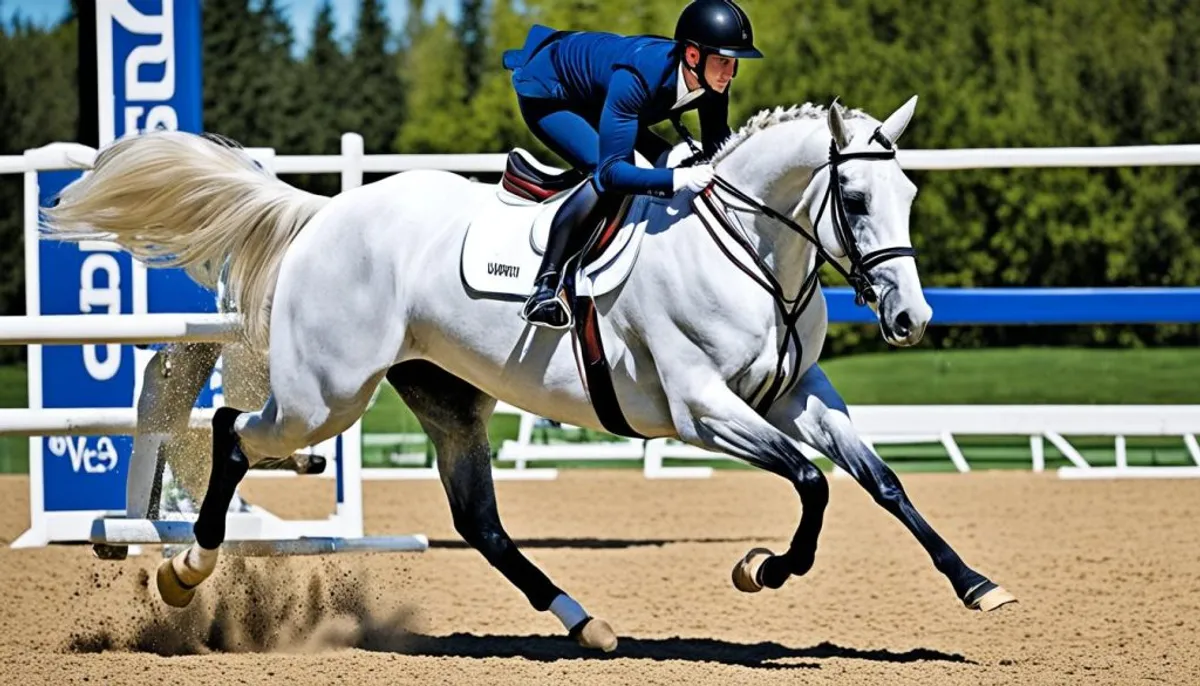
In summary, clearing high obstacles is a beautiful challenge that requires a lot of work. The techniques and physical and mental preparation of both the rider and the horse are essential. It is one of the most motivating aspects of the equestrian world.
Regulations and safety
Show jumping is an Olympic discipline. It has very strict rules. These rules serve to keep riders and horses safe. They vary depending on the competition.
Beginners can jump obstacles up to 0.80 m. Amateurs go up to 1.10 m. The best can face obstacles up to 1.60 m.
These rules ensure safety while allowing riders to improve.
The rules go beyond the heights of the obstacles. They define the allowed equipment, the courses to follow, and possible penalties. This helps maintain a good level of safety and competitiveness.
Since show jumping is risky, adhering to all the rules is crucial. It is key to keeping everyone healthy. And it is also essential for ensuring fair competition.
Conclusion
The height of the obstacles is crucial in show jumping. It reflects the performance of the riders and their passion. Each age and level category has its heights, showing everyone's commitment.
Preparing the horses and riders is vital, whether the obstacles are high or more accessible. The high level of technique and mastery required makes every moment unique.
Show jumping in equestrianism is vital for competitions and expresses the passion of fans. Everyone, amateur or pro, can thrive and push their limits. Thus, this sport remains diverse and exciting for all.
FAQ
What is show jumping?
Show jumping is an equestrian sport. Riders and their horses must clear obstacles. They use a special technique for this. This technique requires ease, balance, and confidence to successfully clear the obstacles.
Why is the height of the obstacles important?
In show jumping, the height of the obstacles is very important. It requires a specific technique. The horse and rider must work together on impulse, balance, and coordination. The goal? To achieve perfect jumps without making mistakes.
What are the differences between amateur and professional events?
The amateur events are simpler. The obstacles are lower, measuring between 65 cm and 105 cm. The professional events are more technical. The obstacles can be very high, up to 150 cm.
What are the heights of obstacles by level of competition?
In Club competitions, the obstacles range from 65 cm to 105 cm. For Pony competitions, the heights extend from 40 cm to 130 cm. At the international level, the obstacles can measure up to 150 cm. The technical challenges are even greater.
How do riders and horses prepare to clear high obstacles?
Preparing a horse to jump high obstacles is a big job. It requires training, strength training, and flexibility. The rider must work on their balance, sensitivity, and confidence to be well prepared.
What are the regulations related to the height of the obstacles?
Show jumping has strict rules regarding obstacle heights, how they are built, and safety. These rules ensure the well-being of the horses and the safety of participants. They vary depending on the level of competition.