
We have all experienced that moment. A horse passes by, and we are left speechless. We wonder if the most beautiful horse in the world really exists. Or if it’s just the emotion speaking. We will explore this together, keeping the magic alive.
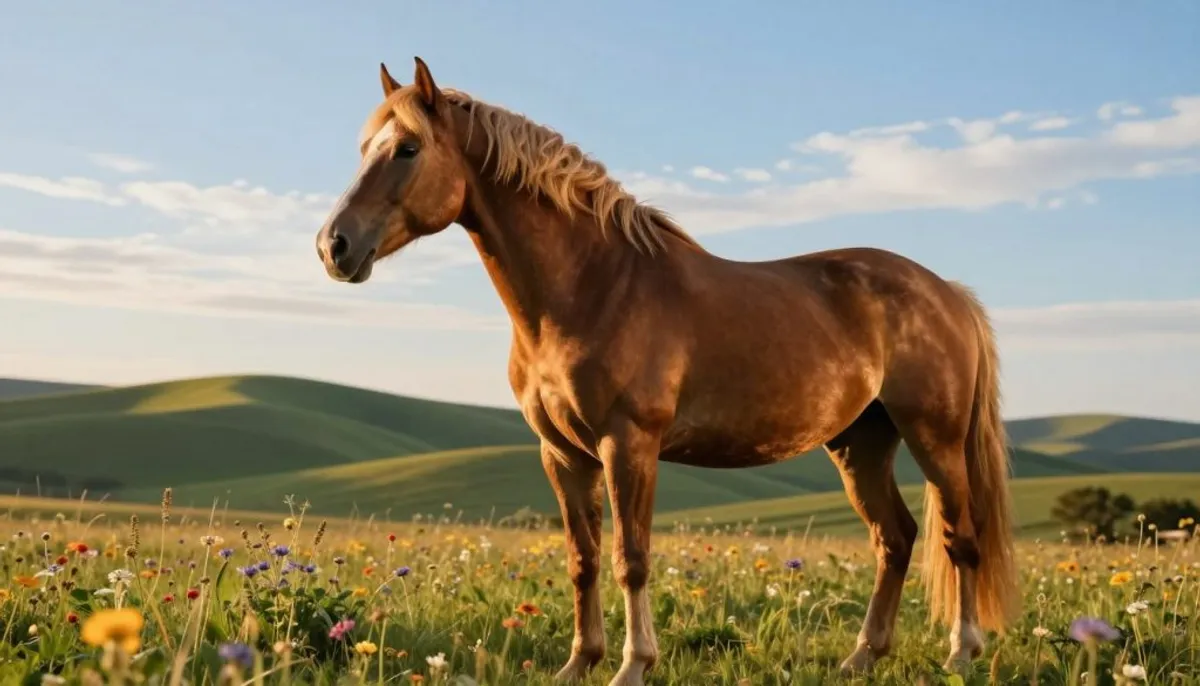
We will talk about the beauty of horses clearly. We will discuss their conformation, their gaits, their gaze. Because a horse is not just its coat. Its movement and attitude matter too.
We will explore the origins of exceptional horses. The breeding traditions, the famous bloodlines, and the images that leave a mark on us. Our goal is to understand why certain breeds touch us so deeply.
We will also talk about the importance of quality equipment. In France, La Sellerie Française is an example of superior quality. These products are unique and crafted by talented artisans.
This guide does not provide a definitive answer. But it will help you see what makes a magnificent horse. You will be able to better compare and understand the appeal of the most beautiful horse in the world.
Key Takeaways
- The most beautiful horse in the world depends on perspective and visible criteria.
- Equestrian beauty comes from harmony, gaits, and expression.
- The mental state and behavior influence the perception of a horse.
- Photos, competitions, and trends influence our choices.
- We will seek clear answers, without claiming absolute truth.
- In France, quality equipment, like that of La Sellerie Française, is crucial.
Why Equestrian Beauty Has Fascinated for Millennia
The beauty of horses captivates at first glance. It speaks directly to our senses. First, we perceive their power, then their grace. Even without knowing the different breeds, their presence is undeniable.
Seeking the most beautiful horse in the world often means comparing their silhouette. But what remains is their liveliness: their posture, their breath. The rhythm of their steps also contributes to this impression.
Strength, Grace, and Aura of the Magnificent Horse in the Collective Imagination
These words keep coming back: strength, grace, beauty. A magnificent horse embodies them all effortlessly. Its shape is outlined with elegance, its back carries with confidence. Its gaits seem natural.
The aura of an exceptional horse is equally important. It’s not just its color or the shape of its head. It’s its unique way of standing, calm and poised. Everything seems perfectly in place.
Beauty, Emotion, and Energy: What We Really Seek When Observing a Horse
Observing a horse is about seeking to feel something. Through Gabriele Boiselle’s photos, we sense the energy and emotion. Her work captures the essence of horses with sensitivity.
We then notice the small details: an attentive ear, a bright gaze. The beauty of horses becomes a unique language. They communicate with their surroundings, mixing tension and relaxation.
The Union Between Animal and Human: When the Relationship Elevates Aesthetics
The relationship between a horse and its human changes everything. A horse that trusts, guided gently, appears more harmonious. We see the bond through the smallest gestures, the connection is palpable.
This relationship, often highlighted by Gabriele Boiselle, enriches their aesthetics. Together, they move with impressive clarity. The idea of finding the most beautiful horse then blends with the beauty of their bond.
| What We Observe | What It Suggests | Effect on Perception |
|---|---|---|
| Regular gaits and propulsion | Channelled strength, body balance | The magnificent horse appears effortless, even in exertion |
| Expression (ears, gaze, relaxation) | Emotion, availability, attention | Equestrian beauty becomes more “close,” more real |
| Quality of the relationship with the human | Trust, shared codes, respect | Exceptional equines gain in aura and presence |
| Body + movement + intention together | Readable energy, coherence of action | The idea of the most beautiful horse in the world plays on the overall impression |
How to Define a “Magnificent” Horse Without Being Mistaken
Talking about a magnificent horse is sometimes subjective. Beauty in these animals arises from basic criteria. Then, it sharpens with experience. The ideal is to understand what draws the eye, rather than seeking perfection.
Visual Criteria: Conformation, Gaits, Expression, and Harmony
The overall harmony is crucial. We look at how the horse carries itself, its proportions, and the balance between its head, back, and hips. Regardless of its type, what matters is that its gait is coherent.
The gaits are also essential. A good walk, trot, and canter, with an expressive head, make the difference. Some PREs, like the Cartujano, are renowned for their noble gaits and presence, even at a slow pace.
The Role of Mental State and Behavior in the Perception of Beauty
Beauty does not come solely from external appearance. A calm horse seems more noble. It moves with ease and keeps its attention on us. Conversely, a tense horse loses its charm and fluidity in movement.
That’s why a good mental state is often emphasized. A brave, friendly, respectful, and confident horse attracts all eyes. Its confidence is visible in its gaze, its ears, and its reaction to the unknown.
Natural Beauty vs. Selection: The Influence of Breeding Prestigious Horses
Selection can highlight a magnificent horse or make all horses seem alike. In prestigious breeding, history, follow-up, and consistency of the lineage are essential. Pure genetics and good traceability are as important as appearance.
Carole Reiss, a breeder, noted that some PRE bloodlines are selected to be larger. But in seeking to increase everything, the very essence of the breed can be lost. It is crucial to reflect on what we truly wish to preserve in terms of elegance.
| Reference | What We Observe | What It Changes to the Eye | Frequent Warning Sign |
|---|---|---|---|
| Harmony of Conformation | Proportions, tight back, connected croup, well-defined neck | Fluid silhouette, impression of ease and balance | Front/back imbalance, long back that “dips” in movement |
| Quality of Gaits | Regularity, amplitude, bounce, engagement of the hindquarters | Immediate presence, sense of lightness, clear gesture | Rushed walk, “flat” trot, irregularities or stiffness |
| Expression | Gaze, ears, head mobility, relaxation | Charisma, softness, true connection with the human | Hard eye, clenched jaw, visible stress in hand |
| Daily Mental State | Calm, curiosity, respect, ability to “go anywhere” | The horse appears more beautiful as it remains available and composed | Hyper-vigilance, sudden reactions, fleeing at the slightest novelty |
| Selection and Prestige | Lineage history, type consistency, tracking of origins | Recognizable style, stable identity, regularity of qualities | Seeking trendy criteria at the expense of the breed |
The Most Beautiful Horse in the World: Myth, Subjectivity, and Realities
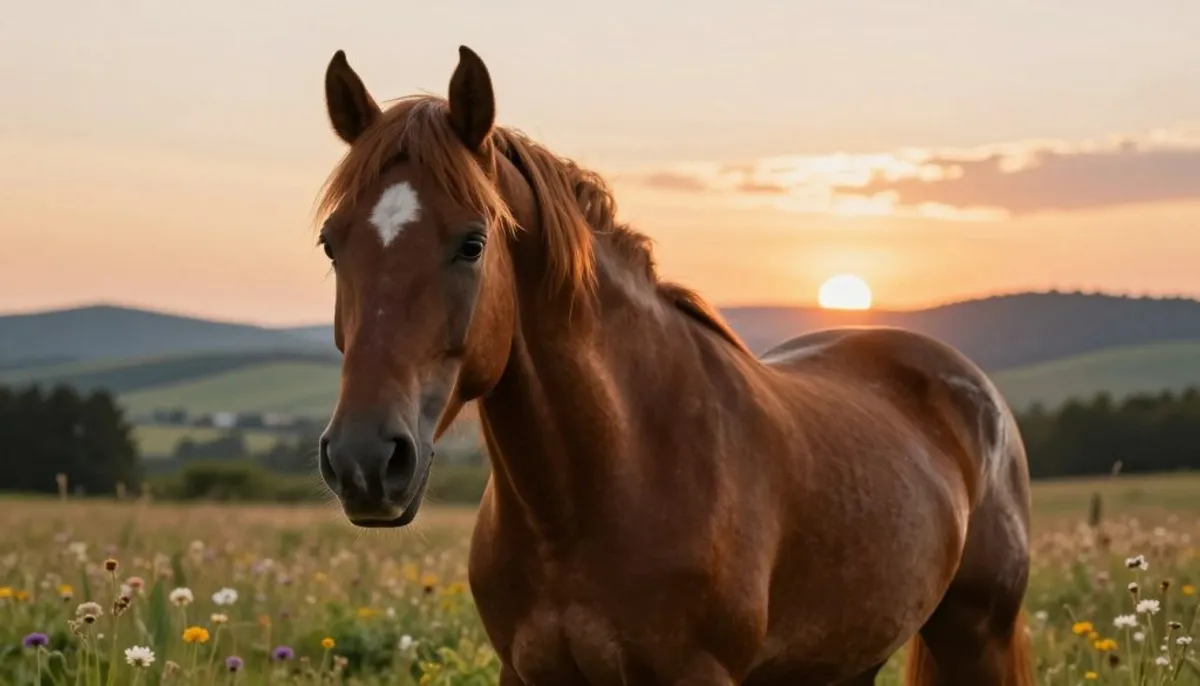
Finding the most beautiful horse in the world seems easy to say. But our opinion changes with time, place, and feelings. The beauty of a horse is seen in its appearance and behavior.
People choose the most beautiful horse breeds according to their own criteria. Some prefer a beautiful gait, others are attracted by coat color. Many are touched by the story a horse tells, even without words.
Why There Is No Single Universal Winner
What we find “perfect” changes according to our values: balance, strength, elegance, or charisma. A horse may impress at a standstill but not in motion. And sometimes, fluid movements make us forget imperfections.
Competition horses are admired for their elegance and performance. Their way of moving and responding to commands changes our perception of their beauty.
When Breed, Discipline, and Culture Change the Perspective
Draft horses like the Percheron impress with their size and strength. Their robust appearance evokes a reassuring beauty.
The Cartujano, with its elegant gait and history, attracts in a different way. In some cultures, this elegance holds as much value as physical appearance. This shows that the beauty of horses is felt more than it is ranked.
| Admired Profile | What Catches the Eye | What We Often Value | Effect on the Idea of “Most Beautiful” |
|---|---|---|---|
| Draft Horses (Percheron, Clydesdale, Shire) | Volume, feathers, conformation, power | Quiet strength, presence, historical utility | The most beautiful horse in the world becomes a symbol of grandeur |
| Cartujano | Neck, short back, elevated gaits, expression | Heritage, harmony, mental state, baroque style | The most beautiful horse in the world takes on a cultural dimension |
| Elegant Competition Horses | Cadence, balance, engagement, brilliance | Performance, precision, mastery of movement | The most beautiful horse in the world merges with effectiveness in action |
Competitions, Images, and Social Media: What Shapes Our Preferences
A competition affects our perception: lighting, presentation, and choice of angles play a role. In a photo, everything seems grander. And on social media, striking images circulate faster.
Quality photography, like that of Gabriele Boiselle, has a significant impact. Her images often showcase the horse and the human in magnificent settings. This creates an ideal and influences our idea of the most beautiful horse.
Most Beautiful Horse Breeds Around the World: A Panorama Inspired by Photography
Looking at a photo book opens our eyes. We see horses change in appearance, with their varied coats and poses. This panorama shows why what is considered the most beautiful horse can depend on its environment and expression.
Photography captures unique details. It reveals aspects that we don’t always notice directly. Thus, photos show the unique beauty of each horse, even when still.
A Visual Journey Between Continents and Breathtaking Natural Landscapes
The location where the photo is taken changes everything. A mane in the wind and the back of a horse against a clear horizon showcase their beauty. In seeking the most beautiful breeds, we also discover the importance of place: its climate, soil, and traditions.
This journey teaches us that beauty goes beyond a simple portrait. It includes the horse’s environment and its connection with humans. It is this interaction that makes certain horses incredibly photogenic.
Focus on a Selection of Breeds: The Diversity of Exceptional Equines
Photos show a great variety: different profiles, shapes, and gaits. They help appreciate each detail without judgment. A horse can be remarkable either for its harmony or for its tenderness.
- Expression: gaze, ears, mouth relaxation, attention to the rider.
- Silhouette: harmony of proportions, neck attachment, topline.
- Gait: amplitude, regularity, engagement, perceived lightness.
- Presentation: body condition, coat care, simplicity of staging.
Cultural Reference: Gabriele Boiselle’s “Best of” Approach
The book The Most Beautiful Horses in the World, created by Gabriele Boiselle, presents a remarkable selection. It impresses with its dimensions and weight, and has been published in French. Its release date is November 7, 2013.
Gabriele Boiselle is not new to this project. Before this, she had already published on the Arabian Thoroughbred. Her works highlight the special relationship between horses and humans. They contribute to our understanding of equine beauty.
| Editorial Element | Data | What It Brings to the Panorama |
|---|---|---|
| Photographer | Gabriele Boiselle | A consistent visual signature to compare the most beautiful horse breeds without changing the image language |
| Approach | Best of | A tight selection that highlights exceptional equines in expressive situations |
| Content | 18 breeds, 448 pages | Enough variety to capture types, models, and temperaments, without losing the narrative thread |
| Format | 34 x 42 cm (product: 37 x 4.9 x 44 cm), 5.3 kg | Wide images that make details readable: head, neck, conformation, coat texture of a magnificent horse |
| Publisher and Date | Place des Victoires, November 7, 2013, French | An accessible cultural reference in France, useful for situating the most beautiful horse in a solid editorial framework |
| Identifiers | ISBN-10 280990734X; ISBN-13 978-2809907346 | Clear markers to find the work and verify the edition |
The Cartujano of Andalusia, Genetic Treasure of the Spanish Horse
Some horses from southern Spain capture the eye from the start. The Cartujano, also known as the Chartreuse horse, is ideal for those seeking exceptional beauty. It is a symbol of magnificence and equestrian elegance.
A Pure Lineage Linked to Andalusia and the Cradle of Jerez de la Frontera
The history of the Cartujano is deeply rooted in Andalusia, especially around Jerez de la Frontera. Its breeding began in 1476, under the guidance of Carthusian monks. They aimed to preserve a pure, useful, and beautiful lineage.
This horse is often seen as the foundation of the Pure Spanish Horse (PRE) breed. Carole Reiss reminds us that there is a trace of Cartujano blood in all PREs, even if it’s minimal.
An Old Stud Book and a History Marked by the Preservation of the Lineage
The breeding register, among the oldest, was established as early as the late 15th century. By the 18th century, this lineage had about 700 specimens. It was recognized thanks to the founding stallion Esclavo.
The period 1808–1814 was difficult: requisitions, turmoil, dissolution of religious orders. Legend has it that some breeders were secretly preserved. Pedro José Zapata even altered the branding to protect the lineage.
Yeguada Cartuja – Hierro del Bocado, operated by Expasa, continues to protect this lineage. More than two hundred horses live there, following a philosophy of prestigious breeding and conservation.
Typical Profile: Baroque Model, Often Gray Coat, Height Around 1.55 to 1.60 m
Cartujanos have a baroque, compact, and harmonious appearance. They typically measure between 1.55 and 1.60 m, although some may be taller.
Most have a gray coat, although other colors can also be found. Their head is fine and broad, with a noble profile. The back is short and the croup rounded, giving a distinctive silhouette.
The purity of the breed is verified by documents and sometimes by a brand. In France, Yeguada Cartujanos del Sol, near Lunel, maintains a limited number of stallions and foals. They practice hand breeding, and the mares spend their years outdoors, with summer transhumance in Savoie with the foals.
A Horse of Kings: Stories, Symbols, and Prestige Surrounding the Chartreuse Horse
The Chartreuse horse is a symbol of prestige, associated with power and ceremonies. It has links to Napoleon, and a statue at Versailles recalls this prestige. It represents the breeding of prestigious horses.
The Duke of Newcastle said it is “the most beautiful and clean horse in the world for a king on a day of triumph.” These horses have strong character, love humans, and are very skilled in training. They showcase natural equestrian beauty.
| Reference | What We Observe in the Cartujano | Why It Matters |
|---|---|---|
| Cradle | Andalusia, around Jerez de la Frontera and the Chartreuse Santa María de la Defensión | An identified origin strengthens the coherence of selection and lineage reading |
| Stud Book | Old register, structured since the late 15th century | Useful traceability for genetics and recognition of subjects |
| Model | Baroque type, short back, rounded croup, high tail attachment | Expressive silhouette, highly sought after in a magnificent horse |
| Coat and Height | Often gray; 1.55–1.60 m (up to 1.64 m) | Simple markers to locate the type, without reducing individual diversity |
| Current Mission | Yeguada Cartuja – Hierro del Bocado (Expasa): preservation, maintenance, dissemination; over two hundred horses | Preserve exceptional equines while ensuring responsible dissemination |
Giant Horses and the Record for the “Largest Horse in the World”: When Size Impresses
In the face of equine giants, the magic of horses takes on another dimension. We admire not just their appearance, but also their imposing mass and powerful calm. These giants attract attention like moving cathedrals.
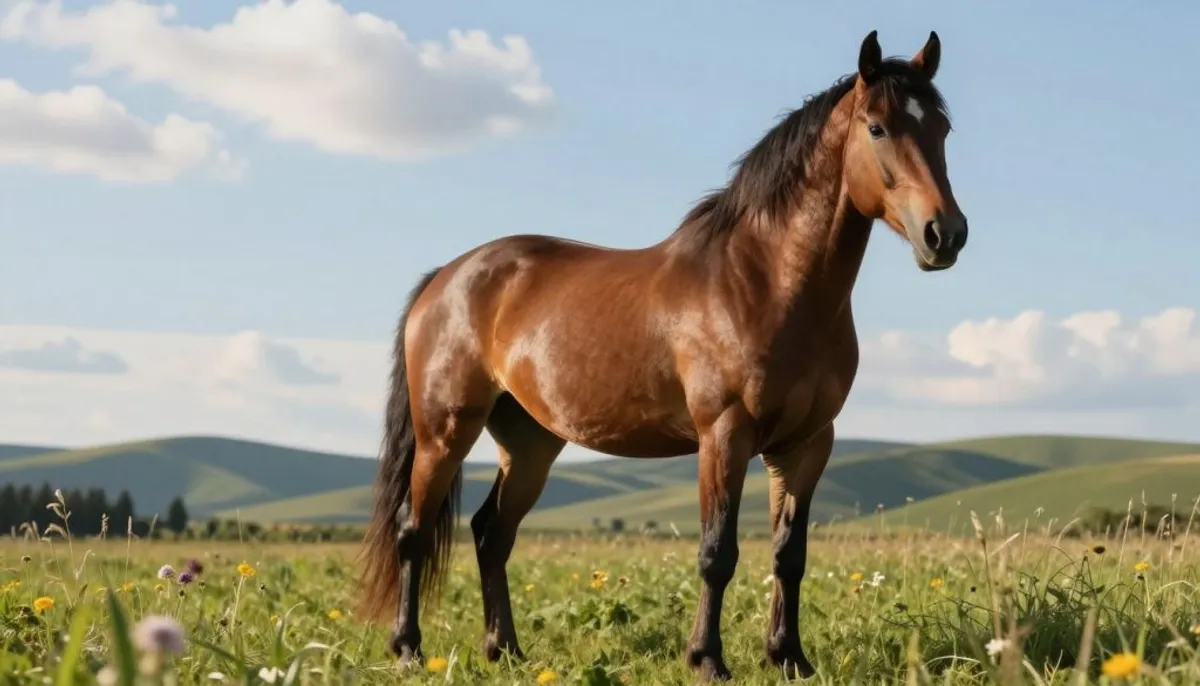
Large horse breeds have a unique charm. The French Percheron can measure up to 19 hands and weigh over 1,000 kg. The Clydesdale from Scotland can reach 20 hands and over 900 kg. As for the English Shire, known for its strength, it can exceed 21 hands and 1,200 kg.
| Breed | Origin | Max Height (hands) | Typical Weight | What Impresses |
|---|---|---|---|---|
| Percheron | France | 18–19 | > 1,000 kg | Wide back, pulling power, calm presence |
| Clydesdale | Scotland | Up to 20 | > 900 kg | Great amplitude, marked conformation, power |
| Shire | England | Up to 21 | > 1,200 kg | Strength, size, dominant silhouette |
The records of gigantic animals fascinate us. For example, Big Jake, a large American horse, measured 20 hands and 2.5 inches, weighing about 1,179 kg. Born in 2000, he was officially recognized by the Guinness World Records in 2010, thanks to his owners Jerry and Dawn Gilbert.
Before him, there was Sampson, also known as Mammoth, in England. Born in 1846, he reached 21 hands and 2.5 inches, weighing nearly 1,500 kg. Used for agricultural work, his imposing size involved health issues. He died at 15, showing the risks of such gigantism.
Care, Well-being, and Equipment: The Demands of Exceptional Horses
A horse that catches the eye is good, but its well-being is even more important. For extraordinary horses, every detail counts. A calm routine is needed, monitoring their weight, and caring for them attentively. These efforts protect their health and enhance their natural beauty.
Measuring Height at the Withers: Understanding the “Hand” (10 cm) and Comparing Morphologies
A horse is measured from the ground to the withers, where the neck and back meet. It’s an easy measure to compare very different horses. The “hand,” which is about 10 cm, is also used.
To say a horse is 18 or 20 hands gives an idea of its size. But it says nothing about its back or the robustness of its bones. For an exceptional horse, these aspects affect its comfort and way of moving.
| Reference | What We Measure | Why It’s Useful | Point of Caution |
|---|---|---|---|
| Withers | Vertical distance ground → withers | Compare horses, track growth | Flat ground, horse straight, vertical measuring stick |
| “Hand” | 4 inches ≈ 10 cm | Read sizes (18, 19, 20 hands) | Says nothing about width, shoulder, back |
| Morphology | Back, shoulder, barrel, limbs | Anticipate saddle, bridle, protection | A large horse can remain slender or be very strong |
The Concrete Challenges of Large Horses: Nutrition, Space, Joints, and Feet
A large horse is a big challenge. Its food can cost more than twice that of a normal-sized horse. They need more space to move freely.
Care must be taken with their feet and joints, as they support more weight. Large horses can have respiratory and heart issues. Good monitoring and gradual training are essential.
- Ration: adjusted to size, without excess energy.
- Space: stall, paddock, access to daily movement.
- Feet: regular trimming and shoeing, suitable ground.
- Joints: long warm-up, careful recovery.
Adapting Equipment: Saddle, Bridle, and Protection to Morphology
Finding the perfect equipment is a real challenge. Especially for horses that don’t fit standard sizes. If the saddle is not adjusted, it can discomfort the horse. The protections must fit well, and the bridle should not hurt.
For custom equipment, La Sellerie Française is a good choice. They offer comfort and stability through their artisanal expertise. This helps showcase the true beauty of horses, without compromises.
Elegance in Action: Beauty and Performance of Elegant Competition Horses
The beauty of competition horses shines in motion. They enchant with their balance and calm. Their gait, beyond their coat, is a spectacle of balance, rhythm, and presence.
Dressage and Elevated Gaits: When Movement Becomes Signature
Dressage reveals the grace of movements. The Cartujano, with its noble gaits, stands out for its finesse and elevation. This elegance transforms a beautiful horse into a work of art in motion.
A fluid and precise movement, coming from the hindquarters and maintained by a supple neck, speaks even to novices. This explains the memorable impact of certain horses, thanks to a simple transition.
Versatility and Disciplines: Jumping, TREC, Leisure, Demonstrations
Competition horses are not limited to one discipline. Cartujanos excel in jumping, TREC, trail rides, and during their demonstrations. Their beauty lies in their adaptability, courage, and willingness.
Their versatility is evident daily. They remain calm, even in unfamiliar territory, and adapt quickly. These horses often progress better due to their ability to stay serene.
The Detail That Changes Everything: Presentation, Condition, and Horse-Rider Coherence
A good presentation amplifies their elegance. Good physical condition, a well-groomed mane, and regular care enhance their harmony. When the rider and horse share a coherent style, it strengthens their impact.
Having well-fitted equipment is essential. With La Sellerie Française, custom and French quality ensure this perfect finish. Thus, the beauty of competition horses rests on simple yet essential details.
| Observed Point | Visible Effect in the Ring | What It Reinforces |
|---|---|---|
| Elevated Gaits and Regular Cadence | More readable, more airy movements | Signature of the movement of a magnificent horse |
| Calm Mental State (respect, courage, attention) | More stable entrance to the ring, less tension | Impression of elegance in exceptional equines |
| Versatility (jumping, TREC, leisure, demos) | Quick adaptation to terrains and requests | Sporting value and beauty in action |
| Adjusted and Coherent Equipment | Sharper line, more discreet aids | Clear reading of the pair and comfort |
Conclusion
The most beautiful horse in the world is more than a dream; it is a reality full of harmony. It stands out for its beauty, gentle movements, and captivating gaze. But the true beauty of a horse also lies in its spirit and its connection with humans. That’s where the magic truly happens.
Gabriele Boiselle has captured this essence in her book. With 18 different breeds over 448 pages, it showcases the energy, emotions, and unique bond between man and horse. These images show us why the beauty of horses goes beyond their appearance. They unveil the stories and cultures behind each gaze.
The Cartujano is a perfect example of this timeless beauty. Founded in 1476, this horse is a symbol of pride with a history that dates back to the 15th century. Protected by the efforts of Yeguada Cartuja and Expasa, it represents the nobility of an equestrian past. On the other end, giants like Big Jake and Sampson remind us that greatness comes with its own challenges.
In France, the beauty of horses is a matter of respect and care. A good saddle can change everything, from balance to the perception of the animal. La Sellerie Française is committed to artisanal quality, from start to finish, entirely made in France. That’s how the most beautiful horse in the world becomes the one we cherish and protect.
FAQ
Can we really designate the most beautiful horse in the world?
No, it’s subjective. What is considered the most beautiful varies from person to person. Some love strength, others elegance or baroque style. The ideal also depends on history and performance.
What visual criteria allow us to recognize a magnificent horse?
We need to look at the harmony of the body, proportions, and overall gait. The expression of the face and skin quality are important. A good walk, trot, and canter show dynamic beauty.
Why do we say that equestrian beauty rests on strength, grace, and beauty?
It’s because of the trio strength, grace, and beauty. These three elements create a special charm. When they meet, we are captivated.
How do energy and emotion influence our judgment of a horse?
A horse can be perfect but lack charm. If a horse shows energy, it changes everything. A good photo captures these moving moments.
What role does the horse-human relationship play in the perception of beauty?
This relationship makes a horse more beautiful. Trust and complicity enhance the image of a horse. A good relationship shows serenity and respect.
Can the mental state make a horse “more beautiful”?
Yes, behavior is visible. A calm and cooperative horse seems more elegant. A good mental state enhances natural elegance in public.
Natural beauty vs. selection: can the breeding of prestigious horses distort a lineage?
Yes, if we exaggerate certain traits. Carole Reiss says that excessive height seeking can harm purity. Breeding must protect natural qualities.
Why do breed, discipline, and culture change the definition of the most beautiful horse breeds?
Beauty criteria vary by discipline. Dressage values balance, jumping values responsiveness. Draft horses impress with their strength. Each world has its ideals of beauty.
Do images and social media influence the idea of a magnificent horse?
Yes, a lot. Staging and photos play a big role. Competitions and media create standards and influence our tastes.
What should we know about the book “The Most Beautiful Horses in the World” by Gabriele Boiselle?
It’s a reference book with photos by Gabriele Boiselle. Published on November 7, 2013, it contains 448 pages on 18 breeds. It’s a journey through the world and its equestrian beauty.
What is unique about Gabriele Boiselle’s perspective on exceptional equines?
She focuses on the energy and emotion of horses. Her vision highlights their relationship with humans. It amplifies their beauty.
What is the Cartujano, and why does it fascinate so much?
It’s an Andalusian breed famous for its history and qualities. Bred since 1476, it is known for its magnificence. Its beauty and character make it a prized choice.
Is the Cartujano linked to the Pure Spanish Horse (PRE)?
Yes, it is the foundation of the PRE. Even with just 1% Cartujano blood, it influences the breed. This notion is key to understanding its prestige.
What historical data makes the Cartujano unique?
Its breeding is one of the oldest. Despite challenges, around 700 animals survived in the 18th century. Its lineage was carefully preserved during the War of Independence.
What is the role of Yeguada Cartuja – Hierro del Bocado (Expasa) today?
It protects the lineage of the Chartreuse horse. With over 200 horses, it aims for genetic conservation.
What does the “type” Cartujano look like?
It is medium-sized, often gray. Its baroque appearance is distinctive. Its silhouette is characterized by an expressive head and a well-proportioned body.
Why is the Cartujano sought after in dressage, and not just?
Its gaits and style favor dressage. Its ability to excel in various disciplines showcases its beauty in action.
Is there a Cartujano breeding dedicated entirely in France?
Yes, at Yeguada Cartujanos del Sol, near Lunel. They have stallions and produce 6 to 10 foals per year. The horses benefit from attentive management and summer transhumance pastures.
Why is the Chartreuse horse referred to as a “horse of kings”?
They were ridden by kings like Napoleon and Louis XIV. A statue at Versailles honors this breed. They were considered ideal for kings.
What are the most impressive draft horses, and why do they fascinate?
The Percheron, Clydesdale, and Shire impress with their size and strength. Their presence is monumental, another form of beauty.
Who holds the modern record for the largest horse in the world?
Big Jake, at 210.2 cm, has held the Guinness record since 2010. Weighing 1,179 kg, he was known for his sociable character.
What is the historical size record for horses?
Sampson, also called Mammoth, measured 218.4 cm and weighed 1,500 kg. Born in 1846, he was used for work.
How do we measure a horse’s height at the withers, and what does a “hand” mean?
Height is measured from the ground to the withers. A “hand” equals 10 cm, used to compare sizes.
Do giant horses have specific health risks?
Yes, they can have foot and joint problems. Cardiac and respiratory risks are also higher.
Why does a large horse cost more to maintain?
They eat much more and need more space. Veterinary care and foot care are also more significant.
Why is it difficult to find suitable saddlery for exceptional horses?
Large sizes or special shapes require custom equipment. Poor fitting can discomfort the horse and harm its appearance.
What high-end solution in France for truly fitted equipment?
A: La Sellerie Française offers premium, custom equipment. Everything is made in France by high-quality artisans.
In dressage, what makes gaits so decisive for beauty?
Dressage highlights balance and harmony. Clear gaits create an elegant image of the horse-rider pair.
Is a horse's beauty better seen in competition or daily life?
Both offer different perspectives. Competition shows precision, while daily life reveals character and complicity.
What presentation details enhance the perception of a magnificent horse?
Good physical condition, cleanliness, and well-fitted equipment are key. They transform a beautiful horse into a memorable vision.