
The Arabian horse symbolizes elegance and performance. With a concave head profile, curved neck, and short back, its beauty is undeniable. It is often considered the most distinguished in the world.
It is bred everywhere, in more than 82 countries. The global organization, the World Arabian Horse Organization, supports it. These horses excel in endurance and shows, proving their versatility.
Their appearance is unique with a short head and a fine muzzle. They are often found in gray, but bay and chestnut are also common. They measure between 1.40 and 1.60 m and weigh 300 to 450 kg.
These horses are intelligent, gentle, and learn quickly. Thanks to their history with Bedouins, they enjoy human contact. Monitoring their health is crucial in breeding.
La Sellerie Française offers quality equipment for these horses. Everything is made in France to ensure their comfort and elegance.

Key Points
- Breed Arabian horse: concave head profile, high tail carriage, square build.
- Global presence and preservation via WAHO.
- Versatility in equestrian competitions: endurance, show, driving, dressage, leisure.
- Human-friendly character: intelligent, sensitive, manageable.
- Coats primarily gray; height 1.40–1.60 m; weight 300–450 kg.
- Arabian breed standards and health monitoring frame Arabian horse breeding.
- Premium equipment for Arabian stables with La Sellerie Française.
Origins, History, and Standards of the Arabian Breed
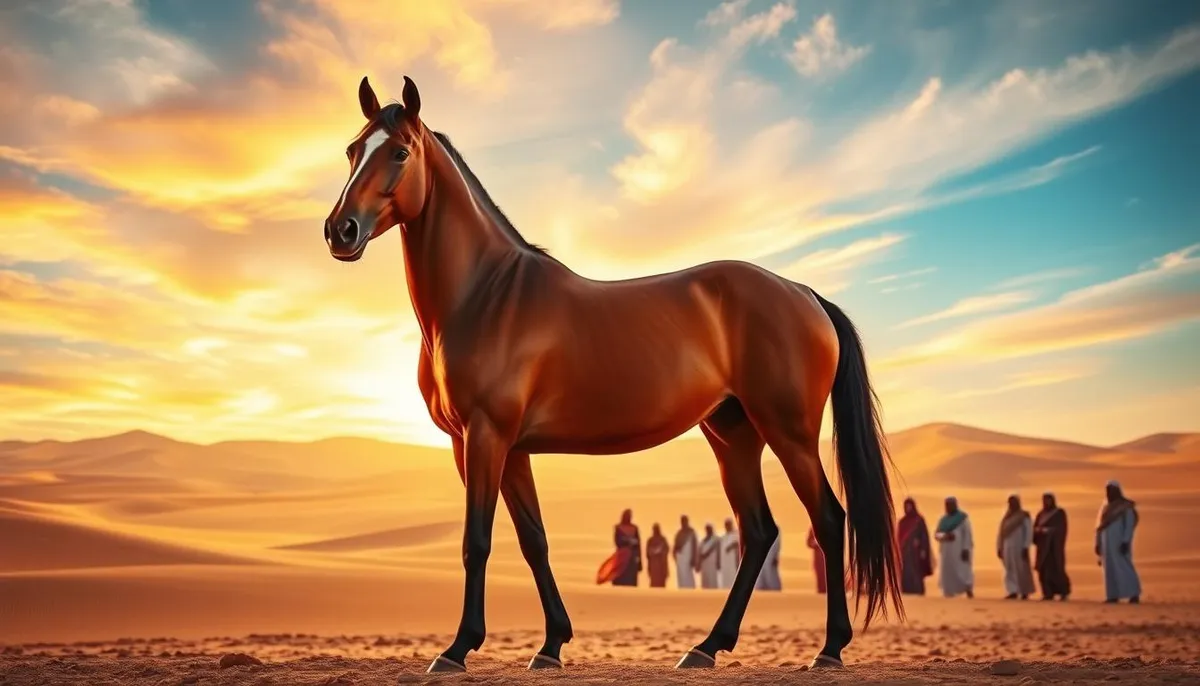
The Arabian horse breed originates from the Middle East. There, it developed remarkable endurance. According to a 2020 study by Nature, its origins with Persian influence date back to 1100-1300 BC. Islam helped its spread through caravans and the Red Sea.
It later reached India and Europe. Today, Arabian horses are present in over 80 countries. Their beauty is appreciated everywhere.
Middle Eastern Cradle and Global Spread
Tribes and traders brought the Arabian horse to India and then to Europe in the 17th century. Royal studs chose it for light cavalry. Thus, its pedigree has crossed ages and continents.
Iconography and Archaeology Over More Than 2,000 Years
The reliefs of Saqqarah and the tomb of Rekhmire depict a distinctive small horse. Excavations in Bahrain confirm its unique appearance. Mentions in Yemen reinforce its ancient history.
Role of the Bedouins and Selection in Desert Environments
Bred close to the family, it was useful for raids and trade. Bedouin selection favored its endurance and attachment to humans. This selection influenced its beauty and functionality.
Breed Standards: Concave Head, High Tail, Square Build
The Arabian horse breed is characterized by a square body and a proudly held tail. Its head, with large eyes and a broad forehead, is remarkable. Its solid hooves and distinctive colors contribute to its fame.
Genealogical Registers and WAHO, Arabian Horse Pedigree
In France, the first registers date back to 1833. The WAHO ensures recognition and international harmony. Despite debates about purity, the goal is the conservation of the breed.
National Variants and Lines: Egyptian, Syrian, Polish, Koheilan, Saklawi
The Koheilan and Saklawi lines are well-known. Varieties like the Egyptian show the diversity of breeding. Historic studs have helped preserve this history and beauty.
Arabian Horse: Morphology, Character, and Athletic Abilities
The Arabian horse is known for its fine appearance, courage, and energy. It is compact and spirited, making it competitive in equestrian sports and trail riding. Equestrian enthusiasts appreciate its ease of daily work and the beauty of its movements.
Height, Weight, and Coats: From Gray to Bay, Chestnut (Rarely Black)
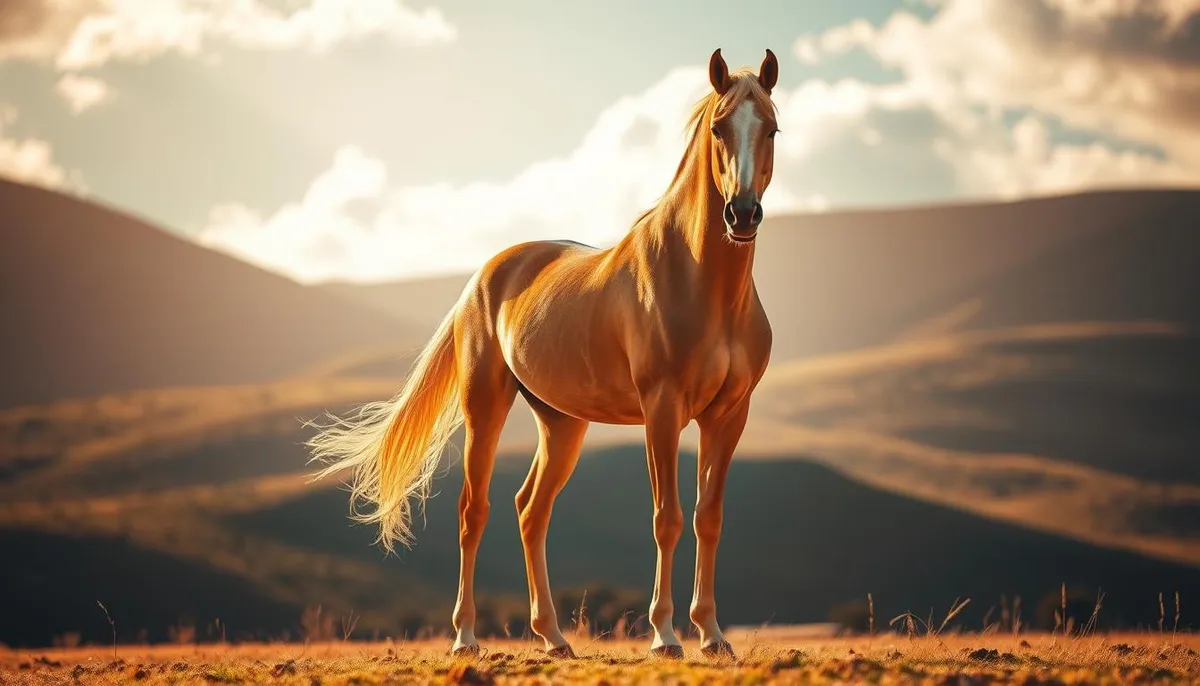
Arabian horses generally measure between 1.48 and 1.60 meters. They can weigh from 300 to 450 kilograms, typically between 300 and 400 kilograms.
The gray coat is the most common, followed by bay and chestnut. Black is quite rare. These horses display subtle yet vibrant colors, sometimes including pinto, but never albino.
Character: Intelligent, Sensitive, Familiar, Strong Nervous Influence
The Arabian horse is lively, curious, and loyal. It learns quickly and enjoys interaction. To manage its energy well, one must be calm and give clear instructions.
With proper management, these horses are well-suited for committed riders. In an Arabian stable, they form strong bonds with humans due to their sociable nature.
Endurance and Equestrian Competitions: Physiological Assets and Recovery
Their efficient metabolism, dry limbs, and hard hooves make Arabian horses champions of endurance. They recover well after exertion, even over long distances.
Adapted to arid environments, they remain focused and perform well. These assets earn them success in equestrian competitions, both national and international.
Versatility: Endurance, Show, Driving, Dressage, Leisure
Arabian horses also excel in shows, driving, and various forms of dressage. Their agility and intelligence allow them to perform precise and elegant riding.
Whether for pleasure or competition, Arabian breed horses are expressive, enduring, and easy to handle in daily life.
Beauty of Arabian Horses and Model and Gait Competitions
Their delicate head, large expressive eyes, and elegantly curved neck illustrate the unique beauty of these horses. They stand out in competitions for their grace and balance.
Their compact hooves and robust back complete this harmonious picture. This exceptional aesthetic also enhances their performance in competition.
| Criterion | Morphological Description | Sporting Impact | Practical Guidelines |
|---|---|---|---|
| Height & Weight | 1.48–1.60 m; 300–450 kg | Favorable weight/power ratio | Easy management in the Arabian stable |
| Head & Neck | Concave head, arched neck | Facilitated breathing and flexion | Soft contact in dressage |
| Back & Tail | Short back, high tail carriage | Airy gaits and balance | Advantage in shows and models |
| Limbs & Hooves | Dry limbs, round, hard hooves | Resistance on varied terrain | Less energy loss |
| Coat | Gray, bay, chestnut; rare black | Visibility and aesthetics | Compliance with Arabian horse breed standards |
| Character | Intelligent, sensitive, familiar | Quick learning | Ideal in equestrian competitions |
| Endurance | Efficient metabolism | Quick recovery | Mastery over long distances |
Breeding Arabian Horses in France: Practices, Health, and Market
In France, the breeding of Arabian horses follows precise rules. The studs aim for stable behavior and good endurance in the horse. They carefully select crossings and conduct regular veterinary checks. This helps meet the needs of a varied market, ranging from families to competitors.
Responsible Breeding: Arabian Breed Standards and Selection
Selection criteria include a concave head and solid hooves. The horse's movement and recovery after exertion are also checked. Breeders test the horse's character in various situations to ensure its safety outdoors and on track.
The French registers, linked to WAHO, guarantee the authenticity of origins. Adhering to these standards increases the sporting and heritage value of the horses.
Pedigree, Genealogy, and Purity: Issues and Best Practices
The pedigree of an Arabian horse is central. It is essential to verify the parents and study important lines. Varied origins such as Egyptian and Polish are also considered. Current studies, such as those by Iwona Głażewska, emphasize the importance of reliable genealogies and caution regarding inbreeding.
In Europe, institutions like the VZAP identify pure lines. This helps prevent confusion when purchasing. This rigor preserves the purity of the breed without limiting genetic diversity.
Health: Known Genetic Diseases and Testing (CA, SCID)
Testing for Cerebellar Abiotrophy (CA) and Severe Combined Immunodeficiency (SCID) is common. SCID, fatal for foals, can be avoided through careful breeding.
Other mutations related to inbreeding are also monitored. Testing before breeding and analyzing the pedigree of the Arabian horse reduce risks for the foal and mare.
Housing, Care, and Nutrition to Avoid Overweight and EMS
Arabian horses must move every day. Keeping them in groups with access to clean water and quality forage is essential. In stalls, daily walks are necessary, closely monitoring water and overall health.
To combat overweight and equine metabolic syndrome (EMS), nutrition should be adjusted to activity levels. Concentrated feeds and treats should be limited, and good hay should be chosen. Mineral needs are defined with the help of a veterinarian.
Sale of Arabian Horses: Prices, Purchase Criteria, Arabian Stable
Prices for Arabian horses vary widely. They start around €4,000 and can be much higher. Buyers look for good pedigree, genetic testing, veterinary examination, good temperament, and specific discipline.
A good Arabian stable offers safety and comfort. La Sellerie Française, for example, provides high-quality equipment that showcases the horses.
| Key Point | Recommended Practice | Direct Benefit |
|---|---|---|
| Morphological Selection | Compliance with Arabian breed standards, hoof checks | Efficient movement, sporting longevity |
| Traceability | WAHO registers, verification of Arabian horse pedigree | Value at sale, buyer trust |
| Genetic Screening | CA and SCID tests before breeding | Reduced risks for the foal |
| Weight Management | Adjusted ration, quality hay, veterinary monitoring | Prevention of EMS and better performance |
| Arabian Stable Infrastructure | Group living, daily outings, premium equipment | Well-being, professional image, and safety |
| Sale of Arabian Horses | Veterinary examination, mounted trial, complete documentation | Peaceful transaction, fair price estimation |
History of the Arabian Horse and Influence on Modern Breeds
The history of the Arabian horse begins long ago, around 2200-2000 BC. Christoph Lange tells us that their appearance was already recognizable in the 2nd millennium BC. CAB International specifies that their elegance became remarkable in the 19th century. This clearly shows the evolution and historical significance of the Arabian horse.
As early as the 8th century, Islamic armies adopted the Arabian horse. The Mamluks, famous for their cavalry, distinguished themselves in 1299. Later, exports to India increased, and gifting horses became a diplomatic gesture. Thus, the Arabian horse influences many cultures through its mobility and resilience.
In Europe, with the evolution of artillery, light horses became essential. Ottoman conquests provided new horses to European breeding. Russia and Prussia, with specific breeding programs, sought to improve speed and resilience in horses through the Arabian breed.
In France, Buffon declared in 1753 that the Arabian horse is the most beautiful horse. Napoleon I and his Imperial Studs highlighted this breed for its beauty and qualities. This period shaped the image of the Arabian horse in Europe.
In the 19th century, interest in the Arabian horse grew thanks to several key figures and imports. Count Rzewuski, for example, studied Bedouin horses, enriching knowledge of the breed. These contributions helped establish international standards for the Arabian horse.
Crossbreeding created influential breeds like the Anglo-Arab. In Germany, the VZAP plays a role in classifying these mixes. In sports, Arabian horses shine for their endurance and lightness, while maintaining exceptional beauty in competitions.
| Period | Notable Fact | Actors / Places | Impact on Breeds | Sporting and Cultural Resonance |
|---|---|---|---|---|
| 2nd millennium BC | Morphological fixation mentioned | Eurasian steppes, DOM2 | Genetic base of the Arabian horse breed | Origins of endurance abilities |
| 8th–13th centuries | Islamic diffusion and exports to India | Mamluks, Wadi al-Khazandar | Propagation of Eastern lines | Military prestige, beauty of Arabian horses |
| 16th–18th centuries | Ottoman captures and state studs | Hungary, Vienna 1529, Prussia 1732 | Improvement of European strains | Rise of light equestrian competitions |
| 18th–19th centuries | Structured programs and targeted imports | Orlov (Smetanka), Bábolna, Marbach | Creation of stable derived types | Preparation for modern horse racing |
| Empire and 19th century | Imperial studs, scholarly narrative and travels | Napoleon I, Buffon, Rzewuski, Blunt, Davenport | Standardization of the Arabian horse breed | Radiance in equestrian competitions and shows |
| 20th–21st centuries | Global diffusion and crossbreeding | VZAP, Anglo-Arab, Shagya, Tersker | Beneficial effect on speed and recovery | International endurance, beauty of Arabian horses |
In the background, the history of the Arabian horse connects the steppe, the desert, and Europe. It combines elegance and athletic abilities, maintaining its status as a prestigious horse.
Conclusion
The Arabian horse combines beauty and performance. It is recognizable by its concave head, high tail, and square shape. It is famous for its history and selection by the Bedouins. Additionally, its presence worldwide gives it a special place.
In France, the breeding of Arabian horses is serious. It is essential to verify the pedigree and adhere to breed standards. Genetic testing is crucial. Also, good nutrition is vital to avoid health issues.
The price of an Arabian horse often starts at €4,000. This depends on its heritage and performance. They are known for their longevity and reliability. For their well-being, a quality saddle is necessary. La Sellerie Française offers custom saddles, perfect for them.
The breeding of Arabian horses blends tradition and innovation. It influences modern breeds and enriches equestrian culture. The Arabian horse is a perfect companion for the rider, combining beauty and versatility.
FAQ
What distinguishes the Arabian horse (al-ḥiṣānu al-ʿarabiyyu) from other saddle breeds?
The Arabian horse is easy to recognize. It has a short head with a concave profile and a high tail. It is also compact, elegant, and close to humans. It is known as the "most beautiful horse in the world."
Where does the Arabian breed come from, and how has it spread?
This breed comes from the Middle East. A 2020 study confirmed it. It spread with the expansion of Islam and reached Europe in the 17th century. Today, it is present in 82 countries thanks to WAHO.
What do iconography and archaeology contribute to the history of the Arabian horse?
Egyptian and Bahraini artifacts show horses with similar characteristics as early as 900 BC. This proves the breed's antiquity over more than 2,000 years.
What role did the Bedouins play in the selection of the Arabian horse?
The Bedouins bred these horses in harsh conditions. This made the breed enduring, hardy, and close to humans. They became symbols of status and reliable companions.
What are the standards of the Arabian horse breed?
Arabian horses are compact with a curved neck and a flat top line. They have a fine head, a large eye, and a high tail. Their size and weight vary, and they are primarily gray, bay, and chestnut.
Who manages pedigrees and how to verify genealogy?
WAHO handles global pedigree recognition. In France, registers dating back to 1833 are used. For a reliable pedigree, one relies on WAHO documents, traceability, and genetic testing.
What are the major lines and national variants?
There are notable Bedouin lines and national variants, such as the Egyptian and Polish Arabian. Studs in Europe have also helped in their diffusion.
What measurements and coat colors are most commonly observed?
They generally measure between 1.48 and 1.60 m, weighing 300 to 450 kg. Most are gray, bay, or chestnut. Their hooves are small and sturdy.
What is the typical temperament of the Arabian horse breed?
They are intelligent, sensitive, and curious. Manageable, they are suitable for riders of all levels. They learn quickly and are obedient.
Why does the Arabian horse excel in endurance competitions?
Its endurance is due to an economical metabolism and a quick recovery ability. Bedouin selection has increased its robustness.
Is the Arabian horse versatile in equestrian sports?
Yes, it is talented in shows, trail rides, leisure, and driving. It is also good in dressage and suited for other competitions.
What makes the beauty of Arabian horses in shows?
Their concave head profile and airy gait make them magnificent. Judges look for expression, balance, and quality of coat.
How to responsibly breed Arabian horses in France?
It is essential to adhere to breed standards, prioritize endurance and temperament. Using WAHO stud books and conducting genetic tests is crucial.
How to approach pedigree and the question of "purity"?
It is necessary to verify traceability and adhere to WAHO standards. Health and sound genetics are priorities.
What genetic diseases should be monitored in the Arabian horse?
CA and SCID should be monitored; SCID can be fatal. Testing breeders and practicing careful matings is recommended.
What good housing and feeding practices should be adopted?
Ensure movement, good shelter, and clean water. Avoid excess weight and adjust feeding, especially for sport horses.
What is the price of an Arabian horse and what purchase criteria should be considered?
Prices start at €4,000. One should evaluate ancestry, veterinary examination, and temperament. Good equipment is also crucial.
What is the average lifespan of an Arabian horse?
On average, they live between 25 and 30 years. Some reach 40 years with good care and proper training.
What has been the influence of the Arabian horse on modern breeds?
It has improved many European breeds. The Anglo-Arab, Shagya, and Tersker are examples. Its lightness and endurance are highly valued.
Is the European history of the Arabian horse well documented?
Yes. From the Ottoman Empire to European studs, the Arabian horse has marked history. In France, figures like Napoleon popularized it.
How to best equip a demanding Arabian stable?
Choose tack that respects their morphology. La Sellerie Française offers high-end equipment that fits perfectly.
What organizations and registers should be consulted for breeding Arabian horses?
WAHO and national stud books are references. In Germany, the VZAP is also a useful resource.
What important keywords to navigate the Arabian horse breed?
Use terms like breeding, sale, and Arabian horse pedigree. This helps find the right resources and organizations.