
Equestrianism is an ancient practice that has marked the history of humanity. It has evolved from the nomads of the steppes to the knights of the Middle Ages. Today, it includes Olympic competitions.
In France, equestrianism has a rich history. Our country is known for its horse breeding and innovations. Equestrianism has become a key element of our culture.
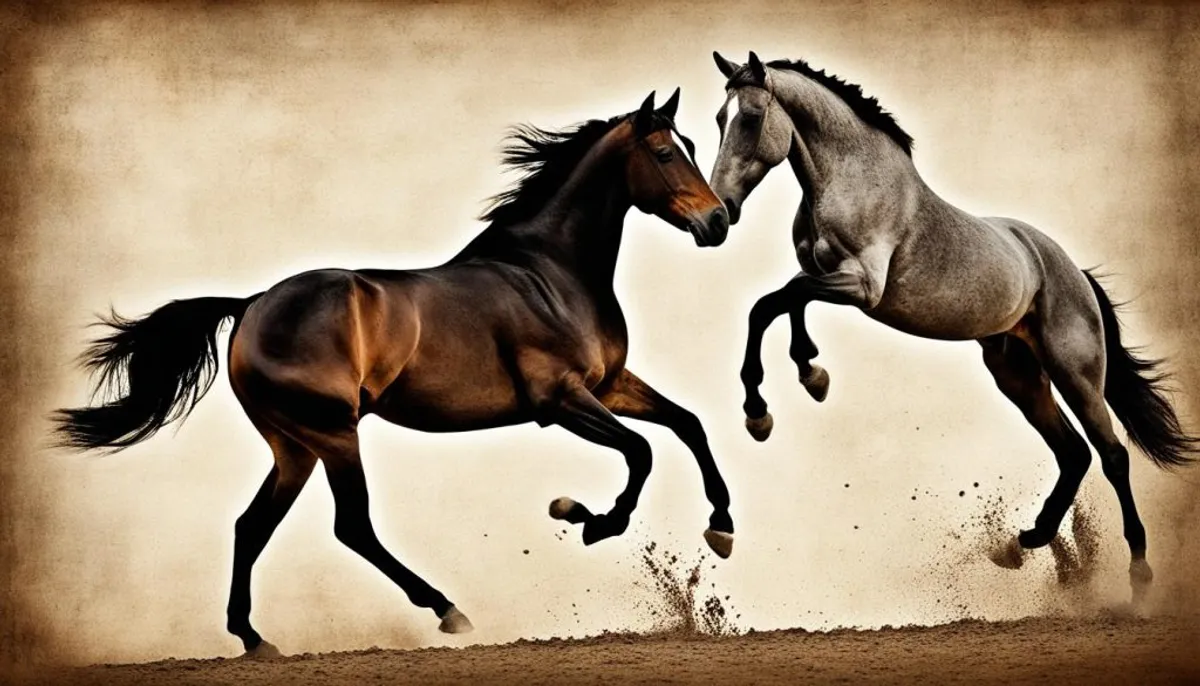
Main points to remember:
- Equestrianism is an ancestral practice, rooted in the history of humanity for millennia.
- It has evolved over the centuries to adapt to the needs of society, reflecting cultural and social changes.
- France occupies a central place in the history of equestrianism, being a cradle of horse breeding and innovation in equestrian sports.
- Equestrianism is now an integral part of French cultural heritage.
- Diving into the origins of equestrianism allows for the discovery of a fascinating odyssey.
The Early Origins of Equestrianism
The first traces of the use of horses by humans date back to 4000 to 3500 BC. At that time, interaction with horses was mainly for work and transport. The nomadic peoples of the Central Asian steppes were among the first to master equestrianism, around 3500 years ago.
The Nomads of the Steppes
These nomadic horsemen changed the use of horses. They transformed them into companions for war and hunting. Their mastery of equestrianism helped in the expansion of their territories.
The First Equestrian Civilizations
Later, many civilizations adopted equestrianism, from the Persian Empire to Ancient Rome. Among the ancient Greeks, equestrianism was a subject of philosophical study, as shown in the writings of Xenophon. Equestrianism took on a new dimension in medieval Europe, where the knight and his steed symbolized strength, bravery, and nobility.
| Civilization | Role of Equestrianism |
|---|---|
| Persian Empire | Military weapon and means of transport |
| Ancient Greece | Military skill and subject of philosophical study |
| Ancient Rome | Military weapon and symbol of prestige |
| Medieval Europe | Symbol of strength, bravery, and nobility |
The Evolution of Equestrianism in the Middle Ages
Equestrianism changed in medieval Europe with chivalry. The knight and his steed symbolized strength, bravery, and nobility. They influenced European culture.
Medieval horsemen wore special equipment for war. War saddles improved control and stability. Horsemen's armor protected them in battle, making medieval cavalry powerful.
The Role of Chivalry
Chivalry was essential for the evolution of equestrianism in the Middle Ages. Knights, mounted on horses, formed a military elite. Their equipment, riding skills, and code of honor marked the era.
- Knights learned equestrianism and combat from a young age.
- Their war saddles and armor allowed them to charge with force.
- Chivalry and equestrianism symbolized power and social prestige.
The evolution of equestrianism in the Middle Ages was marked by chivalry. It shaped European culture for centuries.
The Rise of Modern Equestrianism
Modern equestrianism emerged in the 17th century. It introduced new equestrian disciplines such as classical dressage. At that time, equestrianism became more accessible, moving beyond aristocracy and warfare.
Previously, equestrianism was for nobles and military personnel. But it opened up to everyone. Advances in training and practice conditions made equestrianism more accessible.
Since then, equestrianism has evolved. It unites enthusiasts from all over for their love of horses. Today, one can choose from numerous equestrian disciplines, from classical dressage to spectacular sports.
Whether you are a beginner or an experienced rider, modern equestrianism is a unique adventure. It allows for the discovery and mastery of new skills. Everyone can find their place in this exciting world.
The Origin of the Horse: The Ancestor of Equids
The history of the horse is truly fascinating. It dates back millions of years. It is a captivating journey from the ancestor to today's horses.
From Eohippus to the Modern Horse
About 55 million years ago, the Eohippus lived in North America. This small herbivorous mammal was not large, with four toes on each foot. It evolved, transforming into a horse with a single toe, the hoof.
Climate change forced it to migrate to Eurasia. There, it evolved into different species of equids that we know today.
The Przewalski, The Direct Ancestor
The Przewalski horse is the direct ancestor of the domestic horse. Saved from extinction, it is crucial for understanding the origin of the horse.
In paleontology, differentiating between horse and zebra fossils is difficult. But the DNA from the bones reveals the species.
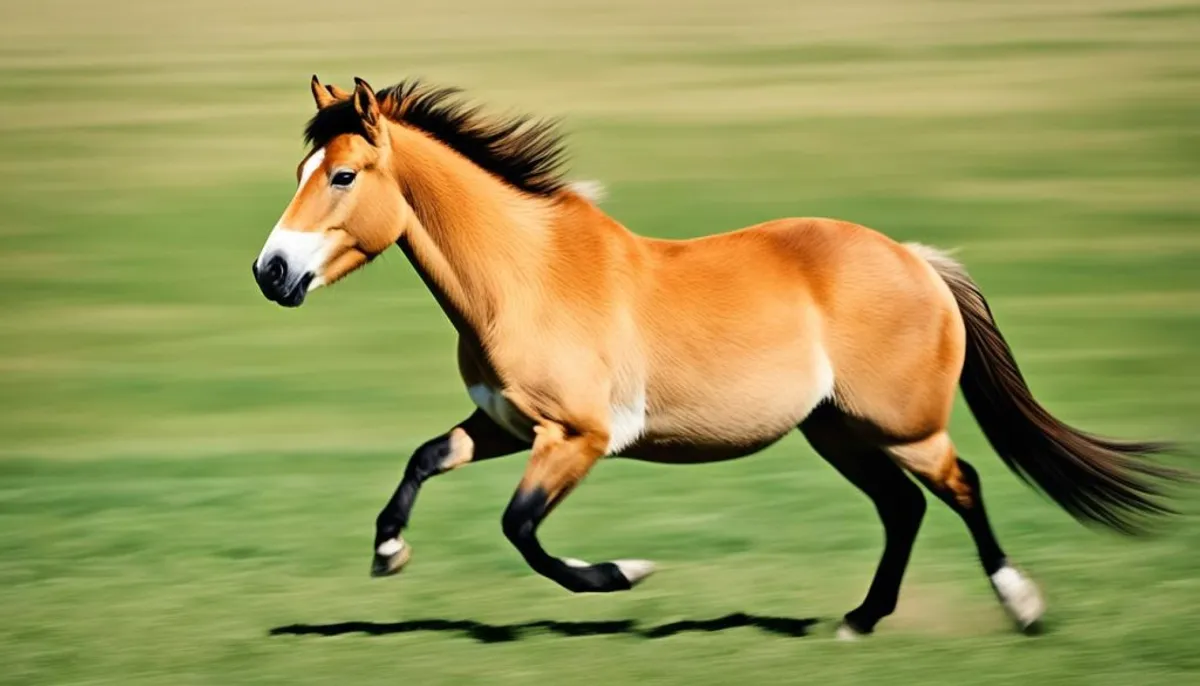
The history of the horse is a fascinating adventure. It immerses us in the evolution of equids. It shows the importance of preserving unique species, such as the Przewalski horse, to understand our origins.
The Horse and Man: A Shared History
The history of man and the horse is deeply intertwined. Before being a working, war, or transport animal, the horse was a source of food. The first encounter between man and horse dates back to 40,000 years ago.
In 4,500 BC, in Kazakhstan, the first horses were domesticated. This step marked the beginning of a close relationship between man and equid. The horse became a loyal and useful animal.
The Domestication of Horses
The domestication of the horse allowed for the exploitation of mare's milk. It is a valuable food source. The horse became essential for cart pulling and cavalry.
It also remained an effective means of transport. The creation of the royal postal service by King Louis XI in 1476 is an example of this.
The domestication of horses has profoundly marked the history of humanity. It has opened the way to new perspectives for the use and development of this animal species.
Origin of Equestrianism: An Ancestral Passion
The passion for equestrianism in France is ancient. It reflects the richness of equestrian history in France and the French equestrian tradition. Since the domestication of horses, France has experienced great equestrian exploits.
The first riders, the medieval knights, riding schools, and Olympic champions have marked history. Each era has added something special, creating a rich equestrian tradition.
Today, the passion for equestrianism is still alive. It is seen in prestigious stables, competitions, and cultural events. France is a leader in equestrianism, whether in sports, breeding, or the preservation of know-how.

The French equestrian tradition has evolved since the domestication of the horse. It shows how society and equestrian culture have changed. This heritage continues to captivate equestrian enthusiasts around the world.
The Horse in Art and Mythology
The horse has been widely represented in art since Prehistory. It can be found in cave paintings, Greek sculptures, and medieval tapestries. This shows its importance to Man, as a means of transport, war, or work.
Artistic Representations Through the Ages
The representations of the horse throughout history are varied. In painting, we think of the horses in the paintings of Eugène Delacroix and George Stubbs. In sculpture, the horses in sculpture that are most well-known are the equestrian statues of antiquity, such as that of Marcus Aurelius in Rome.
The Horse in Myths and Legends
The horse is also important in myths and legends. In Greek mythology, we find centaurs and Pegasus, the winged horse of Zeus. Mythological horses are present in many cultures, showing the importance of the equid.
The horse is a favorite subject of artists throughout the centuries. This shows its significance in the life and imagination of Man.
Conclusion
The invention of equestrianism does not come from a single person or culture. It is a collective heritage, resulting from thousands of years of interactions between man and horse. Today, equestrianism unites enthusiasts from around the world in their love for these animals.
The history of equestrianism in France is full of changes and discoveries. It spans from the nomads of the steppes to the knights of the Middle Ages, through modern equestrianism. This passion has always been able to adapt and reinvent itself.
Today, equestrianism is a key element of French culture, visible in art and mythology. It continues to fascinate enthusiasts who wish to carry on this tradition. Ultimately, equestrianism is more than just a sport or leisure activity. It is a deep bond between man and horse that transcends ages and civilizations.
FAQ
What are the origins of equestrianism?
The first contacts between man and horse date back to around 4000-3500 BC. At that time, the use of horses was mainly for work and transport. The nomadic peoples of Central Asia were among the first to learn to ride horses, about 3500 years ago.
What are the major civilizations that practiced equestrianism in antiquity?
Equestrianism was adopted by many civilizations, from the Persian Empire to Ancient Rome. The ancient Greeks viewed equestrianism as a military skill and a subject of philosophical study. Xenophon wrote on this subject.
How did equestrianism evolve in the Middle Ages?
In medieval Europe, equestrianism took on a new form with chivalry. The knight and his steed symbolized strength, bravery, and nobility. The equipment was designed for war, with war saddles for better control.
When did modern equestrianism begin to take shape?
Modern equestrianism emerged in the 17th century with classical dressage. At that time, equestrianism became more accessible, moving beyond aristocracy and warfare.
What is the origin of the domestic horse?
Man discovered the horse about 40,000 years ago, initially for its meat and hide. Around 4,500 BC, in Kazakhstan, the first horses were domesticated for milk.
Who is the direct ancestor of the domestic horse?
The direct ancestor of the domestic horse is the Przewalski, saved by conservation programs.
What is the place of the horse in art and mythology?
The horse has been widely represented since prehistory. It appears in many legends and mythologies, such as the centaurs or the horses that pull the chariot of the sun and moon.
Can we attribute the invention of equestrianism to a particular person or culture?
No, the invention of equestrianism cannot be attributed to a specific person or culture. It is a collective heritage, stemming from thousands of years of interaction between man and horse.