
The word “equestrianism” comes from the Latin “equitare”, which means “to ride a horse”. This story does not begin there. The earliest evidence of humans riding horses dates back to the Yamnaya culture. This occurred between 3000 and 2500 BC in the Eurasian steppes. The people of this time, nomads, demonstrated great talent for equestrianism. They laid the groundwork for what would later become a true art.
In ancient Greece, equestrianism was regarded as a distinguished art. It was a combination of power and elegance. The Roman aristocracy subsequently associated equestrianism with its high status. Even though it did not significantly evolve equestrianism, the aristocracy helped popularize it in Europe.
Today, equestrianism symbolizes the harmony between the rider and the horse. But its etymology speaks of much more than that. It reveals an exciting history, touching on subjects such as equestrian sports, equestrian terms, and the origins of the word equestrianism.

Main ideas to remember
- Equestrianism finds its origins in the Yamnaya culture, over 5000 years ago
- The Greeks elevated equestrianism to the rank of noble art
- The Roman aristocracy made horseback riding a status symbol
- The etymology of the word “equestrianism” reveals a rich and fascinating history
- Equestrianism today is a sport combining strength, elegance, and complicity with the horse
Equus caballus
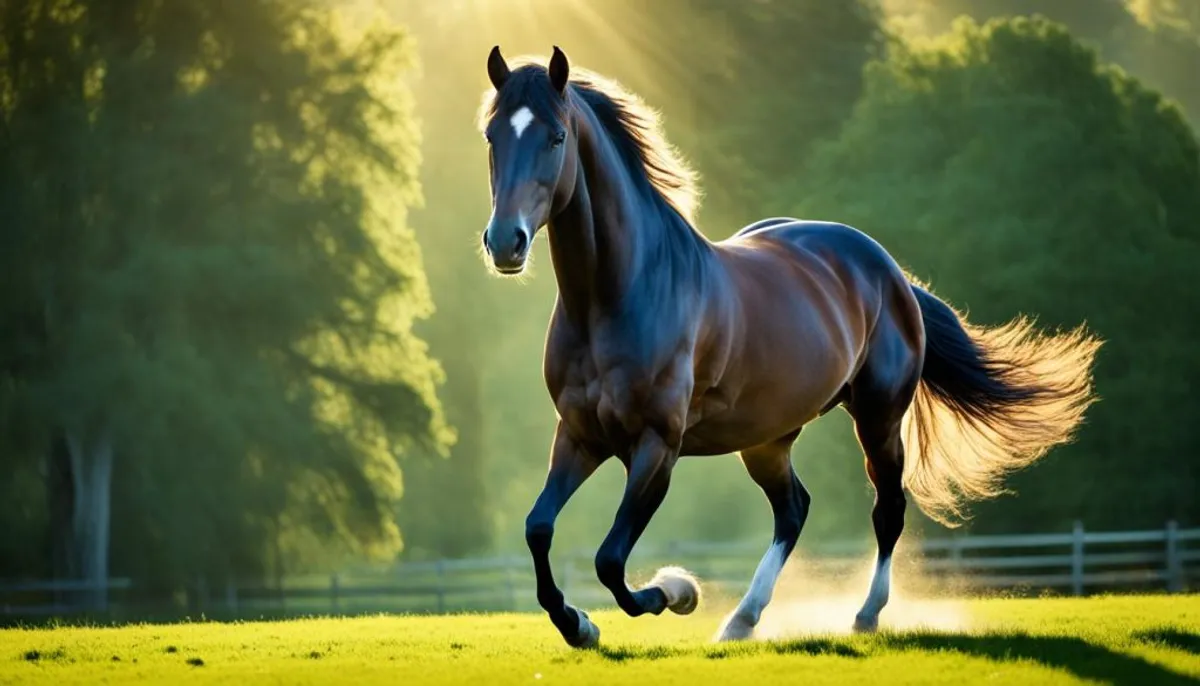
The Equus caballus, or domestic horse, is a herbivorous mammal of the equine family. It descends from a common ancestor that appeared about 4 million years ago. It has adapted to plains and steppes.
Hippology
Hippology studies the horse as a whole. Size and weight vary greatly among breeds. Miniature horses measuring 44.5 cm and weighing 26 kg exist, as well as imposing draft horses measuring 2.19 m and weighing 1500 kg.
A domestic horse has 32 pairs of chromosomes. It can live over 30 years, although its physical condition begins to decline around 15 years of age.
Terminology
A precise vocabulary has been created to talk about horses. We say “mare” for the adult female, “stallion” for the breeding male, “gelding” for the castrated male. For the young, we use “foal” or “filly“. Small horses are called “ponies“. This rich vocabulary shows the importance of horses in human culture.
| Characteristic | Value |
|---|---|
| Minimum height | 44.5 cm |
| Minimum weight | 26 kg |
| Maximum height | 2.19 m |
| Maximum weight | 1500 kg |
| Number of chromosomes | 32 pairs |
| Life expectancy | Up to 30 years |
equestrianism etymology
The word “equestrianism” comes from the Latin “equitare”, meaning “to ride a horse”. The nomadic peoples of the Eurasian steppes were its first masters over 6000 years ago.
Equus caballus
The Equus caballus, or domestic horse, is essential in the history of equestrianism. Since its domestication, it has been a military, work, and leisure partner. It has become a cultural pillar in several civilizations.
Terminology
The language of equestrianism is detailed, illustrating the importance of the horse. It includes names for types of horses, ways of moving, equipment, and equestrian sports.
| Term | Definition |
|---|---|
| Gait | Natural movement of the horse (walk, trot, gallop, etc.) |
| Tack | Set of elements (saddle, bridle, reins, etc.) used to ride a horse |
| Equestrian discipline | Type of equestrianism practiced (dressage, show jumping, eventing, etc.) |
This vocabulary shows how central the horse is in human history, from the origin of the word equestrianism to modern equestrian terminology.
Evolutionary history
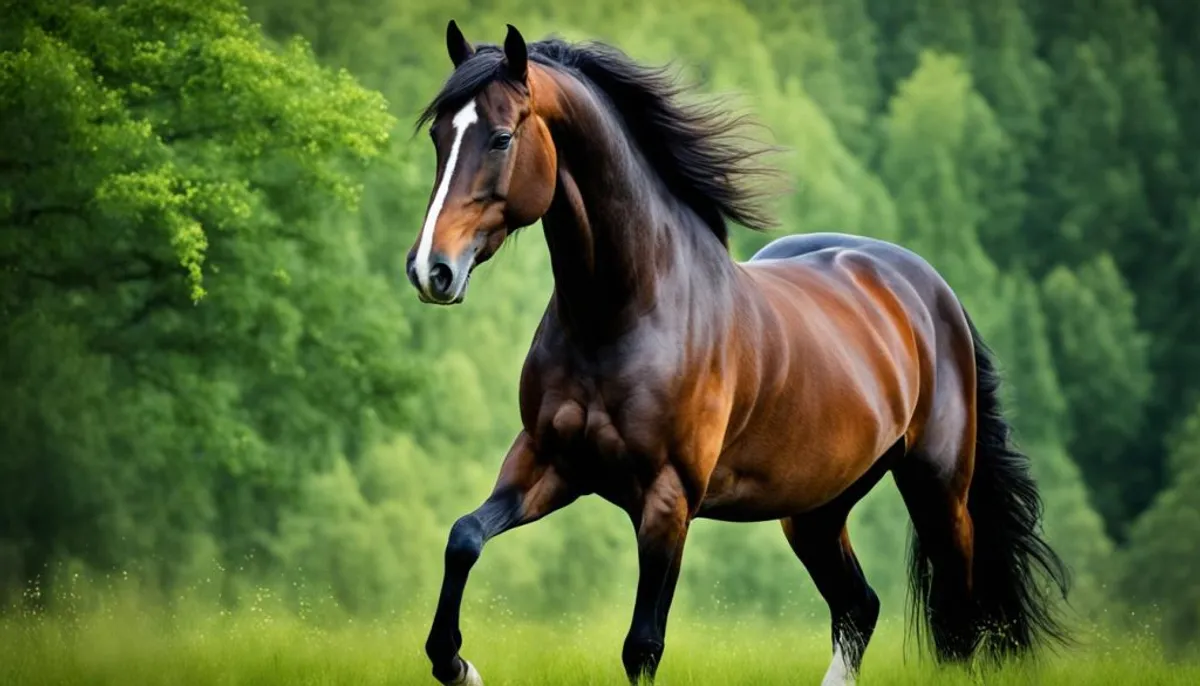
The evolution of the horse is fascinating. It clearly illustrates the theory of evolution. Researchers have discovered many fossils. The oldest dates back 60 million years. These fossils demonstrate that the Equus caballus descends from a small forest mammal. This mammal had multiple toes. It adapted to life in the plains and steppes. Thus, it developed a single median toe.
Over the centuries, the ancestors of the horse evolved. They adapted to a changing world. All of this led to the Equus of the Pleistocene. Measuring about 1.40 m, it moved on four hooves.
A recent genetic study revealed something fascinating. It dated the common ancestor of modern equids to 4 million years ago. This discovery is very important. It enriches our understanding of the theory of evolution and the origin of the Equus caballus.
| Period | Species | Characteristics |
|---|---|---|
| Eocene (60 million years ago) | Hyracotherium | Small forest mammal, multiple toes |
| Pleistocene | Equus | About 1.40 m, four hooves |
| 4 million years ago | Common ancestor of modern equids | Genetic dating |
Origins of the domestic horse
The question of the origins of the domestic horse fascinates researchers. For a long time, it was believed that all horses descended from a single wild strain, probably the Tarpan. But recent genetic studies have changed this viewpoint.
Now, it is believed that the domestic horse comes from different wild subspecies. These were each domesticated in a region of Eurasia. One study indicates that the domestication of the horse coincides with the development of Indo-Iranian languages. This is thought to have occurred about 2000 to 2200 years ago, in the northern Caucasus steppes.
These horses had sturdier bones and were easier to tame. Their behavior quickly distinguished them from other lines of domestic horses. This discovery changes our view of the origin of the wild horse and its domestication.
Equus caballus
The Equus caballus, the domestic horse, is an emblematic species. It is one of the oldest in the equine family. It has been domesticated for many millennia, primarily in the steppes of Eurasia.
- The Equus caballus descends from several wild subspecies
- The domestication of the horse occurred in parallel with the development of Indo-Iranian languages
- The genetic profile of the domestic horse quickly supplanted other breeds of horses
Conclusion
The history of equestrianism dives into the past, even before humans domesticated horses. From nomads on the Eurasian steppes to people from noble families in Europe, equestrianism has always played a major role. It was essential for work, war, and leisure moments.
The term “equestrianism” itself tells us a lot about its evolution. From ancient Latin to today, from the Equus caballus that we know, it is a rich heritage. Today, equestrianism is a sport and a passion. It connects the history of humans with that of horses in a very special way.
In the vast Eurasian expanses, in the arenas of the Greeks and Romans, and then in the stables of kings, the man-horse connection is palpable. Our shared history spans millennia. It celebrates the crucial role of domestic horses in the progress of our societies.
FAQ
What is the origin of the word “equestrianism”?
“Equestrianism” comes from the Latin “equitare”, translated as “to ride a horse”. Its roots extend further back, to the nomadic peoples of the Eurasian steppes. This refers to a period from 3000 to 2500 BC.
What is Equus caballus?
The Equus caballus is known as the domestic horse. It is a herbivorous mammal of the equine family. This animal descends from a common ancestor that appeared about 4 million years ago.
Horses have adapted to the plains and steppes since that time. They vary in size and weight, from miniature horses to draft horses.
What is the specific terminology for horses?
The equine family uses a well-defined vocabulary. For example, a “mare” is an adult female. A “stallion” is a breeding male. A castrated male is called a “gelding”. Young horses are “foals” and “fillies”.
A small horse is a “pony”. This vocabulary demonstrates the cultural importance of horses to humans.
How has Equus caballus evolved?
The evolution of the horse shows a major change. Fossils prove that it descends from a small mammal with multiple toes.
This mammal adapted to the plains by reducing its toes to one. The culmination was the Equus of the Pleistocene. The latter measured about 1.40 m and moved on four hooves.
Where does the domestic horse come from?
It was initially thought that all domestic horses came from a single wild strain, the Tarpan. But genetic studies have shown otherwise.
In reality, the domestic horse comes from different subspecies, captured and domesticated about 2000 to 2200 years ago, on the Eurasian continent.