
The TREC, or Techniques of Equestrian Hiking for Competition, is an equestrian sport that combines the beauty of hiking and equestrian techniques. It emerged in the 1980s. This sport highlights the bond between rider and horse, testing them in various events.
These events assess their sense of direction, their control of gaits, and their ability to overcome natural obstacles. TREC is open to all riders and all types of horses or ponies. It allows enthusiasts of trec riding, equestrian hiking, navigation, regularity, and control to thrive.
TREC is also known as horse trail, equestrian competition, equestrian rally, or natural terrain event. It offers a unique experience to riders seeking exciting challenges and who enjoy equestrian hiking.
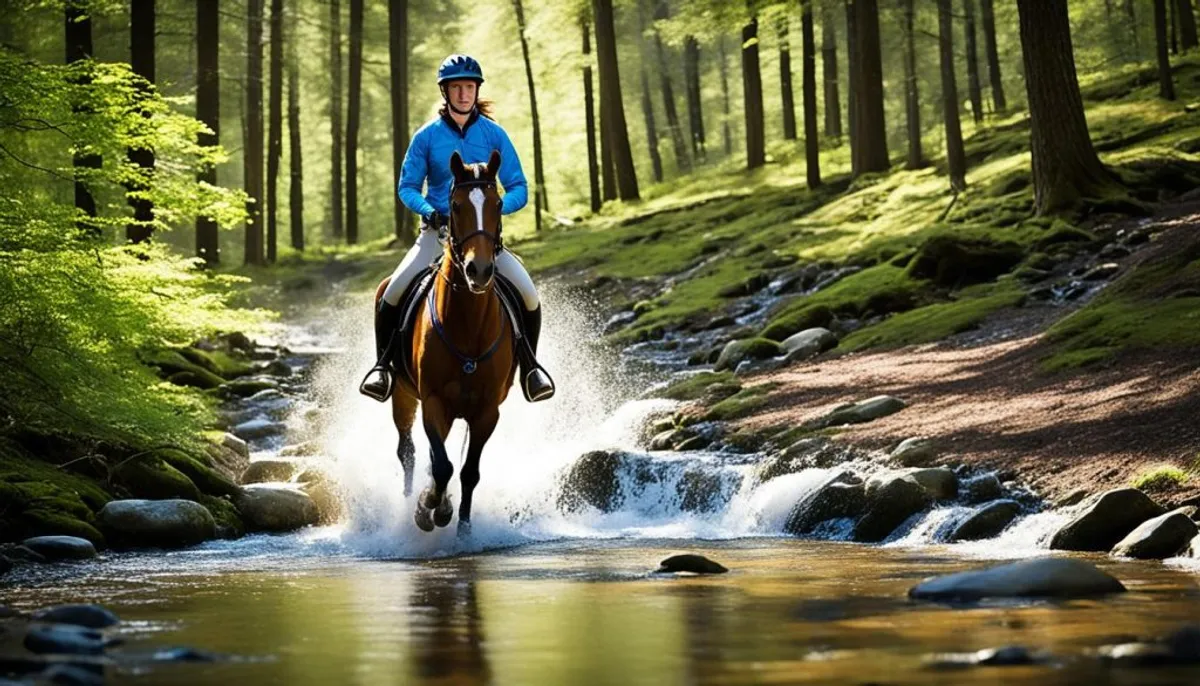
Main Points to Remember
- TREC is an equestrian sport combining hiking and equestrian techniques
- It showcases the qualities of the rider-horse pair
- TREC includes various events testing navigation, control of gaits, and overcoming natural obstacles
- Accessible to all riders and all horses/ponies
- TREC offers an exciting and diverse equestrian experience
What is TREC Riding?
TREC, or Techniques of Equestrian Hiking for Competition, is a unique equestrian discipline. It combines the pleasure of hiking with the technical challenges of a competition. Created in the 1980s, it emphasizes the bond between rider and horse.
Definition and Origin of TREC
TREC was created to promote equestrian hiking with a competitive twist. The first competitions took place in France and spread to other countries. Today, TREC attracts amateur and professional riders from around the world.
In trec riding competitions, the rider and their horse go through four events. These events test their abilities in equestrian hiking, equestrian competition, and equestrian discipline. They highlight their bond and harmony.
- The Orientation and Regularity Course (POR)
- The Control of Gaits (MA)
- The Varied Terrain Course (PTV)
- A scored presentation
The TREC is open to all riders and all types of horses or ponies. It offers different levels of difficulty to suit each rider-horse pair.
The TREC Events
TREC riding competitions take place over two days. They include four main events. These events evaluate the skills of the riders and their horses. They showcase their control of the orientation courses, control of gaits, and management of the varied terrain courses.
The Presentation of the Rider-Horse Pair
Each competitor has 5 minutes to showcase their equipment. They must explain their choices in the presentation of the rider-horse pair. This event assesses the competitor's knowledge of their horse and their equipment.
The Orientation and Regularity Course (POR)
The Orientation and Regularity Course (POR) requires following the map accurately. Competitors must arrive at the correct point, at the right time, by the correct path. This demonstrates their control of navigation.
The Control of Gaits (MA)
The Control of Gaits (MA) evaluates the horse's ability to find the right gait. It must go at the slowest gallop on the way out and the fastest on the return. This requires great riding finesse from the rider.
The Varied Terrain Course (PTV)
The Varied Terrain Course (PTV) includes 12 to 18 challenges. The pair must overcome them with efficiency and style. This event tests the technical and physical abilities of the pair in a demanding equestrian competition.
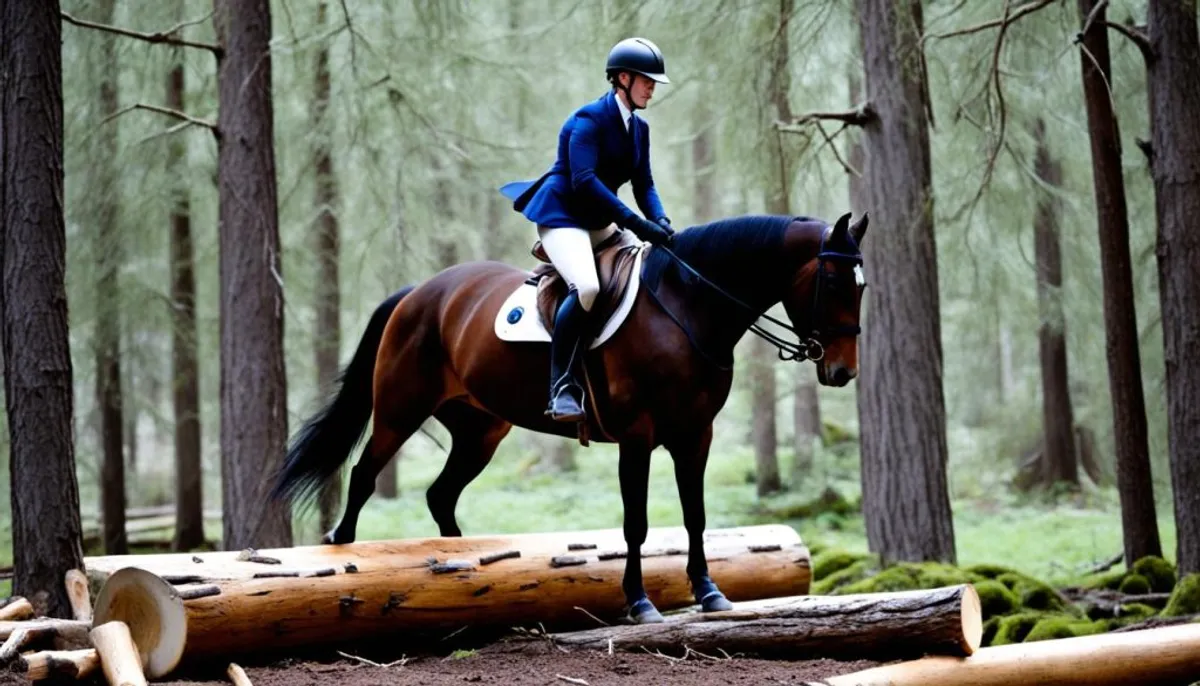
The Orientation and Regularity Course (POR)
The Orientation and Regularity Course (POR) event is essential in TREC riding. Competitors have 20 minutes to replicate their orientation course on a blank map. The goal is to find the correct control point at the right time, following the correct route.
Afterwards, controllers check if the rider is on time and if they followed the course correctly. Precision is crucial as penalties are given for time errors.
This event tests navigation, map reading, and the regularity of participants. It plays a key role in ranking in TREC riding.
| Event | Duration | Objectives |
|---|---|---|
| Orientation and Regularity (POR) | Approximately 20 minutes |
|
The Control of Gaits (MA)
TREC riding values the horse's control of gaits. It is a key event to see if the rider and their horse can effectively control changes in gallop, walk, and tempo. This dressing discipline requires precision and finesse in the communication between the rider and their horse.
The horse must maintain the correct gait at gallop in a narrow corridor. There is a track 1.5 meters wide and 100 or 150 meters long. If the horse steps out of line or changes gait, it receives penalties. This demonstrates the control of the rider-horse pair.
| Criteria | Objectives |
|---|---|
| Speed of gallop | Slow on the way out, fast on the return |
| Maintaining tempo | Regularity of rhythm |
| Position in the corridor | Stay within the limits |
This control of gaits event is crucial in TREC riding. It showcases the quality of dressing and the bond between the rider and the horse.
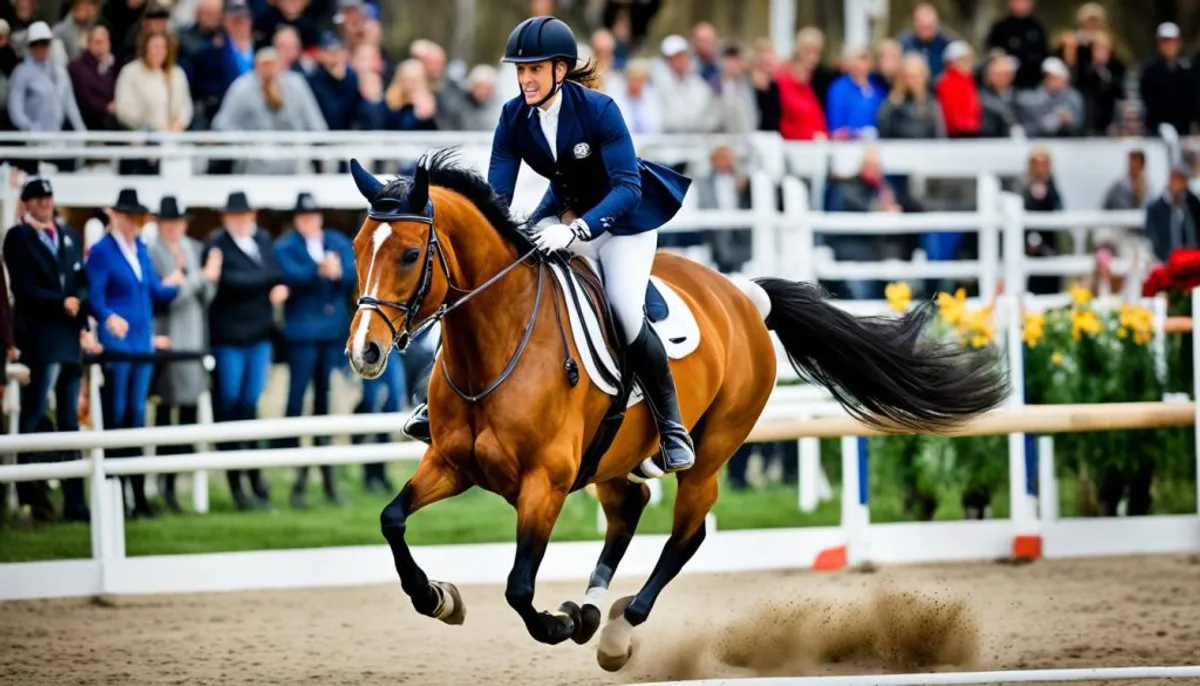
trec riding
The TREC, or Techniques of Equestrian Hiking for Competition, is an equestrian sport that blends the joy of hiking with the skills of an equestrian competition. The rider-horse pair must face challenges. These challenges evaluate their navigation, their control of gaits, and their ability to overcome natural obstacles.
This equestrian discipline is open to everyone, from beginners to experts. It is suitable for all horses or ponies, in teams or individually. TREC offers several levels of difficulty. This showcases the bond and qualities of the rider-horse pair.
- TREC combines equestrian hiking and equestrian competition
- Various events test navigation, control of gaits, and overcoming obstacles
- Accessible to all riders and all types of horses/ponies
- Multiple levels of difficulty to highlight the rider-horse pair
The TREC is perfect for riders of all levels. It offers a unique experience, blending sport and hiking. Discover this exciting equestrian discipline and join the TREC community!
The Varied Terrain Course (PTV)
The varied terrain course (PTV) is the most spectacular event in TREC riding. It includes between 12 and 18 natural or simulated obstacles. These obstacles are on a circuit of 300 meters to 2 kilometers.
The rider-horse pair must face logs, ditches, and water crossings. They will also encounter hedges, stairs, and hand-held descents. The obstacles vary greatly.
The goal is to demonstrate teamwork and the abilities of the rider-horse pair. Candidates are judged on their efficiency and style. A fall or a dangerous crossing results in penalties.
This event is the pinnacle of TREC riding. It tests the bond, control, and boldness of the rider-horse pair. The varied terrain course is filled with exciting challenges.
The Equipment for TREC
Participating in a TREC riding competition requires special equipment. In addition to equestrian hiking gear, one must be equipped for the events. The rider must be prepared for all situations.
Safety equipment is crucial: halter, lunge line, human and equine first aid kit, farrier kit, flashlight, etc. These tools help the rider and their horse act quickly in case of emergency.
TREC also requires specific equipment for the events. For the Orientation and Regularity Course (POR), a compass and a roadbook are necessary. For the Control of Gaits (MA), a stopwatch is essential. The Varied Terrain Course (PTV) requires a hiking helmet and appropriate boots.
Choosing your TREC equipment is crucial for safety and performance.
| Basic Equipment | Specific Equipment |
|---|---|
|
|
Conclusion
TREC is a unique equestrian sport, offering an adventure for riders and horses. It combines hiking and equestrian techniques for an exciting experience. It is perfect for competitors and enthusiasts, providing an extraordinary experience.
TREC is open to everyone, with all types of horses or ponies. You will learn navigation, control of gaits, and overcoming obstacles. You will discover beautiful landscapes and strengthen your bond with your horse.
If you are looking for a new challenge or a unique equestrian experience, TREC is ideal. Join us to experience the essence of TREC riding!
FAQ
What is TREC?
TREC, or Techniques of Equestrian Hiking for Competition, is an equestrian sport that combines hiking and competition. It was created in the 1980s. This sport highlights the bond between rider and horse, testing them in several events.
These events evaluate their navigation, their control of gaits, and their ability to overcome obstacles.
Who can practice TREC?
TREC is accessible to everyone, riders and horses or ponies of all levels. It suits competitors and amateurs alike. It is an exciting and varied equestrian experience.
What are the events of TREC?
TREC competitions last two days and include four key events. There is the presentation of the rider-horse pair, the Orientation and Regularity Course (POR), the Control of Gaits (MA), and the Varied Terrain Course (PTV).
What is the Orientation and Regularity Course (POR)?
The POR is the second event of TREC. Participants must arrive at the correct control point, at the right time, by the correct path. They are penalized if they are early or late.
What is the Control of Gaits (MA)?
The MA highlights the gaits and the dressing of the horse. The pair must find the correct gait at gallop, the slowest on the way out and the fastest on the return. They must stay within a defined corridor.
What is the Varied Terrain Course (PTV)?
The PTV is the most spectacular event. It includes 12 to 18 natural or simulated difficulties. The pair must overcome them with efficiency and style, proving their teamwork and honesty.
What equipment is necessary for TREC?
For TREC, you will need classic hiking equipment and specific gear. This includes a halter, a lunge line, and a first aid kit. This equipment helps the pair prepare and face the events.