
The fascination for equines and their power transcends the centuries. Their elegance and strength have always captivated humans.
Today, we delve into an exciting question: identifying the equine athlete with ultimate performance. This quest leads us to the most prestigious racetracks.
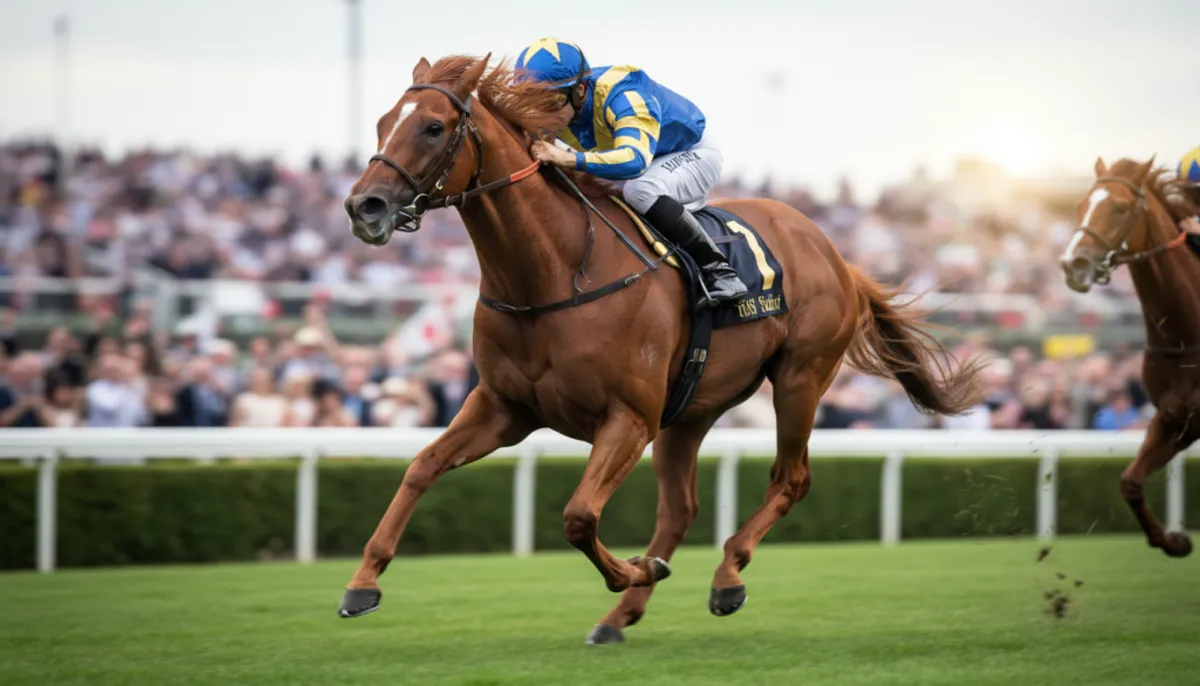
Official records, such as that of Winning Brew, mark history. This mare set a Guinness record of 71 km/h in 2008.
Other breeds, like the Quarter Horse, impress with phenomenal speeds. They can reach nearly 86 km/h over short distances.
Understanding these feats requires analyzing the unique physiology of these animals. Rigorous genetic selection guides their evolution.
Prepare to explore a universe where grace meets raw performance. We will dissect the secrets behind every legendary stride.
Key Points to Remember
- The pure speed of horses is a topic that has fascinated since antiquity.
- Official records are measured precisely during international competitions.
- Winning Brew holds a Guinness record recorded at 71 km/h in 2008.
- The Quarter Horse is renowned for its lightning-fast accelerations over 400 meters.
- Genetics and selective breeding play a key role in performance.
- The physiology of these athletes explains their ability to reach such speeds.
- This article guides you through the physical limits of these magnificent creatures.
Introduction and Historical Overview
The earliest traces of organized equestrian competitions take us back to 17th century England. At that time, the nobility and military sought to test the speed of their finest mounts.
This passion gave rise to rigorous selection, the foundation of modern racing history.
Origins and Evolution of Horse Racing
The enthusiasm for speed transformed breeding. Owners began to cross their sturdy local horses with eastern lines known for their agility.
The goal was clear: to produce an athlete combining power and speed. These experiments laid the groundwork for the great breeds we admire today.
The First Fast Horse Breeds
From these efforts emerged the Thoroughbred. This exceptional lineage primarily descends from three founding sires: the Byerley Turk, the Darley Arabian, and the Godolphin Barb.
Their unique genetic heritage has shaped a breed capable of extraordinary performances. Over time, this meticulous selection has allowed this horse to dominate the racetracks.
Its legacy explains why it remains an essential reference in the history of speed. Other fast horses often have to measure up to this standard.
This evolution shows how a horse became the very symbol of racing.
Speed Criteria and Technical Characteristics
The performance of an equine athlete relies on a precise combination of physical and technical factors. To achieve impressive speed peaks, every element of its locomotion is analyzed.
Stride Measurement, Cadence, and Stride Angle
The speed of an equine depends primarily on the length of its stride. This is the distance covered in a single leap.
The stride rate, or cadence, plays a crucial role. On average, it is 130 to 140 strides per minute. The best horses can reach 160.

A high stride angle improves technical efficiency. It represents the gap between the front and rear foot.
Experts study this cadence to assess a horse's potential. It reveals its ability to accelerate quickly.
Comparison Between Gallop and Trot
The gallop is the fastest gait. It allows reaching about 60 km/h over a short distance.
Over a long track, this speed stabilizes between 50 and 55 km/h. The trot, on the other hand, requires different muscle coordination.
The power of the shoulders and hindquarters is essential. It allows maintaining a steady pace in competition.
These characteristics distinguish great champions. They explain why some horses dominate on the turf.
What is the Fastest Horse in the World?
The crown of the fastest equine is contested among several contenders with documented feats. To decide, we refer to official timings and the organizations that validate them.
Analysis of Speed Records like Winning Brew
The undisputed record belongs to the mare Winning Brew. She was clocked at 71 km/h in 2008 at the Penn National Race Course.
This time earned her a spot in the Guinness World Records. Another athlete, Beach Rakit, achieved 69.69 km/h over 400 meters in Mexico.
These speed peaks illustrate the potential of racehorses. They remain absolute references in the equestrian world.
Selection Criteria and Performance Over Different Distances
Choosing a high-performing racehorse is not limited to genetics. Morphology, such as long legs and a powerful heart, is crucial.
These traits optimize oxygenation and power during exertion. However, the fastest over a quarter mile may not be the same over a mile.
The ability to maintain effort varies with distance. That is why trainers adapt their preparation.
Pure speed is one thing, but endurance is another. Great champions often excel in a specific niche.
Iconic Breeds and Their Feats
The world of racing is dominated by two lines with complementary specialties. Each embodies a unique response to the quest for speed.
The Thoroughbred: History and Feats
The Thoroughbred is often referred to as the fastest breed in the world over long distances. Its large heart allows it to sustain extreme physical effort.
Known as the lord of the racetracks, it collects prestigious victories. It is celebrated at the Epsom Derby and the Prix de l'Arc de Triomphe.
Each stallion of this breed is selected for its performance. This ensures the constant competitiveness of these horses on the tracks.
The Quarter Horse: Specialist in Short Distances
The Quarter Horse, originating from America, excels over short distances. Its powerful musculature provides explosive thrust at the start.
It can reach nearly 86 km/h over 400 meters. This record illustrates its mastery of intense sprints.
The fastest horses in this discipline have a massive hindquarters. This physical trait is key to their lightning-fast acceleration.
These two breeds dominate the racetracks. The Thoroughbred impresses with its grace and endurance, while the Quarter Horse dazzles with its raw power over short distances.
Comparison: Speed, Endurance, and Technology
To understand ultimate performance, one must go beyond mere measurement of speed and consider endurance and technical means. These three elements form a triangle upon which every champion depends.
Genetics, Training, and Nutrition
Genetics lays the foundation. Breeders cross lines to combine endurance and pure speed.
A rigorous training regimen transforms this potential into reality. It develops muscular strength and cardiovascular capacity.
Tailored nutrition, rich in protein, supports this intense effort. It allows the fastest horses to recover and maintain their condition.
| Type of Performance | Example | Distance | Time / Speed | Key Characteristic |
|---|---|---|---|---|
| Sprint (Gallop) | Quarter Horse | ~400 m | ~86 km/h (peak) | Explosive acceleration, raw power. |
| Endurance (Trot) | Standardbred | 1600 m | 1 min 46 s | Steady pace and endurance over distance. |
| Record (Trot) | Homicide Hunter | 1 mile (~1609 m) | 1 min 48 s | Demonstrates that endurance is a form of speed. |
Technological Innovations and Modern Equipment
Technology is revolutionizing preparation. GPS sensors analyze speed and cadence in real time during training.
This data helps trainers refine each session. The goal is to maximize each horse's natural potential.
These modern tools perfectly complement the work on genetics and nutrition. They allow horses to be faster and more enduring than ever.
Cultural Impact and Historical Anecdotes
Beyond the timers and tracks, the legend of fast equines fuels films, books, and passions. These athletes have become true icons.
Influence in Popular Culture and Media
Film has magnified their feats. Movies like Secretariat and Seabiscuit have captivated the entire world.
They showcase the power and grace of these champions. These stories often inspire young riders.
The media makes them symbols of freedom and determination. This representation reinforces their mythical status.
Stories, Unprecedented Records, and Surprising Anecdotes
The history is full of fascinating tales. The famous Secretariat set a historic record in 1973.
Its name remains synonymous with absolute performance. One anecdote speaks of Lightning Bolt.
This horse reportedly reached 75 km/h during a friendly race. Although unofficial, this story adds to the legend.
The ability to cover long distances at high speed continues to amaze. Each breed has its heroes.
These anecdotes prove that the quest for the fastest goes beyond mere sport. It touches the collective imagination.
Conclusion
Ultimately, the quest for the fastest horse reveals a complex balance between genetic heritage and modern science. The Thoroughbred reigns over the racetracks, crowned by rigorous selection that optimizes its speed.
Champions like Winning Brew embody this pursuit of excellence. Their record testifies to a perfect chemistry between nature and nurture.
The horse speed does not only arise from a prestigious pedigree. Tailored training and scientific nutrition shape these exceptional athletes.
The ideal galloping horse possesses a large heart and an aerodynamic morphology. These traits explain its dominance over long distances.
Appreciating the grace and power of these equines is to understand their millennia of evolution. Time remains the only impartial judge in this race against the clock.
FAQ
What is the world speed record for a horse?
The official record is held by the Thoroughbred stallion Winning Brew. He ran at an incredible speed of 70.76 km/h over a distance of 402 meters in 2008. This time remains the absolute reference for pure speed on a track.
Which breed is considered the fastest over long distances?
The Thoroughbred dominates endurance and long-distance races. Thanks to its large heart and efficient stride, it excels over courses of 1,600 meters and more. Champions like Secretariat are the perfect illustration of this.
Can a Quarter Horse beat a Thoroughbred in a race?
Yes, but only over short distances! The Quarter Horse is a born sprinter, explosive over a quarter mile (approximately 402 m). Its lightning-fast acceleration gives it an initial advantage, but the Thoroughbred generally overtakes it as the distance increases.
What factors, aside from breed, influence a horse's speed?
Genetics plays a key role, but modern training and scientific nutrition are essential. Morphology, particularly leg length and stride angle, as well as the relationship with the rider, fully optimize the animal's potential.
Are there famous historical speed records?
Absolutely! Before electronic timing, the Thoroughbred stallion Big Racket was legendary for its speed. More recently, the mare Winning Brew has etched her name in history with her world record, demonstrating the continuous evolution of performance.
Has technology changed the preparation of racehorses?
Radically. Video analysis, biomechanical sensors, and high-tech training equipment allow for refining every aspect of performance. This helps prevent injuries and develop the strength and endurance capacity of equine athletes.