
Choosing a career in equestrianism blends passion and work. In France, the paths are numerous, from sports stables to equestrian tourism. It is crucial to know the realities on the ground before embarking. The goal is to guide you towards a clear, achievable, and exciting project, without forgetting the joy of horseback riding.
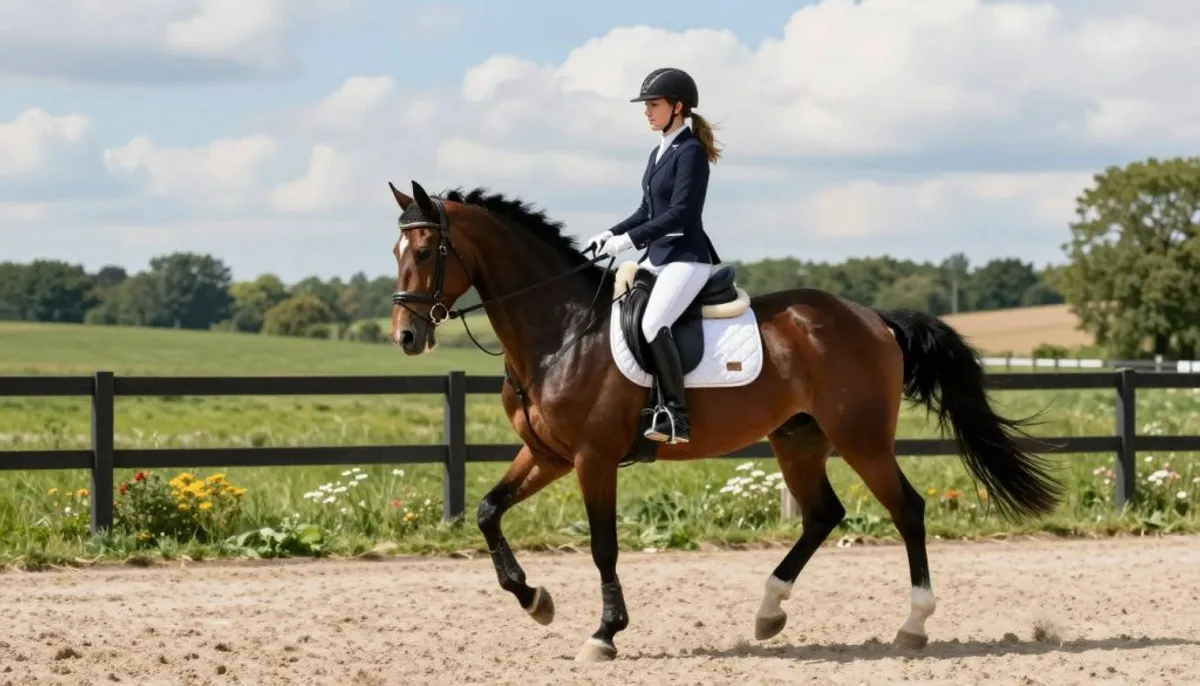
Equestrian professions require practicality, seriousness, and respect for horses. They include leisure, competition, or excellence, without solely aiming for the top. The DLTSE 2.0 program from Canada Equestrian (2017) aims to enrich the experience of all, including riders with disabilities.
It doesn't matter if you are starting after high school or changing your adult path, the questions are similar. What are your arrangements for work, budget, location, technical level? Also important, what steps to take to progress without the risk of injury or burnout.
The following will detail opportunities, progression, training, and more. Health, recovery, and safety are essential for longevity. Choosing good equipment and valuing craftsmanship, like La Sellerie Française, also plays a significant role.
Key Points to Remember
- The equestrian career requires a concrete project, not just a passion.
- The horse professions cover very different roles: coaching, sport, care, management.
- The equestrian career in France can aim for leisure, competition, or excellence, without an obsession with high levels.
- The equestrian orientation is built step by step, with measurable objectives.
- The equestrian retraining succeeds better when anticipating pace, budget, and working conditions.
- Health, safety, and reliable equipment support performance and longevity.
Overview of Horse Professions in France and Opportunities
In France, there is a wide variety of horse-related professions that go far beyond horseback riding. They include teaching, care, organizing competitions, and the field of horse racing. Each structure values both daily routine and sports performances. Physical and mental fitness plays a significant role, as emphasized by the MSA.
There are many job opportunities in sports stables, breeding centers, racetracks, and equestrian centers. The common point of these jobs is daily contact with horses. It is essential to observe them, ensure their safety, and manage time well. Knowing how to manage a stable becomes crucial when work accumulates, even on the ground.
Rider Profession and Mixed Roles: Teaching, Sport, Care, Management
The rider profession often combines several roles: riding, teaching, caring, and organizing schedules. In a club, activities vary between giving lessons, caring for horses on the ground, maintaining equipment, and talking with owners. Days are influenced by the weather, the horses' health, and safety measures.
Approaching stable work as if it were a small business is common. This involves managing inventory, tracking feed rations, and coordinating with the veterinarian and farrier. These simple tasks require consistency. Being versatile helps progress in equestrian professions without changing sectors.
Professional Rider Employment: Ground Realities, Schedules, Seasonality
Working as a professional rider means starting early, managing the unexpected, and adapting to the seasons. During competitions, one has to take care of many things in addition to training: transporting horses, preparing them, scouting the course, and managing stress. The details make the difference, especially when tired.
The horse racing sector has its own rhythm. In France, there are over 18,000 races per year. The trainer handles the sports strategy, nutrition, care, team management, and travel. Work often starts early in the morning and includes timed training, frequent assessments, and precise performance analysis.
Equestrian Center Employment: Desired Profiles and Cross-Functional Skills
Equestrian centers look for reliable employees who can work well in a team. Technical skills are required, but so is rigor: opening facilities, checking fences, caring for sick horses, and following instructions. Good communication with students, colleagues, and clients is essential to avoid problems.
To understand job opportunities, here is an overview of the missions and skills often required. This includes stable management when it becomes a significant part of the job.
| Opportunity | Daily Missions | Cross-Functional Skills | Work Rhythm |
|---|---|---|---|
| Teaching in a Club | Preparing lessons, supervising safely, adapting exercises, managing the horses | Pedagogy, calmness, risk prevention, service orientation | Wednesdays, evenings, weekends, peaks during holidays |
| Sports Stable | Mounted work, care, competition preparation, recovery follow-up | Organization, precision, autonomy, team spirit | Morning, intensive in season, frequent travel |
| Care and Stable | Grooming, monitoring, maintenance, hygiene, ration management | Observation, consistency, safety, endurance | Regular, 7 days a week depending on structure |
| Racing Sector | Training, timed sessions, race planning, logistics, veterinary follow-up | Analysis, discipline, responsiveness, team coordination | Very early, dense schedule related to races |
| Management Functions | Planning, purchasing, client relations, compliance, work organization | Stable management, communication, prioritization, practical sense | Variable, heavy load during activity periods |
It is common to perform multiple tasks, such as caring and managing, in these professions. This variety makes them interesting. One learns on the ground, and each day improves our understanding of horses.
Equestrian Career: Defining a Solid and Realistic Project
Building a career in equestrianism starts with assessing your situation. You need to think about free time, budget, access to a horse, and distance to facilities. The goal is to have a rewarding experience, according to the DLTSE 2.0 from Canada Equestrian (2017), which aims for happiness and advancement for all, not just the elite.
To organize your equestrian project well, it is helpful to identify the key players in your daily life: trainers, parents, sponsors, breeders, judges, administrators, and sports science experts. Their role can facilitate the journey or complicate it if the plan is unclear.
“Leisure,” “Competition,” or “High Level” Goals: Clarifying Your Trajectory
Before aiming for performance, define a simple goal that fits your schedule. Consistency is essential in equestrianism: training, horse care, groundwork, and recovery. A clear goal limits impulsive spending and interruptions in activity.
| Trajectory | Realistic Rhythm | Typical Budget | Tracking Indicators |
|---|---|---|---|
| Leisure | 1 to 2 sessions per week, clinics during holidays | Controlled, priority on safety and comfort | Confidence, ease at all three gaits, self-care |
| Club/Amateur Competition | 2 to 4 sessions per week, regular outings | Higher: entries, travel, coaching | Regularity in competitions, stress management, horse consistency |
| High Level | Almost daily, annual planning, team around the pair | Very high: veterinary follow-up, physical preparation, logistics | Progression by cycles, seasonal objectives, injury prevention |
The Horse-Rider Pair as a Partnership: Progressing Together
In the DLTSE, the rider and the horse are considered two athletes. This perspective changes the training approach: one adapts the workload, monitors health status, and respects learning. This partnership makes equestrianism safer by avoiding excessive efforts.
A good equestrian project also includes rest days, gentler training, and regular evaluations. The aim is to do better, not necessarily more. Progress follows when the harmony between technique, mental state, and physical condition matches the horse's rhythm.
- Skills: balance, stable hands, understanding of gaits, precision.
- Health: warm-up, osteo/veterinary follow-up, pain prevention.
- Organization: training log, competition calendar, short-term goals.
Including Accessibility: Possible Pathways for Riders with Disabilities
Accessibility must be considered from the outset, without lowering standards. Para-equestrianism has been recognized as a Paralympic sport since 1996 (Atlanta). It is open to individuals with physical or visual disabilities, with mixed competitions based on functional abilities, classified into 4 categories.
Para-equestrian competitions focus on dressage, with imposed and freestyle tests, including musical performances, and team competitions. Depending on the need, aids such as dressage whips, attached reins, or elastic bands are permitted. Congenital disabilities are distinguished from acquired disabilities, the latter emphasizing relearning.
Many therapeutic riding centers offer special equipment and qualified instructors. Considering accessibility early in planning helps choose the right places, the right support, and creates an environment that fosters progress.
Understanding Long-Term Development in Equestrian Sports for Better Progress
To progress step by step, a simple model exists. The DLTSE 2.0 model from Canada Equestrian in 2017 shows how to evolve in equestrianism, from leisure to high-level competitions.
In France, this model helps understand progression in equestrianism. It emphasizes that not all skills are worked on at the same time. One starts with safety, then technique, and finally consistency. Priorities evolve according to age, available time, and competition stress.
Why Progression is Stage-Based: Learning, Training, Competition
The DLTSE 2.0 proposes clear stages of progression. They guide without confining and explain periods of stagnation.
- Awareness and first contact
- Active child
- Having fun through sport
- Learning to train
- Training to train
- Learning to compete
- Training for competition
- Learning to win
- Training to win
- Active life
In learning, the goal is to acquire automatic responses and a good relationship with the horse. As training intensifies, one manages intensity, rest, and session goals better.
In competition, the goal goes beyond simple ranking. It is also about maintaining solid riding in stressful situations while preserving the mental and physical well-being of the horse-rider pair.
Physical Literacy: Balance, Coordination, Motor Skills, and Multi-Disciplines
Physical literacy, according to the DLTSE, is the skill and confidence to be active. Ideally developed before adolescence, the body learns better and retains the fundamentals longer.
It includes basic and fundamental motor skills such as agility, balance, and coordination. Simple actions like running or jumping improve stability in the saddle.
Practicing different equestrian disciplines strengthens physical literacy. Varying activities like dressage and show jumping enhances movement understanding, which helps progress in equestrianism without forcing.
Two Sustainable Paths: Pathways to Excellence and Lifelong Competition
The DLTSE 2.0 connects leisure and competition, introducing lifelong competition. The goal is to offer achievable pathways that fit professional life and health.
The pathway to excellence is oriented towards high levels, with clear commitment and direction. As requirements increase, few can maintain the pace without precise organization, good support, and careful horse care.
Lifelong competition encourages staying active and competitive at any level. It values pleasure, safety, and sustainability in equestrian sports.
| Pathway | Main Intention | Training Priorities | Competition Benchmarks | Point of Caution |
|---|---|---|---|---|
| Pathway to Excellence | Achieving high international performance (Olympics, Paralympics, world championships depending on the discipline) | Annual planning, fine technique, mental preparation, veterinary follow-up and horse recovery | Selections, performance objectives, consistency under pressure, course and routine strategies | Risk of burnout if the load is not managed; need for strict staff and framework |
| Lifelong Competition | Competing sustainably, progressing at your own pace, staying active in the long term | Quality of fundamentals, variety of sessions, injury prevention, simple and regular routine | Club/amateur competitions, master tests, technical objectives (without aiming for international) | Avoid monotony; keep a comfortable horse and stable motivation |
Choosing the Right Equestrian Instructor Training According to Your Level
It is important to think carefully before enrolling in a training program. Ask yourself what audience you want to train, the rhythm you can follow, and the level of responsibility you are willing to take. A serious training program primarily aims for safety and the methodical progression of students. Choosing the right diploma and internships suited to your experience can save you time.
Your success depends on the consistency between your technique, your ability to explain, and to manage the unexpected. When you progress in these three areas simultaneously, you avoid uneven training. You build a solid reputation on the ground.
Becoming an Equestrian Instructor: Expected Skills and Teaching Posture
To become an equestrian instructor, a solid foundation in care, groundwork, and riding is essential. What often makes the difference is your teaching style. You must be able to give clear instructions and help riders progress according to their needs. A good instructor knows how to organize a lesson, manage a group, and always ensure safety.
The instructor profession is demanding and requires strong physical endurance, especially when there is a lot of work. Knowing how to manage scheduling, equipment, and budgets is very useful. Speaking English is an advantage, especially if you want to work in international competitions or abroad.
Certification and Continuing Education: Professionalizing Over Time
Being certified provides a framework and safe benchmarks for riders and establishments. Canada Equestrian offers a National Coach Certification Program. This program follows a clear and structured evaluation logic. A good training program leads to more stable and effective teaching in the long term.
Continuing education allows you to update your knowledge in biomechanics, mental preparation, and management of young horses. It is crucial for maintaining a consistent teaching method. Investing in continuing education quickly improves the quality of your lessons.
The racing field shows the importance of professionalization. The classic pathway includes a CAP agricultural lad-rider, followed by a professional bac. To be a trainer, one must obtain a license after a specialized internship. This requires a deep knowledge of the discipline.
| Pathway | What You Learn | How It Changes Work |
|---|---|---|
| Equestrian Instructor Training | Pedagogy, safety, progression, session organization | Clearer lessons, smoother group management |
| Trainer Certification | Evaluation standards, planning, structured feedback | More precise objectives, better tracking of progress |
| Racing Sector (CAP, professional bac, license) | Rigor, preparation, stable management, regulations | Solid routines, sharp sense of details and responsibilities |
Practical Internships and Supervision: Learning with a Certified Trainer
Internships are not just a way to accumulate hours. They allow you to learn to observe and correct gently. They also teach you to make quick decisions. Having a certified supervision provides direct feedback on what works, risks, and what needs to be simplified.
A good internship provides essential practical skills:
- Safety briefing before the session, equipment check, distance management
- Progressions in short steps, adapted to level and fatigue
- Reading the horse: locomotion, stress, possible pain, recovery
- Managing the unexpected: falls, hot horses, weather, changing ground
Regularly working with a certified trainer is ideal. It allows you to refine your techniques, communication, and timing. You develop a reliable teaching method, even in difficult moments.
Online Equestrian Training: Learning Faster Without Mistakes
Learning equestrianism online can save time. However, it is important to see it as a guide. This explains the "why" behind exercises before trying them. This leads to progressing with confidence when mixing theory and practice.
The key to good equestrian learning is to review the basics, then prepare a session with your coach. Identify a goal, a directive, and how you will know you have succeeded. This way, you avoid thinking you are progressing without actually improving.
The path to technical mastery is step-based, as shown by the DLTSE: you reinforce, automate, and finally, add complexity. Online, this allows you to work on different aspects. Like reading signals, understanding horse movements, care, and how to organize your training. Then, when riding, you adjust with live advice.
Safety in equestrianism, according to MSA advice, also depends on our physical and mental condition. Incorporating a warm-up into your routine, starting from horse care and while walking, is a good idea. Additionally, mentally preparing the rider off the saddle, with breathing and concentration exercises, is beneficial.
- Before the session: select a topic (like bending, transitions, managing stress) and choose two brief exercises.
- During: film a part, then compare it to a technical model reviewed online.
- After: highlight a successful aspect, one to improve, and a point to maintain.
| Usage | What You Gain | Point of Caution | Field Application |
|---|---|---|---|
| Online Equestrian Training on training theory | Understanding objectives, workload, recovery | Risk of wanting to "go too fast" | Plan 1 focus per session and keep breaks |
| Equestrian Learning via analysis videos | Better reading of rhythm, trajectories, aids | Deceptive camera if the angle is wrong | Film from the side, then check with the trainer |
| Technical Progression through exercise sheets | Structured exercises, clear steps | Copying an exercise without an adapted level | Reduce difficulty: less pace, less duration |
| Mental Preparation for Riders in daily life | Less distraction, more calm under pressure | Too long routines, abandoned | 2 minutes of breathing before saddling, then before mounting |
| Equestrian Safety inspired by MSA guidelines | Better reflexes, fewer avoidable accidents | Believing oneself "protected" by knowledge alone | Check equipment, circulation areas, ground work instructions |
Equestrian Internship: Transforming an Immersion into a Job Springboard
A good equestrian internship can change a lot. You learn the rhythm of work, the requirements, and how to fit into the team. Testing your endurance, observation, and communication are also key points.
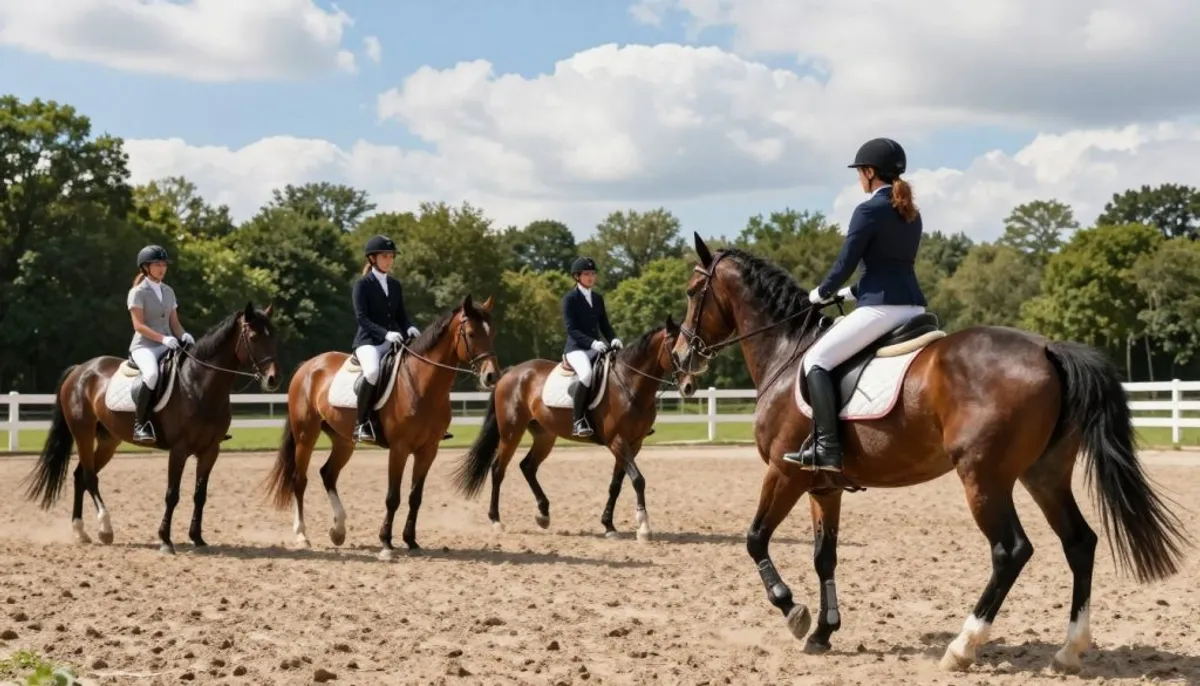
To aim accurately, start from a concrete position: teaching, sports stable, racing, or daily care. This precision is useful, both for finding a job in an equestrian center and for succeeding in an equestrian recruitment.
Where to Apply: Equestrian Centers, Sports Stables, Specialized Structures
Equestrian centers offer a good entry point to get started. You will discover the welcome, the lessons, and club life. Sports stables, on the other hand, emphasize training and precision of actions daily.
Racing structures offer another perspective: daily follow-up, timing, organization, travel, and interactions with owners. As for specialized structures, such as adapted or therapeutic riding, they require special attention to equipment and the well-being of riders.
What an Internship Should Teach You: Safety, Care, Mounted and Ground Work
A useful equestrian internship should start by teaching safety. You need to know how to keep distances, circulate correctly, and understand horses. Then, you learn the basic gestures, where the whole body is involved, from grooming to training.
In an internship, you should seek to practice and understand, not just to do. Skills are built with repetition, method, clear instructions, and routines.
- Complete grooming and general condition check
- Ground movement: leading, turning, stopping, managing space
- Tacking: adjustments, checks, storage
- Hoof cleaning and simple inspection (heat, stones, sensitivity)
- Cleaning the stall, managing bedding, equipment hygiene
- Washing after training, drying, covering if needed
- Carrying water buckets, pellets, transporting saddle and wheelbarrow with safe gestures
Capitalizing on Your Missions: Portfolio, Recommendations, Targeted Applications
To prepare well for an equestrian recruitment, keep evidence of your know-how: an internship journal, a task list, and photos of your actions. A recommendation, signed and concise, is very useful.
When applying, tailor your application to the desired position. Whether for a club, a stable routine, or organizing races, showcase your specific skills. This will help employers understand what you bring.
| Equestrian Internship Framework | What You Quickly Observe | Proofs to Keep for Equestrian Recruitment |
|---|---|---|
| Equestrian Center | Management of lessons, rider relations, task sequencing | Internship journal, safety sheet, recommendation on reliability and punctuality |
| Sports Stable | Preparation for effort, rigor of equipment, care after work | Routine list (grooming, tacking, washing), validations of key gestures |
| Racing Structure | Planning, daily follow-up, logistics, and travel | Organization report, tasks handled independently, feedback on seriousness |
| Adapted/Therapeutic Structure | Specific equipment, attention to comfort, structured communication | Notes on protocols, supervised participation, evidence of calmness and listening |
Physical and Mental Preparation of the Rider: Health, Safety, and Performance
Being fit is not limited to riding. It is also reflected in how you take care of the horse daily. To keep your horse safe, it is essential that you are in good health.
The rider profession works the whole body. This includes the ability to breathe, heart, energy, and joints. It is not just during sports exercises. Even during grooming, you exert effort while the horse rests.
Why the Horse's Performance Also Depends on Your Physical Condition
If you are not fit, your posture and how you hold the reins change. This influences the horse's behavior. During training, the heart rates of the horse and rider can be similar. This shows the importance of staying physically active, even during a busy week.
Being attentive is crucial. If you are tired, your reactions are slower, which can be dangerous. Fabrice Véron emphasizes the importance of warming up to avoid accidents from the start.
Warm-Up Integrated into the Routine: Grooming, Walking, Cleaning, Tacking
You do not need to practice a sport before starting your workday. The idea is not to begin directly with intensive work. Starting with tasks like feeding the horses helps prepare physically.
- Conscious walking: parking → paddock → tack room, focusing on each step.
- Grooming and cleaning: it is good to alternate between the right and left sides, so as not to stay bent for too long.
- Tacking: make movements to wake up your shoulders, neck, and pelvis evenly.
Anthony Barrier explains that well-organizing your warm-up helps activate gradually without risk for the team.
Mental Preparation: Breathing, Vigilance, Stress and Emotion Management
Horses sense what the rider feels. Starting by staying calm and attentive is essential. If you are stressed, it affects your body, and the horse feels it.
Controlling your breathing is an effective method. Deep breathing helps you stay calm and think clearly. Your posture also helps: keep your shoulders relaxed and your neck supple.
Recovery and Lifestyle Hygiene: Recovering After Effort to Last in the Profession
It is important to start recovering right after effort. After exercise, the body is warm and may be dehydrated. This is when it is crucial to stay cautious to avoid accidents.
| Moment | Simple Action | Desired Effect |
|---|---|---|
| Right After | Walk for 3 to 5 minutes, shoulders down, slow breathing | Lower heart rate and maintain clarity |
| Within the Hour | Drink regularly, add a snack if the morning is long | Support energy and limit fatigue |
| End of Day | Self-scan: stiff areas, hands, lower back; gentle stretching | Reduce pain and preserve mobility |
Arnaud Boiteau shares a tip: staying flexible helps maintain good posture. This positively impacts everything: safety, work quality, and longevity in the profession.
Working in Stables and Competitions: Methods, Organization, and Rigor
Before going to the track, organization in the stable is crucial. First, observe the horse at rest and in motion. Conduct simple tests to assess its potential without rushing.
A well-defined routine helps avoid the unexpected. Training generally takes place in the morning. It includes timing, observations, and minor adjustments. One also monitors the horse's appetite and general condition while keeping an eye on the competition.
A personalized training plan is established for each horse. This takes into account endurance, technique, and the need for rest. Knowing when to speed up or slow down is essential for good management.
Daily stable management requires good coordination. It involves working with different professionals and planning carefully. Additionally, one must handle race registrations and communicate clearly with horse owners.
Preparation for competitions goes beyond simple transport. It includes everything for the horse's comfort, from hydration to its arrival on site. The goal is to keep it fit, with a routine that prevents injuries.
On race day, strategy relies on several factors. One considers the terrain, weather, and track profile. Discussing the tactics to adopt with the jockey is essential. This simplifies instructions to make them easy to follow.
| Key Moment | Pro Actions | Control Point | Performance Benefit |
|---|---|---|---|
| Initial Assessment | Observation in the box, effort test, review of temperament and lineage | Recovery, breathing, locomotion | Reliable basis for a realistic plan |
| Weekly Training | Alternating endurance, speed, technique, recovery days | Timing, fatigue, regularity of gaits | Progression without overwork |
| Daily Follow-Up | Long grooming, walking, targeted care, session adaptation | Limbs, appetite, attitude, hydration | Fewer injuries, more consistency |
| Before Moving | Check equipment, documents, travel rations, arrival planning | Loading stress, safety, comfort | Calmer transport, available horse |
| At the Racetrack | Reconnaissance, simple instructions, adjustment of shoes and pace | Weather, track condition, opponent profiles | Clear decisions for the race strategy |
Good organization makes daily life easier for everyone. Planning for the competition and the race strategy becomes clearer. This rigor allows focusing on the essential: a horse in good shape and ready for competition.
Equipment, Professional Image, and Artisan Excellence with La Sellerie Française
In the equestrian world, looking good is important, but being consistent is even more so. Having quality equestrian equipment enhances your professional image. It also contributes to the precision and safety of your movements. Working for long periods takes a toll on the body: neck, back, shoulders, everything suffers.
The MSA emphasizes the importance of performing sustainably without exhausting oneself. Choosing the right equipment helps you stay alert. It facilitates daily tasks, from grooming to saddling, reducing the unexpected.
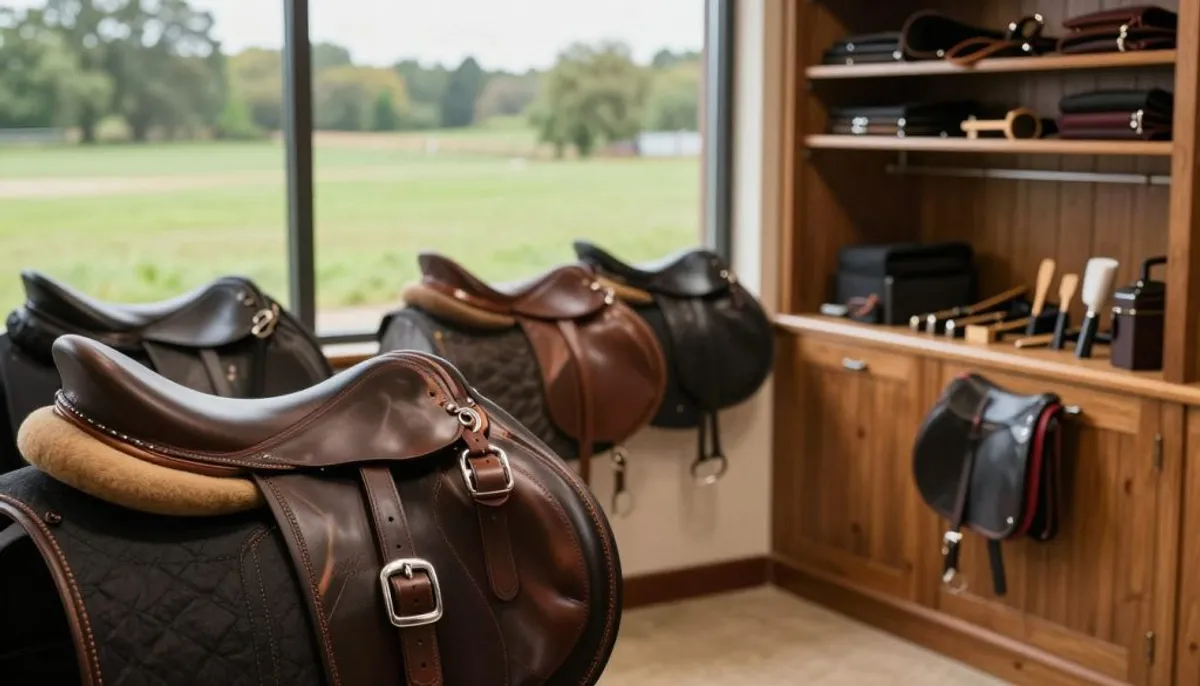
Why Invest in Reliable Equipment: Comfort, Precision, Safety at Work
Good equipment is not superfluous. It ensures the reliability of every action. A solid girth, neat stitching, and good adjustment prevent errors that lead to fatigue. These details are crucial for safety, in competition or during transport.
- Comfort: relaxation, better posture, improved contact.
- Precision: stable adjustments, clear reference points, refined gestures.
- Prevention: fewer unpleasant surprises, secure handling.
Comprehensive Know-How in France
La Sellerie Française focuses on exceptional quality: unique products made with French materials. They are designed entirely in France. This approach goes beyond simple labels, promising more than "Made in France." They aim for perfect harmony between origin, cut, and finishes.
This choice appeals to professionals who use their equipment daily. Longevity is evident in the cuts, resistance, and quality of the leathers. Good equipment, well-maintained, retains its characteristics and facilitates work, even at the end of the day.
Custom or Limited Series: Consistency Between Job Requirements and Equipment Choices
Choosing between a custom saddle or a limited series depends on your needs. An adapted saddle can change a lot: seat stability, horse comfort, freedom of movement. A limited series guarantees consistent quality, practical for quick replacements or for standardizing a stable's equipment.
| Field Need | Relevant Option | Concrete Benefit |
|---|---|---|
| Horse that evolves (muscle building, seasons, recovery) | custom saddlery | Precise adjustment, lasting comfort, better pressure point management |
| Daily work + competitions with tight logistics | Limited series from La Sellerie Française | Ease of replacement, stable reference points, unified image |
| Priority on safety, both in the stable and during transport | Made in France equipment | Enhanced safety, reliable finishes, easy visual checks |
In summary, the essential thing is to choose equipment that meets your needs, not the other way around. With La Sellerie Française, craftsmanship and French origin guarantee effective, regular, and safe use, season after season.
Conclusion
Building a solid equestrian career in France requires a precise goal. Whether for leisure, competition, or reaching a high level, everything depends on your ambitions. A professional path solidifies with clear steps, time spent on horseback, and feedback from experience.
The key to becoming a horse professional is to progress sustainably, not just to have talent. The DLTSE emphasizes the importance of following a path to excellence and participating in competitions throughout life. One must also lead an active life, train regularly under good supervision, or simply consistently.
This support is also available for riders with disabilities. With para-equestrian disciplines, specific classifications, and support from therapeutic centers, opportunities abound. The important thing remains to aim for constant progress, considering the physical well-being and independence of riders.
Never underestimate the importance of health and safety for better performance. This includes a good warm-up, vigilance, recovery time, and adherence to rules, such as those from the MSA. Continuing education and coaching by experts are crucial. And to strengthen self-confidence and effectiveness, choosing quality equipment recommended by La Sellerie Française is essential.
FAQ
How to Build a Realistic and Sustainable Equestrian Career in France?
To build a successful equestrian career, align these four elements: a precise plan (leisure, competition, excellence), step-by-step evolution, a field of experiences (internship, alternation), and attention to health and safety. According to the DLTSE 2.0 (Canada Equestrian, 2017), the goal is to offer the best experience to all. This includes riders with disabilities.
What Are the Major Opportunities and Horse Professions in France?
Opportunities can be found in teaching, sports, daily care, management, and the racing sector. Roles vary: coaching, training, care, organization, team management. The world of horse riding relies on the daily work of its professionals.
What Does a Professional Rider's Daily Job Look Like?
As a professional rider, expect rigor: care, mounted and ground work, managing the unexpected, adhering to safety rules. Your day starts early and changes according to the season, competitions, and foaling. Your fitness level matters as performance relies on the horse-professional duo.
Equestrian Center Employment: What Profiles Are Sought and What Skills Really Matter?
Centers look for rigorous, reliable, versatile individuals. Skills in care, communication, and organization are expected. One must be calm, consistent, and patient in progression.
How to Choose Between a “Leisure,” “Competition,” and “High Level” Project?
Consider your time, budget, access to horses, and motivation. The DLTSE 2.0 helps to define a framework. Clarifying your goals helps avoid hasty choices and remain happy in the long run.
Why Is the Horse-Rider Pair Considered a Partnership?
The DLTSE sees the duo as two athletes. It is necessary to adapt the work, monitor their condition, and progress together. This partnership is based on consistency, recovery, and quality work.
What Pathways Exist for Riders with Disabilities?
The para-equestrian sport has been paralympic since 1996 (Atlanta). It welcomes athletes with physical or visual disabilities. Competitions include dressage, with specific aids allowed.
Do Therapeutic Riding Centers Offer Something Different?
Yes. Therapeutic centers provide adapted equipment and specialized supervision. They differentiate between congenital and acquired disabilities, often with a relearning approach.
Why Is Progression “Stage-Based” According to DLTSE 2.0?
Learning varies according to phases. The DLTSE 2.0 (Canada Equestrian, 2017) structures learning into clear stages. This prevents injuries and builds solid foundations.
What Is Physical Literacy, and Why Is It Crucial in Equestrianism?
Physical literacy develops skill and confidence. In equestrianism, it encompasses mastery of different disciplines. This forms an adaptable body and a good sense of movement.
What Are the Two Sustainable Paths Proposed by the DLTSE?
The DLTSE distinguishes between international excellence and lifelong competition. The latter allows for regular competition at any level. It integrates into an active life.
What Equestrian Instructor Training to Choose for Safe Supervision?
A good equestrian instructor training teaches progressive supervision, audience management, and session safety. Being an instructor also means knowing how to observe and adapt. The DLTSE structure emphasizes the importance of advancing step by step.
Why Do Certification and Continuing Education Matter So Much?
According to the DLTSE, following the recommendations of a certified trainer improves your chances of success. Continuing education is key to staying competent in safety, pedagogy, and management.
What Should an Equestrian Internship Provide to Really Progress?
An equestrian internship should offer field experience, rigor, observation, and safety. A good internship fosters your growth, step by step.
Where to Apply for an Internship or First Job in the Horse Sector?
Apply to equestrian centers, sports stables, racing structures, or specialized ones (adapted riding). Ensure the place matches your project and skills. This follows the DLTSE spirit: a progression that adapts to your goals.
What Concrete Tasks Should Be Mastered in an Internship, According to the MSA?
The MSA emphasizes mastering varied tasks: grooming, movement, hoof care, cleaning. Mastering these tasks minimizes accidents and maximizes safety.
How to Capitalize on an Internship to Land a Job?
Use your internship experience as an asset: keep a journal, gather skills, photos, and recommendations. Target your applications precisely to highlight your profile.
Are Online Equestrian Trainings Useful or Risky?
Online equestrian trainings can enrich your knowledge. Be careful not to substitute them for practice. Prefer a mixed learning approach: theory online, then practice on the ground.
Why Does the Physical and Mental Condition of the Professional Impact the Horse's Performance (MSA)?
A good physical and mental condition ensures better performance. The work requires optimal fitness from the rider to influence that of the horse. Mental and physical health is maintained together for the well-being of the duo.
How to Integrate Warm-Up into a Stable Routine (MSA)?
Start by feeding and walking, avoiding starting with the boxes. The warm-up occurs while walking and caring for the horse. Vary exercises as needed.
How to Work on Mental Preparation and Breathing Daily (MSA)?
Mental preparation influences the physical. Breathe deeply to reduce stress and tension. Good posture promotes easy breathing.
Why Is Recovery a Career Issue in Horse Professions (MSA)?
Recovery is crucial after effort to restore capacities. It reduces pain and prepares for the next training. Stay vigilant even after work to prevent accidents.
What Can Be Learned from the Organization of Horse Races to Progress Faster?
Horse races teach the importance of planning: assessment, training, follow-up. With over 18,000 races per year in France, good organization is essential. Analyzing helps define the best strategies.
What Is the Exact Role of the Racehorse Trainer?
The racehorse trainer manages both strategy and business. They handle nutrition, care, and coordination. Their work also includes team management and communication with owners.
What Training Is Needed to Work Legally in the Racing Sector in France?
For racing, the CAP agricultural lad-training rider is recommended, followed by a professional bac and a trainer license. Internship at SECF or France Galop. Key skills are vast, from horse knowledge to financial management.
What Cross-Functional Skills Are Expected in Stables and Competitions?
You are expected to show rigor, caution, care capacity, communication, and organization. Being able to work in a team is essential, as well as time management and effective communication during competitions.
How Does Equipment Influence Safety, Precision, and Longevity at Work?
Good equipment makes work safer and more precise. It helps preserve the body and maintain focus. It is an investment for a long-term career.
What Is La Sellerie Française, and Why Is It a Benchmark for a Professional Image?
A: La Sellerie Française (https://laselleriefrancaise.com) offers high-end, made in France products. It is the choice of professionals for a quality image. The products are designed entirely in France.
Custom or Limited Series: How to Choose Based on Activity (Teaching, Sport, Racing)?
Custom is for those seeking comfort and precision. The limited series offers quality and ease. Your choice depends on usage, travel, and objectives in your field.
RelatedRelated articles
- 23 Mar 2026·20 min readSchleich Rare Horses – Find Your FigurineGeneral
 Finding a rare schleich horse in France is like going on a treasure hunt. Every enthusiast knows that the details make the difference, especially when it comes to adding a rare piece to their collection. This article will show you how to recognize a...