
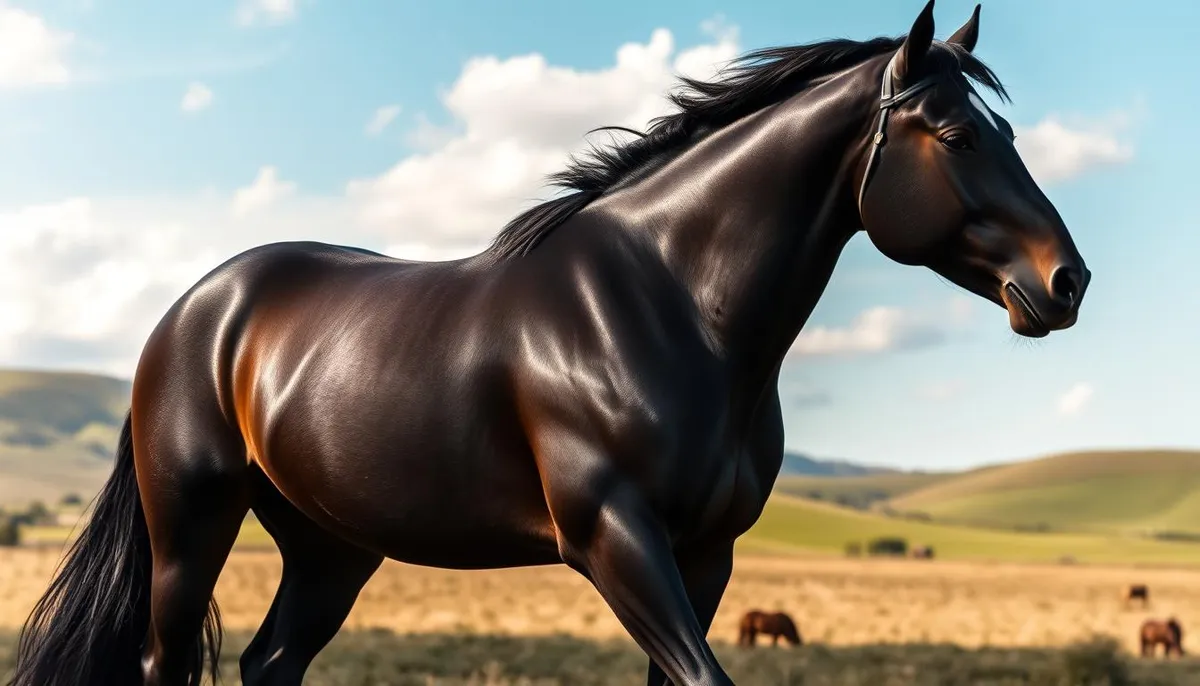
The black horse captivates with its appearance and power. From Central Asia to the palaces of Europe, it symbolizes a natural elegance ready for adventure. Its fascinating shadow is everywhere: in legends, battles, art, and modern equestrianism.
These horses shine in dressage, driving, and parades. They belong to unique breeds like the Friesian and the Lusitano. Their black coat comes from a special gene, varying from deep black to coal black.
From Genghis Khan to European cavalry, from tales of knights to Nordic legends, the black horse remains a sign of prestige. In every equestrian club, it is admired for its energy and style, a blend of tradition and innovation.
To keep them magnificent and comfortable, equipment is crucial. La Sellerie Française offers quality accessories, made in France. They are perfect for the field and dazzling competitions.
Key Points
- A symbol of elegance and power, from the steppes to royal courts.
- Striking presence in dressage, driving, and equestrian sports.
- Coat derived from a dominant gene, from jet black to "blue" black.
- Living heritage: from historical cavalry to modern icons.
- Saddlery and targeted care for shine and thermal comfort.
- Central role of breeders and equestrian clubs in passing on expertise.
- Premium equipment from La Sellerie Française, designed for demanding equestrianism.
Symbolism, History, and Heritage of the Black Cavalry
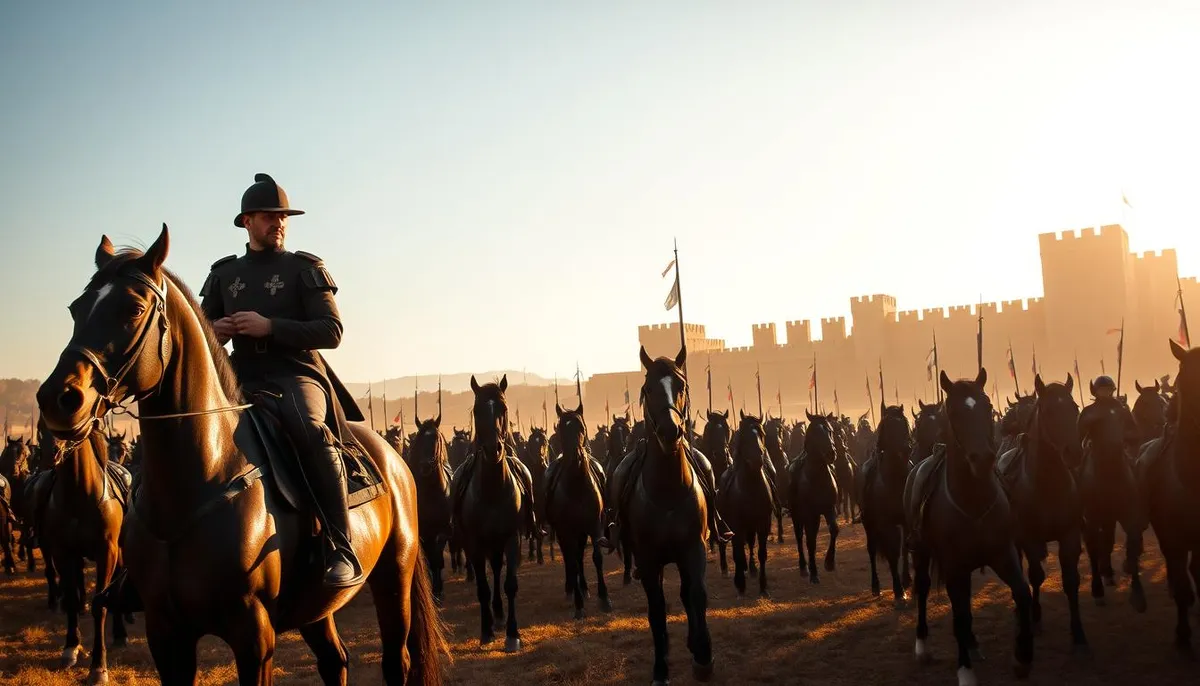
The black cavalry marks equestrian history uniquely. It symbolizes power, traditions, and great empires. The black horse, with its prestige, beauty, and the fear it inspires, connects the plains of Asia to European palaces.
From Myth to Royal Courts: An Imaginary Between Power and Mystery
The black horse has multiple meanings in myths around the world. It symbolizes strength as well as the passage from one life to another. It is seen as a spiritual guide in several cultures.
These stories have influenced royal rituals. Black horses in parades express prestige and control. Equestrian art has captured the grace and elegance of these animals.
Black Horse and Nobility: Prestige, Parades, and Elite Cavalry
During the Middle Ages, owning a black horse meant belonging to the elite. These horses were the stars of tournaments and ceremonies. Breeds like the Friesian were highly sought after for their beauty.
The black cavalry represents authority throughout history. Official images often depict leaders with black horses. Even today, equestrian clubs strive to maintain these traditions.
From Central Asia to Europe: Nomadic Influences, Arts, and Legends
Nomadic peoples from Asia have influenced equestrian culture. Their choice of black horses had a psychological impact in battle. From Genghis Khan to the Romans, the “black riders” have remained in history.
The black horse has inspired artists and writers. It symbolizes movement and command. The legacy of these horses continues to enrich modern dressage and equestrian parades.
The aesthetics of the black horse blend with utility in a narrative that transcends time and cultures, perpetuated by every equestrian club.
Black Horse Breeds and Iconic Lineages
Black horses are known for their beauty and diversity. They come from different families, from baroque to heavy draft horses. Each type has its own utility, style, and history, enriching equine breeding. They are used in dressage and driving while retaining the essence of their origins.
Friesian, Lusitano, Black Arabian: Elegance, Agility, and Endurance
The Friesian is large and has a lot of mane. It is known for its shiny black coat and beautiful gaits. It brings power and elegance during public events.
The Lusitano comes from the Iberian Peninsula. It excels in dressage and equestrian arts. Agile and fast, it shines in both historical and modern events. It showcases the beauty of black horses.
The Black Arabian is famous for its endurance and speed. It is seen in racing and military history. Its deep coat and ability to run long distances are remarkable.
Shire and Clydesdale: Draft Power, Work, and Transport
The Shire is known for its strength and reliability. Used on British farms, it pulled heavy loads. It is perfect for driving demonstrations due to its size and calm demeanor.
The Clydesdale comes from Scotland. It was used in cities and fields. Tall and easy-going, it reminds us of the importance of horses before the invention of engines.
Black Kladruber: Ceremonial Driving, Habsburg Heritage, and UNESCO Site
The Kladruber was created for the Habsburg court in Bohemia. Founded in 1579, the Kladruby nad Labem stud mixed breeds for a majestic result.
The black variety was used in ceremonies and processions. With an impressive stature, it is perfect for driving and dressage. Since 2019, the stud has been recognized by UNESCO.
Black Mustang and Other Lineages: Free Spirit, Trail Riding, and Versatility
The Black Mustang represents freedom in North America. Perfect for trail riding and leisure, it is resilient. Its wild nature attracts lovers of the black color.
In France, some breeders focus on versatile black horses. They range from show to dressage. The legacy of Totilas, a dressage legend, highlights the beauty of black horses in competition.
Black Horses in Modern Equestrianism and Equestrian Sports
Black horses stand out in equestrianism and show jumping. Totilas, for example, was exceptional in dressage. His movement and cadence captivated the audience. In equestrianism, these horses showcase movements like the piaffe. They also shine in equestrian shows and driving competitions, adding impressive visual effects.
Equestrian tourism in France offers unique experiences with these horses. They can be ridden to explore beautiful landscapes, from the Jura to Provence. A black pony or a Friesian leads riders through forests and cliffs. These rides combine technical learning and nature discovery.
Black horses also inspire youth and popular culture. They feature prominently in books and games. This fascination helps equestrian clubs teach riding. Thanks to them, young people learn better and stay motivated.
Good saddlery is crucial for excelling. In competition, the right equipment provides stability and comfort for the horse. La Sellerie Française offers high-quality gear, perfect for competitions. They help highlight the horse and its rider.
Caring for black horses is essential. They require special care due to their dark coat. They are trained early or late in the day, well-hydrated, and their coat is well-maintained. This keeps their coat shiny and protects them during competitions.

In equestrianism, variety and consistency go hand in hand. Every rider, from beginner to experienced, must train regularly. Clubs provide well-prepared horses for equestrian competitions. This ensures the best partnership between the rider and their horse.
Genetics of the Black Coat, Equine Breeding, and Conservation
In black horses, their color tells a fascinating story of science and hereditary transmission. The genetics of the black coat guides equine breeding. Moreover, breed conservation ensures that their future is preserved. Saddlery and maintenance are essential to combine beauty, comfort, and performance.
Dominant Gene and Shades: Jet Black, "Blue" Black, Charcoal Black
One dominant allele is needed to have a black coat. This gene produces dark pigments and allows for different shades. Jet black is uniform and shiny, almost like a mirror.
Blue black has bluish highlights, giving a metallic effect under light. Charcoal black is distinguished by lighter areas, creating a smoky veil effect. These variations also depend on diet, sun exposure, and stress.
Selection and Development of Breeds: Goals of Strength, Elegance, and Endurance
For centuries, equine breeding has focused on specific goals. Breeders have selected dark horses to stabilize color and desired traits. Friesians and Lusitanos are chosen for their elegance and elevated gaits.
Shires and Clydesdales symbolize strength and endurance, perfect for draft work. The Black Arabian and Mustang are renowned for their speed and endurance. These selections have influenced the development of equestrianism, from military uses to parades and modern competitions.
Conservation Challenges: Genetic Diversity, Inbreeding Risks
Breeds like the Kladruber nearly disappeared but are now protected, particularly in Kladruby nad Labem and recognized by UNESCO since 2019. Conservation relies on precise stud-books and international lineage management.
Inbreeding and genetic drift are dangers. Regular veterinary examinations, monitoring overall health, proper shoeing, and diversity of activities help protect horses, especially larger ones.
Well-being and Maintenance: Coat Shine, Heat Management, and Suitable Saddlery
Dark coats absorb more heat. It is crucial to keep horses well-hydrated, ventilate stables, and allow them to rest in the shade. Regular grooming and the use of specific products for dark coats enhance their shine and protect their skin.
A gradual increase in training avoids locomotion issues by monitoring joints and posture. Saddlery plays an important role. A well-fitted saddle distributes weight correctly and improves movement. Companies like Hermès Sellier and La Sellerie Française offer custom equipment tailored to each horse and discipline.
From the genetics of the black coat to saddlery, each element contributes to the health, performance, and preservation of breeds.
Conclusion
Black horses are still seen as symbols of elegance and strength. They come from various places, such as the Habsburg cavalry and today’s parades. Their history is rich, blending myths, prestige, and utility.
There are several types of black horses. The Friesian, Lusitano, Black Arabian, and others can be found. Each breed has its own role. Some are for ceremonies, others for work or sports.
The black color of horses varies. It can be very dark, bluish, or charcoal. This color comes from breeding, selection, and environment. The preservation of rare breeds is essential for diversity.
The national stud of Kladruby nad Labem is recognized by UNESCO. It plays a key role in the conservation of black horses.
In France, equestrianism is a daily passion. It is practiced in clubs, on trails, or in competitions. Black horses showcase their versatility across various disciplines.
It is important to properly equip these horses. Good saddlery ensures their beauty and comfort. This requires quality equipment specially designed for them.
Black horses connect the past to modernity. They stand at the crossroads of history, art, and sport. As icons and partners, they remain central to contemporary equestrianism.
Their careful breeding and the use of luxury saddlery highlight their excellence. This also emphasizes the beauty of their movements.
FAQ
Why are black horses so fascinating in history and culture?
They combine elegance and strength. From Greek mythology to Arthurian legends, they symbolize authority and mystery. Their image is everywhere: in art, war, and even modern equestrianism.
What are the most emblematic black horse breeds?
Among the most known are the Friesian and the Lusitano. Also, the Black Arabian, Shire, Clydesdale, Mustang, and Kladruber are famous. Each has a unique story.
Where does the black coat in horses come from?
A dominant gene causes this dark color. Only one is needed for the color to appear. The shades vary, ranging from deep black to charcoal.
What is the role of the Black Kladruber in European history?
Created for the Habsburgs in 1579, it participated in important events. Black for funerals, gray for state occasions. This horse and its stud are recognized by UNESCO.
Are black horses suitable for modern equestrian sports?
Yes, especially in dressage and show jumping. Totilas, a black horse, even excelled in dressage. Good training and suitable saddlery are key to their performance.
Do dark coats pose challenges in summer?
Summer can be difficult for them as they absorb more heat. Therefore, it is important to keep them hydrated and cool. Good grooming also helps maintain their coat.
How to choose suitable saddlery for a black horse?
It is important to choose well-fitted and comfortable equipment. La Sellerie Française offers perfect saddles and bridles, made in France.
What are the differences between Friesian, Lusitano, and Black Arabian?
The Friesian is known for its power. The Lusitano is agile and good for dressage. As for the Black Arabian, it is fast and enduring, perfect for long distances.
Black Shire or Clydesdale: for what uses?
These giants are robust and good for driving and equestrian tourism. They require special care for their joints and feet.
Is the Black Mustang suitable for trail riding?
Yes, it is perfect for outdoor adventures. With good equipment, it offers comfort and safety for long rides.
How to preserve the genetic diversity of black horses?
Stud-books help coordinate births and avoid too-close crossings. This work keeps lineages pure and diverse.
What does “black cavalry” mean in history?
It represents mounted units on powerful black horses. Used for centuries, they symbolize strength in parades and in battle.
What care is needed to maintain the shine of a black horse?
The secret is regular grooming and good nutrition. Specific shampoos and special attention under the sun also help preserve their beauty.
Do black horses have an advantage in equestrian competitions?
Their beauty is a plus in competition, especially in dressage and driving. However, success depends on training and the well-being of the horse.
What criteria for a custom saddle in sports equestrianism?
It is important to consider the shape of the horse and rider. La Sellerie Française creates saddles that enhance performance and comfort.
Are black horses rarer than other colors?
Although dominant, the black color is not the most common. Breeders often choose colors based on tradition or desired performance.
What do equestrian clubs contribute to the appreciation of black horses?
They offer training and leisure for all. By sharing knowledge and passion, they contribute to the love of black horses.
Are there specific recommendations for driving with a black horse?
Good preparation and suitable equipment are essential. Breeds like the Kladruber are ideal for these activities, with the appropriate care.
How has iconography shaped the image of the black horse?
Artworks often depict the black horse as a symbol of power. This animal continues to fascinate in shows and popular culture.
Where to find high-end French saddlery for black horses?
La Sellerie Française provides quality equipment, made in France. Their saddles and accessories are designed for comfort and performance.