
Born between the Atlantic Ocean and the mountains of County Galway, Connemara ponies are robust and refined. They are compact and athletic, often measuring between 1.38 m and 1.48 m and weighing 300 to 400 kg. Their head is expressive, with large eyes that charm. They are perfect for sports and leisure due to their unique characteristics.
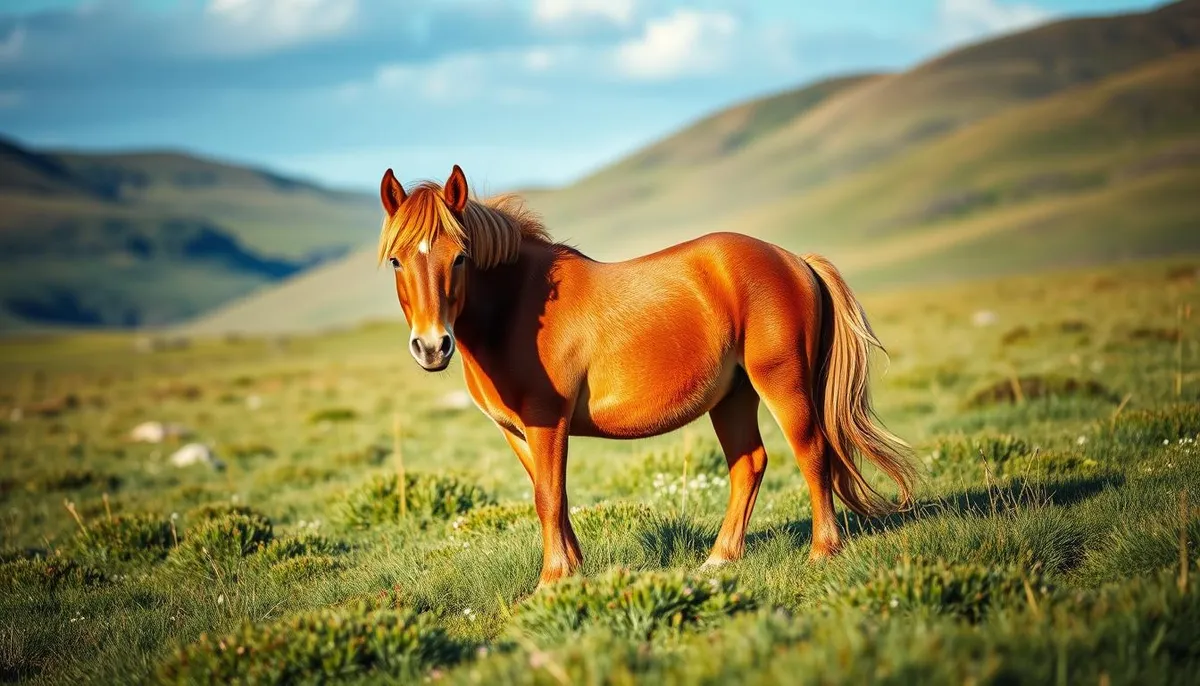
Connemara ponies come from challenging terrains, which has given them great endurance and surefootedness. They are versatile, excelling in show jumping, dressage, eventing, endurance, and driving. They are perfectly suited for families, thanks to their adaptable and gentle nature. Both mares and stallions live long and easily establish a good relationship with riders, whether they are beginners or competitors.
Currently, Connemara ponies benefit from constant improvement through strict stud books. This allows them to spread throughout France and Germany. However, it is essential to pay attention to a rare genetic disease affecting the hooves. Tests are performed before breeding to control this disease. Today, Connemara ponies symbolize Celtic culture. They are known for their elegance, reliability, and accessibility.
Key Points
- Irish pony breed originating from Connemara, between sea and mountain.
- Medioligne model, 1.28 m to 1.48 m, 300 to 400 kg, pony characteristics oriented towards sport.
- Versatile pony: show jumping, dressage, eventing, endurance, and driving.
- Intelligent, calm, brave, and sensitive temperament, ideal for all levels.
- Connemara mare and stallion known for their longevity and strong hooves.
- Sport pony spread in France and Europe, with structured stud books.
- Health prevention: genetic testing recommended for hoof quality.
Irish Origins and Celtic Heritage of the Breed
The Connemara pony originates from the heathlands of Ireland, shaped by tides and winds. It is robust, thanks to the rocks, bogs, and rains of its region. Its past is rich in Celtic traditions and the worship of Epona, with equestrian know-how shared among farms.
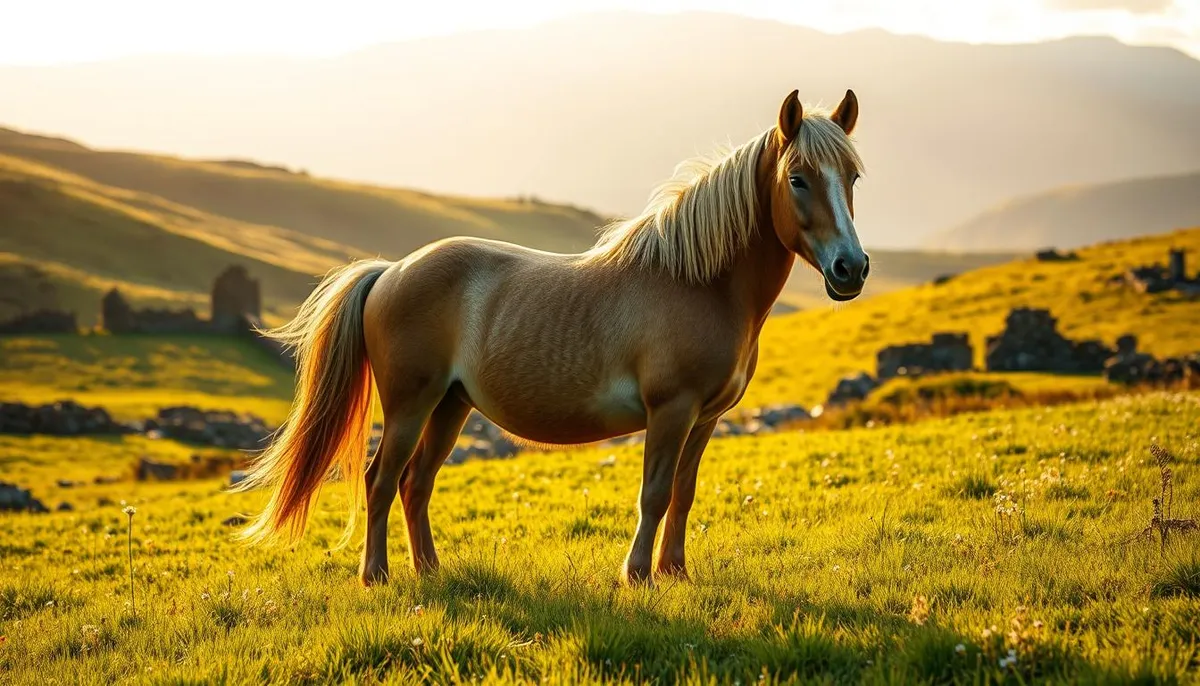
A pony from the Connemara region, Ireland
Connemara, north of Galway Bay, gave its name to the pony. The varied terrain demands sobriety and endurance from the ponies. This context has created a Connemara pony that is supple, agile, and reliable on rocky soils.
Historical Influences: Iberian, Arab, Thoroughbred, and Nordic Ponies
The Iberian influences, noted since the Armada of 1588 and the trade from Galway, brought elegance. In the 19th century, Arab blood enriched their lineage. Thoroughbreds and Nordic ponies added speed and strength without compromising the identity of the Connemara pony.
Result: the Connemara pony is balanced, enduring, fast, and skilled on difficult terrains.
From Agricultural Work to Modern Sport Pony
These ponies initially worked in fields and mines. Then, in the 60s and 70s, they became popular in sports and leisure. Their natural skills made them perfect for jumping, dressage, and outdoor activities.
Stud Book and Associations: CPBS (1923) and Development in France (AFPC)
The Connemara Pony Breeders’ Society was founded in 1923 in Galway. Crossbreeding with other breeds ceased in 1963-1964, thus fixing their lineage. In France, the French Association of Connemara Ponies has been working since 1969 to promote and develop the breed.
International Spread and Cultural Anchoring in Brittany and Europe
Since the 40s, the Connemara pony has spread to the UK, the USA, and then Europe. In Brittany, joint efforts have strengthened its presence. This Irish breed has become an important symbol in many European countries, illustrating the heritage of Galway.
Connemara Pony: Physical Characteristics and Temperament
The Connemara pony is known for its versatility. It has the appearance of a saddle horse and a unique hardiness. Its main characteristics are balance, good bone structure, and an expressive gaze. Connemara mares are appreciated in sports and family settings, thanks to their beautiful coat and abundant mane.
Originating from the Atlantic heaths, this medioligne model maintains true dietary sobriety and great endurance, useful from the arena to the trails.
Size, Weight, and Morphology: Compact, Athletic, Medioline
Their height varies between 1.28 m and 1.48 m, often around 1.42 m. They weigh between 300 and 400 kg. These ponies are compact, muscular, athletic, with a deep chest.
Their head is fine, with a straight or slightly concave profile. They have large eyes and small ears. Their neck, long for a pony, rests on a pronounced withers and sloping shoulders.
The back of Connemaras is short and strong, and their loins are solid. They have a powerful hindquarters and often double croups. With short, dry limbs and strong joints, they are made for all terrains.
Coats and Particularities: Majority Gray, Isabelle, Bay, Chestnut (Piebald Excluded)
Most Connemaras are gray, sometimes dappled. There are also isabelle, bay, and chestnut coats, excluding piebald. White markings are accepted.
Their mane is abundant and silky. A Connemara mare, with a beautiful coat, attracts all eyes effortlessly.
Gaits and Natural Abilities: Flexibility, Amplitude, Balance at the Gallop
Their gaits are regular and ample. They have a sure-footed walk, a bouncy trot, and a balanced gallop. Their natural balance helps them in jumping and dressage.
Their characteristics support the rider's comfort. This makes them popular in show jumping and eventing.
Character: Intelligent, Calm, Brave, Reliable Partner for All Levels
Connemaras are intelligent and learn quickly. They remain calm and build strong bonds based on respect and consistency.
They are suitable for beginners and competitors. A Connemara mare is a safe and reliable partner for equestrian activities.
Points of Caution: Genetic Diversity and Hoof Health
They require careful feeding to avoid metabolic issues. Although their hooves are strong, regular trimming is essential.
There is a genetic risk related to hoof health. Screening before breeding is recommended to preserve the quality of the breed.
| Criteria | Key Data | Practical Interest |
|---|---|---|
| Height & Weight | 1.28–1.48 m (avg. ~1.42 m); 300–400 kg | Suitable for young and adults; carrying capacity and comfort |
| Morphology | Medioline, sloping shoulders, strong back, powerful hindquarters | Propulsion, stability, efficiency in jumping |
| Hooves | Hard and round; strong, low-set hocks | Reliability on varied terrains; easy maintenance |
| Coats | Majority gray; isabelle, bay, chestnut; piebald excluded | Compliance with the standard; highlighting the pony coat |
| Gaits | Flexible, ample; very balanced gallop | Rider comfort; availability in sports |
| Temperament | Calm, intelligent, willing, brave | Reliable partner for all levels |
| Caution | Genetic diversity; hoof screening; metabolic management | Preservation of the lineage; sustainable health of a Connemara mare |
Sporting Versatility: From Show Jumping to Eventing
The Connemara pony, solid, lively, and cooperative, is highly sought after in sports. With its supple movement and strong mentality, it excels both on tracks and outdoors. It is a versatile pony that shines up to the pony championship.
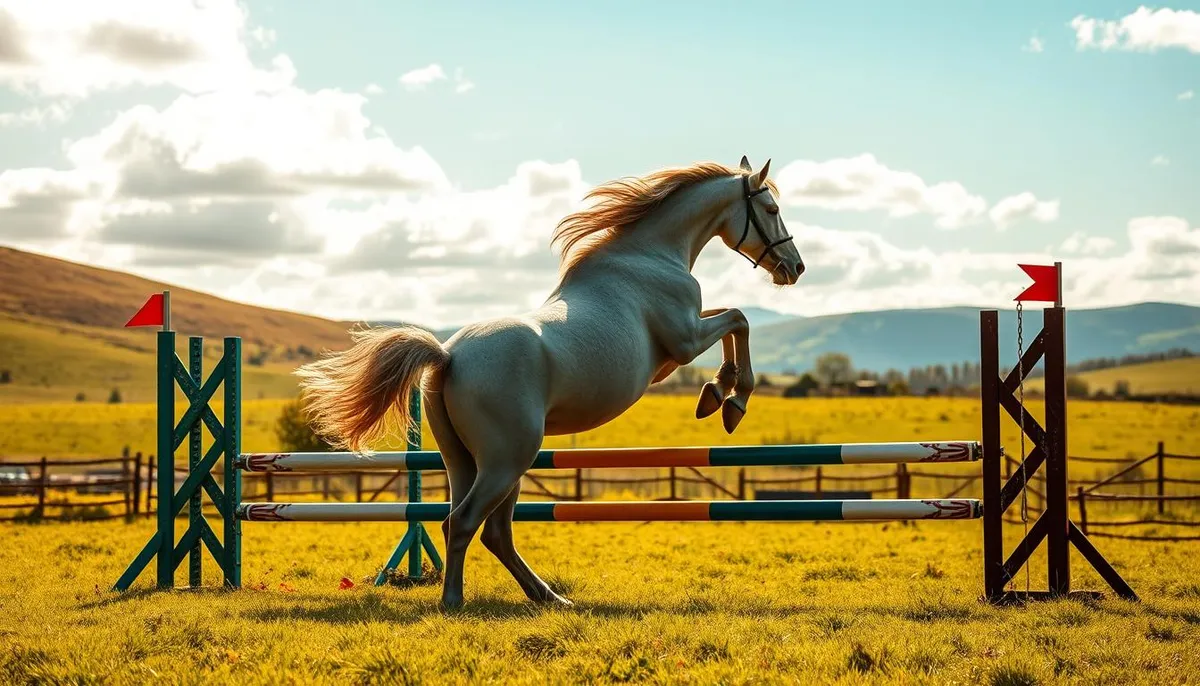
Show Jumping: Technique, Power, Agility, and Recovery
On the track, it quickly analyzes the obstacle and clears it with respect. It smoothly transitions between oxers, verticals, and water jumps. Its movements are fluid and precise.
It makes tight turns to save strides. Thanks to its quick recovery, it retains its energy for the next challenge. This makes it an ideal sport pony for today.
Dressage: Sensitivity, Balance, Harmonious Movements
In dressage, it remains light and supple. It changes movements easily, and these are regular and expressive. This comes from its good balance.
This ability enriches the training of riders. It prepares them well for young competitions, from local to the pony championship.
Eventing and Endurance: Stamina, Courage, and Adaptation to Varied Terrains
In eventing, it combines precision in dressage with agility over obstacles. Its strength allows it to perform well on the cross-country course. Its confidence is a plus on difficult terrains.
For endurance, it manages its energy well and recovers quickly. This allows it to maintain its pace over long distances without tiring.
Driving, Trail Riding, and Leisure: The Ultimate Versatile Pony
In driving, it shows its strength and consistency. In trail riding, it is reliable, which reassures everyone.
These qualities make it the preferred versatile pony for learning and leisure activities.
Championships and Young Circuits: From Pony Breeding to Podiums
It excels from local to international levels, thanks to its comprehensive training. Young horse competitions highlight its development.
From its birth to the pony championship, the Connemara pony remains a top choice for aspiring riders.
| Discipline | Connemara Pony Strengths | Key Requirements | Rider Benefits |
|---|---|---|---|
| Show Jumping | Jumping technique, agility, recovery | Trajectories, tight turns, time management | Confidence in the jump-off, rapid progress |
| Dressage | Sensitivity, balance, regularity of gaits | Stable contact, clear transitions, engagement | Harmonious movements, clarity of tests |
| Eventing | Stamina, courage, surefootedness | Versatility, effort management, terrain adaptation | Complete results, confidence on cross-country |
| Endurance | Economy, cardio-respiratory recovery | Pace, feeding, pulse monitoring | Stable gait, comfort over long distances |
| Driving & Leisure | Strength, stability, reliable temperament | Obedience, comfort, safety | Family/club versatility, serenity outdoors |
Breeding, Coats, and Pedigree: Making the Right Choice in France
Choosing a Connemara pony means following a precise method. In France, breeders and buyers consider the model, mentality, and Connemara pedigree. Their goal? To find a companion for calm moments or a competition pony.
Pony Breeding and Selection: Family Leisure Goals vs. Sport Pony
The pony breeding for families focuses on gentleness and safety. A pony with a good character, easy to handle for everyone, is essential.
The sport pony, on the other hand, must be agile and strong. It should measure between 1.28 and 1.48 m, and be well-built and athletic.
Reading a Connemara Pedigree: Founding Lines, Stallions, and Reference Mares
To understand a Connemara pedigree, one first studies the ancestors. For example, Cannon Ball (1904), Rebel (1922), and Golden Gleam (1932) are significant. Crossbreeding with Thoroughbreds and Arabs before 1964 refined the breed.
It is also important to examine genetic diversity and maternal ancestors. Breeders pay attention to avoiding inbreeding and hereditary diseases.
Pony Coat and Care: Abundant Hair, Care for the Gray Coat
Connemara ponies are often gray, but other colors are accepted except for piebald. The chosen color depends on use and climate. Maintenance is also a criterion.
Ponies with abundant hair require special care. Brushing, gentle shampooing, and parasite control are essential. Regular hoof care is also necessary.
French Association of Connemara Ponies (AFPC): Standards, Births, and Stud Book
The AFPC, created in 1969, manages the official register of Connemara ponies. It defines the breed standards and accounts for about 1,500 births per year. The association also helps verify and validate ponies for breeding and competition.
Thanks to the AFPC, riders and breeders can choose and promote their ponies with confidence. The information provided is crucial for their success.
High-Quality Equipment: La Sellerie Française, 100% Made in France
La Sellerie Française specializes in custom equipment for sport ponies. Everything is made in France, with particular care for quality and comfort.
Good equipment ensures the pony's well-being. This allows for better performance and effective protection for the animal's back.
| Criteria | Family Leisure | Sport/Competition | Objective Benchmarks |
|---|---|---|---|
| Model | Medioline, comfortable back | Compact, open shoulders, strong hocks | Height 1.28–1.48 m, overall balance |
| Temperament | Calm, tolerant, easy | Generous, reactive, focused | Test in hand, tied, and mounted |
| Pedigree | Stable lines, genetic diversity | Performance lines, strong maternal lineage | Check the Connemara pedigree and inbreeding |
| Coat | Common gray, easy maintenance | Gray, bay, isabelle, chestnut (piebald excluded) | Care plan for the pony coat and hair |
| Health Management | Regular trimming, skin/hair care | Hoof screening, osteo follow-up, sport farriery | AFPC checks, record-keeping, and traceability |
| Equipment | Comfortable saddle, simple bridle | High-quality fitted equipment | La Sellerie Française, 100% French manufacturing |
Conclusion
The Connemara pony is a perfect blend of Celtic tradition and modern sport. It is both robust and elegant, with great endurance. Thanks to its liveliness, it is suitable for all riders.
Its qualities make it ideal for numerous equestrian activities. It shines in show jumping, eventing, and dressage. It is also found in driving, endurance, and trail riding.
The success of the Connemara relies on an ancient genealogical register. This has been maintained by the Connemara Pony Breeders’ Society since 1923. In France, the French Association of Connemara Ponies supports it.
The breed standards control size, coat color, and temperament. Genetic diversity and health are closely monitored. This ensures the maintenance of exceptional pony qualities.
Selecting a Connemara depends on its pedigree and the intended purpose. Whether for family activities or competition. In Europe, the quality of horses fuels high-level competitions.
In Brittany, the cultural identity of the breed enriches its global reach. This region takes pride in its heritage linked to the Connemaras.
Equipment also plays a crucial role in performance. La Sellerie Française offers custom equipment. These 100% French products are perfect for the versatile sport pony.
Ultimately, the Connemara pony is more than just an animal. It is a reliable, charming, and ambitious partner. It embodies a unique blend of elegance, functionality, and Irish spirit.
FAQ
Does the Connemara pony indeed come from the Connemara region in Ireland?
Yes, it is a pony originating from Ireland. It comes from the wild lands of Connemara, in County Galway. This environment has created a strong, resilient, and agile pony, iconic of Celtic culture.
What blood influences have shaped the breed over time?
Various influences have marked the breed: Iberian, Arab with the stallion Naseel, Thoroughbred, and Nordic ponies. The stud book closed in 1964, keeping the breed pure.
How did the Connemara transition from agricultural work to sport pony?
Once used for work, the Connemara shifted towards sport around the 1960s. The focus on form, movement, and mentality, along with dedicated competitions, cemented its place in sports.
What is the role of the CPBS and AFPC in pony breeding?
The CPBS, founded in 1923 in Galway, launched the first stud book. The AFPC, established in 1969, manages the register in France, helping to promote the breed and overseeing about 1,500 births per year.
Where is the breed most present today?
Ireland, France, and Germany have large populations. Brittany, in France, is a historical center due to intercelticism and imports since the 1970s.
What are the Connemara pony's characteristics in size and morphology?
The Connemara measures between 1.28 m and 1.48 m, weighing between 300 and 400 kg. It is compact, strong, and agile, with good joints.
What coat colors are accepted in this Irish pony breed?
The gray coat is the most common. Isabelle, bay, and chestnut are also accepted. White markings are allowed, but piebald is not.
What is the temperament of the Connemara?
It is intelligent, calm, brave, and sensitive. Perfect for everyone, it forms strong bonds and learns quickly with gentleness and respect.
Does the Connemara have health vigilance points?
Yes. A genetic hoof disease deserves attention, with pre-conception tests recommended. Its diet must be well managed due to its metabolism.
Why is the Connemara a versatile pony?
Its versatility allows it to excel in several disciplines: jumping, dressage, endurance, driving, trail riding, and family activities.
What qualities does it show in show jumping?
It has good jumping technique, remarkable agility, and excellent focus. These qualities are essential in competitions.
And in dressage and eventing?
In dressage, it shows sensitivity and grace. In eventing, its versatility and stability stand out, especially on demanding courses.
Is the Connemara suitable for driving and leisure?
Absolutely. Its strength and balanced mentality make it an excellent choice for driving. For leisure and trail riding, it is highly appreciated.
How to make the right choice in pony breeding in France?
Determine your objectives, then assess the desired characteristics. Genetic testing and good pedigree management are crucial for maintaining the quality of the breed.
How to read a Connemara pedigree?
Identify key lines and famous stallions. Also, look at historical contributions. Analyzing inbreeding and performance is important.
What care is needed for the pony coat, especially gray?
Regular maintenance and specific care against yellowing are necessary. Special attention to the hooves ensures their health.
What are the reference institutions for the breed?
The CPBS in Ireland and the AFPC in France are the authorities. They set the standards and stimulate activity around the breed.
What equipment is recommended for a Connemara sport pony?
Opt for equipment specifically designed for their size and shape. La Sellerie Française offers custom or limited edition options.
What longevity and performance can be expected?
Many live up to 30 years. With appropriate training, they can excel from club level to championships, thanks to their endurance and agility.
Is the Connemara suitable for beginners?
Yes, particularly with the right guidance. Its calm nature and teaching aptitude make it an ideal partner for starting and progressing.