
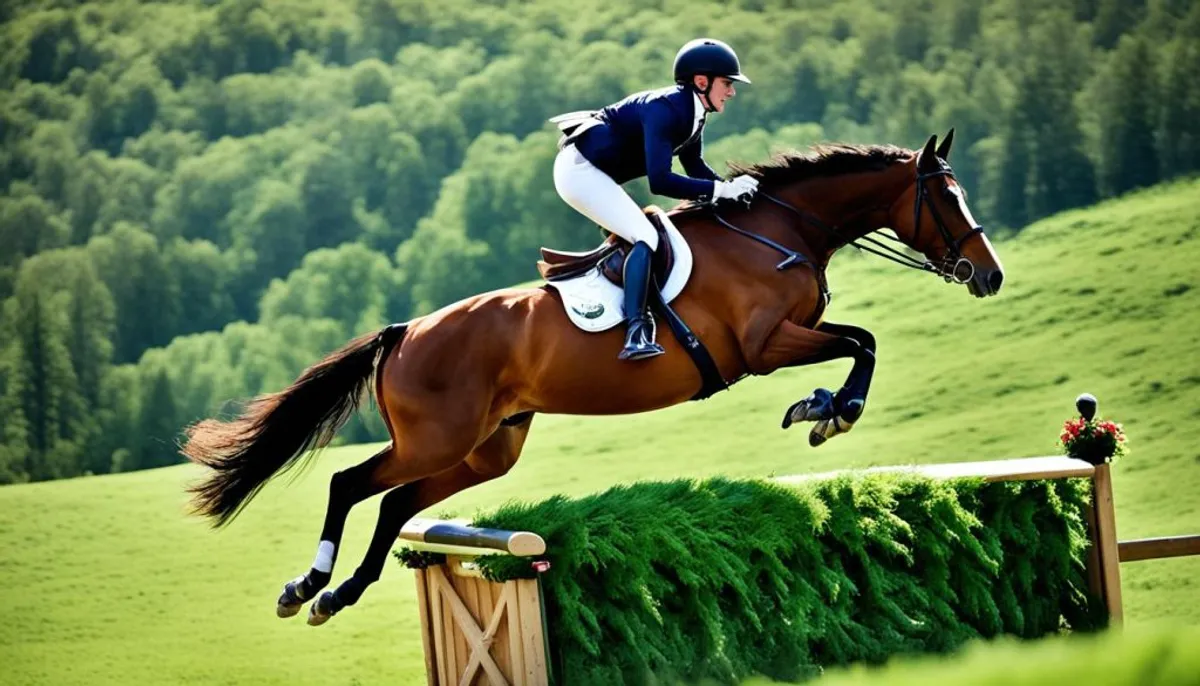
Cross-country show jumping is an equestrian discipline that combines the excitement of obstacles with the relationship between horse and rider. It requires technical skills and physical and mental preparation for both horse and rider. The course tests the duo's ability to overcome various challenges, such as water jumps and fixed obstacles.
The cross-country show jumping obstacles have become spectacular and technical, attracting a wide audience. This discipline demands mastery of jumping techniques, impeccable physical condition, and a strong bond between horse and rider.
Main Learnings
- The exciting history of show jumping in equestrianism
- The physical and mental qualities sought in a show jumping horse
- The different types of obstacles encountered in cross-country show jumping
- The essential equipment for the rider and horse for show jumping practice
- The key techniques for successfully jumping obstacles
Introduction
The show jumping has a long and fascinating history. It dates back to ancient times when riders jumped over natural obstacles. In the Middle Ages, knights wore heavy armor, making their movements difficult.
It was during the Renaissance that riding became an art. Riders sought lightness and beauty in the spectacle. Their quest changed equestrianism.
The 20th century saw equestrianism open up to everyone. Show jumping became a major sport in equestrian sports. Techniques and obstacles evolved, making this discipline exciting.
Today, show jumping is recognized as one of the most spectacular disciplines. It is considered one of the most technical in equestrianism.
The Origins of Show Jumping and Its Evolution Over Time
The origins of show jumping date back to ancient times. Riders jumped over natural obstacles to move or train for combat. In the Middle Ages, knights developed jumping techniques to cross ditches and barriers.
During the Renaissance, show jumping began to take shape. Riding arenas and artificial obstacle courses emerged. This allowed riders to train and improve.
Today, show jumping is a major Olympic discipline. Prestigious competitions like the World Equestrian Games and World Cups exist. The obstacles are becoming increasingly technical and spectacular, offering challenges for riders and horses to overcome.
The Show Jumping Horse: A Born Athlete
The show jumping horse is a top athlete. It is chosen for its physical and mental qualities. To excel, it must meet specific criteria.
The Desired Physical and Mental Qualities
We seek a balanced horse, with a smooth and powerful canter. Agility and the ability to detach are essential. However, temperament is crucial. A resilient mindset is necessary to face challenges.
The Importance of Progressive Training
A show jumping horse cannot excel without progressive training. It is a long-term effort. It aims to develop jumping skills and strengthen physical condition and mental resilience. This training is vital to face challenges with confidence and mastery.
The Different Types of Cross-Country Show Jumping Obstacles
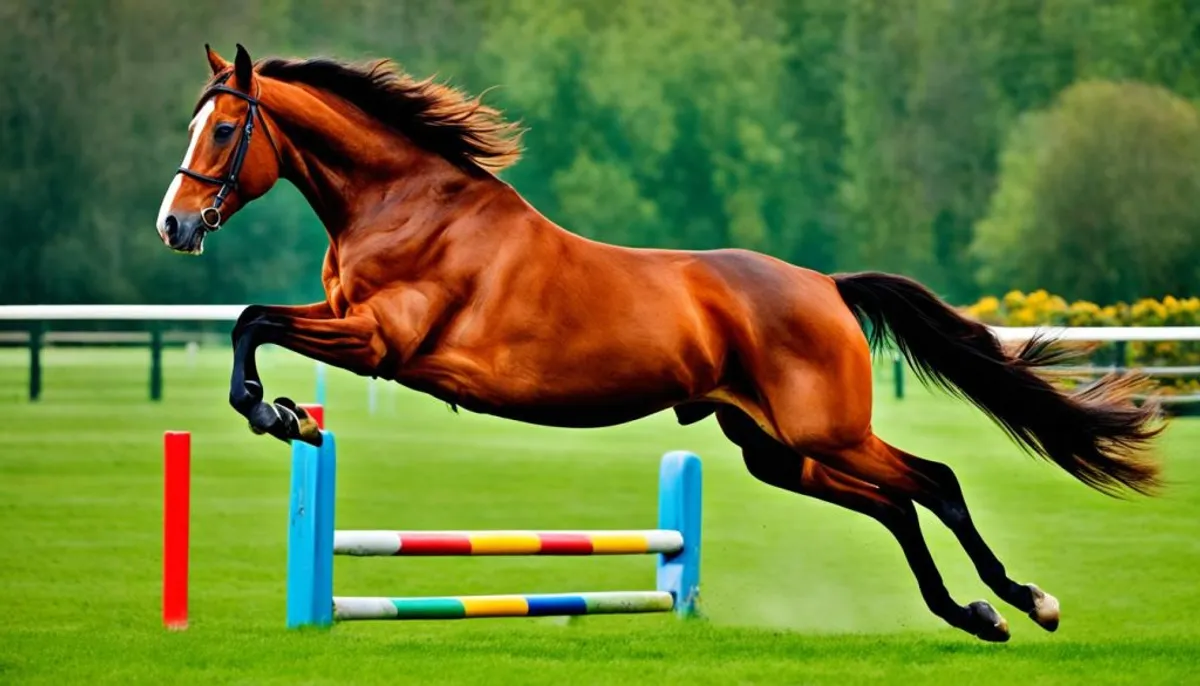
In cross-country show jumping, riders and their horses encounter various demanding obstacles. Each obstacle requires specific skills. These challenging tests evaluate the technical and physical abilities of the horse-rider duo. They enrich this exciting equestrian discipline.
Vertical Obstacles: Elevation in Honor
Vertical obstacles, such as fences and hedges, require agility and elevation of the horse's shoulders. Clearing these obstacles with grace and precision is a significant challenge for the rider and their horse.
Wide Obstacles: Power at Play
Wide obstacles, such as oxers and spreads, demand great strength and powerful impulse from the horse. The rider must anticipate these imposing obstacles and guide their horse skillfully for a safe crossing.
Drop Obstacles: Balance in Question
Drop obstacles, such as rivers and ditches, test the balance and jumping ability of the horse. The rider must remain calm and precise to clear these challenges with elegance.
Cross-country show jumping courses combine these obstacles, offering a complete and captivating experience for riders and their audience.
| Type of Obstacle | Required Qualities of the Horse | Challenges for the Rider |
|---|---|---|
| Vertical Obstacles | Agility, shoulder elevation | Precision, coordination |
| Wide Obstacles | Power, impulse | Anticipation, mastery |
| Drop Obstacles | Balance, jumping ability | Composure, precision |
Each cross-country show jumping obstacle presents unique challenges. They test the technical skills and the relationship between rider and horse. This diversity makes this discipline exciting.
The Cross-Country Show Jumping Obstacle: The Royal Discipline of Equestrian Sports
Cross-country show jumping is very popular in the equestrian world. It is seen as the “royal discipline.” This attracts riders from everywhere due to its combination of passion and technical skill.
The Major Competitions of Cross-Country Show Jumping
Major international competitions, such as the Olympics and the Nations Cup, showcase the best riders and horses. These events are a unique opportunity to witness the excellence of cross-country show jumping. They demonstrate the passion and mastery of the riders.
| Competition | Description |
|---|---|
| Olympics | The highest honor for horse-rider pairs, the ultimate challenge of cross-country show jumping. |
| World Championships | A major competition that brings together the best athletes in the discipline from around the globe. |
| Nations Cup | A team event showcasing the rivalry between different equestrian nations. |
These competitions are an opportunity for riders to showcase their talent. They highlight this exciting and demanding equestrian discipline.
The Essential Equipment for the Rider and Horse
Practicing cross-country show jumping requires quality equipment. This concerns both the rider and their horse. Each piece is crucial for safety and performance.
For the rider, the cross-country show jumping equipment includes:
- A certified safety helmet
- Appropriate riding boots
- A durable riding jacket and pants
- Gloves for better grip
The horse needs:
- A saddle suitable for show jumping
- A well-fitted bridle for control
- Leg protection (boots, knee guards, etc.)
- Proper shoeing for support and traction
This specialized cross-country accessories greatly assist in competition. Each piece of the cross-country rider equipment and cross-country horse equipment must be carefully chosen. This ensures safety and performance.
The Techniques of Show Jumping
Being good at cross-country show jumping requires mastering certain show jumping techniques. These techniques concern the rider's position, the horse's impulse, and relaxation. All of this must be perfectly coordinated.
The Rider's Position in Jumping
It is crucial to sit correctly on the horse to clear obstacles. The torso should lean slightly forward to maintain balance. The legs are important for a good seat and to convey aids.
The Horse's Impulse and Relaxation
Impulse and relaxation are essential for excelling in show jumping. Good training and proper rider-horse coordination allow the horse to jump well. It becomes powerful enough to clear obstacles.
By mastering these show jumping techniques, the rider and their horse can face the most difficult show jumps with confidence.
Training and Preparation for Competitions
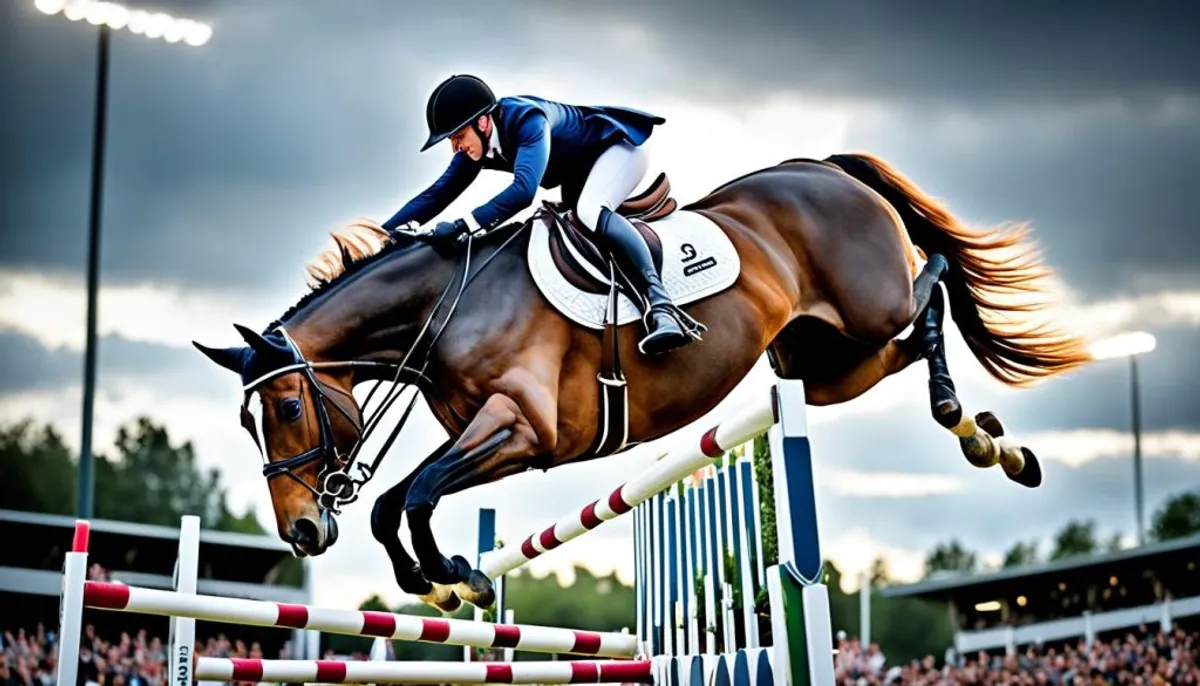
Becoming an accomplished rider in cross-country show jumping requires regular and progressive cross-country training. This involves both the rider and the horse. This preparation is divided into key stages. It allows for learning the necessary reflexes and confidence to excel in competition.
The Different Stages of Training
Cross-country training begins with groundwork and lunging. This helps the horse become familiar with cross-country show jumping obstacles. Next, work on moderate heights is introduced to improve technique and coordination.
The size of the cross-country show jumping obstacles is gradually increased. This allows reaching the desired level of cross-country competition preparation.
- Groundwork and lunging
- Low-height jumps
- Gradual increase in obstacle size
This detailed cross-country competition preparation helps acquire the essential cross-country training techniques. This enables preparation for competitions with confidence and ambition.
Conclusion
Cross-country show jumping is a discipline that blends passion and technique. It spans from the origins of show jumping to the selection of horses. Riders must master various skills to succeed.
Regarded as the “royal discipline” of equestrian sports, cross-country show jumping is a significant challenge. Riders and their horses compete in international competitions. This discipline attracts equestrian fans with its mix of technique and passion.
In summary, cross-country show jumping is a unique discipline. It combines sport, beauty, and competition. For enthusiasts, it is a way of life that pushes them to surpass themselves.
FAQ
What is cross-country show jumping?
Cross-country show jumping is a discipline that combines adrenaline and precision. It requires demanding technique and a strong relationship between horse and rider.
What is the history of show jumping?
Show jumping has an ancient history, dating back to ancient times. Riders were already jumping over natural obstacles. Over the centuries, equestrianism became an art, seeking lightness and beauty.
What qualities are sought in a show jumping horse?
A show jumping horse is a perfect athlete. It must be harmonious, balanced, with a smooth and agile canter. A good temperament is also essential.
What are the different types of obstacles in cross-country show jumping?
Obstacles in cross-country show jumping are divided into three categories: vertical, wide, and drop. Each type requires specific qualities from the horse.
What are the main competitions in cross-country show jumping?
Major competitions include the Olympics, World Championships, and Nations Cup. They highlight the best riders and horses in technical and spectacular events.
What equipment is necessary for practicing cross-country show jumping?
For cross-country show jumping, quality equipment is crucial. This includes helmets, boots, saddles, and bridles. Each piece is essential for safety and performance.
What are the show jumping techniques to master?
To excel in cross-country show jumping, show jumping techniques are necessary. The rider's position, the horse's impulse, and relaxation are key to successfully clearing obstacles.
How to train effectively for a cross-country show jumping competition?
Regular and progressive training is vital. It should include groundwork, lunging, and increasing obstacle heights. This prepares the rider and horse for competition.