
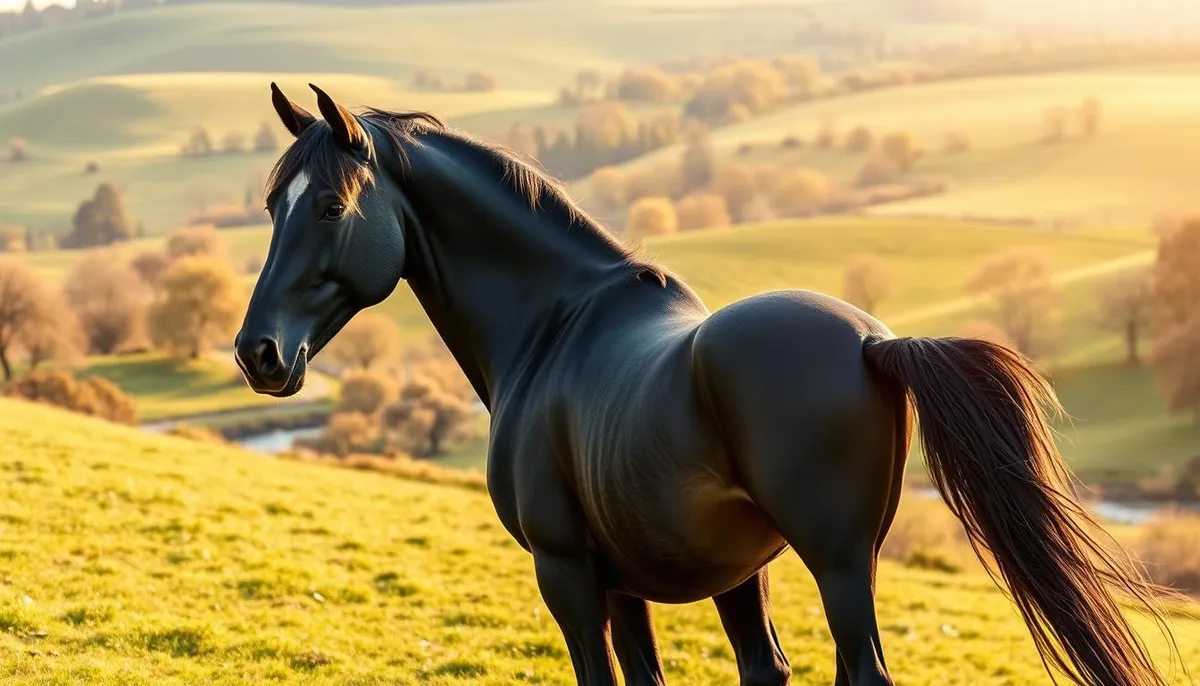
The Friesian is a magnificent horse breed from the province of Friesland. It is recognizable by its black coat, abundant mane, and majestic gaits. It is nicknamed black pearl for its elegance and strength.
It has a calm character and a strong connection with humans. This makes it very special.
Initially, the Friesian played an important role in wars. Later, it excelled in driving and modern dressage. It is tall, measuring between 1.55 m and 1.75 m at the withers. It weighs between 500 and 800 kg. Its appearance is both impressive and elegant.
Taking care of such a horse requires special efforts. La Sellerie Française offers quality equipment to care for these magnificent animals. They provide durable and comfortable products, available in limited editions or custom-made.
Key Points
- The Friesian, black pearl from Friesland, is remarkable for its style.
- Its beauty lies in its elegant movements and well-defined musculature.
- It measures between 1.55 m and 1.75 m at the withers and weighs between 500 and 800 kg.
- It excels in dressage, driving, shows, and easily bonds with humans.
- It is essential to properly maintain its black coat and mane.
- La Sellerie Française offers luxury equipment for its comfort.
Origin and History of the Friesian Horse, from Medieval Friesland to Modern Disciplines
The Friesian horses come from Friesland, in the north of the Netherlands. They are strong, resilient, and good on wet terrain. Their history is linked to major events in Europe, ranging from battles to dressage competitions.
Roots in Friesland in the Netherlands and Medieval War Horse
In the Middle Ages, the Friesian was the choice of knights for war. It could carry heavy loads while remaining fast. Dutch and German tales speak of its importance among the nobility.
Bred near Leeuwarden and Groningen, they had a swift walk and a strong trot. This made them reliable for riding and pulling.
Iberian Influences and Selection Towards an Elegant and Powerful Model
In the 17th century, Spanish influences modified their appearance. They then had a higher neck and more pronounced knee movements. While retaining their strength, they became more elegant, perfect for luxury carriages.
This change prepared them for modern dressage. They have a noble appearance that pleases riders.
Role in Improving Other Breeds and Contemporary Preservation
They have helped improve other breeds in Europe, bringing agility and endurance. But in the 20th century, they were threatened by mechanization. The Friesian association and breeders launched rigorous selection programs.
Today, supported by the Royal Dutch Federation (KFPS) and the French Association of the Friesian Horse, they shine in driving, dressage, and shows. They demonstrate their importance in modern disciplines.
Physical Characteristics and Morphology: Size, Weight, Elegance, and Power
The Friesian combines strength and beauty. Its characteristics are admired in a robust structure and a silhouette that captures attention. Its elevated gaits are magnificent to see.
Withers Height, Weight, and Harmonious Musculature
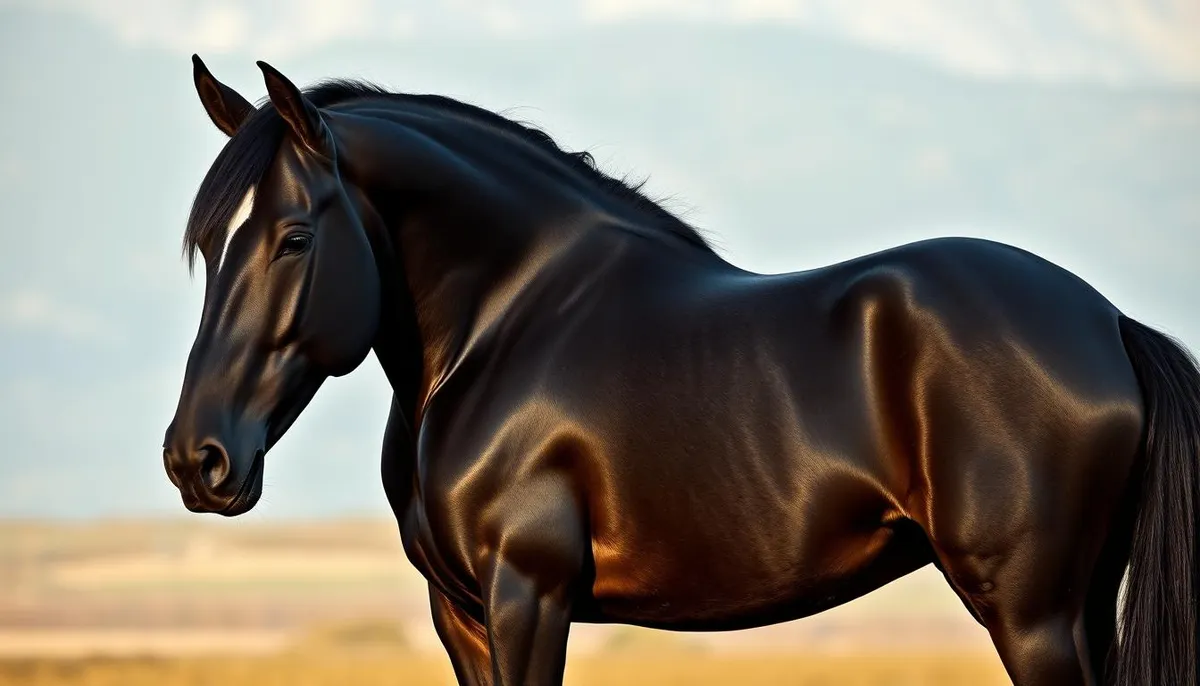
The Friesians often measure between 1.55 m and 1.75 m at the withers. Their weight ranges from 500 to 700 kg, sometimes up to 800 kg.
Their body is well-muscled and balanced. They have a strong back and powerful legs. This gives them a lot of stability.
Noble Head, Long Neck, and Elevated Gaits in Dressage
They have an elegant head and expressive eyes. Their neck is long and often arched, making them very elegant.
Their movement is impressive and full of grace. Their trot and gallop are particularly appreciated for dressage and shows.
Comparisons with Other Sport and Draft Breeds
The Friesian combines the charm of a Selle Français with the strength of a Percheron. It is both attractive and robust, perfect for various activities.
It stands out for its unique elegance and remarkable pulling ability. These qualities make it ideal for shows and work.
Friesian Coat and Particularities: Abundant Mane, Feathers, and Care for the Black Pearl
The Friesian is a symbol of elegance due to its shine and silhouette. It is called black pearl because of its color, long mane, and generous feathers. The latter require attentive and regular care.
Dominant Black Color, Highlights, and Rare Tolerances
The black coat is shiny and usually uniform, earning its nickname. In the sun, brownish highlights may appear, especially after the cold season. A small star on the forehead is sometimes accepted, and shades like chocolate are observed without altering its identity.
Care for the Mane and Tail to Preserve Aesthetics
The long and soft mane of the Friesian requires special care. Use nourishing shampoos, followed by leave-in treatments. Dry the feathers well to avoid moisture and brush regularly to maintain shine.
Practical Tips to Limit Knots and Breakage Daily
- Brush starting from the tips, strand by strand, with a soft brush.
- Separate the mane into sections and detangle by hand before using a tool.
- Use a light detangler and renew Friesian mane care every two days.
- Protect the tail during transport with a sleeve and avoid prolonged rubbing.
- Keep the feathers clean and dry to prevent mud fever.
Products from La Sellerie Française, such as brushes and textiles, protect the Friesian's coat. They keep the shine of the black pearl all year round.
| Element | Best Practices | Recommended Frequency | Key Benefits |
|---|---|---|---|
| Black Coat | Nourishing shampoo, cold rinse, light shine | Every 2 to 3 weeks | Long-lasting shine, black coat maintenance without overload |
| Mane | Detangle from tips to roots, separated sections | Daily in wet season | Less breakage, controlled volume |
| Tail | Leave-in serum, protection during transport | 2 to 3 times/week | Limits knots, maintains length |
| Feathers | Cleaning, complete drying, skin inspection | After each outing | Prevention of mud fever |
| Tools | Soft brush, wide comb, La Sellerie Française textiles | As needed | Respect for fiber, horse comfort |
Temperament and Behavior: Docility, Intelligence, and Horse-Rider Relationship
The Friesian temperament charms with its calmness and attention towards humans. It observes, listens, and responds gently. Its great docility facilitates learning for riders, reducing stress.
Its intelligence shines from the start. It learns quickly and anticipates simple requests. This ability greatly enhances the relationship with its rider, using rewards and consistency.
It is also very sensitive. With clear transitions, constant contact, and a soft voice, good results are achieved. Indoors and outdoors, the Friesian is consistent. This helps its mental balance and the regularity of its movements.
Whether in dressage or driving, it is always ready and calm. However, its strength must be managed carefully, especially for beginners. With proper guidance, this horse builds trust between itself and the rider.
To maintain its docility, stable routines and breaks are adopted. Progressive training, with stretching and various exercises, utilizes its intelligence.
This blend of calmness, attention, and willingness to do well makes the Friesian special. With respect and consistency, this relationship becomes more reliable each day.
Equestrian Uses: Dressage, Driving, Shows, and Leisure
The Friesian is a versatile and expressive horse that excels everywhere, from the arena to road rides. In Friesian sport, its impressive power remains gentle for all equestrian leisure. It shines in competitions and enchants during equestrian events in France.
Natural Strengths in Dressage and Performance in Driving
Thanks to its majestic appearance, Friesian dressage stands out easily. Its strong back and clear momentum make every movement and transition clearer.
In Friesian driving, its regular gait and charisma are unmatched. It is perfect for pulling carriages at weddings, participating in driving competitions, and much more.
Presence in Shows and Equestrian Events in France and Europe
The Friesian is a star in equestrian shows, with its dark coat and long mane. It adds a magical touch to all performances, from historical parades to modern shows.
It participates in the Salon du Cheval de Paris and various equestrian events in France. It can also be found touring Europe for Friesian dressage and Friesian driving demonstrations.
Versatility for Leisure and Trail Riding Depending on Rider Level
This horse is ideal for equestrian leisure due to its relaxing gait and calm temperament. Its ability to handle slopes makes it perfect for trail riding, although the rider should be fairly experienced.
Its versatility makes the Friesian an ideal companion for sport and leisure, suitable for different environments and riding levels.
| Discipline | Friesian Strengths | Recommended Level | Event References |
|---|---|---|---|
| Friesian Dressage | Elevated gaits, neck carriage, transition expression | Intermediate to advanced | Salon du Cheval de Paris, national FFE circuits |
| Friesian Driving | Power, regularity, presentation charisma | Intermediate to expert | Traditional competitions, modern FEI events in Europe |
| Equestrian Shows | Stage presence, synchronization, aesthetics | Amateur with guidance to pro | Historical festivals, galas in equestrian events France |
| Equestrian Leisure | Reassuring temperament, comfort at walk and trot | Beginner with guidance to advanced | Regional trail rides, rallies, and club outings |
Friesian Breeding, Genetics, and Friesian Stallions: Selection, Reproduction, and Friesian Association
Friesian breeding relies on high-performing stallions and closely monitored genetics. The goal is to create healthy, expressive horses that excel in dressage and driving, close to their origins.
Sexual Maturity, Gestation, and Selection Criteria
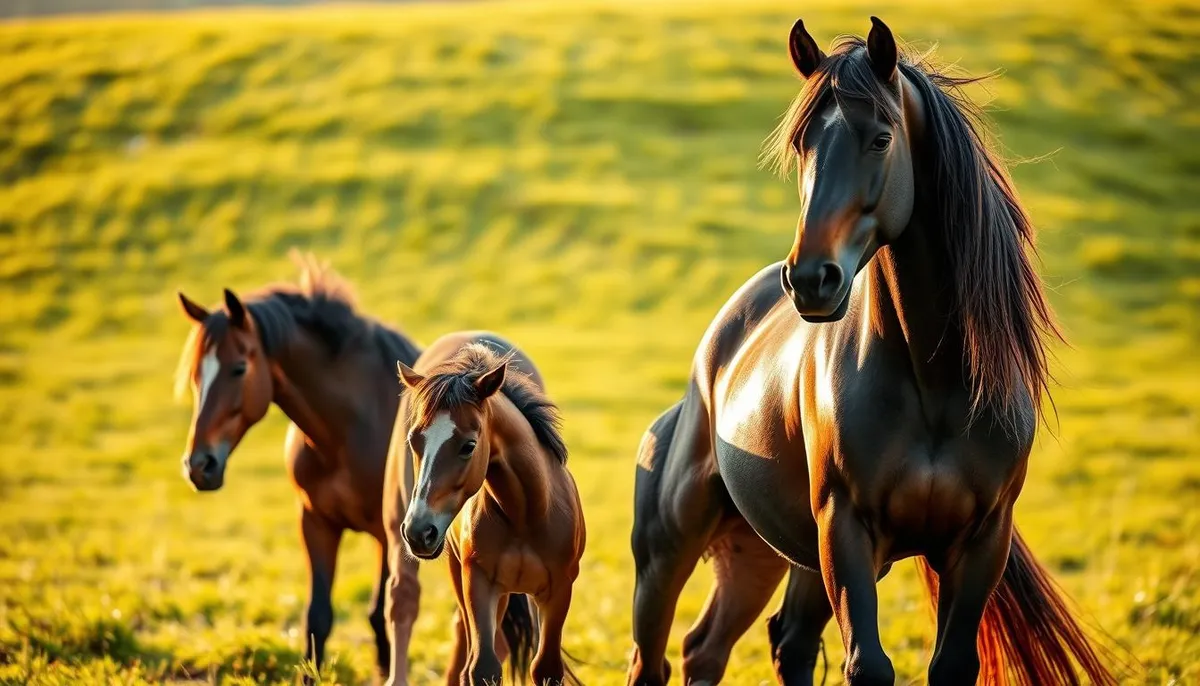
Friesians reach maturity at 3 or 4 years. Gestation lasts 11 months and the foal weighs about 50 kg. Selection criteria include good size, long neck, and elegant gaits, as well as a black coat and a gentle character.
Friesian stallions undergo thorough testing. Breeders use this data to ensure a quality lineage.
Genetic Influence on Other Sport Lines
The Friesian improves other breeds through its elasticity and endurance. Its genetics are prized for strengthening the back and enhancing hindquarters power.
Friesian breeders select reproducers for their gaits and good conformation. They aim to maintain elegance and functionality.
Role of Breed Associations and Price and Availability References
In France, the French Association of the Friesian Horse assists with stud books and inspections. It guides breeders in their choices and administrative follow-up.
Prices for Friesians range from €5,000 to €15,000. Reference breeding farms can be found in Europe and North America. For equipment, La Sellerie Française offers everything necessary.
Selection decisions are based on strict criteria. They aim to ensure the long-term quality of the breed.
Care and Health: Nutrition, Farriery, Veterinary Follow-up, and Environment
Friesian nutrition means choosing quality fibers. Provide your horse with clean and edible hay without limiting the amount. Add elements like minerals and vitamins for its health. If your horse works a lot or appears thin, you can give it concentrated feed. But be careful, as Friesians can gain weight quickly. Monitor weight by weighing the hay and keeping an eye on your horse's weight.
Veterinary follow-up is crucial and should be done regularly. This allows early detection of muscle or skin issues. Summer dermatitis requires special attention. Use repellents, put on a light neck cover, rinse the horse after exercise, and provide it with a shaded area. Don’t forget to check its mane, tail, and feathers regularly.
The feathers of Friesians attract moisture. Dry them well and brush them to prevent mud fever. Trim hooves every 6 to 8 weeks. Keep the feet and the area where the horse lives clean. This helps prevent infections. Additionally, an annual dental check is good for its health.
A healthy stable environment is essential. Ensure that the stable is clean, ventilated, and that the floor is dry. Change the water often to keep it fresh. Spacious paddocks are important for the horse to move freely. Additionally, regularly change pastures to keep the grass fresh and avoid insects. A good stable contributes to the Friesian's well-being.
- Fiber-rich hay + suitable minerals for Friesian nutrition
- Repellents and shaded shelters against summer dermatitis
- Hygiene of feathers and regular farriery
- Planned veterinary follow-up and dental checks
- Stable environment dry, clean water, and paddocks for movement
Conclusion
The Friesian horse combines elegance and strength. It possesses a perfect shape, intense black coat, and graceful movements that date back centuries. It is a descendant of the horses of medieval Friesland and Spanish influence, a true black pearl loved for its appearance and closeness to humans.
It excels in dressage and driving thanks to its posture, balance, and mentality. Beginners appreciate its gentleness, while experts admire its expression and presence, whether in competition or show. Friesian breeding, supported by associations, emphasizes quality, health, and performance.
Caring for a Friesian requires a well-defined routine. This includes a balanced diet, regular hoof care, veterinary visits, and meticulous maintenance of its mane and legs. With consistent care, it can reach its full potential, remaining comfortable and serene both indoors and outdoors.
La Sellerie Française offers high-quality, durable equipment made in France for this remarkable horse. This equipment is designed to enhance its movements, protect its muscles, and support its versatility day after day.
FAQ
What is a Friesian horse and where does it come from?
The Friesian comes from Friesland, in the north of the Netherlands. It is known for its black coat and gaits. People call it the “black pearl.” Its history is rich, with military uses and Iberian influences.
What are the main characteristics of the Friesian?
A Friesian measures between 1.55 m and 1.75 m at the withers and weighs between 500 to 800 kg. It has a proud head, a strong back, and powerful legs. Its gaits are impressive, perfect for dressage and driving.
Is the Friesian coat always black?
Yes, Friesians are predominantly black. Sometimes, their coat has brownish highlights. A small white star on the forehead is rare but accepted.
Is the Friesian suitable for beginner riders?
Generally, yes, as it is gentle and consistent. However, its size requires precise guidance. Patient training helps progress safely.
In which sports does the Friesian excel?
Friesians excel in dressage, thanks to their movements. They are also perfect for driving and historical shows.
How to care for the mane and feathers of a Friesian?
Brush the mane daily starting from the tips. Protect the tail during transport. Keep the feathers dry to prevent diseases.
What nutrition do you recommend for a Friesian horse?
Provide good hay, along with minerals and vitamins. Concentrates depend on the work done. Access to water and good veterinary follow-up are crucial.
What health precautions are specific to the Friesian?
Pay attention to their skin and hooves to prevent certain diseases. Ensure their teeth are healthy. Good care and shelters are necessary in summer.
What does Friesian breeding involve in terms of selection?
Breeding focuses on their appearance, coat, and dressage ability. Stallions are carefully evaluated for their genetic quality.
What is the Iberian influence in the history of the Friesian?
In the 17th century, crossbreeding with Spanish horses improved their refinement. This gave the Friesian its elegance, perfect for driving and dressage.
Has the Friesian contributed to other breeds?
Yes. Its robustness and gaits have helped improve other breeds. This has had a positive impact on dressage and driving.
What is the role of the French Association of the Friesian Horse?
This association manages the registry, organizes events, and assists breeders. It also promotes the breed and its good breeding practices.
What budget should be planned for purchasing a Friesian?
The price of a Friesian ranges from €5,000 to €15,000. This depends on many factors. Maintenance costs should also be considered.
How to choose suitable equipment for the Friesian?
Choose robust equipment that fits their powerful body. Custom items ensure comfort and style.
Is the Friesian suitable for trail riding and leisure?
Yes, with good management, it is perfect for outings. Ensure it is well shod and in shape.
What references for Friesian stallions in reproduction?
Stallions must meet specific criteria. Tests ensure their compliance. Good follow-up guarantees the quality of the offspring.
Where to see Friesians in competition and show?
They participate in competitions and shows all over Europe. Their elegance makes them undeniable stars.