
The connection between the Arab people and the horse is fascinating. It dates back to the time of great conquests. The Arabs became experts in equestrianism through an ancient Muslim custom. According to this tradition, Ishmael, son of Abraham and the first man to ride a horse, is the ancestor of the Arabs.
The horse lived freely in the Arabian Peninsula until that time. Then, the nomadic camel herders transitioned to horseback riding. They assisted the Roman Empire in the 5th century. In just a hundred years, these riders became famous for their exploits in Europe and Asia. This was made possible by the transformation of this nomadic society when the prophet Muhammad introduced horseback riding.
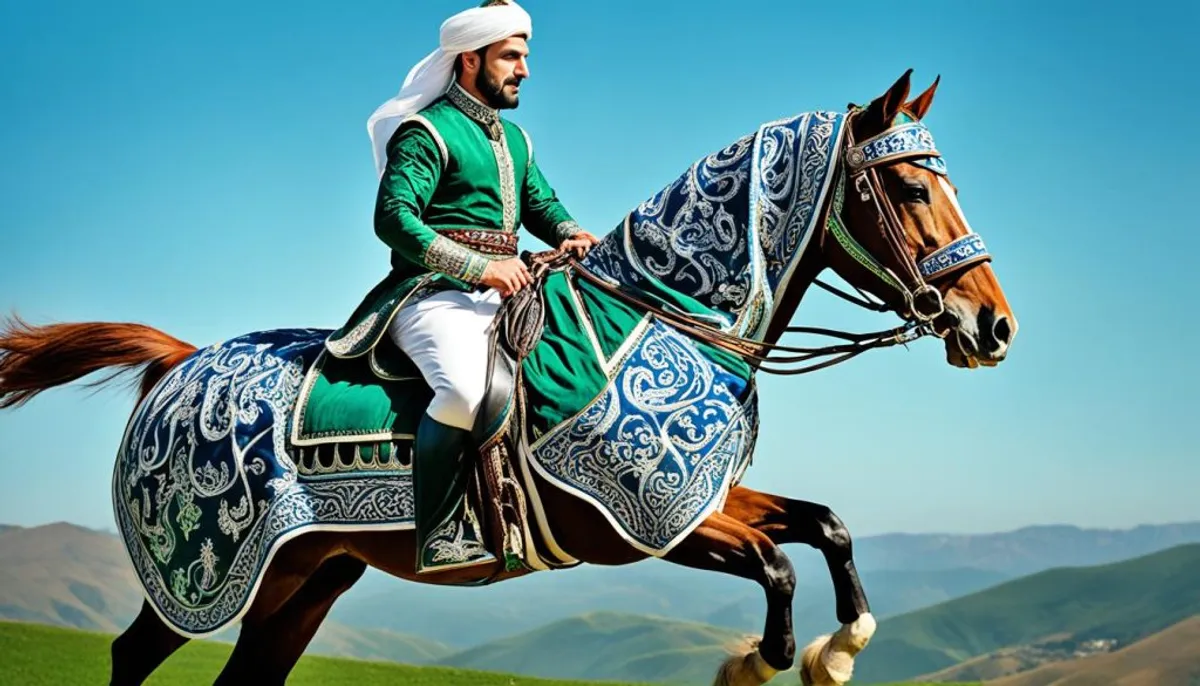
Main ideas to remember
- Equestrianism and Islam are closely linked, with an ancestral tradition of Arab cavalry.
- Ishmael, son of Abraham, is considered the first man to have ridden a horse according to Muslim tradition.
- The Arabs became a people of horsemen, participating in military conquests across Europe and Asia.
- The prophet Muhammad played an important role in indoctrinating Bedouin society into horseback riding.
- The breeding and use of the Arabian horse are deeply rooted in Islamic culture and traditions.
The origins of Arab equestrianism
The Arabian horses have an incredible history coming from distant Arabia. According to Muslim belief, the Arabs became experts in horseback riding. This was due to the domestication of the horse by Ishmael, their ancestor.
In the time of Ishmael, the horses lived freely in Arabia. This was before Ishmael came to Mecca with his father, Abraham. At that moment, God asked Ishmael to tame the horse. This marked the beginning of horse breeding by the Bedouin Arabs.
This encounter launched the rich Arab equestrian tradition.
The Arabs become a people of horsemen
Thanks to Ishmael, the Arabs changed their way of life. Once, they traveled on camelback. Now, they became excellent horsemen. This change was rapid. By the 5th century, they were already assisting the Roman Empire.
They were so skilled that they traveled far, from the West to the East, in a very short time.
The influence of Muhammad was also very significant. It aided in the evolution of equestrianism among the Arabs.
The domestication of the horse by Ishmael according to Muslim tradition
The Muslim tradition tells that Ishmael, son of Abraham, tamed the first horse. This happened in Mecca, following God's command. Before that, horses lived freely in Arabia. But thanks to Ishmael, the Arabs became talented horsemen.
Thus, horseback riding became a central element of their culture and life.
The foundations of equestrianism in Islam
The prophet Muhammad played a major role in establishing the foundations of Arab equestrianism. As a military genius and legislator, he introduced innovative strategies. These changes helped the Muslim army achieve significant Arab conquests.
Muhammad, the prophet, the military genius, and the legislator
Muhammad showed great talent in uniting the Bedouin people on military and political plans. He understood that horses were essential in battles. He introduced a system allowing cavalry to receive twice as much loot as infantry. This encouraged horsemen to do their best in battles.
He was also a wise legislator, establishing clear rules to encourage holy war (Jihad). Through these methods, Muhammad's disciples were able to lead distant conquests. They thus dominated a large part of the world for nearly four centuries.
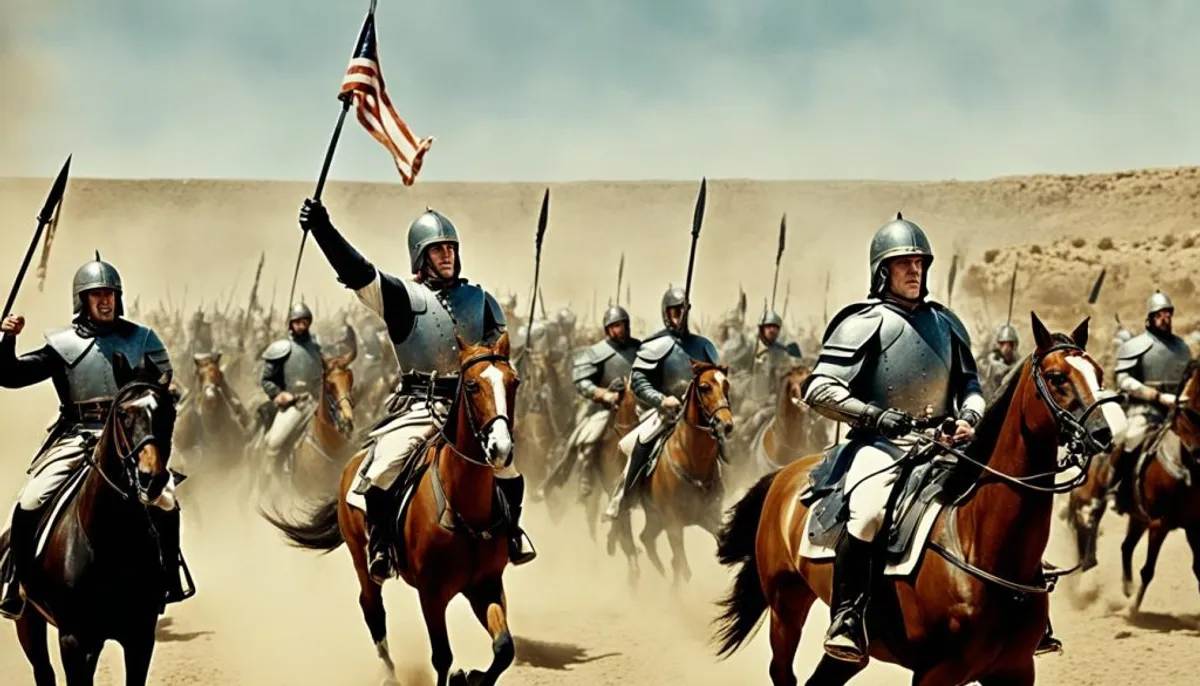
Muhammad played a crucial role in the development of Arab equestrianism. By being both a military genius and a legislator, he initiated very positive changes. These changes helped the Muslim army achieve important victories. Thanks to him, equestrian culture spread within Islam.
Classical Arab equestrianism
Since the end of the 7th century, the Arabs of Arabia have dominated the Muslim empire. However, they withdrew and preserved their typical Arab equestrianism. By encountering other peoples with equestrian traditions, Arab equestrianism gradually changed. Two books from the 14th century, “Naceri” and “Adornment of Horsemen and the Insignia of the Valiant”, are cornerstones in this field.
These books explain techniques still used today, such as proper seating or holding the reins correctly. They showcase the beauty of the Arab equestrian tradition, inherited from the ancients. This tradition evolved across the vast plains of the Muslim empire for centuries.
| Treatise | Author | Region |
|---|---|---|
| Naceri | Unknown | Mashrek (East) |
| Adornment of Horsemen and the Insignia of the Valiant | Unknown | Maghreb (West) |
The works “Naceri” and “Adornment of Horsemen and the Insignia of the Valiant” are of paramount importance. They helped continue and spread the techniques of classical Arab equestrianism. Even today, these methods influence equestrian art in many Muslim countries.
The furûsiyya: Islamic equestrian art
The “furûsiyya” encompasses the knowledge and practices related to horses in Islam. It took shape as early as the 8th century, during the Abbasid caliphate. This tradition covers everything from riding and training horses to their health, as well as military art.
The disciplines of the furûsiyya
The furûsiyya includes several important areas:
- Riding and training: teaches how to properly ride and train a horse.
- Hippology: studies the horse scientifically, from its body to its diseases.
- Military arts and techniques: explains the use of the horse in war, such as charges.
- Sports of skill: includes equestrian competitions, such as archery.
- Code of chivalrous virtues: shows the values expected of a good horseman.
There have been many writings, such as hippological treatises, to explain this equestrian tradition. They help to understand and preserve it through time.
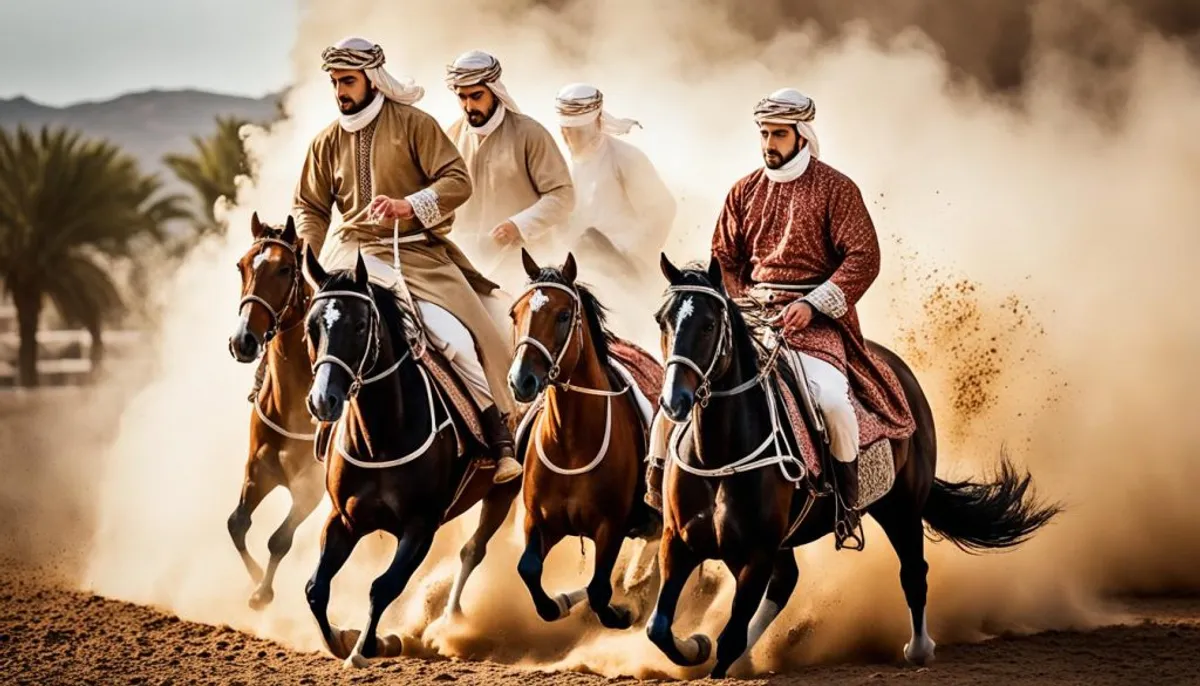
The furûsiyya shows the Arabs' love for horses, stemming from past cultures. It brings together a wide array of customs, knowledge, and ideals.
Equestrianism and Islam in literature
The horse is significant in Islamic literature. It is linked to mythology and religious beliefs. The Quran and the hadiths speak of horses as special creatures. They illustrate how important horses are in Muslim culture.
The Quran and hadiths on horses
The surah “Al-Adiyat” discusses the theme of horses and the ingratitude of people towards God. A well-known hadith states that “good will be with horses until the Day of Resurrection”. These words highlight the role of Arab horses in spirituality and war in Islam.
Writings about horses in the Arab world also note their legendary origin. They say that Ishmael rode a horse that God had sent him. This story illustrates the central place of the horse in the culture and mythology of Islam.
Thus, the horse is an important symbol in Islamic literature. It is respected for its strength and religious significance. This view of the horse in sacred texts highlights the importance of equestrianism in the Arab and Muslim world.
The Arabian stallion: a revered breed
Muslims deeply respect Arabian horses. Their history is recounted in the Quran and the hadiths. Arabic poetry describes them as forces of nature, emphasizing their speed and courage in battle.
The Arabic language has over 500 words to talk about horses. Thus, it is clear that the Arabs have always been interested in their origin. The Arabian horse is often called “the most beautiful horse in the world.” It is also said to have influenced the breed of the Thoroughbred.
This Arab breed is highly valued for its noble qualities, speed, and incredible endurance. Breeding these horses is an ancient practice in Muslim culture. This demonstrates their important role in the history and tradition of Muslims.
FAQ
What are the origins of Arab equestrianism according to Muslim tradition?
The Muslim tradition recounts that Ishmael, son of Abraham, was the first to ride a horse. He is the ancestor of all Arabs. Ishmael tamed a wild horse under God's command. This took place in the holy city of Mecca.
How did the prophet Muhammad influence the development of Arab equestrianism?
The prophet Muhammad won the hearts of the Bedouins through his wisdom and courage. He established practices that valued horsemen. Warriors received two shares of the loot, thereby showing respect for the horse.
He encouraged holy war through a moral code, the Jihad. Thanks to this code, Muhammad's successors led campaigns for Islam.
What are the reference works on classical Arab equestrianism?
Two books from the 14th century are very important for Arab equestrianism. The “Naceri,” written in the East, and the “Adornment of Horsemen and the Insignia of the Valiant,” written in the West, are valuable guides. They discuss firm seating, balanced reins, and the balance between the forehand and hindquarters.
These books are still used today as references.
What is the furûsiyya?
The “furûsiyya” covers everything related to the horse. It includes riding and veterinary medicine. But also military art and the training of horsemen. There was also a list of moral values to follow.
How do the Quran and hadiths mention the horse?
The Quran and the hadiths emphasize the importance of the horse. They regard it as a noble animal, especially in battle. In the surah Al-Adiyat, horses symbolize the ingratitude of men.
A famous hadith states that good will be with horses until the Day of Judgment.
Why is the Arabian horse considered a revered breed in Muslim culture?
The Arabian horse is highly respected among Muslims. This comes from sacred texts like the Quran and traditions. Arabic culture describes it as the most beautiful and the fastest.
Compared to natural phenomena in poetry, it is a prominent symbol of courage. Its influence is still felt on other breeds, such as the Thoroughbred.